
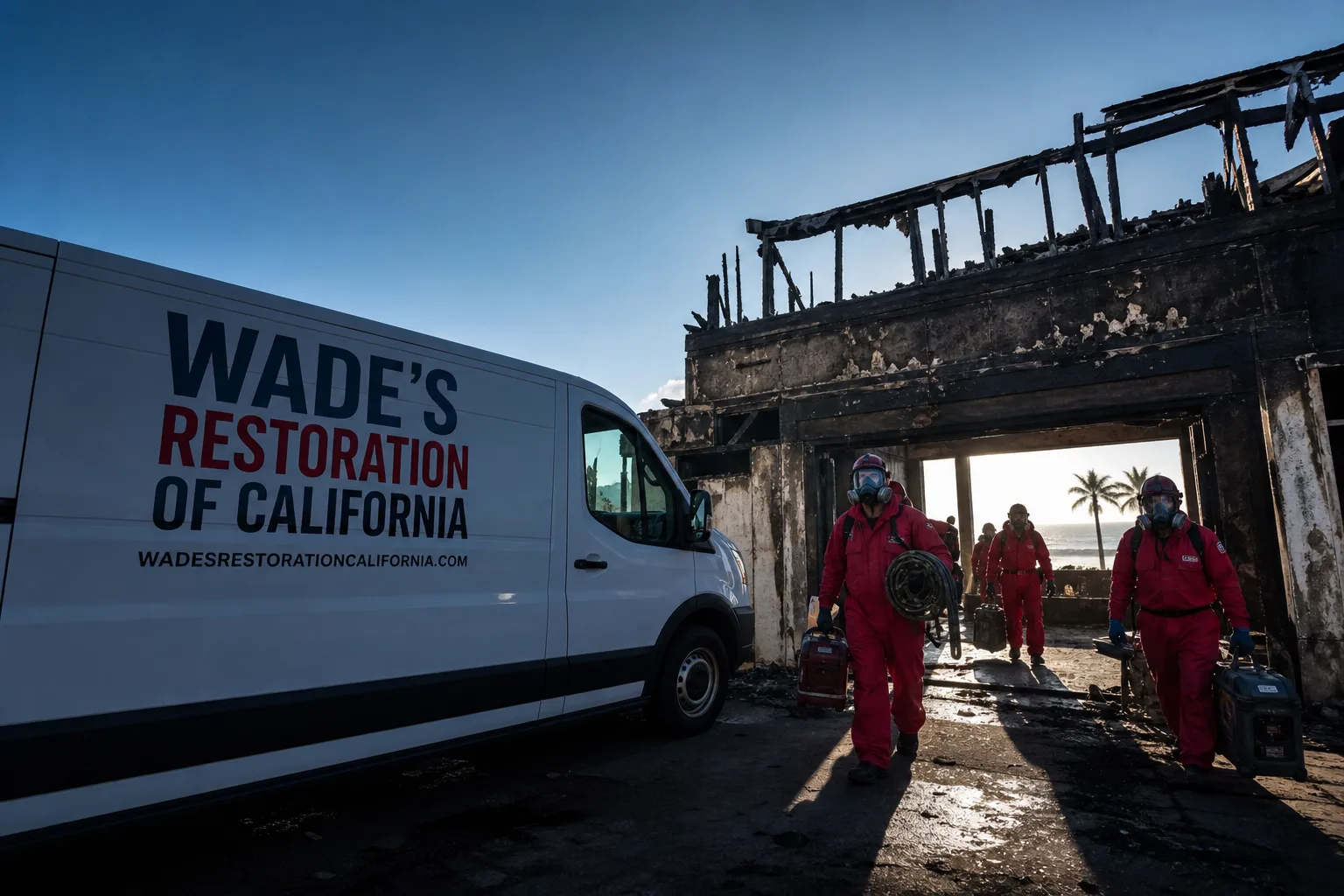
Fast, Reliable Water Damage Restoration Across Granite Bay
Water damage restoration in Granite Bay typically costs between $2,100 and $7,800 depending on the extent of the loss, with emergency extraction alone running $450 to $1,200 for a standard room. Most jobs in Granite Bay are same-day response because Wade Ferris answers his own phone and can have equipment rolling toward your place inside the hour. Granite Bay’s combination of large custom homes, 1990s-era plumbing, and expansive clay soil means water damage here rarely behaves like it does in flatter parts of Placer County. Call Wade’s Restoration of California at (855) 915-0646 and you’ll talk to a person who knows the difference between a slab leak in a Granite Bay rambler and a roof-soffit intrusion in a two-story off Douglas Boulevard.
We’ve spent nearly two decades drying out homes from Sierra College Boulevard to the lake side of Auburn-Folsom Road. The soil under Granite Bay moves. The polybutylene pipes in 1990s builds fail. And when water gets behind custom millwork or natural stone, the clock starts before you ever see a stain. That’s why our Water Damage Restoration team runs moisture mapping and thermal imaging on every Granite Bay job, not just the obvious ones.
Why Wade’s Restoration of California Is Granite Bay’s Preferred Water Damage Restoration Company
Wade Ferris founded this company in 2007 and put his name on the truck. He still answers the phone at midnight. Ask anyone on your street who’s had a water loss and they’ll tell you the same thing: Wade shows up, he takes readings, he writes everything down, and he doesn’t disappear once the invoice clears. The 90-Day Done Right Promise is stamped on every contract. If something isn’t right after we finish, one call brings Wade back. That’s not a slogan; it’s the way he’s run the business from day one.
Granite Bay isn’t a place where you want to gamble with a national chain that sends a different sub each day. The homes here are too particular for that. We’ve dried engineered hardwood in a 5,800-square-foot custom on Newcastle Road, pulled saturated insulation from vaulted great rooms near Hidden Valley Park, and dealt with foundation intrusion on slabs cut into granite ledge, which is a Granite Bay issue that most restoration companies don’t even test for. Coverage in the 95746 zip is immediate. Wade’s crew knows the roads, knows the building styles, and knows which 1990s subdivisions have the failing supply lines.
Every Granite Bay job gets daily moisture readings and a full log handed to the homeowner at the end. Wade deals with your insurance adjuster directly, so you’re never the one stuck relaying numbers between two people who won’t talk to each other. And if you have a written estimate from another company, bring it in. Free second opinion. No charge for that.
Our Water Damage Restoration Services in Granite Bay
We handle the full scope of water damage work in Granite Bay, from the first call to the final inspection. Here’s what we do most often in the 95746 area.
Emergency Water Extraction
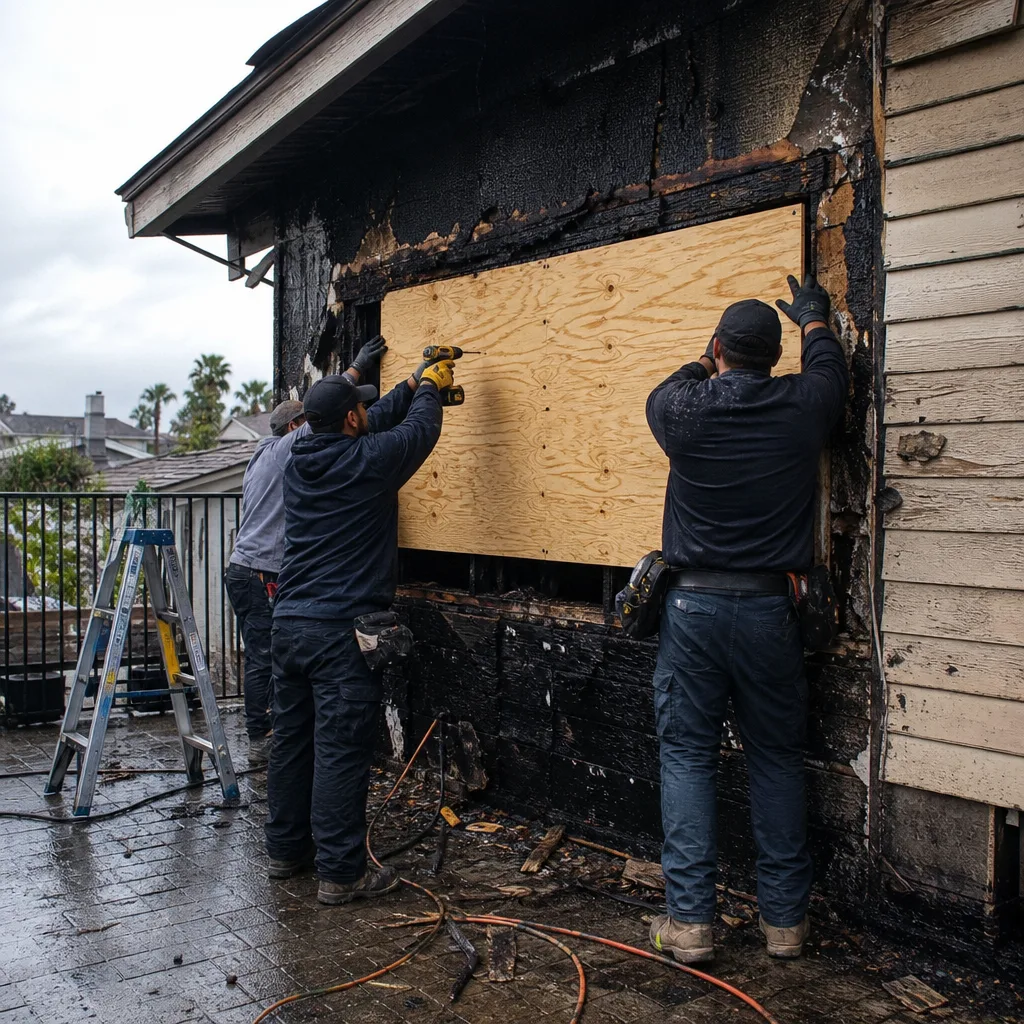
Standing water in a Granite Bay home needs to come out fast, especially on the clay-heavy lots where water that sits too long starts wicking into slab edges and subfloor framing. Our extraction crews run truck-mounted Dri-Eaz and XPOWER equipment and can typically start pulling water within 60 to 90 minutes of your call. Speed matters because engineered hardwood and natural stone flooring, common throughout Granite Bay, absorb water differently than standard oak or tile. The faster we extract, the more of your floor and trim we can save.
Structural Drying & Dehumidification
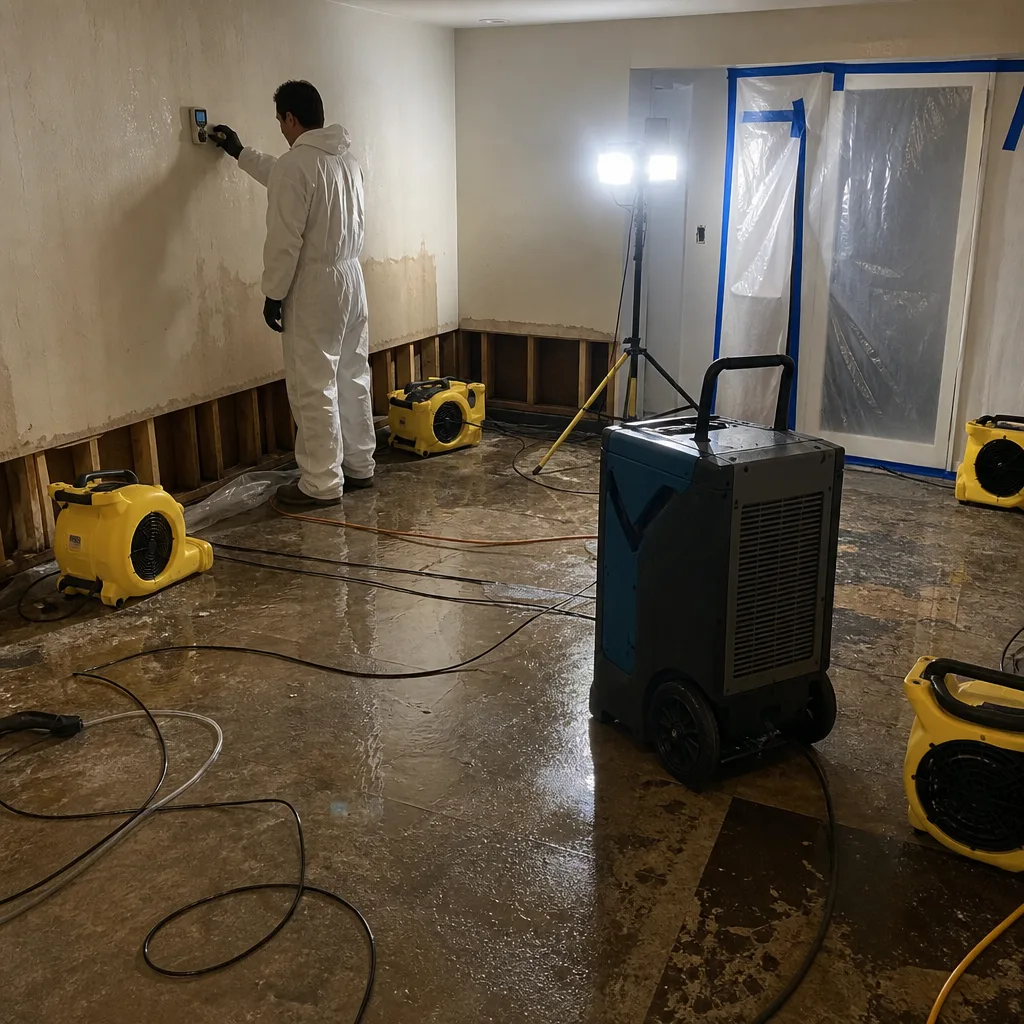
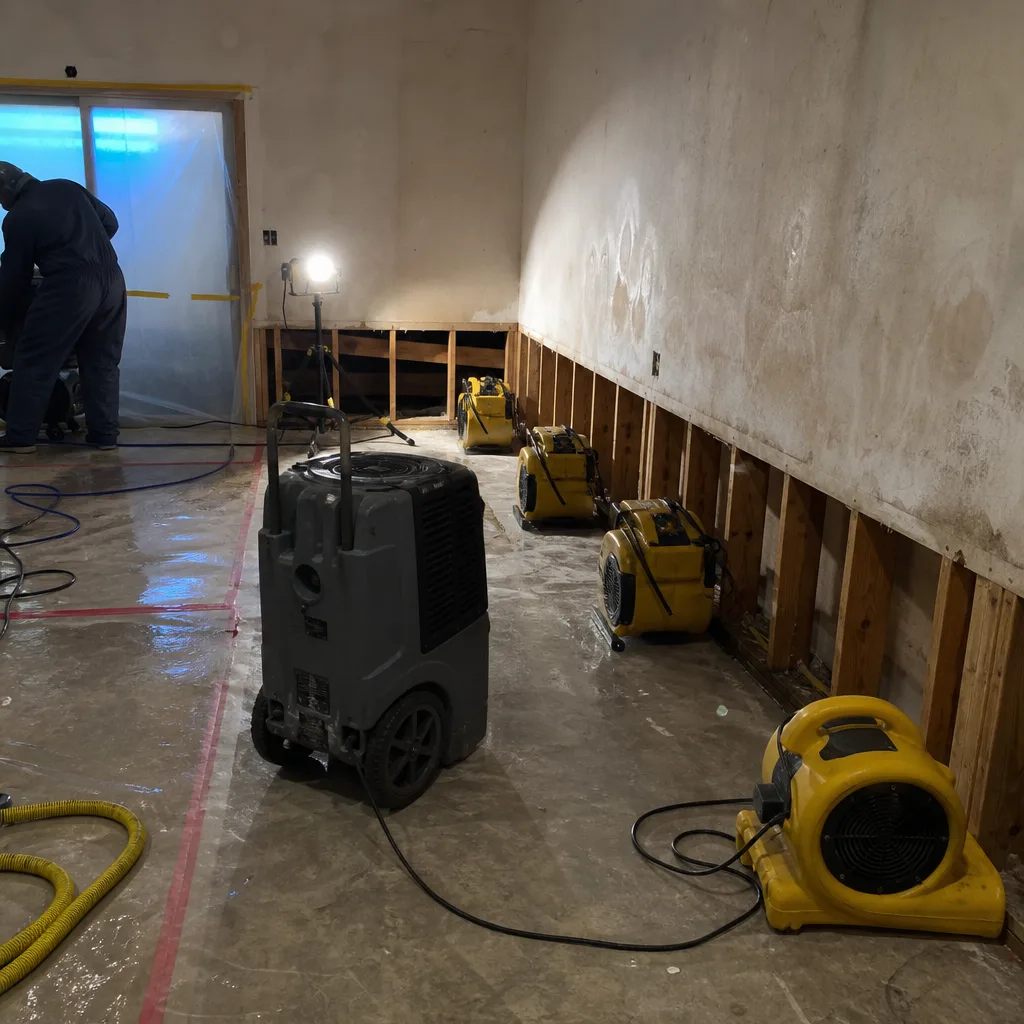
Granite Bay’s winter atmospheric rivers and summer irrigation runoff both create the same problem: trapped moisture in floor cavities and behind drywall. We use Phoenix dehumidifiers and Injectidry drying mats to pull water out of hardwood, subfloor, and wall cavities without tearing everything apart. On a Granite Bay job, we also map moisture in the slab because the expansive clay under so many of these homes can hold water long after the surface looks dry. Standard crews miss that. We don’t.
Flood Cleanup
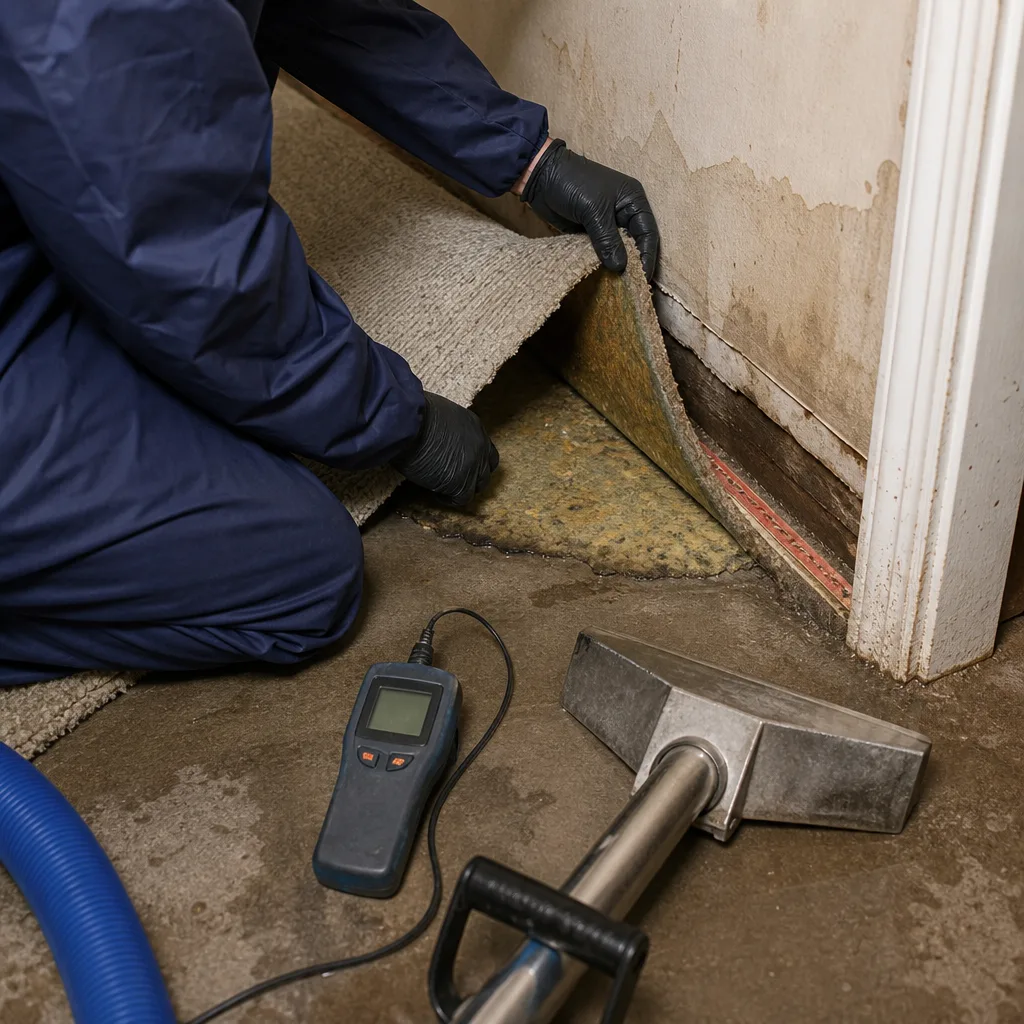
When a storm drains poorly against a foundation cut into granite ledge, or a sump fails during a heavy rain event off Folsom-Auburn Road, the result is flood water inside living space. Flood water in Granite Bay often carries sediment from granite fines and clay, which means the cleanup has to include thorough cleaning of the affected surfaces, not just drying. We remove the water, sanitize affected areas, document everything for insurance, and get your home stable enough to live in again.
Burst Pipe Restoration
The 1990s building boom in Granite Bay means a lot of polybutylene and early CPVC supply lines are still in service, and they fail. Usually it’s a pinhole that becomes a rupture, often inside a wall or under a slab. By the time a homeowner notices, water has been traveling for hours or days. We find the source, stop it, and then dry the concealed spaces. The restoration cost on these jobs is usually higher in Granite Bay because the water is behind natural stone, custom cabinetry, or high-end wall finishes, but the approach is the same: stop the water, map the spread, dry it fully, and verify with daily readings.
Ceiling & Roof Leak Water Damage
Wind-driven rain in the Sierra foothills gets into Granite Bay homes through aging wood-framed soffits, attic bypasses, and complex rooflines that were built before modern WUI standards. What starts as a small stain on a great-room ceiling often means saturated insulation and a wet drywall cavity above. We trace the actual leak path, not just the visible stain, because water travels along trusses and beams before it shows up where you noticed it. If there’s a code-upgrade trigger because of the home’s location near the wildland-urban interface, we’ll tell you before it becomes a surprise mid-job.
What happens when you call
- 1
A real person answersNo phone trees - you reach a local pro.
- 2
You get an upfront price rangeHonest numbers before anyone is dispatched.
- 3
A background-checked tech heads outLicensed & insured, dispatched right away.
- 4
You approve before work beginsNothing starts until you say go.
Trusted Brands We Service in Granite Bay
We work on all equipment and materials found in Granite Bay homes, and we stock common parts and drying accessories locally so we’re not waiting on a warehouse in another county. Our crews are trained on Dri-Eaz dehumidifiers, Phoenix air movers, Injectidry mat systems, and XPOWER extraction units, and we’re IICRC-certified with RIA affiliation. If you have a specialty pump, a hydro-air system, or a built-in humidifier affected by a water loss, we can service and restore it as part of the job. No sub-outs, no mystery third parties.
Common Water Damage Restoration Problems We See in Granite Bay Homes
- Hidden polybutylene and early CPVC supply line failures. Granite Bay’s 1990s build-out used materials that are now past their service life, and when they fail, it’s usually inside a wall or under a slab. By the time the water reaches a visible finish, the damage behind it is already significant.
- Foundation water intrusion on expansive clay. Winter storms push water through cracks in foundation walls and up through slabs, especially on lots where granite outcroppings block natural drainage. This is a Granite Bay problem most flat-land restoration crews never test for.
- Wind-driven rain through aging soffits and attic bypasses. Homes built before Placer County adopted modern WUI construction standards often have wood-framed soffits and non-ignition-resistant vents that let storm water into insulation and drywall long before any visible leak appears.
- Post-storm runoff pooling against slab edges. When heavy rain hits the granite and clay mix of Granite Bay, water doesn’t always drain away from the house. Improperly graded lots and blocked drains cause water to sit against foundations, leading to slow, concealed intrusion that standard drying crews miss without slab moisture testing.
Pricing for Water Damage Restoration in Granite Bay, CA
Here are honest numbers for Granite Bay’s market, based on what we typically see. Emergency water extraction for a standard room runs $450 to $1,200. Structural drying and dehumidification for a typical single-room loss ranges from $1,400 to $3,800, depending on how long the water sat and what materials are involved. Flood cleanup after a storm event usually lands between $2,000 and $6,500, and burst pipe restoration in a Granite Bay home with custom finishes typically runs $2,800 to $7,800. Ceiling and roof leak water damage, including insulation removal and drying, runs $1,200 to $4,200. Larger custom homes and losses involving natural stone or custom millwork will land at the higher end. The final number depends on the extent of the damage and what can be dried versus what must be replaced. Call (855) 915-0646 for a free estimate, and you’ll get a written scope before any work starts.
We Also Serve Cities Near Granite Bay
While this page focuses on Water Damage Restoration in Granite Bay, we regularly run crews to Orangevale, Loomis, Folsom, and Rocklin. The same owner-operator approach applies: Wade heads out, the equipment follows, and the 90-Day Done Right Promise covers every job in the county. The soil, the plumbing era, and the housing styles change slightly from town to town, but the standard of work doesn’t.
Serving Granite Bay, CA - Our Local Coverage Area
We’re based in the Granite Bay area and know this community well. Use the map below to see our service coverage - if you’re nearby, we can almost certainly help.
FAQs - Water Damage Restoration in Granite Bay
Granite Bay sits on expansive clay interspersed with granite outcroppings, so winter rain often forces water through foundation cracks and up through slabs in ways that flatter Valley cities never see. That means restoration here has to include subfloor moisture mapping and slab-edge drainage correction as a default, not an add-on. We check for moisture trapped in the slab because the clay holds water long after the surface looks dry. If your home is on a lot with visible granite ledge, runoff may be pooling against the foundation without you ever noticing. Call (855) 915-0646 and we’ll check it properly.
Homes built during Granite Bay’s 1990s boom frequently used polybutylene or early CPVC supply lines, and those materials fail more often now that they’ve aged 25 to 35 years. The failure usually happens inside a wall or under a slab, behind custom millwork or natural stone, so the water travels concealed until finishes blister or a stain appears. By then, the restoration scope is much larger than a simple patch job. If your home was built between roughly 1988 and 2005, it’s worth having the supply lines inspected before a failure happens. We do that as part of every water damage assessment at no extra charge.
Sometimes, yes. Many Granite Bay homes permitted in the late 1990s sit just outside the current State Responsibility Area fire-hazard zone on paper but were built before Placer County adopted modern WUI construction standards. When storm or water damage forces attic, soffit, or roof repair work, the repair frequently triggers code-upgrade requirements for ignition-resistant vents, ember-resistant soffits, or wind-rated components. We’ll identify those triggers early and tell you what the county will require before we start work, so the scope doesn’t expand unexpectedly mid-project. For a written assessment that includes any code triggers, call (855) 915-0646.
After a heavy atmospheric river, Granite Bay homeowners should check attic insulation for dampness, especially near wood-framed soffits and attic bypasses, and look for water staining where vaulted ceilings meet exterior walls. Wind-driven rain often enters through aging soffits and travels along trusses before it ever shows up as a ceiling stain. Also check foundations on the uphill side of the lot, where runoff may have ponded against the slab. If you find dampness, don’t wait. The longer water sits in these concealed spaces, the more of your insulation, drywall, and framing has to be replaced. Wade can inspect it and tell you honestly what’s wet and what isn’t.
In most cases, we can dry engineered hardwood and custom millwork in place using Injectidry mats and controlled dehumidification, and we’ve done it many times in Granite Bay homes. We responded to a burst polybutylene supply line in a 1990s custom home off Douglas Boulevard where water had run inside a vaulted great-room wall for hours before discovery. Our crew used thermal imaging and Injectidry floor mats to dry the engineered hardwood and custom millwork in place, avoiding a full tear-out that would have tripled the restoration cost. Not every situation allows in-place drying; if the material is delaminating or irreversible, we’ll tell you straight and give you a written recommendation before anything gets pulled. Call (855) 915-0646 for an assessment and you’ll know exactly what can be saved.
If you’ve got water where it shouldn’t be in Granite Bay, call Wade’s Restoration of California at (855) 915-0646. You’ll get a live person, a straight answer, and a written scope before any work begins. Wade Ferris has been doing this since 2007, and he’ll be the one on the phone.
Written by Wade Ferris, Owner at Wade’s Restoration of California, serving Granite Bay and surrounding Placer County communities since 2007.