
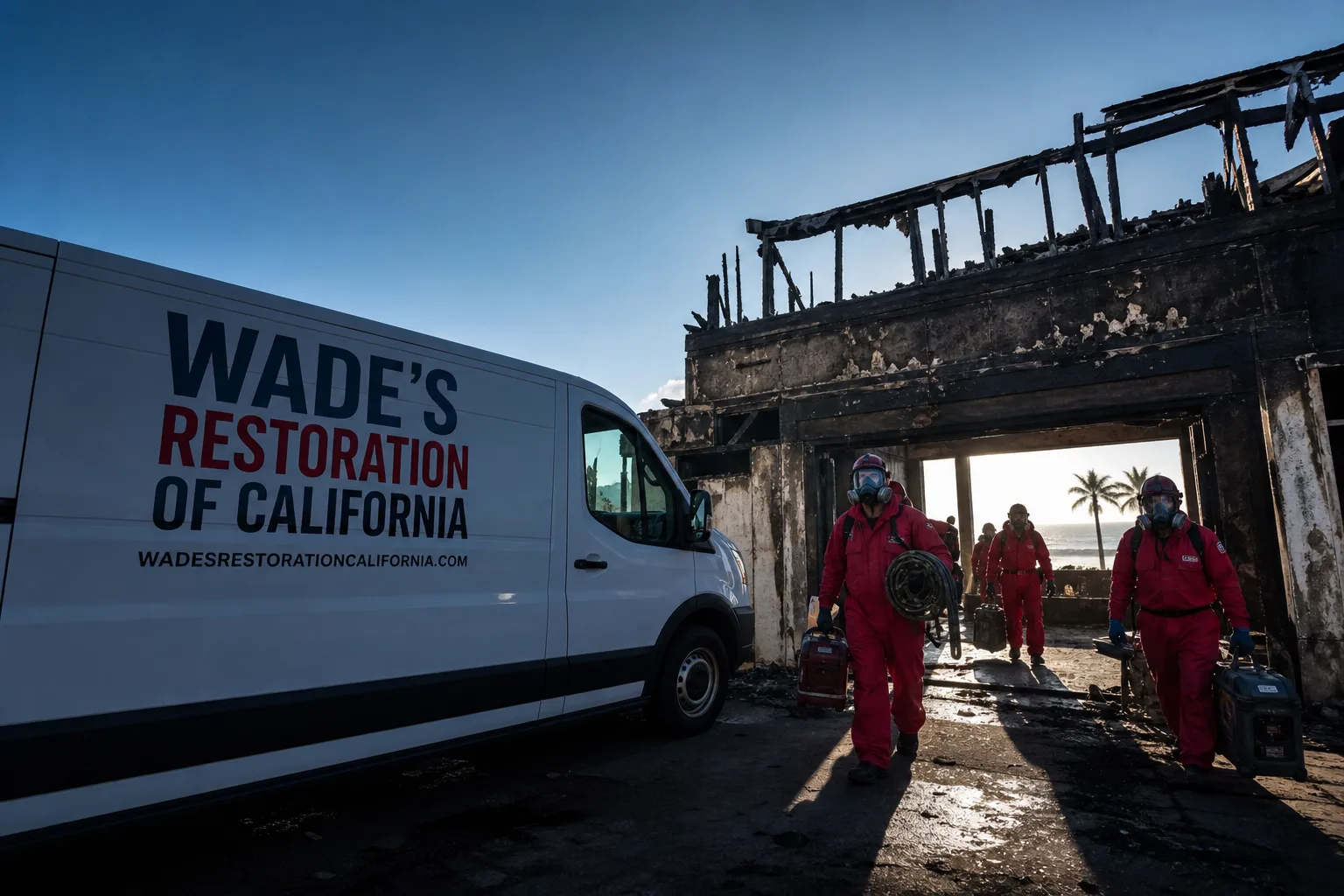
Fast, Reliable Storm & Disaster Restoration Across West Hills
Storm damage in West Hills moves fast, and so do we. When Santa Ana winds tear a section of roofing off a 1970s ranch home on a street off Valley Circle Boulevard, the window to prevent water from wicking into blown-in attic insulation is measured in hours, not days. Wade’s Restoration of California responds to West Hills calls around the clock with a live person on the phone, and crews are on the road immediately. If you’re standing in a living room watching rain come through the ceiling, call (855) 915-0646 right now. Wade Ferris answers his own phone.
Why Wade’s Restoration of California Is West Hills’s Preferred Storm & Disaster Restoration Company
West Hills is a different kind of restoration market than anywhere else in the San Fernando Valley. The wildland-urban interface here means wind-driven debris, ember exposure, and smoke infiltration are not abstract risks; they’re recurring events. We’ve worked on post-Woolsey rebuilds near the hillside sections and on original 1960s ranch homes that sit side by side on the same block. That local familiarity means we arrive already knowing what a West Hills attic looks like after a wind breach, and what a surviving home’s HVAC returns smell like years after a fire event.
Homeowners in the 91307 and 91308 ZIP codes call us because we don’t send a rotating cast of subcontractors. Wade’s crew shows up in uniform, background-checked, and carrying professional-grade equipment from Dri-Eaz, Phoenix, and Injectidry. The work carries IICRC certification standards and the 90-Day Done Right Promise in writing. If something isn’t right, Wade makes it right. He’s the guy whose name is on the truck, and he’s going to run into you at the hardware store on a Saturday. That accountability matters here.
Our Storm & Disaster Restoration Services in West Hills
We handle the full scope of Storm & Disaster Restoration work that West Hills wind events and fire seasons demand. Here’s what that actually looks like on the ground here.
Storm Damage Cleanup
Wind-driven debris in West Hills doesn’t just dent fences. It punches holes in roofing, snaps fascia, and buries yards in eucalyptus bark and broken tile. We clear the debris, document everything with photos for your adjuster, and get the structure stabilized the same day we’re called. The photo documentation is non-negotiable on our end because insurance claims in this ZIP code often hinge on proving wind versus water causation.
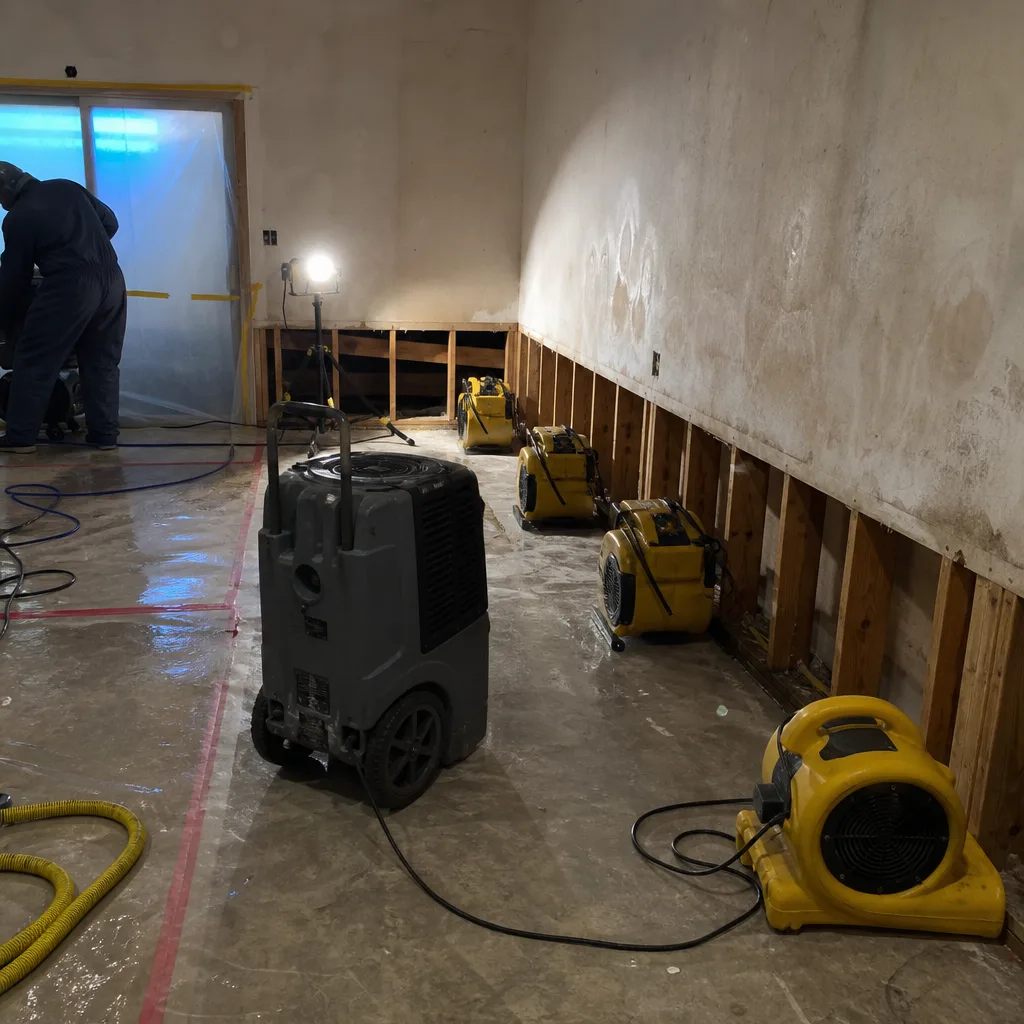
Flood Damage Restoration
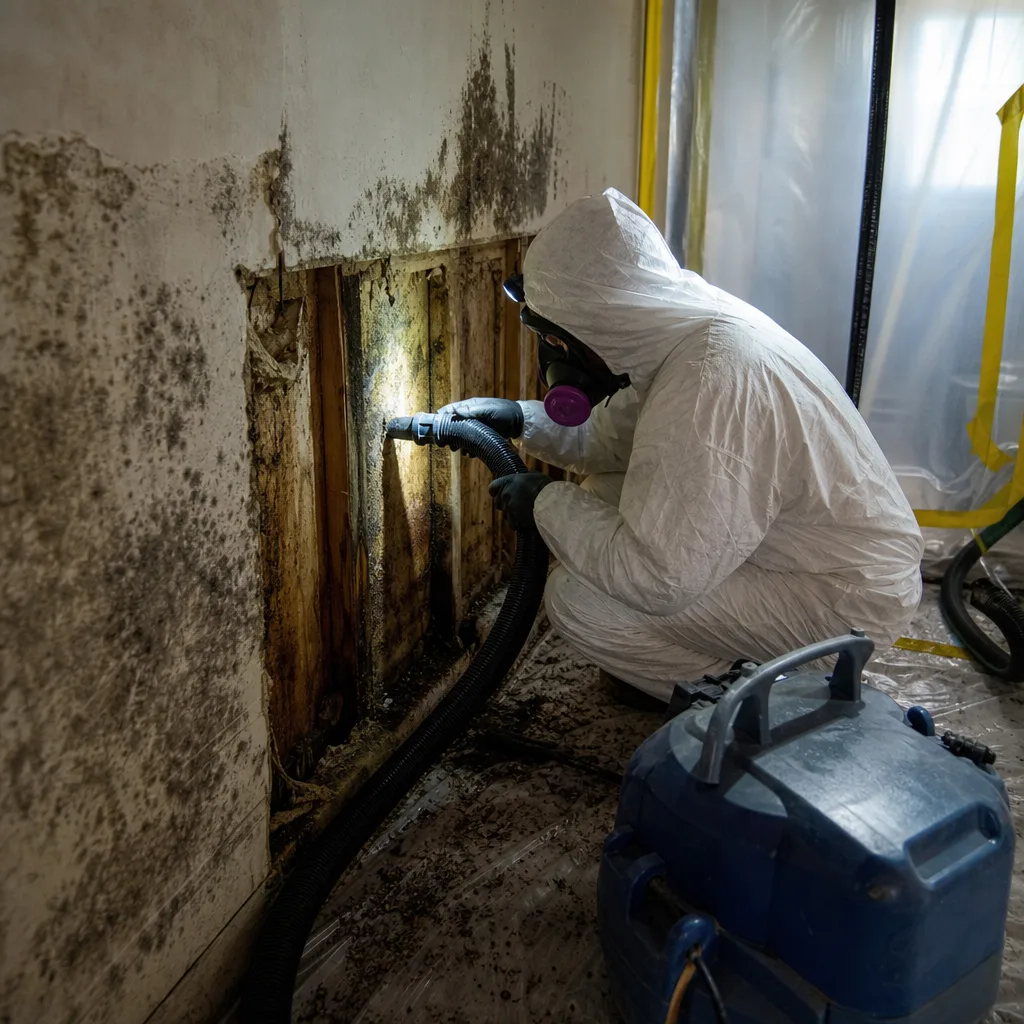
When a storm breaches a roof or a gutter system fails on a slab-foundation ranch home, water goes where gravity takes it: into open attic spaces, down wall cavities, and under baseboards. We run Dri-Eaz and Phoenix air movers with Injectidry panels to pull moisture from structural cavities that box fans can’t touch. Wade takes moisture readings every single day and hands you the full log at the end of the job. Almost nobody else in the trade does that.
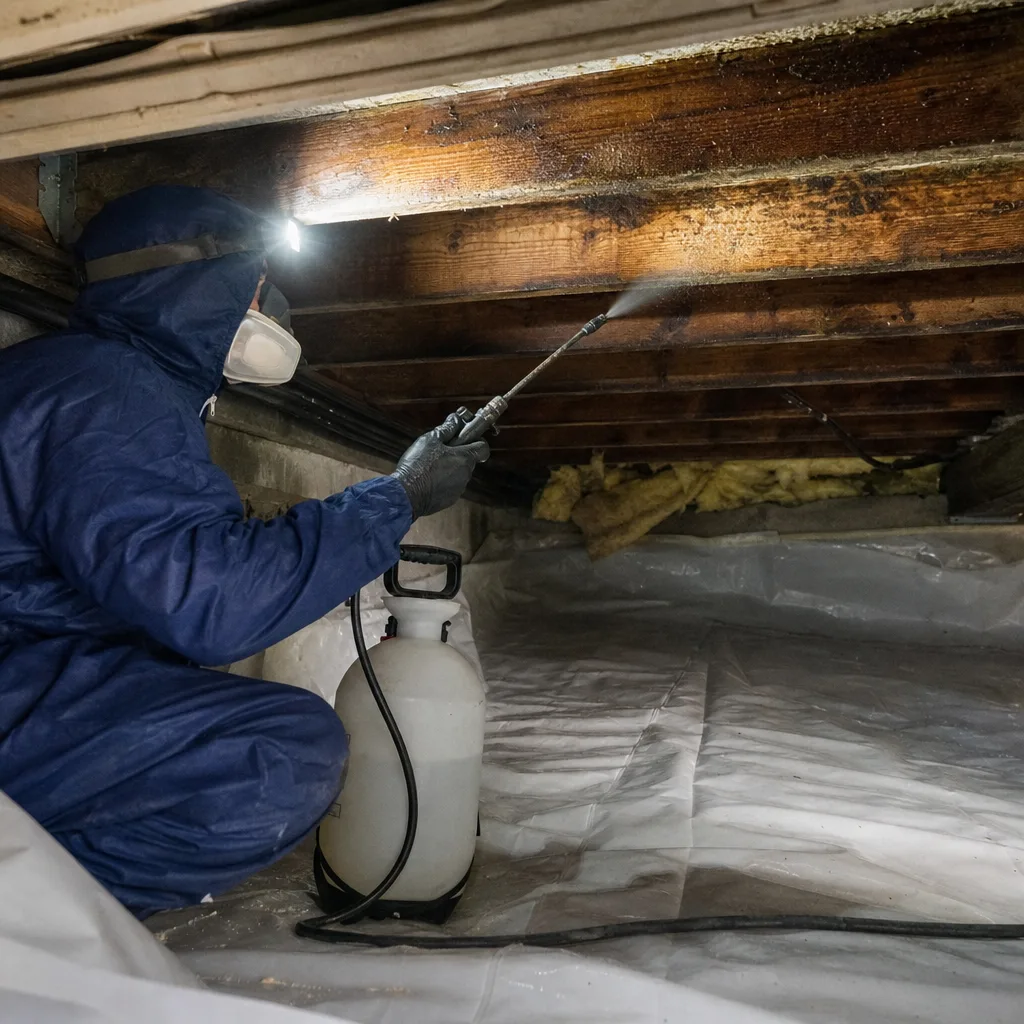
Emergency Board-Up
If a tree limb or wind event leaves a window or door opening exposed, the house is vulnerable to water, animals, and people. We board it up immediately, then document the condition so your adjuster has a clear before-and-after record. West Hills streets near the hillside corridor see more of these calls than most of the Valley because the wind here finds weak points in older framing.
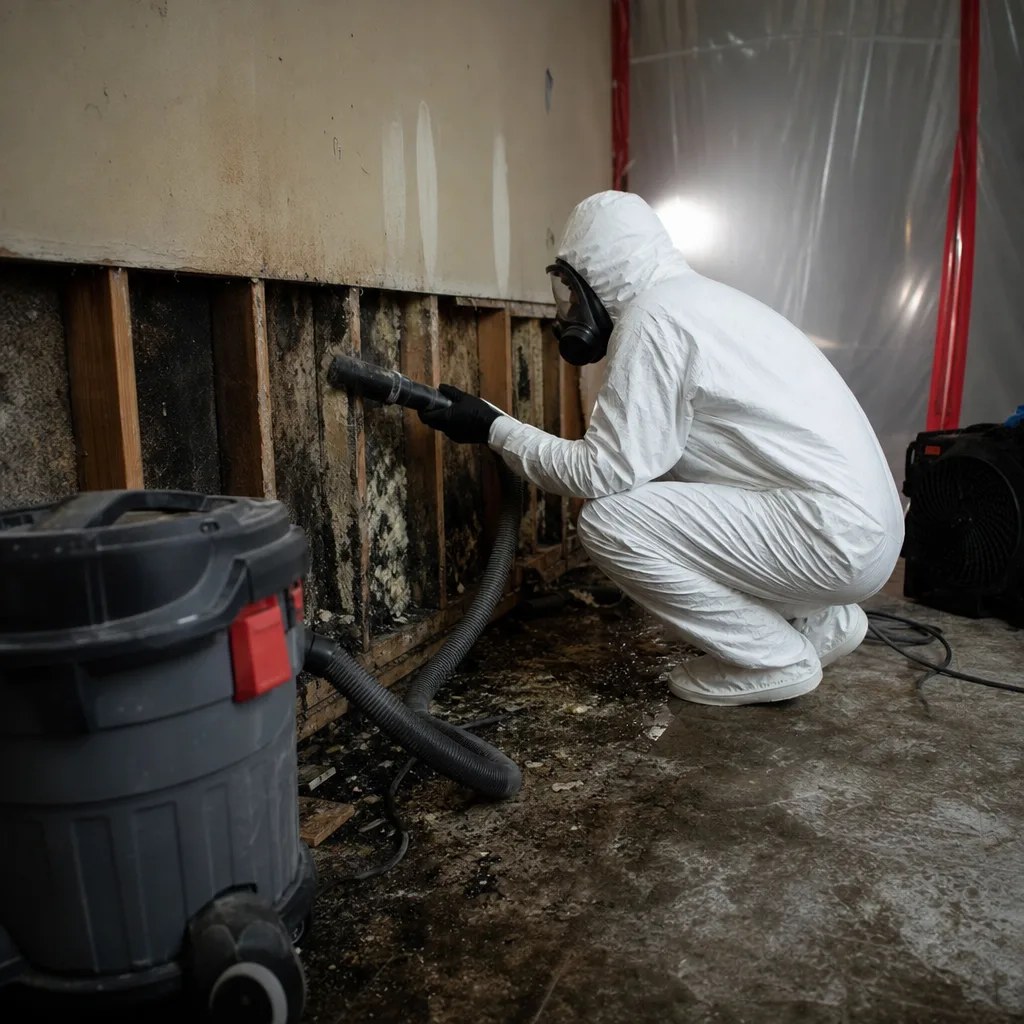
Roof Tarping
A tarp that fails under the next Santa Ana wind event is worse than no tarp at all, because it gives a false sense of security while water keeps finding its way in. We tarp to hold through sustained wind, not just to cover the hole. After a wind-driven debris impact on Valley Circle Boulevard, our crew tarped a 1970s ranch home’s compromised roof and ran Dri-Eaz and Phoenix air movers with Injectidry panels to dry the open attic, where blown-in insulation had wicked moisture from the breached section. We also found smoke odor lingering in the HVAC returns from a prior fire event and sealed those runs during the same service call.
What happens when you call
- 1
A real person answersNo phone trees - you reach a local pro.
- 2
You get an upfront price rangeHonest numbers before anyone is dispatched.
- 3
A background-checked tech heads outLicensed & insured, dispatched right away.
- 4
You approve before work beginsNothing starts until you say go.
Trusted Brands We Service in West Hills
We stock parts and materials that match West Hills’s housing stock, including components for the 1960s through 1980s ranch homes that dominate the 91307 and 91308 neighborhoods. When a job requires Injectidry extraction panels on a slab foundation or a specific drying protocol for lightweight-frame post-Woolsey rebuilds, we’re not improvising. The work is done to IICRC standards, with RIA affiliation and IFA recognition backing the methods we use. That matters in West Hills because the building stock isn’t uniform. A hillside rebuild from 2020 doesn’t dry or decontaminate the same way a 1968 ranch does.
Common Storm & Disaster Restoration Problems We See in West Hills Homes
- DIY tarping that fails under the next Santa Ana wind event. Homeowners in West Hills often tarp a roof themselves in the middle of a storm, then discover the tarp shredded and water in the attic days later. The problem is that the wind corridor here doesn’t stop at 40 miles per hour; it gusts through the Santa Susana Pass and finds every unsecured edge.
- Latent smoke odor in attics and HVAC systems of older ranch homes. Properties that survived the Woolsey Fire structurally often carry smoke particulate deep in blown-in insulation and ductwork. The odor comes back on hot days or when the heat kicks on, and homeowners think something’s burning when it’s actually years-old residue.
- Using standard drying protocols on post-Woolsey lightweight-frame rebuilds. Newer homes in the hillside sections are built differently than the original slab-foundation stock. Lightweight-frame construction dries differently, holds moisture differently, and needs a different decontamination approach than a 1970s wood-frame ranch.
- Water intrusion through aging roof penetrations during wind-driven rain. Wind in West Hills doesn’t just push rain straight down. It drives water sideways into flashing, vents, and seams that haven’t leaked in decades. The first sign is usually a water spot on a ceiling that’s nowhere near the obvious roof damage.
Pricing for Storm & Disaster Restoration in West Hills, CA
Storm damage restoration pricing in West Hills runs on a range, and we’re direct about it. A straightforward emergency board-up typically runs $300 to $800 depending on the number of openings and the size of the property. Roof tarping on a 1960s or 1970s ranch home usually falls between $450 and $1,200, with steeper sections near the hillside corridor costing more because the wind load demands stronger anchoring. Flood damage restoration for a single-room water intrusion starts around $1,500 and can reach $6,000 or more when water has moved through multiple rooms and into attic insulation. Storm damage cleanup with debris removal and documentation for insurance typically runs $500 to $2,500 based on the scope. Estimates are free, and the Senior & Veteran 10% discount applies to every job. Call (855) 915-0646 and Wade will give you a straight number before any work starts.
We Also Serve Cities Near West Hills
We work throughout the western San Fernando Valley, including Storm & Disaster Restoration in West Hills and the surrounding communities. If you’re in Canoga Park, Woodland Hills, Calabasas, or Chatsworth, the same crew that handles West Hills calls is available to you. No trip charge inside the county, and the same 90-Day Done Right Promise applies.
Serving West Hills, CA - Our Local Coverage Area
We’re based in the West Hills area and know this community well. Use the map below to see our service coverage - if you’re nearby, we can almost certainly help.
FAQs - Storm & Disaster Restoration in West Hills
The Santa Susana Pass funnels some of the strongest and driest Santa Ana winds in the San Fernando Valley directly through West Hills, which means tarps, board-up materials, and temporary repairs have to be anchored for sustained wind, not just a passing storm. We use heavier anchoring patterns and wind-rated tarping methods on every West Hills job because we know the gusts here routinely exceed what neighboring communities experience. The wind also drives rain laterally, so we check flashing, vents, and rooflines that weren’t directly impacted because water travels sideways in this microclimate. Call (855) 915-0646 and we’ll walk you through what your specific street needs.
Older ranch homes in the 91307 and 91308 ZIP codes were built with open attic spaces and blown-in insulation that absorbed smoke particulate deep into the material during the Woolsey Fire and subsequent wind-driven fire events. The odor resurfaces on hot days or when HVAC systems cycle because the residue sits in ductwork, insulation, and wall cavities that were never remediated. We treat this as a known West Hills work scope now: sealing HVAC returns, replacing or treating attic insulation, and cleaning duct runs that still carry VOC readings years after the fire. Call (855) 915-0646 for a free odor assessment if your home still smells like smoke on warm days.
Yes, and this is one of the areas where West Hills restoration work diverges from other Valley communities. Post-Woolsey rebuilds use lightweight-frame construction methods that absorb and release moisture differently than the original 1960s-80s wood-frame ranch stock, and they often share property lines with older homes that carry latent fire residue. We run different drying curves on lightweight-frame structures and use a decontamination sequence that accounts for wind-driven ash re-deposition from the Simi Hills open space. The last thing you want is a standardized protocol from a different market applied to a hillside rebuild.
Call us before you attempt any DIY tarping, especially on a hillside section where the next Santa Ana event can shred an unsecured tarp and let water into the attic. The first step is an emergency board-up or tarping that’s anchored for sustained wind, followed by a moisture assessment of the attic space and any wall cavities. We document everything with photos for your insurance adjuster and can start extraction the same hour. Call (855) 915-0646 and Wade will head out personally.
Yes, and it’s one of the most distinctive restoration patterns in this ZIP code. Even when a home sustains no direct fire or smoke damage from a new ignition in the Simi Hills, the wind corridor re-contaminates properties that were previously remediated after the Woolsey Fire or any subsequent event. We regularly return to West Hills homes where smoke odor and ash particulate have re-entered through HVAC returns, crawl spaces, and attic vents despite prior cleaning. Treating this as a repeat maintenance issue rather than a one-time event is the realistic approach, and we’ll work directly with your adjuster if the re-contamination is tied to a documented event. Call (855) 915-0646 to schedule a walkthrough at no charge inside the county.
Contact Wade’s Restoration of California in West Hills
When wind, water, or fire damage hits your West Hills home, you don’t need a call center or a national chain. You need someone who knows the Santa Susana Pass wind corridor, recognizes a post-Woolsey rebuild from an original ranch, and answers his own phone at midnight. That’s Wade Ferris. Call (855) 915-0646 for a free estimate. No trip charge inside Los Angeles County, a free second opinion on any written estimate, and a permanent Senior & Veteran 10% discount on every job.
Written by Wade Ferris, Owner at Wade’s Restoration of California, serving West Hills and the surrounding San Fernando Valley since 2007.