
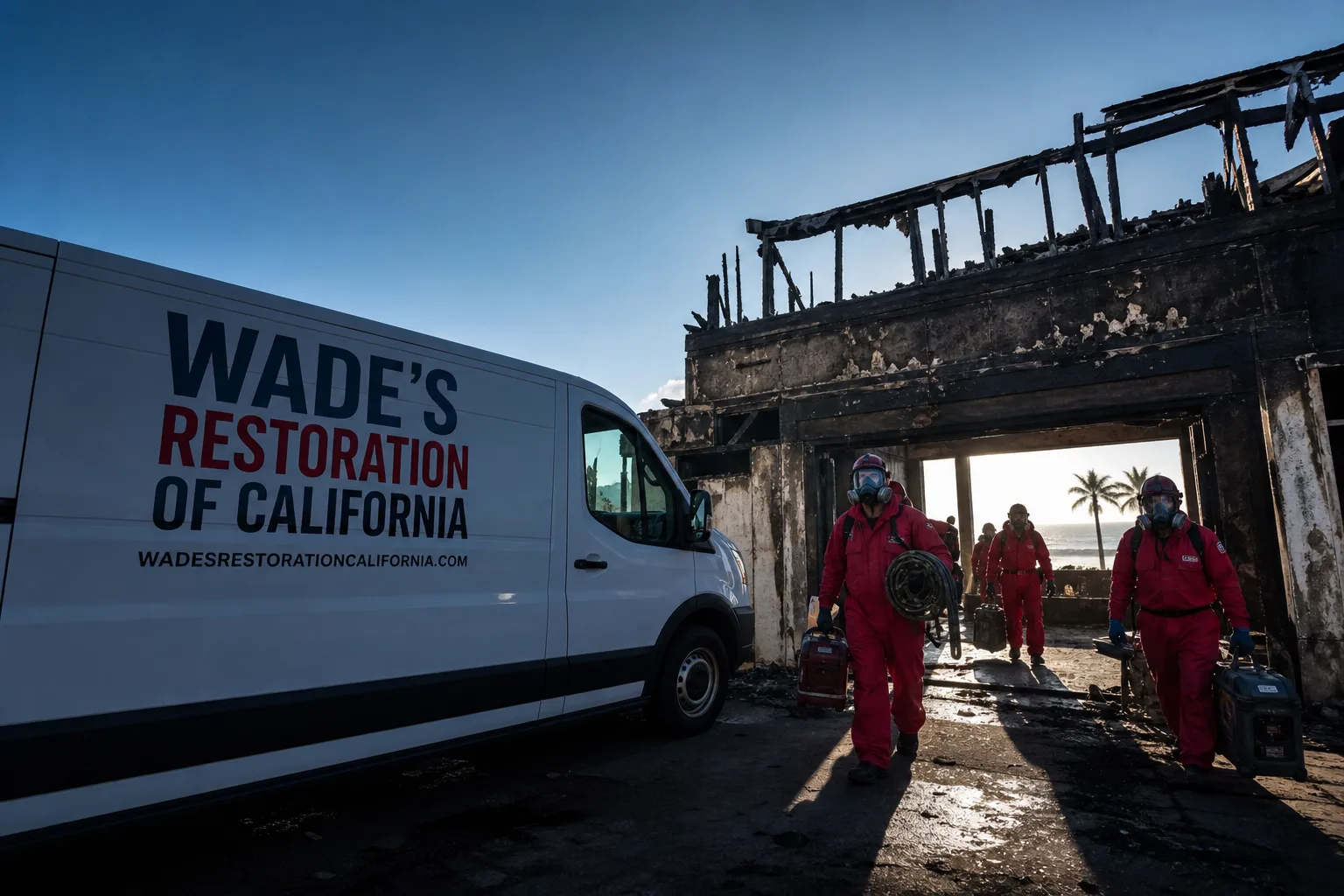
Fast, Reliable Storm & Disaster Restoration Across Tamalpais-Homestead Valley
Storm damage in Tamalpais-Homestead Valley hits different than it does down in Mill Valley or Corte Madera. You’re up on the wooded slopes of Mount Tamalpais, where winter rain can dump 60-plus inches, canyon fog rolls in every night, and the one-lane roads winding through the redwoods make every response more complicated. When a storm tears through, you need someone who knows these hills, these roads, and the way moisture behaves in a 1950s wood-frame cottage with redwood siding and a post-and-pier foundation. That’s what our Storm & Disaster Restoration team does. Call Wade at (855) 915-0646 and he’ll answer his own phone, day or night.
Why Wade’s Restoration of California Is Tamalpais-Homestead Valley’s Preferred Storm & Disaster Restoration Company
Wade Ferris founded this company in 2007 and put his name on the truck. That’s not a marketing line. It means when you call about storm damage in Tamalpais-Homestead Valley, the person making decisions is the same person who’s going to run into you at the Good Earth in Mill Valley or on the trailhead at Homestead. Local reputation in Tamalpais-Homestead Valley isn’t built through advertising. It’s built one roof tarp, one board-up, one crawl-space dry-out at a time. Ask anyone up on Panoramic Highway or down in Homestead Valley proper. They’ll tell you the same thing: Wade shows up, gives you a straight answer, and does what he says he’ll do.
Response time matters when storm water is still coming in. Wade and his crew stay ready for Tamalpais-Homestead Valley calls specifically. He knows that getting from the Bay Area office up onto the mountain means navigating roads like Edgewood, Laverne, and Melrose, where a single downed tree blocks everything. He’s had extraction running inside the hour on jobs where other outfits were still “checking availability.” And every water, fire, and mold restoration job comes with the 90-Day Done Right Promise, in writing. If it’s not done right, Wade makes it right. That’s the whole point of putting your name on the truck.
The other thing you won’t find with a national chain: Wade deals with your insurance adjuster directly. You’re never the person stuck relaying information between two sides. Wade’s IICRC-certified, RIA-affiliated, and he brings professional-grade Dri-Eaz and Phoenix equipment up into Tamalpais-Homestead Valley homes. Calls are answered by a live person, 24/7. No voicemail, no answering service. You get Wade.
Our Storm & Disaster Restoration Services in Tamalpais-Homestead Valley
Flood Damage Restoration
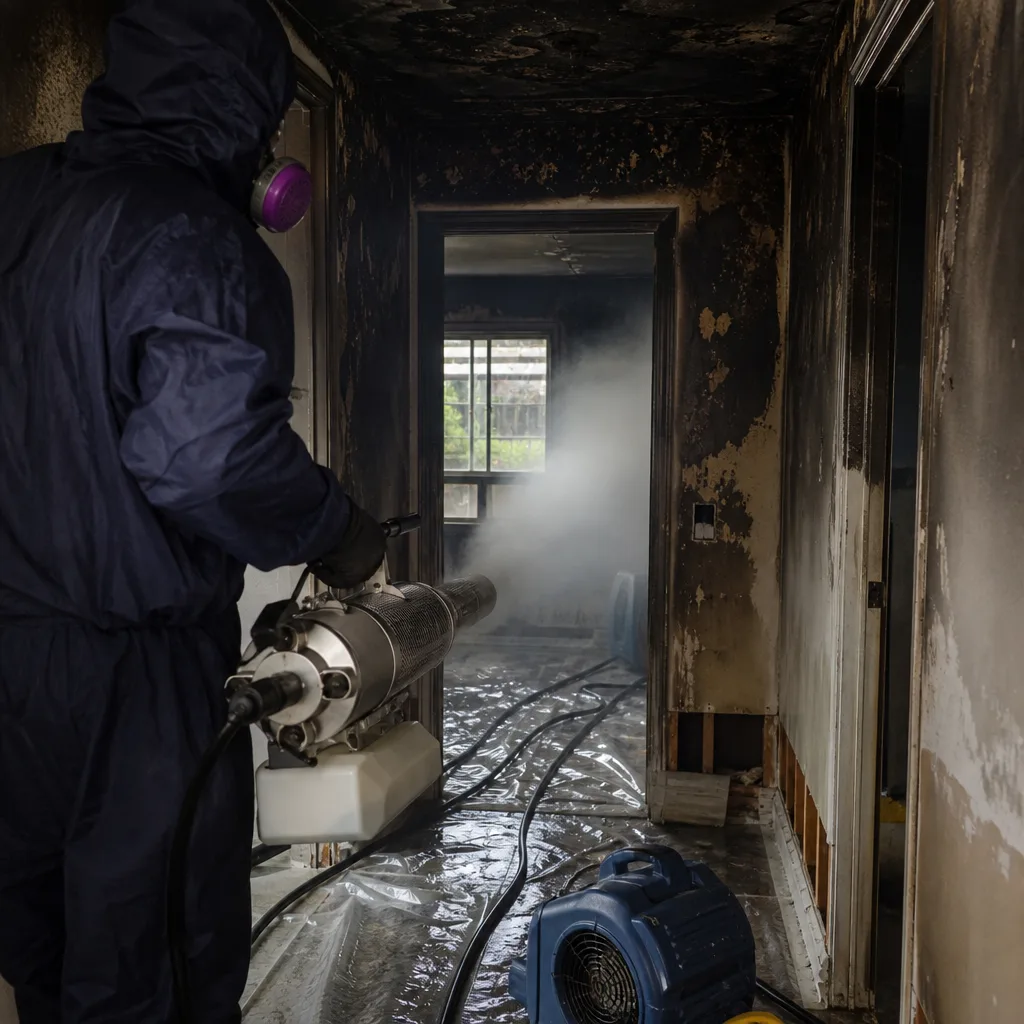
Flood water in Tamalpais-Homestead Valley doesn’t just sit on the floor. It wicks up into redwood siding, settles into crawl spaces, and then the nightly canyon fog keeps relative humidity pinned above 70%. That’s a recipe for mold colonization inside 48 hours, especially in the 1940s-to-1960s cabins that make up much of this housing stock. Wade’s crew starts with extraction, then sets desiccant dehumidifiers and air movers sized for the actual cubic footage of your hillside cottage, not a cookie-cutter number from a chart. He takes moisture readings every single day and hands you the full log when the job is done. Almost nobody in this trade does that.
Emergency Board-Up
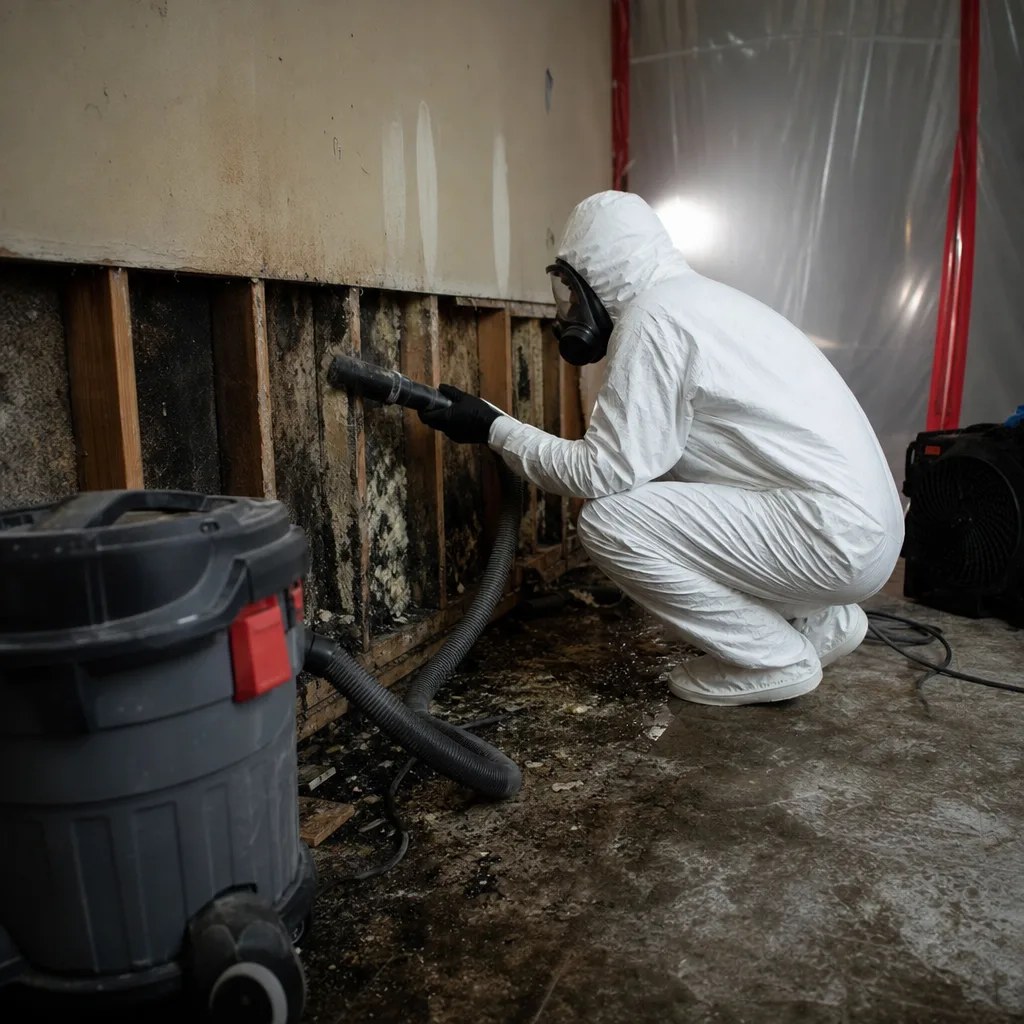
When wind rips a window out or a tree limb punches through a wall, your house is open to the weather and to anything else that wants in. The board-up approach for a Tamalpais-Homestead Valley home has to account for redwood-shingled exteriors and steep slopes, not just flat-wall plywood cuts. Wade’s crew carries the fasteners and lumber that actually work on hillside construction. They’ll secure the opening, document everything for your adjuster, and make sure the board-up holds through the next storm cycle. That’s not a given when a generic crew shows up with a box of drywall screws.
Roof Tarping
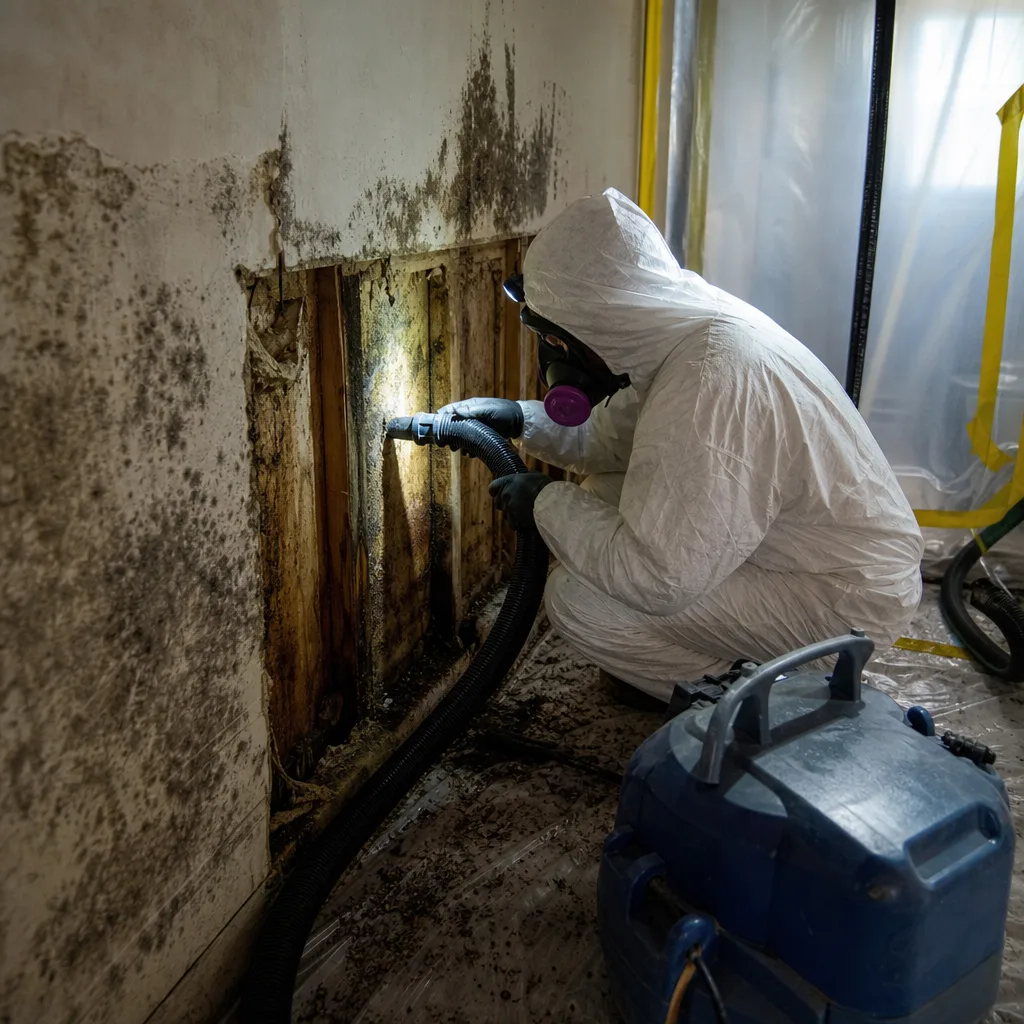
Roof damage on Mount Tamalpais slopes is different from roof damage in flatland Corte Madera. Wind drives rain at angles that find every gap in aging cedar shake and composite roofs. Tarps have to be anchored to hold against repeated gusts coming up the canyon, not just draped and weighted. Wade’s team does it right the first time because they’ve seen what happens when a tarp fails at 3 a.m. and the water’s coming through the ceiling. If structural work is needed after the storm passes, that gets scoped, scheduled, and priced in writing, same as a remodel. No same-day promises on reconstruction. But the tarp goes up now.
What happens when you call
- 1
A real person answersNo phone trees - you reach a local pro.
- 2
You get an upfront price rangeHonest numbers before anyone is dispatched.
- 3
A background-checked tech heads outLicensed & insured, dispatched right away.
- 4
You approve before work beginsNothing starts until you say go.
Trusted Brands and Equipment We Use in Tamalpais-Homestead Valley
We run Dri-Eaz desiccant dehumidifiers and Phoenix axial air movers on storm jobs in Tamalpais-Homestead Valley, because the moisture load in this canyon environment demands equipment that actually removes water from air, not just circulates it. Injectidry systems handle the hard-to-reach cavities in lath-and-plaster walls and behind redwood paneling. The IICRC standards and RIA training back the work, but frankly, what matters more is that the equipment is sized right and monitored daily. Wade documents every reading and hands you the log. That’s rare in this business, and it’s what you should expect up here.
Common Storm & Disaster Restoration Problems We See in Tamalpais-Homestead Valley Homes
- Garage-door springs snapping under coastal salt-air corrosion. You live close enough to the Pacific that fog isn’t weather, it’s a nightly event. Salt particles ride that fog and settle on torsion springs. They pit, they corrode, and then a storm hits and the spring lets go. The door won’t open. If your car is stuck in the garage during an evacuation warning, that’s not an inconvenience. It’s a real problem.
- Flood water wicking into redwood siding and crawling into the crawl space. The mid-century construction in this part of Marin uses a lot of redwood with minimal vapor barriers and post-and-pier foundations. Water moves up through capillary action, and the fog keeps everything damp. Mold colonization in under 48 hours is not a worst-case scenario here, it’s the normal timeline.
- One-lane roads blocking access for heavy equipment. Desiccant trucks, debris haul-outs, and any crane lift for structural work genuinely cannot reach some Tamalpais-Homestead Valley homes without prior coordination with Marin County. A crew that’s never worked up here will spend an hour figuring out how to get a truck down a road that barely fits an SUV. Wade’s crew already knows which roads work and which ones don’t.
- Ember-cast smoke and structure loss during fire season. Tamalpais-Homestead Valley sits within a Cal Fire Very High Fire Hazard Severity Zone. Storm-season winds here don’t just bring rain. They push fire. The same narrow roads that complicate flood response complicate an evacuation, and post-fire smoke restoration on a redwood structure is a different animal than urban smoke. We deal with that reality because we work here.
An Unusual Failure Pattern in This Canyon
The thing that makes Tamalpais-Homestead Valley different from Mill Valley or Corte Madera is the combination of salt fog and steep canyons. Salt air off the Pacific rides the marine layer up over Mount Tamalpais and settles in the higher elevations. It attacks garage-door hardware first. Springs, hinges, rollers, tracks, and opener chains all corrode years faster than the same parts would inland. You’ll hear a spring fail. That’s a loud, sharp snap. But hinges and rollers fail quietly, and the first sign is often a door that shudders or binds, especially after a storm when the tracks are wet and the weight shifts.
On a hillside cabin off Panoramic Highway, our crew arrived after a winter storm had sent water cascading through a failed garage-door seal. The salt air had already pitted the original steel rollers and springs. The flood pushed moisture into the crawl space, right into the post-and-pier foundation. We replaced the corroded hardware with galvanized springs and stainless fasteners, then set Dri-Eaz desiccant dehumidifiers in the foundation to pull the fog-fed dampness from the redwood framing before mold could colonize. That job is exactly what this page is about: how the salt fog and steep canyon conditions of Tamalpais-Homestead Valley turn a garage door into the first point of storm and smoke failure, and what we replace to stop it. We inspect, we replace with coated or stainless hardware, and we keep the whole system working when the weather does its worst.
Pricing for Storm & Disaster Restoration in Tamalpais-Homestead Valley, CA
Storm damage restoration in Tamalpais-Homestead Valley runs on a different cost curve than the flatlands, mostly because of access and moisture load. Here’s what you can expect in this market:
- Emergency board-up: $350-$800 per opening, depending on size and whether we’re working on a steep slope with difficult ladder access.
- Roof tarping: $475-$1,200 for an average hillside home, with higher costs if multiple planes or ridge lines need coverage.
- Flood water extraction and dry-out: $3,800-$7,500 for a typical 1,200-1,800 square foot cottage, including daily moisture readings and desiccant dehumidification.
- Full storm restoration with mold prevention: $8,000-$18,000, depending on how much redwood siding and framing has absorbed moisture.
Wade gives you a written scope agreed before work starts. No price surprises at the door. No trip charge inside Marin County. And if you have a written estimate from another outfit, Wade will give you a free second opinion. Call (855) 915-0646 and you’ll talk to a person, not a call center.
We Also Serve Cities Near Tamalpais-Homestead Valley
Our crews work throughout the Mount Tamalpais watershed and the surrounding communities. If you’re in Tamalpais Valley, Mill Valley, Corte Madera, or Larkspur, the same owner-operated, 90-Day Done Right Promise service applies. See our full coverage at Storm & Disaster Restoration in Tamalpais-Homestead Valley for the anchor page and service details. Dispatch is coordinated from our San Francisco Bay Area office, with crews serving Tamalpais-Homestead Valley locally.
Serving Tamalpais-Homestead Valley, CA - Our Local Coverage Area
We’re based in the Tamalpais-Homestead Valley area and know this community well. Use the map below to see our service coverage - if you’re nearby, we can almost certainly help.
FAQs - Storm & Disaster Restoration in Tamalpais-Homestead Valley
Because you’re higher up and directly exposed to the marine layer funneling through the Golden Gate and up over Mount Tamalpais. The fog carries salt particles, and that salt settles on torsion springs, rollers, and track hardware. It causes pitting and corrosion that weakens metal long before it would fail in lower, more sheltered areas. Mill Valley and Corte Madera get fog too, but the elevation and canyon channeling here intensify the salt exposure. We replace corroded springs with galvanized units and swap steel rollers for stainless. Call (855) 915-0646 for an inspection, and Wade will tell you honestly what’s wearing and what’s fine.
In a 1950s redwood-framed cottage with minimal vapor barriers, mold colonization typically starts within 48 hours of sustained moisture. The nightly canyon fog keeps relative humidity above 70%, which accelerates the timeline compared to drier inland areas. If flood water has reached the crawl space or the post-and-pier foundation, the clock starts the moment the water stops rising. Extraction within the first hours and desiccant drying are what prevent a manageable flood from becoming a mold remediation job. Wade’s crew is ready to move when you call.
Yes, because Wade’s crew has been up and down those roads for years. But we coordinate access before we arrive. The one-lane stretches through the redwood-shaded neighborhoods genuinely won’t pass a full desiccant truck without a plan. We stage equipment where the road allows and haul the rest by hand or with smaller vehicles. Some properties require coordination with Marin County for temporary access. Flatland outfits rarely anticipate this, and that’s why dry-out gets delayed. Ours doesn’t.
Redwood shingles aren’t like stucco or fiber-cement siding. You can’t just run long screws into them and expect a seal. The board-up has to anchor into framing members, and the exterior must be protected from further shingle damage. On a hillside, ladder angle and footing complicate the work. Wade’s crew carries specific fasteners and sealants meant for redwood construction, and they document the entire board-up for your adjuster. That photo documentation is what makes an insurance claim go smoothly. Estimates are free at (855) 915-0646.
Yes. Smoke from wildland fires has a different chemical profile than smoke from a house fire in an urban area. It carries fine particulates, resins, and sometimes fire retardant compounds. It penetrates redwood siding differently, too. On a Tamalpais-Homestead Valley home, smoke restoration often means cleaning what’s salvageable and knowing what needs replacement. Wade deals with your insurance adjuster directly on fire and smoke jobs, because the scope of work is never a simple square-footage calculation. Call (855) 915-0646 for a straight answer about what can be cleaned and what can’t.
Get Storm Damage Under Control in Tamalpais-Homestead Valley Today
When the garage door won’t open, water is coming through the seal, and the fog is working against you, the last thing you want is a phone tree. Call Wade at (855) 915-0646. He answers his own phone. He’ll tell you what he can do, when he can be there, and what it will cost. Same day emergency response for storm damage in Tamalpais-Homestead Valley. The 90-Day Done Right Promise in writing. No trip charge inside Marin County. Seniors and veterans always get 10% off. This is not a national chain. This is a neighbor who happens to specialize in restoration. And to wade is what you do through a flooded basement at two in the morning. It happens to be his name.
Written by Wade Ferris, Owner at Wade’s Restoration of California, providing storm and disaster restoration throughout the San Francisco Bay Area since 2007.