
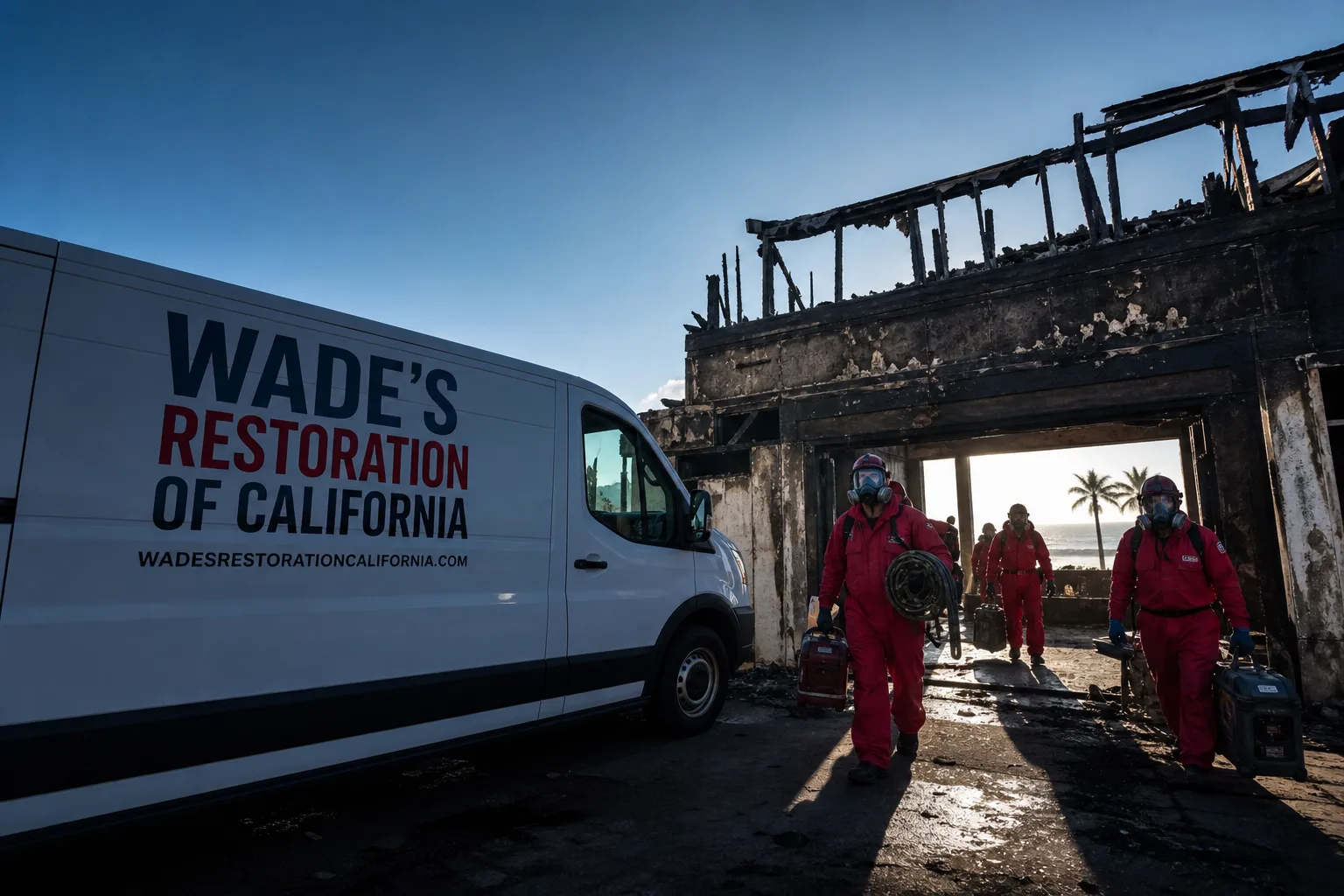
Fast, Reliable Storm & Disaster Restoration Across Seal Beach
Storm damage in Seal Beach rarely announces itself politely. A winter storm pushes the San Gabriel River over its banks, or a 60-year-old supply line lets go inside a Leisure World co-op wall, and suddenly you’re standing in water that’s already soaking into wood framing. Storm and disaster restoration in Seal Beach typically starts with emergency extraction, board-up, or tarping within hours, and full structural drying usually takes three to seven days depending on how far moisture has traveled. Call Wade’s Restoration at (855) 915-0646 and you’ll talk to a live person who can have a crew moving toward your street right away.
We know the difference between a 1935 Ocean Avenue bungalow with redwood siding and a third-floor Leisure World unit with a failed wax ring. That local knowledge changes how we dry, what we document, and how fast we can stop secondary damage. When water is moving through your walls, every hour matters. We treat Seal Beach like what it is: our backyard, not a service territory on a map.
Why Wade’s Restoration of California Is Seal Beach’s Preferred Storm & Disaster Restoration Company
Wade Ferris founded this company in 2007 and still answers his own phone. That’s not a marketing line. When a Seal Beach homeowner calls at 2 a.m. because the marine layer turned a slow leak into a mold bloom inside a wall cavity, Wade picks up. He’s the one who decides whether you need extraction now or can wait until morning. For over 29 combined years, the people around here have learned that a local owner who publishes his name and license and shows up himself is a different kind of restoration company.
Seal Beach customers have told us the same thing for years: they want to look the person in the eye before handing over a house key. Wade’s crew is background-checked, uniformed, and trained on the equipment we actually own: Dri-Eaz LGR dehumidifiers, Phoenix air movers, Injectidry panels. We’re IICRC-certified, RIA-affiliated, and IFA-recognized. That matters when an adjuster asks why a wall cavity needs three more days of drying on a 1920s cottage with no vapor barrier. Wade hands you the daily moisture log and explains it in plain English, then deals with the adjuster directly so you’re not stuck relaying information between two sides.
Response time to Seal Beach is measured in minutes, not days. Our dispatch coordination runs through our Los Angeles office, but the crews serving Seal Beach know the streets, the parking realities of Main Street, and the gate protocols at Leisure World. That’s the difference between showing up and knowing what to do when you get there.
Every water, fire, and mold restoration job in Seal Beach carries our 90-Day Done Right Promise in writing. If it’s not done right, Wade makes it right. One call brings him back.
Our Storm & Disaster Restoration Services in Seal Beach
Storm damage here isn’t one problem. It’s a sequence. Wind rips shingles off. Rain gets in. Water saturates insulation and drywall. Mold starts forming in a marine climate that never really dries out. Here’s what we handle most often for Seal Beach homeowners and co-op residents.
Storm Damage Cleanup
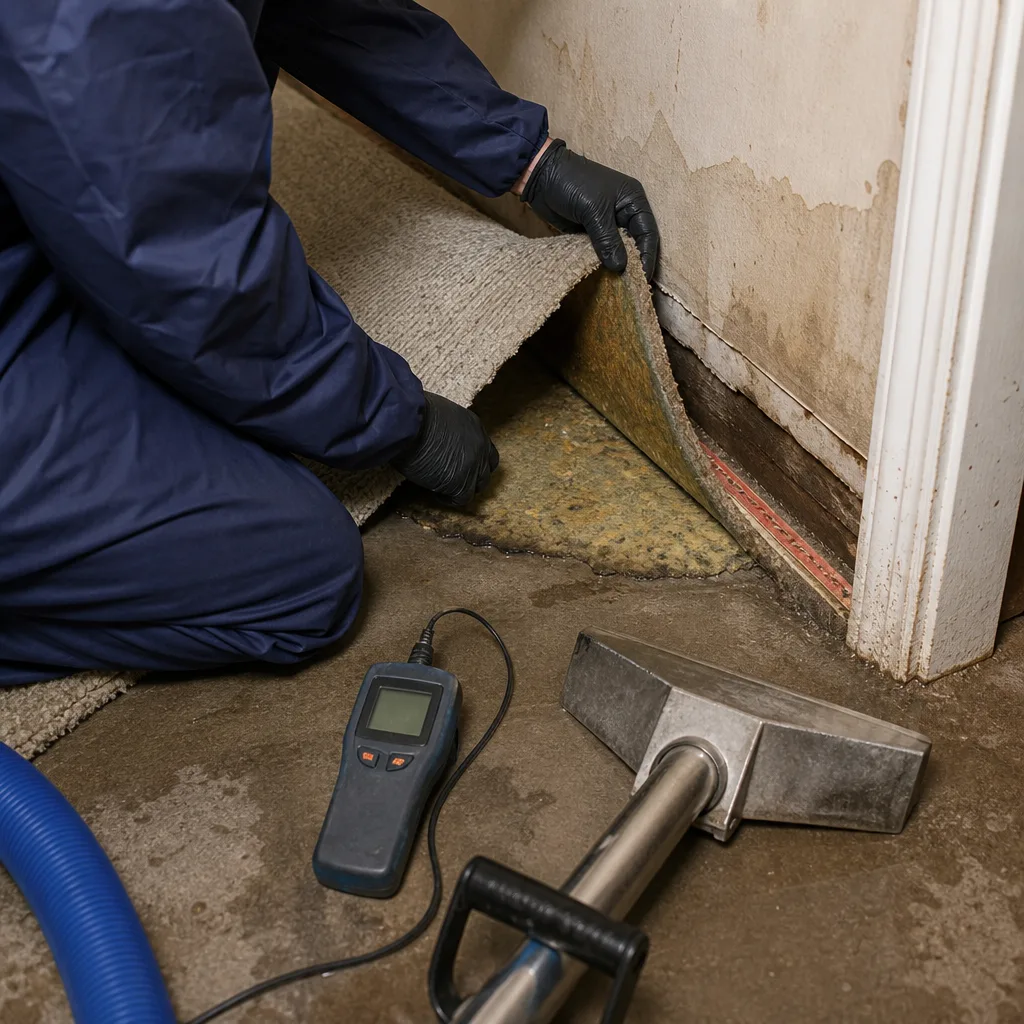
After a storm rolls through Seal Beach, the damage isn’t always dramatic. Shingles in the driveway, a fence panel down, a wet patch on the ceiling that you can’t quite trace. We start with a full moisture assessment, not a guess. In Old Town’s pre-WWII wood-frame homes, water travels horizontally through wall cavities in ways that newer construction doesn’t. That means we check adjacent walls, not just the one that looks wet. You get a written scope before any work starts, so you know exactly what we’re doing and why.
Flood Damage Restoration
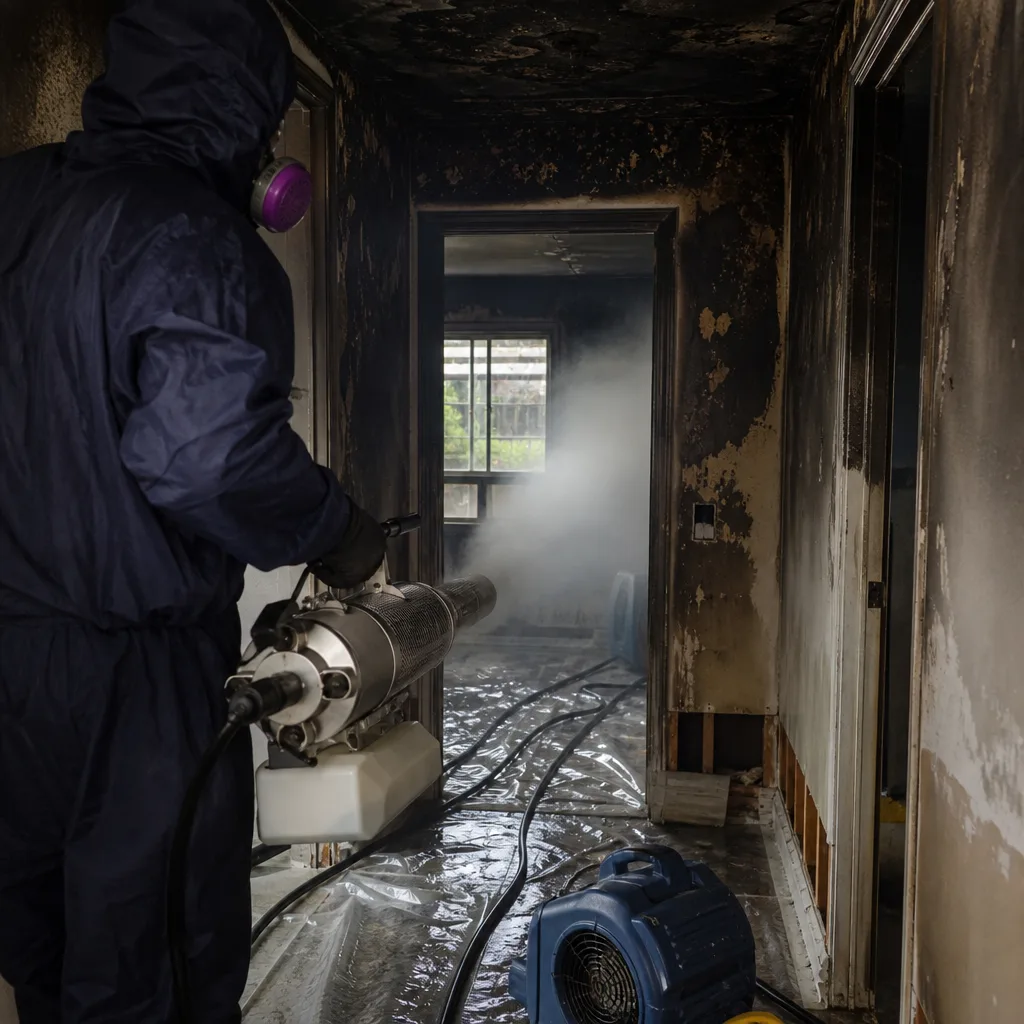
Flooding near the San Gabriel River mouth hits low-lying Old Town blocks hard. Crawlspaces turn into standing ponds, and water wicks up through original redwood siding and floor joists. Extraction gets water out fast, but drying is the part that separates a good result from a mold problem six months from now. We run Dri-Eaz dehumidifiers and air movers continuously, take moisture readings every single day, and hand you the full log when we finish. No one else in this trade does that as a matter of routine.
Emergency Board-Up
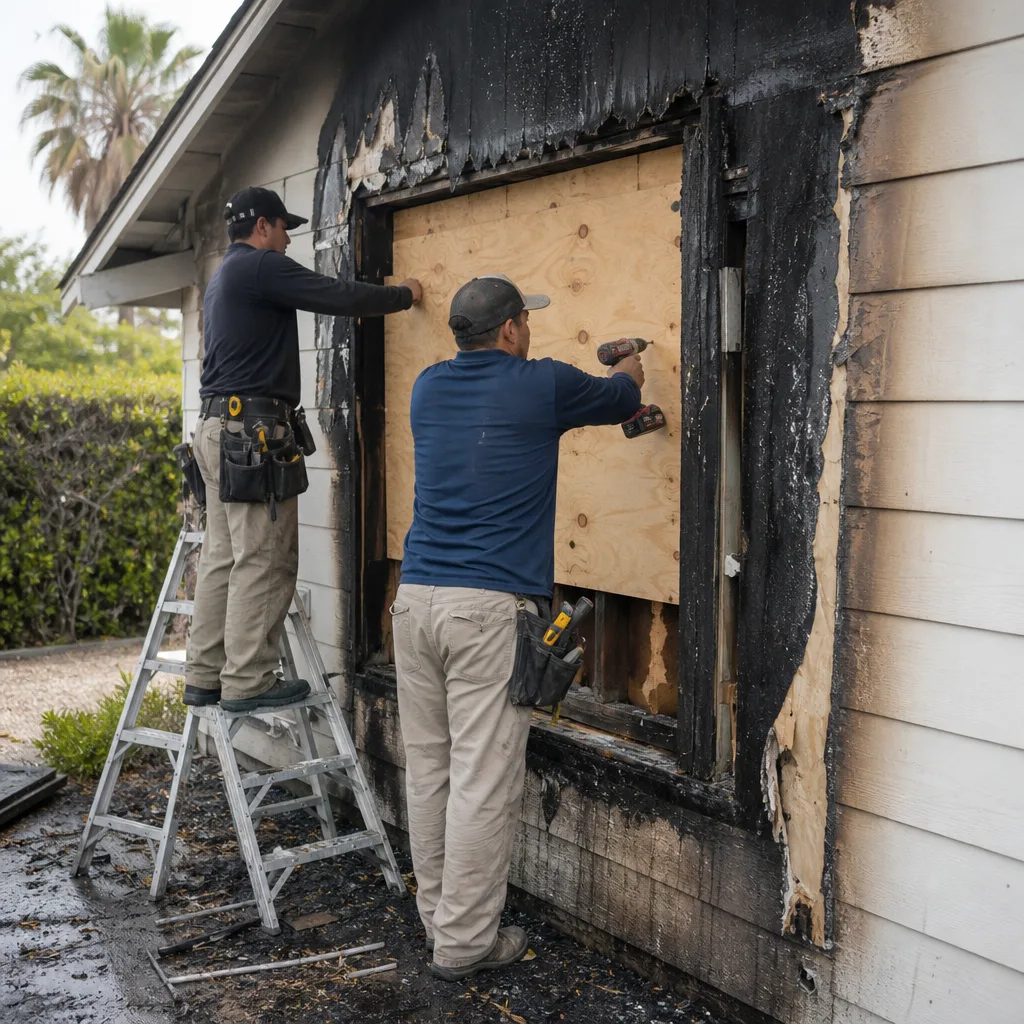
When a storm blows out a window or a tree limb opens a hole in your roof, your house is exposed to rain, salt air, and whoever happens to wander by. We board up and tarp fast. Same-day response for Seal Beach addresses, no trip charge inside the county. You shouldn’t have to pay extra just because a storm hit your street and not the next town over.
Roof Tarping
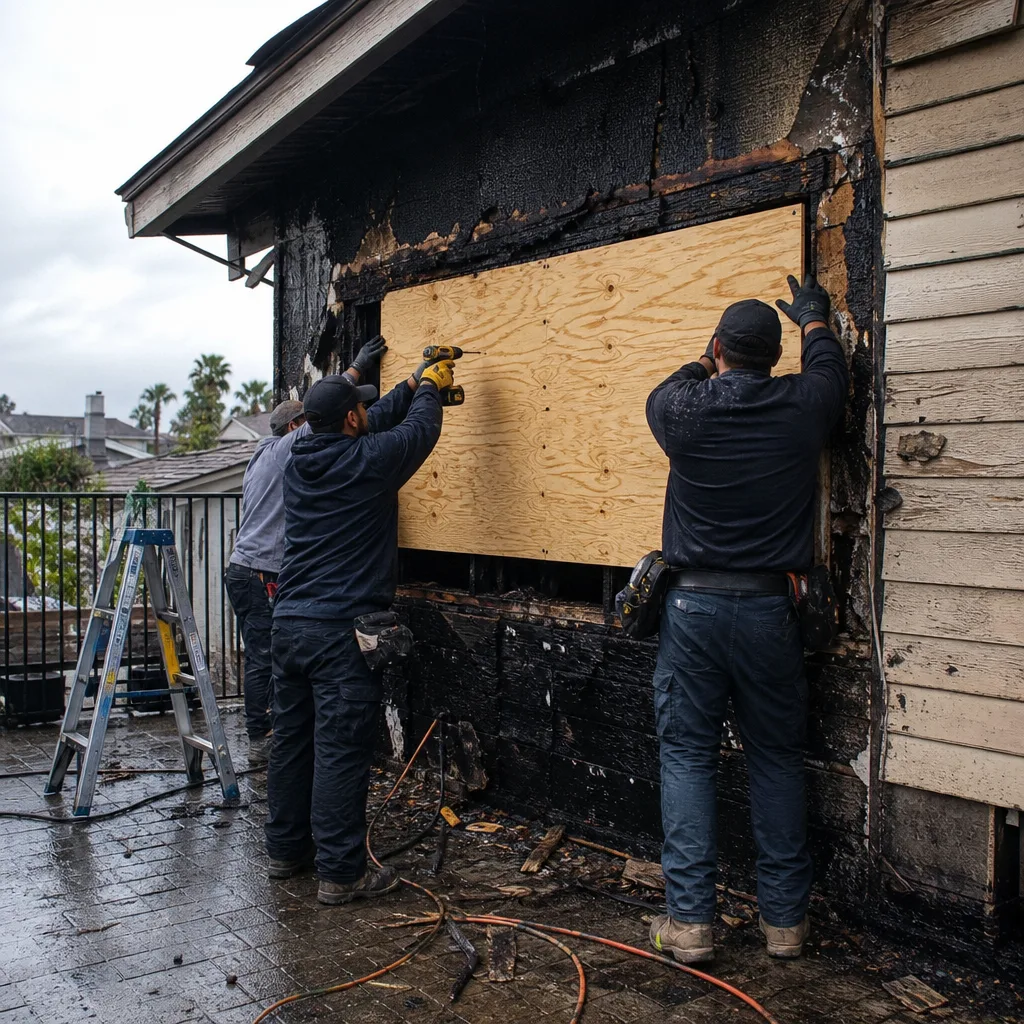
A tarp buys you time to deal with a roof properly. In Seal Beach, roofs on Old Town cottages are often original or long past a reasonable service life. The undersized rafters and minimal sheathing common in 1920s construction mean a small leak spreads faster than you’d expect. We tarp tight, secure against ocean wind, and document everything with photos for your insurer. Then we help you figure out whether the roof needs a patch or a conversation about a retrofit.
What happens when you call
- 1
A real person answersNo phone trees - you reach a local pro.
- 2
You get an upfront price rangeHonest numbers before anyone is dispatched.
- 3
A background-checked tech heads outLicensed & insured, dispatched right away.
- 4
You approve before work beginsNothing starts until you say go.
Trusted Brands We Service in Seal Beach
We don’t push one equipment line or one material brand. We stock and service what works for Seal Beach’s housing stock. For drying equipment, we run Dri-Eaz and Phoenix gear because those units hold up under continuous operation in humid coastal air. For panel drying on plaster walls common in Old Town, Injectidry panels pull moisture from wall cavities without tearing out your original lath and plaster. We keep common parts and consumables ready for local jobs, so a replacement filter or a dehumidifier swap doesn’t wait on a warehouse order. Faster turnaround for Seal Beach customers is the point of being local.
Common Storm & Disaster Restoration Problems We See in Seal Beach Homes
- Undetected mold in Old Town wall cavities. The 1920s to 1940s wood-frame cottages near the ocean were built without vapor barriers and with original siding that wicks moisture. Chronic salt-air humidity condenses inside walls for years before any visible leak occurs. By the time you see staining on the plaster, the cavity behind it is often fully colonized. Restoration crews from drier inland cities routinely misjudge how long these walls need to dry.
- Water cascading through Leisure World co-op stacks. A third-floor toilet supply line or failed wax ring can saturate two or three units below over a weekend. The water doesn’t stop at the ceiling. It travels down through wall framing, behind cabinets, into the unit below the floor. Restoration can’t start until the Mutual’s management authorizes it, which creates a delay inland crews aren’t prepared for.
- Crawlspace flooding near the San Gabriel River mouth. Old Town’s low-lying blocks sit at essentially sea level. When heavy rain in the San Gabriel Mountains pushes the river over its banks, crawlspaces and ground-level units flood fast. Homeowners wait too long because they assume oceanfront drainage can handle any rain. It can’t. Water sits, wood rot starts, mold follows.
- Roof failures during wind-driven rain. The marine layer isn’t just fog. It’s moisture loading on aging rooflines that were never designed for decades of salt air. When a winter storm adds wind and rain, original shake or early asphalt shingles fail at the worst possible moment. Water enters at the eaves and travels inward, often showing up days later on a ceiling far from the actual leak.
Pricing for Storm & Disaster Restoration in Seal Beach, CA
Here are honest ranges for the work Seal Beach homeowners and co-op residents call us for most often. Emergency board-up in Seal Beach typically runs $400-$900 depending on how many openings and what material is needed. Roof tarping runs $350-$1,100, with old-roof conditions on Old Town cottages sometimes pushing that up. Structural drying after a flood or leak usually falls between $2,500 and $7,500 for a single-family home, driven by how far water traveled and how long it sat. The biggest cost variable in Seal Beach is the age of the framing: 1920s lumber with no vapor barrier dries slower than modern construction, and mold remediation in a chronic-humidity climate costs more per square foot than it does inland, typically $1,500-$6,000 depending on containment needs. We give a written scope before any work starts, and estimates are free. Call (855) 915-0646 for a straight number on your situation.
We Also Serve Cities Near Seal Beach
Wade’s Restoration handles storm and disaster work throughout the area around Seal Beach, including Rossmoor, Los Alamitos, Westminster, and Cypress. If you’re in one of those neighborhoods, the same crew and the same 90-Day Done Right Promise apply. Learn more about our full Storm & Disaster Restoration services or see specific coverage for Storm & Disaster Restoration in Seal Beach.
Serving Seal Beach, CA - Our Local Coverage Area
We’re based in the Seal Beach area and know this community well. Use the map below to see our service coverage - if you’re nearby, we can almost certainly help.
FAQs - Storm & Disaster Restoration in Seal Beach
Mold needs moisture and time. The marine layer in Seal Beach keeps interior relative humidity elevated year-round, which means mold spores can germinate and colonize within 24 to 48 hours of a water event, compared to 48 to 72 hours in drier inland cities like Los Alamitos. In Old Town’s wood-frame cottages with no vapor barrier, that timeline compresses further because moisture never fully leaves the wall cavity. If you’ve had flooding in Seal Beach, call us the same day. Waiting a weekend gives mold the head start it’s waiting for. Call (855) 915-0646.
The Mutual’s management authorizes emergency water extraction, not the individual unit resident. That’s a structural difference between Seal Beach and nearly every other restoration market in Orange County. When a third-floor line fails and saturates lower units, the restoration company must coordinate scope, access, and insurance through the co-op board. We handle that coordination directly, which means you’re not stuck between your insurance company and the Mutual’s management. We document everything with photos and daily moisture readings, and we deal with the adjuster. Call (855) 915-0646 if you’re dealing with a stack-unit leak right now.
Old Town Seal Beach sits essentially at sea level on the north side of the San Gabriel River mouth. When heavy rainfall in the San Gabriel Mountains pushes the river up, low-lying blocks along Ocean Avenue and adjacent streets flood before gravity drainage can clear the water. Homes in Surfside and Sunset Beach face ocean-side surge risk, but the river-mouth backwater flooding that hits Old Town comes from inland runoff, not surf. Those crawlspaces fill with fresh water that wicks into wood framing and original redwood siding. We know which streets take water first and how fast it needs to come out. Call (855) 915-0646 at the first sign of standing water.
The original construction has no vapor barrier, and 100 years of salt-air humidity has been condensing inside those wall cavities the whole time. Wood-frame construction from the 1920s and 1930s was built to breathe, which works in a dry climate and fails chronically at the beach. What you’re seeing is condensation trapped between the exterior siding and the interior plaster. That’s not a sign of a plumbing leak. It’s the house’s original design meeting Seal Beach’s marine layer. We dry those cavities with Injectidry panels and document the lack of a vapor barrier for your insurer, because the fix is structural drying, not just drying the surface. Call (855) 915-0646 for a moisture assessment.
Ground-level Old Town bungalows flood from the ground up: crawlspace water, wicking siding, saturated floor joists. The restoration is about dehumidification across a wide horizontal footprint and preventing structural rot in the cripple walls. A Leisure World second-floor unit floods from a plumbing failure inside or above the unit, and the water travels down through wall cavities and ceiling spaces into floors below. The restoration is vertical, not horizontal, and it requires access to adjacent units and coordination with the Mutual’s management. Two different houses, two different drying strategies, same urgency. We do both. Call (855) 915-0646 for a free estimate on either one.
Written by Wade Ferris, owner of Wade’s Restoration of California, serving Seal Beach since 2007.