
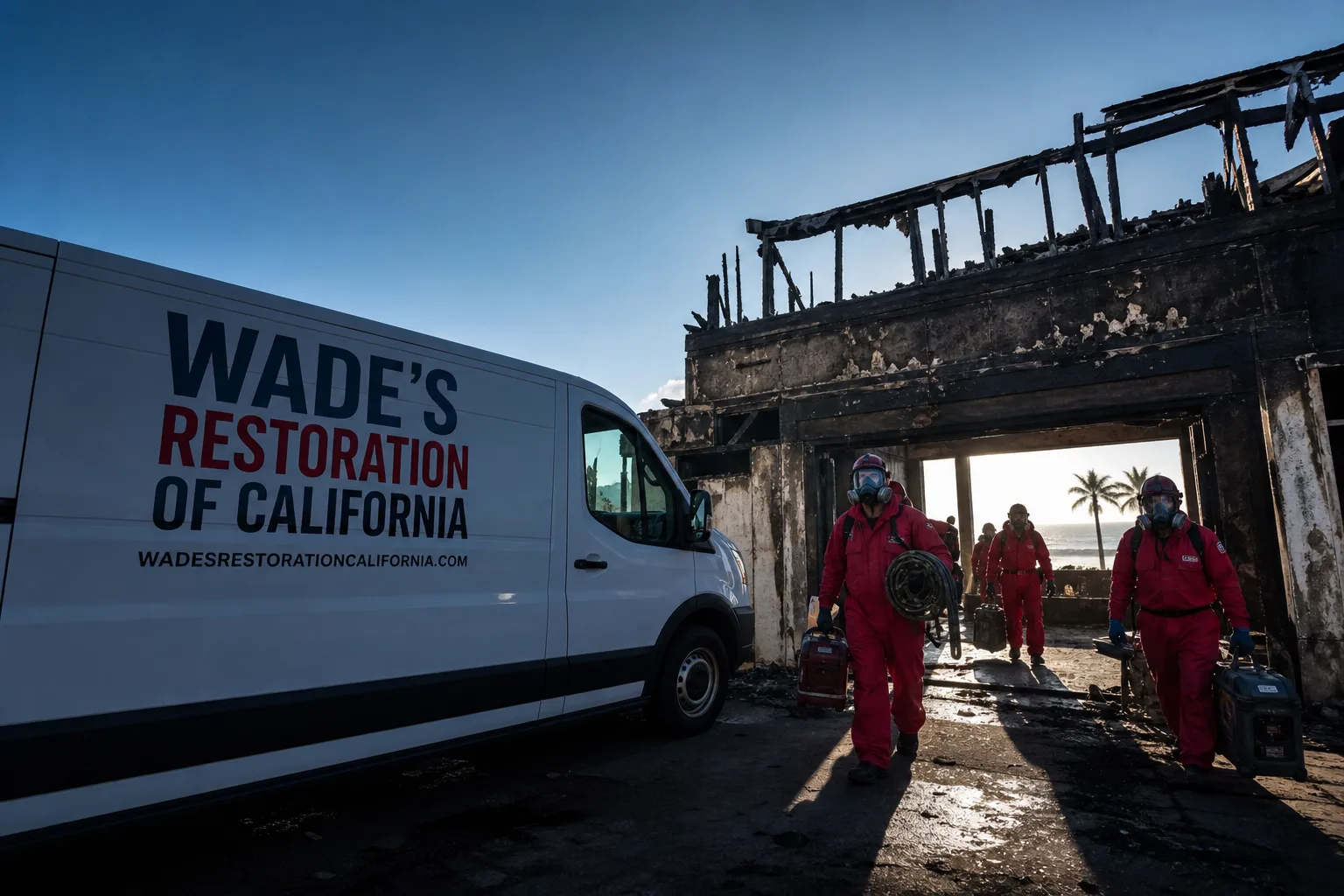
Fast, Reliable Storm & Disaster Restoration Across San Jose
When a storm rips through San Jose, the clock starts before the rain stops. Water is already working its way into pier-and-beam crawlspaces, soft-story apartment subfloors, and 1950s stucco homes that were never built to handle a modern atmospheric river. We know because we’ve pulled wet insulation out of Naglee Park crawlspaces and dried out ground-floor units in Alum Rock that looked fine from the street. Wade Ferris answers his own phone, day or night, and he can have a crew heading your way from the San Francisco Bay Area office into San Jose within the hour. Call (855) 915-0646 the moment you suspect water is where it shouldn’t be, or learn more about our Water Damage Restoration in San Jose.
Why Wade’s Restoration of California Is San Jose’s Preferred Storm & Disaster Restoration Company
San Jose homeowners don’t have patience for a national chain that quotes one number on the phone and another when the truck pulls up. We’ve been at this since 2007, and Wade built the company on a simple rule: his name is on the truck, his address is published, and he’s going to run into you again at the grocery store. That’s the oldest accountability mechanism there is. Our Storm & Disaster Restoration team shows up in uniforms, background-checked, and carrying professional-grade equipment from Dri-Eaz, Phoenix, and XPOWER. We take moisture readings every single day and hand you the full log when the job’s done. Almost nobody in this trade does that.
Wade deals with your insurance adjuster directly. You’re never stuck relaying information between two sides. And every storm, water, and mold restoration job carries the 90-Day Done Right Promise in writing: if it’s not done right, he makes it right. One call brings Wade back, not a call center.
Our Storm & Disaster Restoration Services in San Jose
Storm damage in San Jose is not one problem. It’s water, wind, structural shifting, and the hidden moisture that follows. Here’s what we actually do when you call.
Flood Damage Restoration
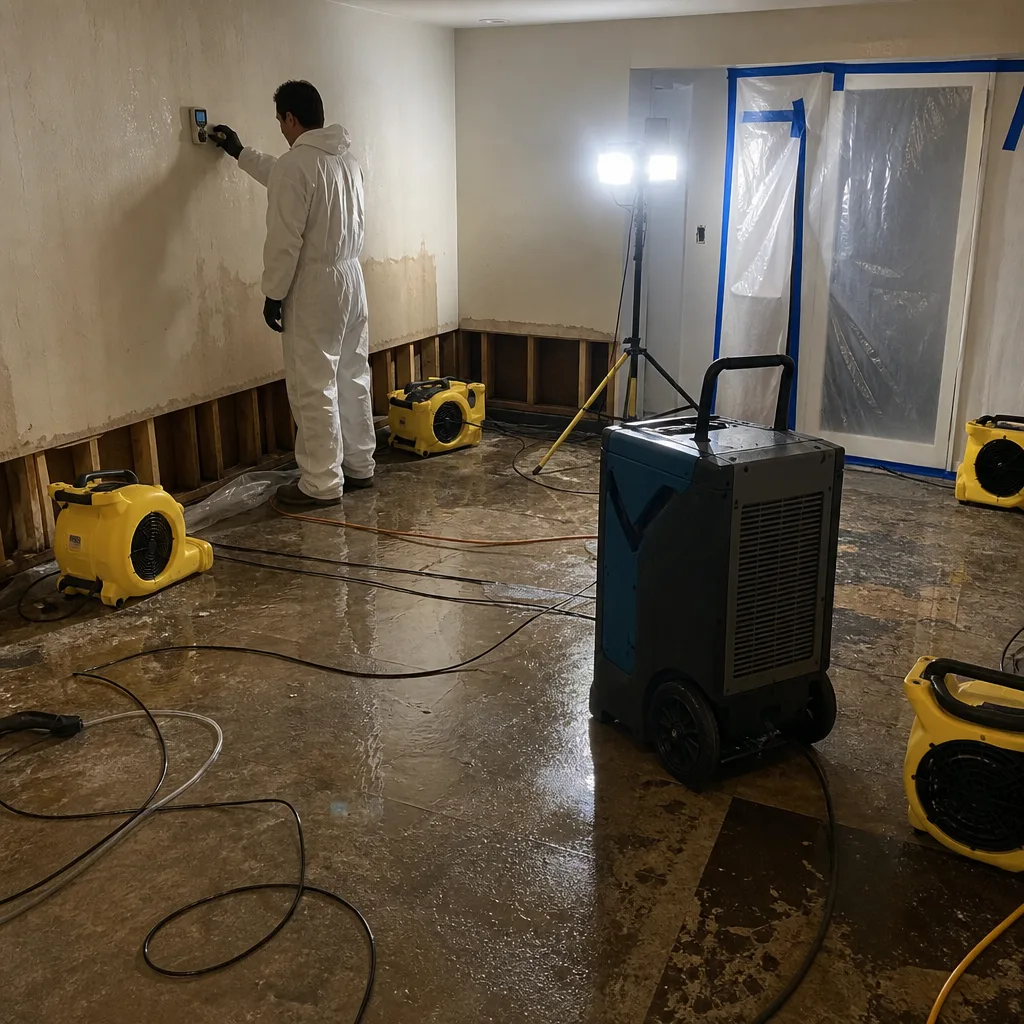
San Jose’s flat valley floor gives stormwater nowhere to sheet-flow, so it pools against foundations and seeps into ground-floor slabs and crawlspaces. A typical flood damage restoration in San Jose runs $3,500-$12,000 depending on square footage and how long water sat before extraction started. We pull standing water, document everything for your adjuster, set up drying equipment sized to the space, and monitor until the structure hits dry-standard. That means daily readings, not a once-at-the-end number.
Emergency Board-Up
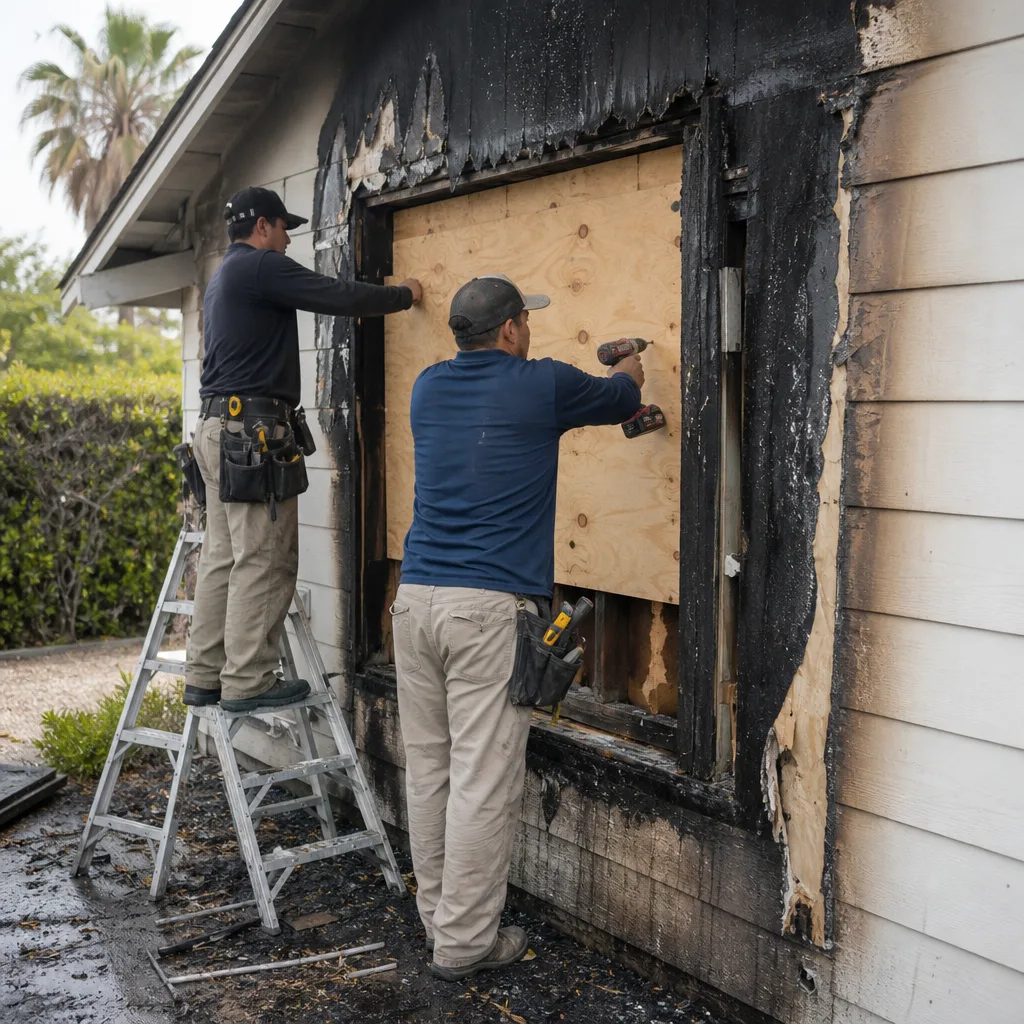
After wind damage or a break-in attempt during a storm, an open entry is an invitation. San Jose’s older downtown apartments and townhomes often have tight clearances at alley-load doors, so we bring compact board-up equipment that actually fits through narrow side gates. Emergency board-up in San Jose typically runs $350-$800 per opening, and we’re usually on site within 60 to 90 minutes for priority calls. If you’re dealing with structural instability or exposed gas lines, do not attempt this yourself. Let a trained crew secure it safely.
Storm Damage Cleanup
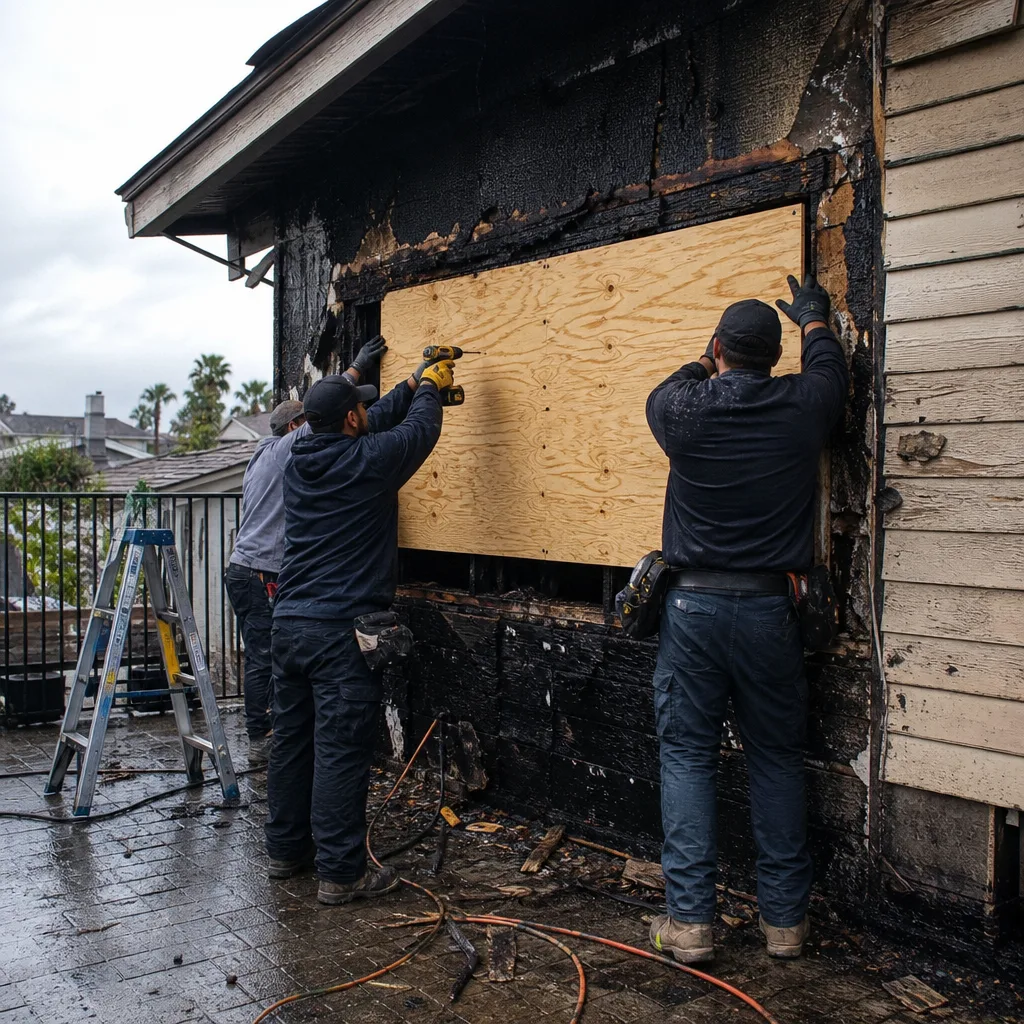
Debris removal, wet drywall tear-out, carpet extraction, and sanitizing the affected area. We see a lot of homes in 95117 and 95118 where surface water got extracted but nobody addressed the subfloor. That’s the mistake that leads to mold months later. Storm cleanup in the San Jose market runs $2,200-$7,500 for a typical single-family incident, and it includes the moisture log you’ll want for insurance.
Roof Tarping
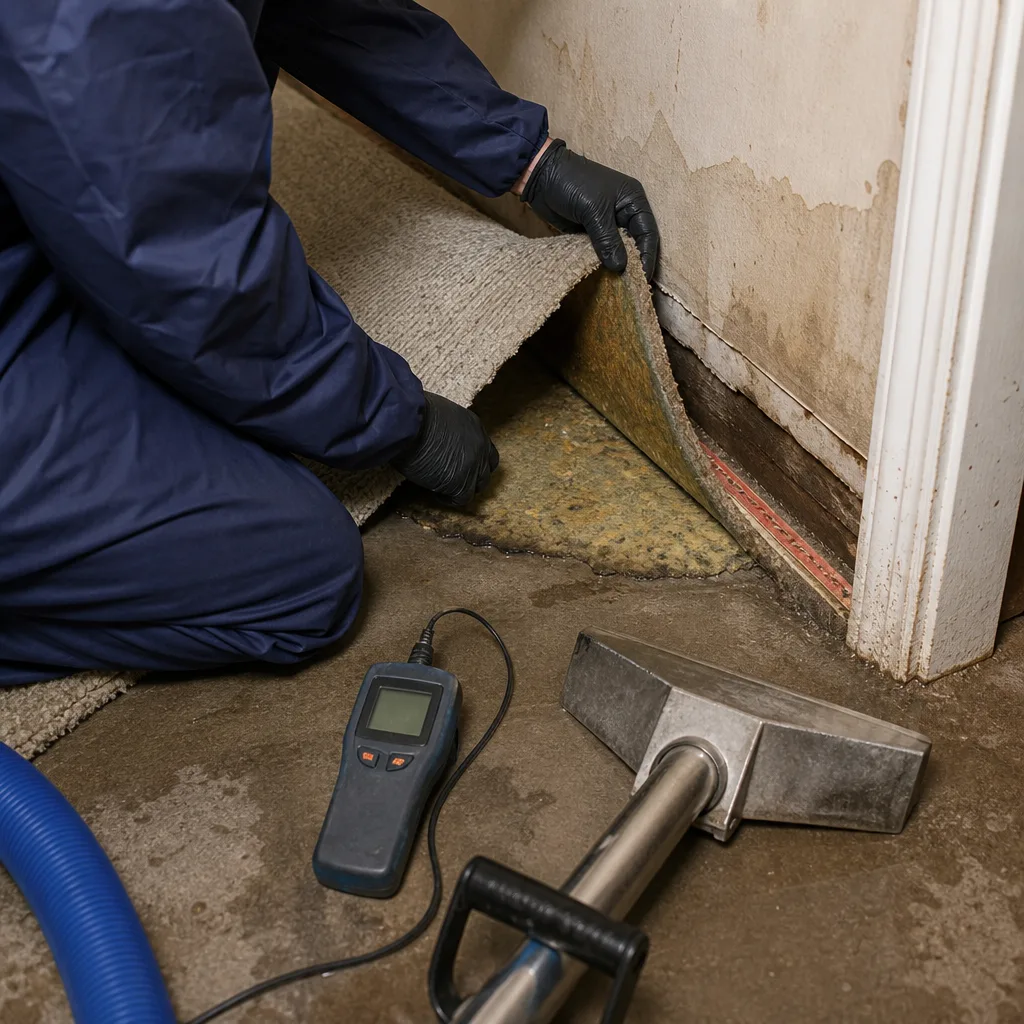
A damaged roof during a November-to-March atmospheric river means water entering the structure every hour you wait. Roof tarping in San Jose usually runs $450-$1,200 depending on roofline accessibility and the number of penetrations. We secure the tarp, photograph the damage for your file, and coordinate directly with your adjuster if you’re filing a claim.
What happens when you call
- 1
A real person answersNo phone trees - you reach a local pro.
- 2
You get an upfront price rangeHonest numbers before anyone is dispatched.
- 3
A background-checked tech heads outLicensed & insured, dispatched right away.
- 4
You approve before work beginsNothing starts until you say go.
Why San Jose Homes Fail Differently After Storms
San Jose sits squarely between three active fault systems. The San Andreas runs west of the city, the Hayward lies northeast, and the Calaveras cuts directly through the Alum Rock foothills. That’s earthquake country, yes. But here’s what most storm damage pages miss: the same geology that makes San Jose shake also makes it flood. The valley floor is flat, urban, and laced with creek corridors that overwhelm fast. The 2017 Coyote Creek flood displaced roughly 14,000 residents in central San Jose neighborhoods. We got the secondary wave of calls months later, because many Rock Springs and Naglee Park homes received only surface water extraction before owners moved back in. The crawlspace subfloor assemblies retained moisture for months. The mold that followed was Category 3.
We keep a field vignette from a recent January atmospheric river in our heads every time we quote a job near Naglee Park. Our crew stabilized a 1960s soft-story apartment where the flat valley-floor drainage couldn’t move water fast enough. An unstrapped water heater had leaked and saturated the pier-and-beam subfloor. We ran a Phoenix 200 Max LGR dehumidifier and multiple XPOWER air movers for days, while boarding up a ground-floor entry that had shifted. After extraction and structural drying, we handled the Reconstruction & Cleanup - San Jose phase, including injecting an antimicrobial barrier into the crawlspace. Why? Because we knew exactly what happened after Coyote Creek in 2017. We didn’t want to be back in six months tearing out mold behind intact flooring. That’s the difference between surface work and San Jose-specific restoration.
Common Storm & Disaster Restoration Problems We See in San Jose Homes
- Hidden crawlspace moisture in pier-and-beam homes. Pre-WWII Craftsman and Victorian-era homes throughout 95110-95113 sit on pier-and-beam foundations with no drainage plane. Water from a storm settles under the subfloor and stays there because no one sees it. By the time the homeowner notices a musty smell, we’re often dealing with months-old contamination.
- Unstrapped water heaters in soft-story apartments. Buildings from the 1960s and 1970s predate modern seismic codes. A small storm shifts ground enough to tip an unstrapped water heater, and what starts as a minor leak becomes saturated floor assemblies and structural damage. We routinely find these in Alum Rock and East Foothills complexes.
- Tight alley-load entries that slow down drying. Downtown San Jose’s townhome stock often has security gates and narrow passageways that full-size equipment can’t clear. If a crew doesn’t know the neighborhood, drying gets delayed. We plan equipment staging around San Jose’s access constraints before we arrive.
- Surface-only extraction after flood events. The most expensive mistake we see, repeating in 95117 and 95119. Water gets pulled from floors, baseboards look okay, and everyone moves on. But the subfloor cavities and wall cavities hold water for weeks. By the time mold surfaces, the scope is four times what it would have been with proper structural drying.
Pricing for Storm & Disaster Restoration in San Jose, CA
Here are real numbers for the San Jose market, based on what we’ve quoted and billed over the years.
| Service | Typical Range in San Jose |
|---|---|
| Flood Damage Restoration | $3,500 - $12,000 |
| Emergency Board-Up (per opening) | $350 - $800 |
| Storm Damage Cleanup | $2,200 - $7,500 |
| Roof Tarping | $450 - $1,200 |
| Debris Removal | $400 - $1,800 |
| Wind Damage Repair | $1,500 - $9,000 depending on structural scope |
What moves the number? Square footage, how long water sat, whether the subfloor is pier-and-beam or slab, and how many rooms got wet. We give you a written scope before any work starts. You agree to the number, in writing, before we open the first wall. Estimate is free. Call (855) 915-0646 and Wade will talk it through with you himself.
How San Jose’s Flat Valley Floor Changes Storm Damage Restoration
Here’s the thing about storm damage in San Jose that you won’t hear from a contractor serving Santa Clara or Fremont. In Santa Clara, water moves. In Fremont, you’ve got slope. San Jose’s downtown-adjacent ZIP codes are dead flat. Stormwater has nowhere to go except into the ground, and the ground in a pier-and-beam neighborhood is essentially a reservoir waiting to be filled. When the Guadalupe River or Coyote Creek overtops, or when an atmospheric river dumps three inches in six hours, the water doesn’t rush away. It sits. It saturates. And because San Jose’s older housing stock often lacks modern vapor barriers, that saturation works its way into structural cavities where it stays for months. That’s why a flood in San Jose requires a different drying protocol than a flood a few miles away with natural drainage.
We Also Serve Cities Near San Jose
Beyond San Jose itself, our Storm & Disaster Restoration crews routinely work in the hills of Communications Hill, the flatlands of Campbell, the older housing stock of Alum Rock, and the East Foothills neighborhoods where steep driveways complicate equipment staging. If you’re anywhere in the San Jose metro, we cover it.
Serving San Jose, CA - Our Local Coverage Area
We’re based in the San Jose area and know this community well. Use the map below to see our service coverage - if you’re nearby, we can almost certainly help.
FAQs - Storm & Disaster Restoration in San Jose
San Jose’s flat, urbanized valley floor gives stormwater nowhere to sheet-flow, so it pools against foundations and soaks into the ground around slab-on-grade and pier-and-beam homes. In Santa Clara and Fremont, grading and slope move water away faster. That means our drying plans for San Jose homes have to account for subsurface saturation and crawlspace humidity that doesn’t show up on a surface moisture reading. A home that reads dry on the floor can still be wet underneath. We check both, because in San Jose, the hidden layer is where the real damage lives. If water got inside, call (855) 915-0646 and we’ll do a full structural moisture assessment.
Check the crawlspace, not just the floors. After Coyote Creek flooded in February 2017, the pattern we saw repeated in Rock Springs and Naglee Park was surface extraction followed by reoccupancy followed by mold discovery months later. The subfloor assemblies and crawlspace cavities had absorbed moisture that never dried. Before you move back in, get a subfloor moisture reading, check for warped floorboards, and open crawlspace access points to air them out. If you smell even a hint of mustiness, the water already did more damage than you think. We’ll come out and check it properly. Call (855) 915-0646.
Those homes were built on pier-and-beam foundations without modern drainage planes. After a storm, wind-driven rain and pooled water work their way under the house and into the subfloor assembly. The structure holds moisture because there’s no vapor barrier and no path for it to escape. We’ve torn open floors in downtown Craftsman homes where the top layer looked completely fine and the subfloor beneath was saturated. If your home is pre-1945 and you saw any water pool near the foundation during a storm, have the crawlspace checked. It’s the part of the house you can’t see. Call (855) 915-0646 and Wade will do the inspection himself.
Fast access is the problem. Many San Jose townhomes in the downtown ZIP codes have security gates, narrow alley-load entries, and doors too tight for standard-width equipment. Full-size dehumidifiers and air movers from a national chain often can’t even fit through the access point. We keep compact drying equipment and board-up materials sized for San Jose’s tight passageways, and we stage everything before we arrive. That means we start drying faster, and fast drying matters because mold colonization starts within 48 to 72 hours. If you’re in a townhome and storm water got in, the access challenge is real. We solve it. Call (855) 915-0646.
A water heater that was never strapped to the wall is a storm damage event waiting to happen. Pre-1990s soft-story apartment buildings in San Jose weren’t built to current seismic or moisture-barrier codes. A modest ground shift during a storm, or even the vibration of heavy rain against a building, can tip an unstrapped unit. The tank ruptures or the supply line breaks, and suddenly you have a Category 2 or 3 water event inside a wall cavity. We find these on a regular basis in the older apartment stock around Alum Rock and East Foothills. If your building is pre-1990s and the water heater isn’t double-strapped, it’s worth checking before the next storm. If water has already leaked, don’t wait. Call (855) 915-0646 and we’ll get extraction running.
Call Wade When the Storm’s Already Done Its Worst
Storm damage in San Jose doesn’t wait, and neither do we. Wade Ferris answers his own phone, 24 hours a day, seven days a week. You’ll get a live person, not a voicemail tree. We’ll give you a straight answer about what we’re seeing, what it costs, and what happens next. Same-day service for emergency extraction and board-up, free estimates for every storm and flood job, and a written scope before any work begins. If you’re a senior or veteran, the 10% discount is permanent. If you’ve got a written estimate from someone else, bring it in and we’ll give you a second opinion for free. Call (855) 915-0646 now, before the water spreads further.
Written by Wade Ferris, Owner at Wade’s Restoration of California, serving San Jose since 2007.