
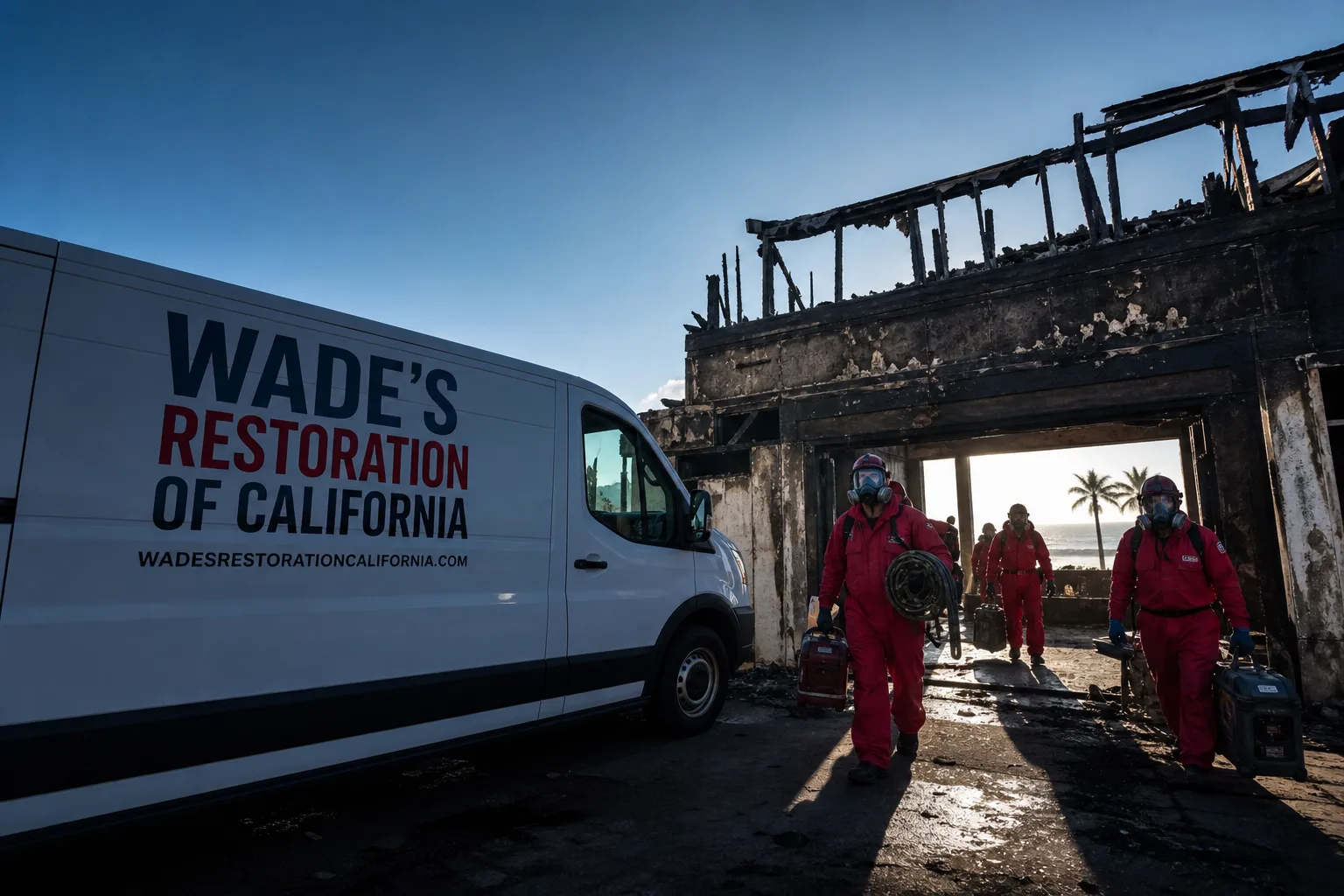
Fast, Reliable Storm & Disaster Restoration Across Richmond
Storm damage in Richmond never waits for a convenient time, and neither do we. When wind tears off shingles near Point Richmond or bay water backs up through storm drains in the Marina district, a fast response is the difference between a repair and a rebuild. We live and work here, so we know the streets, the housing stock, and the weather patterns. Call (855) 915-0646 and Wade Ferris answers. Not a call center. Not a voicemail. The owner.
Richmond sits where San Pablo Bay meets the East Bay hills, and that geography creates a specific set of storm problems. Salt-laden wind off the bay eats metal faster than almost anywhere in Contra Costa County. The marine layer keeps things damp long after the rain stops. And the flatlands near the old Kaiser Shipyard carry clay soil that holds water for weeks. We plan for all of it.
Why Wade’s Restoration of California Is Richmond’s Preferred Storm & Disaster Restoration Company
Ask anyone on your street about storm cleanup in Richmond and you’ll hear the same complaints: national chains that quote one number on the phone and another at the door, crews that don’t know a balloon-frame wall from a platform frame, and adjusters who’ve never seen refinery soot on a window sill. We’re the local alternative. Wade Ferris founded this company in 2007, publishes his name and license number, and shows up on the job himself.
Response time matters most in storm work, and our crews stage equipment for Richmond’s ZIP codes: 94802, 94804, 94805, and 94807. When a storm hits, Wade heads out with the truck already loaded. In the Iron Triangle, where 1940s cottage crawlspaces flood every wet season, that speed means extraction starts before water wicks into the original subfloor framing. In Point Richmond, where salt air has been eating garage-door springs for decades, it means we get eyes on the damage before a homeowner tries to force the door open and makes everything worse.
Our reputation here is built one job at a time. We hand every customer a daily moisture log on water and storm losses. We deal with the insurance adjuster directly so you’re not stuck relaying messages between two sides. And every storm, water, fire, and mold job carries the 90-Day Done Right Promise in writing. If it’s not done right, Wade makes it right. That’s the whole promise.
Our Storm & Disaster Restoration Services in Richmond
Storm Damage Cleanup
Richmond’s onshore winds push rain horizontally, which means water finds its way into places it shouldn’t. We tarp before we tear out, photograph everything for your adjuster, and don’t start demolition until you’ve seen the written scope. No surprises, no pressure.
Flood Damage Restoration
Bayside corridors near the Marina and Ford Point face tidal surge and storm-drain backflow that upland cities like El Cerrito simply don’t see. When brackish bay water gets into a crawlspace, it’s not the same as rainwater. The salt accelerates corrosion on ducting, fasteners, and any metal framing. We extract, dry, and treat for salt residue, then run professional-grade equipment from Dri-Eaz, Phoenix, and XPOWER until the moisture readings say done, not when the clock says done.
Emergency Board-Up
A broken window or a storm-loosened door in the Iron Triangle is an open invitation. We board up before we leave so the house is secure while you wait on the adjuster. Same goes for wind-damaged garage doors that won’t close. Forced entry on a salt-seized door is how tracks get warped and 1940s hardware snaps beyond repair. We shim, reinforce, and secure without doing more damage.
Roof Tarping
When wind peels shingles off a 1940s wood-frame cottage near Cutting Boulevard, the drywall ceiling below is usually next. We get a tarp on fast, using the right fasteners for Richmond’s vintage rooflines, and photograph every step. The tarp is temporary. The evidence package we hand your adjuster is permanent.
Wind Damage Repair
Richmond gets genuine onshore gales off San Pablo Bay, and those winds find the weak spots in 80-year-old construction. Loose siding, lifted flashing, pulled fasteners, and salt-corroded garage-door hardware are the usual casualties. We repair what’s repairable and replace what’s compromised, and we use galvanized or coated components and stainless hardware wherever salt air is a factor.
Debris Removal
Storm debris in Richmond isn’t just branches and leaves. In the flatlands, saturated clay soil makes every wheelbarrow load heavier and every crawlspace more delicate. We hand-carry debris from crawlspaces rather than dragging it across wet subfloor framing, and we bag and dispose of everything properly, including any material that may contain asbestos from older homes.
What happens when you call
- 1
A real person answersNo phone trees - you reach a local pro.
- 2
You get an upfront price rangeHonest numbers before anyone is dispatched.
- 3
A background-checked tech heads outLicensed & insured, dispatched right away.
- 4
You approve before work beginsNothing starts until you say go.
Trusted Brands We Service in Richmond
We work on every major brand of garage door and storm-damaged hardware you’ll find in Richmond homes, and we stock the common parts locally so turnaround is fast. Galvanized springs from premium manufacturers, stainless hinges, nylon rollers, and corrosion-inhibitor treatments for chains and tracks are all on the truck. Our IICRC-certified work meets the standards set by the RIA and IFA, and we use professional-grade equipment from Dri-Eaz, Phoenix, Injectidry, XPOWER, and B-Air. We don’t cut corners on materials or process, because Richmond’s salt air and vintage housing stock punish shortcuts within a season.
Common Storm & Disaster Restoration Problems We See in Richmond Homes
- Salt-corrosion failures on garage-door hardware. Springs, hinges, rollers, tracks, and opener chains within a few miles of the bay corrode years faster than they would inland. We see springs snapped clean through on doors that are only ten years old. We replace with galvanized or coated springs and stainless hardware, and treat chains with corrosion inhibitor.
- Hidden water in balloon-frame walls. Early-1900s Craftsman bungalows in the Iron Triangle and Point Richmond were built with balloon framing, so water from wind-driven rain travels between floors through open wall cavities. If nobody opens access holes at floor transitions, the framing rots in the dark for years. We cut those access points as a matter of course.
- Refinery soot and particulate contamination. After the 2012 Chevron fire, oily soot settled on homes across Richmond. Sandblasting or repainting over that residue without proper HEPA vacuuming and chemical sponge cleaning traps particulate that later triggers respiratory claims. We carry the protocols and the estimating knowledge for post-industrial-incident remediation.
- Saturated clay soils under crawlspaces. In the flatlands, the bay clay stays wet well into spring. That chronic ground-moisture vapor intrusion rots subfloor framing slowly for years before a single storm event triggers a claim. If the adjuster’s initial estimate ignores this, the scope gets underestimated and the problem comes back. We document it and bring the adjuster’s attention to it.
Pricing for Storm & Disaster Restoration in Richmond, CA
We Also Serve Cities Near Richmond
Our crews regularly work in San Pablo, El Cerrito, Kensington, and El Sobrante, and we know how conditions shift block by block. El Cerrito’s hillside homes face different drainage patterns than the Richmond flatlands, and Kensington’s older stock has its own quirks. If you’re just outside Richmond proper, our full Storm & Disaster Restoration services still apply, and Wade still answers his own phone. You can also read more about how we serve this specific area on our Storm & Disaster Restoration in Richmond page.
Serving Richmond, CA - Our Local Coverage Area
We’re based in the Richmond area and know this community well. Use the map below to see our service coverage - if you’re nearby, we can almost certainly help.
FAQs - Storm & Disaster Restoration in Richmond
Why does garage-door hardware fail so much faster in Richmond than in El Cerrito?
Richmond sits directly on San Pablo Bay, and the salt-laden onshore winds and marine-layer moisture hit every exposed metal surface within a mile of the shoreline. El Cerrito is upland and sheltered by the Berkeley Hills, so its air carries far less salt. In Richmond, door springs, hinges, rollers, tracks, and opener chains corrode two to three times faster than they would inland. The fix is simple: galvanized or coated springs, stainless hinges, nylon rollers, and regular corrosion-inhibitor treatment on chains. Call (855) 915-0646 and we’ll take a look.
What should I do if oily soot from the Chevron refinery settles on my home after a storm or industrial event?
Don’t sand it, don’t pressure wash it, and don’t paint over it. Oily soot from refinery incidents like the 2012 Chevron fire contains particulate that, once disturbed, becomes airborne and can trigger serious respiratory issues. Proper removal requires HEPA vacuuming followed by chemical sponge cleaning on every affected surface, with the residue bagged and disposed of under hazardous-material protocols. This is a claims scenario that doesn’t exist in El Cerrito or San Pablo, and you need a contractor who carries the right procedures. We do. Call us first.
Which neighborhoods in Richmond are most at risk for tidal surge and storm-drain backflow flooding?
The low-lying bayside corridors near the Marina, Ford Point, and parts of North Richmond flood first and worst. These areas sit at or near sea level, and when a storm pushes high tides into San Pablo Bay, the storm drains back up into the streets and into crawlspaces. The water is brackish, so it’s not just wet. It’s saline, and it starts corroding anything metal on contact. We know these zones. If you’re in one, get extraction started the same day.
Do I need hazmat abatement before you can start restoring my 1940s Richmond home after a storm?
If your home was built during the WWII Kaiser Shipyard housing boom and still has original materials, the answer is probably yes. Asbestos insulation and lead paint were standard, and any demolition or removal work that disturbs those materials triggers mandatory hazmat abatement under California law. We identify it up front and bring in the right protocols before we start cutting and hauling. It adds time and cost, but ignoring it is illegal and dangerous.
How do you handle storm debris removal in the Iron Triangle’s saturated clay soils without damaging crawlspace framing?
The clay in the Iron Triangle holds water for weeks after a storm, which makes every trip through a crawlspace a risk to the framing. We hand-carry debris rather than dragging it, lay plywood walkways over wet joists to spread the load, and photograph every step before and after. The goal is to remove the debris without adding a framing repair to your claim. Call (855) 915-0646 and we’ll walk you through it.
Call Wade’s Restoration of California for Storm & Disaster Restoration in Richmond
When a storm hits Richmond, the window to prevent lasting damage is measured in hours, not days. Call (855) 915-0646 and Wade Ferris answers. He’ll tell you straight what needs to happen, send a crew, and show up himself. Written scope before work starts. Daily moisture logs. Direct adjuster communication. And the 90-Day Done Right Promise in writing. That’s how we do it in Richmond.
Written by Wade Ferris, Owner at Wade’s Restoration of California, answering his own phone for Richmond homeowners.