
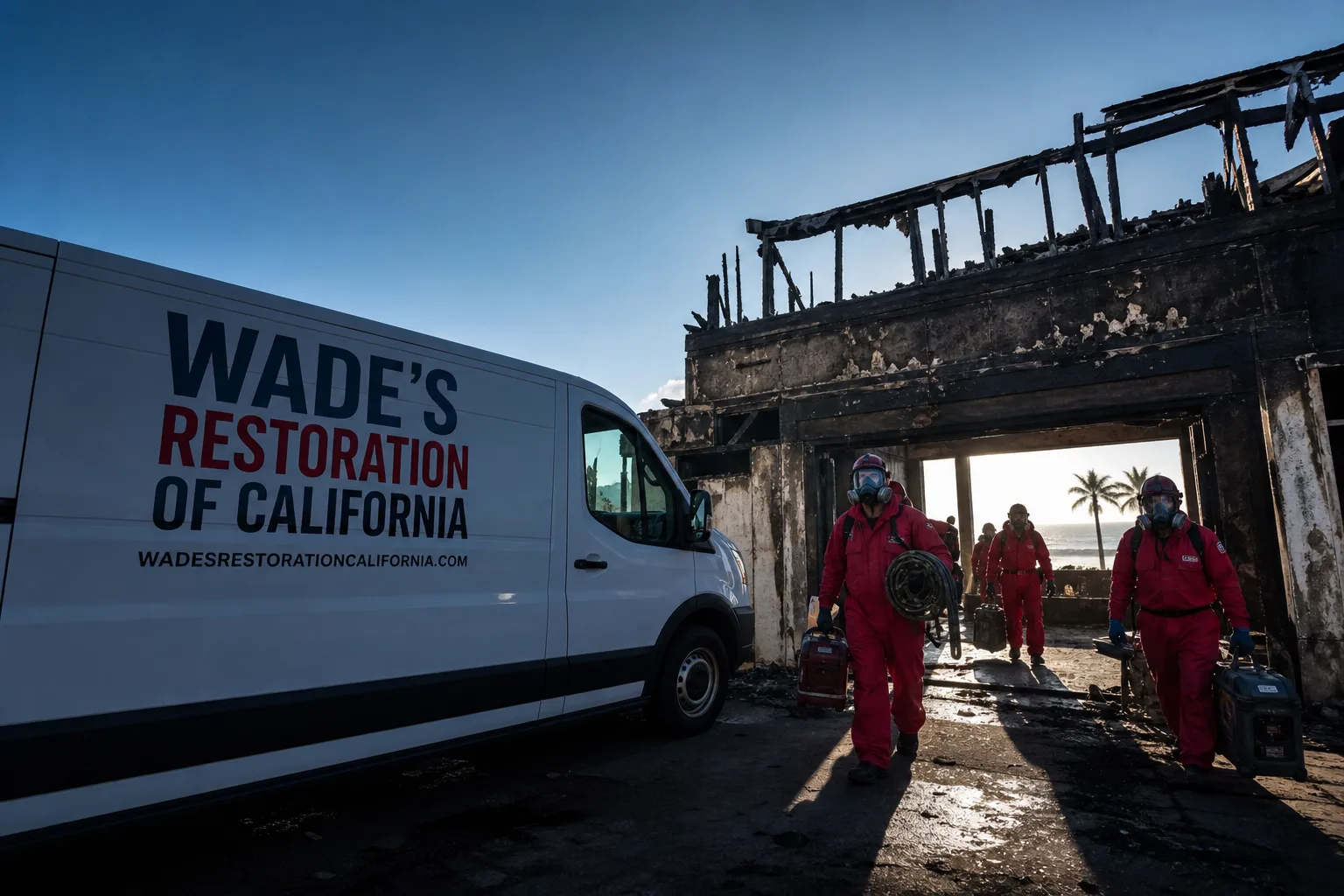
Fast, Reliable Storm & Disaster Restoration Across Oceanside
Storm damage in Oceanside doesn’t wait for business hours. When a winter storm tears roof decking loose in Fire Mountain or the San Luis Rey River pushes into low-lying crawl spaces near 92057, every hour of delay means more water moving through wall cavities and under flooring. Our crew knows the streets, the housing stock, and the specific way this city’s coastal air makes everything harder to dry. Wade answers his own phone at (855) 915-0646, and he can have extraction equipment running inside the hour for most Oceanside neighborhoods. That’s the difference between a cleanup and a rebuild.
We don’t run a call center. We run trucks to Oceanside daily. When you call, you get a live person, often Wade himself, and a straight answer about what happens next.
Why Wade’s Restoration of California Is Oceanside’s Preferred Storm & Disaster Restoration Company
Oceanside homeowners have a specific problem: too many restoration companies treat this city like a generic San Diego suburb. They send a crew that doesn’t know a 1968 wood-frame in 92054 from a 2003 stucco box in 92056, and they scope the job backward because of it. Wade Ferris has been running restoration work in Oceanside long enough to know that the real damage usually isn’t where the water first showed up. It’s behind the wall. Under the subfloor. Inside the ceiling cavity where the marine layer kept things damp for years before the storm even hit.
Our reputation in Oceanside is built on showing up fast and not overselling. Homeowners call us because a neighbor told them we pulled a full drying log on their flood job, or because they heard we hand the homeowner every moisture reading at the end of the job. Almost nobody in this trade does that. We do it on every single storm job, every single day of drying.
Response time to Oceanside matters more with storm work than almost anything else. The marine layer means wood and drywall that gets wet in this city dries slower than it does ten miles inland. That’s not a guess; it’s a vapor pressure calculation we run before we set a single air mover. The faster containment goes up, the less framing and insulation you’re replacing. We’re typically on site in under 90 minutes for storm calls anywhere from downtown 92054 to the eastern edge of 92057.
Ask anyone on your street who’s dealt with a storm loss in Oceanside. They’ll tell you the same thing: the company that showed up with a real moisture meter and a written scope before starting work was the one worth keeping.
Our Storm & Disaster Restoration Services in Oceanside
Our Storm & Disaster Restoration team handles the full sequence: emergency response, water extraction, structural drying, mold prevention, and the rebuild that puts your home back together. In Oceanside, we emphasize flood response, board-up, and tarping because those three actions in the first 24 hours determine whether you’re looking at a $4,000 mitigation or a $40,000 rebuild.
Flood Damage Restoration
When the San Luis Rey River swells after heavy rain, low-lying neighborhoods on the inland side of Oceanside take water fast. We extract first, then run Dri-Eaz dehumidifiers and XPOWER air movers sized to the actual cubic footage of the flooded space, not a guess. In Oceanside’s marine-layer climate, we leave drying equipment running longer than we would in Escondido or San Marcos because ambient humidity slows evaporation. We take moisture readings every day and hand you the log at the end.
Emergency Board-Up
Storm winds snap branches through windows and peel plywood off roofs all over Oceanside. A punctured opening in 92054 near the pier becomes a security and water entry problem instantly, especially with the salt air working on everything exposed. Our crew boards up with real plywood, not the flimsy sheeting some fly-by-nighters use, and we photograph every step for your insurance adjuster. If your carrier needs documentation from the first hour, it exists because we created it.
Roof Tarping
Oceanside’s coastal wind patterns during storm season hit ridge lines and eaves hard, especially on the 1950s-1970s wood-frame homes that dominate the neighborhoods around downtown. A torn-off section of shingles lets rainwater ride the roof deck straight into the wall cavities below. We tarp with reinforced material and fasten with furring strips, not staples that rip loose in the next gust. In Oceanside’s persistent marine layer, a tarped roof still needs inspection before the next rain because trapped moisture beneath the tarp can encourage fungal growth.
Storm Damage Cleanup
After the water is out and the opening is secured, there’s the mess: soaked drywall, ruined insulation, debris from trees and wind, and the smell of wet everything. Our crew hauls it out, cuts the damaged material back to dry studs, and sets containment so mold spores from the exposed cavity don’t migrate through the rest of the house. In Oceanside rental properties near Camp Pendleton’s gates, we routinely extend the cutout farther than the visible stain suggests because we know what’s behind the fresh paint.
What happens when you call
- 1
A real person answersNo phone trees - you reach a local pro.
- 2
You get an upfront price rangeHonest numbers before anyone is dispatched.
- 3
A background-checked tech heads outLicensed & insured, dispatched right away.
- 4
You approve before work beginsNothing starts until you say go.
Trusted Brands We Service in Oceanside
We’re not brand-locked, which means we bring the right tool for the job instead of whatever’s on the truck. Our storm and flood jobs in Oceanside run on Dri-Eaz dehumidifiers and extraction units, XPOWER air movers, and Injectidry systems for hard-to-dry cavities in slab-on-grade homes and townhome party walls. Every technician on an Oceanside storm job is IICRC-certified, and our drying protocols follow RIA and IFA standards. That matters when your Oceanside adjuster asks why drying took five days instead of three. The answer is in the moisture log, not in a sales pitch.
Common Storm & Disaster Restoration Problems We See in Oceanside Homes
- Hidden mold behind cosmetic paint in base-adjacent rentals. Military families move every two to three years, and between tenants, landlords patch leaks with spackle and paint instead of opening the wall. We find layered black mold behind multiple coats of white in 92054 and 92058 rentals with alarming regularity.
- Marine-layer humidity turning a small leak into a wall-cavity mold factory. Even a minor storm entry point that doesn’t flood anything visible can keep a wall cavity above mold threshold in Oceanside’s coastal air for months. By the time you see the stain, the cavity is often colonized.
- Galvanized and thin-wall copper plumbing failing during storm pressure shifts. The postwar homes near downtown Oceanside carry aging pipe that salt air has been working on for 60 years. A sudden weather event changes ground pressure and those pinhole leaks finally let go inside wall cavities.
- Stucco flashings and weep screed failures in eastern Oceanside tract homes. The 1980s-2000s stucco-over-wood-frame developments in 92056 and 92057 trap water behind the stucco when flashings fail. After a storm, water that got in through the roof or window head can’t get out through the wall system, and mold grows in the cavity.
In Oceanside’s Fire Mountain neighborhood, our crew pulled water-stained drywall in a 1968 wood-frame rental just outside the base gate and found layered black mold behind three coats of fresh paint. We contained the wall cavity, ran Dri-Eaz dehumidifiers and XPOWER air scrubbers for five days, and replaced the failed copper supply line before rebuilding the assembly. Three different tenants had lived with that leak and nobody ever opened the wall.
Pricing for Storm & Disaster Restoration in Oceanside, CA
We Also Serve Cities Near Oceanside
Our Storm & Disaster Restoration in Oceanside coverage extends into the communities where our crews drive every day: Camp Pendleton South, Camp Pendleton North, Carlsbad, and Vista. If you’re in one of those areas and dealing with storm damage, the same crew, the same equipment, and the same moisture-log documentation apply. Wade heads out the same day, no matter which of those cities your house sits in.
Serving Oceanside, CA - Our Local Coverage Area
We’re based in the Oceanside area and know this community well. Use the map below to see our service coverage - if you’re nearby, we can almost certainly help.
FAQs - Storm & Disaster Restoration in Oceanside
Why do Oceanside rentals near Camp Pendleton often have hidden mold even without a recent flood?
Because tenants move every two to three years and damage gets painted over between rotations. We routinely open walls in base-adjacent Oceanside rentals and find layered mold behind multiple coats of fresh paint, from leaks that were patched cosmetically rather than dried and repaired. This is the single most common finding on our Oceanside storm jobs involving rental housing. If you’re a landlord or a new buyer in 92054 or 92058, do not trust visible surfaces alone. Call (855) 915-0646 and we’ll scope the walls properly before you buy or list.
How does the marine layer affect storm damage drying times in Oceanside?
The marine layer keeps relative humidity elevated year-round in coastal Oceanside, which slows evaporation from wet building materials. A wall cavity that would dry in three days in Escondido can take five or six days near the 92054 coast. We calculate drying goals using psychrometric readings every day, not a standard three-day equipment rental. That extra time is how you avoid a mold colony forming behind newly replaced drywall. Our moisture logs document the actual conditions in your home, not a national average.
What is the San Luis Rey River flood risk for Oceanside homes?
The San Luis Rey River bisects Oceanside and rises quickly after sustained rain, putting low-lying inland neighborhoods at recurring flood risk. Homes in east Oceanside ZIP codes 92056 and 92057 sit in the river’s flood corridor, and crawl space flooding there is a known pattern after major rain events. We carry long extraction hoses and low-clearance equipment that fits the crawl spaces in those older wood-frame homes. A flood in that corridor is not a once-a-decade event; it’s a predictable risk every wet season.
Can you handle storm damage in Oceanside’s 1950s-1970s wood-frame homes without disturbing aging plumbing?
Yes, and we plan for that plumbing before opening any wall. The 1950s-1970s wood-frame homes common near downtown Oceanside and the pier carry galvanized and early copper pipe that salt air has been corroding for decades. A storm repair that requires cutting into a wall near that pipe risks turning a drywall patch into a full repipe if the vibration and wall movement crack the line. Our crew locates plumbing offset before starting, uses hand tools around pipes in tight stud bays, and documents pipe conditions for your insurance so the scope accounts for it. You get the wall opened, dried, and closed without a surprise plumbing bill.
Why do eastern Oceanside stucco homes (92056, 92057) develop wall-cavity mold after storms?
The 1980s-2000s stucco-over-wood-frame tracts in eastern Oceanside were built with flashing details and weep screed details that fail over time, especially after storm winds and driving rain press water behind the stucco. When the wall can’t drain or dry to the exterior, water sits in the cavity. Then the marine layer humidity keeps it wet. The result is wall-cavity mold that no one sees until a remodel or a leak investigation. Our IICRC-certified crews open test holes where the stain is not visible to check the cavity before starting repairs. That’s not an upsell. It’s the only way to know what you’re actually fixing.
If your Oceanside home has storm damage or you suspect water has been hidden in a wall cavity, call (855) 915-0646 now. Wade answers his own phone, and he’ll head out to look. The estimate is free, the scope is written before work starts, and the moisture log is yours to keep.
Written by Wade Ferris, Owner at Wade’s Restoration of California, serving Oceanside and surrounding communities.