
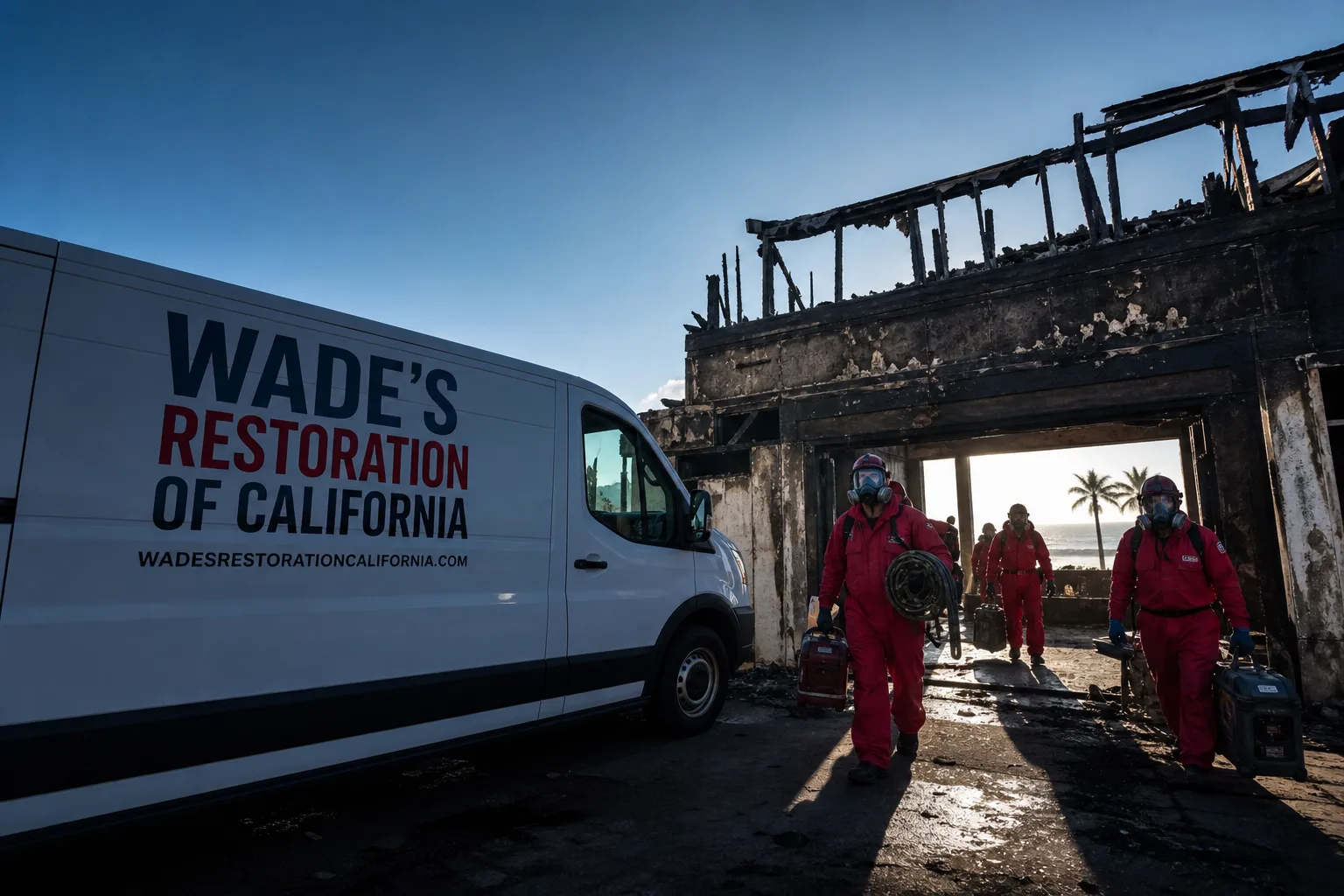
Fast, Reliable Storm & Disaster Restoration Across Livermore
Storm damage in Livermore doesn’t wait for business hours, and neither do we. When wind tears shingles off a Springtown roof or a flash-flooded garage is soaking into drywall on the east side, you need someone who knows this city’s specific failure points. Wade Ferris answers his own phone at (855) 915-0646, and he can have a crew at your Livermore door inside the hour. We’ve been restoring homes here long enough to know that what looks like a sudden storm loss is usually half a decade of hidden damage finally giving way.
Why Wade’s Restoration of California Is Livermore’s Preferred Storm & Disaster Restoration Company
You’ll find our trucks on First Street and Vasco Road on any given week, not because we advertise hard but because neighbors tell neighbors. Livermore homeowners call us after they’ve already had one bad experience with a big-box restoration outfit that quoted one number on the phone and a different one at the door. That doesn’t happen with us. Wade writes the scope, Wade signs the contract, and Wade is the guy you’ll run into at the hardware store next Saturday. Ask anyone on your street about the 90-Day Done Right Promise. If the job isn’t done right, he makes it right, in writing, on every storm and water restoration contract.
Our response time to Livermore is under an hour for true emergencies because our crews stage from the San Francisco Bay Area office and know exactly which routes through the Altamont or over the 580 move fastest when traffic stacks up. More than that, we know what to look for when we get there. The Las Positas fault runs beneath this city. Shrink-swell clay soils crack slabs here every winter. Diablo winds don’t just knock fences down; they drive embers into soffit vents. That local knowledge changes how we scope, dry, and rebuild every job.
Our Storm & Disaster Restoration team carries IICRC credentials, and Wade himself holds RIA affiliation. We run Dri-Eaz dehumidifiers and Phoenix air movers because those machines get homes dry faster than the rental-unit gear some cheaper outfits bring in. Every job gets daily moisture readings, logged and handed to you at the end. Almost nobody in this trade does that. Wade does, because he knows you’ll be the one living in the house after the adjuster settles and the work is done.
Our Storm & Disaster Restoration Services in Livermore
Storm Damage Cleanup
When a Diablo wind event rips through the southern and eastern wildland-urban interface neighborhoods, the damage is rarely just what you can see from the street. We clear downed limbs, haul wind-driven debris, and then walk the entire property looking for what the storm actually did: lifted fascia, broken window seals, ember entry into attic vents. A wind storm in Livermore can leave a home looking fine from the curb while smoke particulates are already working into the insulation above the garage.
Flood Damage Restoration
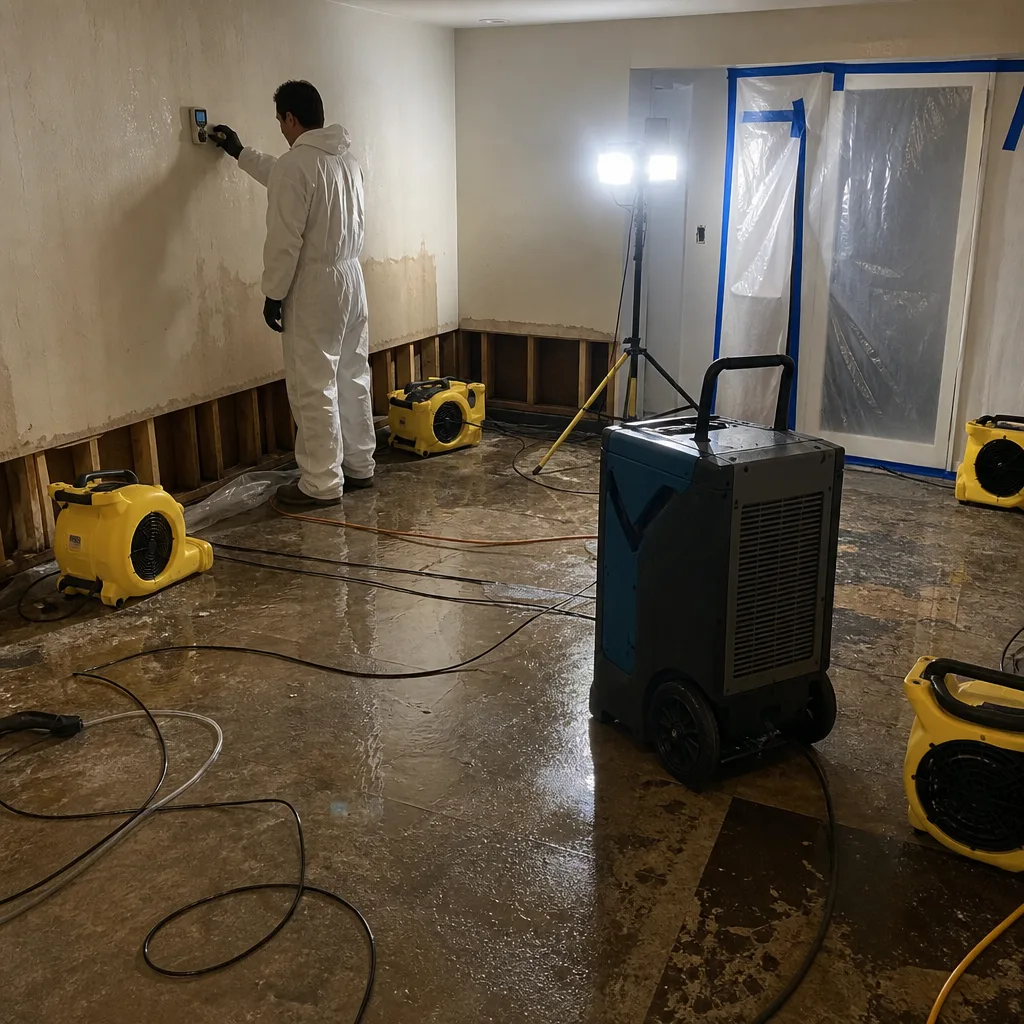
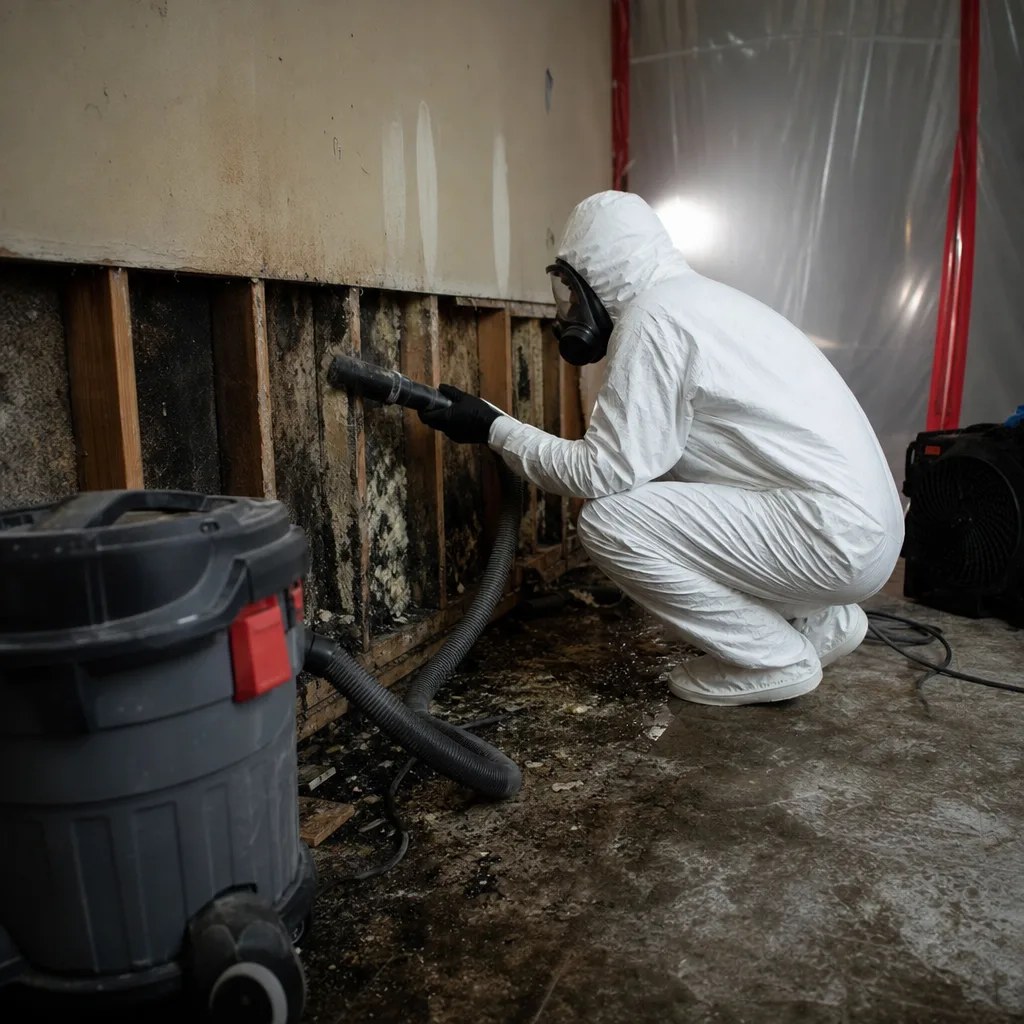
Livermore’s shrink-swell clay soils don’t drain. When late-season rain hits after months of total dryness, water pools against stem walls and finds every hairline crack the ground movement opened up. We extract standing water, map saturated materials with moisture meters, and get the drying process running before mold can colonize. In older Livermore construction, that usually means pulling baseboards and drilling drying holes because the original drywall sat directly on the slab, wicking water up like a sponge.
Emergency Board-Up
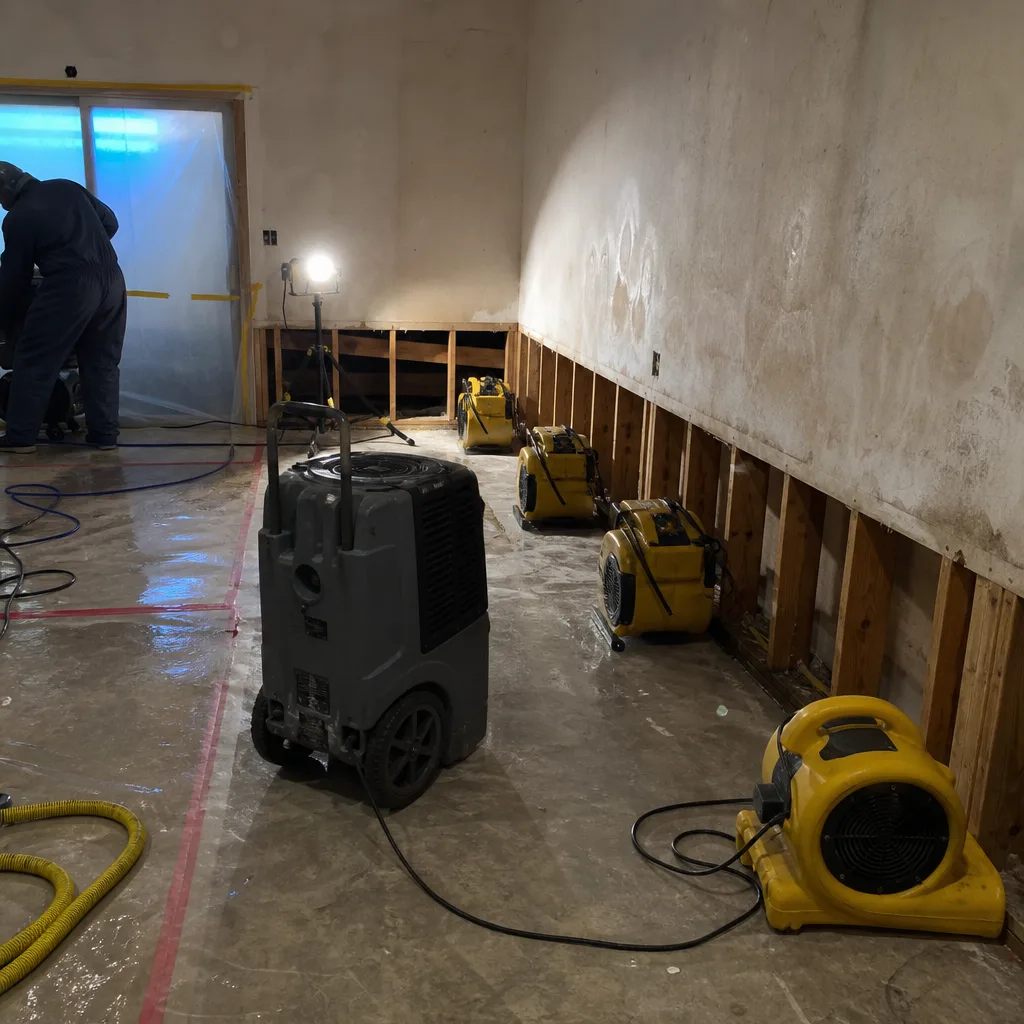
A breached roof or blown-out window in Livermore isn’t just an inconvenience; it’s an open invitation for the next pulse of wind to do worse. We board up fast, properly, with plywood cut to the opening and anchored to code. That matters in this city because one unsecured board-up on a south-facing wall can turn into a missile in the next Altamont gust. We also tarp roofs with weighted, strapped coverings that hold in the kind of gusts Pleasanton and Dublin residents simply never see.
Roof Tarping
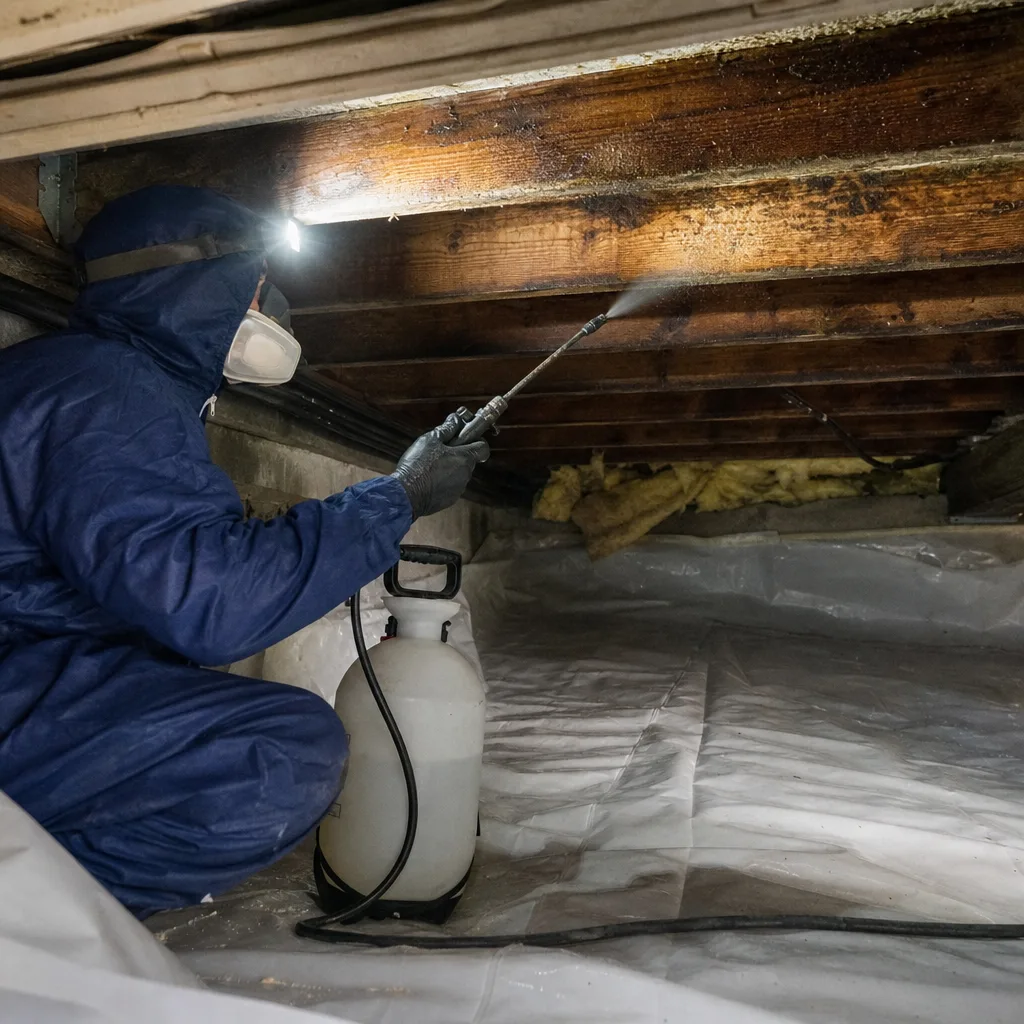
Livermore runs hotter than anywhere else in the Bay Area, routinely pushing past 105°F in summer, and that extreme thermal cycling stresses roofing membranes in ways that make a wind storm’s damage worse than it looks. A small lift in a shingle edge on an east-side 1980s stucco home can open up a channel for driven rain that runs straight down a poorly flashed stucco termination. We tarp roofs the day you call, before the next weather system turns a $400 repair into a $14,000 interior loss.
What happens when you call
- 1
A real person answersNo phone trees - you reach a local pro.
- 2
You get an upfront price rangeHonest numbers before anyone is dispatched.
- 3
A background-checked tech heads outLicensed & insured, dispatched right away.
- 4
You approve before work beginsNothing starts until you say go.
Trusted Brands We Service in Livermore
We run professional-grade equipment that gets homes dry and keeps them dry. Our fleet includes Dri-Eaz LGR dehumidifiers and XPOWER air movers, and we keep spare parts on hand so we don’t lose a day waiting on a courier when a Livermore job is mid-dry. For board-up and tarping work, Wade’s crew carries commercial-grade fasteners and pond liner-weight tarp material, not the blue stuff from a big-box store that shreds in the first real wind. If your existing restoration setup was started by another company and you want a second opinion, we’ll come look. That’s a standing offer. No charge for that.
Common Storm & Disaster Restoration Problems We See in Livermore Homes
- Pitted galvanized pipes in Springtown. The original 1960s supply lines in 94551 have been chewed thin by Livermore’s hard Zone 7 water. A “sudden” storm-related pipe failure is often the last straw on years of internal corrosion.
- Ember entry through soffit and gable vents. Diablo winds don’t just push fire toward homes; they push burning material into the attic space through aging vent screens. Smoke and soot restoration after an Altamont Pass fire is a seasonal reality here, more so than in Pleasanton or Dublin.
- Stucco moisture intrusion on south and east side subdivisions. The 1980s and 90s stucco homes that dominate Livermore’s south side have notoriously thin flashing at roof-to-wall terminations. Wind-driven rain from the Altamont direction exploits those gaps.
- Post-seismic slab cracks mistaken for storm damage. The Las Positas fault runs under Livermore, and the 1980 earthquake swarm left a legacy of hairline cracks in foundations. When winter rain saturates the clay, water follows those cracks straight into walls. A storm restoration that skips structural assessment misses this entirely.
Pricing for Storm & Disaster Restoration in Livermore, CA
Storm damage cleanup in Livermore typically runs $800 to $2,500 depending on the spread of debris and how many rooms took on water. Flood extraction and drying for a single room starts around $1,200 and goes up with square footage and how long the water sat. Emergency board-up for windows and doors runs $400 to $900 per opening. Roof tarping usually lands between $450 and $1,200 for a standard Livermore ranch or two-story. What drives the number is how fast we get there and how much hidden damage the water exposed. Older Springtown and south-side homes tend to cost more to restore because the original materials soak deeper and the plumbing failures are rarely isolated. Every estimate is free, and the price Wade gives you is the price on the contract. No trip charge inside our own county. Call (855) 915-0646 and Wade will come look at the actual damage, not a picture of it.
One thing we run into often here: a homeowner sees one failed fitting in a 1960s Springtown tri-level and thinks that’s the whole problem. We use moisture meters and thermal imaging to find what that fitting was feeding for the last five years. The visible trigger is rarely the origin. That’s why our estimates in Livermore take longer to prepare than the national chains’ do, and why our customers end up with fewer surprises after the walls come open.
We Also Serve Cities Near Livermore
If you’re in Livermore or one of the surrounding Tri-Valley communities, we’ve got you covered. We run crews to Pleasanton, Dublin, San Ramon, and Blackhawk on the same day for storm emergencies when possible, and we’re on a first-name basis with adjusters across the entire region. If you’re in Livermore, you’re our neighbor first. If you’re nearby, you’ll get the same live answer and the same written scope.
Serving Livermore, CA - Our Local Coverage Area
We’re based in the Livermore area and know this community well. Use the map below to see our service coverage - if you’re nearby, we can almost certainly help.
FAQs - Storm & Disaster Restoration in Livermore
Yes. The Zinc and mineral content in Livermore’s Zone 7 water supply has been eating the inside of original galvanized supply lines in Springtown for over five decades. By the time a storm event or pressure spike causes a visible leak, the pipe wall behind it is often near paper thickness. A storm restoration that fixes the wall but leaves the corroded pipe in place sets the homeowner up for a repeat failure. We check the pipe condition as part of every Springtown water loss.
Same day, and preferably within a few hours. The next Diablo pulse can arrive with little warning, and an open roof penetration in north Livermore lets driven rain run straight into the original drywall and insulation. The longer it sits open, the more the drying footprint expands. Call Wade at (855) 915-0646 and he can have a board-up crew on the road while you’re still on the phone.
It absolutely changes the playbook. Post-seismic hairline cracks in slabs and stem walls channel winter rainwater directly into stucco walls and under flooring. A standard storm restoration that doesn’t assess foundation movement will dry the visible water and miss the pathway. We check for structural movement on every Livermore storm loss, because we know the fault is part of the story here.
Those 1980s and 90s tracts were built with stucco right down to grade and minimal flashing at the roof-to-wall intersections. When an Altamont wind storm drives rain sideways, it gets into those terminations and runs down inside the wall cavity. The water stains often show up in a different room than where the water entered. We find these pathways with moisture mapping and dry them at the source, not just at the stain.
Yes, and it’s a uniquely Livermore problem among the Tri-Valley cities. The same Diablo wind events that knock trees down also drive grass-fire smoke and embers from the Altamont corridor directly into southern and eastern neighborhoods. Smoke particulate gets into HVAC ducts, attic insulation, and even wall cavities through vent penetrations. Storm restoration here often includes smoke and soot cleanup as a standard part of the scope, not an add-on. If you’re smelling smoke weeks after a fire event, call (855) 915-0646 and we’ll walk the property with you.
Written by Wade Ferris, Owner at Wade’s Restoration of California, serving Livermore since 2007.