
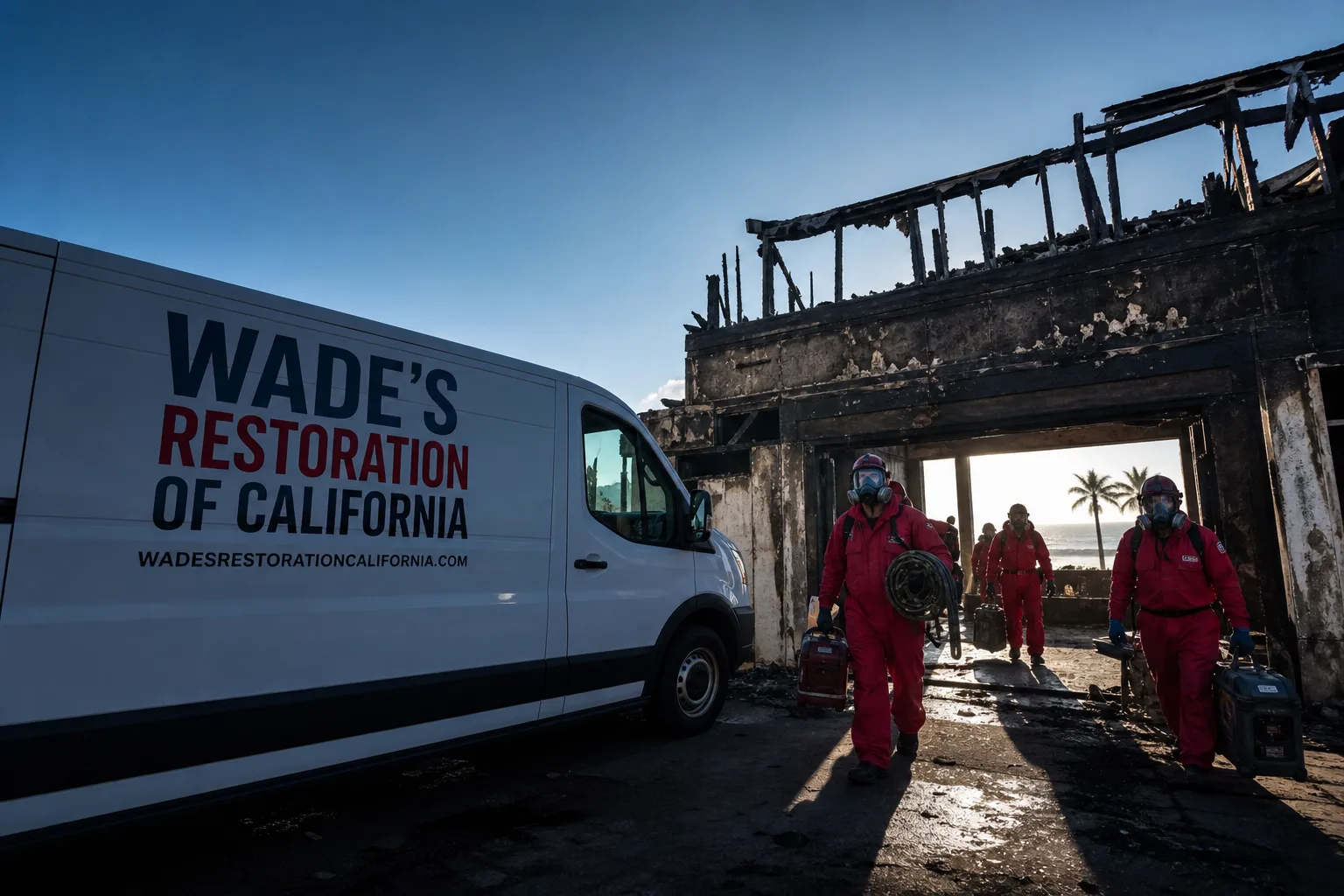
Fast, Reliable Storm & Disaster Restoration Across Lake Los Angeles
When a monsoon cloudburst sends water sheet-flowing across the caliche hardpan and into your crawl space, you need someone who knows Lake Los Angeles, not a call center in another state. Storm damage and flood restoration in Lake Los Angeles typically runs $1,800-$8,500 depending on how far water traveled and how long it sat before we got the call. The longer standing water sits in a 1960s-era underfloor cavity, the more likely you’re looking at full insulation replacement and mold remediation on top of the drying. Call Wade Ferris at (855) 915-0646 and he’ll have a crew on the road to your place within the hour, no answering service, no voicemail runaround.
Wade’s Restoration has been cleaning up storm and flood damage for over 29 years, and he’s worked enough jobs in the 93591 to know exactly what happens when a hard freeze splits a supply line on E Avenue O-8 while the owners are off in San Pedro for the week. That’s the kind of local knowledge you can’t get from a franchise that flies a crew in from Bakersfield.
Why Wade’s Restoration of California Is Lake Los Angeles’s Preferred Storm & Disaster Restoration Company
Wade Ferris publishes his name, his license number, and his cell phone. That’s not a marketing line. He answers his own phone, day or night, and when you call about water running through your Lake Los Angeles crawl space at 2 a.m., it’s Wade’s voice on the other end telling you he’s heading out the door. No triage script, no “we’ll have someone in your area within 48 hours.” He’s on the road.
The crew Wade sends to Lake Los Angeles are background-checked, uniformed, and they show up with professional-grade drying equipment from Dri-Eaz and Phoenix. They take moisture readings every single day on every job and hand you the full log when the work is done. Almost nobody in the restoration trade does that. Wade does because he knows you’ll want to see the evidence before you sign off on a claim with your adjuster.
Response time to Lake Los Angeles matters because of the caliche. More on that below, but the short version is this: flash flood water moves faster here than in Palmdale or Lancaster, and every hour it sits in your underfloor cavity is an hour it’s soaking insulation and feeding mold. Wade knows the roads from the 138 corridor up to Avenue O-8 and 170th Street East, and he gets there fast.
And here’s a thing that matters to folks in this community: Wade writes the 90-Day Done Right Promise on every restoration contract. If it’s not done right, he comes back and makes it right. In writing. Ask anyone on your street if their last contractor did that.
Our Storm & Disaster Restoration Services in Lake Los Angeles
We handle the full scope of what Lake Los Angeles weather and aging housing stock throws at you. These are the four services we get called for most in the 93591.
Flood Damage Restoration
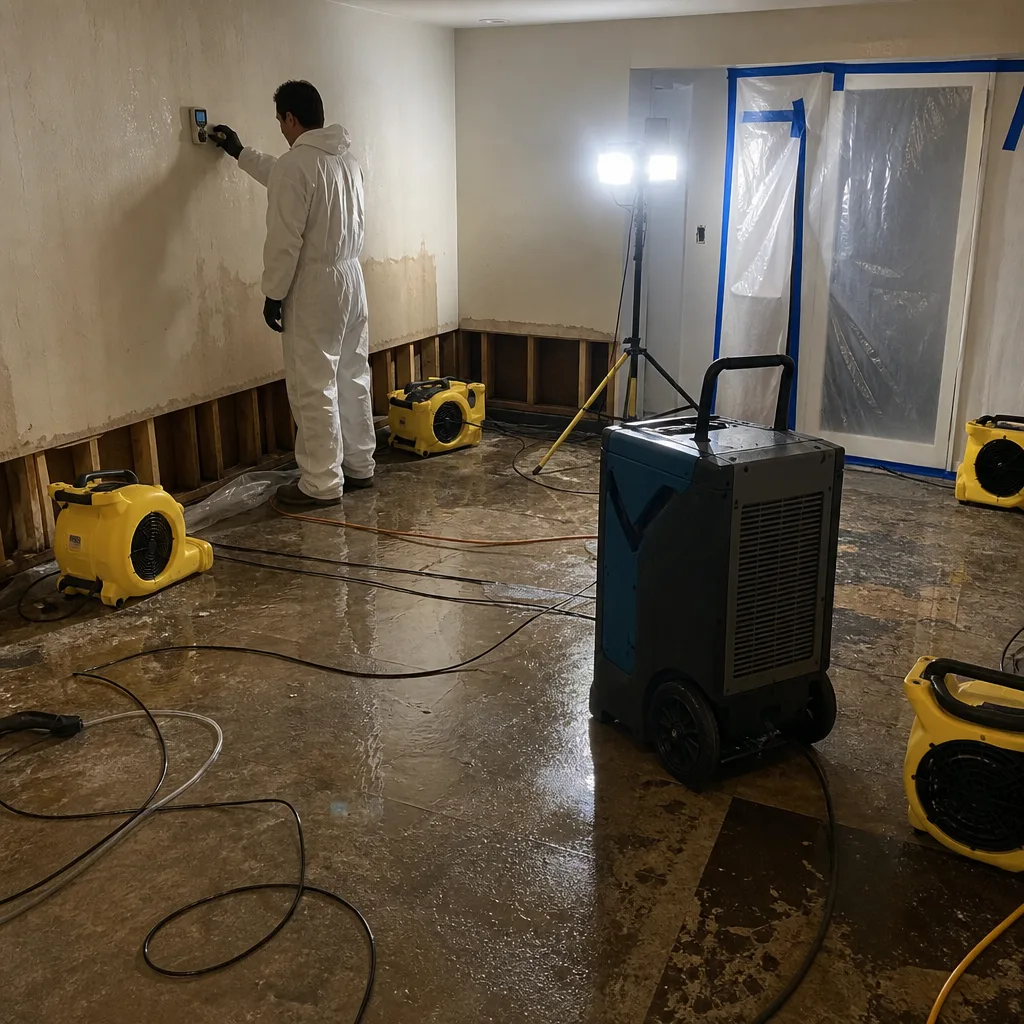
Lake Los Angeles sits on dense caliche hardpan that absorbs almost no water. A 20-minute monsoon downpour can turn an ungraded lot into sheet-flow that pours into your crawl space within minutes, faster than most sump pumps can even think about keeping up. We arrive with truck-mounted extraction and Dri-Eaz LGR dehumidifiers, get the water out, and set up daily moisture monitoring until the structure actually reads dry, not just feels dry. On homes with legacy 1960s copper supply lines, a freeze-burst flood is a recurring seasonal risk, and we’ve replaced dozens of those old 1/2-inch copper runs with PEX after drying the cavity.
Storm & Disaster Restoration covers everything from monsoon flash floods to wind-blown debris damage, and our team handles the whole job from extraction to rebuild.
Storm Damage Cleanup
High desert winds don’t mess around. We get calls after every wind event about downed tree limbs through windows, fences blown into siding, and debris scattered across large unimproved lots. We clear the mess, document everything with photos for your adjuster, and secure the structure so further damage doesn’t pile on while you wait for a permanent repair. On Lake Los Angeles’s larger lots, debris removal alone can be a half-day job before the real restoration even starts.
Emergency Board-Up
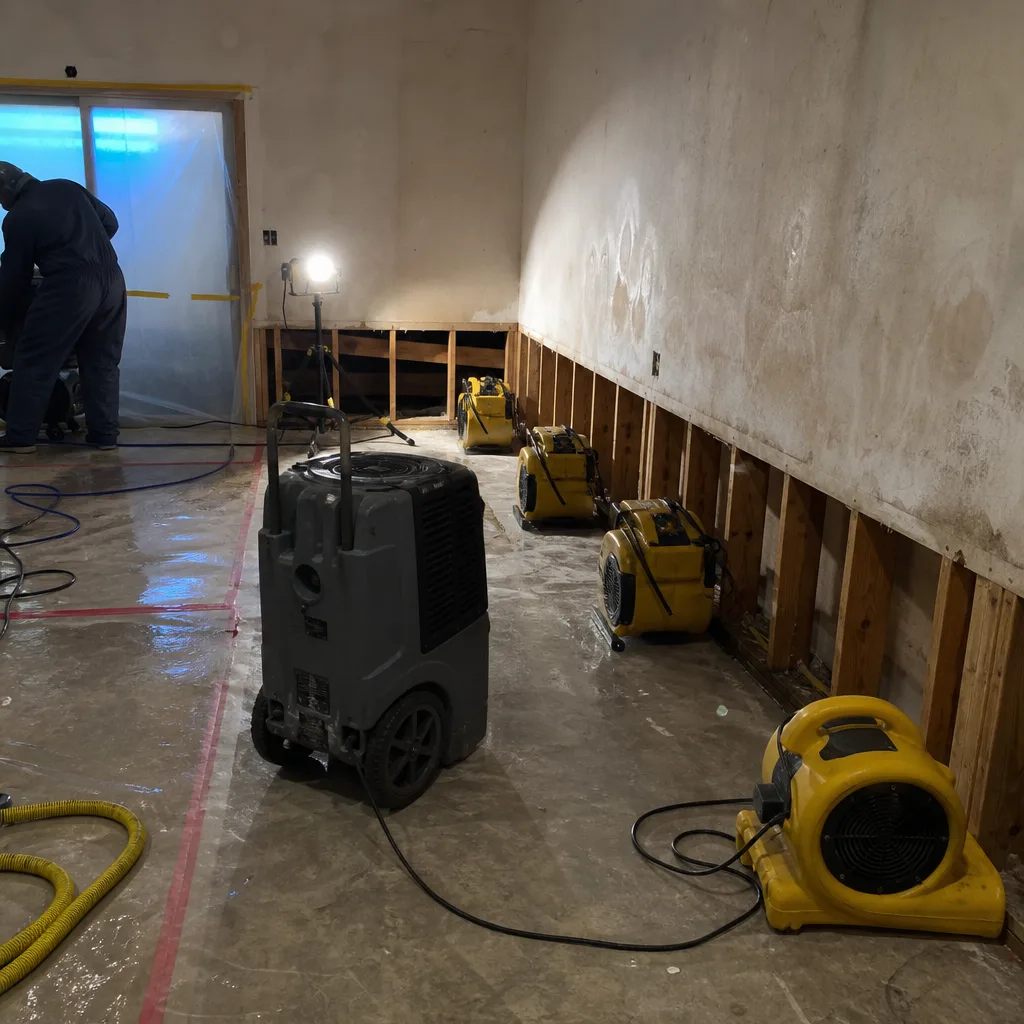
When wind blows out a window or rain punches through a section of roof, the next storm will find that opening. We board up quickly with quarter-inch CDX plywood secured properly to the framing, not just tacked on. On manufactured homes and older stick-frame houses built in the 1960s land-boom era, we check the surrounding wall assembly for hidden water intrusion before sealing things up, because drywall that got damp in the storm will mold fast in the desert heat.
Roof Tarping
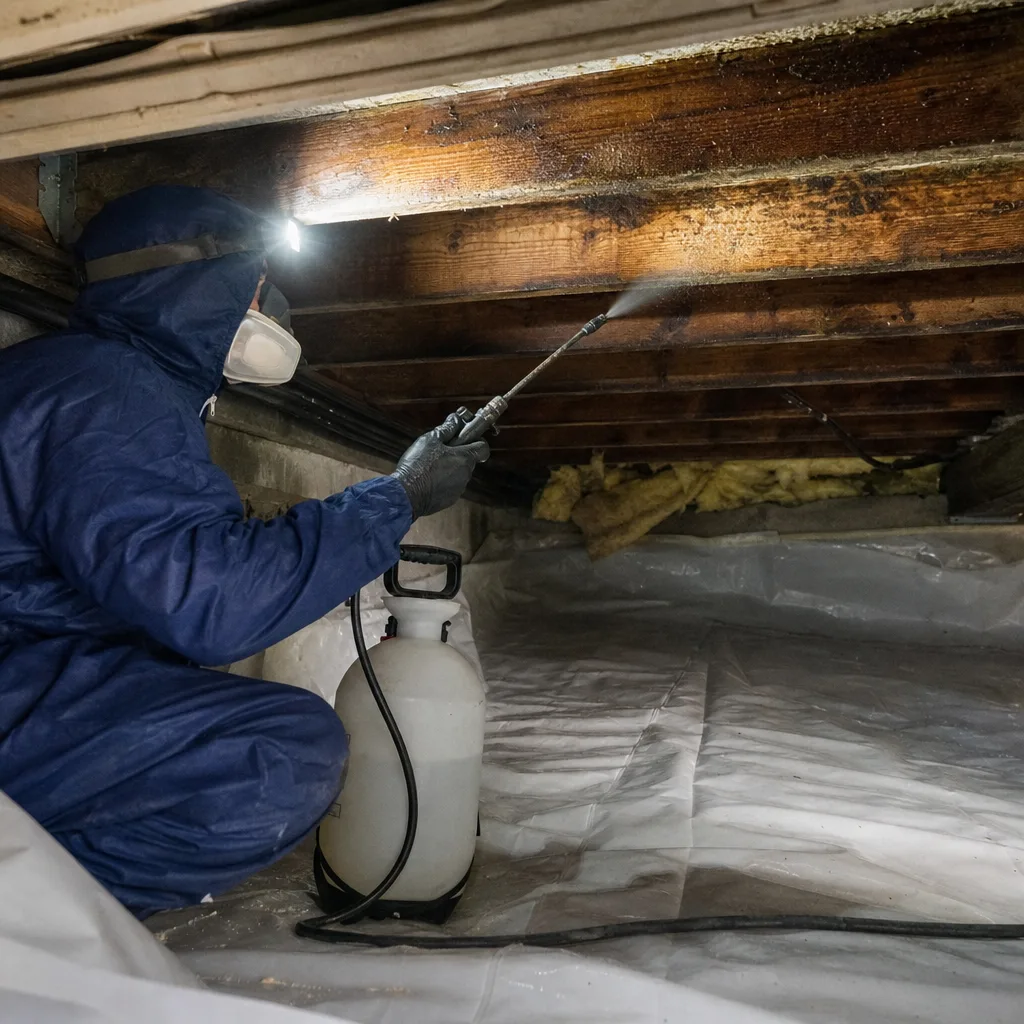
A torn section of shingle or a collapsed swamp-cooler mount on an older home lets water straight into the attic. We tarp with UV-rated heavy-duty polyethylene, secured with battens and capped nails so it survives the next wind event instead of ending up in your neighbor’s yard. The monsoon season in Lake Los Angeles can hit fast and repeat within days, so we don’t leave a tarp half-secured. We also check the decking and underlayment for damage before covering, so your claim has good documentation from day one.
What happens when you call
- 1
A real person answersNo phone trees - you reach a local pro.
- 2
You get an upfront price rangeHonest numbers before anyone is dispatched.
- 3
A background-checked tech heads outLicensed & insured, dispatched right away.
- 4
You approve before work beginsNothing starts until you say go.
Common Storm & Disaster Restoration Problems We See in Lake Los Angeles Homes
- Flash floods over caliche hardpan. The soil here barely absorbs water, so even a short, intense monsoon storm sends water sheet-flowing into slab-edge foundations and underfloor cavities before extraction equipment can even arrive. This is uniquely bad in Lake Los Angeles compared to Lancaster or Palmdale, where soils drain faster.
- Freeze-burst supply lines in absentee homes. A large share of Lake Los Angeles properties are owned by people who live elsewhere part of the year. When a winter freeze splits an original 1960s copper supply line and nobody’s home for a week, standing water in the crawl space spawns mold colonies that require full insulation replacement by the time anyone notices.
- Wildfire smoke intrusion without fire damage. Homes that never caught fire still pulled heavy particulate into HVAC ductwork and blown-in insulation during Antelope Valley fires like the 2020 Bobcat corridor. The house looks clean but smells like an ashtray and irritates occupants for months without thorough duct cleaning and insulation replacement.
- Slow-drying underfloor cavities in aging manufactured homes. Older manufactured and modest stick-frame homes from the 1960s and 70s have thinner wall assemblies and underfloor cavities that trap moisture. In the dry desert air you’d think things would dry fast, but these tight, poorly ventilated cavities hold water far longer than conventional framing, which means longer drying protocols and more hidden mold risk.
Pricing for Storm & Disaster Restoration in Lake Los Angeles, CA
Here’s what we actually see on jobs in the 93591. A basic storm damage cleanup with debris removal and minor tarping runs $1,200-$2,800. Flood damage restoration in a crawl space with extraction, drying, and insulation replacement typically lands between $3,500 and $8,500, depending on how long the water sat. Emergency board-up for wind-broken windows or a punctured wall is $450-$1,100 per opening, including proper plywood and installation. Roof tarping runs $600-$1,800 for most single-story homes, more if the roof is steep or the damaged area is large. Water sitting longer than 72 hours pushes costs up fast because mold remediation enters the picture. We give free estimates, and if you have a written estimate from any other company, bring it. We’ll do a free second opinion on it. Call (855) 915-0646 and Wade will give you a straight number before any work starts.
Trusted Brands We Service in Lake Los Angeles
We use Dri-Eaz and Phoenix equipment on every Lake Los Angeles job because they’re the workhorses of the restoration industry. Dri-Eaz LGR dehumidifiers pull moisture out of tight crawl spaces efficiently, and Phoenix axial air movers push air through underfloor cavities that conventional fans can’t reach. When you call us about a flooded crawl space on Avenue O-8 or a smoke-filled duct system off 170th Street East, the truck that shows up carries gear we’d use on our own homes.
We Also Serve Cities Near Lake Los Angeles
Our Storm & Disaster Restoration in Lake Los Angeles service area extends naturally into the surrounding high-desert communities. We regularly work in Sun Village, Palmdale, Piñon Hills, and Phelan, and we know the roads well enough to get there fast when storm damage hits. If you’re in any of those areas, same phone, same crew, same 90-Day Done Right Promise.
Serving Lake Los Angeles, CA - Our Local Coverage Area
We’re based in the Lake Los Angeles area and know this community well. Use the map below to see our service coverage - if you’re nearby, we can almost certainly help.
FAQs - Storm & Disaster Restoration in Lake Los Angeles
Lake Los Angeles sits on caliche hardpan, a naturally compacted soil layer that absorbs almost no water. When a monsoon cloudburst drops an inch of rain in 20 minutes, the water doesn’t sink in, it sheet-flows across the surface and pours into any low point, which on ungraded lots is often the crawl space or slab edge. Lancaster and Palmdale soils drain faster, so the same storm causes less standing water. Our extraction and drying plan for Lake Los Angeles homes accounts for that fast-moving, low-absorption scenario. Call (855) 915-0646 and we’ll get water moving before it soaks deeper.
Shut the water off at the main valve as soon as you or a neighbor discovers the leak, then call us. The damage window in an empty Lake Los Angeles house is measured in days, not hours, and every day of standing water means more insulation soaked, more joists saturated, more mold starting. We’ve handled dozens of these freeze-burst jobs on original 1960s copper supply lines, and the Dri-Eaz and Phoenix drying equipment we use is sized for the tight underfloor cavities common in local homes. The sooner we start, the less you’ll spend on insulation replacement and mold remediation. Call (855) 915-0646 and Wade will walk you through the first steps over the phone.
Yes. During Antelope Valley fires like the 2020 Bobcat Fire, smoke particulate gets pulled into HVAC ductwork, blown-in attic insulation, and wall cavities even in homes that were never near the flames. The result is a house that looks fine but smells like smoke for months and can irritate lungs. Cleaning that properly requires duct cleaning, insulation replacement, and sometimes sealing wall cavities with odor-blocking treatments. If your Lake Los Angeles home smells like last fire season every time the AC kicks on, call (855) 915-0646 and we’ll tell you what’s involved and what it costs.
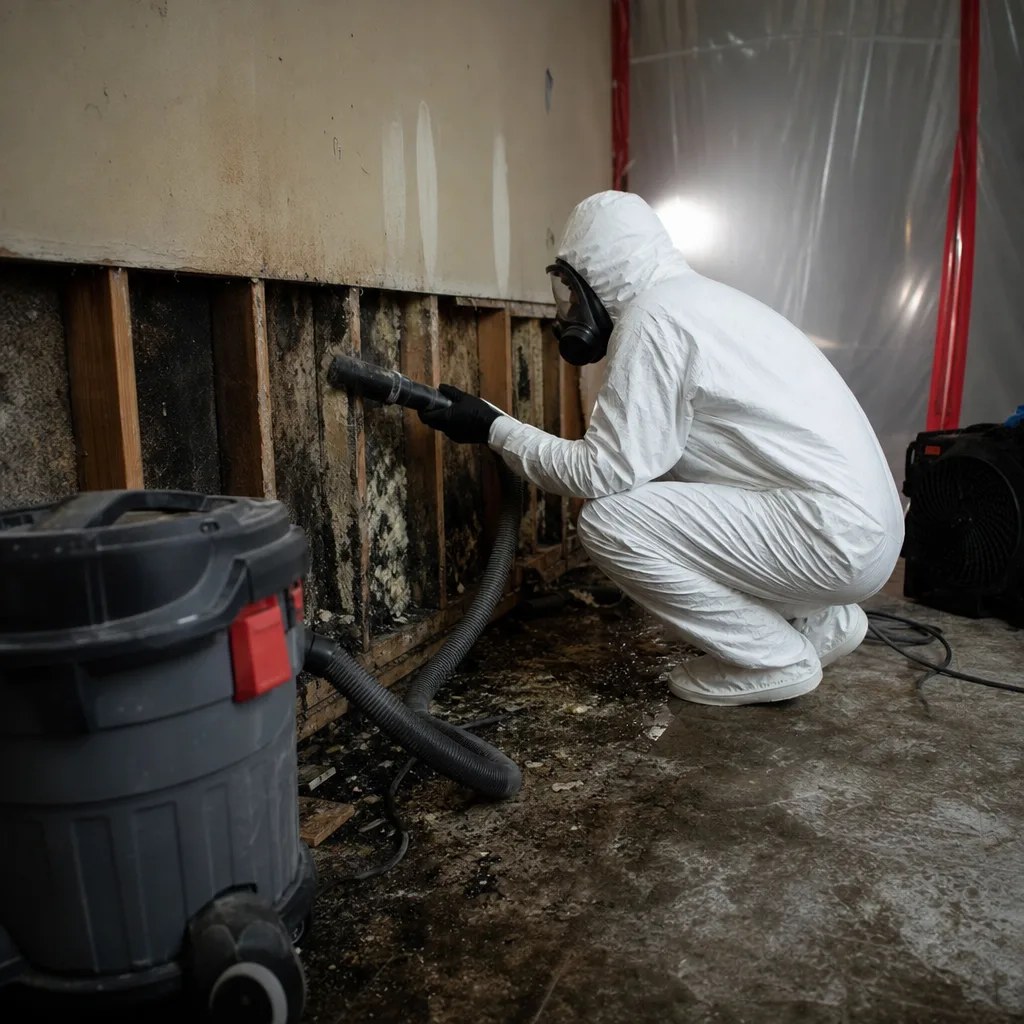
If water reached your crawl space, underfloor insulation, drywall, or any enclosed cavity, you need restoration, not just a shop vac. Cleanup addresses surface water. Restoration addresses what’s soaking inside your walls and floors, where mold starts and framing rots. In 1960s-era Lake Los Angeles homes with minimal site grading, monsoon water finds its way into cavities quickly, and what dries on the surface can still be wet underneath. We’ll assess it and tell you straight which one you need, no overselling. A written scope before work starts, every time. Call (855) 915-0646 for a free assessment.
The underfloor cavities in older manufactured homes are tighter, less ventilated, and often built with materials that hold moisture longer than conventional framing. Thin wall assemblies, minimal insulation in the belly, and sealed skirting trap humid air that would escape more readily from a conventional crawl space. That’s why we bring in axial air movers and LGR dehumidifiers sized for those confined spaces, and why daily moisture readings matter more on these homes. If your manufactured home took on storm water, don’t wait to call (855) 915-0646. Drying goes slower, so starting sooner matters more.
Storm Damage Doesn’t Wait. Neither Does Wade.
If you’ve got water where it shouldn’t be, a tarp that failed, or a house that smells like last fire season, call (855) 915-0646 right now. Wade Ferris answers his own phone, and he’ll have a crew on the way to your Lake Los Angeles home fast. Free estimate, free second opinion on any written estimate you already have, and if it’s not done right, he makes it right, in writing. That’s the deal, and it’s been the deal since 2007.
Written by Wade Ferris, Owner at Wade’s Restoration of California, serving Lake Los Angeles.