
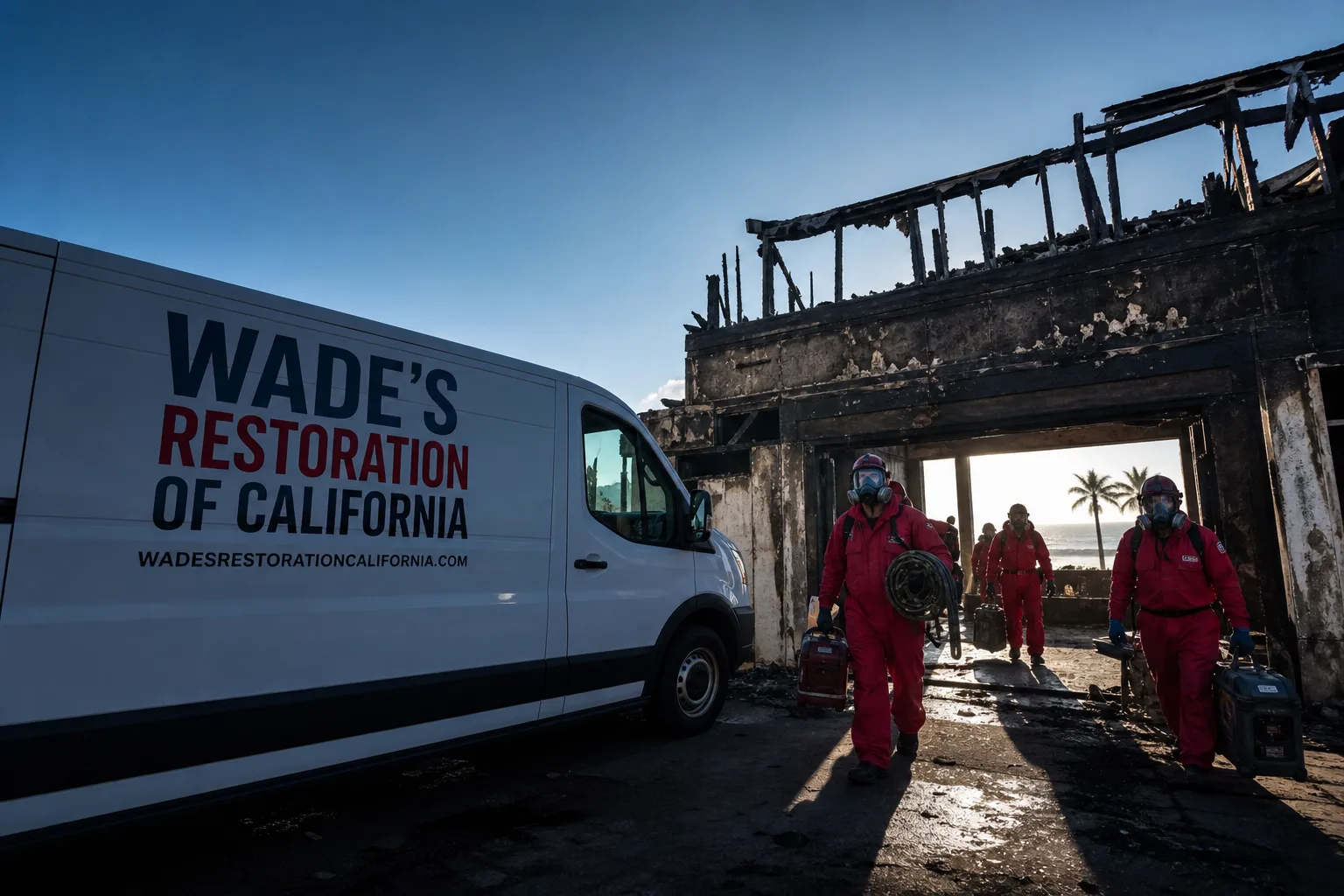
Fast, Reliable Storm & Disaster Restoration Across La Palma
Storm damage in La Palma usually means one of two things: a Santa Ana wind event that tears shingles off a 1960s ranch roof, or an atmospheric river that backs water into a slab-on-grade garage. Either way, the damage spreads while you wait. A tarp on the roof today costs a few hundred dollars. A saturated slab with a hidden copper supply leak feeding it can run into the tens of thousands if it goes unaddressed for a week. Our Storm & Disaster Restoration team handles both ends of that spectrum, and we answer the phone when it rings. Call (855) 915-0646 and you’ll get a live person, not a queue.
La Palma is a specific kind of place. Built out almost entirely in one planned wave during the 1960s and early 1970s, roughly 1.5 square miles of ranch homes on concrete slab foundations. That matters more than most people realize when water gets in. In a city with crawlspaces, you can see where water is coming from. In La Palma, a garage flood can look like a storm drain backup but actually be a corroded galvanized line under the entry slab, feeding moisture from below while you dry the surface. If you don’t know to check for that, you’ll “fix” the wrong problem and the water comes back. We do know. We’ve been in hundreds of La Palma garages and we’ve seen this exact pattern dozens of times.
Why Wade’s Restoration of California Is La Palma’s Preferred Storm & Disaster Restoration Company
Wade Ferris founded this company in 2007 and he still answers his own phone. Not a call center, not an answering service. You call at 2 a.m. during a wind event and the person who picks up is the guy whose name is on the truck. He’ll tell you straight what he thinks is happening, what it’ll cost to make safe tonight, and when he can have a crew on the road. Usually that’s inside the hour for storm damage in La Palma, depending on how many other calls are stacked up from the same storm.
La Palma customers don’t need a national chain’s call tree. They need someone who knows that walker Street and Orangethorpe Avenue is a flood-prone corner during heavy rain, that homes along Moody Creek see different runoff patterns than homes near La Palma Avenue, and that the difference between a true storm intrusion and a slab leak changes the entire restoration plan. That’s not something a dispatch operator in another state can tell you. It’s something you learn by doing the work here, year after year.
Every jobsite gets documented moisture readings, every single day, and you get the full log when the job’s done. That’s a promise Wade made when he started cleaning up after storms, and it’s a promise he keeps because his name is on the paperwork. He also deals with your insurance adjuster directly. You don’t relay messages between two parties. You hand him the claim number and he handles it.
Our Storm & Disaster Restoration Services in La Palma
Flood Damage Restoration
Flood restoration in La Palma starts with a question most companies never ask: is the water actually coming from the storm, or is it a slab failure made worse by the storm? Because virtually every home here sits on a concrete slab with 50-plus-year-old copper or galvanized supply lines underneath, we run a perimeter moisture scan before we ever start drying. That scan has caught hidden under-slab leaks on more La Palma jobs than we can count. If the slab checks clean, we proceed with extraction, structural drying with Dri-Eaz desiccants and air movers, and documentation for your adjuster. If the slab doesn’t check clean, we isolate the line first. Skip that step and you’ll be drying the same square footage twice.
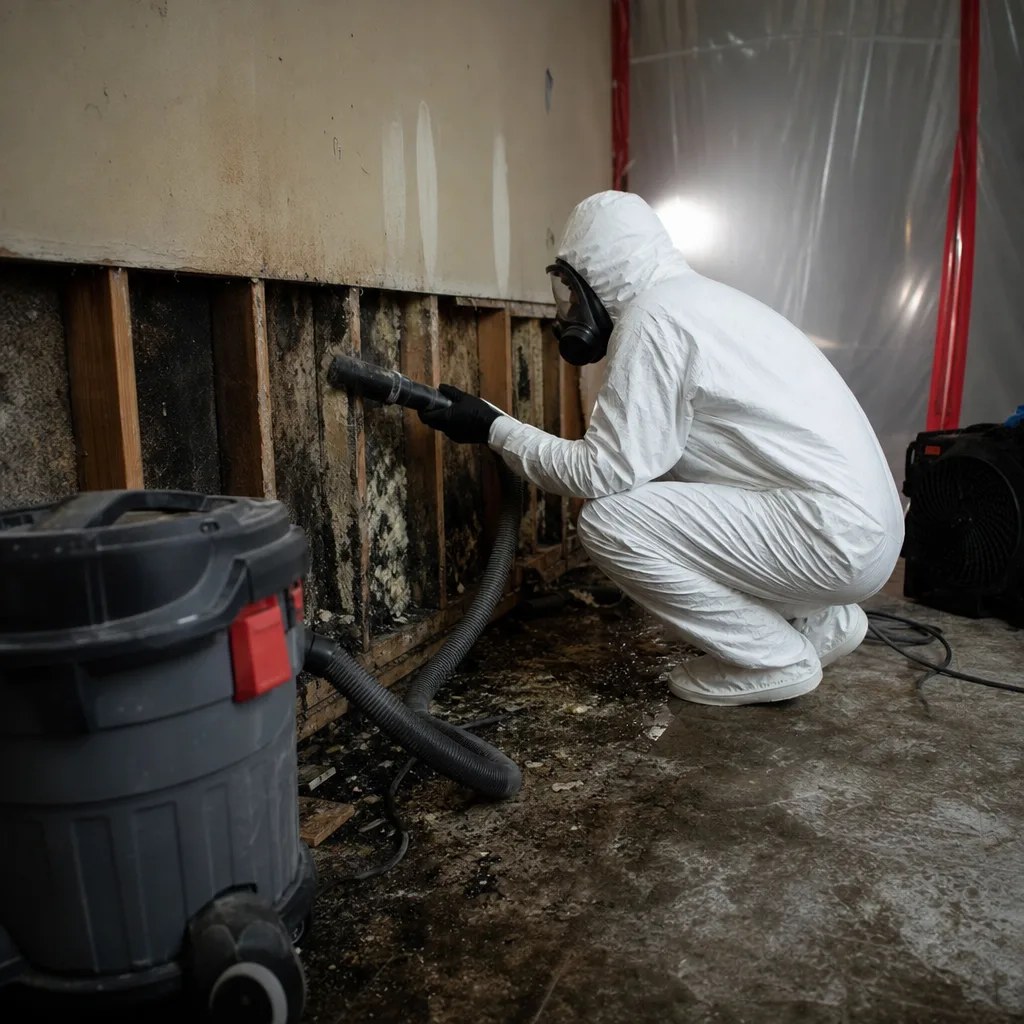
Storm Damage Cleanup
After a hard Santa Ana blow or a heavy atmospheric river burst, La Palma homeowners deal with downed tree debris, soaked drywall, saturated garage floors, and water that pushed under entry doors. We handle the full cleanup: debris removal, flood cuts at the correct height, disposal of ruined materials, and sanitizing affected surfaces. Homes built before 1978, which includes the overwhelming majority of La Palma’s housing stock, get asbestos testing on joint compound and popcorn texture before we open any walls. It’s not optional, and skipping it doesn’t save money. It creates a bigger abatement bill later.
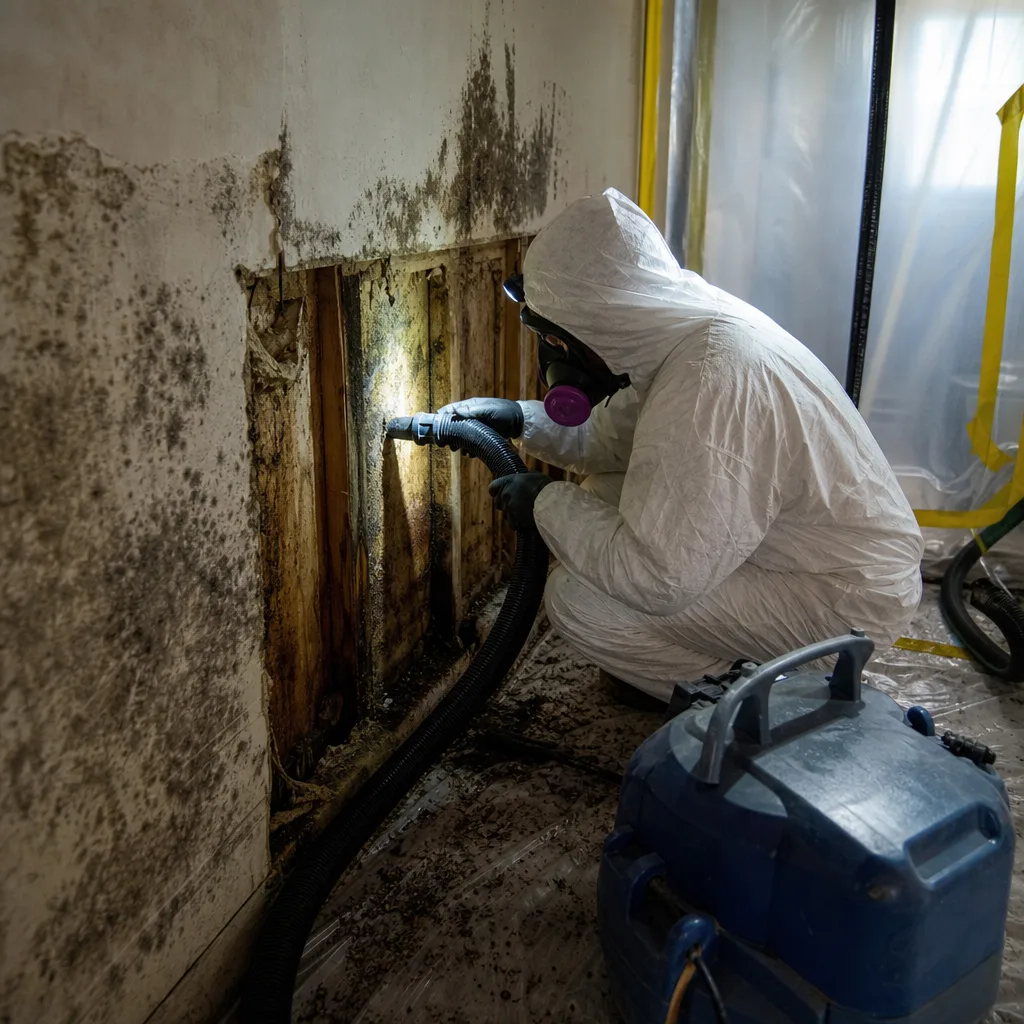
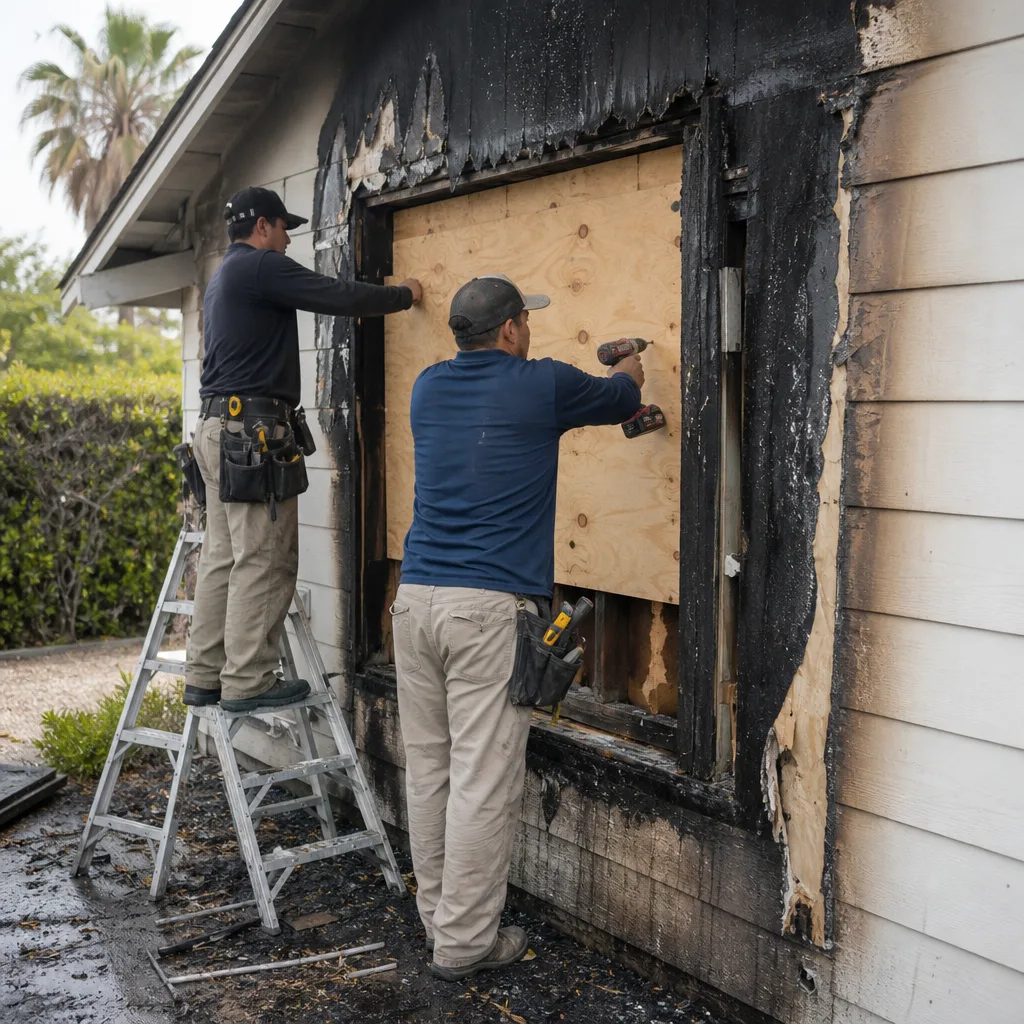
Emergency Board-Up
When a Santa Ana wind event blows a French door or a garage window out, or when flying debris punches through a wall, the first priority is securing the envelope. We do emergency board-up in La Palma using plywood that’s actually cut to fit, not whatever scrap is in the truck. Why does that matter? La Palma is a dense, flat city. Wind coming off the inland basin funnels through streets with little tree cover to break it up. A poorly fitted board rattles, lets rain in during the follow-up system, and invites an animal to move in. We fit it right the first night.
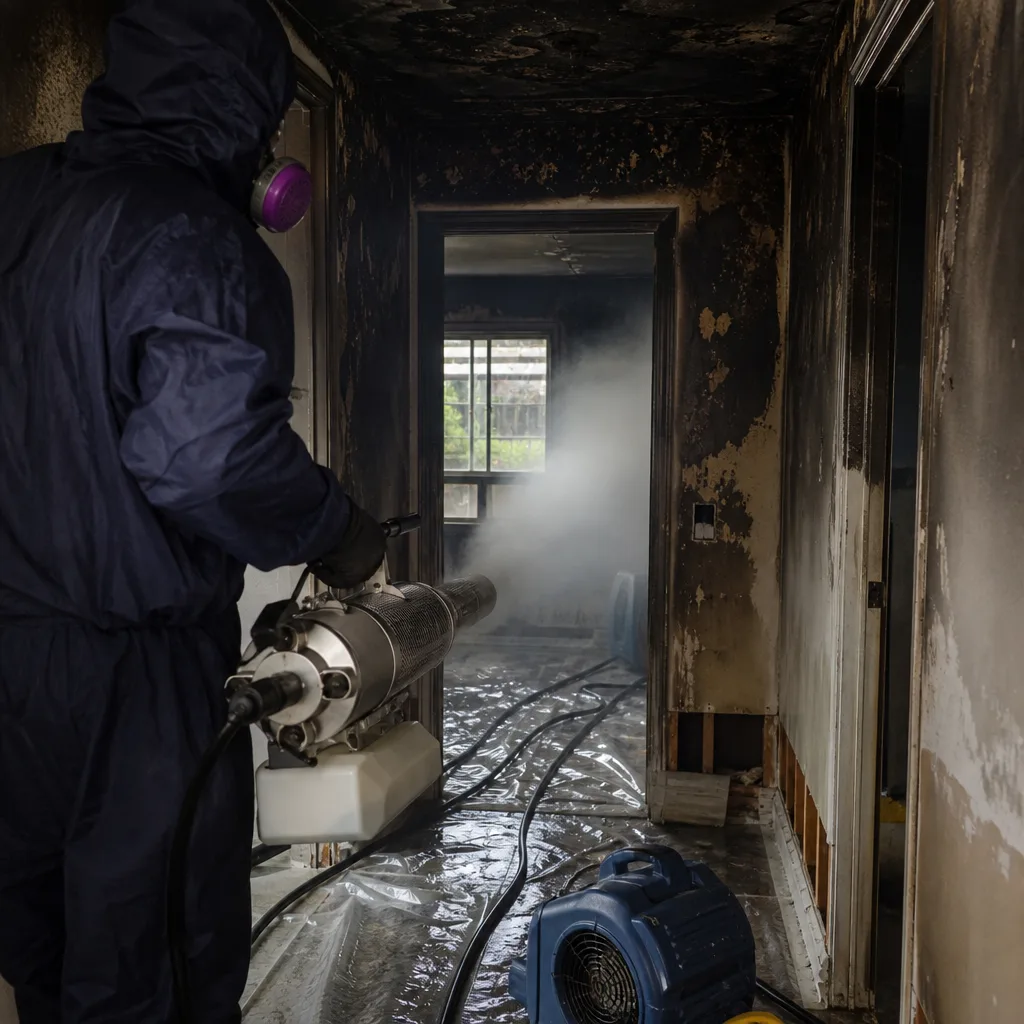
Roof Tarping
Roof tarping after wind events in La Palma is about more than the visible damage. Santa Ana winds don’t always tear shingles off cleanly; sometimes they lift an edge and let moisture wick underneath, where it lingers against the original 1960s sheathing. If we’re tarping a roof near Kelly Elementary or up around La Palma Central Park, we inspect the ridge line and the valleys, not just the obvious gap. A well-secured tarp stops the active leak. A properly installed one also buys you time to make an insurance decision without further damage every time it rains again.
What happens when you call
- 1
A real person answersNo phone trees - you reach a local pro.
- 2
You get an upfront price rangeHonest numbers before anyone is dispatched.
- 3
A background-checked tech heads outLicensed & insured, dispatched right away.
- 4
You approve before work beginsNothing starts until you say go.
Trusted Brands We Service in La Palma
We’re IICRC-certified and RIA-affiliated, and the equipment we bring to La Palma jobs reflects that. Injectidry systems for drying cavities that air movers can’t reach, Dri-Eaz desiccants for slab drying, Phoenix axial fans for wall cavities. The brand on the machine matters less than the person running it, but the person running it should know which machine belongs where. We stock the supplies that La Palma’s specific housing stock needs, which means we rarely have to leave a job to track down a fitting or a replacement part for a 1960s copper repair. When we say we’ll be back in the morning, we’re back in the morning.
Common Storm & Disaster Restoration Problems We See in La Palma Homes
- Hidden slab leaks masquerading as storm damage. A garage floods during a rain event and everyone assumes the storm drain backed up. But in La Palma’s slab-on-grade ranches, the real culprit is often a corroded 1960s copper or galvanized supply line under the entry slab. Storm runoff pours in, and the slab leak keeps feeding moisture from below. If you dry the surface without scanning the slab, the damage returns.
- Pre-1978 materials on every demolition. Popcorn ceilings, original joint compound, old insulation. Nearly every La Palma home was built before asbestos restrictions hit, so every flood cut and storm repair involves testing before demolition. A contractor who swings a sledgehammer without testing is creating a health hazard and an abatement cost that could have been avoided.
- Santa Ana wind damage that isn’t obvious from the ground. La Palma sits in the flat inland basin of northwestern Orange County. No coastal marine layer to soften the blow. Santa Ana winds hit harder here than in Seal Beach or Huntington Beach, and the damage often shows up as lifted ridge shingles or loosened flashing that you can’t see without getting on a ladder. That’s why we inspect beyond the visible tear-outs.
- Flat-grade drainage that concentrates water at garage entries. La Palma is flat. Really flat. The aging 1960s storm drain infrastructure can’t always keep up with atmospheric river bursts, and water pools at the low point of a property. On slab homes, that low point is usually the garage entry. Sandbagging helps, but the long-term fix often involves grading corrections and drain improvements, not just carpet replacement.
Pricing for Storm & Disaster Restoration in La Palma, CA
Storm damage restoration in La Palma typically runs these ranges:
| Service | Typical La Palma Range |
|---|---|
| Emergency board-up (single opening) | $250 - $500 |
| Roof tarping (up to 500 sq ft) | $400 - $900 |
| Debris removal and haul-off | $300 - $800 per truckload |
| Flood extraction and drying (single room) | $1,200 - $3,500 |
| Slab-leak moisture scan | $150 - $350 |
| Flood cuts and asbestos-safe demolition | $800 - $2,500 per affected room |
What moves the number is the extent of slab saturation, whether asbestos abatement is needed, and how many rooms were affected. A clean storm-water intrusion in a single garage with no slab involvement and no testing issues stays on the low end. A hidden slab leak that’s been feeding moisture for weeks, combined with pre-1978 drywall that needs abatement, lands higher. Both deserve an honest number before work starts. Call (855) 915-0646 for a free estimate based on what’s actually in your home, not a pricing matrix.
We Also Serve Cities Near La Palma
Our crews work across northwestern Orange County, so if you’re in Cerritos, Cypress, Buena Park, or Hawaiian Gardens, the same team that handles storm restoration in La Palma can reach you fast. Same owner answering the phone, same moisture-scan-first protocol, same 90-Day Done Right Promise in writing.
Serving La Palma, CA - Our Local Coverage Area
We’re based in the La Palma area and know this community well. Use the map below to see our service coverage - if you’re nearby, we can almost certainly help.
FAQs - Storm & Disaster Restoration in La Palma
Because La Palma’s homes were built almost entirely in one wave during the 1960s and 1970s on concrete slab foundations, and the copper and galvanized supply lines beneath those slabs are now 50 to 60 years old. A storm can push water into a garage while a corroded line under the slab feeds additional moisture from below. If you skip the scan and start drying, the slab stays wet and the damage resurfaces within weeks. A slab moisture scan costs $150 to $350 and tells you whether you’re dealing with one problem or two.
Yes, if the home was built before 1978, which covers the overwhelming majority of La Palma’s planned-community housing stock from the 1960s and early 1970s. Popcorn ceilings, original joint compound, and some insulation contained asbestos. Cutting into those materials without testing releases fibers into the air and creates an abatement situation that costs far more than the test. On any storm demo where walls or ceilings are opened, the test gets done before the blade comes out. Call (855) 915-0646 if you’re unsure whether your storm repair involves pre-1978 materials.
La Palma has no coastal marine layer to blunt the force of a Santa Ana wind event. The city sits in the flat inland basin of northwestern Orange County, and winds that have weakened by the time they reach Seal Beach or Huntington Beach still hit La Palma hard. That means more ripped shingles, more damaged fascia, more downed fences and flying debris. It also means that wind damage in La Palma often shows up as subtle lifted edges and loosened flashing that a homeowner can’t see from the ground, which is why any roof assessment should include an actual inspection of the ridge line and valleys.
Water that pools near the garage door track or along the interior wall adjacent to the entry slab, especially if it reappears after the rain has stopped, is a classic slab leak signature in La Palma. Another warning sign: a wet carpet pad or saturated drywall along the base of a wall that has no exterior exposure to rain. A true storm intrusion dries as the rain stops. A slab leak keeps feeding moisture. If you’re seeing water that doesn’t behave like normal runoff, get a moisture scan before you pay for drying that won’t hold.
Because Santa Ana winds can lift shingle edges without tearing them off completely. Once a shingle edge is lifted, the seal is broken and water can wick underneath, against original 1960s sheathing that was never designed for repeated moisture exposure. You see no gap from the ground, but water is getting in during the next rain. A tarp over the affected area costs a few hundred dollars and stops the damage while you decide on a permanent repair. It’s cheap insurance against a much bigger roof deck replacement later.
Written by Wade Ferris, Owner at Wade’s Restoration of California. Locally owned and owner-operated since 2007.