
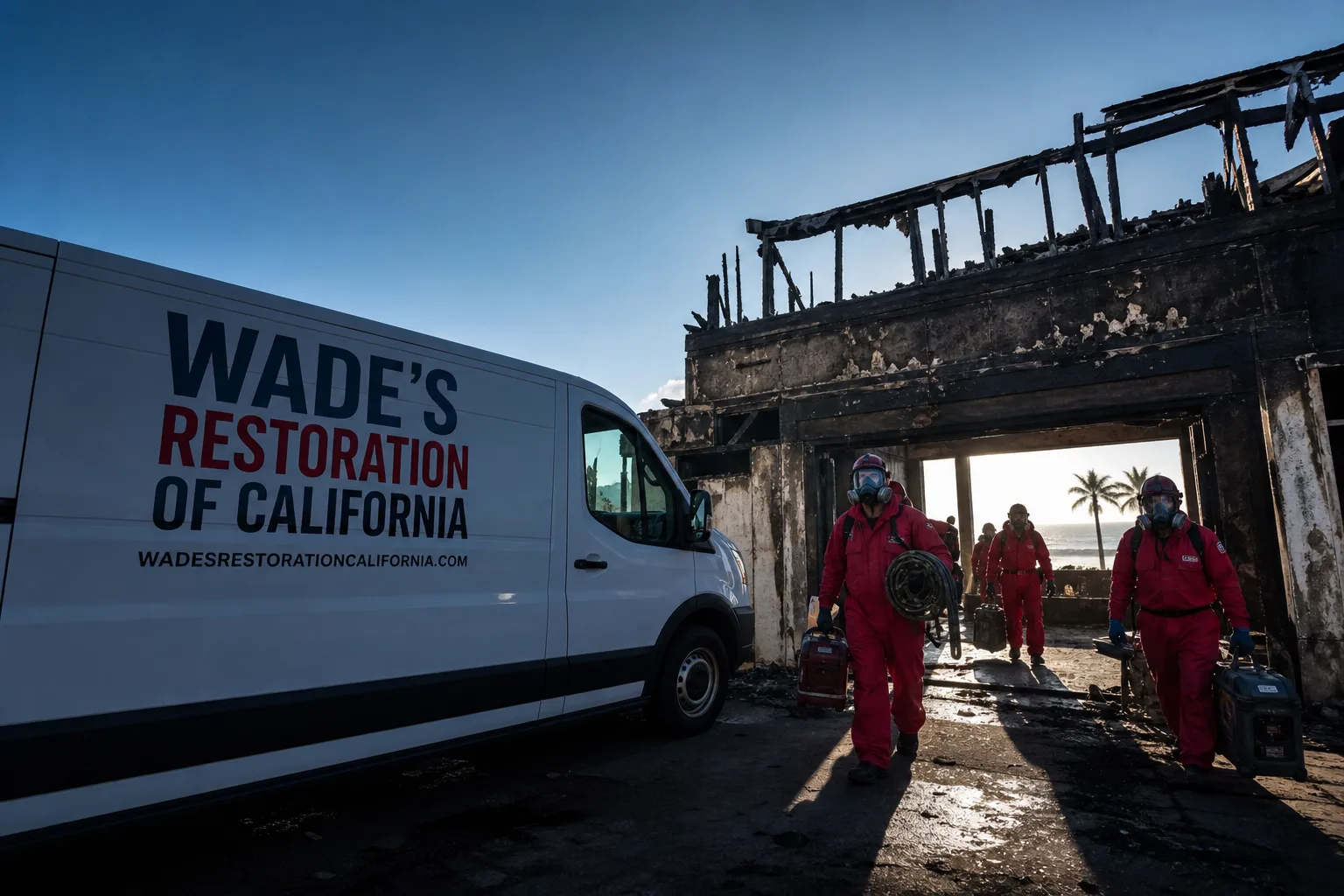
Fast, Reliable Storm & Disaster Restoration Across Interlaken
Storm and disaster restoration in Interlaken is different from anywhere else in Santa Cruz County. We’re not dealing with hillside mudslides or redwood trees through roofs out here. We’re dealing with the Pajaro River and a water table that sits right under your slab. When storm water rises in Interlaken, it comes from below as often as it comes from above, and that changes everything about how a restoration job has to be run. Wade Ferris has been answering his own phone at (855) 915-0646 since 2007, and he’ll be the one walking your property, not a crew you’ve never met.
Why Wade’s Restoration of California Is Interlaken’s Preferred Storm & Disaster Restoration Company
Wade Ferris started this company in 2007 with his name on the truck and his cell number on the card. He’s still the one who answers at 2 a.m. when the Pajaro River is rising and you’re watching water push up through your floorboards on Buena Vista Drive or down near College Road. That matters in Interlaken. This is a small agricultural community where people know each other, and Wade knows that if he does right by the family on one corner of 95019, he’s going to see them again at the hardware store on Saturday morning. That’s the oldest accountability mechanism there is.
Our Storm & Disaster Restoration team runs background-checked, uniformed technicians with professional-grade equipment from Dri-Eaz, Phoenix, and Injectidry. Every water, fire, and mold restoration job carries the 90-Day Done Right Promise in writing. If it’s not done right, Wade makes it right. No fine print, no arguing. And he’s the one who takes moisture readings every single day and hands you the full log when the job is done. Almost nobody else in this trade does that, and it’s why homeowners in Interlaken keep our number saved.
Response time to Interlaken is measured in minutes, not days. Wade heads out from the Bay Area dispatch office and can typically have extraction running inside the hour. When you call, a live person answers. That’s often Wade himself.
Our Storm & Disaster Restoration Services in Interlaken
Flood Damage Restoration
Flood damage restoration in Interlaken starts under the house. The March 2023 levee breach on the Pajaro River taught every homeowner in this valley what happens when river surge meets a shallow water table: water doesn’t just come through walls, it comes up through the slab. We map moisture beneath the structure first, then extract, then dry with Phoenix axial air movers sized for the valley’s marine-layer humidity. Skip the sub-slab step and you’ll have mold in 48 hours. We don’t skip it.
Storm Damage Cleanup
After an atmospheric river blows through the Pajaro Valley, we’re the ones hauling saturated debris, pulling damaged drywall, and getting your home to a dry, stable baseline. Storm cleanup in Interlaken usually means dealing with clay-heavy soil that’s holding water against your foundation, which means the cleanup phase sets up the drying phase. We handle both. Debris removal, water extraction, and full documentation for your insurance adjuster happen in one visit.
Emergency Board-Up
When a storm blows out a window on San Andreas Road or a falling branch opens a hole in your roof near the 95019 corridor, emergency board-up keeps the next rain from turning a repair into a rebuild. We board broken windows, tarp compromised roofs, and secure entry points so your home isn’t exposed to wind-driven rain or opportunistic pests. This is triage work, and we treat it that way. Fast, clean, and documented for insurance.
Roof Tarping
Roof tarping in Interlaken has to be done right the first time because the marine layer means a loose tarp is a wet interior within a week. We use reinforced poly tarps, secure them with cap nails and furring strips, and document everything with photos for your claim. A good tarp buys you time to schedule a proper roof repair without your insulation soaking through. A bad tarp costs you a ceiling. We’ve seen both, and we only do the first kind.
What happens when you call
- 1
A real person answersNo phone trees - you reach a local pro.
- 2
You get an upfront price rangeHonest numbers before anyone is dispatched.
- 3
A background-checked tech heads outLicensed & insured, dispatched right away.
- 4
You approve before work beginsNothing starts until you say go.
Trusted Brands We Service in Interlaken
Wade’s Restoration runs IICRC-certified work with equipment from Dri-Eaz, Phoenix, and Injectidry. These aren’t rental-counter machines. They’re commercial-grade drying systems built for the kind of sustained, low-humidity-ratio conditions we get in the Pajaro Valley. RIA and IFA credentials back the work itself. For Interlaken homeowners, that means the equipment showing up at your door is the same gear we’d run on a commercial loss, and it’s not going to quit on day three of a week-long dry.
Common Storm & Disaster Restoration Problems We See in Interlaken Homes
- Sub-slab moisture intrusion from the shallow water table. The valley’s high groundwater means hydrostatic pressure pushes moisture up through original concrete floors after heavy rain. Perimeter extraction alone misses it entirely, and mold follows within days.
- 1960s-1970s slab-on-grade construction with original vapor barriers. These homes were never flood-proofed. Untreated wood subframing and aging drywall absorb groundwater fast, and the original vapor barriers are often deteriorated or missing in spots.
- Marine-layer humidity that slows structural drying to a crawl. What dries in three days inland takes a week or more in Interlaken. Drywall and flooring left untreated for even five days often develops irreversible microbial growth, especially in older homes.
- Clay-heavy soils that hold water against foundations after atmospheric rivers. The Pajaro Valley’s soil doesn’t drain. It saturates and stays saturated, which means post-flood moisture intrusion continues long after the standing water is gone.
Pricing for Storm & Disaster Restoration in Interlaken, CA
We Also Serve Cities Near Interlaken
If you’re in Watsonville, Aptos, Rio Del Mar, or Capitola, the same team covers you. Our Storm & Disaster Restoration in Interlaken work extends throughout the Pajaro Valley and up the coast, with the same Dri-Eaz equipment, the same 90-day written promise, and the same live person on the phone at (855) 915-0646.
Serving Interlaken, CA - Our Local Coverage Area
We’re based in the Interlaken area and know this community well. Use the map below to see our service coverage - if you’re nearby, we can almost certainly help.
FAQs - Storm & Disaster Restoration in Interlaken
How does Interlaken’s shallow water table affect drying after a flood?
The shallow water table in the Pajaro Valley means groundwater can wick up through your slab for weeks after surface water is gone. Standard drying that only addresses the visible water will leave hidden moisture under the floor. That moisture fuels mold growth within days. Proper drying in Interlaken requires sub-slab moisture mapping and, in many cases, Injectidry panel systems that pull water out from beneath the concrete. Call (855) 915-0646 for an assessment of your specific foundation.
What makes flood damage in Interlaken different from damage in the Santa Cruz mountains?
Mountain flood damage is driven by runoff, erosion, and roof storm impacts. Interlaken flood damage is driven by river surge from the Pajaro River and groundwater intrusion from below. The March 2023 levee breach showed exactly how fast water can move across this flat valley floor. Homes here sit on saturated clay, not draining hillsides, so the water stays longer and moves differently. Different threat profile, different restoration approach.
Why do restoration crews in Interlaken need to start under the structure first?
Because hydrostatic pressure from the valley’s shallow water table pushes moisture up through slab floors from below. If you start with perimeter extraction and air movers on the surface, you’ll dry the walls and floors while the real moisture source sits underneath them. Within days, musty odors appear, followed by mold. Mapping moisture under the slab first tells us what we’re actually dealing with before we spend your insurance money on the wrong fix.
How long does structural drying actually take in Interlaken after a flood?
In inland valleys, structural drying often takes three to five days. In Interlaken, with the marine layer keeping ambient humidity high and clay soil holding water against the foundation, plan on a week or more. Rushing it means trapping moisture in drywall and flooring. Wade takes daily moisture readings and shows you the log, so you can watch the numbers come down day by day.
What specific parts of a 1970s Pajaro Valley home are most vulnerable after a flood?
The slab itself, the untreated wood framing behind original drywall, and any original vapor barrier that’s degraded over 50 years. These homes were never engineered for recurring inundation. Groundwater wicks into the wood subframing within hours, and the drywall absorbs it like a sponge. The joints where walls meet the slab are the first place we check. If your home on Buena Vista Drive or near College Road is from that era, the risk window is real. Call (855) 915-0646 and we’ll assess it honestly, no charge for the trip inside the county.
Call Wade’s Restoration of California Today
When the Pajaro River is rising or a winter storm has already put water in your home, you don’t need a call center. You need Wade Ferris on the phone, telling you exactly when he’ll be there. That’s what you get at (855) 915-0646. Free estimates, direct insurance coordination, and a 90-Day Done Right Promise in writing on every storm and flood restoration job. No runaround. No national chain. Just a local owner who answers his own phone and stands behind the work.
Written by Wade Ferris, Owner at Wade’s Restoration of California, serving Interlaken and the Pajaro Valley since 2007.