
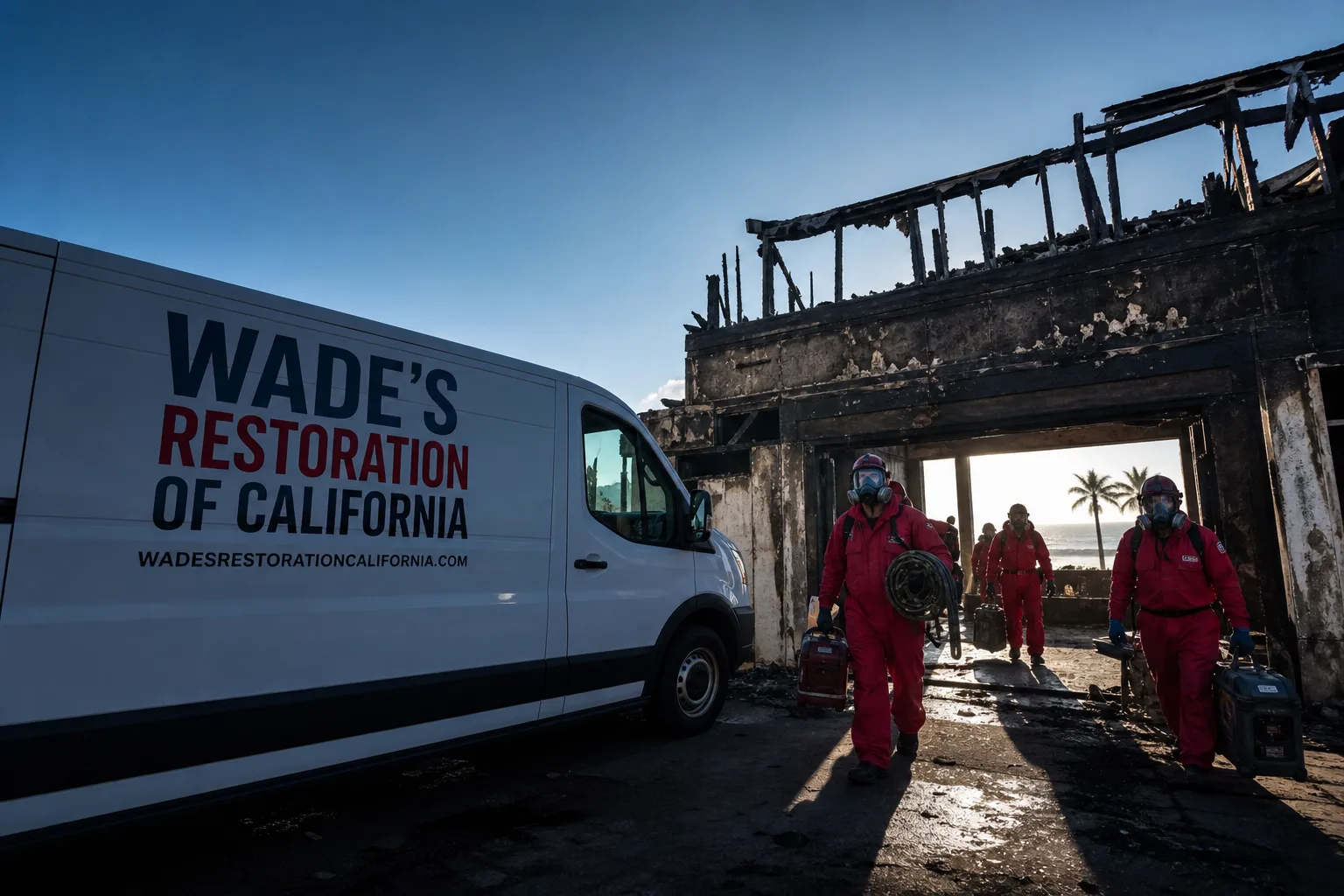
Fast, Reliable Storm & Disaster Restoration Across Hemet
When a storm tears through Hemet, you need someone who knows the difference between a stick-built tract home on Kirby Street and a 1980s manufactured home off Florida Avenue with a skirted crawlspace that’s already wicking water. We do. Wade’s Restoration has been pulling skirting, tarping roofs, and extracting floodwater across the 92543, 92544, 92545, and 92546 ZIP codes long enough to know that storm damage here doesn’t behave like it does in Temecula or Murrieta. Call Wade at (855) 915-0646 and you’ll get him on the phone, not a call center. He’ll have a crew on the road to Hemet inside the hour when there’s active water moving.
Storm damage in Hemet moves fast. The San Jacinto Valley floor collects runoff from the surrounding mountains with almost no warning, and a monsoon cell can turn a low-lying manufactured home lot into a shallow lake in twenty minutes. The Storm & Disaster Restoration work we do here starts with stopping the water, then goes straight to the part most crews skip: pulling the skirting and looking underneath.
Why Wade’s Restoration of California Is Hemet’s Preferred Storm & Disaster Restoration Company
Wade Ferris founded this company in 2007 and he still answers his own phone. That’s not a slogan. When a homeowner in the 92543 ZIP code near the San Jacinto River corridor calls at 2 a.m. because water is coming through the front door, Wade picks up. He’s the one who tells you what to do in the next ten minutes while his crew loads extraction equipment. Around Hemet, that’s how business gets done: you want the person you’re going to run into at Stater Bros. on a Saturday, not a franchise manager three states away.
Every water, fire, and storm restoration job we take on in Hemet carries the 90-Day Done Right Promise. If it’s not done right, Wade makes it right. In writing. That promise matters more in manufactured homes, where hidden moisture behind belly-board insulation can turn a $4,000 dry-out into a $30,000 mold remediation if the first crew didn’t check the underside. We’ve walked into too many Hemet mobile home parks where a previous restoration company set air movers on the floors, got a “dry” reading, and left fiberglass insulation under the subfloor saturated for two weeks. The homeowner found the mold months later.
Wade’s crew is background-checked and uniformed, and they use professional-grade equipment from Dri-Eaz and Phoenix. We document everything with photo logs and daily moisture readings. When your adjuster asks what was wet and for how long, you’ll have the full log in hand. Wade talks to the adjuster directly, so you’re not the one stuck relaying information between two parties who’ve never met.
Our Storm & Disaster Restoration Services in Hemet
Flood Damage Restoration
Flash flooding from San Jacinto Mountain runoff is the most common storm emergency we see in Hemet. When water breaches a home, the first 24 hours decide whether you’re looking at a cleanup or a full gut. On manufactured homes especially, the crawlspace under the skirted perimeter becomes a hidden reservoir. We pull skirting panels, thermally image the belly-board cavity, and place Injectidry mats against the particle-board subfloor before we declare anything dry. A typical flood extraction and dry-out in Hemet runs $2,800 to $6,500 depending on square footage and how far the water traveled under the home.
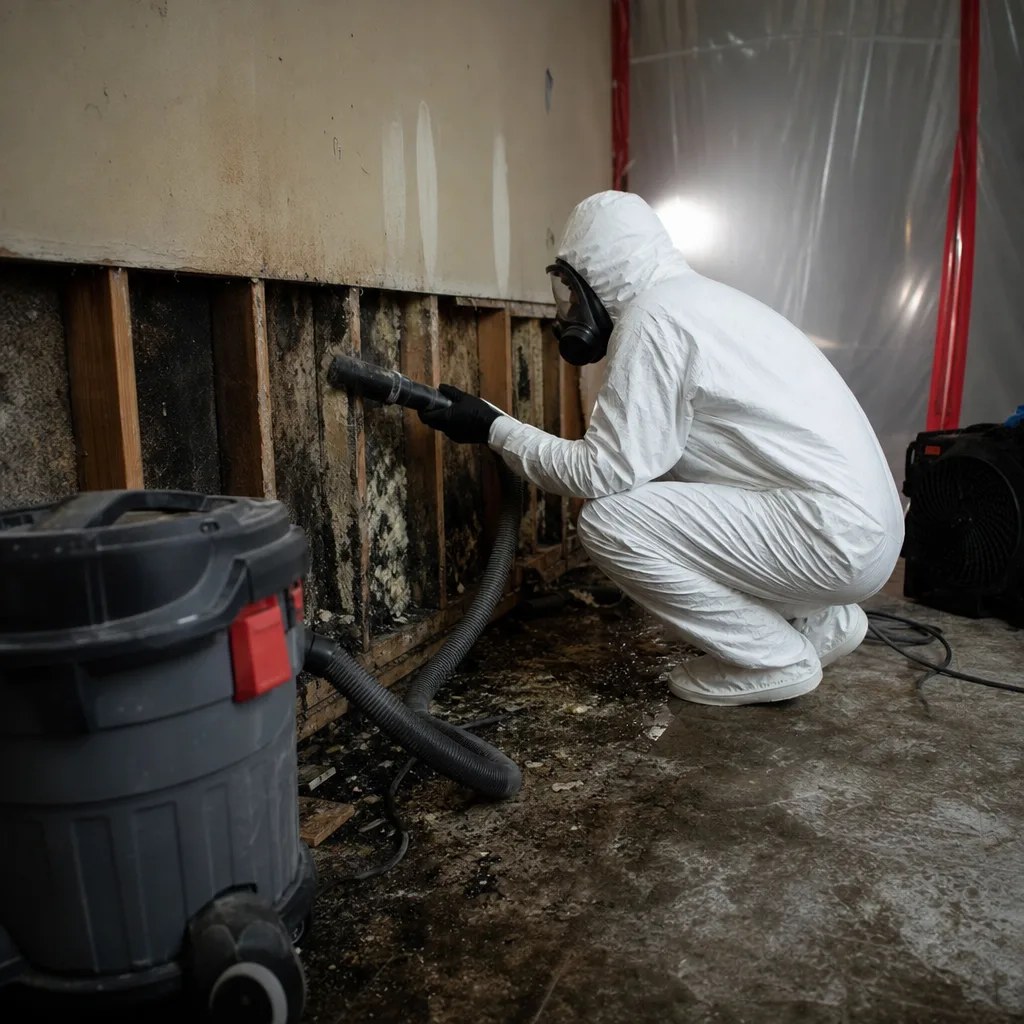
Emergency Board-Up
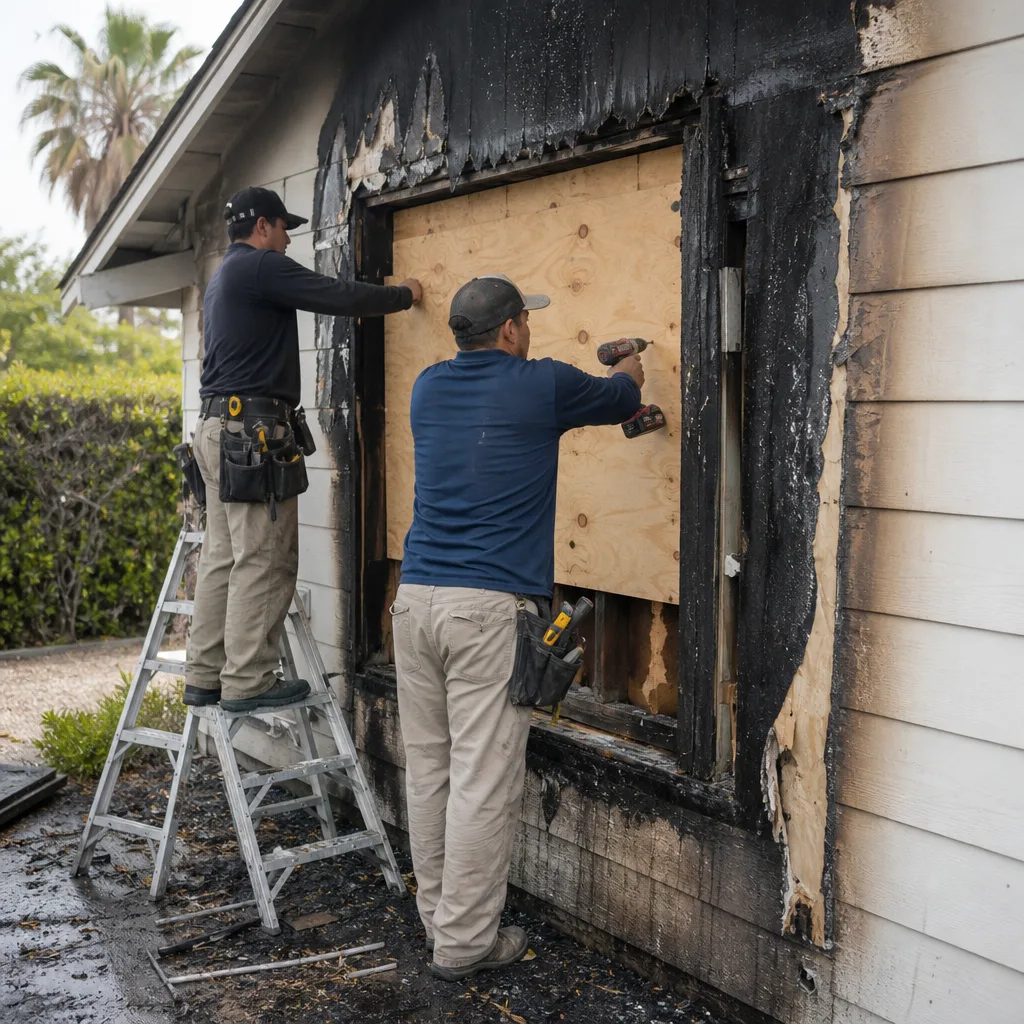
After wind rips a carport apart or a tree limb goes through a window on a 1970s mobile home, the opening sits exposed to rain and anyone walking by. We board up same day. Plywood, screws, and sealant. We don’t wait for the adjuster to approve it before we secure your home. Emergency board-up in Hemet typically runs $450 to $1,200 for a single opening. If a whole side of the home is open, expect $1,800 to $3,500. We write a scope before work starts so there’s no surprise number at the door.
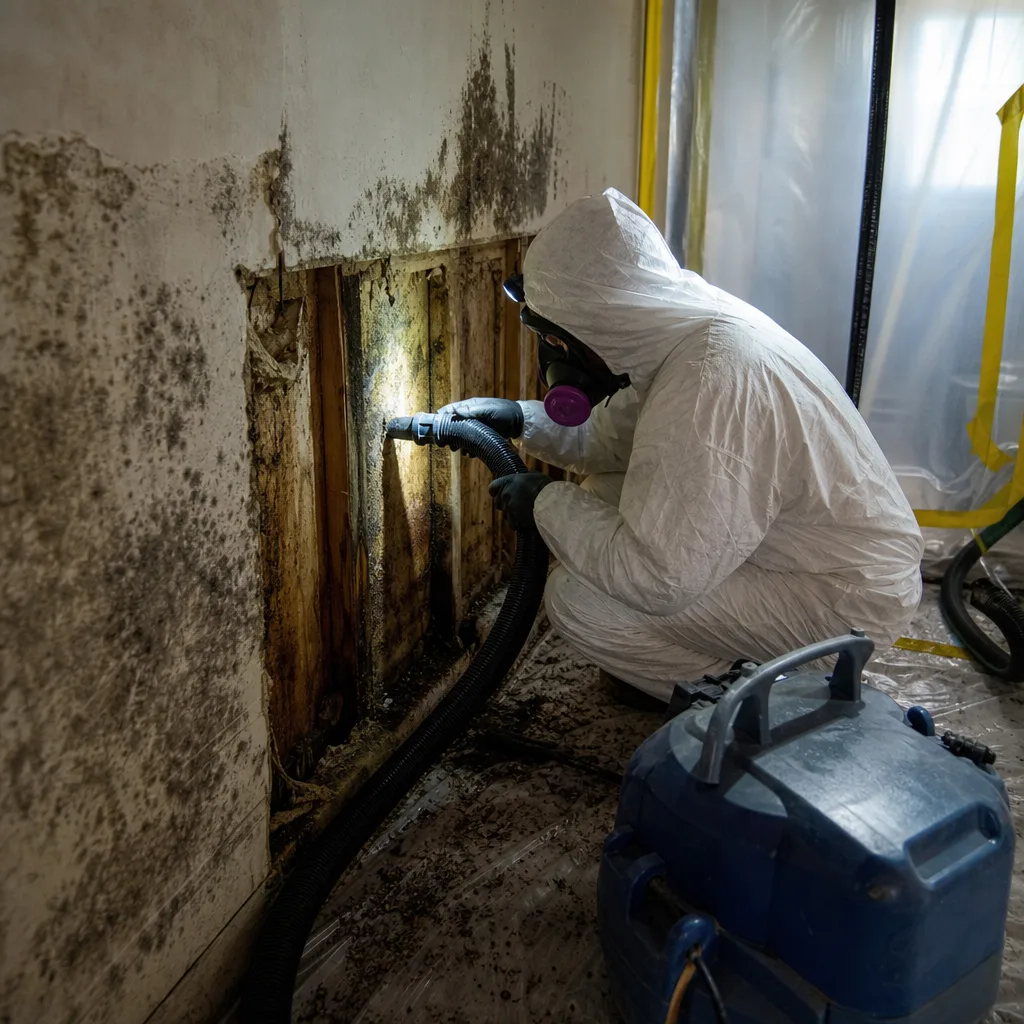
Roof Tarping
A lot of the homes we tarp in Hemet are 1970s and 1980s manufactured units with low-slope or flat roofs. Standard tarping that works on a shingled tract house will not hold on those. The tie-down points are different, the edge sealing is different, and a tarp flapping loose in Santa Ana winds does more damage than the original leak. We anchor tarps to the frame, not just the fascia, and we use furring strips along the edges. Roof tarping in Hemet runs $600 to $1,500 for most manufactured homes, and $900 to $2,200 for stick-built. If you have a Senior or Veteran 10% discount, we apply it. No brochure needed, just ask.
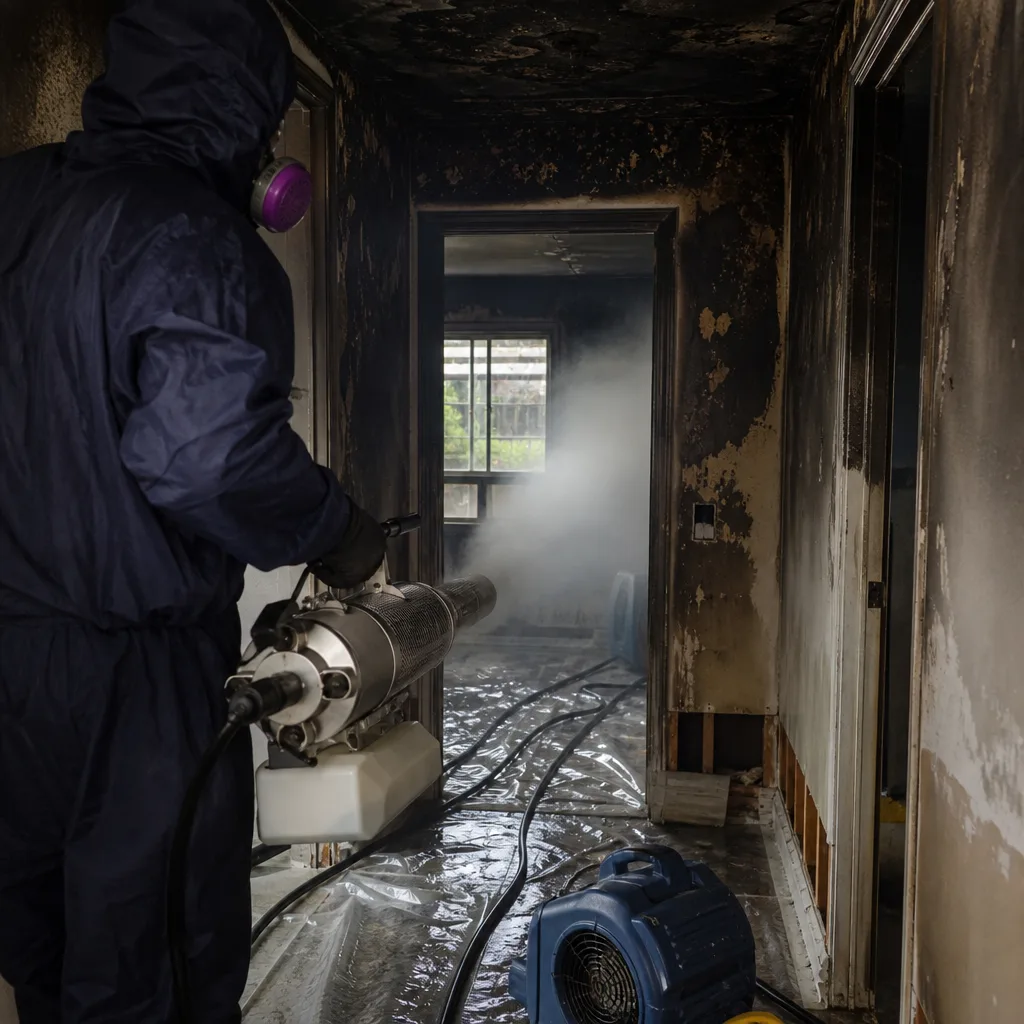
Storm Damage Cleanup
Debris removal, mud-out, saturated carpet and pad extraction, drywall cuts, and content triage. After a storm, you have a pile of wet stuff and a house full of mud. We start by removing what can’t be saved so the drying equipment can actually do its job. In Hemet’s older tract homes, we also check the supply lines before we re-pressurize the system, because polybutylene pipe that’s been sitting in hard water for three decades doesn’t always survive the pressure change. Storm damage cleanup in Hemet typically runs $1,500 to $4,000 for clean-water damage, higher if sewage or heavy mud is involved.
What happens when you call
- 1
A real person answersNo phone trees - you reach a local pro.
- 2
You get an upfront price rangeHonest numbers before anyone is dispatched.
- 3
A background-checked tech heads outLicensed & insured, dispatched right away.
- 4
You approve before work beginsNothing starts until you say go.
Trusted Brands We Service in Hemet
We run Dri-Eaz LGR dehumidifiers and Phoenix axial air movers on every Hemet job because they’re built to pull moisture out of low-clearance spaces that generic equipment can’t reach. Our IICRC-certified crew is trained on the RIA and IFA standards, and that matters when you’re working under a manufactured home where the margin for error is about three inches of clearance. We don’t stock equipment that takes a week to source. If a dehumidifier goes down during a Hemet dry-out, we swap it from our Inland Empire warehouse the same day, not next week.
Common Storm & Disaster Restoration Problems We See in Hemet Homes
- Invisible moisture under manufactured home belly boards. Water wicks through the fiberglass insulation packed against the underside, and a “dry” reading on the living room floor means nothing. The subfloor keeps absorbing moisture for weeks. We thermal-scan the underside on every water loss in a mobile home park.
- Particle-board subfloors that swell and delaminate after the fact. Treating a flooded Hemet mobile home like a standard stick-built job leaves the low-clearance crawls saturated. A few weeks later, the floors start to flex. By then, you need replacement, not drying.
- Polybutylene supply lines that fail during restoration. When a 1980s tract home near the San Jacinto River corridor floods, re-pressurizing the plumbing after extraction can blow old polybutylene fittings. We check the lines before we turn the water back on, because a second flood from a burst fitting is the last thing you need.
- Santa Ana wind damage that turns into a bigger roof problem. Fall winds in Hemet peel tarp edges and tear single-ply roofing from carports and older mobile homes like tinfoil. If a tarp wasn’t tied down to the frame, it’s coming loose. We re-tarp and re-secure before the next wind event, not after.
The honest truth about storm restoration in Hemet is this: the manufactured-housing reality changes every step of the job. A home on concrete slab dries differently than a 14×70 with a skirted perimeter and a pier-and-beam foundation. If the restoration crew doesn’t know that going in, you’re paying for two jobs. The first one that didn’t work, and the second one we come in to fix.
When a monsoon-fed storm cell overwhelmed the drainage ditches around a 1980s manufactured home in the 92543 ZIP code near the San Jacinto River corridor, our crew arrived to find water already wicking through the fiberglass insulation packed against the belly board. We pulled the rusted skirting panels, set up Dri-Eaz LGR dehumidifiers and Injectidry mats under the particle-board subfloor, and caught secondary mold growth before it forced a full gut. That job would have doubled in scope if the underside had gone unchecked. That’s the kind of storm work Hemet produces, and that’s the kind we’re ready for.
Pricing for Storm & Disaster Restoration in Hemet, CA
What you’ll pay for Storm & Disaster Restoration in Hemet depends on the nature of the damage and what type of home you’re in. Here’s what we see in this market: flood extraction and dry-out on a manufactured home runs $2,800 to $6,500. Roof tarping runs $600 to $1,500 on a mobile home, $900 to $2,200 on a stick-built. Emergency board-up runs $450 to $1,200 per opening. Storm cleanup runs $1,500 to $4,000 for clean water. Mud and debris removal add to that. We write the scope and price before work starts, and Wade signs it. Call (855) 915-0646 for an exact quote. Estimates are free, and there’s no trip charge inside Riverside County. Seniors and veterans get 10% off, always.
We Also Serve Cities Near Hemet
Our Hemet crew regularly covers storm and flood work in East Hemet, Valle Vista, San Jacinto, and Homeland. If you’re on the edge of the 92544 ZIP code or just over the line into San Jacinto, call us. Wade heads out the same way he does for Hemet proper, and the same pricing and the same 90-Day Done Right Promise apply.
Serving Hemet, CA - Our Local Coverage Area
We’re based in the Hemet area and know this community well. Use the map below to see our service coverage - if you’re nearby, we can almost certainly help.
FAQs - Storm & Disaster Restoration in Hemet
Because the belly-board cavity under a manufactured home traps moisture in fiberglass insulation against the subfloor, and if you don’t inspect and dry that space, you’ll get mold growth and subfloor delamination weeks after the living areas read “dry.” We pull the skirting on every water job in a mobile home park and set drying equipment under the home. Call (855) 915-0646 if you’ve had water damage and nobody checked underneath.
Fast. When a storm cell stalls over the San Jacinto Mountains, runoff hits the valley floor and the flat drainage on manufactured-home lots can’t keep up. Homes in the 92544 ZIP code have gone from dry to ankle-deep in under thirty minutes. If water is moving, call us immediately. The first hour determines how much of your subfloor and insulation survives.
Because fall Santa Ana events drive wildfire ignition in the hills around the 92543 and 92545 ZIP codes, and when the wind shifts, smoke and fine ash push down into Hemet neighborhoods. Ash seeps through attic vents, window seals, and evaporative cooler pads. Homes that were never touched by flame smell like a campfire for weeks. We clean ducts, soft goods, and structural surfaces to remove the smoke odor at the source rather than masking it.
The roof structure. A 1970s mobile home has a low-slope or flat roof with metal edge trim and thin framing. A tarp tied to fascia alone will pull loose in the first Santa Ana wind. We anchor to the frame members and seal edges with furring strips, which keeps the tarp in place through rain and wind events that would strip a standard tarp job clean off.
Sometimes, if we get to it fast and dry the underside properly. Particle-board subfloor that’s been wet less than 48 hours and dried with Injectidry mats and LGR dehumidifiers from both sides can often be saved. If it’s been wicking for a week and the board is swollen or delaminating, replacement is the only option. That’s why we tell Hemet homeowners to call the day the water happens, not the day the smell shows up. Call (855) 915-0646 and Wade will tell you straight what you’re looking at.
Written by Wade Ferris, Owner at Wade’s Restoration of California, serving Hemet since 2007.