
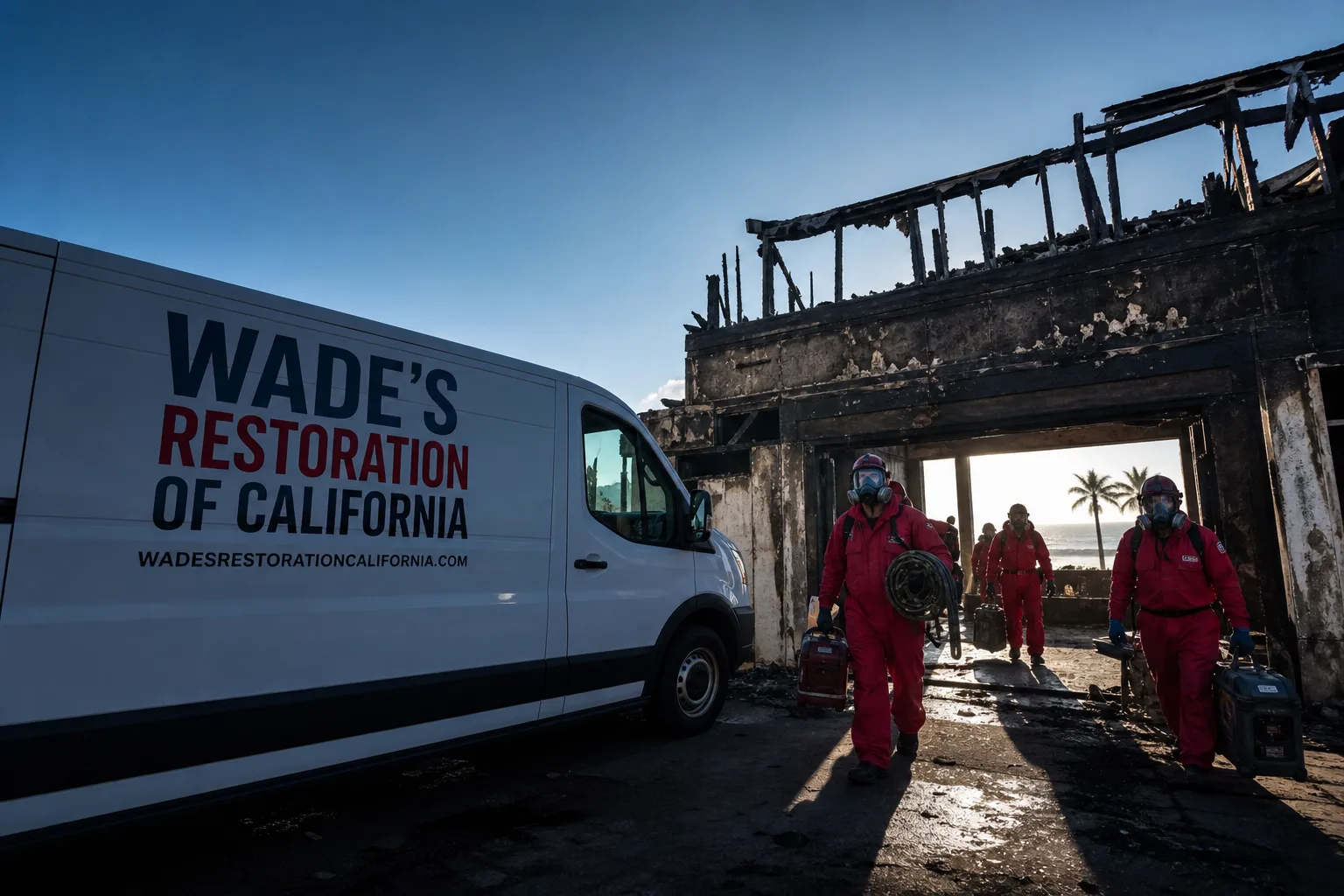
Fast, Reliable Storm & Disaster Restoration Across Fairfax
When Fairfax Creek jumps its banks or hillside runoff pours through your foundation, you need a crew that knows every block along Broadway, every alley behind the old railroad cottages, and every creek-side address that floods in the same sequence every winter. Storm and disaster restoration in Fairfax runs $1,800 to $6,500 for typical water extraction and drying, and $450 to $1,100 for emergency board-up and roof tarping. We answer the phone at (855) 915-0646 day or night, and a live person talks to you within minutes, not a voicemail queue.
Why Wade’s Restoration of California Is Fairfax’s Preferred Storm & Disaster Restoration Company
Wade Ferris started this company in 2007 with a simple rule: put your own name on the truck and answer the phone yourself. In Fairfax, that means the same familiar face shows up on creek-side blocks year after year, because Wade knows which addresses on Broadway recur on call logs every atmospheric river season. He’s on a first-name basis with the hardware store staff on Sir Francis Drake Boulevard and enough of your neighbors that asking around will tell you exactly who showed up at midnight when their basement flooded.
We send background-checked, uniformed crews in trucks stocked with Dri-Eaz and Phoenix drying equipment, because the tight clearance behind an old Fairfax cottage doesn’t allow for a second trip across town. Reviews from Fairfax homeowners run consistently strong, and most of our business here comes from people who got our number from the neighbor whose crawl space we dried out last winter. Wade’s crew reaches Fairfax fast from our San Francisco Bay Area office, usually within 45 to 60 minutes for emergency extraction calls in the 94930 and 94978 zip codes.
What that means in practical terms: if Fairfax Creek overtopped at 2 a.m. and water is standing in your living room, you call Wade. He picks up. He tells you when the crew rolls. Then he shows up himself, not a stranger with a clipboard. That’s the whole model.
Our Storm & Disaster Restoration Services in Fairfax
Flood Damage Restoration
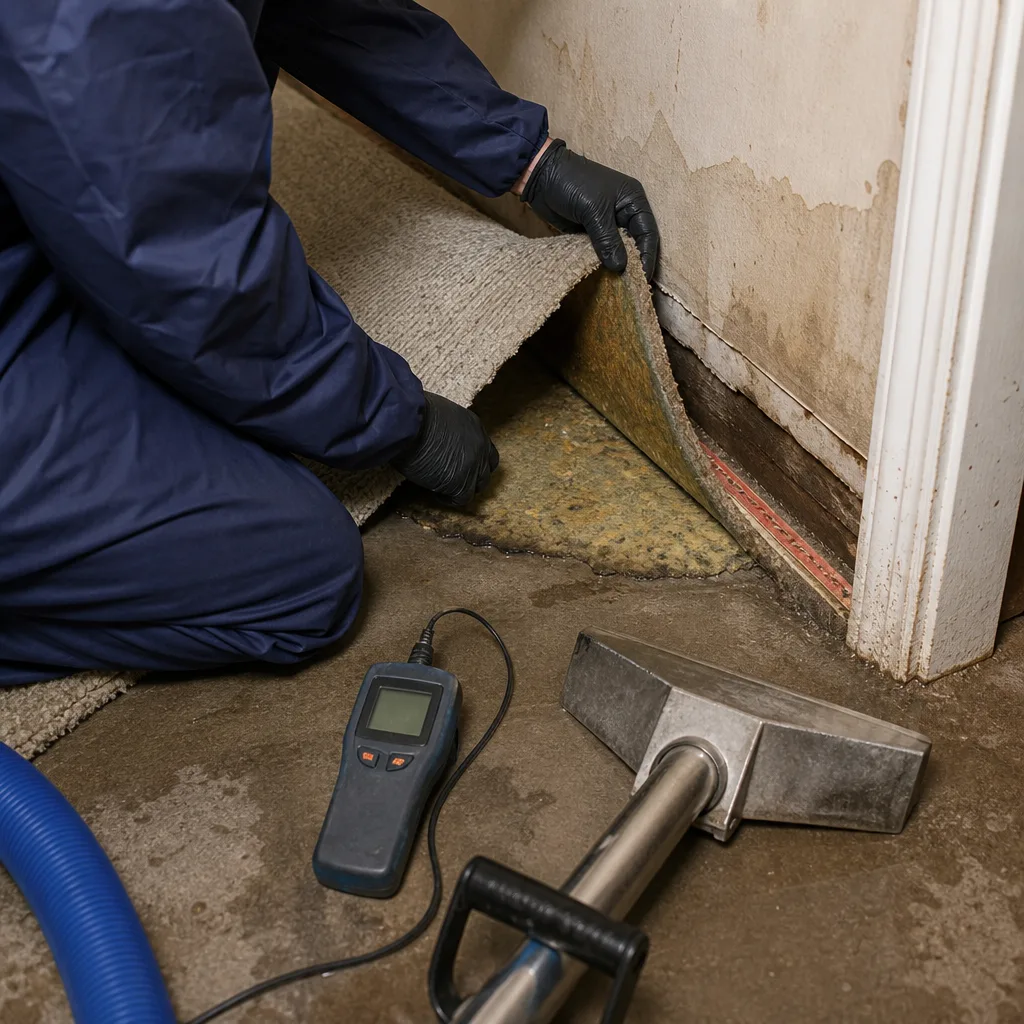
Fairfax’s wet-season floods are different from what San Anselmo or San Rafael deal with. The valley’s funnel effect concentrates Pacific moisture, and Fairfax Creek’s predictable overtopping means water rises from below while hillside runoff pours in from above. Our Storm & Disaster Restoration team extracts the water, then checks subfloor assemblies that haven’t fully dried from the last storm before we rebuild. In raised-foundation cottages built in the 1940s, that unvented crawl space holds moisture for months if nobody checks it properly. We check it properly, every single day, and hand you the moisture log when the job’s done.
Storm Damage Cleanup
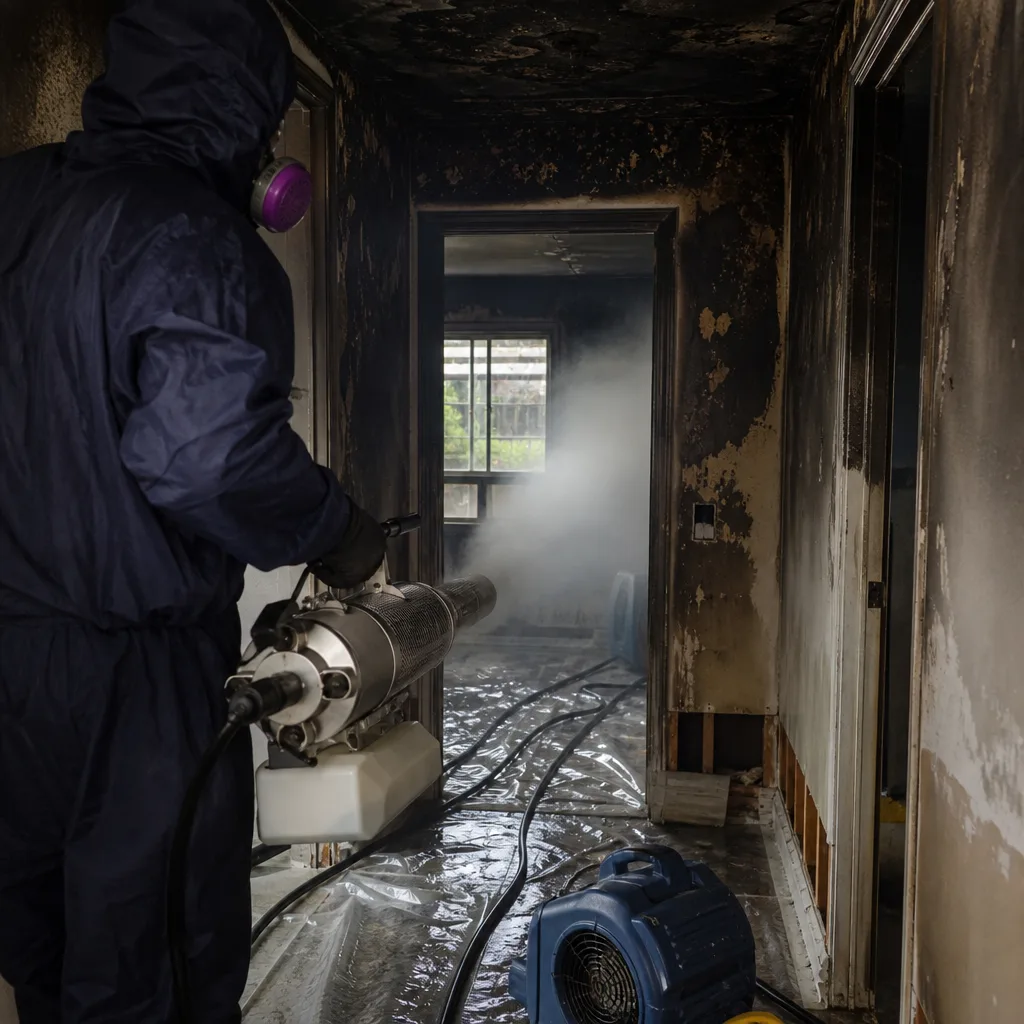
After the water recedes, Fairfax homeowners are left with mud, creek debris, and saturated drywall that starts damaging anything it touches within 48 hours. We haul out the ruined material, dry the structure, and treat surfaces so mold doesn’t get a foothold in the persistent dampness this valley is known for. The raised foundations and balloon-frame construction of Fairfax’s 1920s-through-1950s cottages mean water travels fast through wall cavities once it gets inside. We chase it the whole way, not just the visible spots.
Emergency Board-Up
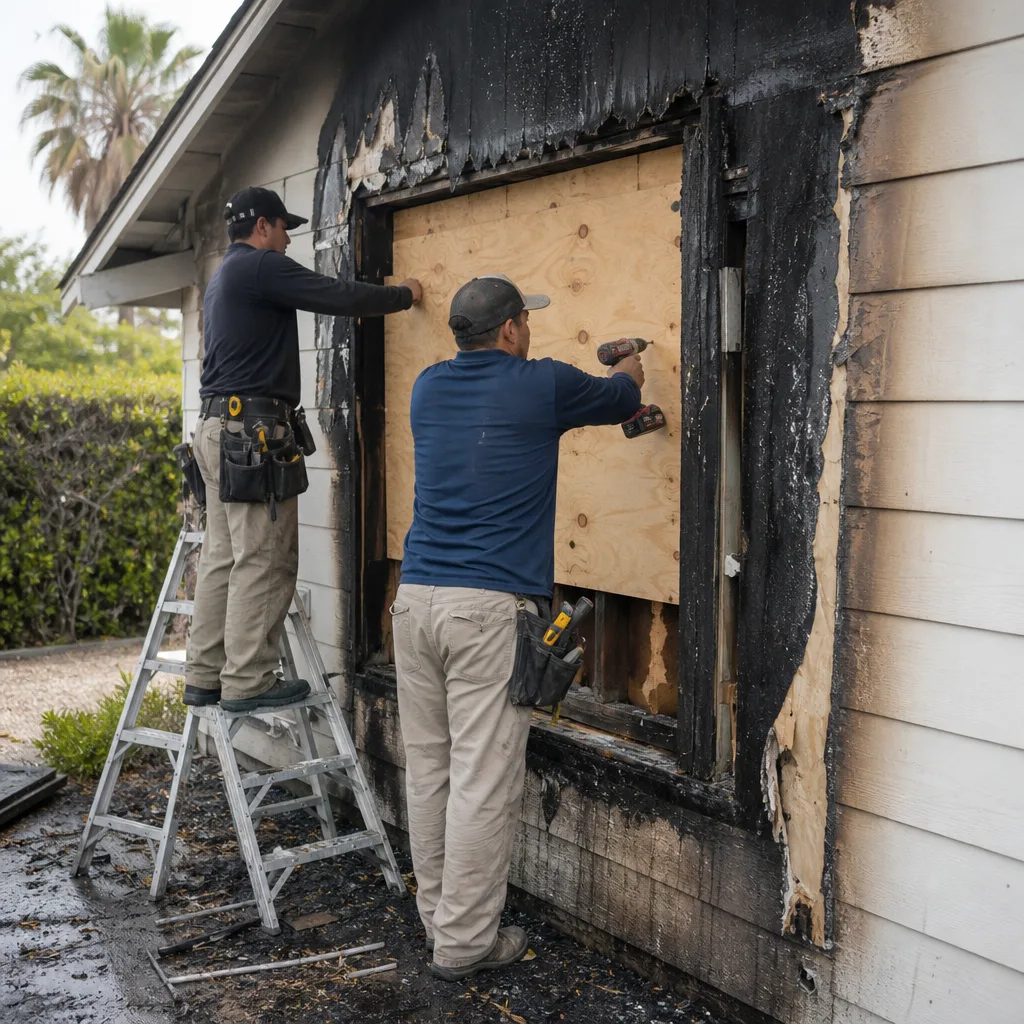
When a falling branch or storm wind takes out a window on a Hillside Avenue cottage, the damage multiplies fast if rain keeps coming through the opening. We board up broken windows and doors the same night, using materials sized for Fairfax’s older wood-frame openings rather than forcing a modern panel onto a 1930s frame. A proper board-up keeps the next storm’s rain out and gives your insurance adjuster a chance to assess the damage before you’re forced into a full replacement.
Roof Tarping
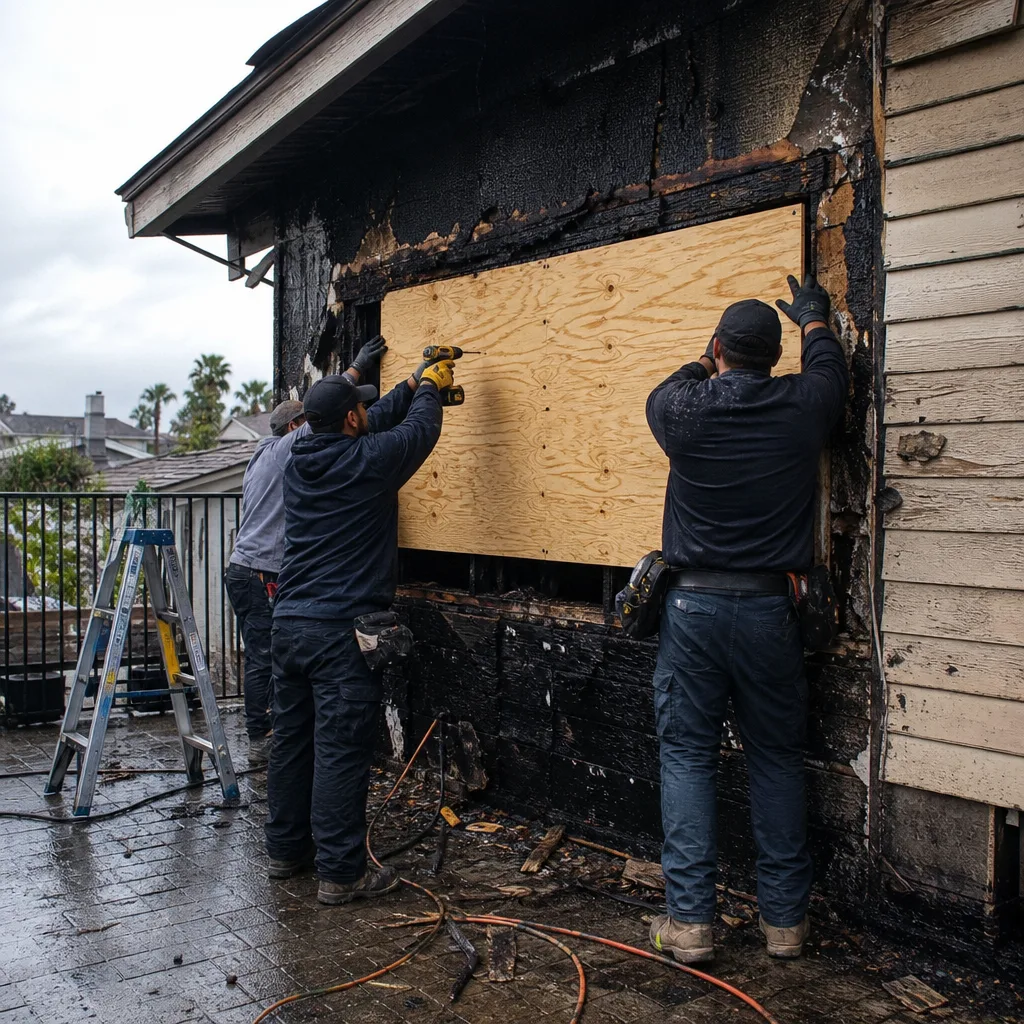
Fairfax sits tucked into hills that catch marine moisture year-round, so a torn roof section doesn’t have the luxury of waiting days for a repair. We tarp damaged roofs the same day, anchoring against wind that accelerates through the valley during winter events. The tarp keeps rain out of attic spaces and wall cavities that would otherwise hold water for weeks in this climate. Once the tarp’s secure, we document everything for your insurer and start the interior drying assessment.
What happens when you call
- 1
A real person answersNo phone trees - you reach a local pro.
- 2
You get an upfront price rangeHonest numbers before anyone is dispatched.
- 3
A background-checked tech heads outLicensed & insured, dispatched right away.
- 4
You approve before work beginsNothing starts until you say go.
Trusted Brands We Service in Fairfax
We run Phoenix and Dri-Eaz drying equipment on Fairfax jobs because those units handle high-humidity, low-clearance spaces better than anything else we’ve tested. Our training and certifications through the RIA and IFA mean the equipment gets used correctly, and our trucks carry the accessories needed for creek-side cottages with tight alley access. If your home had storm damage from a previous company, we stock the parts and materials to match what’s already there, and we’ll give you a free second opinion on any written estimate you’d like us to review.
Common Storm & Disaster Restoration Problems We See in Fairfax Homes
- Flooded creek-side foundations that never fully dried from the last storm. The same addresses along downtown Broadway flood in a predictable sequence, and wet-season ground saturation means subfloor assemblies often haven’t dried before the next event hits. We find hidden mold between floorboards and subfloor in homes that looked dry from above.
- Persistent hillside runoff that re-saturates the same walls every wet season. Homes on streets climbing into the surrounding hills get water moving through slope drainage above and creek flooding below during major storms. Treating this as a one-time event leaves you doing the same restoration next year.
- Alley-access drying challenges on older cottage lots. Fairfax’s denser blocks have narrow alleys and minimal clearance between homes, and full-size drying equipment doesn’t always fit without planning. We bring equipment sized for these spaces, not whatever’s on the truck.
- Unvented crawl spaces with no vapor barrier holding storm moisture for months. The 1920s-through-1950s cottages in Fairfax frequently lack modern vapor barriers, and their raised foundations create perfect conditions for mold colonization after any water intrusion. If nobody opens the crawl space hatch, you won’t know until the smell comes up through the floorboards.
Pricing for Storm & Disaster Restoration in Fairfax, CA
Flood damage extraction and drying in Fairfax typically runs $1,800 to $6,500, depending on how far water traveled and whether creek flooding or hillside runoff is the source. Emergency board-up runs $450 to $900 per opening, and roof tarping runs $500 to $1,100 for a standard Fairfax cottage roof section. Debris removal after a storm runs $350 to $1,400 depending on volume, and full crawl space drying with vapor barrier replacement typically adds $900 to $2,800 when the raised foundation is involved. The final number depends on square footage, how long water sat, and whether subfloor assemblies were already wet from a previous event. We give you a written scope before any work starts, charge no trip fee inside our county, and offer a permanent 10% discount for seniors and veterans. Call (855) 915-0646 for an exact quote.
We Also Serve Cities Near Fairfax
Our Fairfax crews regularly work in Storm & Disaster Restoration in Fairfax and the surrounding communities, including San Anselmo, San Rafael, Kentfield, and Lucas Valley-Marinwood. Same-day response to Fairfax and these neighboring towns is usually available, and the same local knowledge applies whether you’re on a creek-side block or a hillside street.
Serving Fairfax, CA - Our Local Coverage Area
We’re based in the Fairfax area and know this community well. Use the map below to see our service coverage - if you’re nearby, we can almost certainly help.
FAQs - Storm & Disaster Restoration in Fairfax
Fairfax Creek overtops its banks in a predictable sequence during atmospheric river events, and the same addresses near downtown Broadway recur on storm call logs every winter. This changes how we dry those properties: we assume the subfloor assembly is already wet from prior saturation before we start, extend drying times accordingly, and add anti-microbial treatment to prevent mold cycles from repeating year after year. Call (855) 915-0646 and we’ll assess your specific block’s flood history before recommending a drying plan.
Yes, you absolutely should. Fairfax’s older wood-frame cottages often have unvented crawl spaces with no modern vapor barrier, and the valley’s persistent dampness means that space holds moisture for months after any storm event. Hidden mold between floorboards and subfloor is common even when the floor surface looks completely dry. We’ll inspect the crawl space on every Fairfax storm job, take moisture readings daily, and hand you the full log at the end so you can see exactly what dried and when.
Yes. We plan for tight access on Fairfax jobs because we know the older cottage lots and alley-load streets have limited clearance between homes and minimal parking. Our crews bring Dri-Eaz and Phoenix equipment sized to navigate those spaces, and we check access before the truck rolls so we don’t arrive with equipment that can’t make it past the fence line. If your property has an unusually tight alley or hillside access, tell us when you call and we’ll adjust what we bring.
Yes, and it’s a critical difference. Hillside runoff brings water in from above, often moving through slope drainage and saturating walls from the outside, while creek flooding typically rises from below and saturates floors and crawl spaces first. Many Fairfax homes deal with both simultaneously, because the valley’s topography sends slope water down into creek-side blocks. A proper restoration plan addresses both directions of water entry, not just the visible flooding. Call (855) 915-0646 and we’ll assess whether your property faces one threat or both.
It’s never too late to check, and in Fairfax’s damp valley climate, mold that started last winter has likely continued growing in wall cavities, subfloor assemblies, and crawl spaces all year. We regularly find active mold colonization in Fairfax homes months after a flood event, especially in the older cottages with unvented raised foundations. The sooner we inspect, the less replacement work you’re facing. We’ll document everything for your insurer and give you a straight answer about what’s needed and what isn’t.
Written by Wade Ferris, Owner at Wade’s Restoration of California, serving Fairfax since 2007.