
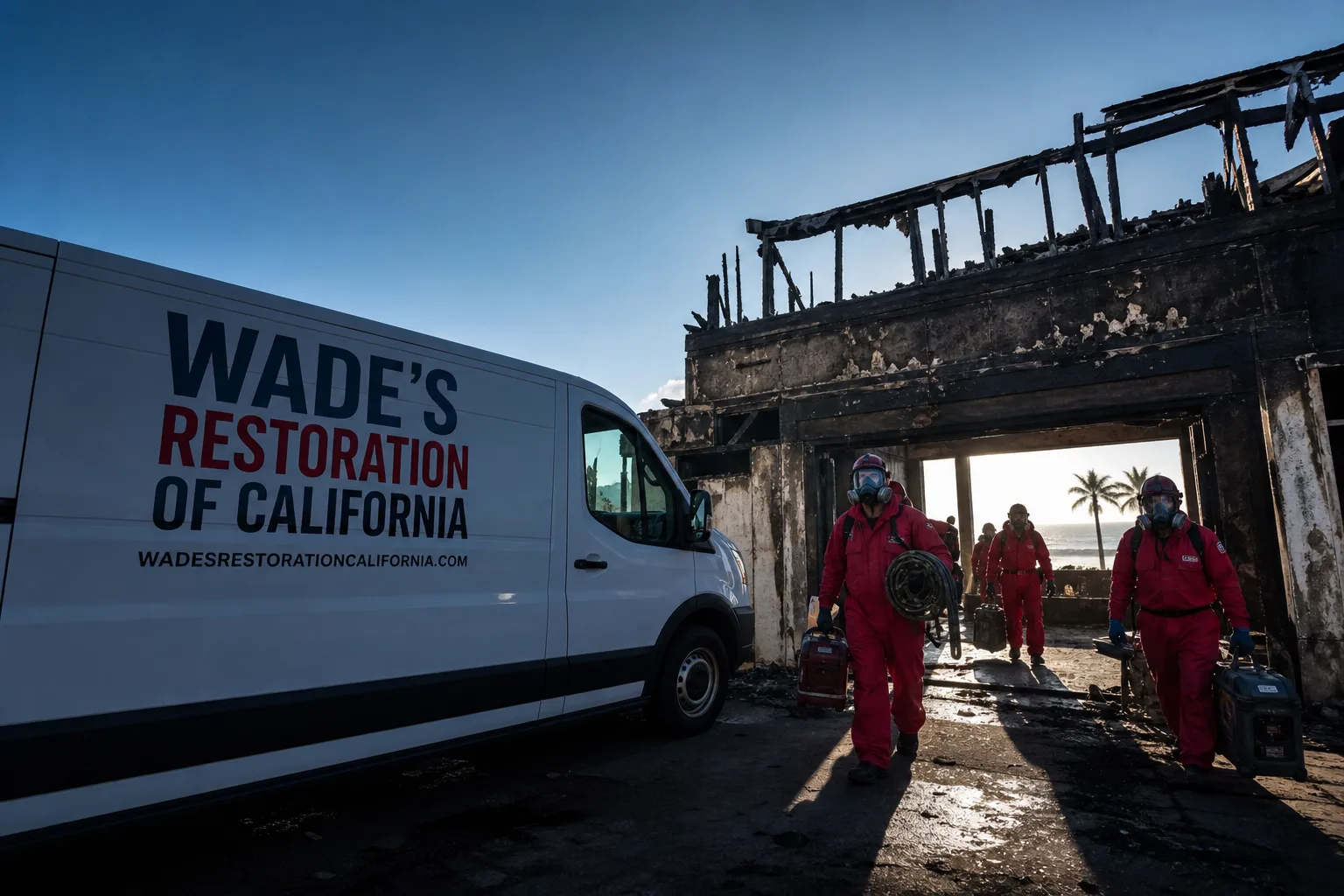
Fast, Reliable Storm & Disaster Restoration Across Big Bear Lake
Storm damage in Big Bear Lake hits differently at 6,752 feet. Heavy snow, ice dams, and hard freezes tear at old cabins and A-frames. Then there’s the problem nobody in the flatlands thinks about: the house sat empty for two weeks when the pipe let go. So the water ran. And ran. By the time anyone saw the damage, it wasn’t a wet corner. It was a structural event. Our Storm & Disaster Restoration team knows how this plays out up here. We’re on call 24/7 at (855) 915-0646, and Wade Ferris answers his own phone.
Why Wade’s Restoration of California Is Big Bear Lake’s Preferred Storm & Disaster Restoration Company
We’ve cleaned up after January pipe bursts in Boulder Bay, ice-dam leaks near Moonridge, and wind damage along North Shore Drive. Homeowners up here want someone who understands mountain conditions, not a call-center script. Wade Ferris founded this company in 2007, and he’s still the one who shows up. His name is on the truck. His address is published. You’ll probably run into him at the hardware store next Saturday. That’s the kind of accountability you don’t get from a national franchise.
Response time matters when a cabin is taking on water. We can usually have a crew heading up Highway 18 or Highway 330 within the hour. Roads sometimes change that calculus, and we’ll tell you straight if the pass is slow. What we won’t do is leave you on hold. Calls are answered by a live person, 24 hours a day, seven days a week. Often that person is Wade.
Big Bear Lake customers also appreciate something most restoration companies don’t offer: documentation. Wade takes moisture readings every single day and hands you the full log when the job is done. Almost nobody in the trade does that. Add in the 90-Day Done Right Promise, stamped in writing on every contract, and you start to see why neighbors recommend us. No charge for a second opinion on any written estimate, either.
Our Storm & Disaster Restoration Services in Big Bear Lake
Restoration work here starts with the unique conditions of the mountain. Every plan accounts for delayed discovery, snow-blocked access, and high-altitude drying physics. Here’s what we handle most in the 92315 zip code.
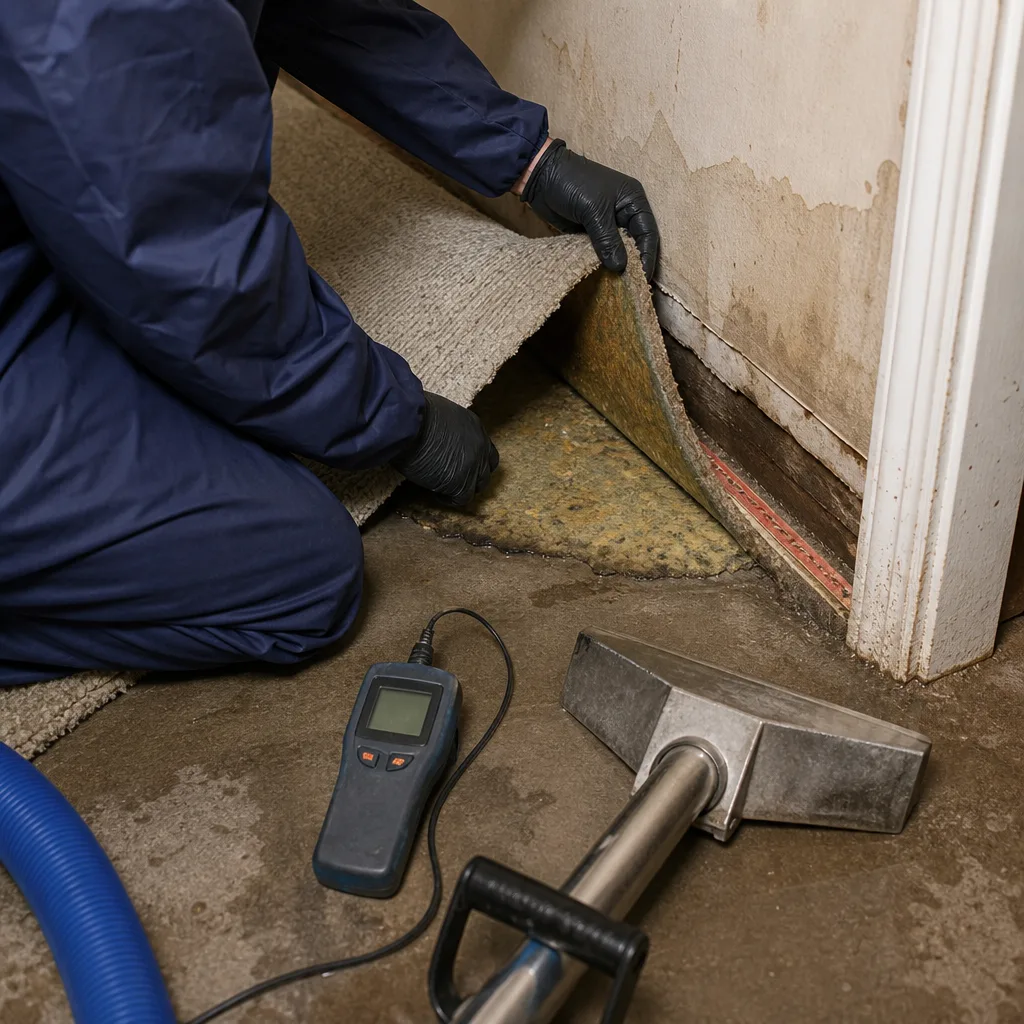
Flood Damage Restoration
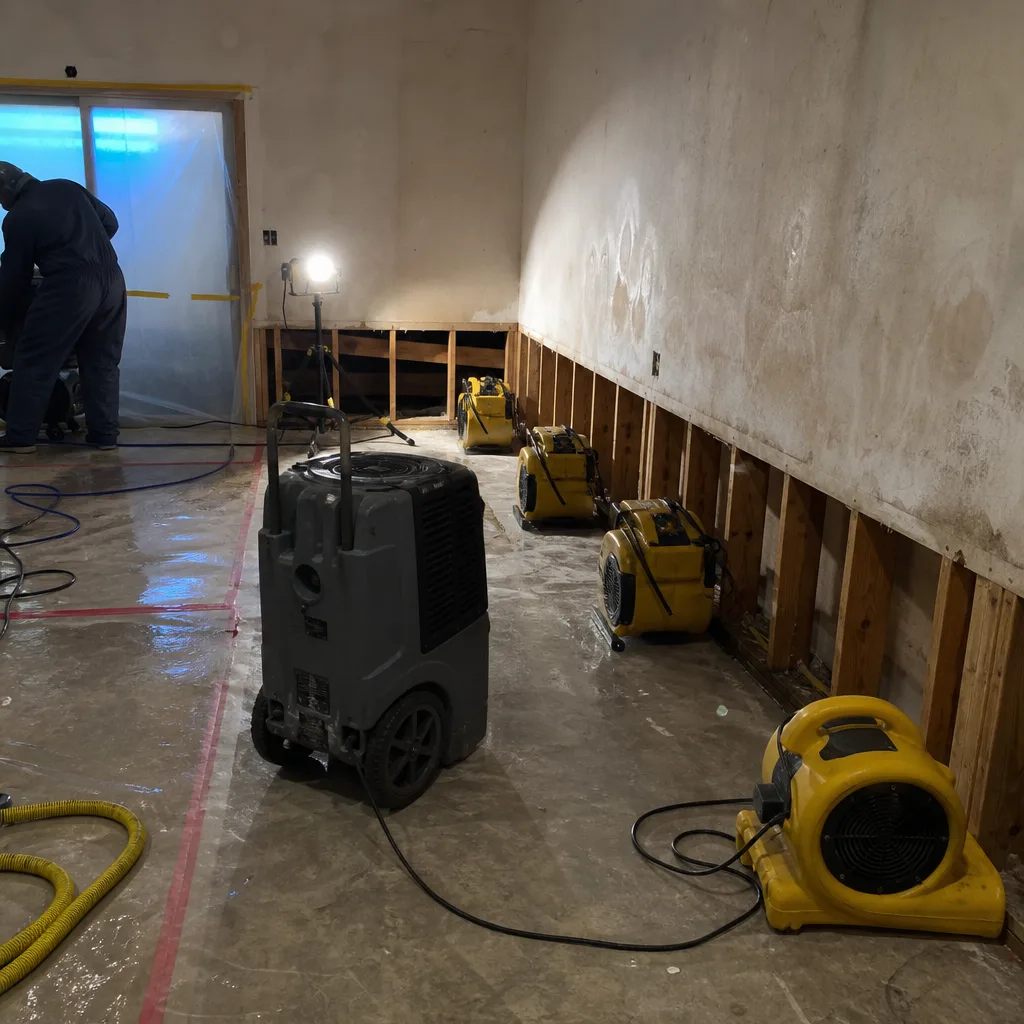
A burst pipe in a Big Bear Lake cabin isn’t the same as one in San Bernardino. The altitude matters. Lower atmospheric pressure at 6,752 feet slows evaporation, so structural drying timelines run 15-20% longer than at sea level. We run Dri-Eaz dehumidifiers and Injectidry floor mats an extra day or more beyond what a low-elevation job would need. Rushing it means hidden moisture stays in the framing. That’s how you get mold six months later, and we won’t leave you with that.
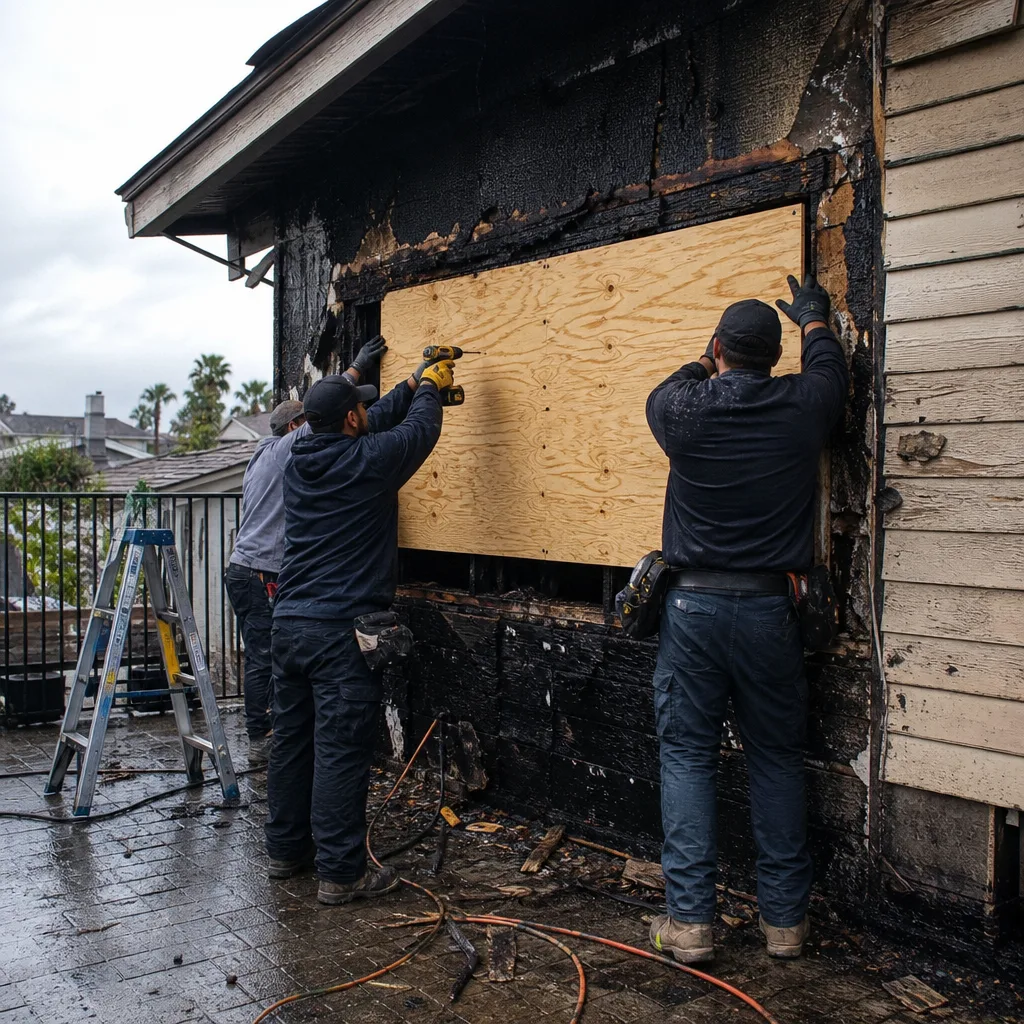
Emergency Board-Up
Wind storms up here can throw a tree branch through a window or peel siding off a cabin on Castle Glen Drive. When the building envelope is open, snow and rain pour in. Our crew gets plywood over openings fast, using fasteners rated for high wind and freezing temperatures. Board-up isn’t a permanent fix, but it stops the damage from spreading while you and your adjuster figure out next steps.
Roof Tarping
Ice dams in Big Bear Lake are brutal. Deep snowpack melts against the warm roof, then refreezes at the cold eaves. Water backs up under shingles and soaks wall cavities and ceilings. Roof tarping buys you time to plan repairs without more water coming in. We anchor tarps for mountain wind. A tarp that’s flapping in a 40-mph gust is worse than no tarp at all, and we’ve seen plenty of those.
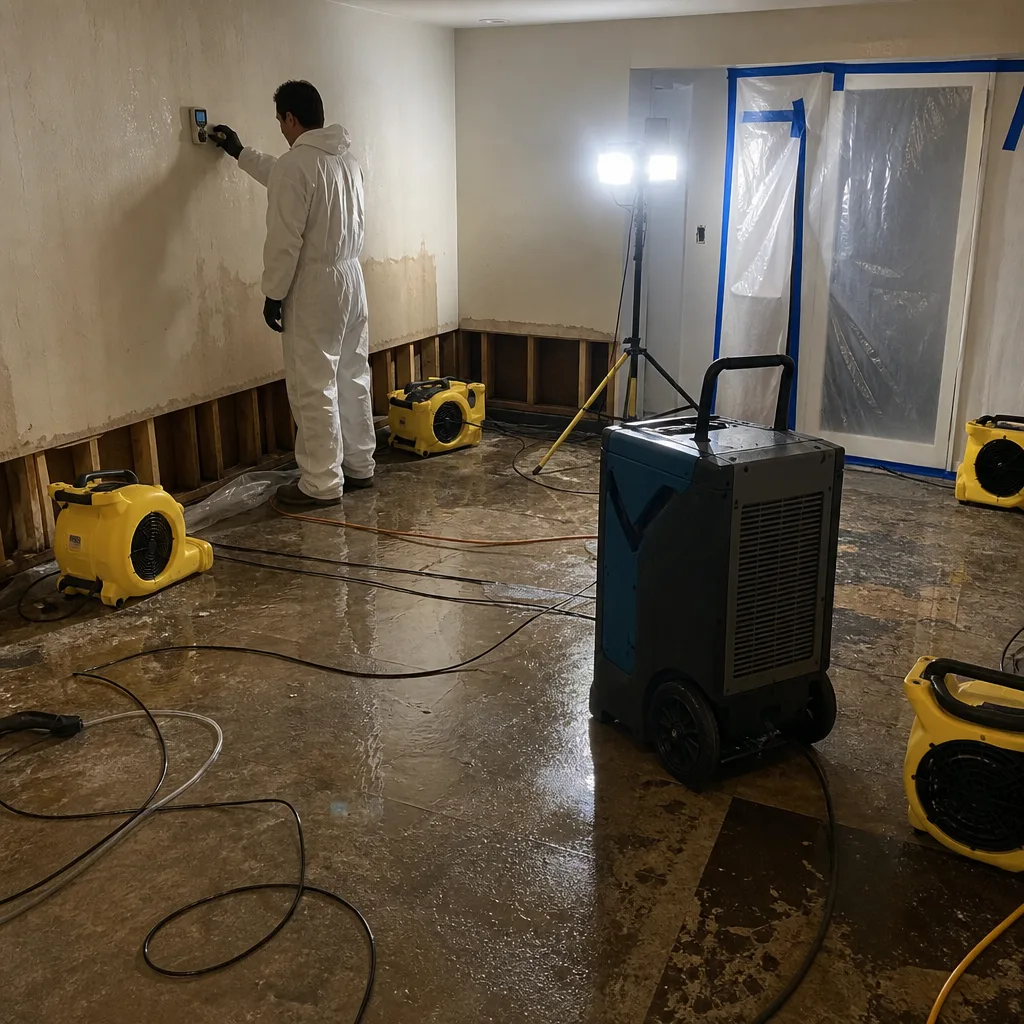
Storm Damage Cleanup
After wind and ice do their damage, the mess is real. Downed branches, soaked insulation, drywall that’s turned to paste. We remove debris, haul out saturated materials, and get the structure ready for drying and reconstruction. In Big Bear Lake, that often means working around a property manager’s schedule and coordinating with a remote owner who’s two hours down the mountain. We’re used to that. Photo documentation goes to the adjuster, and Wade deals with them directly so you’re not the one relaying messages between two sides.
What happens when you call
- 1
A real person answersNo phone trees - you reach a local pro.
- 2
You get an upfront price rangeHonest numbers before anyone is dispatched.
- 3
A background-checked tech heads outLicensed & insured, dispatched right away.
- 4
You approve before work beginsNothing starts until you say go.
Trusted Brands We Service in Big Bear Lake
We service all makes of storm-related equipment and structural components in Big Bear Lake homes, and we stock consumables for the common failures we see up here. Our crews run professional-grade drying and extraction gear from Dri-Eaz, Injectidry, XPOWER, and B-Air. The technicians are background-checked and uniformed, and the work is backed by IICRC certification, RIA affiliation, and IFA recognition. That’s the industry’s highest standard, applied to every cabin, chalet, and rental we step into.
Common Storm & Disaster Restoration Problems We See in Big Bear Lake Homes
- Freeze-burst pipes in vacant cabins. Galvanized and copper supply lines in uninsulated crawl spaces freeze when the thermostat’s set too low. When nobody’s there to notice, water runs for days. By the time a property manager finds it, the damage covers multiple rooms.
- Ice-dam roof leaks. Big Bear Lake averages 59-100 inches of snow per year. That deep pack backs up meltwater under shingles at the eaves, soaking wall cavities and ceilings in spaces that are genuinely hard to dry.
- Snow-blocked driveways and roads. Equipment can’t help if the truck can’t reach the cabin. We plan access with the property owner or manager before dispatch. Sometimes that means snow clearing first, sometimes it means staging equipment and walking it in.
- High-altitude drying complications. Lower air pressure at elevation means slower evaporation. Saturated wood framing and subfloors in Big Bear Lake need longer equipment runtimes than identical damage at sea level. Contractors who don’t know that leave houses wet.
Pricing for Storm & Disaster Restoration in Big Bear Lake, CA
Storm damage pricing in Big Bear Lake runs higher than down the hill, mostly because of access, cold-weather logistics, and extended drying times. Emergency board-up typically runs $400-$900 depending on how many openings need covering and the type of fastening the weather demands. Roof tarping on a typical cabin roof lands between $800 and $1,800, with steep A-frame roofs on the higher end. Flood damage restoration from a burst pipe usually starts around $2,500 and can exceed $15,000 when water ran unattended for days and saturated framing, subfloor, and insulation. Ice-dam leak drying in wall cavities adds another $1,500-$4,000 in most cases. Every job starts with a free estimate. Call (855) 915-0646 and Wade will walk you through what’s needed, in writing, before any work starts. Senior and veteran customers always get 10 percent off. No trip charge inside our own county, and there’s $40 off any repair over $200.
We Also Serve Cities Near Big Bear Lake
We work throughout the mountain communities and surrounding foothills. If your property is in Big Bear City, Lucerne Valley, Mentone, or Yucaipa, you’re in our regular service area. We know the roads, the weather patterns, and the kind of housing stock each place has. For more on how we serve this mountain, see Storm & Disaster Restoration in Big Bear Lake and the surrounding area.
Serving Big Bear Lake, CA - Our Local Coverage Area
We’re based in the Big Bear Lake area and know this community well. Use the map below to see our service coverage - if you’re nearby, we can almost certainly help.
FAQs - Storm & Disaster Restoration in Big Bear Lake
Evaporation slows at elevation because atmospheric pressure is lower. At 6,752 feet, saturated wood framing and subfloors in Big Bear Lake need roughly 15-20% more drying time under equipment than identical damage at sea level. We schedule for that extra runtime instead of pulling dehumidifiers early and leaving hidden moisture behind. It’s one of the reasons we run daily moisture readings and hand you the full log at the end. Call (855) 915-0646 to have a crew assess your cabin.
Call us at (855) 915-0646 before you call your adjuster, and have the property manager shut the main water valve if they can do so safely. The sooner extraction starts, the less framing and flooring you’ll have to replace. Wade can coordinate access with your property manager, photograph everything for the insurance file, and deal with the adjuster directly. You don’t need to drive up the mountain to start the process. A free second opinion on any written estimate is always available, and there’s no trip charge inside our own county.
The housing stock up here runs to wood-frame cabins and A-frame chalets built from the 1940s through the 1970s. Many were summer retreats later converted to year-round or rental use, with minimal insulation and plumbing in crawl spaces or on pier foundations. When January temperatures drop well below 20°F, those supply lines freeze and split. Copper and galvanized don’t flex like modern PEX, so they burst rather than swell. An unoccupied cabin with a burst line can release hundreds of gallons before anyone notices. That’s the most common disaster scenario we see in Big Bear Lake, and it’s why we recommend remote owners set smart leak detectors and keep heat at a minimum of 55°F in winter.
Sometimes, but not always. If the plow hasn’t reached your road, we’ll work with the county and your property manager on timing. If the road is passable for high-clearance vehicles, we head up. If it isn’t, we prioritize what can be done remotely: documenting damage through photos from the property manager, coordinating with your adjuster, and staging equipment so it’s ready the moment access opens. Delays on snow-blocked roads are one of the reasons Big Bear Lake damage gets worse faster. Call (855) 915-0646 and Wade will give you a straight answer about access to your specific street.
Yes, both are part of the same job when an ice dam forces water under shingles and into wall cavities. We tarp the roof to stop the intake, run extraction on the interior, and then set drying equipment sized for the high-altitude evaporation slowdown. No need to hire two companies. Wade’s crew does it all, documents it properly, and hands the moisture log to you and your adjuster when the drying is done. Estimates are free, and the 90-Day Done Right Promise means if it’s not done right, Wade makes it right. In writing.
Written by Wade Ferris, Owner at Wade’s Restoration of California, serving Big Bear Lake and the surrounding mountain communities.