
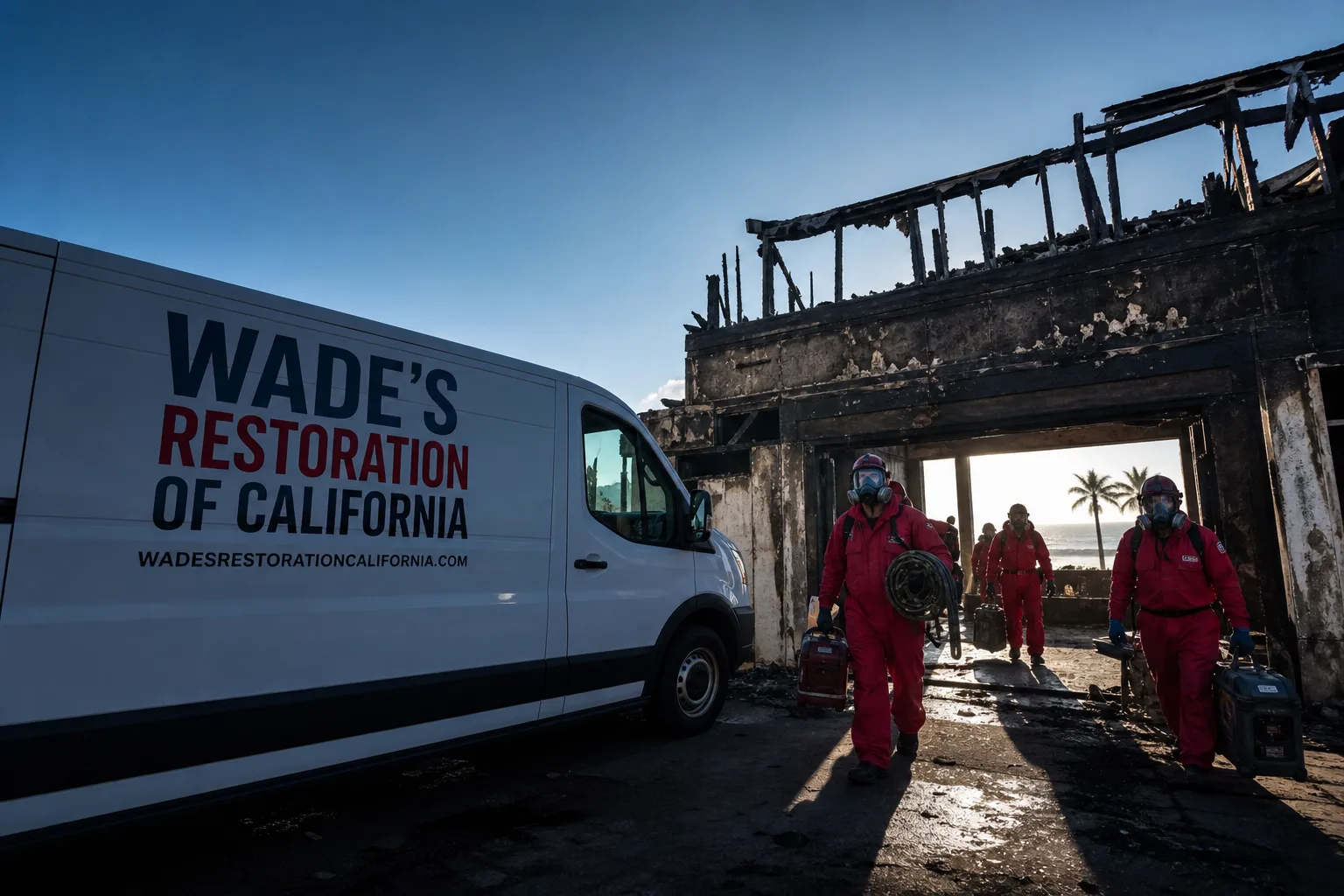
Fast, Reliable Storm & Disaster Restoration Across Auburn
Storm damage in Auburn almost never looks like it does down in the valley. You’re dealing with wind-driven rain against foothill slopes, trees that drop limbs onto shake roofs, and an atmospheric river that can push 5 to 8 inches of water through your neighborhood in a single weekend. When that happens, you need someone who knows the terrain, not a call center in another state. Wade Ferris started Wade’s Restoration in 2007 and still answers his own phone. Call (855) 915-0646 and you’ll talk to a live person who can have a crew heading toward your Auburn street within the hour.
This page covers what storm and flood restoration actually costs here, how fast we can get to neighborhoods across 95602, 95603, and 95604, and why Auburn’s wildfire-adjacent geography changes how storm damage gets scoped. If you’re standing in water right now, skip the reading. Call us.
What Storm & Disaster Restoration Costs in Auburn, CA
Storm damage cleanup in Auburn typically runs $2,800 to $9,500 depending on how much water got inside and how long it sat. Flood damage restoration for a single room usually lands between $3,200 and $7,800, while a crawlspace flood under a pier-and-beam home in the 95603 ZIP can push $6,000 to $14,000 once silt removal, drying, and vapor barrier replacement are done right. Roof tarping runs $450 to $1,200 for a standard single-story home, and emergency board-up typically costs $350 to $900 per opening. These are Auburn numbers, not national averages pulled from a pricing chart.
| Service | Typical Auburn Range | What Affects It |
|---|---|---|
| Storm damage cleanup | $2,800 - $9,500 | Square footage, water depth, how long it sat |
| Flood damage restoration (single room) | $3,200 - $7,800 | Flooring type, wall saturation, drying time |
| Crawlspace flood (pier-and-beam) | $6,000 - $14,000 | Silt depth, foundation access, vapor barrier replacement |
| Roof tarping | $450 - $1,200 | Roof pitch, number of stories, tree access |
| Emergency board-up | $350 - $900 per opening | Window/door size, framing condition |
| Ambient smoke restoration (full attic + ductwork) | $4,500 - $18,000 | Duct run length, insulation depth, particulate saturation |
Every estimate is free and written down before anything starts. We don’t quote one price on the phone and another at the door. Wade’s crew shows up, documents what happened, and hands you a scope you can read line by line. Call (855) 915-0646 for an exact quote on your specific situation.
Why Wade’s Restoration of California Is Auburn’s Preferred Storm & Disaster Restoration Company
Ask anyone on your street. Wade Ferris has been showing up in Auburn since before most national franchises opened their first California office. He publishes his name, his address, and his license number, and he’s the one who picks up the phone at 2 a.m. when a tree goes through your roof. That’s not marketing. That’s how he’s run the business for 29 years in this trade.
Our crews are background-checked and uniformed, and they run professional-grade equipment from Dri-Eaz, Phoenix, Injectidry, XPOWER, and B-Air. Wade is IICRC-certified and RIA-affiliated, which matters when your insurance adjuster asks who did the drying and whether it was done to industry standard. We hand you the moisture log at the end of every job because Wade takes readings every single day, not just on day one and day last. Almost nobody in this trade does that.
Most importantly, we know Auburn. We know the tight clearances on Old Town properties where a ladder truck won’t fit. We know the decomposed granite that turns into a slurry when a creek overtops. We know which neighborhoods in 95602, 95603, and 95604 flood first when an atmospheric river stalls over the foothills. That local knowledge is why Auburn homeowners call us before anyone else.
Our Storm & Disaster Restoration Services in Auburn
Here’s what we actually do when Auburn weather turns on you. This isn’t a list of vague promises. It’s the work Wade’s crew performs after every major storm season, and every service below is part of our broader Storm & Disaster Restoration practice.
Storm Damage Cleanup
When a foothill wind event drops a pine limb through your deck or sends sheet metal off a 1960s carport in 95603, you need debris removed and the exposed structure stabilized fast. We handle tree limb removal, wet insulation tear-out, saturated drywall cutting, and structural drying. In Auburn, we routinely see storm cleanup jobs that start as a roof puncture and end with flash-flood water in the crawlspace, because the same cell that brings the wind brings the downpour.
Flood Damage Restoration
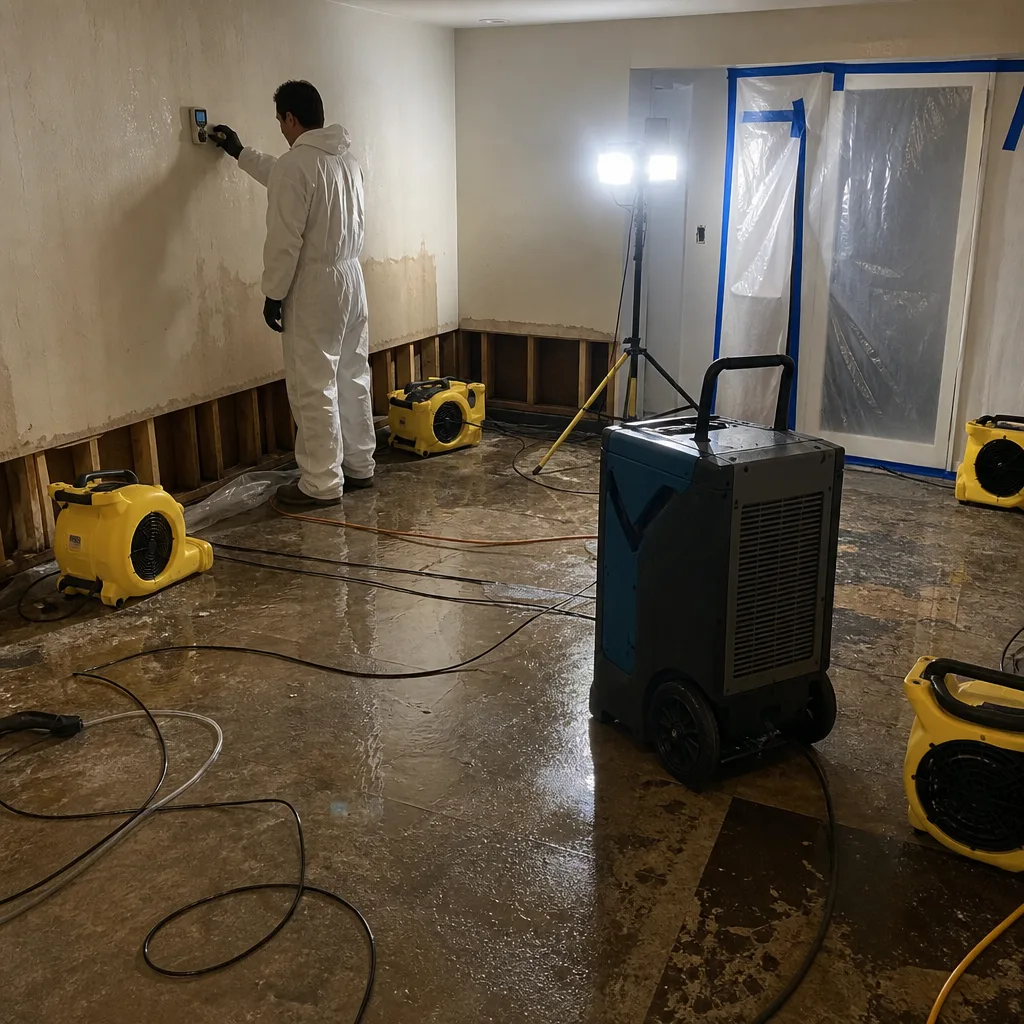
Atmospheric rivers are the biggest flood driver in Auburn. They stall over the Sierra foothills and dump 5 to 8 inches in a weekend, and the clay-over-decomposed-granite soils around 95602 and 95604 don’t drain fast enough to keep up. Water finds the lowest point, which in Auburn is often a 1950s or 1960s ranch with a pier-and-beam crawlspace. We extract, tear out saturated materials, set up drying equipment, and install moisture monitoring that tracks the structure for days, not hours. Follow-up readings matter here because the wet-dry cycle can reopen foundation cracks and let water back in.
Emergency Board-Up
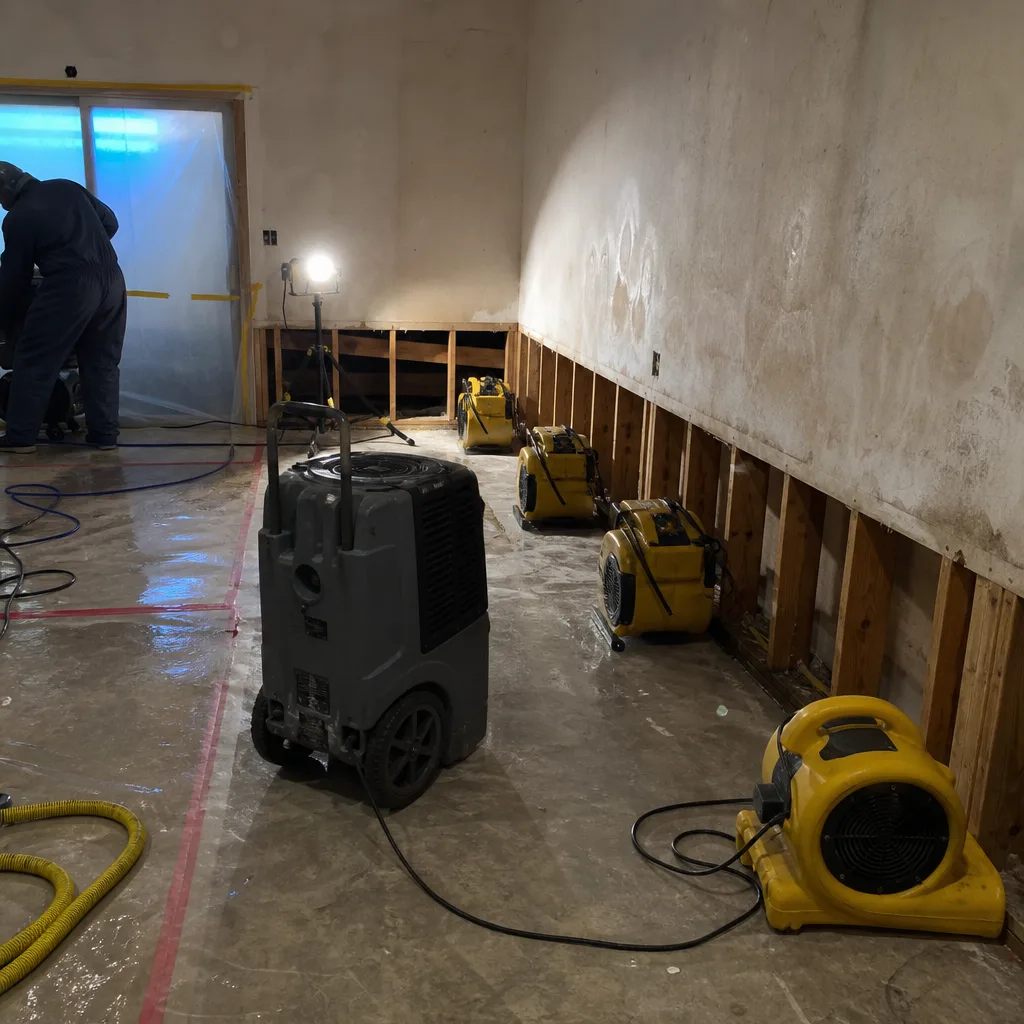
A storm blows out a window in the 95604 ZIP at midnight, and now the rain’s coming through. We board it up properly with plywood cut to fit, fastened and sealed so the opening stays dry until permanent repair can be scheduled. For older Auburn homes with single-pane wood sash windows, this gets delicate. We don’t nail boards into original trim without talking to you first.
Roof Tarping
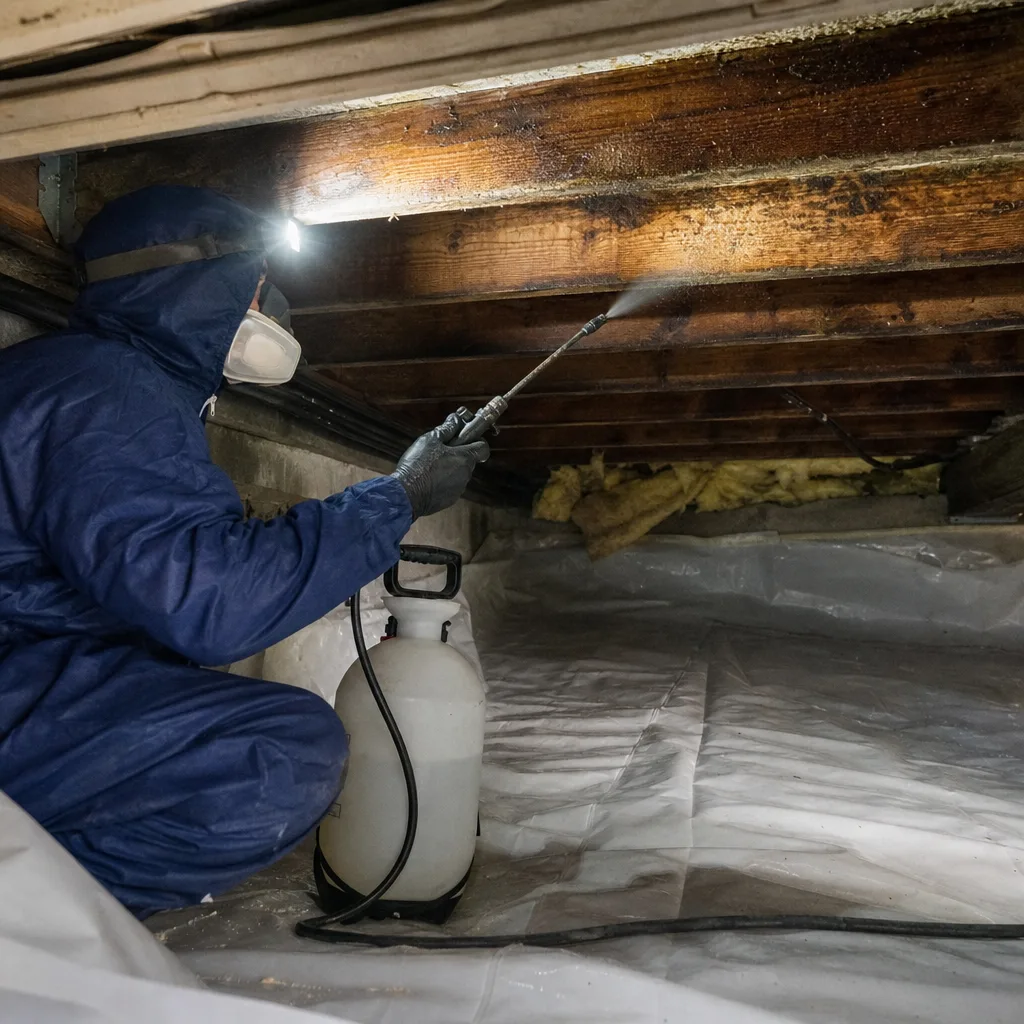
Auburn still has a surprising number of wood shake roofs, especially in the older foothill neighborhoods around Old Town and the north end of 95603. Shake doesn’t take impact well. A falling limb or wind-lifted section opens a hole, and suddenly every rainstorm becomes an active leak. We tarp fast, using weighted and battened installation methods that hold through foothill wind gusts. This buys you time for a proper roof repair without letting the interior take on more water.
What happens when you call
- 1
A real person answersNo phone trees - you reach a local pro.
- 2
You get an upfront price rangeHonest numbers before anyone is dispatched.
- 3
A background-checked tech heads outLicensed & insured, dispatched right away.
- 4
You approve before work beginsNothing starts until you say go.
Common Storm & Disaster Restoration Problems We See in Auburn Homes
Every town has its own failure patterns. In Auburn, these are the ones we walk into most often:
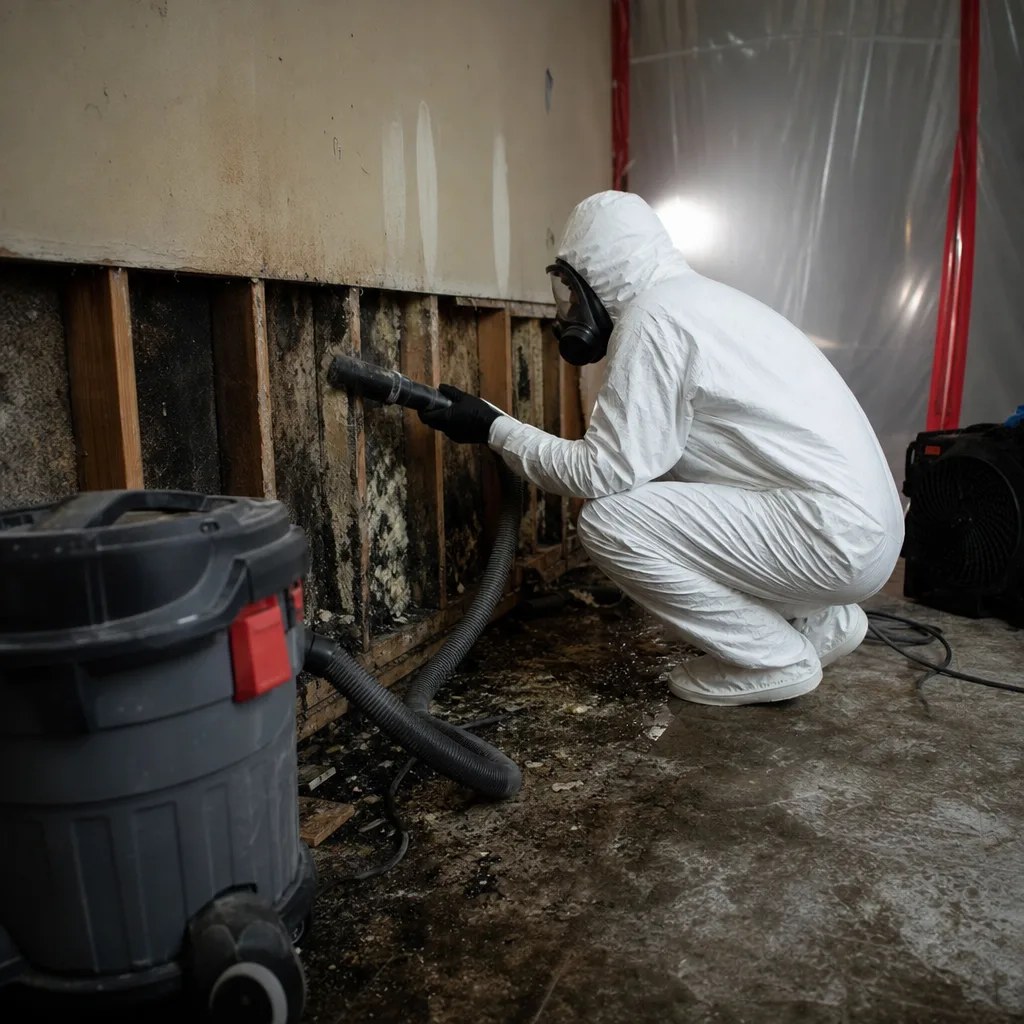
- Ambient smoke that nobody connected to a storm. Homes in the Sierra Nevada foothills Wildland-Urban Interface absorb wildfire smoke particulates into attic insulation and ductwork even when no fire ever touched the property. After a storm season, homeowners finally notice a persistent acrid smell and realize the HVAC has been circulating smoke-saturated air for months.
- Pier-and-beam crawlspaces on decomposed granite. Post-war ranch homes across 95603 sit on piers over soil that erodes when saturated. Flood water carries silt under the foundation and against the floor joists. We regularly find hidden moisture in wall cavities days after the visible water is gone.
- Tight-clearance access on older foothill properties. Narrow driveways, alley-load garages, and hillside lots mean standard-size restoration equipment won’t always fit. We bring compact Dri-Eaz and Phoenix units sized for Auburn’s tighter door widths and steeper approaches.
- The one-two punch: winter flood, summer fire. Auburn’s wet-dry cycle hits the same parcels twice in a single year. A house that flooded in January and dried out improperly becomes a mold risk by summer, and a summer fire season then forces evacuation while the structure is already compromised. We scope for both in the same plan.
Trusted Equipment and Credentials That Back Every Auburn Job
We don’t rent gear from a big-box store. Wade’s crew runs professional-grade drying and extraction equipment from Dri-Eaz, Phoenix, and XPOWER, and our air movers and dehumidifiers are sized to the square footage, not whatever’s on the truck. That matters when your insurance adjuster asks for documentation that the drying was done to IICRC standard. Wade is IICRC-certified, RIA-affiliated, and IFA-recognized, and he puts his name on every job. The equipment and the credentials are why we can offer our 90-Day Done Right Promise in writing on every water, fire, and mold restoration job. If it’s not done right, we make it right. That’s stamped on the contract, not implied in a brochure.
Pricing for Storm & Disaster Restoration in Auburn, CA
You’ll see ranges above, but here’s the straight answer on what drives cost in Auburn specifically. Homes on decomposed granite with pier-and-beam foundations take longer to dry because moisture wicks up through the soil and into the structure. That adds drying days and equipment runs. Homes with wood shake roofs and aging electrical panels often need additional scoping because water travels through hidden channels that didn’t exist in newer construction. And ambient smoke restoration is a different animal entirely: a full attic gut-out and duct replacement in a 1,800-square-foot foothill home can run $4,500 to $18,000 depending on insulation depth and particulate saturation. No one in this industry should quote you a flat price over the phone without seeing the property. What we do guarantee is a free estimate and a written scope before work starts. Call (855) 915-0646 and we’ll schedule it.
How Auburn’s Wildland-Urban Interface Changes Storm Restoration
Auburn sits squarely in the Sierra Nevada foothills Wildland-Urban Interface, and that reality shapes every storm job we take here. The same terrain that burns in summer floods in winter, and the atmospheric rivers that hit the foothills dump more water at 1,255 feet elevation than they do down in Roseville or Rocklin. That’s the core insight most flatland restoration companies miss when they send a crew up from Sacramento: Auburn homes face a compound risk profile. A house that survives a December flood may already have smoke-saturated attic insulation from the prior fire season, and the drying sequence has to account for both moisture and particulate contamination at once. We’ve scoped homes in the 95602 ZIP where visible storm damage was limited to a single bedroom, but the wall cavities throughout the house carried smoke odor that only surfaced once the structure started drying out. You can’t separate fire risk and flood risk here. They share the same geography.
One job sticks with us. A 1950s ranch in the 95603 ZIP had a seasonal creek jump its banks during a winter atmospheric river. The crawlspace flooded, silt packed against the foundation, and the home still had original wood shake roofing and an aging electrical panel. Wade’s crew scoped the hidden moisture pathways, set Dri-Eaz and Phoenix drying equipment, and documented daily moisture readings. Then a foothill fire broke out nearby, and wind-driven smoke infiltrated the open wall cavities while they were still drying. That house needed full HVAC duct replacement and an attic gut-out on top of the flood restoration. A flatland crew would have finished the water job and left, and the homeowner would have spent the next year wondering why the smell wouldn’t go away. In Auburn, you scope for the full year, not the single event.
That’s the difference with a company that actually works here. We’ve been part of the Auburn community long enough to know which creeks flood, which hillsides slough, and which older homes have hidden pathways that make storm damage worse than it looks. That knowledge goes into every estimate we write.
We Also Serve Cities Near Auburn
Wade’s crew regularly works in North Auburn, Loomis, Lincoln, and Alta Sierra, and we cover all of 95602, 95603, and 95604. If you’re in one of those communities and dealing with storm or flood damage, call us. We’ll treat you the same way we treat our Auburn neighbors: free estimate, written scope, and Wade’s name on the work.
Serving Auburn, CA - Our Local Coverage Area
We’re based in the Auburn area and know this community well. Use the map below to see our service coverage - if you’re nearby, we can almost certainly help.
FAQs - Storm & Disaster Restoration in Auburn
Homes in the Auburn WUI routinely suffer ambient smoke infiltration during regional wildfire events, meaning attic insulation, ductwork, and wall cavities become saturated with smoke particulates even when the fire never crossed onto the property. After a storm season, when the structure gets wet and begins drying, that trapped smoke becomes more noticeable, and restoration requires full duct replacement or attic gut-outs on top of the water mitigation. Call (855) 915-0646 if you smell smoke in a home that never had a fire.
Pier-and-beam homes in Auburn sit over decomposed granite that erodes and holds water when saturated, so flood water wicks up through the soil and into floor joists and wall cavities days after the visible water is gone. Restoration requires drying equipment placed in the crawlspace, silt removal from under the foundation, and follow-up moisture monitoring that lasts longer than a standard slab-on-grade job. We document every reading and hand you the log.
Yes. Auburn’s clay-over-decomposed-granite soils expand and contract through the wet-dry cycle, which causes chronic foundation movement that can reopen hairline cracks and let water re-enter months after the initial flood. A one-time dry-out isn’t enough. We schedule follow-up moisture readings and document everything so you’re not chasing a recurring musty smell next winter.
Carefully. Old Town Auburn structures built in the 1850s through 1870s often have unreinforced masonry, balloon framing, and original wood sash windows, so we don’t hammer plywood directly into trim or brick without assessing the framing first. For shake roofs on historic homes, we use battened tarp methods that secure the covering without adding nail holes to original lumber. Call (855) 915-0646 and Wade will walk the property with you before anything gets touched.
Ambient smoke restoration means cleaning a home that was never touched by a fire but still has attic insulation, ductwork, and wall cavities saturated with smoke particulates from weeks of regional wildfire air-quality emergencies. Auburn sits in the Sierra Nevada foothills WUI where wildfire smoke settles and persists at elevation, while Sacramento’s valley geography rarely produces the same sustained particulate saturation. In Auburn, this is a routine call type. In Sacramento, it’s almost nonexistent.
Written by Wade Ferris, Owner at Wade’s Restoration of California, serving Auburn and the surrounding foothills since 2007.