
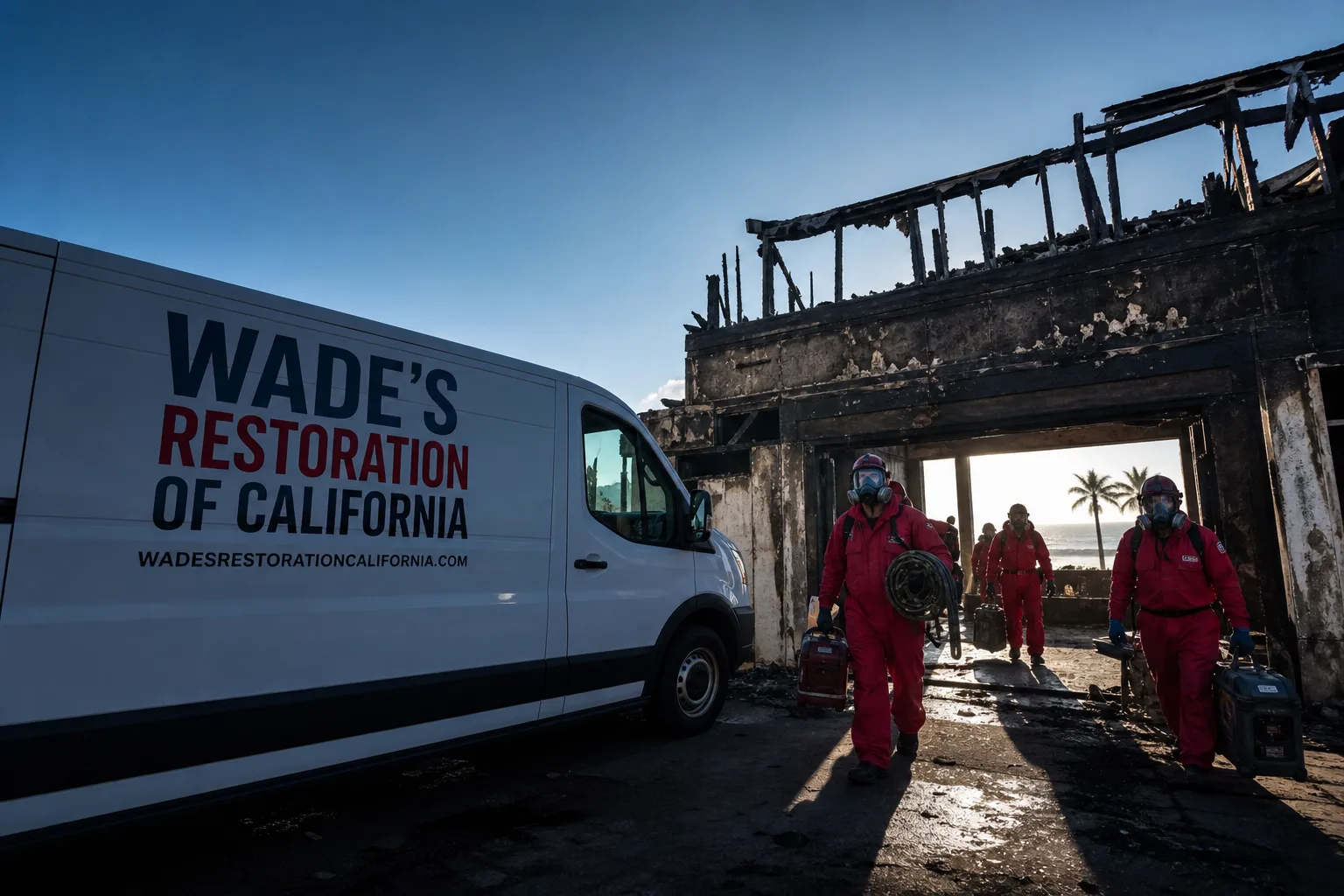
Fast, Reliable Storm & Disaster Restoration Across Antelope
Storm damage in Antelope rarely announces itself politely. Wind tears a section of roof sheathing loose at 2 a.m., rain follows the gap behind the stucco, and by morning the OSB is wicking moisture sideways through the wall cavity. That’s when you call (855) 915-0646. We answer around the clock, and Wade heads out from the Sacramento office with a crew that knows Antelope’s streets, its 1985-2005 tract housing, and exactly how quickly hidden moisture moves through OSB behind stucco. A typical storm response in Antelope runs from emergency tarping and board-up through structural drying and rebuild scope, usually starting inside the hour.
Why Wade’s Restoration of California Is Antelope’s Preferred Storm & Disaster Restoration Company
Wade Ferris started this company in 2007 and put his own name on the truck. That’s not branding, it’s accountability. Antelope homeowners see the same faces job after job, and word travels fast on streets like those off Walerga Road and Elverta Road. When a storm blows through 95843, the calls come quickly, and Wade answers his own phone. Not a call center. Not a voicemail tree.
We’ve earned a strong local reputation in Antelope by doing the unglamorous things right: daily moisture readings logged and handed to the homeowner at job’s end, direct communication with insurance adjusters so you’re never the middleman, and the 90-Day Done Right Promise stamped in writing on every restoration contract. If it’s not done right, Wade makes it right. One call brings him back.
Response time to Antelope is a live-person answer followed by a crew on the road. Wade coordinates dispatch from the Sacramento office, but the people who show up at your door know Antelope’s housing stock: the OSB sheathing, the stucco skins, the aging flashing, the HVAC ductwork that pulls wildfire smoke particulate. That local knowledge changes how a restoration gets scoped. It’s why Antelope neighbors trust us with their homes.
Our Storm & Disaster Restoration Services in Antelope
Storm Damage Cleanup
After a storm pushes through Antelope, you’re left dealing with wet drywall, soaked insulation, downed branches, and wind-scattered debris. We handle the full cleanup scope: extraction, controlled demolition of unsalvageable materials, structural drying with Dri-Eaz dehumidifiers and XPOWER air movers, and a written moisture log at completion. Because Antelope’s 1985-2005 homes share the same construction generation, we know to check behind stucco coats even when the interior damage looks minor. Water that breaches the exterior skin wicks horizontally through OSB sheathing. What shows as a small ceiling stain is often a wall cavity full of retained moisture.
Flood Damage Restoration
Antelope’s winter rainfall, concentrated from November through March, routinely overwhelms aging flashing and sealants on homes now 20 to 35 years old. When wind-driven rain penetrates behind exterior walls, the OSB holds that moisture instead of shedding it. Our flood restoration process strips wet materials, sets up professional-grade drying equipment, replaces delaminated OSB panels, and re-seals the stucco envelope. We document every moisture reading so you and your adjuster see exactly what we found, what we dried, and what we replaced.
Emergency Board-Up
Broken windows and storm-blown doors can’t wait until morning in Antelope. Once a window goes, the house is open to rain, animals, and anyone walking by. We board up openings with plywood cut to fit and secured properly, not just nailed over the gap. Board-up is part of the storm response, whether the damage is on a quiet cul-de-sac near Foothill Farms or off Don Julio Boulevard. It’s ugly, it’s temporary, and it stops further damage before our full restoration scope begins.
Roof Tarping
When wind tears shingles or sheathing loose, water follows the path of least resistance: into the attic, down the wall cavities, behind the stucco. We tarp damaged roof sections with heavy-duty material secured against wind uplift, not just draped and staked. Antelope’s extreme dry-to-wet seasonal swings have already compromised decades-old caulk and flashing on many roofs. A proper tarp buys the time needed to schedule repairs without the home taking on more water with every passing storm cell.
Trusted Brands We Service in Antelope
When an Antelope storm restoration job calls for equipment or replacement materials, we rely on the same brands we’ve trusted since 2007: Dri-Eaz for structural drying, Phoenix for high-performance dehumidification, and XPOWER for aggressive air movement. These aren’t rental-counter units. They’re professional-grade machines maintained and calibrated for the drying demands of Sacramento Valley homes. We stock parts and supplies sized for Antelope’s housing stock so common storm-scope components don’t leave your home waiting on a two-week specialty order. The goal is fast, certified, documented drying, not a lingering damp smell two months later.
Common Storm & Disaster Restoration Problems We See in Antelope Homes
- OSB sheathing wicks water horizontally behind stucco. Antelope’s 1985-2005 tract homes used OSB extensively. Once storm water breaches the stucco skin, the moisture travels sideways through the sheathing, so the visible stain is just the tip of a much larger hidden problem.
- Decades-old caulk and flashing fail under dry-to-wet seasonal swings. Summer heat bakes the sealants; winter rain finds the cracks. Wind-driven rain follows those gaps behind exterior walls. It’s a predictable failure pattern on homes now hitting the 30-year mark all at once.
- Wildfire smoke gets pulled into HVAC systems after storms. Antelope sits in the path of Sierra Nevada fire-corridor smoke in late summer and fall. Storm damage compromises duct runs and the system keeps pulling particulate through the house, so restoration increasingly includes duct cleaning and odor remediation in the same scope.
- Stucco coats hide the true extent of water damage. A storm punches a hole through the roof deck, water runs down the wall cavity, and the stucco looks fine from outside. The damage is behind it, in the OSB and insulation, which is why we inspect with moisture meters before writing any restoration estimate.
Pricing for Storm & Disaster Restoration in Antelope, CA
Storm damage restoration in Antelope reflects the specific work required, but here’s what homeowners in 95843 should expect. Emergency board-up and roof tarping typically runs $300-$800 depending on the number of openings and roof face complexity. Storm damage cleanup with extraction, controlled demolition, and debris removal lands between $1,200 and $3,500 for a typical single-family tract home. Full flood damage restoration including structural drying, OSB replacement, and stucco repair commonly falls in the $4,000-$12,000 range, and rises if the HVAC system needs duct cleaning or odor remediation after smoke-intrusion compounding. Every job starts with a free written scope and a clear number before work begins. No trip charge inside the county. Senior and veteran homeowners get 10% off, always. Call (855) 915-0646 for an exact quote.
We Also Serve Cities Near Antelope
Our Storm & Disaster Restoration team serves homes throughout the Antelope area and into neighboring communities. If you’re in Foothill Farms, North Highlands, Citrus Heights, or Elverta, we can reach you just as quickly and bring the same documented drying, direct adjuster communication, and 90-Day Done Right Promise. See our Storm & Disaster Restoration in Antelope page for local specifics, or call and ask for Wade.
Serving Antelope, CA - Our Local Coverage Area
We’re based in the Antelope area and know this community well. Use the map below to see our service coverage - if you’re nearby, we can almost certainly help.
FAQs - Storm & Disaster Restoration in Antelope
Because the overwhelming majority of Antelope’s housing is stucco-clad wood-frame construction built between 1985 and 2005, and the sheathing under that stucco is OSB. OSB wicks moisture sideways through the panel once water breaches the stucco skin, so a storm leak that starts at a failed flashing point can rot wall cavities feet away from the visible stain. Older plywood sheathing sheds water more readily; OSB holds it and distributes it. That’s why our storm response in Antelope always includes moisture-meter inspection behind the stucco, not just at the drywall surface. Call (855) 915-0646 if you suspect hidden storm moisture.
It shortens or extends them depending on what we find, but the honest answer is that Antelope’s uniform housing generation means damage patterns repeat predictably. We’ve seen the same OSB delamination, the same flashing failures, the same stucco cracks on hundreds of Antelope homes. That experience helps us scope accurately and avoid surprise discoveries. What extends timelines is hidden moisture: if wind-driven rain reached the OSB behind the stucco, the cavity has to be opened, dried with Dri-Eaz dehumidification, and the sheathing replaced before re-sealing. That’s a multi-day structural drying process, not a same-day patch. We tell you in writing what the timeline is before we start.
First we tarp the damaged roof section to stop active water intrusion. Then we open the ceiling below to inspect the wall cavity and check the OSB sheathing with moisture meters. If the sheathing is delaminated, we cut it out, dry the framing, replace the OSB, re-flash, and re-seal the stucco envelope. On a street in Antelope’s 95843 ZIP, we responded to exactly this scenario: wind-driven rain breached aging flashing, water wicked through the OSB behind the stucco, and our crew stripped the wet drywall, set up Dri-Eaz dehumidifiers and XPOWER air movers, replaced the delaminated panels, then re-sealed the envelope before a smoke event pulled particulate through the compromised HVAC system. We bundled duct cleaning and odor remediation into the same scope. That’s the standard procedure when the damage runs deep.
Yes, increasingly. Antelope sits downstream of Sierra Nevada fire-corridor smoke, and late-summer/early-fall smoke events push particulate into homes through HVAC systems. When a storm damages the roof or exterior and the system keeps cycling, that smoke particulate gets pulled through the duct runs and spread room to room. Restoration scopes on Antelope homes now routinely bundle duct cleaning and odor remediation with standard storm or flood work, because a home can be structurally dried and still smell like a campfire every time the furnace kicks on. If your home went through a storm and a smoke event back-to-back, ask us to inspect the ducts as part of the scope.
Call us at (855) 915-0646. The first priority is board-up: plywood over the opening, cut to fit and secured properly, so rain doesn’t pour through the broken window into the wall cavity and the OSB behind the stucco. Then we assess what got wet, set up drying if needed, and write the restoration scope. Don’t wait for sunny weather. Antelope’s winter storms come in waves, and a tarped or boarded opening is the only thing standing between your home and the next storm cell. We arrive fast, board it up, and hand you a written plan before any restoration work starts.
Written by Wade Ferris, Owner at Wade’s Restoration of California, serving Antelope and surrounding Sacramento County communities since 2007.