
Fast, Reliable Sewage Cleanup Across Old Fig Garden
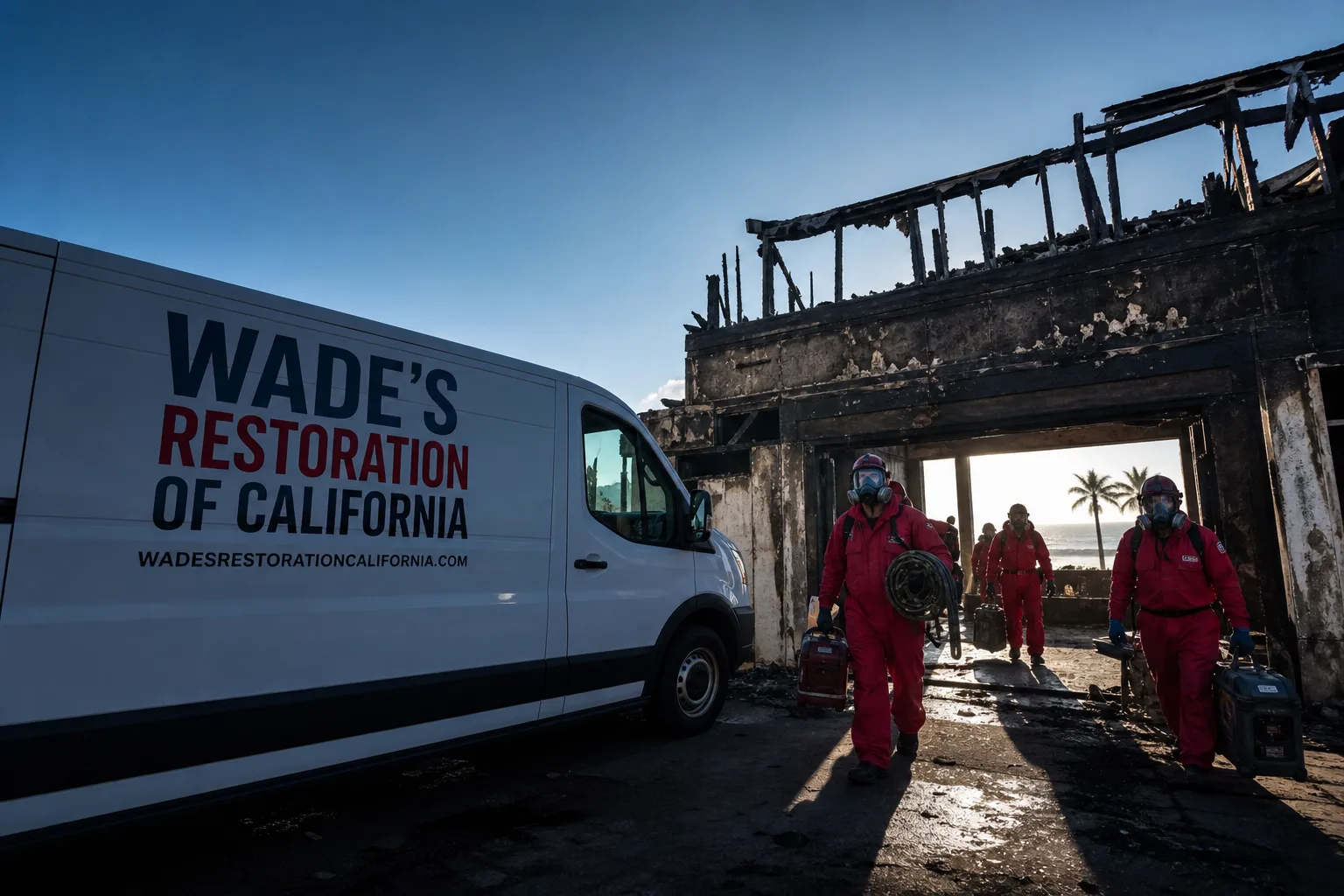
A sewage backup in Old Fig Garden is rarely a simple mop-and-dry job, and pretending otherwise is how expensive mistakes get made. These are century-old homes with plaster walls, fir floors, and clay sewer laterals that predate most of the people living in them. When sewage backs up into a 1920s Craftsman on Van Ness Boulevard or a Spanish Revival on East Rialto Avenue, you need a crew that understands what those materials can and cannot survive. Wade’s Restoration has been handling Sewage Cleanup across Old Fig Garden long enough to know every block in 93704, and Wade himself answers the phone at (855) 915-0646, 24 hours a day. When sewage is spreading across original hardwood, the first hour matters more than the first day of paperwork.
Why Wade’s Restoration of California Is Old Fig Garden’s Preferred Sewage Cleanup Company
Wade Ferris founded this company in 2007 and put his own name on every truck, every contract, and every job. That’s not a marketing line. It means when you call about a sewage backup on North Van Ness Avenue, the person who answers is the same person who signs the 90-Day Done Right Promise on your restoration contract. Old Fig Garden homeowners tend to be particular about their houses, and for good reason. These aren’t suburban tract homes that get gutted and rebuilt on a weekend. They’re historically significant structures with materials you can’t buy at the big-box store. Wade’s crew has worked in enough of them to know what original plaster can take and what it can’t.
Wade deals with your insurance adjuster directly. You don’t have to translate between a restoration crew and an insurance company while standing in a sewage-soaked hallway. He hands you a moisture log every single day, with readings from every affected room, and he keeps those logs until the job is done right. That’s accountability in writing, not a promise over the phone.
You’ll also run into Wade again. At the hardware store. At a neighborhood association meeting. That’s the operating principle behind the whole company: a locally owned, owner-operated restoration business where the owner publishes his name, address, and license number, and answers his own cell at midnight. If the sewage cleanup in Old Fig Garden doesn’t hold up, one call brings him back. No national chain can make that claim and mean it.
Our Sewage Cleanup Services in Old Fig Garden
This page is specifically for Old Fig Garden, and the work here looks different than it does in newer Fresno neighborhoods. Here’s what we handle most often, with local context for each.
Crawl Space Sewage Removal
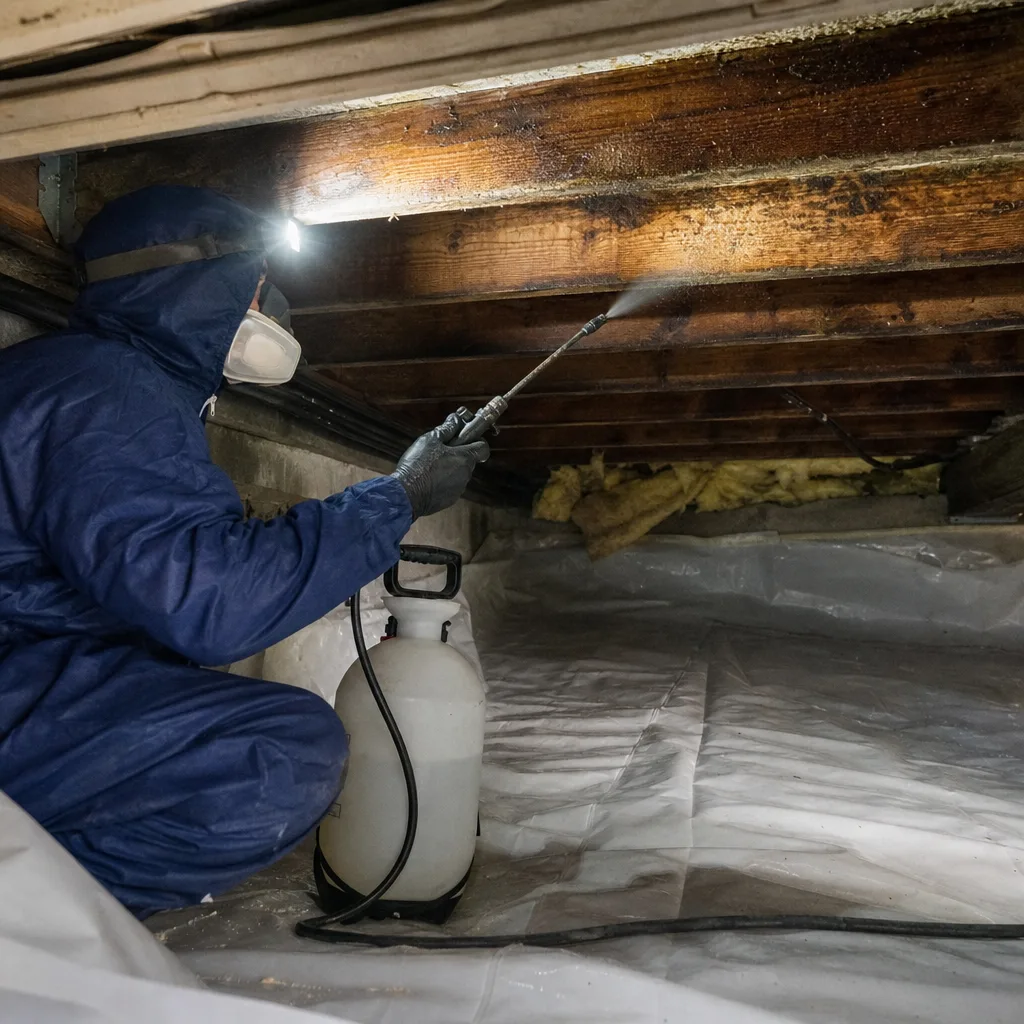
Old Fig Garden homes sit on raised foundations with crawlspaces that are tight, dark, and often full of century-old debris. When a clay sewer lateral cracks, sewage pools in those crawlspaces and wicks up through the subfloor into the rooms above. We pump it out with professional-grade extraction equipment from Dri-Eaz and XPOWER, then dry the space thoroughly before anything gets sealed back up. In Old Fig Garden, that crawlspace work often means navigating around fig tree roots that have grown through foundation vents or along the perimeter wall. We don’t disturb those roots; we work around them and coordinate with your lateral repair contractor so the fix doesn’t create a new problem.
Black Water Extraction
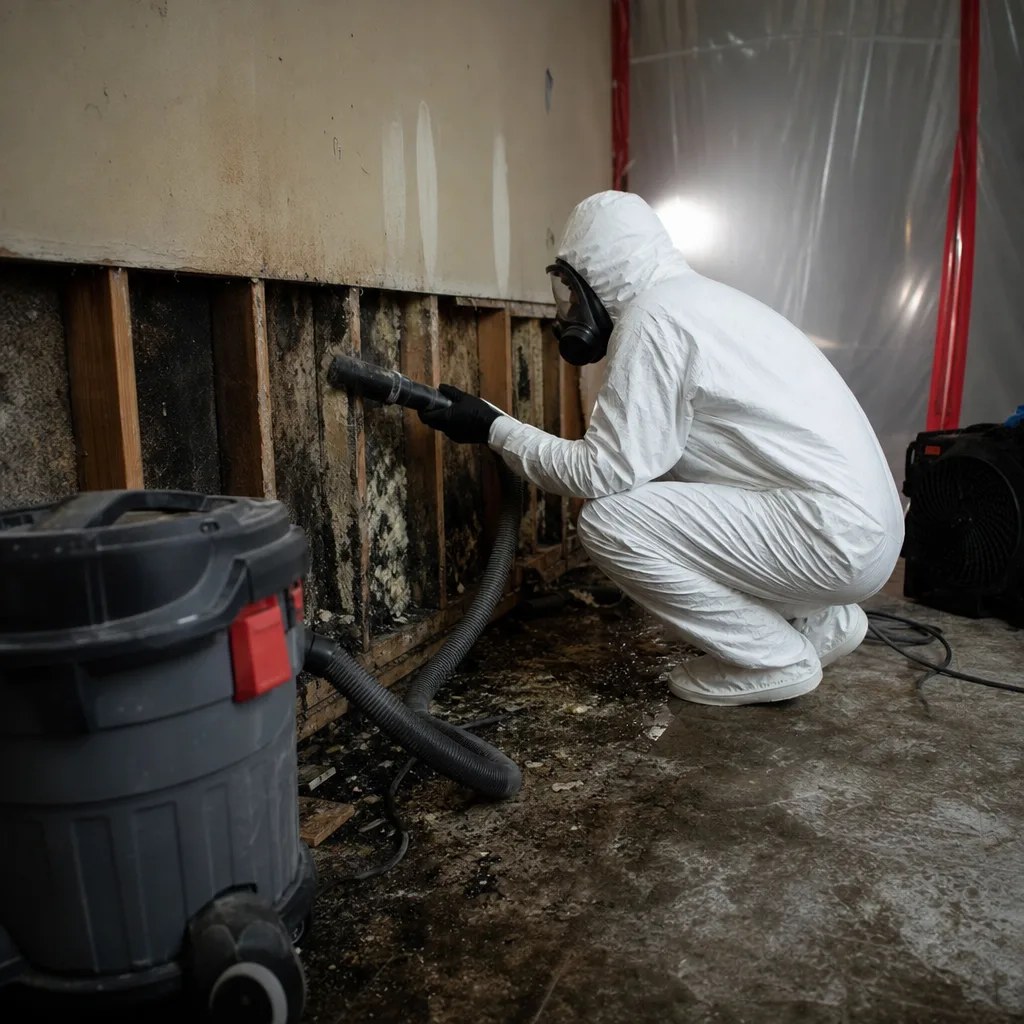
Black water is the category of water that contains raw sewage, and it cannot be treated like a clean water spill. In a 1930s Tudor Revival on East Michigan Avenue, black water from a bathroom backup can saturate three layers of flooring, the subfloor, and the joists below before it ever puddles visibly on the surface. We use controlled extraction and drying protocols that pull that moisture out of old-growth fir and oak without warping the boards. Injectidry drying mats go directly against the wood, and daily moisture readings tell us exactly when the floor is actually dry, not just dry to the touch. Guessing at this stage is how hidden mold gets sealed in for a decade.
Sanitization & Disinfection
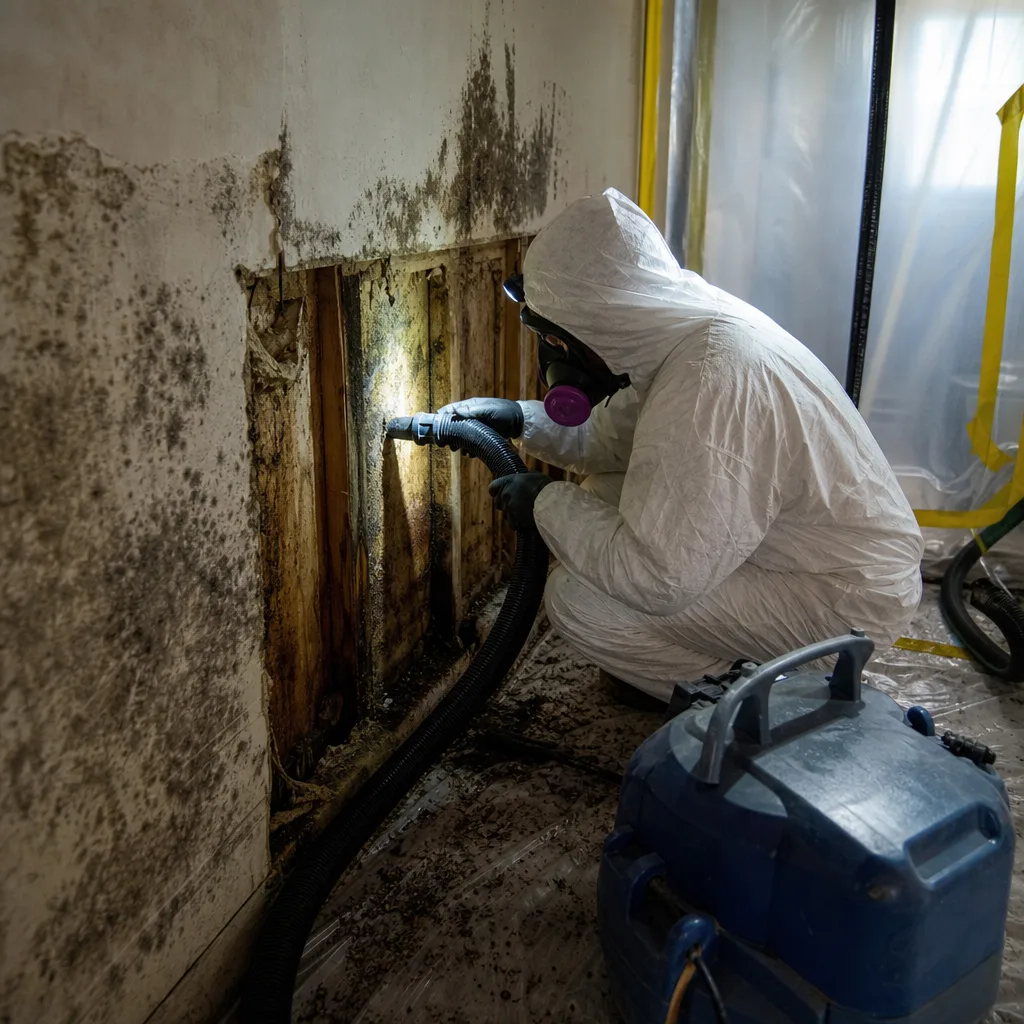
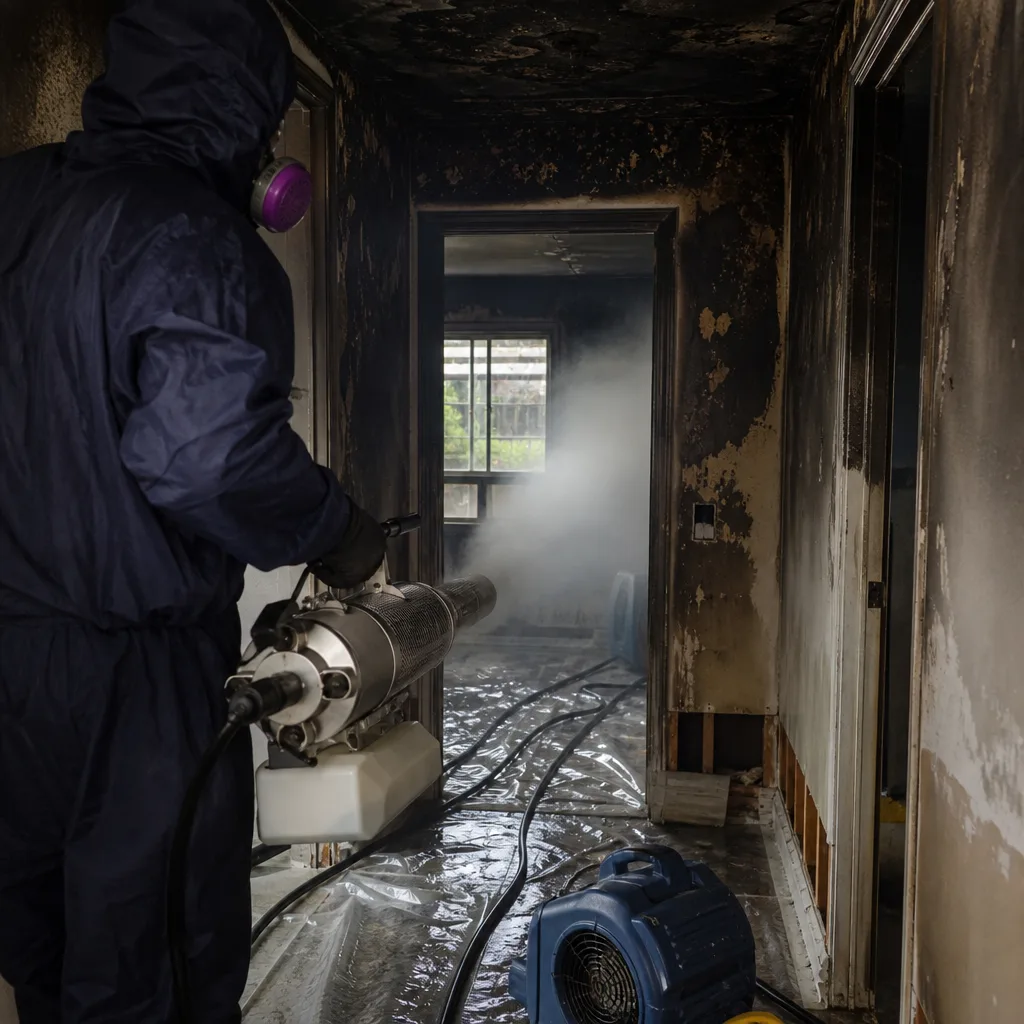
Sewage cleanup in Old Fig Garden requires more than water removal. Every surface the sewage touched has to be sanitized with antimicrobial agents rated for black water contamination, and in old plaster homes, the path of contamination is rarely obvious. Sewage wicks up into plaster keys behind baseboards and into the gaps around original door casings. We treat those areas, then verify with moisture meters and thermal cameras before we call anything clean. IICRC standards apply to every job, and Wade’s crew is trained to those standards.
Septic Failure Cleanup
Some of the larger estate-style homes in Old Fig Garden were built before municipal sewer lines reached every street, and a handful still run on older septic systems. When those fail, the sewage often surfaces in the yard before it ever reaches the house. We handle the interior side of that disaster: the floors, walls, and crawlspace contamination. The septic system repair itself belongs to your plumber or septic contractor, but Wade coordinates with them directly so the cleanup doesn’t get done twice.
What happens when you call
- 1
A real person answersNo phone trees - you reach a local pro.
- 2
You get an upfront price rangeHonest numbers before anyone is dispatched.
- 3
A background-checked tech heads outLicensed & insured, dispatched right away.
- 4
You approve before work beginsNothing starts until you say go.
Common Sewage Cleanup Problems We See in Old Fig Garden Homes
Almost every sewage call in Old Fig Garden shares a few root causes, and none of them are handled well by a generic restoration franchise. Here’s what we see most often:
- Root intrusion in clay sewer laterals. The mature fig trees and canopy oaks that make Old Fig Garden what it is are the same trees whose roots have spent decades working their way into aging clay pipes. A root intrusion can look like a slow drain for months, then turn into a full sewage backup overnight. In 93704, we expect to find tree roots any time a clay lateral starts backing up.
- Trapping moisture behind original plaster walls. This is the expensive mistake. A restoration crew that treats a 1930s plaster wall like a 2005 drywall wall will seal surface moisture in, and within weeks you’ll have hidden mold blooming behind the multi-coat plaster finish. Old plaster has to dry on its own schedule, with daily monitoring, not a timer.
- Sewage wicking into old-growth fir floorboards. Fir and oak from the 1920s is dense and slow to release moisture once it absorbs it. We see floors that look dry on top and read 25% moisture an inch down. Without Injectidry mats or equivalent low-pressure drying panels, those boards warp, cup, and hold onto odor permanently.
- Crawlspace contamination that gets missed. Sewage in the crawlspace is out of sight and often out of the estimate until someone points it out. In Old Fig Garden, with raised foundations and older vent placements, we always inspect the crawlspace on a sewage call. If we skip it, the smell comes back in a month and so does the problem.
Trusted Brands We Service in Old Fig Garden
Most Old Fig Garden sewage jobs involve equipment that’s specific to the house’s age and construction, not something a generic restoration company stocks. Wade’s crew works with professional-grade equipment from Dri-Eaz, Phoenix, Injectidry, XPOWER, and B-Air, and we’re IICRC-certified, RIA-affiliated, and IFA-recognized. What that means on the ground: we can bring the right drying system for a 1930s plaster-and-lath wall instead of renting whatever’s available at the supply house. In a neighborhood where the houses are older than the restoration companies, that matters. We maintain our own inventory for Old Fig Garden jobs, so equipment and materials show up when we do, not two days later.
Pricing for Sewage Cleanup in Old Fig Garden, CA
Here’s what sewage cleanup typically costs in Old Fig Garden, with the caveat that every job is measured in moisture readings and contamination mapping, not square footage guesses.
- Crawl space sewage removal: $1,800 to $4,500 depending on the size of the crawlspace and the depth of contamination.
- Black water extraction from original hardwood floors: $2,500 to $6,000. This includes drying mat deployment and the extended drying time fir and oak require.
- Sanitization and disinfection of affected rooms: $800 to $2,200 when done properly with antimicrobial treatment and post-verification readings.
- Full toilet overflow cleanup in a single bathroom: $900 to $2,400, including flooring treatment and baseboard work where needed.
The range reflects how far the sewage traveled before it stopped. A backup contained to one bathroom is a small job. A backup that spread through a hallway and into a sunroom with original fir flooring is a larger one. There’s a free estimate, and it’s a real price in writing before any work starts, not a lowball over the phone that gets adjusted after a crew arrives. No trip charge inside Fresno County. Senior and Veteran discounts are always 10%. If you have a written estimate from any other company, Wade will give you a free second opinion on it.
We Also Serve Cities Near Old Fig Garden
Wade’s crews work throughout the Fresno area, including Old Fig Garden, Fresno, Clovis, Bonadelle Ranchos-Madera Ranchos, and Fowler. Same owner, same 90-Day Done Right Promise, same direct phone line.
Serving Old Fig Garden, CA - Our Local Coverage Area
We’re based in the Old Fig Garden area and know this community well. Use the map below to see our service coverage - if you’re nearby, we can almost certainly help.
FAQs - Sewage Cleanup in Old Fig Garden
Sewage backs up into a plaster wall differently than it does into drywall. The lime-based plaster in a 1910s-1940s Old Fig Garden home is porous and absorbs contaminated water quickly, but releases it slowly. Standard restoration equipment designed for drywall will push moisture deeper into the plaster and trap it behind the finish coats, which creates hidden mold inside the wall cavity. In Old Fig Garden, we use lower-pressure drying with daily moisture readings until the plaster’s moisture content returns to baseline, which can take several days longer than drywall would. For an assessment of your specific home, call (855) 915-0646.
Yes, and in Old Fig Garden this is one of the most common causes of sewage backups we see. A healthy mature fig tree has an extensive root system that follows water, and clay sewer laterals from the 1920s and 1930s have joints that let small roots in. Those roots grow, crack the pipe, and create the conditions for a sewage backup even if the tree itself looks perfect. The tree isn’t sick; it’s just doing what fig roots do. The fix usually involves a lateral repair that works around the roots rather than cutting through them.
Don’t wait, and don’t try to dry the floor yourself with fans from a hardware store. Sewage that reaches old-growth fir or oak floorboards settles down between the boards and into the tongue-and-groove joints, where it starts breaking down the wood fibers and feeding bacteria. The longer it sits, the more likely the floor warps or retains a permanent odor. The right response is prompt black water extraction, followed by Injectidry drying mats or equivalent panels that draw moisture out from the underside, not just the surface. Call us at (855) 915-0646 and we’ll walk you through what to do in the first hour.
Saltillo tile is usually salvageable, but it depends on how long it sat in sewage and whether the contamination reached the mortar bed underneath. Saltillo is unglazed and porous, so it absorbs sewage quickly, but it also responds well to repeated extraction and targeted antimicrobial treatment when the work is done promptly. The grout lines are the weak point; we usually remove and replace the grout while treating the tile itself. In a 1930s Spanish Revival on East Rialto Avenue, we saved an entire kitchen of original Saltillo after a root-caused lateral backup because the homeowner called the same day the sewage appeared.
Plan for three to seven days of active cleanup and drying, and sometimes longer if the plaster is particularly thick or the contamination spread into multiple room cavities. Modern drywall dries in two or three days under normal conditions. Plaster from the 1930s holds water and releases it slowly, and rushing the process with high heat or aggressive air movement can crack the plaster and force moisture deeper into the wall. Daily moisture logs from Wade’s crew will show you exactly where the drying process stands, and we don’t call a job done until the readings prove it.
If you have sewage backing up into an Old Fig Garden home right now, call (855) 915-0646. Wade answers his own phone, and he’ll be on the road to 93704 before you finish describing the problem.
Written by Wade Ferris, Owner at Wade’s Restoration of California, serving Old Fig Garden since 2007.