
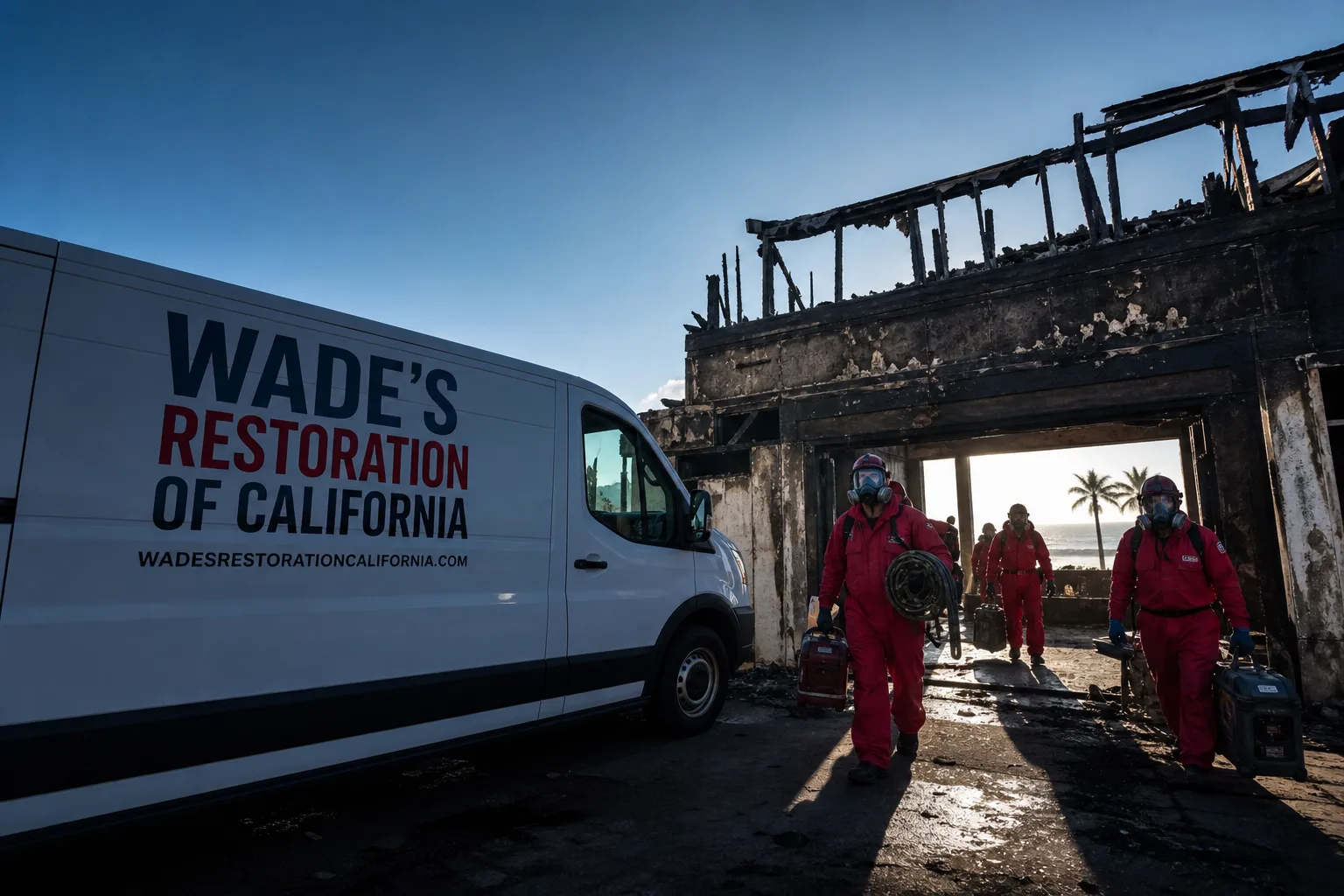
Fast, Reliable Sewage Cleanup Across Country Club
Sewage cleanup in Country Club runs $900-$2,800 for a typical bathroom backup with moderate water damage, and $3,500-$8,500 for a crawl space-scale event with saturation into lath-and-plaster walls. We get a live crew to Country Club homes within 60-90 minutes, because a backup here doesn’t sit politely in one room. Given the 1920s-1950s construction stock in this part of Stockton, black water moves behind plaster fast, which means the first hour is the difference between cutting out baseboard and gutting a wall. Call (855) 915-0646 and we’ll have someone on the road while you’re still on the phone.
Why Wade’s Restoration of California Is Country Club’s Preferred Sewage Cleanup Company
We’re not a call center dispatching a contractor who’s never seen Country Club. Wade Ferris owns this company, publishes his address and license number, and answers his own phone at two in the morning. When a toilet overflows onto original oak floors in a 1938 bungalow off of Country Club Boulevard, the person who shows up knows what an 18-inch lath-and-plaster wall cavity looks like after a sewage release. That’s not a training video to us. That’s most of our workweek.
Country Club homeowners have told us directly that they’ve been burned by big-name outfits that quote one number over the phone and another at the door. We quote a written scope before any work starts, and we stand behind it. Our 90-Day Done Right Promise applies to every sewage job: if it’s not done right, Wade makes it right, in writing. We also hand you the full moisture log at the end of the job. Daily readings, every day, no exceptions. Almost nobody in this trade does that, and it matters in a neighborhood where sewage water hides behind plaster until the wall fails.
We’re IICRC-certified and carry professional-grade equipment from Dri-Eaz and Phoenix. And we answer the phone live, 24/7. No voicemail. No answering service. You call, a person picks up.
Our Sewage Cleanup Services in Country Club
Sewage Backup Cleanup
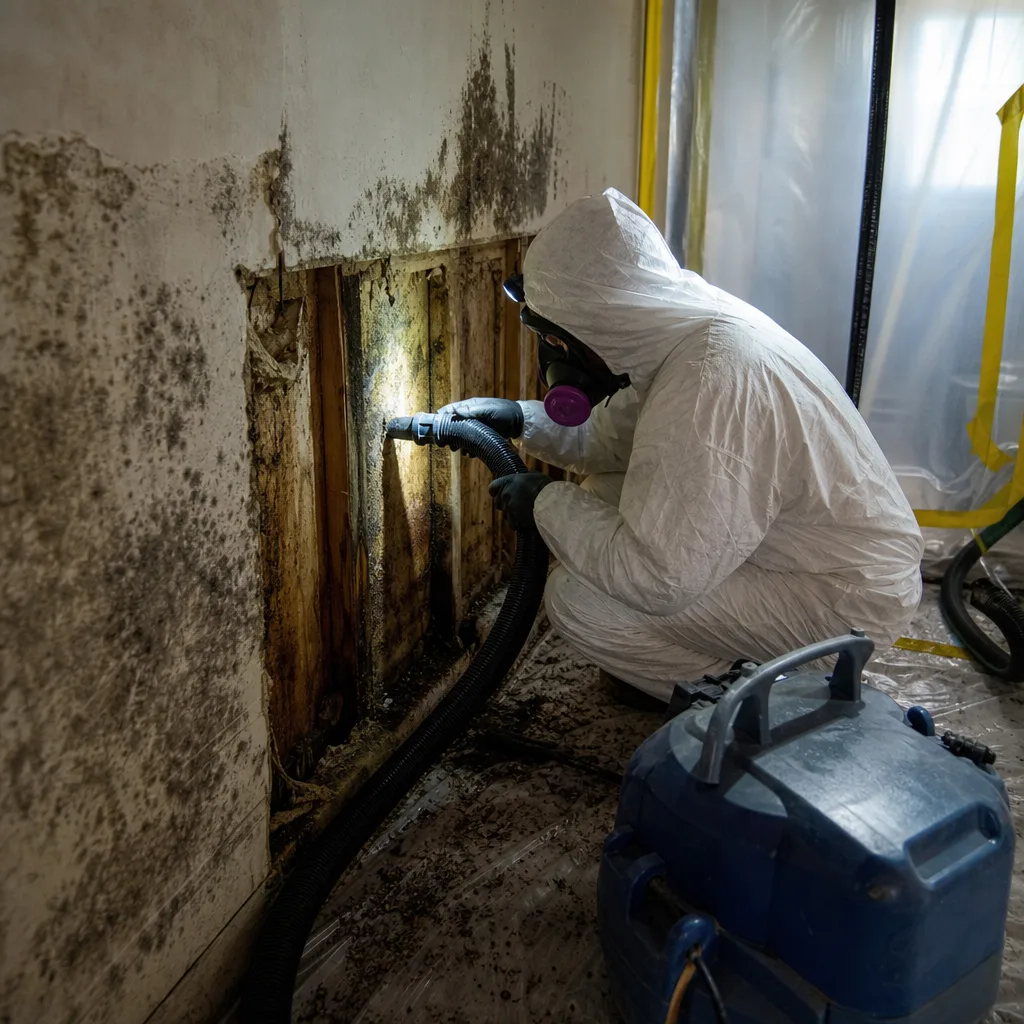
A sewage backup in Country Club rarely announces itself with a visible stain. In the pre-1960 bungalows here, the original galvanized waste lines have spent decades corroding at their threaded joints from Delta humidity. When one finally lets go, sewage seeps into the wall cavity and wicks laterally behind the plaster. By the time a stain shows on the surface, the contamination has already moved feet, not inches. We open these walls farther and sooner than we would in a drywalled tract home, because waiting for visible damage means performing structural demolition instead of surgical cutting.
Toilet Overflow Cleanup
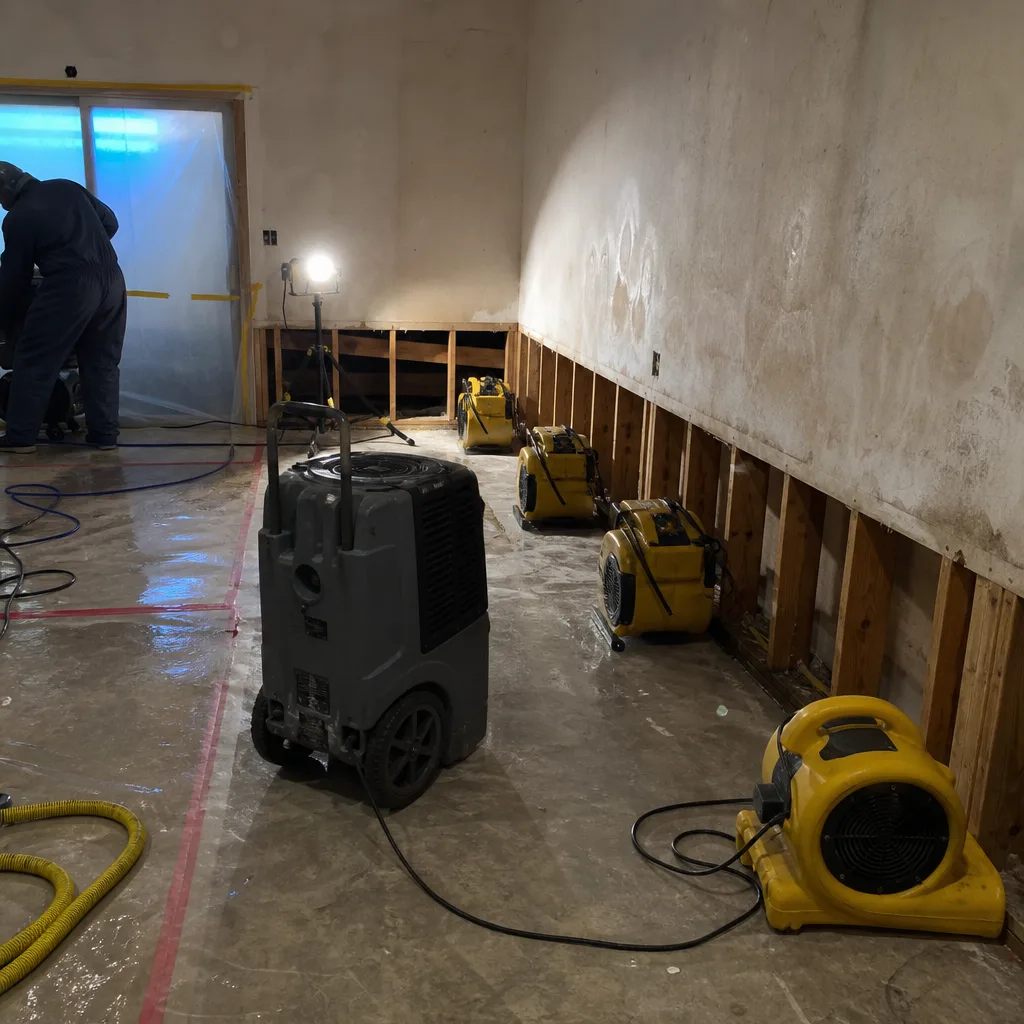
When a toilet overflows in Country Club, the sewage doesn’t sit on the floor waiting politely. In homes with original hardwood flooring over pier-and-beam foundations, contaminated water pushes down through the gaps between boards and into the subfloor within the first hour. The crawl space below acts like a catch basin, and because most Country Club homes predate modern vapor barriers, that contaminated moisture saturates bare dirt and starts feeding bacteria up through the floor. Our crew handles both the visible overflow and what’s happening underneath.
Septic Failure Cleanup
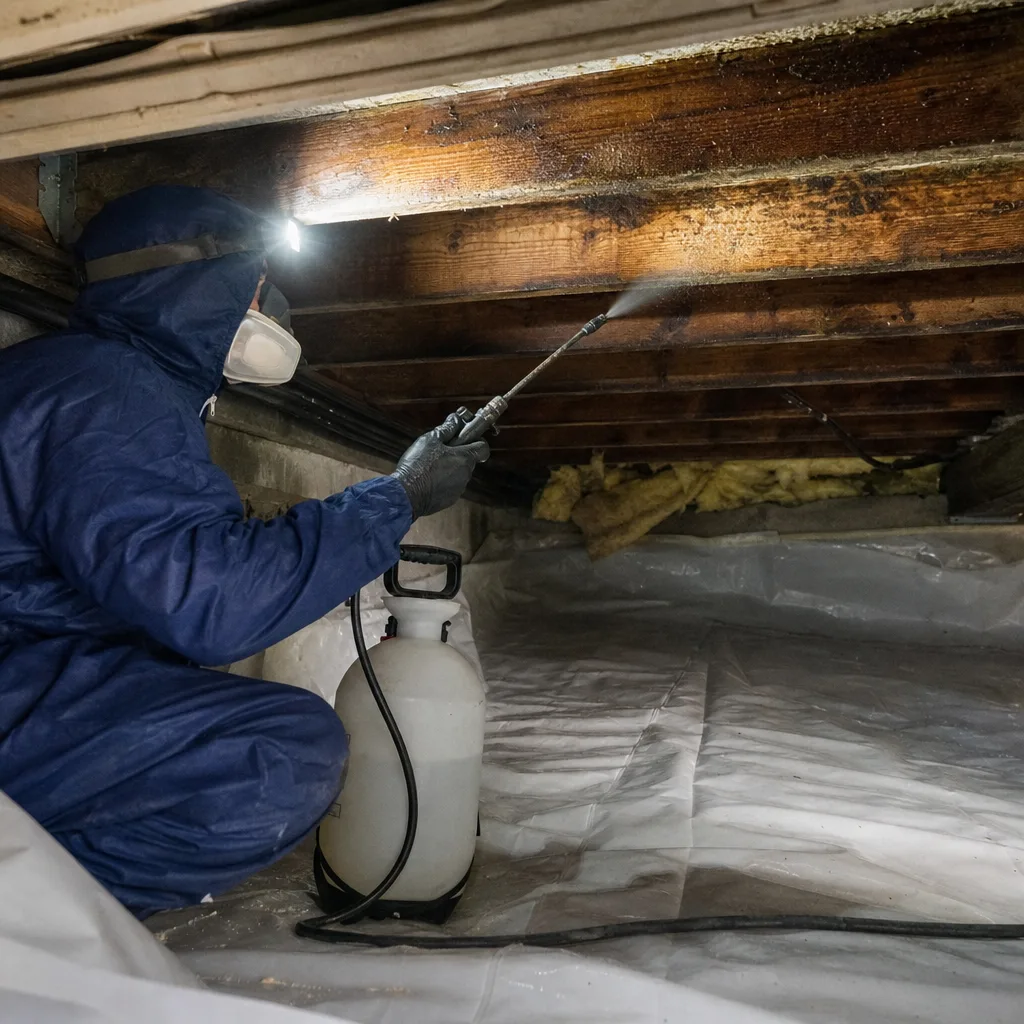
Septic failures in Country Club tend to involve the same cast-iron and clay pipe systems that have served these homes since the Roosevelt administration. Root intrusion from the neighborhood’s mature oaks and sycamores breaks into old clay joints, creating blockages that back up into the lowest fixture. That’s usually a floor drain in the laundry room or a powder room toilet. We coordinate septic pump-outs with local contractors and handle the sewage extraction, sanitization, and wall cavity drying on our side.
Black Water Extraction
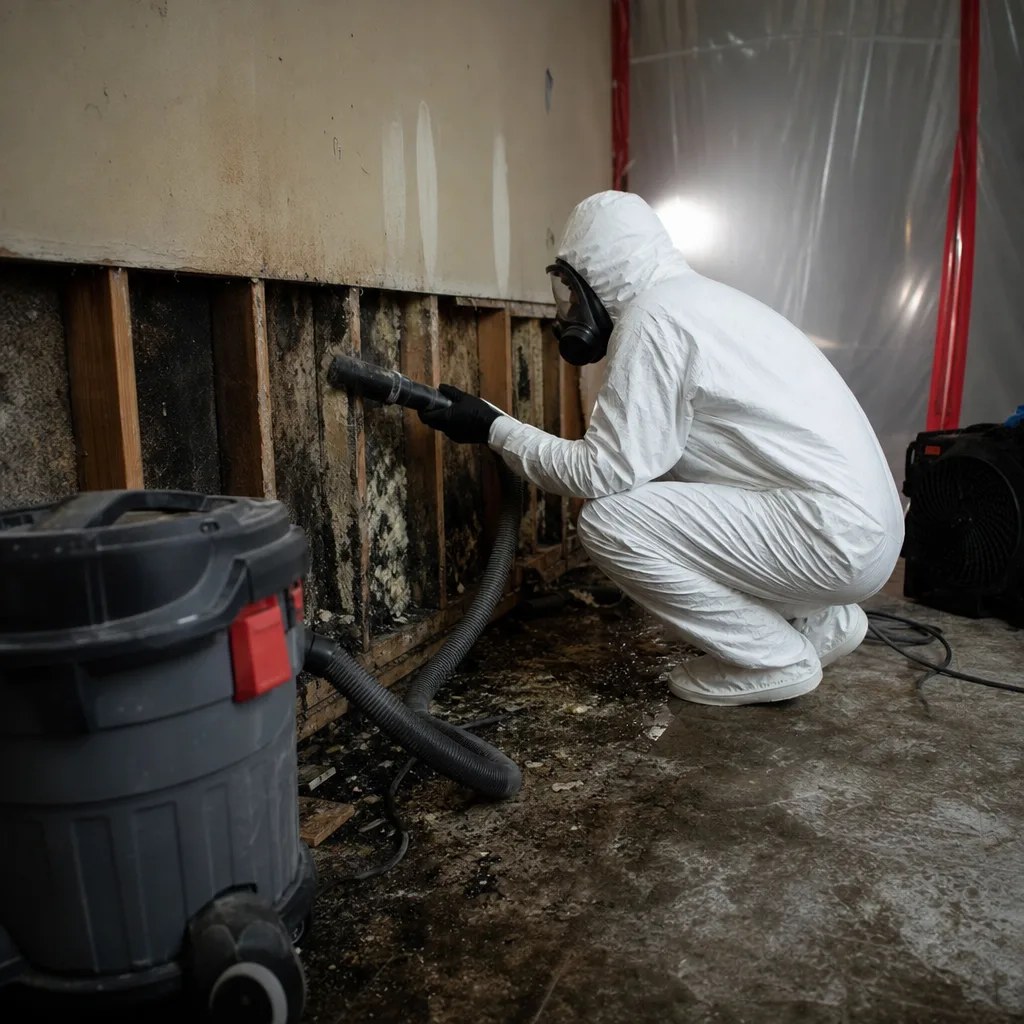
Black water is what we call sewage that’s been sitting long enough to breed the serious pathogens: E. coli, salmonella, hepatitis A. In Country Club’s low-lying lots, where the water table rides high year-round, black water that reaches the crawl space doesn’t evaporate the way it would in Lodi or other foothill communities. It lingers, feeding bacteria and pushing contaminated humidity up through the floor assembly. We use truck-mounted extraction, containment barriers, and HEPA air scrubbers from Dri-Eaz to remove the sewage, the moisture, and the airborne contaminants.
What happens when you call
- 1
A real person answersNo phone trees - you reach a local pro.
- 2
You get an upfront price rangeHonest numbers before anyone is dispatched.
- 3
A background-checked tech heads outLicensed & insured, dispatched right away.
- 4
You approve before work beginsNothing starts until you say go.
Trusted Brands We Service in Country Club
We work on all the systems you’d expect in Country Club housing stock: original cast-iron waste lines, galvanized replacements from the 1950s and 60s, ABS and PVC retrofits in flipped ranches, and the occasional clay main under the bigger lots. Wade’s crew stocks common fittings for older plumbing systems so we’re not driving back and forth across the county mid-job. Our equipment runs Dri-Eaz HEPA 500 air scrubbers and Phoenix 200 MAX axial air movers, which is what you want in a 900-square-foot bungalow where sewage odor infiltrates plaster. We don’t cut corners on the air side of a sewage job, because the smell of a half-dried crawl space will tell your neighbors what happened before you do.
Common Sewage Cleanup Problems We See in Country Club Homes
- Hidden wicking behind lath-and-plaster. Original plaster walls in these 1920s-1950s homes absorb sewage water far more aggressively than modern drywall. The contaminated water travels laterally through the plaster keys and wooden lath, which means the microbial load spreads two to three feet beyond where any moisture meter reads on the visible surface.
- Galvanized pipe corrosion at threaded joints. These homes weren’t built with modern vapor barriers, and the constant Delta humidity in the crawl space accelerates rust on galvanized waste lines. The joints fail slowly, dripping sewage into the soil for months before the homeowners notice any odor or staining.
- Root intrusion into clay main lines. Country Club’s mature street trees send roots into the old clay pipe joints, creating blockages that force sewage backward into the house. The first sign is usually a toilet that bubbles when the washing machine drains, and by then the blockage has been building for weeks.
- Crawl space saturation with no vapor barrier. Homes built before 1960 here rarely have a vapor barrier over the dirt, so a sewage overflow pools and soaks in. Contaminated moisture then migrates upward through hardwood floors and into wall cavities, spreading bacteria into spaces you can’t see or smell from living areas.
Pricing for Sewage Cleanup in Country Club, CA
Here’s what we see in Country Club. A contained toilet overflow with quick extraction runs $900-$1,800. A sewage backup that’s penetrated a lath-and-plaster wall runs $2,200-$4,800, depending on how far we have to open the wall and how much plaster we remove. A crawl space sewage removal with full sanitization and drying runs $3,500-$8,500. The biggest variable in Country Club is whether the sewage reached the original plaster on interior walls. Once it has, we’re cutting back 18 inches or more to find clean lath, and that’s the labor that drives the cost up. We provide a written scope before any work starts, and we don’t change the number after we open the wall unless you approve it first. Call (855) 915-0646 for a free on-site estimate. No trip charge inside our own county.
We Also Serve Cities Near Country Club
Our crews handle Sewage Cleanup in Lodi, Discovery Bay, Mountain House, and Tracy, with most runs from our Inland Empire dispatch office reaching Country Club within 90 minutes. If you’re just over the boundary, call us anyway. If we can get there fast and safely, we’ll take the job.
Serving Country Club, CA - Our Local Coverage Area
We’re based in the Country Club area and know this community well. Use the map below to see our service coverage - if you’re nearby, we can almost certainly help.
FAQs - Sewage Cleanup in Country Club
We take moisture readings at multiple depths through the wall assembly, not just on the plaster surface. In a lath-and-plaster wall, the contaminated water sits between the plaster and the lath, and it doesn’t read on a surface meter until saturation reaches the painted surface. We use penetrating meters and thermal imaging to map the wall cavity, then drill small inspection ports where the readings indicate contamination. That’s how we find sewage water that’s already traveled three feet behind the wall without a single visible stain.
The main difference is that drywall acts like a sponge on the surface, so you see damage quickly. Lath-and-plaster acts like a capillary system. The porous plaster and wood lath wick contaminated water horizontally behind the wall, where it can travel for days before any stain appears. That means in a Country Club bungalow, we open walls based on moisture readings, not visual damage. A Stockton drywalled ranch might need two feet of drywall cut. A Country Club bungalow often needs five to six feet of plaster removed to reach clean material.
Yes, and here’s why: Country Club homes before 1960 rarely have a vapor barrier, and the water table here sits high. When sewage water reaches the crawl space, it soaks into bare dirt and doesn’t drain the way it would at higher elevation. That contaminated soil then releases bacteria and moisture upward through your hardwood floors for weeks. We treat the crawl space as part of the sewage job, not an afterthought. That means extraction, soil removal where needed, sanitization, and installing or repairing vapor barriers before drying begins.
Yes. Sewage contains organic matter, and organic matter feeds mold even after the water is gone. If we dry the plaster and lath but leave contaminated dust or residue in the wall cavity, mold will bloom weeks later behind the finished wall. That’s why sanitization is not optional on a sewage job. We apply antimicrobial treatments to every surface that came into contact with sewage water, including the lath, the studs, and the crawl space soil underneath. Then we dry. If you skip the sanitization step, you’re building a mold farm with a toilet overflow.
It rarely looks like a flood. It looks like a soft spot in the plaster near the baseboard, a persistent musty odor in one corner of a room, or a floorboard that’s starting to cup for no apparent reason. The galvanized waste lines in these homes rust from the inside out at their threaded joints, and a slow seep may run for months before anyone notices. By the time you see a stain or feel a soft spot, the wall cavity is already saturated and the subfloor below is contaminated. Call us at (855) 915-0646 if you’ve got a smell you can’t place in a pre-1960 home. We’ll find it.
Call Wade’s Restoration for Sewage Cleanup in Country Club
If you’ve got sewage on the floor or you suspect it behind your walls in Country Club, call (855) 915-0646 right now. Wade answers his own phone, and he can have a crew at your door inside the hour. We’ll walk your property, hand you a written scope with real numbers, and document everything for your insurance adjuster. Free estimate. No trip charge in our own county. And if it’s not done right, we make it right. In writing.
Written by Wade Ferris, Owner at Wade’s Restoration of California, founded 2007.