
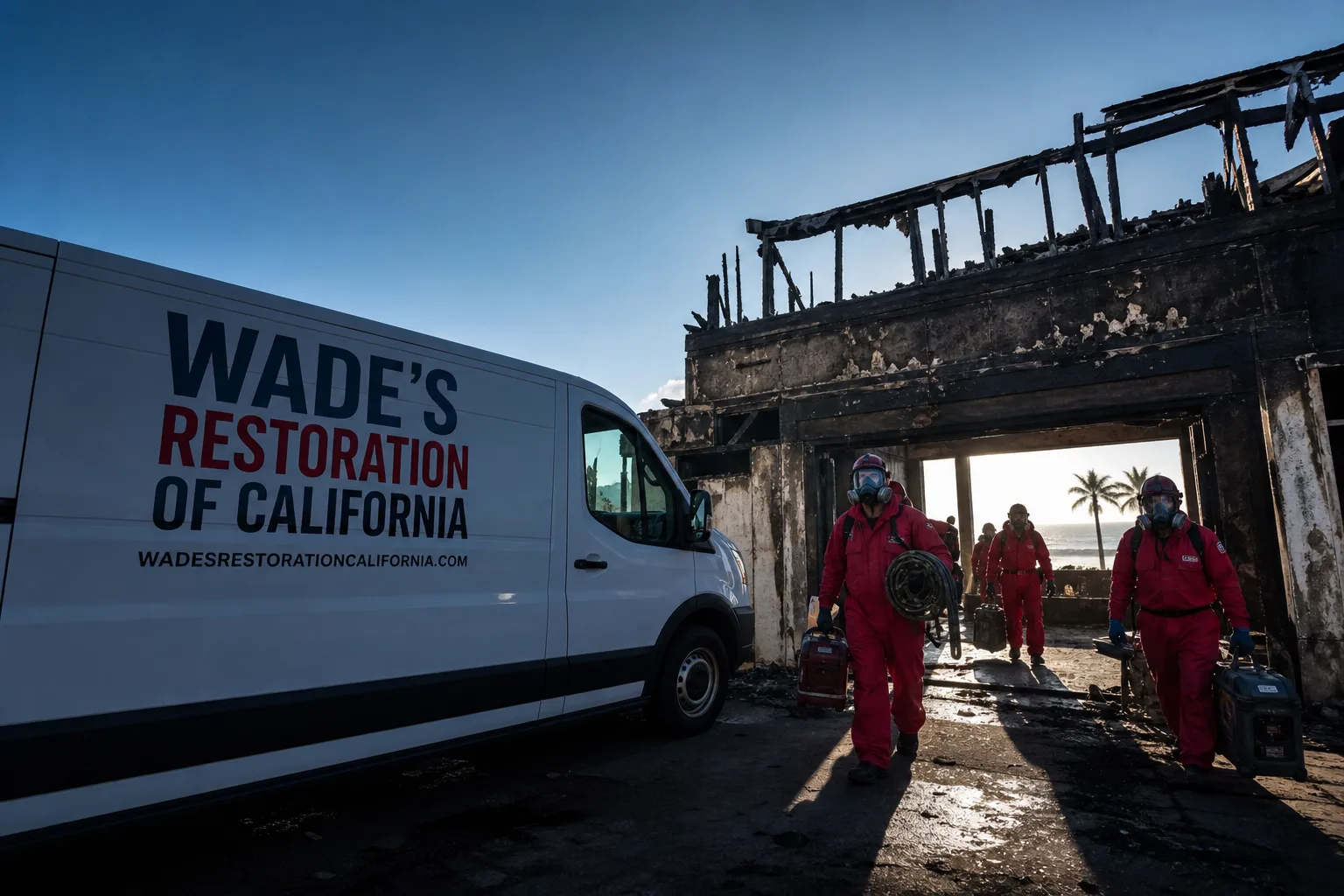
Fast, Reliable Reconstruction & Cleanup Across Koreatown
Reconstruction and cleanup in Koreatown after a water or fire event is rarely a one-unit job. A burst galvanized supply line on the third floor of a 1930s courtyard building near Wilshire Boulevard routinely pushes water through subfloor assemblies into two or three units below it, and that’s when full-scale reconstruction stops being optional. Wade Ferris and his crew have worked those stacked-unit jobs across Koreatown for years. Call (855) 915-0646 and Wade will likely pick up himself.
We know the difference between a dingbat walk-up on Berendo and a soft-story retrofit on Western Avenue. That matters when you’re deciding whether drywall needs to come down or dry in place. In Koreatown’s dense housing stock, the answer is usually more invasive than a suburban contractor would tell you.
Why Wade’s Restoration of California Is Koreatown’s Preferred Reconstruction & Cleanup Company
Wade Ferris founded this company in 2007, and his name is still on the truck. He publishes his address and license number, answers his own phone, and has built his entire business around the idea that he’ll run into you again at the market. Ask anyone on your street. In a neighborhood as tight-knit as Koreatown, that accountability is the whole ballgame.
We’re IICRC-certified and RIA-affiliated, and every water, fire, and mold job we reconstruct in Koreatown carries the 90-Day Done Right Promise, stamped in writing. If it’s not right, Wade makes it right. No caveats, no fine print, no disappearing act. He means it.
Response time to Koreatown is short. Our Los Angeles office coordinates crews that serve Koreatown locally, and Wade heads out himself when the damage warrants it. He can typically have a crew on-site within the hour for active water situations. For reconstruction work, we schedule it in writing like a remodel, because that’s what it is.
Our Reconstruction & Cleanup Services in Koreatown
Here’s what we actually do in Koreatown, from the first tear-out to the final coat of paint. This is not a generic list. These are the services that matter when you live in a pre-WWII courtyard apartment or a 1960s soft-story walk-up with original plumbing and post-retrofit framing holes.
Full-Service Reconstruction
When water or fire damage in Koreatown forces walls, flooring, or framing to come out, we rebuild it. That means new drywall, subfloor repair, insulation replacement, paint, trim, and fixture reinstallation. Because Koreatown units are so tightly stacked, we’re often rebuilding the same stud cavity from both sides: your ceiling is someone else’s floor. We coordinate with landlords, tenants, and multiple insurance carriers so the work doesn’t stall in a finger-pointing loop. We write the scope before we touch anything, and you sign it before the first hammer swings.
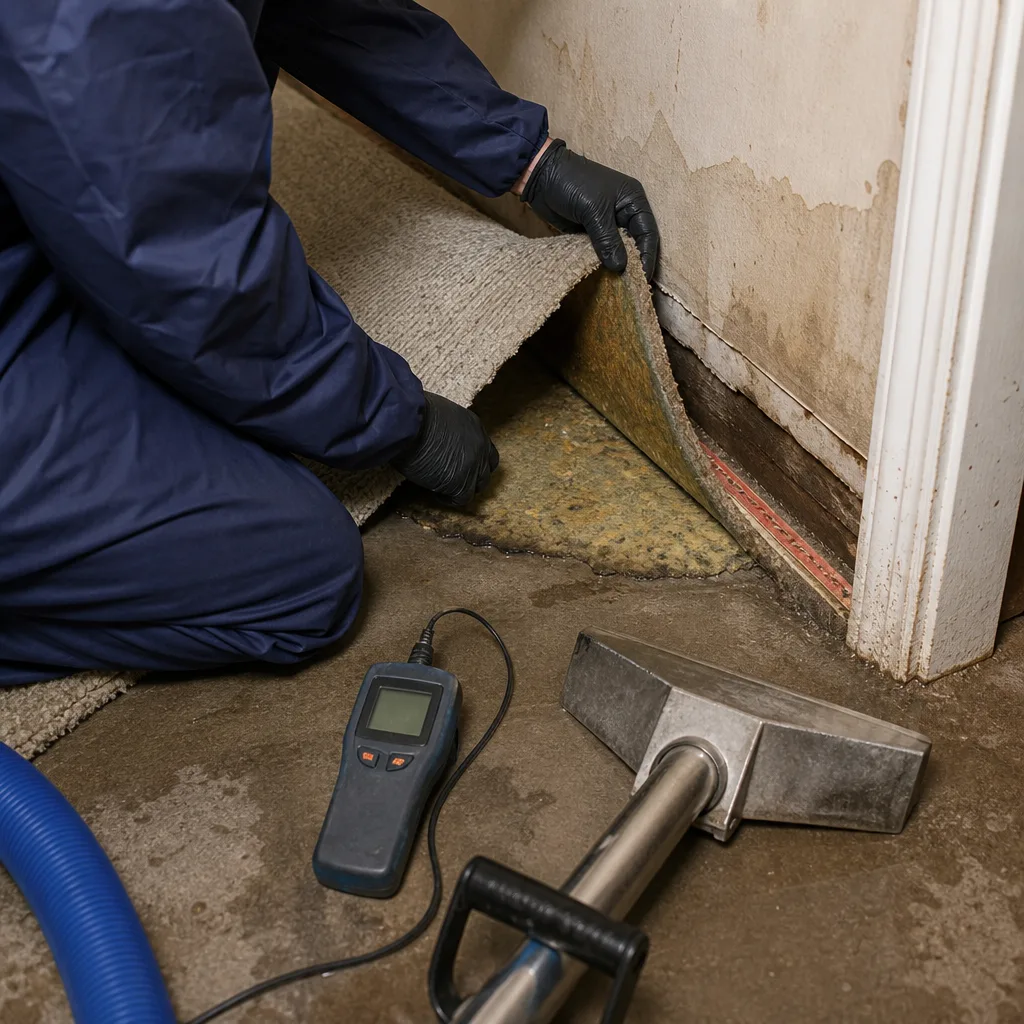
Drywall & Flooring Repair
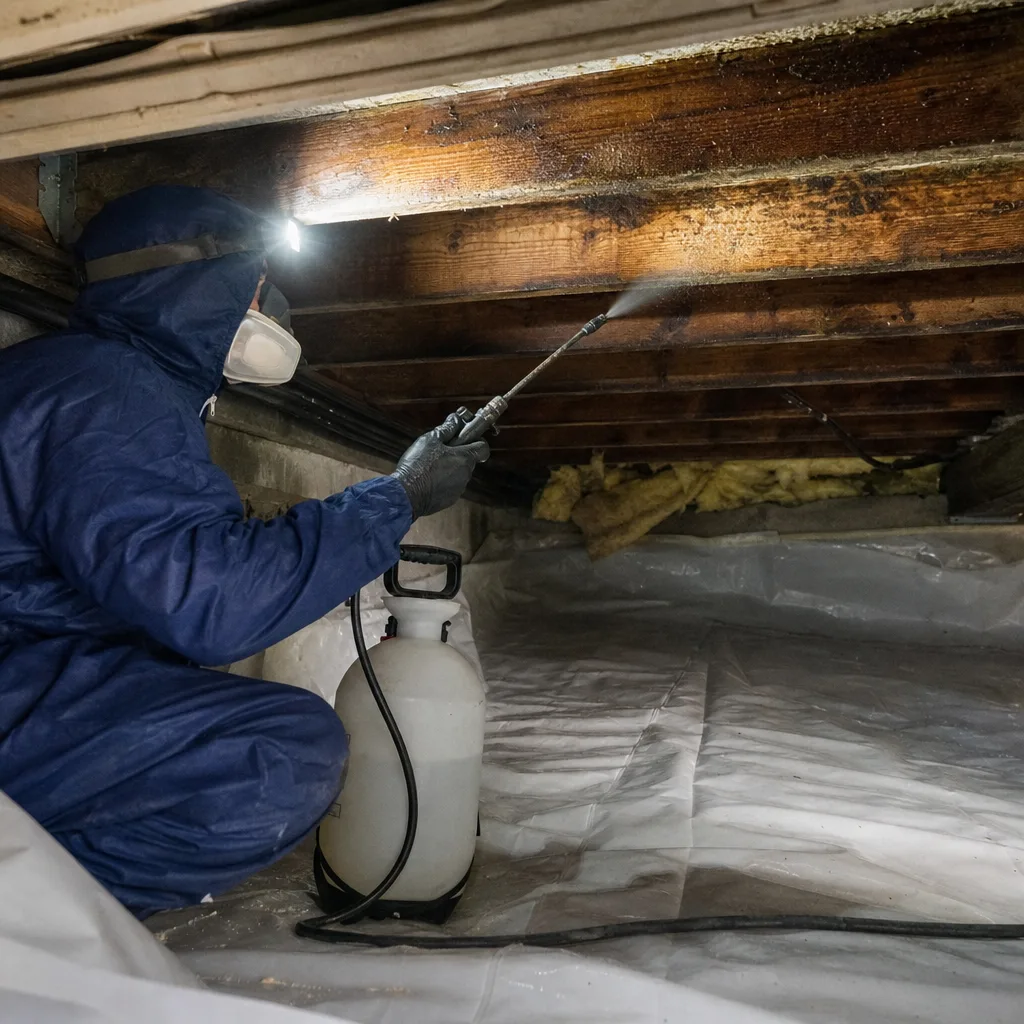
Koreatown’s concrete-and-wood hybrid buildings trap moisture between floors. A slow leak in a shared wall cavity can saturate drywall and subfloor assemblies spanning two or three units before anyone sees a stain. We cut back to dry framing, dry it with Dri-Eaz dehumidifiers and Injectidry drying mats, then hang, tape, texture, and paint to match. For flooring, we match the existing age and style where we can, and when we can’t, we tell you straight: this is a full-room replacement, not a patch job. In Koreatown’s older units, it often is.
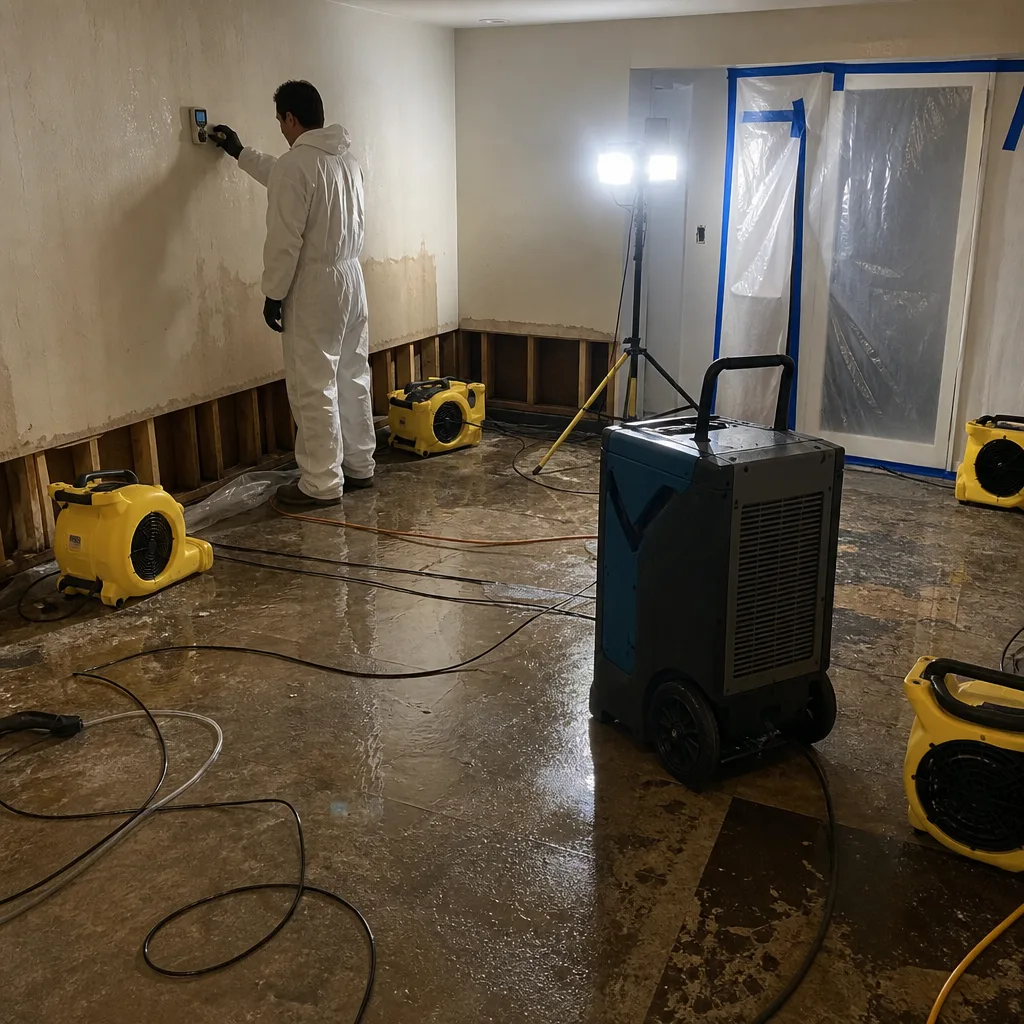
Contents Restoration & Pack-Out
When reconstruction spans multiple units, residents’ belongings need somewhere to go. We pack out contents with photo documentation, store them in a clean facility, and clean or restore what can be saved. For Koreatown tenants dealing with a cascading claim that’s been handed to three different adjusters, having one company handle the contents, the drywall, and the flooring means fewer phone calls at midnight. We hand you the inventory list, the photos, and the disposal log at the end. Almost nobody does that. We do because insurance carriers ask for it and homeowners need it.
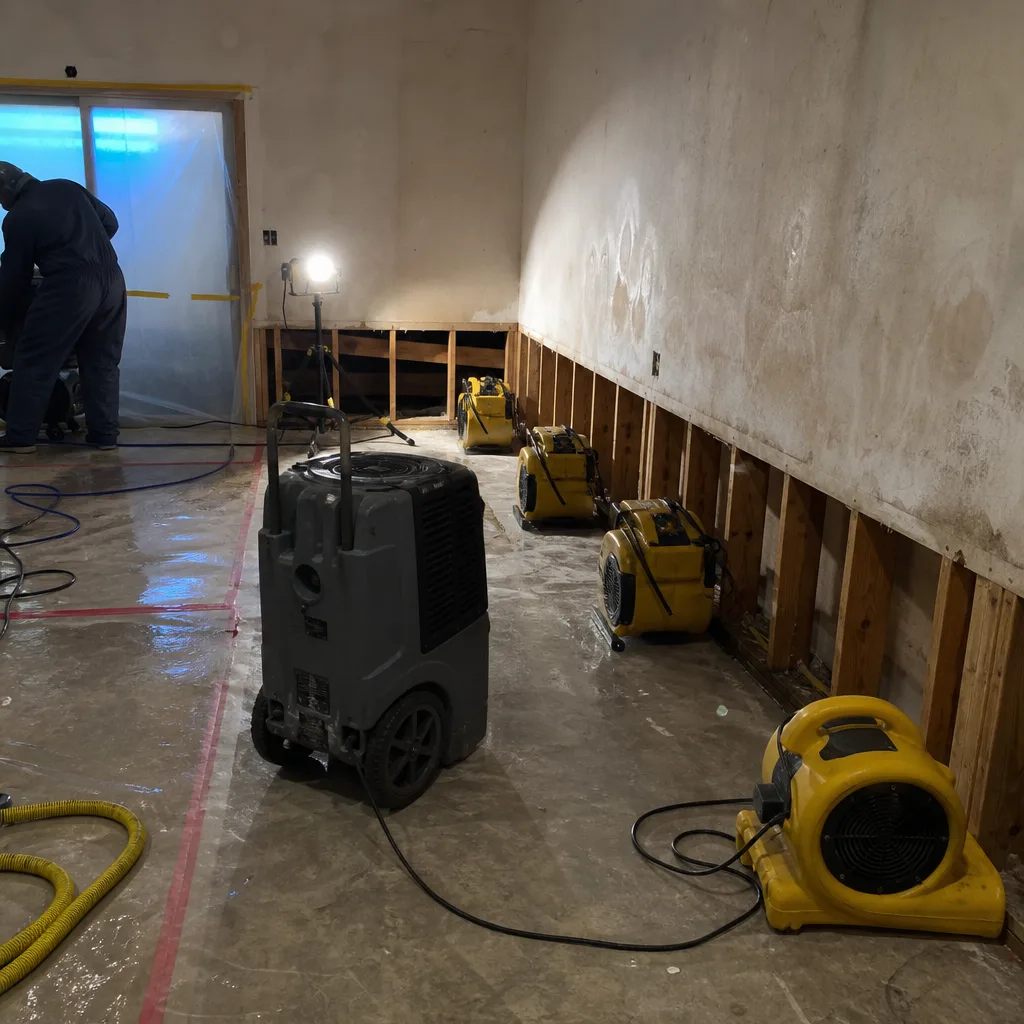
Carpet & Upholstery Cleaning
Not every Koreatown job requires demolition. Sometimes the carpet in a dingbat walk-up just needs a professional-grade extraction after a minor overflow. We run XPOWER air movers and B-Air scrubbers, we clean carpet and upholstery on site, and we’re honest about when cleaning is enough. Koreatown’s older carpets over original slab often hold moisture longer than they should. If the pad is saturated, we’ll say so. No pressure, no upsell.
What happens when you call
- 1
A real person answersNo phone trees - you reach a local pro.
- 2
You get an upfront price rangeHonest numbers before anyone is dispatched.
- 3
A background-checked tech heads outLicensed & insured, dispatched right away.
- 4
You approve before work beginsNothing starts until you say go.
Trusted Brands We Service in Koreatown
We don’t sell appliances, but we do service and clean the equipment Koreatown residents rely on during and after reconstruction. Our crews work with professional-grade gear from Dri-Eaz, Phoenix, Injectidry, XPOWER, and B-Air. Those names matter because cheap rental equipment doesn’t dry the inside of a shared wall cavity in a 1930s courtyard building. The same goes for cleaning. We stock replacement filters, drying mats, and extraction parts locally so we’re not waiting on a shipment while your unit is open to studs. If a piece of our gear fails mid-job, we swap it same day. That’s not a policy. That’s just not leaving your walls wet.
Common Reconstruction & Cleanup Problems We See in Koreatown Homes
- Slow leaks inside shared wall cavities. Galvanized supply lines corroded by LA’s mineral-heavy water fail inside walls between units. By the time anyone notices, mold colonies have usually established across multiple stacked tenancies, and reconstruction becomes far more invasive than a simple repair.
- Flat roof drains clogged by long dry spells. Koreatown’s older flat-roofed apartment buildings sit through months of drought with clogged drains and dried-out membrane seams. When an El Niño storm hits, those roofs fail catastrophically, dumping water into multiple units at once and forcing simultaneous emergency extraction and rebuild.
- Post-retrofit framing penetrations. LA’s mandatory soft-story seismic retrofit ordinance drove new bolts, braces, and framing connections through existing walls and floor plates. Those penetrations created hidden pathways for water intrusion that generic cleanup crews routinely miss. We inspect them explicitly in Koreatown buildings that went through retrofit.
- Aging subfloor assemblies in dense floor plates. Koreatown’s older multi-story buildings have subfloor systems that were never designed for repeated saturation. When a supply line bursts on the third floor, water pools inside the floor plate and spreads laterally before it shows on the ceiling below. By the time we arrive, reconstruction often means opening the plate itself, not just drying the visible surface.
Pricing for Reconstruction & Cleanup in Koreatown, CA
Reconstruction pricing in Koreatown runs higher than suburban LA because the work is physically tighter and more coordinated. Full-service reconstruction after a multi-unit water loss typically runs $8,000-$25,000 per unit, depending on how many stud cavities, floor plates, and ceiling assemblies need to be opened. Drywall and flooring repair alone runs $1,800-$7,500 per room. Contents pack-out and restoration adds $1,200-$5,000 depending on volume. Carpet and upholstery cleaning runs $150-$500 per room. If you have a written estimate from another outfit, bring it to us. A free second opinion costs nothing, and we’ll tell you if their scope is wrong. Call (855) 915-0646.
We Also Serve Cities Near Koreatown
Our crews work throughout central Los Angeles, and while this page is focused on Koreatown, we regularly handle Reconstruction & Cleanup projects in Koreatown and the neighborhoods around it. That includes Los Angeles, Echo Park, Silver Lake, and Hollywood. If you’re a landlord with buildings in multiple central LA neighborhoods, one phone call covers all of them.
Serving Koreatown, CA - Our Local Coverage Area
We’re based in the Koreatown area and know this community well. Use the map below to see our service coverage - if you’re nearby, we can almost certainly help.
FAQs - Reconstruction & Cleanup in Koreatown
The retrofit added steel moment frames, bolts, and braces through existing walls and floor plates, and every one of those penetrations is a potential water pathway. During reconstruction, we map those penetrations and inspect each one for moisture migration because water that entered at the third-floor supply line can ride the retrofit framing down two levels before it pools. This is standard practice on our Koreatown jobs. If a crew doesn’t do it, they’re guessing. Call (855) 915-0646 and Wade will walk you through what we found.
Yes, in most cases. On a 1930s courtyard building near Wilshire Boulevard, our crew responded to a burst galvanized supply line that had saturated the subfloor assemblies across three units below. We used Dri-Eaz dehumidifiers and Injectidry drying mats on the shared wall cavities, then rebuilt the damaged drywall and flooring in each unit while documenting everything for the three separate insurance carriers involved. We phase work unit by unit so most tenants stay in place. When a unit has to be vacated briefly, that’s in the written scope before we start. No surprises.
We provide a full packet per unit: daily moisture readings, photo documentation of every opened cavity, the demolition log, the drying log from our Dri-Eaz and Injectidry equipment, and a line-item reconciliation of what was replaced and why. Wade takes moisture readings every single day and hands you the complete log at the end of the job. When three carriers are involved, that documentation is what keeps your claim moving instead of stalling. We also talk to adjusters directly, so you’re never the one relaying information between two sides. Call (855) 915-0646 for a free estimate with documentation built in.
Yes. Post-construction cleanup in Koreatown’s 1950s and 60s dingbat walk-ups means more than vacuuming drywall dust. Those buildings have open stairwells, shared walkways, and tight courtyards where construction debris travels. We run HEPA-filtered B-Air scrubbers during teardown, then do a full wipe-down of surfaces, sills, and shared walkways before we leave. The goal is that your tenants don’t know we were there, except that the damage is gone. That cleanup is part of our reconstruction scope, not an add-on line item.
Reconstruction starts after the structure is dry, and that’s not a corner we cut. In Koreatown’s flat-roof apartments, the roof membrane and the floor plates below often need 3-7 days of active drying with Dri-Eaz and Phoenix equipment before we’ll hang drywall or lay flooring. We’ll give you a drying plan with target dates in the written scope. Once the moisture log shows the substrate is dry, reconstruction starts the next business day. Call (855) 915-0646 and Wade will tell you what your building needs, based on what he’s seen in Koreatown, not a script.
Call Wade’s Restoration of California in Koreatown
If you’ve got water moving through a shared wall cavity, a cluttered mess after a fire, or a flat roof that just gave out, don’t wait. Koreatown’s older buildings don’t get better on their own. Call (855) 915-0646 and Wade will answer. He’ll tell you what he thinks over the phone, he won’t charge you for the trip inside the county, and he’ll put your scope in writing before any work starts. That’s how we’ve operated since 2007, and it’s why Koreatown landlords and homeowners keep his number.
Written by Wade Ferris, Owner at Wade’s Restoration of California, serving Koreatown and central Los Angeles since 2007.