
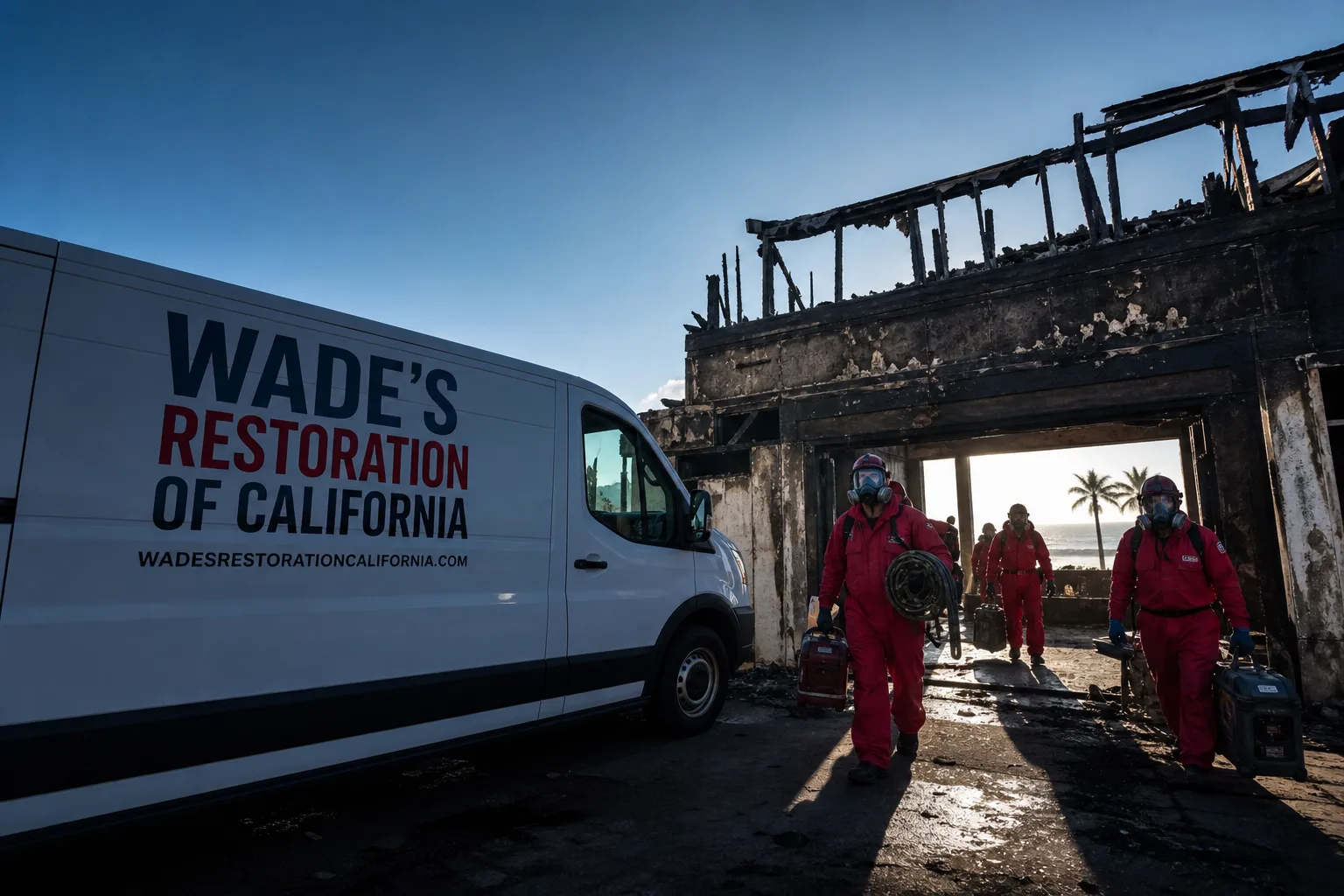
Fast, Reliable Mold Remediation Across Walnut
Mold remediation in Walnut typically costs $1,800-$6,500 depending on how far the growth has spread and whether crawlspace or HVAC work is involved. Most jobs in the 91788, 91789, and 91795 ZIP codes take two to five days once we’re on site. If you’re seeing dark spots on drywall, catching a musty smell near baseboards, or dealing with a recent water event, call Wade’s Restoration of California at (855) 915-0646 and Wade Ferris himself will walk you through what’s happening. We know Walnut’s hillside homes and the specific ways moisture finds its way in, and we’ll get a crew out fast.
Key takeaways:
- Mold inspection and testing in Walnut runs $350-$650 for a full assessment with lab results.
- Crawlspace treatment on graded hillside pads is the single most common job we do here, typically $1,200-$4,000.
- We document everything with photos and moisture logs your adjuster can actually read.
- Every mold job carries our 90-Day Done Right Promise in writing.
Why Wade’s Restoration of California Is Walnut’s Preferred Mold Remediation Company
We’ve worked enough homes in Walnut to know that mold rarely starts where you find it. A patch on a bedroom wall is often the tail end of water moving through a slab-on-grade foundation or a crawlspace that never dried out after a storm. The homes in the Snow Creek and Three Oaks neighborhoods, along streets like Lemon Avenue and La Puente Road, share a particular vulnerability: they were built into hillside clay, and moisture wicks upward in ways a flatland house never sees. Wade Ferris founded this company in 2007 and has been answering his own phone since day one. When you call, you get him, not a call center.
Walnut homeowners have told us the same story more times than we can count: a national outfit showed up, quoted a number, and then the final bill looked nothing like the estimate. That’s not how we work. We put our scope in writing before any equipment comes off the truck. Our 90-Day Done Right Promise means if it’s not done right, Wade comes back and makes it right. Ask anyone on your street. They’ll tell you.
RIA-affiliated and IFA-recognized, our crew carries IICRC credentials and uses professional-grade equipment from Dri-Eaz, Injectidry, XPOWER, and B-Air. We’re not renting machines from a hardware store. We show up with the right gear, background-checked people in uniform, and a moisture log we update every single day until the job is done. That log gets handed to you at the end. Nobody else in Walnut is doing that.
Our Mold Remediation Services in Walnut
Mold Inspection & Testing
Before any tear-out, you need to know what you’re dealing with. A mold inspection in Walnut means air sampling, surface swabs in affected rooms, and moisture mapping of walls and floors with thermal imaging and pin meters. In hillside homes near the San Jose Hills, we pay special attention to slab-on-grade foundation walls where moisture wicks up from clay-heavy soil. We send samples to an independent lab, not a kit you buy at the hardware store on Nogales Street. You’ll get a report telling you what species is present, how concentrated it is, and exactly where the moisture is coming from.
Mold Removal
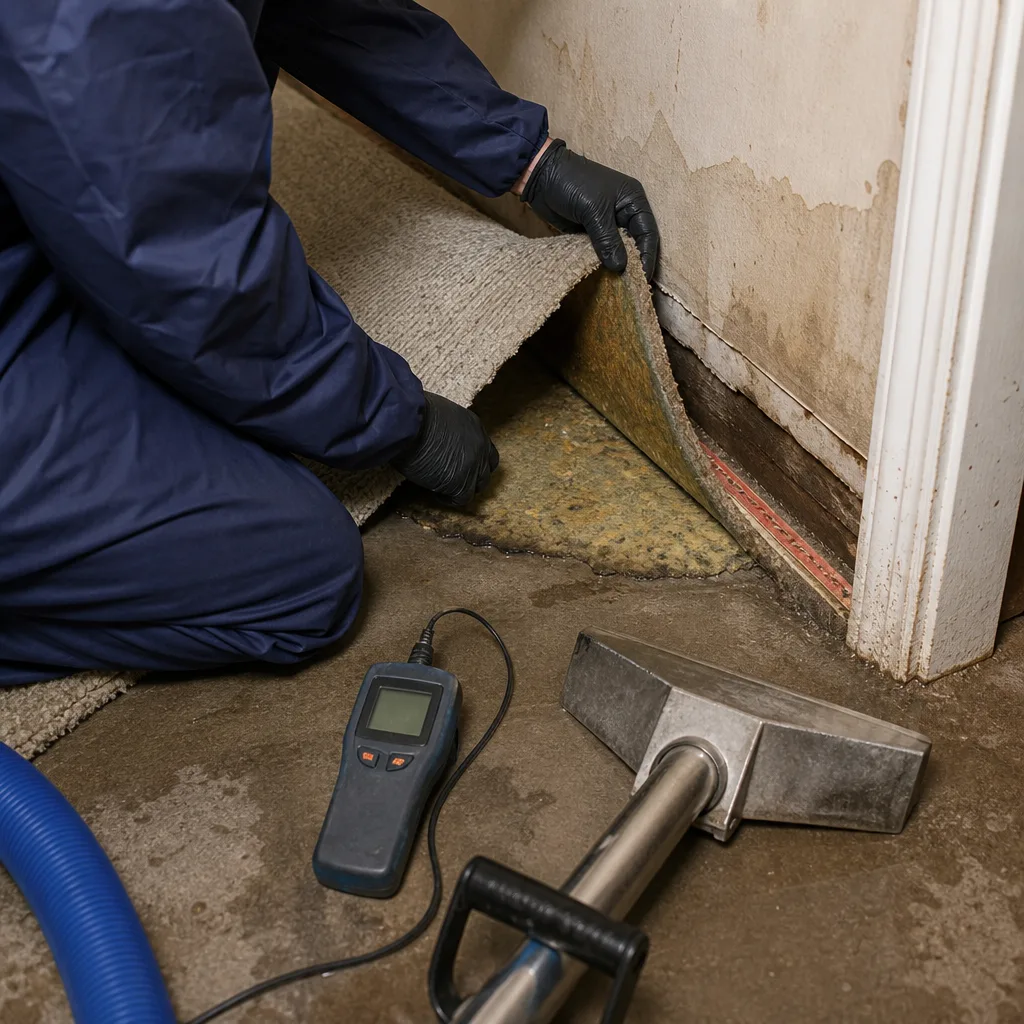
Mold removal in Walnut homes usually means more than scrubbing visible growth. If drywall is saturated or the paper face is breaking down, that section has to come out. Our Mold Remediation team contains the area with negative air pressure, removes affected material in sealed bags, and treats the framing behind it. On older tract homes from the 1970s and 1980s, we often find mold hiding behind original vapor barriers that were never meant to last 40 years. We remove that barrier, dry the studs to below 16% moisture content, and rebuild before replacing it.
Black Mold Remediation
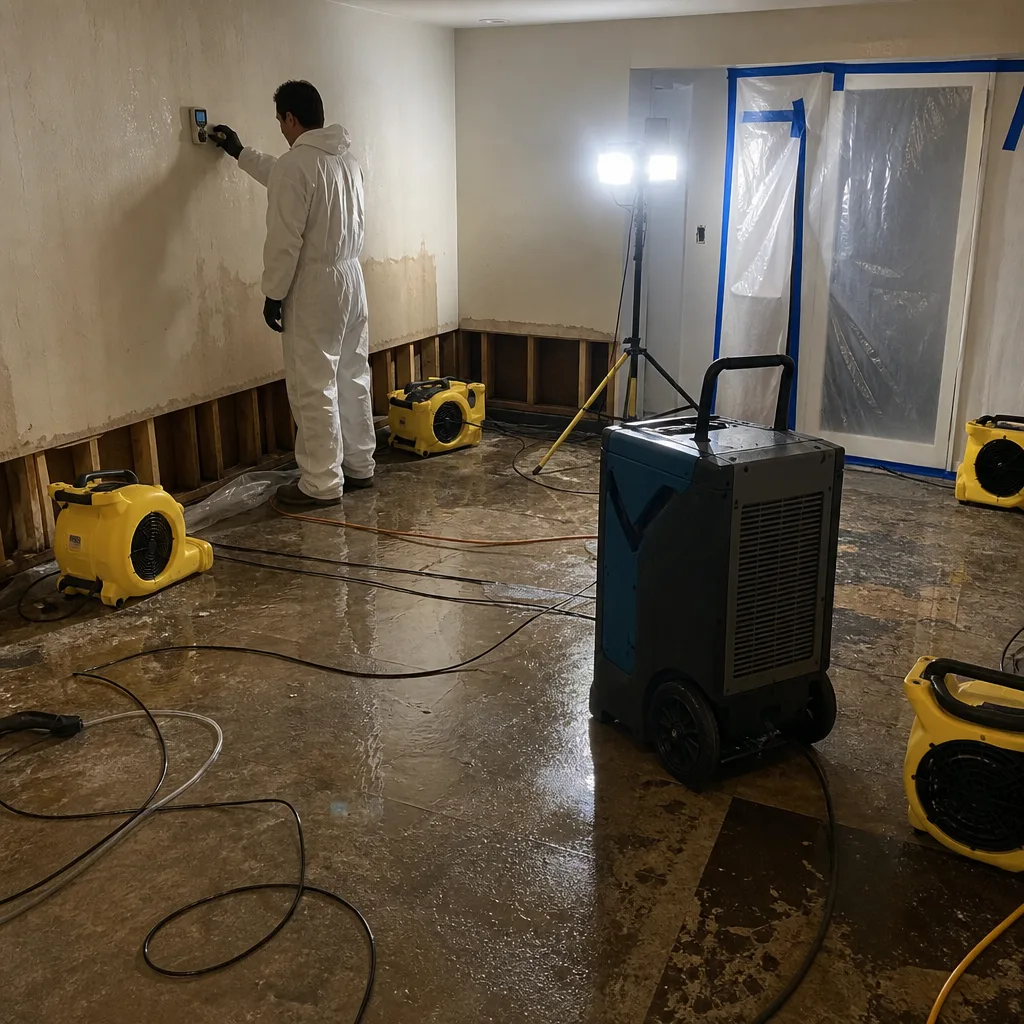
Black mold, most often Stachybotrys chartarum, needs constant moisture to survive. In Walnut we see it most in two places: crawlspaces under hillside slab homes where drainage has failed, and wall cavities behind bathrooms with slow plumbing leaks that have gone unnoticed for years. Santa Ana events complicate things. Soot and ember infiltration can settle inside wall cavities and, once winter rains create a secondary moisture source, black mold blooms behind the drywall. We’re one of the few firms in Walnut equipped to document both the fire-related contamination and the subsequent mold growth for a single insurance claim.
Air Quality Restoration
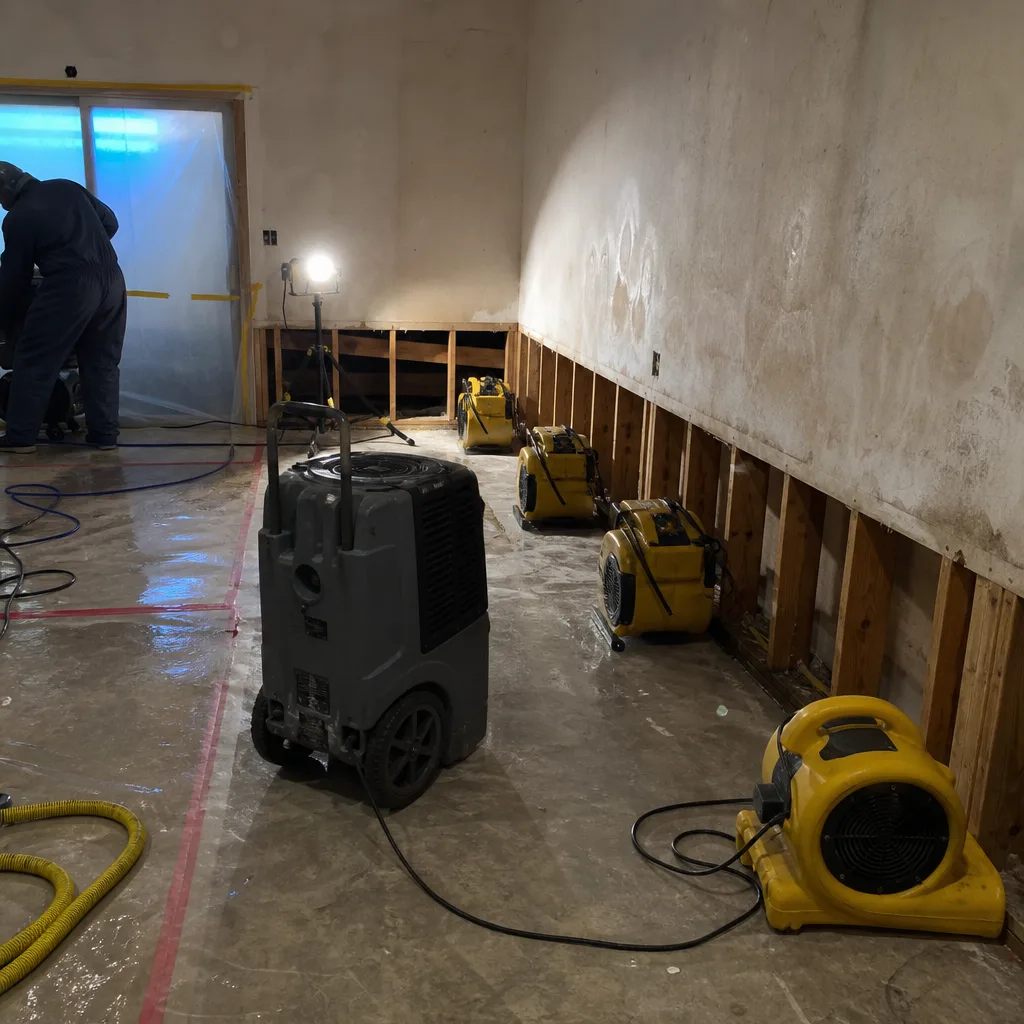
After physical mold removal, the air inside the home has to be brought back to a healthy state. Air quality restoration in Walnut includes HEPA air scrubbing, HVAC inspection and filter replacement, and post-remediation air testing to confirm spore counts are back to normal background levels. Given the fire-to-flood pattern here, we typically recommend re-testing several weeks after a major Santa Ana event, even if no visible mold has appeared. Settled spores from post-fire debris flows find their way into return ducts and wall cavities, and they wait for moisture.
What happens when you call
- 1
A real person answersNo phone trees - you reach a local pro.
- 2
You get an upfront price rangeHonest numbers before anyone is dispatched.
- 3
A background-checked tech heads outLicensed & insured, dispatched right away.
- 4
You approve before work beginsNothing starts until you say go.
Trusted Brands We Service in Walnut
We don’t tie ourselves to one equipment line because we want what works best for your situation. We stock and operate Dri-Eaz dehumidifiers, Injectidry drying mats for hard-to-reach crawlspace spots, XPOWER air movers, and B-Air air scrubbers. Parts and filters for these brands are available locally, which matters when you’re trying to keep a job on schedule and your adjuster is waiting on documentation. Our IICRC-certified crew knows how to run these machines properly. A dehumidifier set up wrong just wastes electricity and leaves mold alive inside the walls.
Common Mold Remediation Problems We See in Walnut Homes
- Mold behind original vapor barriers on slab-on-grade foundations. Walnut’s master-planned tracts from the 1960s through early 1990s were built on graded hillside pads. The original moisture barriers under those slabs break down over decades, and clay-heavy soils hold water against the foundation. Mold grows inside the crawlspace and wicks upward into the walls, often undetected for years.
- Incomplete remediation after wildfire smoke. A contractor who never re-tests for settled mold spores after a post-fire debris flow is walking off a job half done. Homes backing to the San Jose Hills that saw smoke in October can harbor spores inside wall cavities. By February, after the first heavy rain saturates the hydrophobic burn-scarred soil, those spores bloom. We test for both.
- Improper drying after plumbing bursts. Hard San Gabriel Valley water shortens the life of Walnut’s original copper supply lines. When a pipe lets go, water travels fast through a slab home. Some crews pull drying equipment before wood moisture content drops below 16%. Mold thrives in that margin. We leave equipment running until our moisture log proves the job is dry, not just until the surface looks alright.
- Low-slope roof runoff overwhelming aged drainage. Many hillside Walnut homes have tile or low-slope roofs that have shifted over decades. Intense bursts of the area’s roughly 17 inches of annual rainfall come too fast for aging storm drains to handle, and water sheets down toward foundations. If your downspouts discharge against the foundation wall, you’ll get crawlspace saturation and mold within weeks.
Pricing for Mold Remediation in Walnut, CA
Here’s what we quote for mold work in Walnut, and these are real numbers we’ve used on jobs in this market:
- Mold inspection & testing: $350-$650 including lab analysis
- Small mold removal (under 30 sq ft of drywall): $900-$2,200
- Full room remediation with containment: $2,500-$5,500
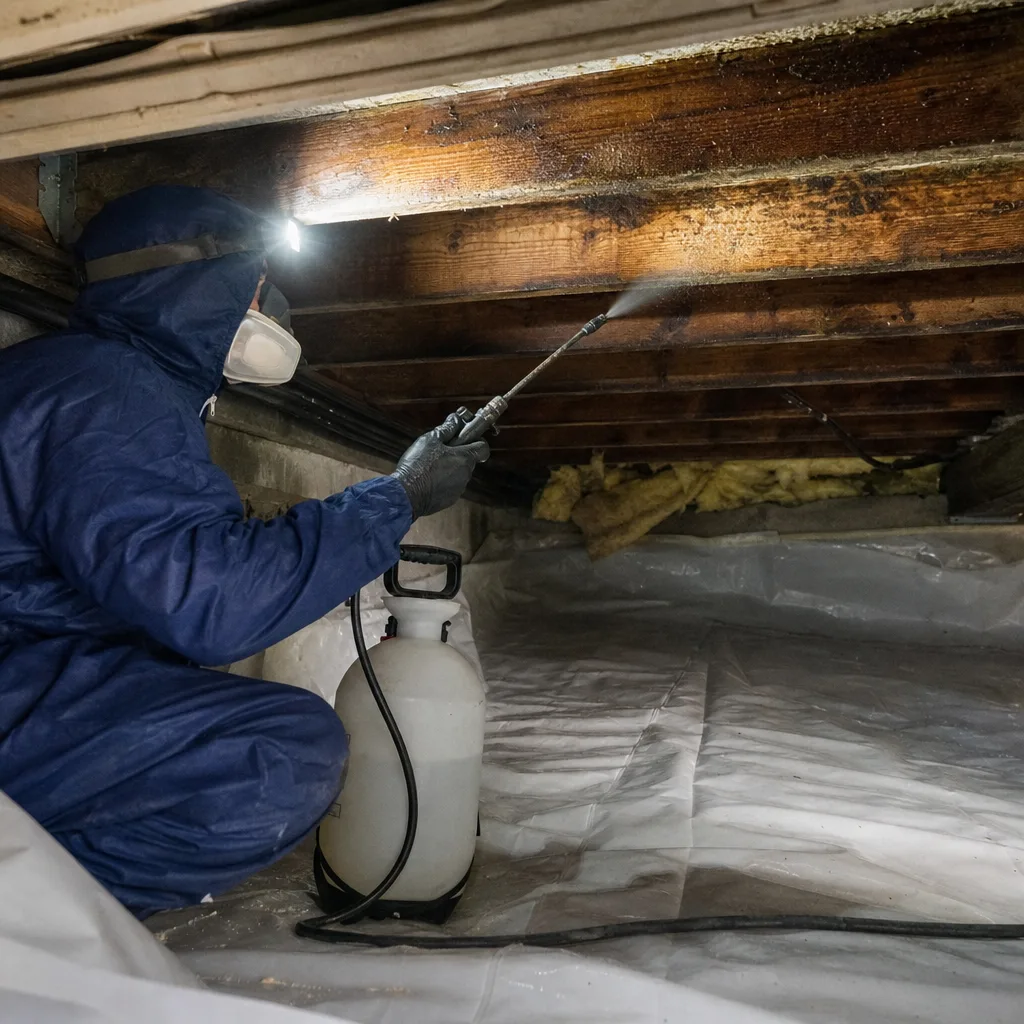
- Crawl space treatment (drying, antimicrobial, vapor barrier replacement): $1,200-$4,000
- Air quality restoration with HEPA scrubbing and HVAC cleaning: $700-$2,500
What moves the price: how far the growth has spread, whether containment is required, how deep into the framing the moisture went, and whether an insurance claim is being filed. We write every scope in plain English before work begins. You’ll know what’s coming, and you’ll never get a second number at the door. Estimates are free. Call (855) 915-0646.
Senior and Veteran customers always get 10% off, and we don’t charge a trip fee inside Los Angeles County. We also offer a free second opinion on any written estimate. If you already got a number from another company, bring it to us. Wade will look it over at no charge.
We Also Serve Cities Near Walnut
Our crews live and work throughout the eastern San Gabriel Valley. Beyond Walnut, we regularly handle mold remediation in South San Jose Hills, Diamond Bar, Rowland Heights, and West Covina. If you’re anywhere in the surrounding area, call and ask for Wade. If we can’t get there as fast as you need, we’ll tell you straight who can.
Serving Walnut, CA - Our Local Coverage Area
We’re based in the Walnut area and know this community well. Use the map below to see our service coverage - if you’re nearby, we can almost certainly help.
FAQs - Mold Remediation in Walnut
A property that saw smoke damage in October can present with serious mold growth by February because burn-scarred slopes on the San Jose Hills shed water like pavement. Winter rains saturate those hydrophobic soils and redirect runoff toward rear foundations. That means remediation often involves two documented loss events: soot and smoke penetration in the fall, then water intrusion and mold in the winter. Scoping both properly for one insurance claim takes time, and a rushed job will miss spores that settled inside wall cavities. Call (855) 915-0646 and we’ll walk you through what your specific property needs.
Yes. Slab-on-grade foundations on graded pads sit directly against clay-heavy hillside soil that holds water after heavy rain. When the original moisture barrier fails, which most have after 30 to 50 years, water wicks into the crawlspace and causes mold growth that spreads upward into walls. Flatland homes in nearby cities drain differently and don’t see the same sustained groundwater contact.
It becomes more common in the months that follow, though the Santa Ana winds themselves don’t cause black mold. What they do is drive embers, ash, and organic debris into attics, wall cavities, and vented crawlspaces around homes backing to open space. Once winter rains create moisture, that embedded organic material feeds mold growth, including Stachybotrys. We test for it specifically during post-fire inspections.
Expect about two to three hours on site. We map moisture in every exterior-facing wall, check the crawlspace for standing water and vapor barrier condition, inspect the attic for roof leaks or ember intrusion, and take air and surface samples from at least three locations. Lab results typically come back in 48 to 72 hours. The report tells you exactly what you’re dealing with and what the next step is.
Often yes. If the mold is on the surface and drywall is structurally sound with moisture content below the threshold, we can clean and treat in place. But if the back side of the drywall paper is colonized or the material has been wet for more than 48 hours, that section has to come out. We’ll show you the moisture readings and let you see exactly why before any cutting starts.
Written by Wade Ferris, Owner at Wade’s Restoration of California, serving Walnut and the eastern San Gabriel Valley since 2007.