
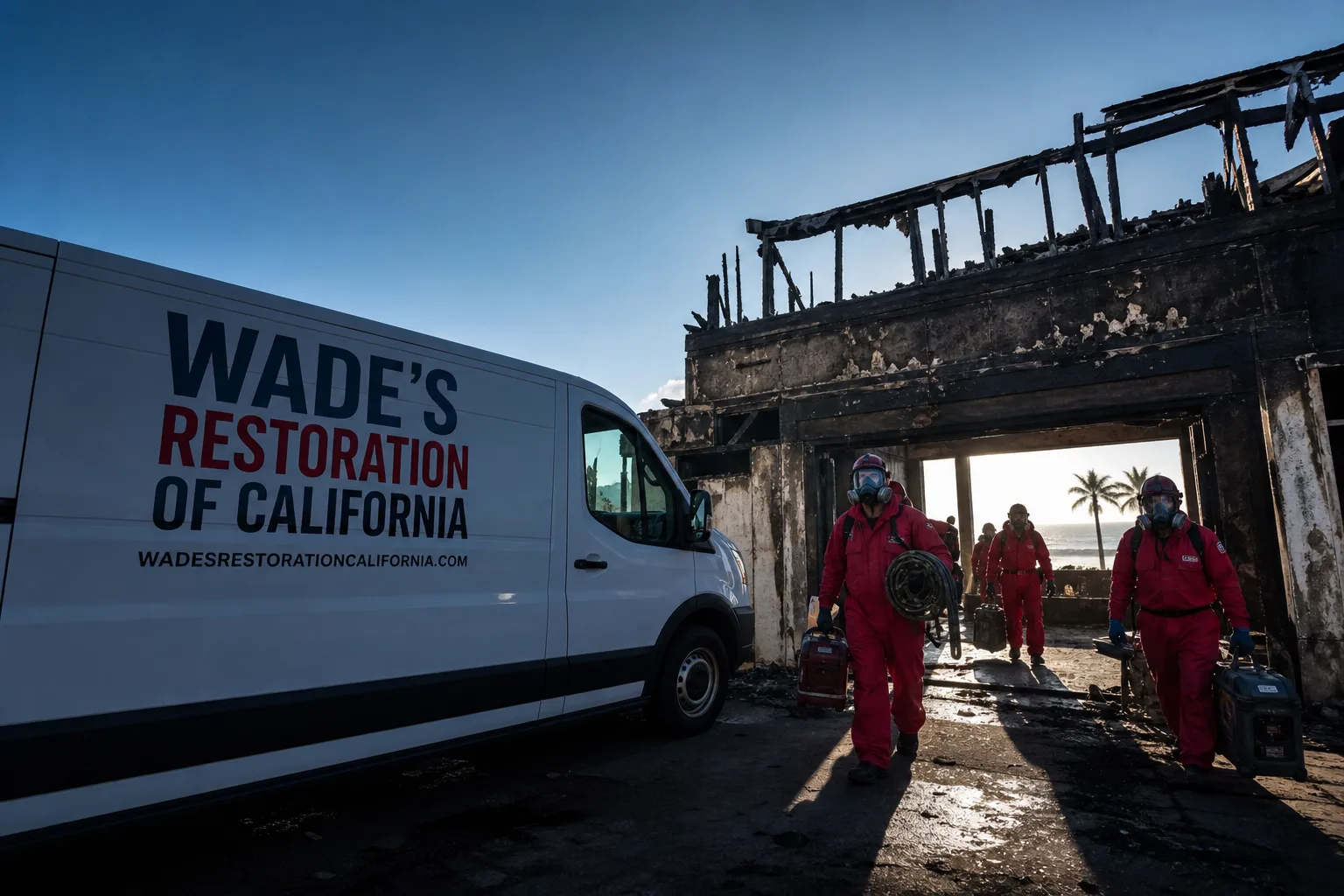
Fast, Reliable Mold Remediation Across Temple City
Mold remediation in Temple City typically runs $1,800-$6,200 for a full containment and removal job, with inspection-only visits starting around $295. Most homes here need more than surface treatment because of the way this city was built and expanded over decades. We know Temple City’s housing stock: 1950s-1970s ranch homes on slab foundations, unpermitted additions, galvanized pipes that have been quietly failing for years. If you’re smelling must or seeing staining, call Wade at (855) 915-0646. He answers his own phone, and he’ll tell you straight what you’re dealing with.
Why Wade’s Restoration of California Is Temple City’s Preferred Mold Remediation Company
Wade Ferris founded this company in 2007, and he still runs it like a neighbor, not a franchise. His name is on the truck, his license number is published, and he’s going to run into you at the hardware store on a Saturday. That’s the oldest accountability mechanism there is, and it’s why people in Temple City call him when a mold problem turns out to be bigger than the paint job they planned.
Ask anyone on your street. Temple City homeowners have been burned by national outfits that quote one price on the phone and another at the door. Wade does no-hassle upfront pricing and puts the 90-Day Done Right Promise in writing on every mold job. If it’s not done right, he makes it right. One call brings Wade back, not a call center.
Response time to Temple City is fast. Calls are answered by a live person 24/7, including Wade himself. He can have his crew on the road and working inside the hour. That matters when mold is spreading behind a wall you can’t see.
His crew is background-checked, uniformed, and works with professional-grade equipment: Dri-Eaz, Phoenix, Injectidry, XPOWER, B-Air. Wade holds IICRC certification and is RIA-affiliated. He takes moisture readings every single day and hands you the full log at the end of the job. Almost nobody in this trade does that.
Our Mold Remediation Services in Temple City
Mold Inspection & Testing
A mold inspection in Temple City is not a visual walkthrough. It’s a systematic moisture mapping of walls, ceilings, and slab floors, with special attention to cavities that don’t appear on any permit record. Wade’s team uses thermal imaging and intrusive probes to find trapped moisture before it becomes visible mold. In Temple City’s converted garages and added bathrooms, the problem is almost never where you first smell it.
Mold Removal
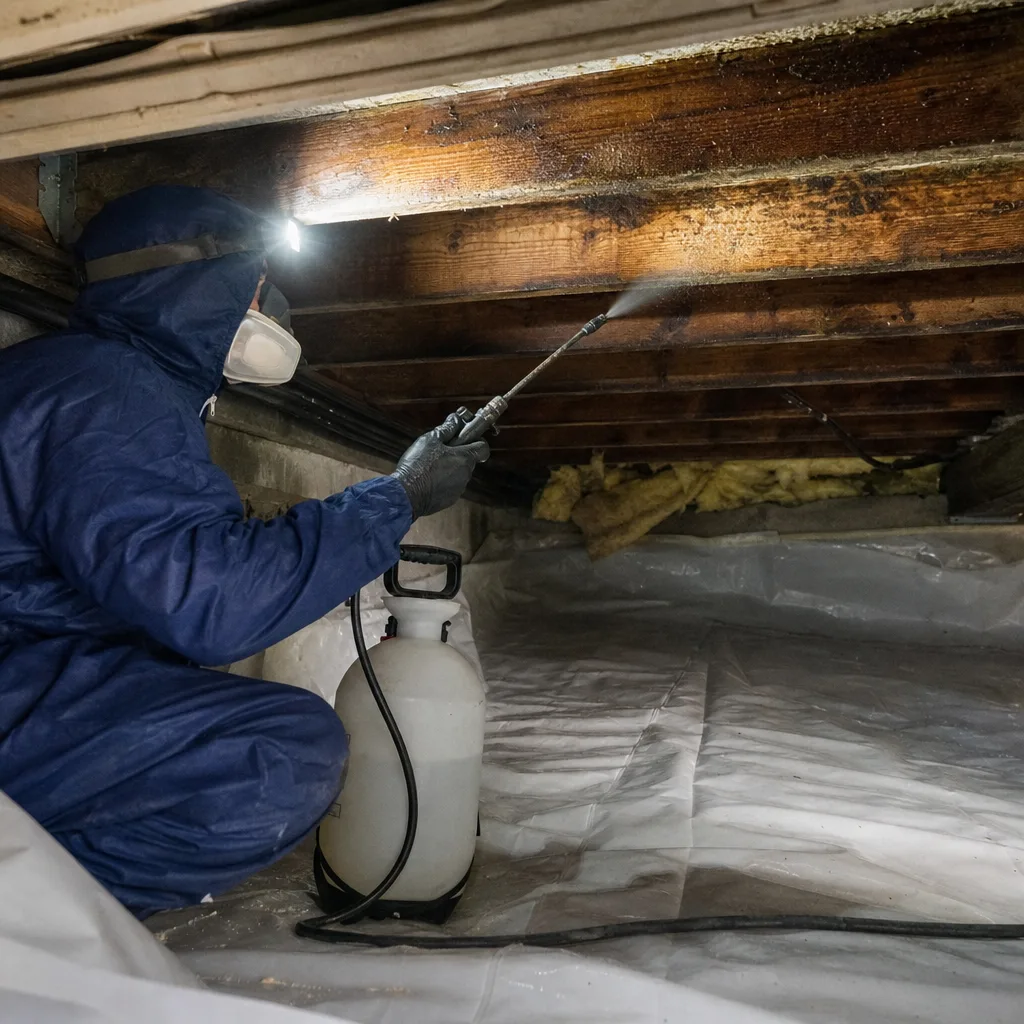
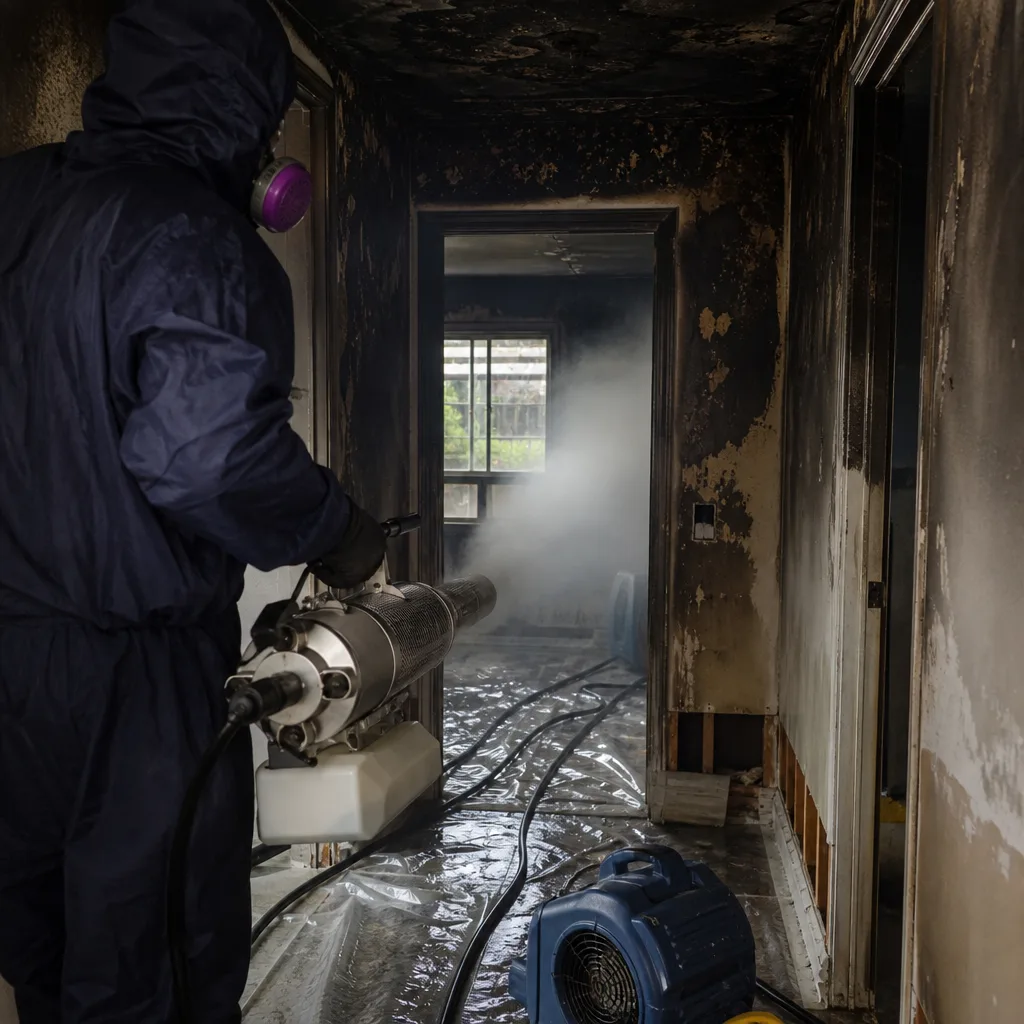
Mold removal on a 1950s Temple City ranch means opening walls carefully, containing the workspace, and removing affected drywall, insulation, and cabinetry without cross-contaminating the rest of the house. We set up negative air pressure with a Phoenix axial air scrubber, bag the mold-affected material, and clean stud bays to bare wood. The goal is not to “kill” mold with a spray. It’s to remove the material that’s feeding it.
Black Mold Remediation
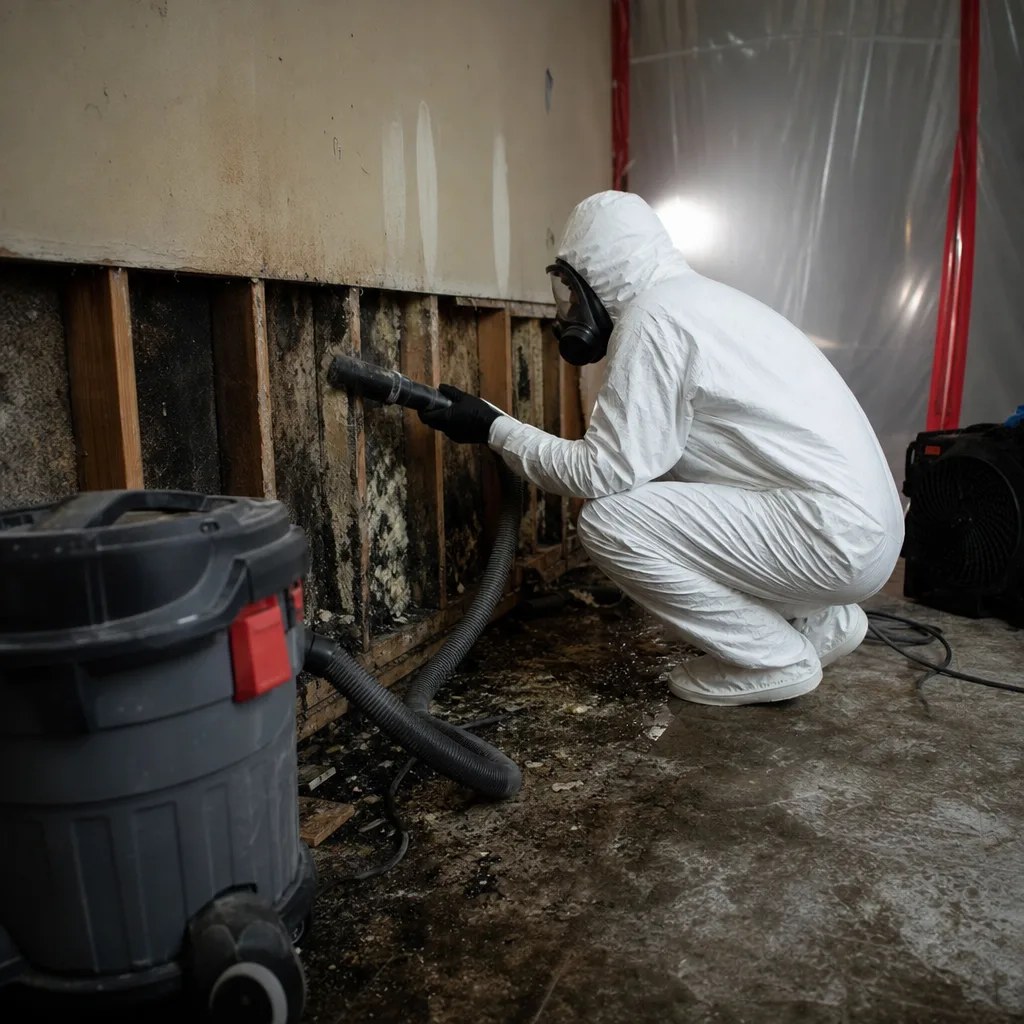
Black mold (Stachybotrys) loves the dead, humid spaces behind unpermitted walls and above slab floors. In Temple City, we regularly find black mold around corroded galvanized supply lines that have been weeping behind drywall for years. Full containment, HEPA air scrubbing, and proper disposal are non-negotiable here. This is not a DIY job. If it’s disturbed without containment, spores spread through the whole house.
Air Quality Restoration
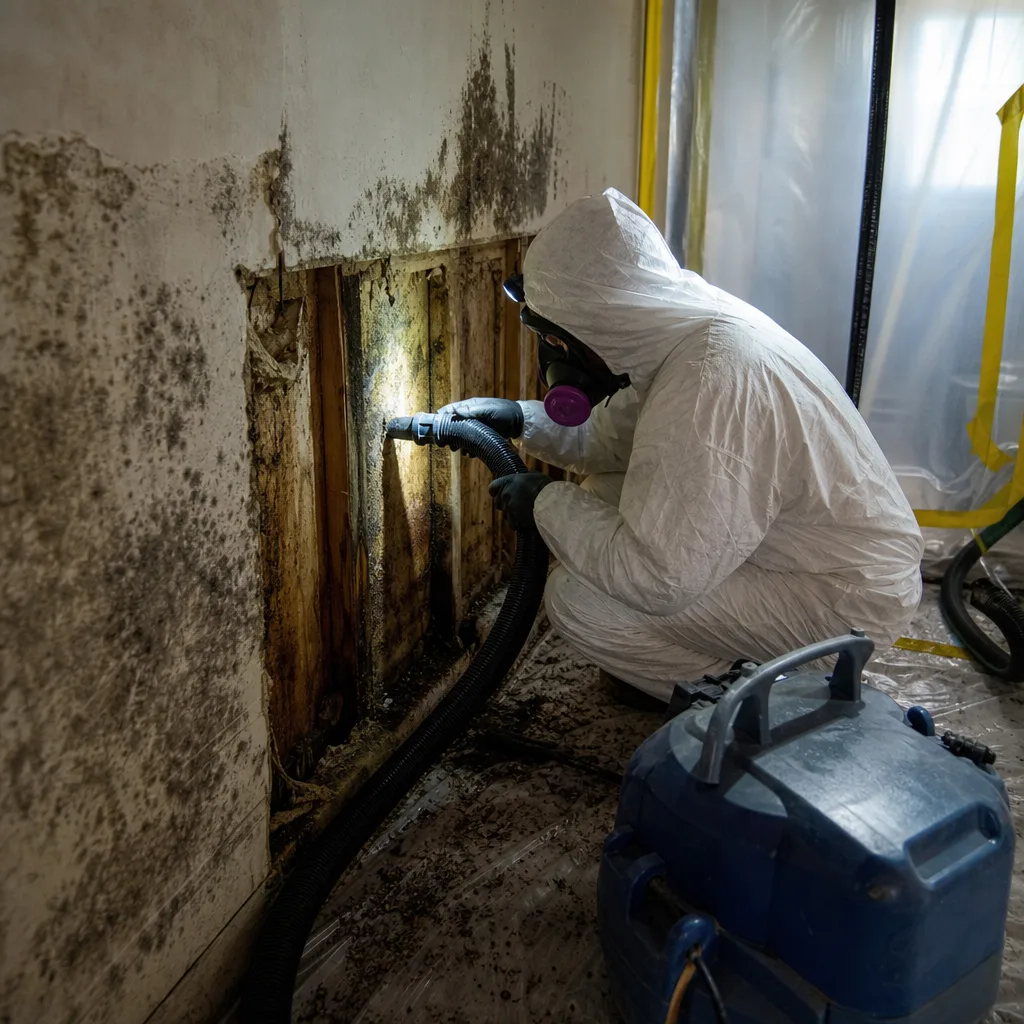
After we remove mold-affected material, we don’t just pack up and leave. Wade’s crew runs HEPA air scrubbers throughout the space for 24-48 hours, then takes post-remediation air samples to confirm spore counts are back to normal background levels. In Temple City, where Santa Ana winds push fine particulate through older window seals and door gaps, air quality restoration on the back end is what keeps the musty smell from returning.
What happens when you call
- 1
A real person answersNo phone trees - you reach a local pro.
- 2
You get an upfront price rangeHonest numbers before anyone is dispatched.
- 3
A background-checked tech heads outLicensed & insured, dispatched right away.
- 4
You approve before work beginsNothing starts until you say go.
Common Mold Remediation Problems We See in Temple City Homes
- Hidden mold behind unpermitted walls stays wet. Original slab-on-grade construction has no crawlspace ventilation. Standard air movers alone can’t dry the trapped cavities behind a garage conversion or added bath. You need Injectidry panels and floor-core testing to get to the real problem.
- Hard, mineral-rich groundwater accelerates pinhole leaks. The San Gabriel Valley’s water leaves calcium deposits in galvanized lines. When those lines fail, the calcium-laden water feeds mold and leaves white residue that obscures active growth on inspection. We see this constantly in Temple City.
- Winter atmospheric rivers push stormwater under slab foundations. Homes without a raised foundation have no capillary break. Water wicks up into unpermitted additions. Crews that skip floor-core moisture testing miss full-depth mold in the slab itself, and the problem returns within months.
- Second kitchens and in-law bathrooms that don’t exist on paper. A “simple” water-line break in Temple City often turns into a multi-room remediation once we open walls and find a fully tiled second kitchen with a gas stub-out and drain line installed in what the permit history still lists as a garage.
Pricing for Mold Remediation in Temple City, CA
A typical mold inspection with moisture mapping in Temple City runs $295-$495. A single-room containment and removal runs $1,800-$3,400. A multi-room job involving an unpermitted addition, slab moisture, or black mold runs $4,200-$6,200. Crawl space treatment adds $1,200-$2,800 depending on depth and access. Moisture and humidity control, including a professional-grade dehumidifier install, runs $900-$2,200.
What changes the price: how many wall cavities are wet, whether slab-floor cores show moisture, and whether asbestos or lead testing is required on older material. Wade gives a written scope before work starts, so there’s no surprise at the end. Estimates are free. Call (855) 915-0646 and Wade will come out, take readings, and tell you what you actually need – not what a sales script says.
We Also Serve Cities Near Temple City
Our Mold Remediation team works throughout the San Gabriel Valley. If you’re in Rosemead, San Gabriel, Arcadia, or East San Gabriel, the same crew, the same written promise, and the same live-answer phone apply. Wade heads out to these neighborhoods on the same schedule as Temple City. No trip charge inside the county.
Serving Temple City, CA - Our Local Coverage Area
We’re based in the Temple City area and know this community well. Use the map below to see our service coverage - if you’re nearby, we can almost certainly help.
FAQs - Mold Remediation in Temple City
Because Temple City is one of the most densely Asian-American cities in the U.S. with a long tradition of multigenerational households. Many 1950s-1970s tract homes have had second kitchens, in-law bathrooms, and converted-garage living spaces added without permits. Those cavities never appear on any city record, so moisture mapping has to be physical and thorough – you can’t rely on blueprints to know what’s behind a wall. Our local techs learned to pull permits and scope the job as if every wall hides a surprise, because in Temple City it usually does. Call (855) 915-0646 for an inspection that goes where the records don’t.
Temple City runs 10-15°F hotter than the coast, which means faster spore proliferation inside walls once moisture is present. The heat bakes the slab and drives trapped moisture upward into drywall and insulation, which is why we use Injectidry panels and slab-core testing more aggressively here than we would in coastal markets. Drying scopes in Temple City routinely extend into wall and ceiling cavities that appear on no permit record, so the heat makes thorough moisture mapping non-negotiable. Wade’s daily moisture log is how you know the job actually dried.
Yes. Temple City sits squarely in the Santa Ana wind corridor. The 2020 Bobcat Fire sent smoke and ash into this city for weeks. That fine particulate settles into wall cavities and ductwork, coating existing mold growth with carbon that can mask visual detection and irritate respiratory conditions even at low spore counts. If you had mold before fire season and you’re now noticing a different smell, it’s worth an inspection. Call Wade and he’ll tell you if it’s a problem or just dust.
Because slab-on-grade construction has no raised foundation and no capillary break. When stormwater pushes under the slab during atmospheric river events, it wicks up into the concrete and into any wood framing in contact with it. In unpermitted additions, which often lack proper vapor barriers, that water becomes trapped and feeds mold for months after the visible puddles are gone. Floor-core moisture testing is the only way to catch it. Wade’s team does exactly that before writing any drying scope.
We start with the assumption that the records are wrong and the walls are hiding something. On a 1950s ranch home near Live Oak Park, our team traced a musty odor to a converted garage now used as an in-law suite. Behind drywall we found black mold blooming around corroded galvanized supply lines above a second kitchen that had no permit or vapor barrier. We contained the area with a Phoenix axial air scrubber, removed mold-affected drywall and cabinetry, and used Injectidry panels to force dry the remaining framing before rebuilding with moisture-resistant materials for the unvented dead-space above the slab. Permit history is a starting point, not a map. Call (855) 915-0646 and Wade will do a proper inspection first.
Why Mold Keeps Returning in Temple City and What Actually Stops It
Temple City is one of the most densely Asian-American cities in the U.S., with a long tradition of multigenerational households that have added second kitchens, in-law bathrooms, and converted-garage living spaces to 1950s-1970s tract homes – frequently without permits. Restoration crews here disproportionately encounter hidden plumbing failures inside these unpermitted additions, where non-standard work meets the San Gabriel Valley’s notoriously hard, mineral-rich groundwater, accelerating corrosion in original galvanized lines and leaving calcium deposits that complicate structural drying in ways rarely seen in coastal LA markets.
That means the real reason mold keeps coming back in Temple City isn’t a bad cleanup. It’s a drying process that ended too soon. Trapped cavities behind unpermitted walls, moisture in the slab itself, and calcium residue masking active growth all need a different approach. Wade’s team pulls permits first, maps moisture with slab-core testing, and documents every reading daily until the job is actually dry. His 90-Day Done Right Promise is in writing because he knows this city’s homes are full of surprises behind the walls.
Contact Wade’s Restoration for Mold Remediation in Temple City
If you’re smelling mold, seeing staining, or just bought a Temple City home with a suspicious second kitchen, call Wade. He’ll answer his own phone, walk you through what to look for, and schedule an inspection. No answering service, no runaround. Free estimate, written scope before work starts, and direct adjuster coordination if you’re filing an insurance claim. Call (855) 915-0646 now.
Written by Wade Ferris, Owner at Wade’s Restoration of California. Serving Temple City homeowners with mold remediation, moisture mapping, and slab-aware drying since 2007.