
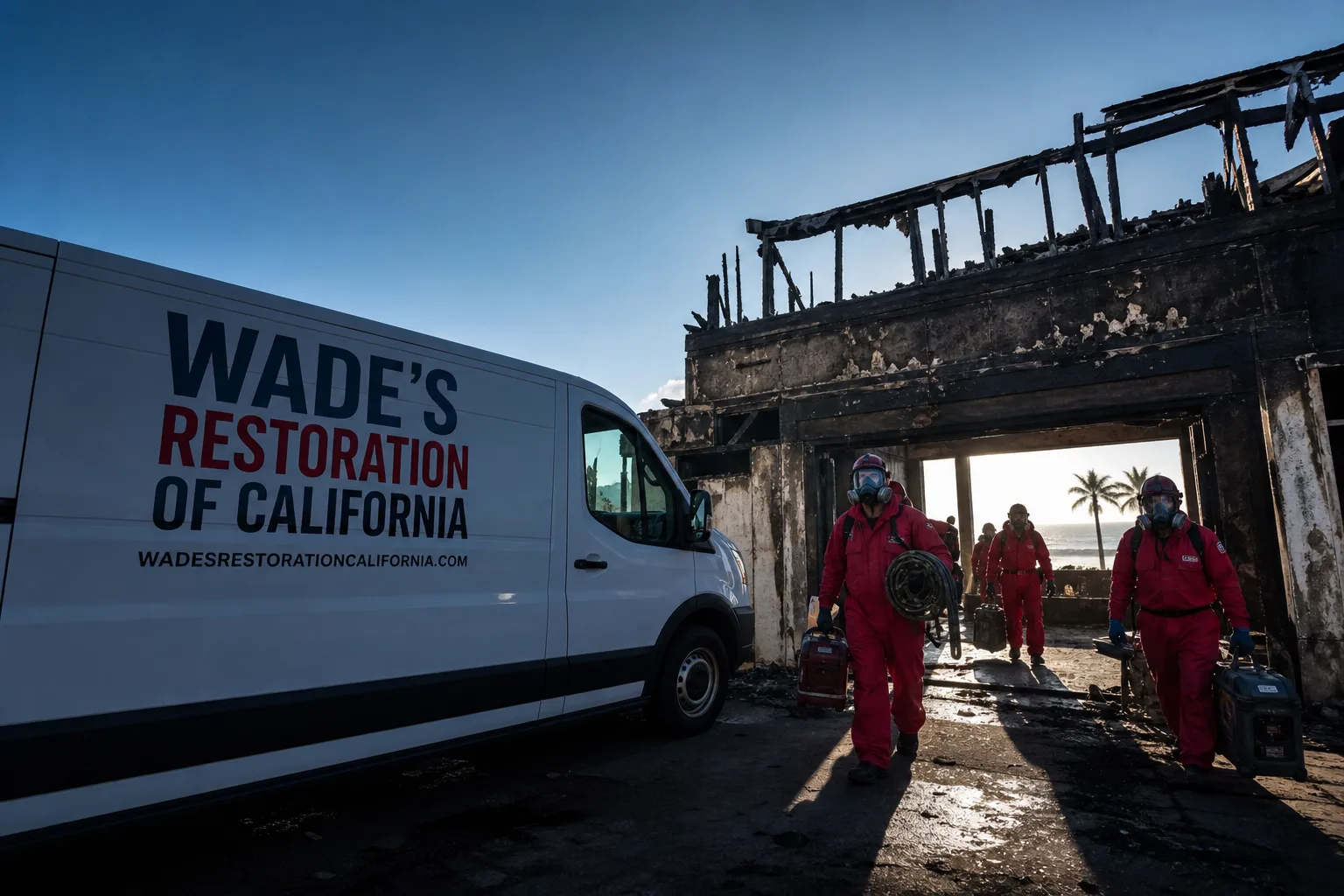
Fast, Reliable Mold Remediation Across Spring Valley
Mold remediation in Spring Valley typically costs between $2,200 and $6,500 for a standard single-room job, with crawl space treatments running $1,800 to $4,200 depending on square footage and contamination level. Same-day emergency response is available, and Wade Ferris answers his own phone at (855) 915-0646. If you’re smelling must in a back bedroom or seeing staining along a baseboard, don’t wait. Mold here doesn’t announce itself politely. It hides behind stucco through our dry summers and blooms after the first atmospheric river saturates the walls. We know Spring Valley’s homes, we know its canyons, and we know where the water goes when storm runoff hits. Call us and Wade heads out.
Why Wade’s Restoration of California Is Spring Valley’s Preferred Mold Remediation Company
Spring Valley homeowners have been burned before. Not by mold. By companies that quote one number on the phone and a different one at the door, by crews that swap out mid-job, by voicemail systems that never call back. Wade Ferris built Wade’s Restoration in 2007 specifically because he was tired of watching that happen to his own neighbors. His name is on the truck. His phone is in his pocket. When you call (855) 915-0646, you get him, not a queue.
The work we do in Spring Valley is documented the way it should be. Wade takes moisture readings every single day on every mold job and hands you the full log when the job is done. Almost nobody in the trade does this. It matters because mold is a moisture problem first and a cleanup problem second. If you don’t know where the water is coming from and whether it’s actually drying, you’ll be calling someone back in six months. Wade’s crew uses Dri-Eaz and Phoenix equipment, follows IICRC standards, and carries RIA and IFA affiliations. The paperwork backs the promise. And the promise is in writing: the 90-Day Done Right Promise. If it’s not done right, Wade comes back and makes it right. No charge for that.
Ask anyone on your street. The canyon-adjacent blocks, the ranch tracts off Campo Road, the rebuilt streets where the Cedar Fire came through in 2003. They’ll tell you who showed up, who documented everything, who dealt with the adjuster directly so the homeowner never had to relay a word between two sides. Wade deals with the adjuster himself. You shouldn’t have to be the middleman in your own crisis.
Our Mold Remediation Services in Spring Valley
Mold work is not one-size. The house on a flat parcel in Rancho San Diego has different failure modes than the 1960s ranch on a canyon rim in 91977. We scope each job based on how the water got in, how long it’s been there, and what’s actually growing. Here’s what we handle most in Spring Valley.
Mold Inspection & Testing
Before we tear anything out, we find the source. In Spring Valley, that means checking crawl spaces for storm runoff intrusion, probing stucco for hidden moisture pockets, and tracing galvanized supply lines in pre-1980 homes that have been quietly weeping behind walls for years. We take air samples, surface samples, and moisture readings, and you get the numbers. Not a guess. A documented baseline that tells us exactly how far the problem has gone and what we’re dealing with. A typical inspection with sampling in Spring Valley runs $350 to $650.
Mold Removal
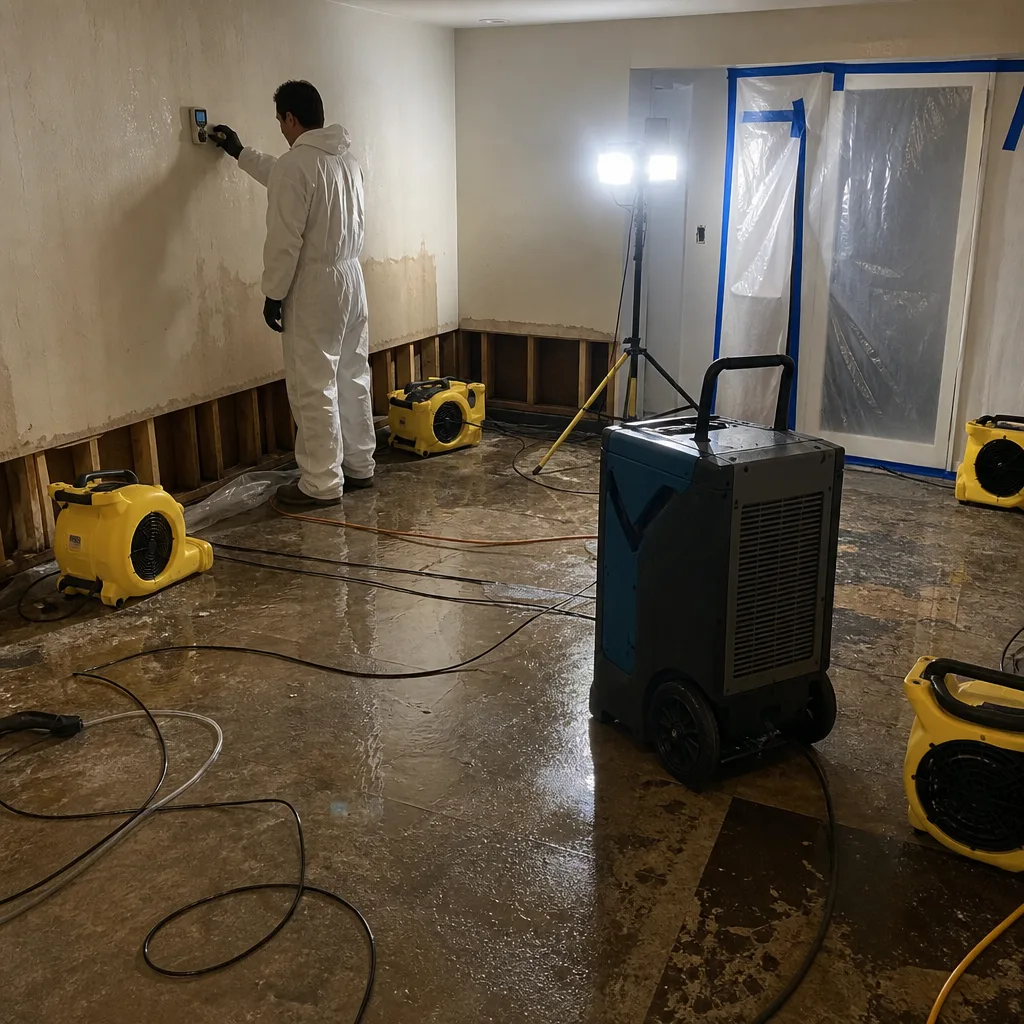
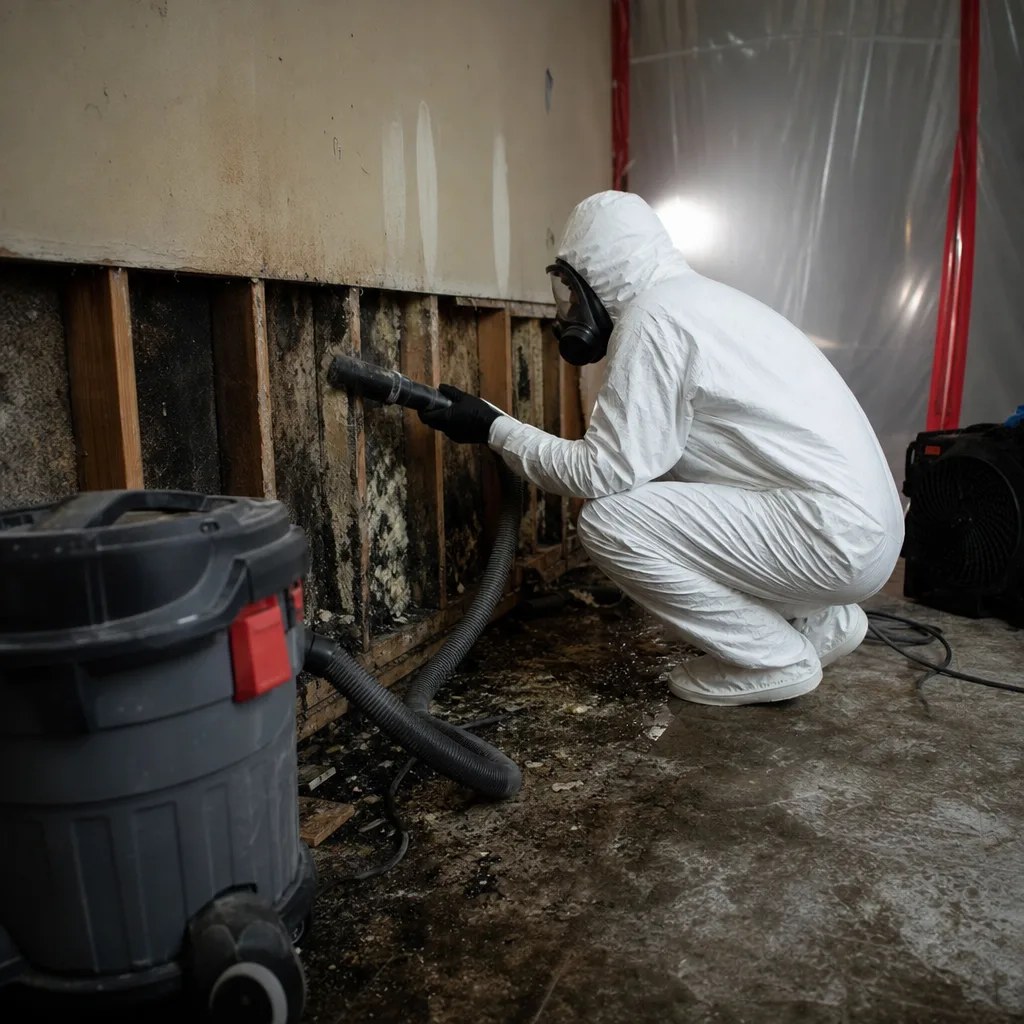
Removal is containment first, demolition second, remediation third. We set up negative air pressure and 6-mil poly containment so spores don’t get pulled into your HVAC and redistributed through the house. We remove affected drywall, insulation, carpet, or subflooring, bag it properly, and run HEPA air scrubbers throughout. Spring Valley homes built before 1980 often have composition-board subflooring that delaminates rapidly once soaked. It has to come out. Mold removal for a typical one-room job in Spring Valley runs $1,500 to $4,000.
Black Mold Remediation
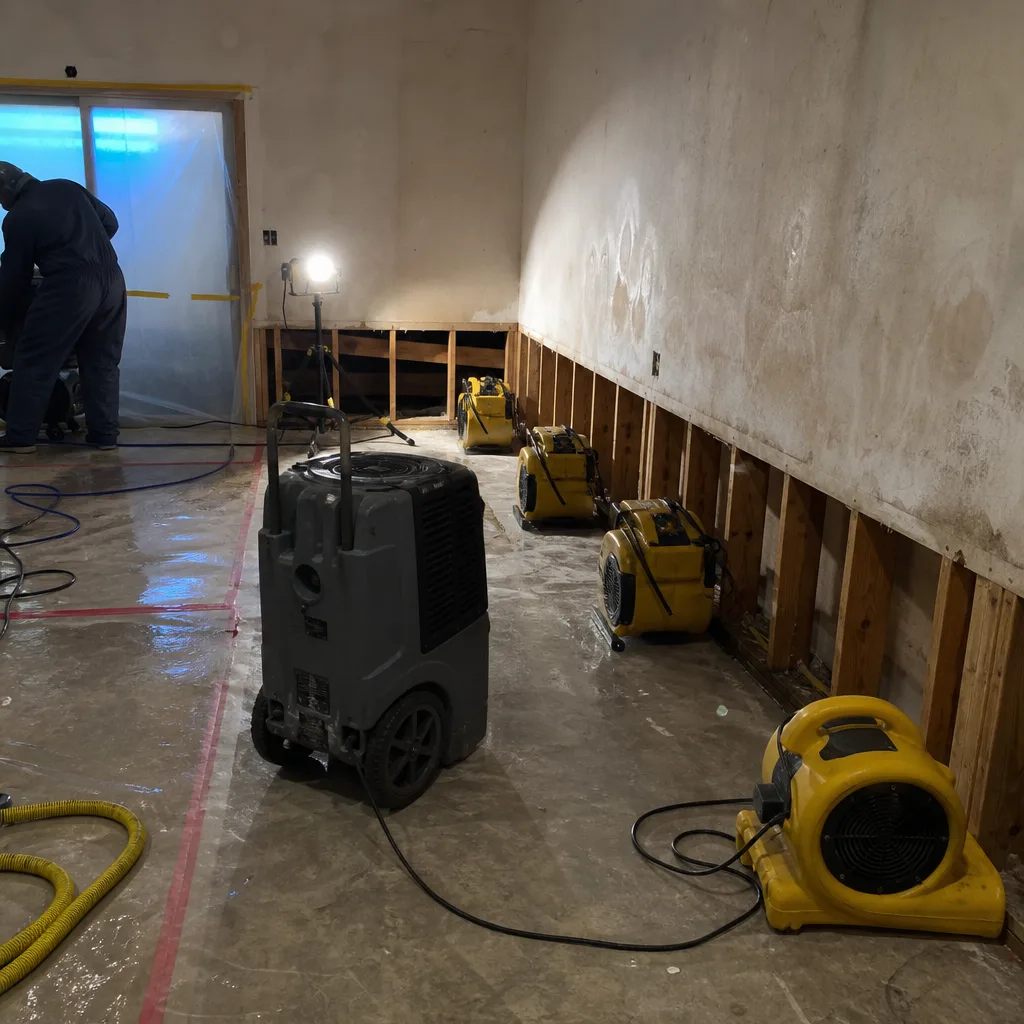
Black mold, usually Stachybotrys, is what people fear most, and Spring Valley’s conditions feed it. Anywhere water has been sitting more than 48 hours on cellulose material: drywall paper, fiberboard, old framing. The canyon homes in 91977 and 91978 that take on crawl space water repeatedly are prime candidates. Black mold remediation follows the same containment protocol as standard removal but with stricter PPE and clearance testing at the end. Air samples get sent to an independent lab. You get the lab report. Black mold remediation in Spring Valley generally runs $2,800 to $7,000 depending on the spread.
Air Quality Restoration
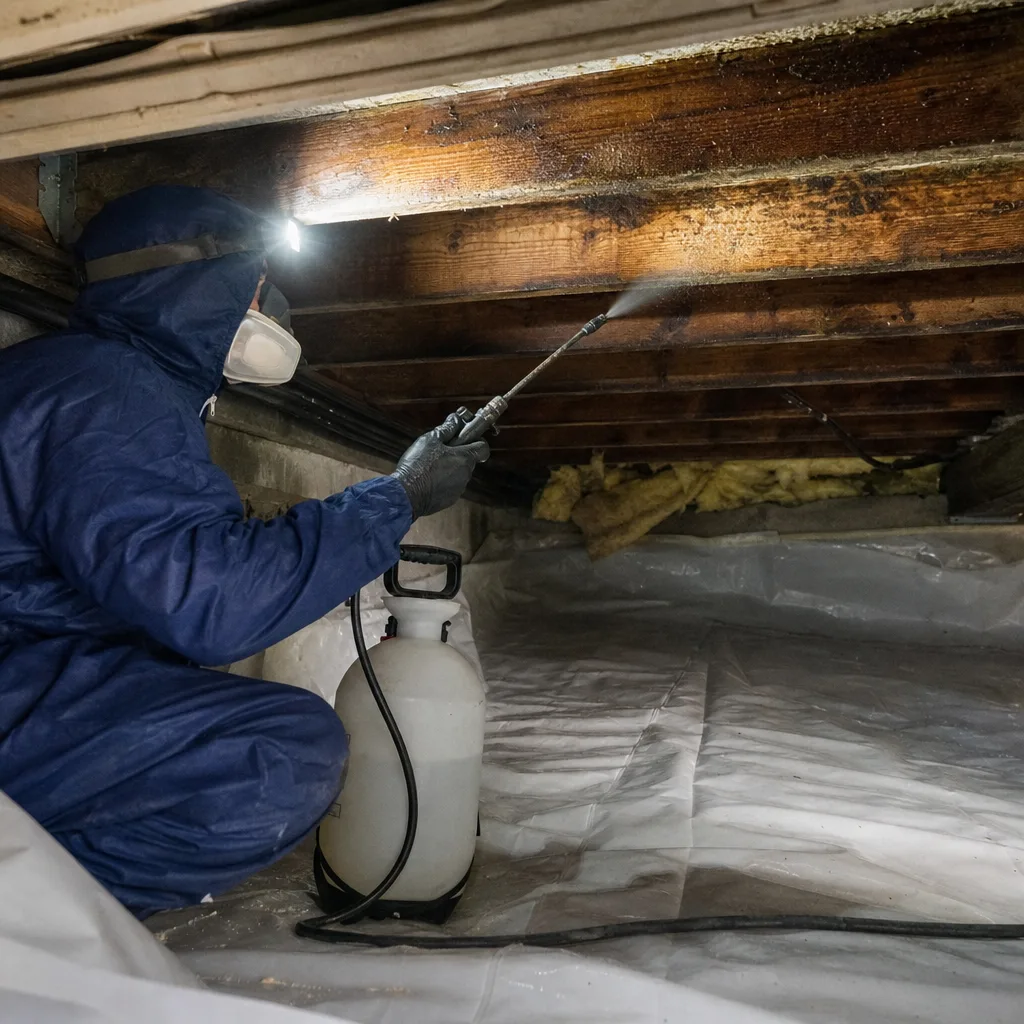
Mold colonies release spores into your air even when you can’t see them. After remediation, or after a wildfire smoke event pushes soot and spores through ridge vents and attic bypasses for days at a time, your air needs work. We run HEPA filtration, clean the HVAC plenum and registers, and in severe cases fog the affected space with an EPA-registered antimicrobial. Spring Valley sits directly in the ember-cast corridor from the Otay Mountain and Jamul wildlands to the southeast. Recurring fires push smoke through homes that never see a flame. Air quality restoration for a typical Spring Valley home runs $900 to $2,500.
What happens when you call
- 1
A real person answersNo phone trees - you reach a local pro.
- 2
You get an upfront price rangeHonest numbers before anyone is dispatched.
- 3
A background-checked tech heads outLicensed & insured, dispatched right away.
- 4
You approve before work beginsNothing starts until you say go.
Trusted Brands We Service in Spring Valley
We’re not tied to any one manufacturer, and we don’t push equipment you don’t need. What we run is what works. Dri-Eaz dehumidifiers and air movers, Phoenix desiccants for deep draws, XPOWER and B-Air scrubbing units. We stock the consumables and replacement filters locally so we’re not waiting on a distributor. When your crawl space is sitting wet and mold is actively growing, a two-day parts delay isn’t acceptable. The crew that shows up at your Spring Valley door is background-checked, uniformed, and carrying professional-grade equipment, not rental-store fans. The difference shows up in the drying log.
Common Mold Remediation Problems We See in Spring Valley Homes
- Hidden mold behind stucco. Spring Valley’s inland position means hot, low-humidity summers that pull moisture inward and mask slow intrusion until the colonies are well established. By the time you see staining, the colony behind the wall has usually been growing for weeks or months.
- Crawl space flooding from canyon runoff. The topography that drains toward Spring Valley’s canyons doesn’t care about your property line. Debris-laden flash runoff backs up into crawl spaces on canyon-adjacent streets, soaks fiberboard subflooring, and creates a rewetting cycle that keeps mold alive even after surface cleanup.
- Original galvanized supply lines in pre-1980 homes. These corrode from the inside, leak behind walls, and never show a puddle on the floor. The first sign is often a musty smell and staining at the baseboard, by which point the framing has been wet for a while.
- Wildfire smoke contamination from the east. Homes in 91977 and 91978 sit in the smoke corridor from Otay Mountain and Jamul. Soot and smoke infiltrate ridge vents and attic bypasses, settle in the HVAC, and create surfaces where mold can anchor. The 2003 Cedar Fire legacy runs deep here. Soot infiltration and mold compound each other in ways coastal Spring Valley’s neighbors don’t experience.
Pricing for Mold Remediation in Spring Valley, CA
Here are real numbers, not phone-quote games. A crawl space treatment in Spring Valley runs $1,800 to $4,200 depending on square footage, regrowth severity, and whether waterproofing or drainage correction is needed. Moisture and humidity control work: vapor barrier replacement, dehumidifier installation, drainage correction, runs $1,200 to $3,800. Air quality restoration after smoke or spore events runs $900 to $2,500. Full-room mold removal with containment and clearance testing runs $1,500 to $4,000 per room, with black mold remediation on the higher end at $2,800 to $7,000. Inspection and testing runs $350 to $650. What moves the number: how much material comes out, whether HVAC cleaning is required, and whether the crawl space needs waterproofing to stop the water that started the mold. We’ll put the scope in writing before any work starts. Estimates are free. Senior and Veteran discount is 10%, always.
We Also Serve Cities Near Spring Valley
Wade’s Restoration covers Spring Valley and the surrounding communities: Spring Valley proper from the 91976 through 91979 ZIPs, plus La Presa, Rancho San Diego, Lemon Grove, and La Mesa. If you’re just over the line and wondering whether we’ll come out, the answer is yes. No trip charge inside our own county. Our Mold Remediation team handles the whole area, and Wade is on the road the same day you call.
Serving Spring Valley, CA - Our Local Coverage Area
We’re based in the Spring Valley area and know this community well. Use the map below to see our service coverage - if you’re nearby, we can almost certainly help.
FAQs - Mold Remediation in Spring Valley
Wildfire smoke deposits fine soot and carbon particles on every horizontal surface and into every air pathway, including attic bypasses, ridge vents, and HVAC returns. Those particles are hygroscopic: they attract and hold moisture. In Spring Valley’s dry seasons, that can sit inert. When humidity returns, as it does during winter atmospheric river storms, soot-laden surfaces become moisture sinks where mold spores can anchor and grow. Homes in the ember-cast corridor from Otay Mountain and Jamul see this repeatedly, even without direct flame exposure. The answer is not just airing out the house. It’s HVAC cleaning, HEPA scrubbing, and sometimes antimicrobial fogging. Call (855) 915-0646 and we’ll assess what’s actually in your air.
Spring Valley’s canyon-and-valley topography channels storm runoff directly into residential crawl spaces. Water that sheet-flows down denuded hillsides and canyon walls doesn’t find a storm drain. It finds the path of least resistance, which in older ranch tract homes is often the foundation vent or a low perimeter grade. Repeated flooding saturates raised foundations, soaks fiberboard subflooring, and creates the exact dark, humid, stagnant conditions where mold thrives. Flatland cities like Lemon Grove rarely deal with this. In Spring Valley, especially in 91977 and 91978, it’s routine. The fix is containment, removal of the delaminated material, drying with desiccants, and then correcting the drainage so it doesn’t happen again. Otherwise you’re just renting time. Call us for an assessment; estimates are free.
Yes, and it’s one of the most common things we find. Spring Valley’s summers are hot and low-humidity, which pulls moisture inward through the stucco toward the cooler side of the wall assembly. If there’s a slow leak from an original galvanized supply line or window flashing, the moisture migrates inward and gets trapped behind the stucco where it can’t dry to the outside fast enough. The wall cavity stays wet while the surface looks fine. Mold grows unseen for weeks or months. Homeowners typically discover it after the first big winter storm, when the walls get genuinely soaked and the colony blooms through the drywall. If you’re seeing staining or smelling must in a stucco house built before 1980, don’t wait it out. Call (855) 915-0646 and Wade will come out and take readings.
On raised foundations, the sequence is: inspect and sample first, then contain, then remove, then dry, then restore. We set negative air pressure in the affected area, install 6-mil poly containment, remove the damaged subflooring and insulation from the crawl space, bag it and haul it out, then run Dri-Eaz or Phoenix dehumidifiers until the moisture log shows your framing is at or below the target. Once it’s dry, we fog the crawl space with an EPA-registered antimicrobial and run HEPA air scrubbers. Last winter, our crew tackled a 1960s ranch-style home in the 91977 ZIP near the Jamul wildlands where the homeowner called about a musty smell in a back bedroom. We traced it to a crawl space that had been flooding repeatedly during storm runoff, where the original fiberboard subflooring had delaminated and was feeding a significant Aspergillus colony. We set up a Dri-Eaz LGR 7000XLi dehumidifier, contained the space, removed the damaged subfloor, and fogged the crawl space. Within three days, air samples showed spore counts back to normal outdoor levels. That’s the standard. Give us a call and we’ll walk you through exactly what your house needs.
Prevention starts with water. If the crawl space floods every winter, remediation alone won’t save you. The drainage has to be corrected: perimeter grading, downspout extensions, vapor barrier replacement, and in some canyon-adjacent homes, a sump pump or French drain. Inside the home, the galvanized supply lines in pre-1980 houses need to be assessed; if they’re corroding, they’ll leak again. Humidity control matters: a crawl space dehumidifier with a humidistat that actually works. Wade’s team does moisture and humidity control as part of remediation, not as an upsell. The 90-Day Done Right Promise is in writing on every mold job. If the moisture comes back, so does Wade. Call (855) 915-0646 to talk about what’s realistic for your house and your block.
If you have mold in your Spring Valley home and you’re not sure where to start, start with a call. Wade answers his own phone at (855) 915-0646. Estimates are free, the second opinion on any written estimate is free, and there’s no trip charge inside our county. We’ll come out, take readings, show you the numbers, and put a scope in writing before any work starts.
Written by Wade Ferris, Owner at Wade’s Restoration of California, serving Spring Valley residents with mold remediation, crawl space treatment, and moisture control since 2007.