
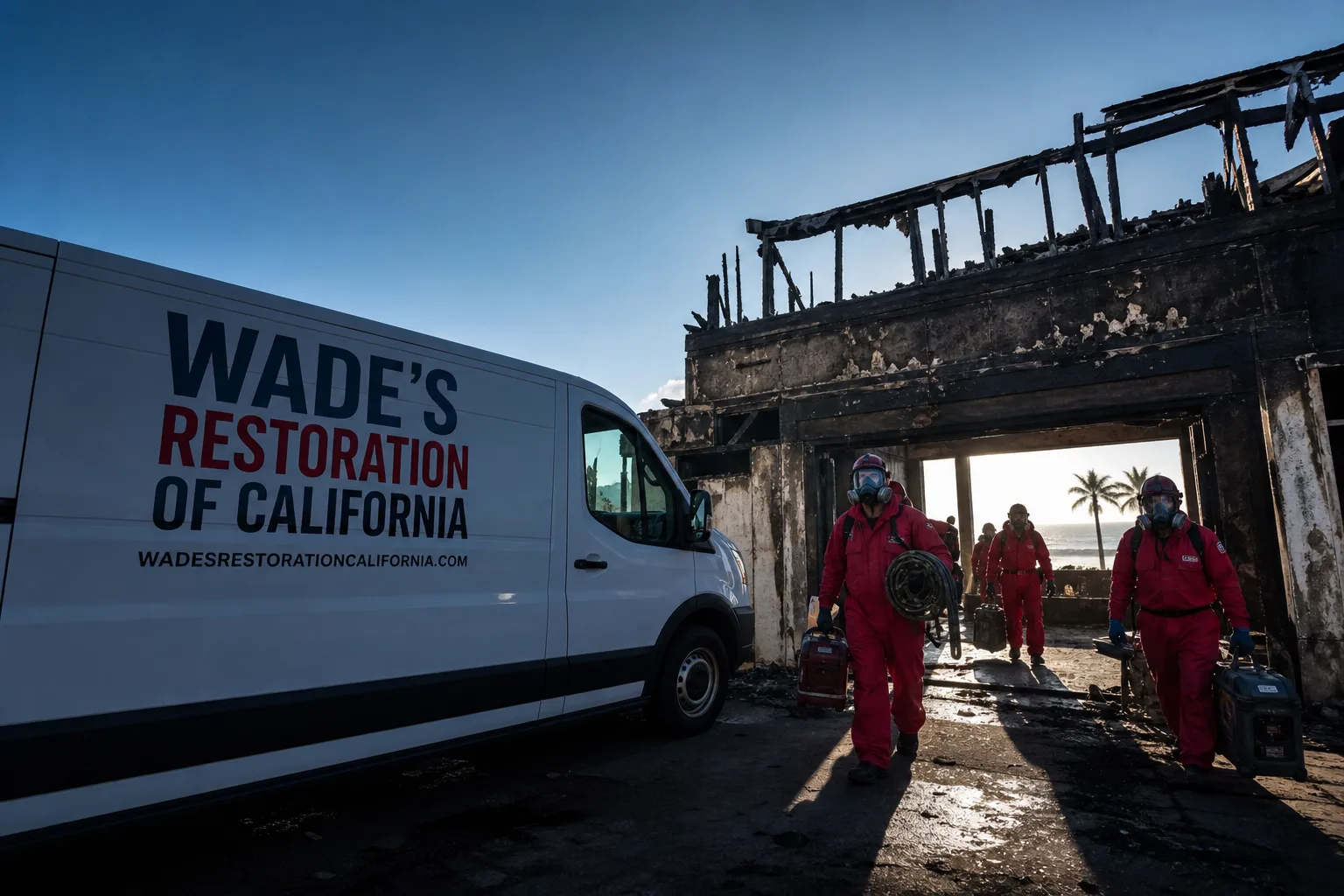
Fast, Reliable Mold Remediation Across Selma
Mold remediation in Selma usually runs between $1,800 and $6,500 depending on how far the colony has spread, and most jobs take two to five days once we’re inside. That’s the straight answer. The longer one involves Selma’s particular geography: flat clay soil, flood-irrigated vineyards pressing moisture sideways into crawl spaces, and Tule fog that keeps humidity parked against your framing for weeks every winter. Wade’s Restoration has worked Selma homes since 2007, and we answer the phone at (855) 915-0646 when you call.
If you’ve got a musty smell that won’t quit, staining on baseboards, or a crawl space you haven’t looked at since you bought the place, don’t wait another week. Mold doesn’t. Call (855) 915-0646 and Wade or one of his crew will head out to your side of Selma today.
Why Wade’s Restoration of California Is Selma’s Preferred Mold Remediation Company
Wade Ferris founded this company in 2007 and put his own name on the truck. He still answers his own phone. That matters in a town the size of Selma, where you’ll run into us at the hardware store or the raisin festival and we’d have to answer for shoddy work whether we wanted to or not. There’s no national franchise behind us, no 800-number queue with a call center three states away. You call, a live person picks up, and Wade heads out.
We’ve worked homes off Floral Avenue, around the high school, and along the older blocks near Rose Avenue where the 1950s raised foundations sit low to the ground. Selma homeowners have dealt with national outfits that quote one number on the phone and a different number at the door. We hand you a written scope before any work starts, and every mold job carries our 90-Day Done Right Promise in writing. If it’s not right, Wade comes back and makes it right. No argument.
Our response time to Selma is measured in minutes to hours, not days. When you’ve got active mold growth, the colony keeps feeding on drywall and framing until someone stops it. We’re IICRC-certified and affiliated with the RIA, and Wade takes daily moisture readings on every job, then hands you the full log when we finish. Almost nobody in this trade does that. You should ask anyone claiming otherwise to show you theirs.
Our Mold Remediation Services in Selma
Mold Inspection & Testing
A proper mold inspection in Selma means more than swabbing the visible spot on your bathroom ceiling. It means getting under the house. Selma’s raised foundations from the 1940s through the 1970s, especially south of downtown and on the west side near the vineyard edges, trap moisture against subfloor framing for months at a time. We inspect the crawl space, check relative humidity in wall cavities, and take air samples when the situation calls for it. You get a written report with findings, photos, and a straight recommendation. If there’s no mold problem, we’ll tell you that too, and we won’t invent one to bill you.
Mold Removal
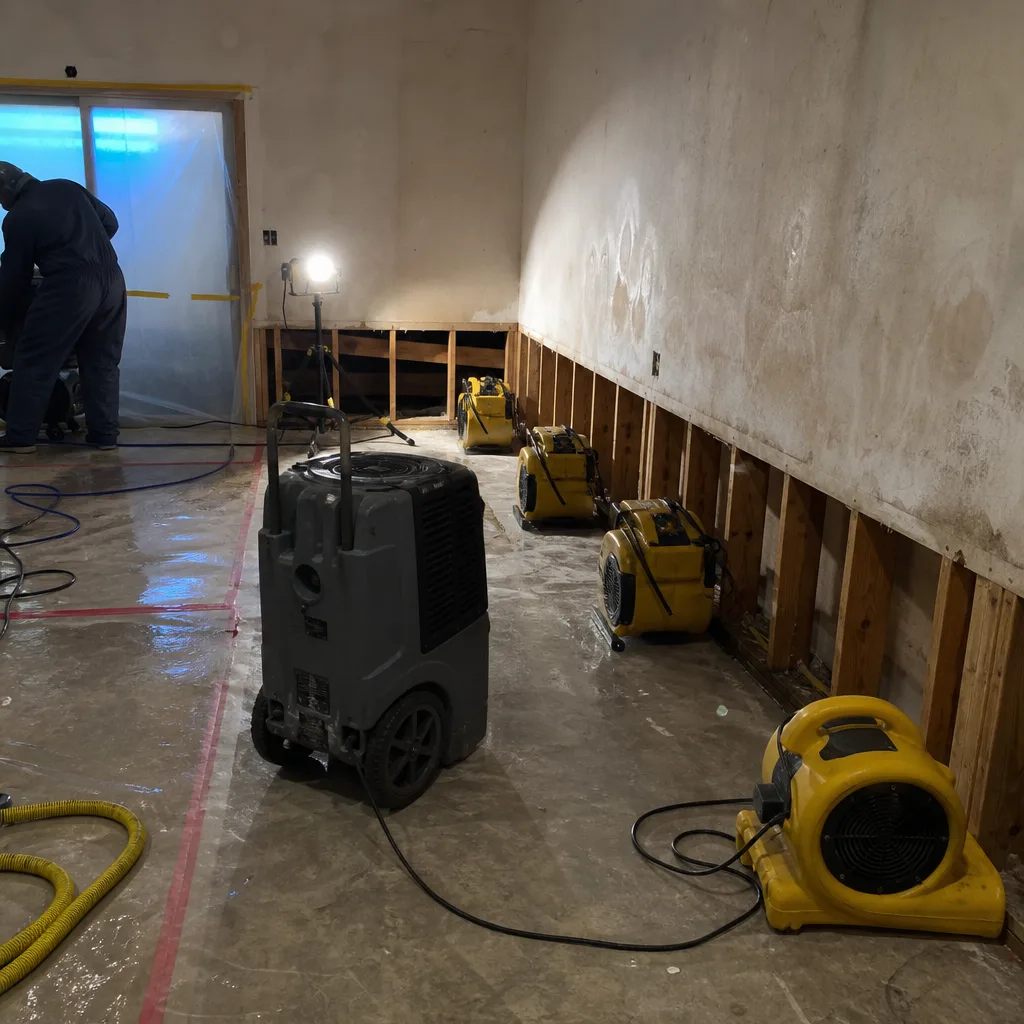
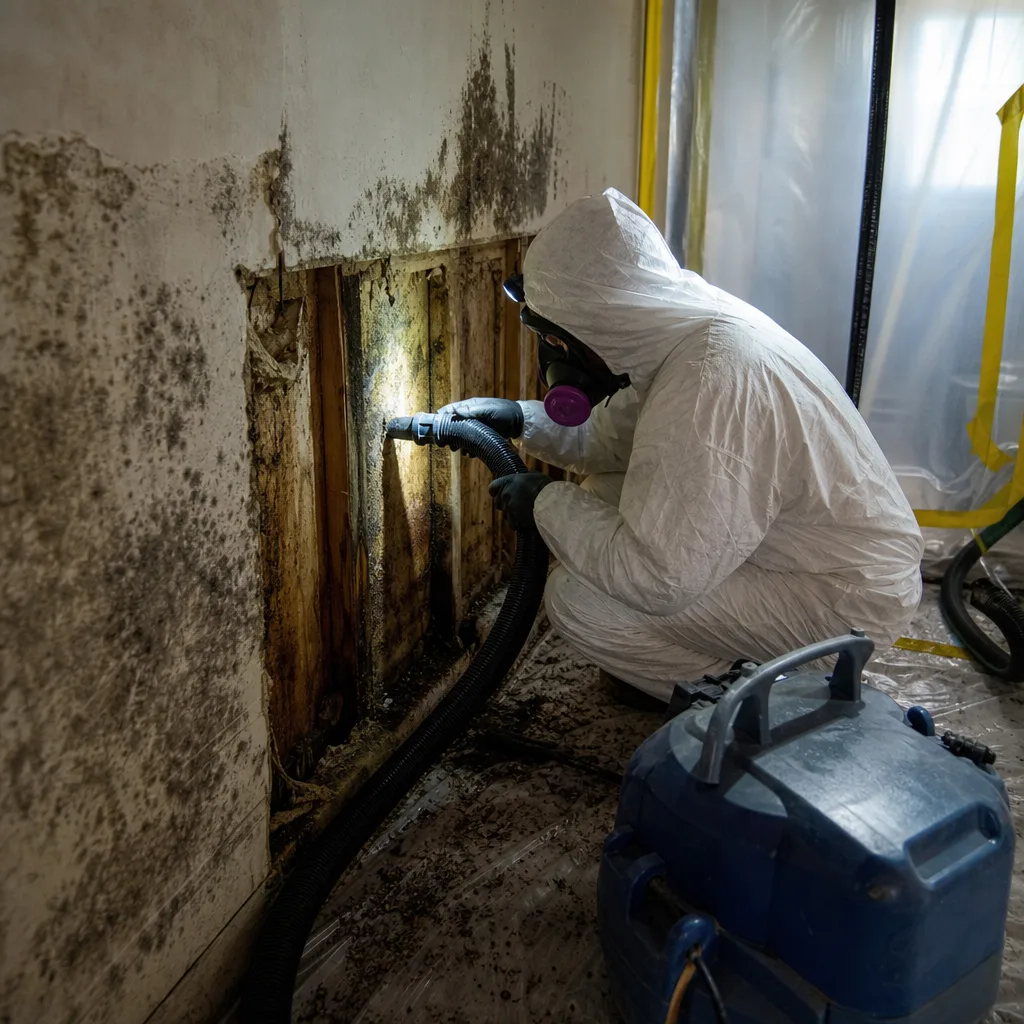
Removing mold in a Selma home means cutting out affected drywall, treating framing, and drying the structural cavity to a level that won’t support regrowth. In homes off Nebraska Avenue and around Lincoln Elementary, we regularly see mold behind baseboards that looks minor until you open the wall and find the bottom plate colonized. Our crew uses Dri-Eaz dehumidifiers and XPOWER air scrubbers to dry, then HEPA-vacuums and treats all affected surfaces with an EPA-registered antimicrobial. You’ll know the mold is gone because we document every moisture reading until the job is done.
Black Mold Remediation
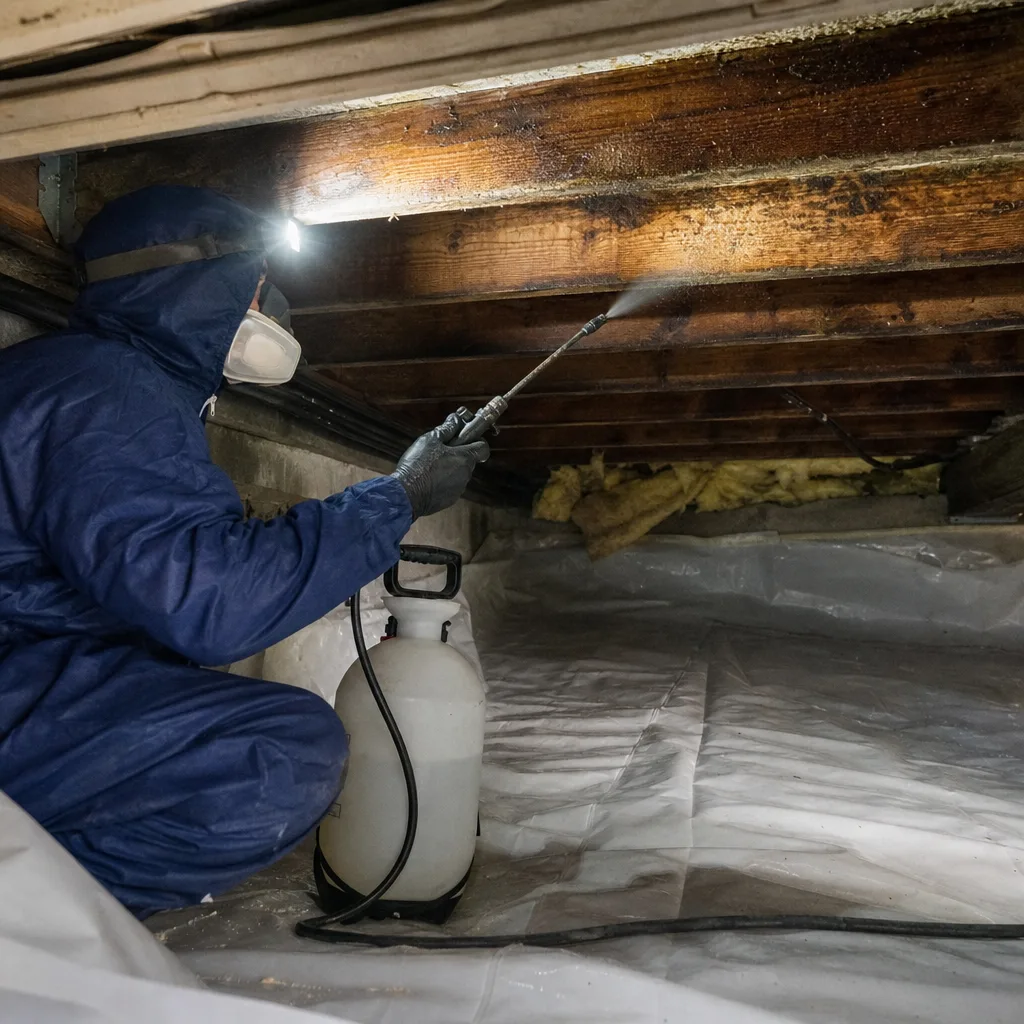
Black mold, or Stachybotrys chartarum, gets a lot of attention and for good reason. In Selma, we most often find it in chronically damp crawl spaces and behind walls that have been wet for weeks or months, not from a single leak but from sustained humidity and moisture wicking through clay soil. The remediation protocol is the same as for any mold: contain the area, protect the rest of the house with negative air pressure, remove contaminated materials, treat what stays, and dry the space thoroughly. We handle full containment and clearance, including post-remediation verification.
Air Quality Restoration
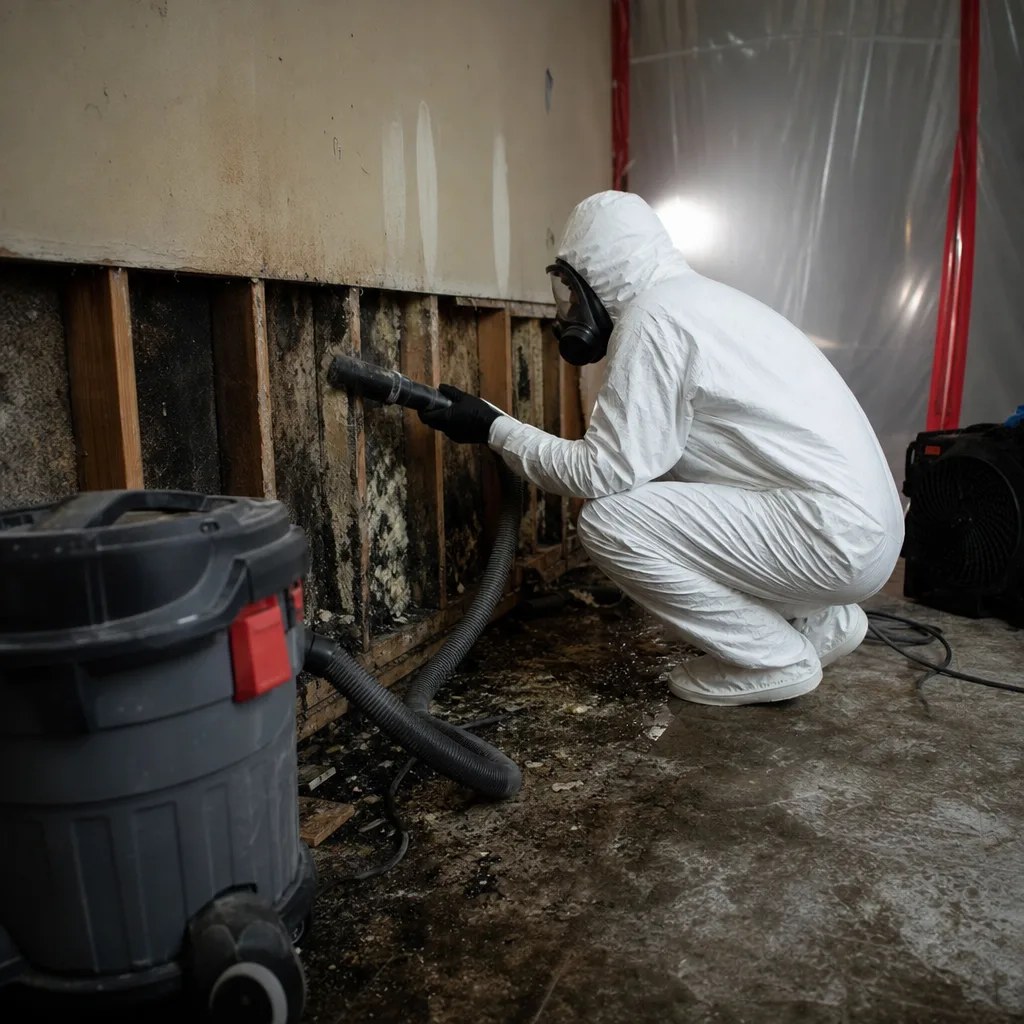
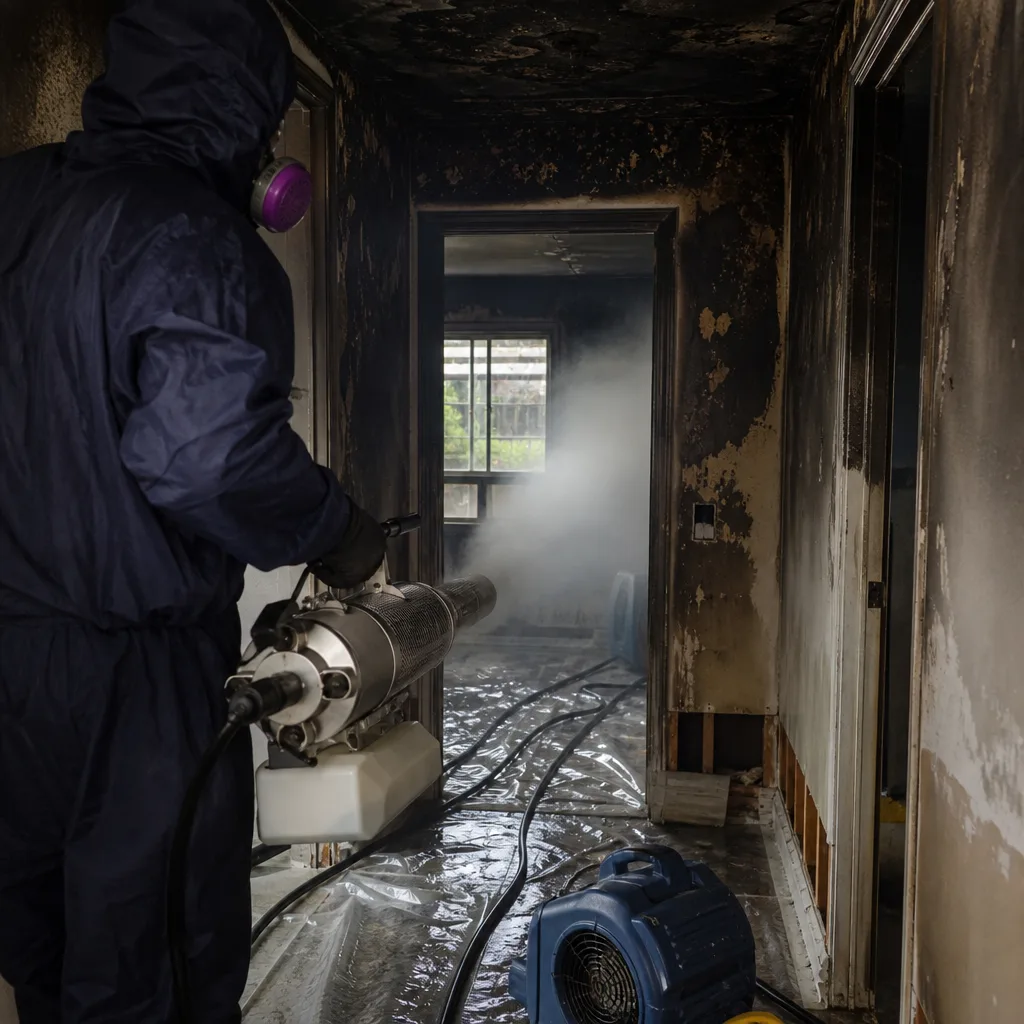
After mold is removed, the air in your home has to be restored. Mold spores don’t respect containment lines, and in Selma’s tight, older homes, air exchange is already limited. We run HEPA air scrubbers during and after remediation to pull airborne spores out of circulation, then verify with post-remediation air sampling when the project requires it. If you’ve been dealing with a stale, damp smell for months, this step matters more than most people realize. It’s the difference between a house that tests clean and a house that smells clean.
Crawl Space Treatment
If you have a raised foundation in Selma, your crawl space is the first thing we want to see. The clay soil under this town holds water like a bowl, and flood irrigation from surrounding vineyards pushes it sideways into the spaces under older homes on the south and west sides. We install vapor barriers, seal vents where appropriate, and treat subfloor framing that has already started to grow mold. In a Selma crawl space, the problem is rarely a single leak. It’s the ground itself, and the fix has to account for that or the mold comes back next irrigation season.
Moisture & Humidity Control
Selma’s winter Tule fog doesn’t just make Highway 99 dangerous. It pushes ambient humidity into attics, wall cavities, and crawl spaces for weeks at a time. Combined with summer highs above 105°F that crack caulking and roofing, and you have a house that cycles between saturated and baked dry. We install crawl space dehumidification, improve attic ventilation, and seal the gaps that let moist air into places it shouldn’t be. The goal isn’t just killing the mold that’s there now; it’s making the home boring for mold, so it doesn’t come back.
What happens when you call
- 1
A real person answersNo phone trees - you reach a local pro.
- 2
You get an upfront price rangeHonest numbers before anyone is dispatched.
- 3
A background-checked tech heads outLicensed & insured, dispatched right away.
- 4
You approve before work beginsNothing starts until you say go.
Trusted Brands We Service in Selma
When we do Mold Remediation in Selma, we’re not hauling in equipment you’ve never heard of that looks impressive and does little. We use Dri-Eaz dehumidifiers and Phoenix axial fans because they actually move air and pull water in the Valley’s conditions. Our IICRC-certified crew and RIA-affiliated process mean the equipment is run by people who know how to set it up for Selma’s clay-heavy moisture loads, not by whoever the temp agency sent. That’s the difference between drying a crawl space in three days and running a machine in it for a week while the mold keeps growing.
Common Mold Remediation Problems We See in Selma Homes
- Crawl space mold under 1950s and 1960s raised foundations near vineyard edges. Flood irrigation in adjacent fields drives moisture laterally through clay soil into the space under the house. By the time the homeowner notices the smell in the living room, the subfloor framing has often been colonized for an entire growing season.
- Post-Tule fog season attic and wall mold. The fog that blankets Selma from November through February keeps relative humidity high for weeks. Homes with poor attic ventilation or unsealed wall cavities start growing mold without any actual leak, and most homeowners never check until staining appears or someone with allergies starts reacting.
- Slab crack wicking in 1980s and 1990s tract homes. Selma’s clay soil expands when wet and contracts when dry, which puts pressure on slab foundations over time. Cracks form, moisture wicks up through them, and mold grows under flooring that tests fine on the surface. Moisture mapping catches this; visual inspection alone often misses it.
- Surface mold treated without addressing the moisture source. We see handyman “mold treatments” all over Selma. Someone sprays bleach on the visible mold, paints over the stain, and everyone feels better for six months. Then the irrigation season or the fog returns, the water source was never fixed, and the mold comes back worse than before.
Pricing for Mold Remediation in Selma, CA
Here’s what you should expect to pay in Selma, based on the work we’ve scoped in this area. A basic crawl space mold treatment with vapor barrier installation on a 1,200-square-foot raised foundation typically runs $2,500 to $4,500. Full mold remediation with drywall removal, framing treatment, and air scrubbing in a bathroom or kitchen runs $1,800 to $3,800. Whole-house remediation with containment, including post-remediation verification, ranges from $4,500 to $8,500 or more for severe colonizations. Inspection and testing alone runs $250 to $500, and that’s credited toward remediation if you hire us for the work.
What drives cost in Selma: how much drywall has to be cut out, how long the crawl space takes to dry given the clay soil, and whether the mold has reached structural framing. We give you a written estimate before work starts, and we honor our standing offers. That includes a free second opinion on any written estimate and no trip charge inside our own county. Seniors and veterans always get 10% off. Call (855) 915-0646 and we’ll put numbers in front of you with no pressure.
We Also Serve Cities Near Selma
While this page focuses on Selma, our crew regularly works in Mold Remediation in Selma and the surrounding communities. If you’re in Fowler, Parlier, Kingsburg, or Reedley, the same Wade Ferris who answers calls at (855) 915-0646 will head out to your place too. Same written scope, same 90-Day Done Right Promise, same live person on the phone.
Serving Selma, CA - Our Local Coverage Area
We’re based in the Selma area and know this community well. Use the map below to see our service coverage - if you’re nearby, we can almost certainly help.
FAQs - Mold Remediation in Selma
Yes, flood irrigation absolutely affects mold growth in Selma homes. The vineyards that surround the city, especially on the south and west sides, use flood irrigation that saturates the top few feet of clay soil. That water doesn’t drain away quickly on Selma’s flat terrain; it moves laterally, seeping into the crawl spaces of raised-foundation homes and raising the relative humidity under the floor. Homes within a few hundred yards of an irrigated field often show subfloor mold without ever having a plumbing leak. The fix includes addressing that ground moisture, not just treating the mold. Call (855) 915-0646 for an inspection that accounts for your neighbor’s irrigation schedule.
Yes, testing after Tule fog season is a good idea for many Selma homes, especially older ones with crawl spaces or unventilated attics. The fog season from roughly November through February keeps ambient humidity above 70% for weeks at a time, and that’s enough to trigger mold growth in wall cavities and attics that never see a plumbing leak. If you notice a musty smell in spring, or if anyone in the house has worsening allergies, an air quality test and visual inspection is the cheapest way to know whether you have a problem. We charge $250 to $500 for inspection and testing, and we credit that toward remediation if we find something.
Yes, and in Selma that’s actually the most common cause. The clay soil under Selma holds moisture, and when flood irrigation runs in nearby fields or winter rain saturates the ground, that moisture wicks upward and sideways into crawl spaces. A 1960s raised foundation near the vineyard edge can have a crawl space at 70% relative humidity with no leak anywhere in the plumbing. We’ve pulled out a 1962 raised-foundation home off Nebraska Avenue where the subfloor joists were coated with black mold purely from irrigation moisture. The fix was drying the space below 50% RH, treating the joists with an EPA-registered antimicrobial, and installing a vapor barrier on the crawl space floor. No plumbing repair needed. The mold was gone, and the musty odor dissipated within three days.
Most crawl space mold remediation jobs in Selma take two to four days. The variable is how wet the soil is and how long it takes to get the framing below 50% relative humidity. In a 1950s home with clay-heavy soil under it, drying time is longer than in a sandy soil area, and we don’t rush it. We run Dri-Eaz dehumidifiers and monitor moisture daily until the numbers are right, then treat the framing and install the vapor barrier. You’ll see the moisture log with your own eyes before we call it done.
Selma’s summer heat above 105°F actually dries things out and slows active mold growth, but it creates the conditions for the next mold outbreak. The heat bakes and cracks roofing, caulking, and exterior finishes, leaving gaps for the winter fog and rain to work their way in. So a hot dry summer doesn’t mean your mold problem is gone; it means the cycle is just paused. We recommend checking attics in early fall, after the heat has done its worst but before the fog season starts. Call (855) 915-0646 for a free second opinion if you’re not sure what you’re looking at.
Call Wade’s Restoration for Mold Remediation in Selma, CA
If you’ve got mold in Selma, the fastest way to get a real person on the phone who can actually help is to call (855) 915-0646. Wade Ferris answers his own phone, day or night. He’ll talk through what you’re seeing, give you an honest read on whether you need testing or full remediation, and get a crew out to your home quickly. No call center, no pressure, no inflated estimate at the door. We serve all of Selma, zip code 93662, and the nearby communities of Fowler, Parlier, Kingsburg, and Reedley. Estimates are free. The 90-Day Done Right Promise means we’re accountable long after we leave your driveway.
Written by Wade Ferris, Owner at Wade’s Restoration of California, serving Selma and the surrounding Central Valley communities since 2007.