
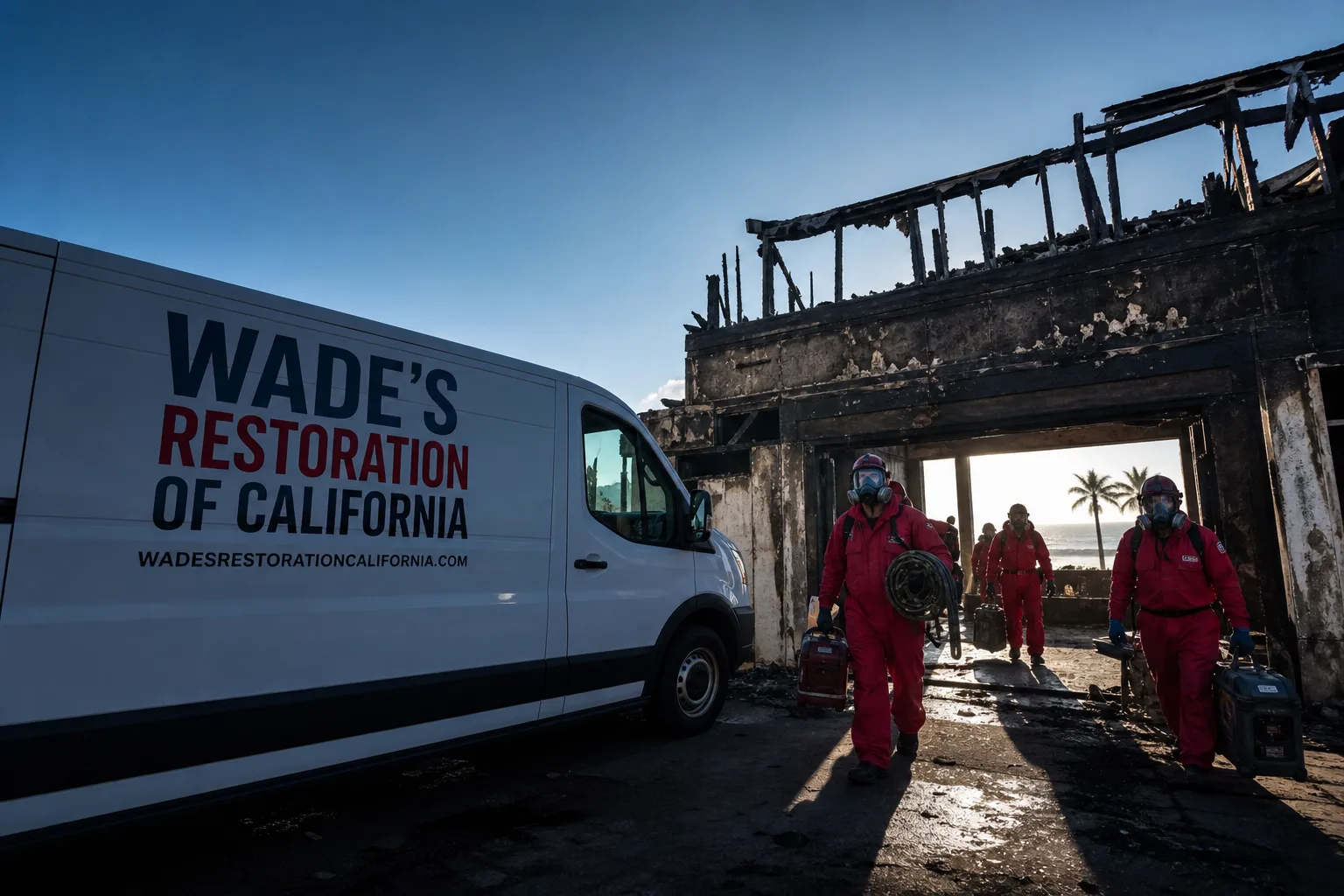
Fast, Reliable Mold Remediation Across Rolling Hills Estates
Mold remediation in Rolling Hills Estates costs between $1,800 and $6,500 for a typical single-room job, and between $4,000 and $14,000 when a crawl space or detached barn is involved. Most of our Rolling Hills Estates work starts with a same-week inspection, because mold here doesn’t wait and neither should you. If you’ve got musty odors, water staining, or visible growth anywhere on your property, call Wade at (855) 915-0646 and he’ll talk you through what you’re seeing before anyone sets foot on your driveway.
Rolling Hills Estates is not Torrance. It’s not Palos Verdes Estates either. The peninsula has its own problems, and mold here behaves differently than it does in the flatlands below. We’ve spent years learning what that means for homeowners, and we’ll get into it below, but the short version is this: if you skip the ground check before you rip out drywall, you’ll be calling us again in twelve months.
Key Takeaways:
- Mold jobs in Rolling Hills Estates typically run $1,800-$6,500 per room; crawl spaces and barns run higher.
- Slab movement from expansive clay soils causes most recurring mold here, not roof or pipe leaks.
- Wade answers his own phone, 24/7. Not a call center. Call (855) 915-0646.
- Every job includes a written scope before work starts and the 90-Day Done Right Promise after.
Why Wade’s Restoration of California Is Rolling Hills Estates’s Preferred Mold Remediation Company
Wade Ferris started this company in 2007 and he still answers the phone. That’s not a marketing line. When you call (855) 915-0646 at 2 a.m. because water is pooling under your tack room, Wade is the one who picks up. He’ll ask you questions a homeowner can answer, walk you through shutting down the water if it’s safe, and tell you honestly whether this needs a crew right now or can wait until morning. Most companies won’t do that. Wade does it because he lives in the same world you do, where problems don’t keep business hours.
Our crews are IICRC-certified and we work with RIA and IFA standards on every job. That matters here more than most places. Rolling Hills Estates homes sit on ground that moves, and mold remediation that ignores that movement is remediation that fails. We’d rather tell you the hard truth on the front end than collect a check and come back twice.
Wade also deals with your insurance adjuster directly. If your mold problem traces back to a covered water event, we document everything with photos and moisture logs, and we hand you that log when the job’s done. You never get stuck relaying messages between two parties who won’t return each other’s calls.
Ask anyone on your street. We’ve been doing this long enough that our name gets passed around at the hardware store and the feed store alike.
Our Mold Remediation Services in Rolling Hills Estates
Every mold job in Rolling Hills Estates starts with a question nobody asked you on the phone: is the ground under your house moving? We’ll get to that. But first, here’s what we do and how it applies to the homes and barns on the hill.
Mold Inspection & Testing
A proper mold inspection in Rolling Hills Estates costs $350-$650 and includes moisture mapping, thermal imaging where needed, and air samples that go to an independent lab. We’re not selling you a test for the sake of a test. We’re looking for the moisture source first, because mold is the symptom and water is the disease. In Rolling Hills Estates, that moisture source is often a crack under the slab that nobody has seen yet.
We bring Dri-Eaz moisture meters and document every reading. When we’re done, you get the full log, not a verbal summary. If your adjuster needs to see it, we send it directly.
Mold Removal
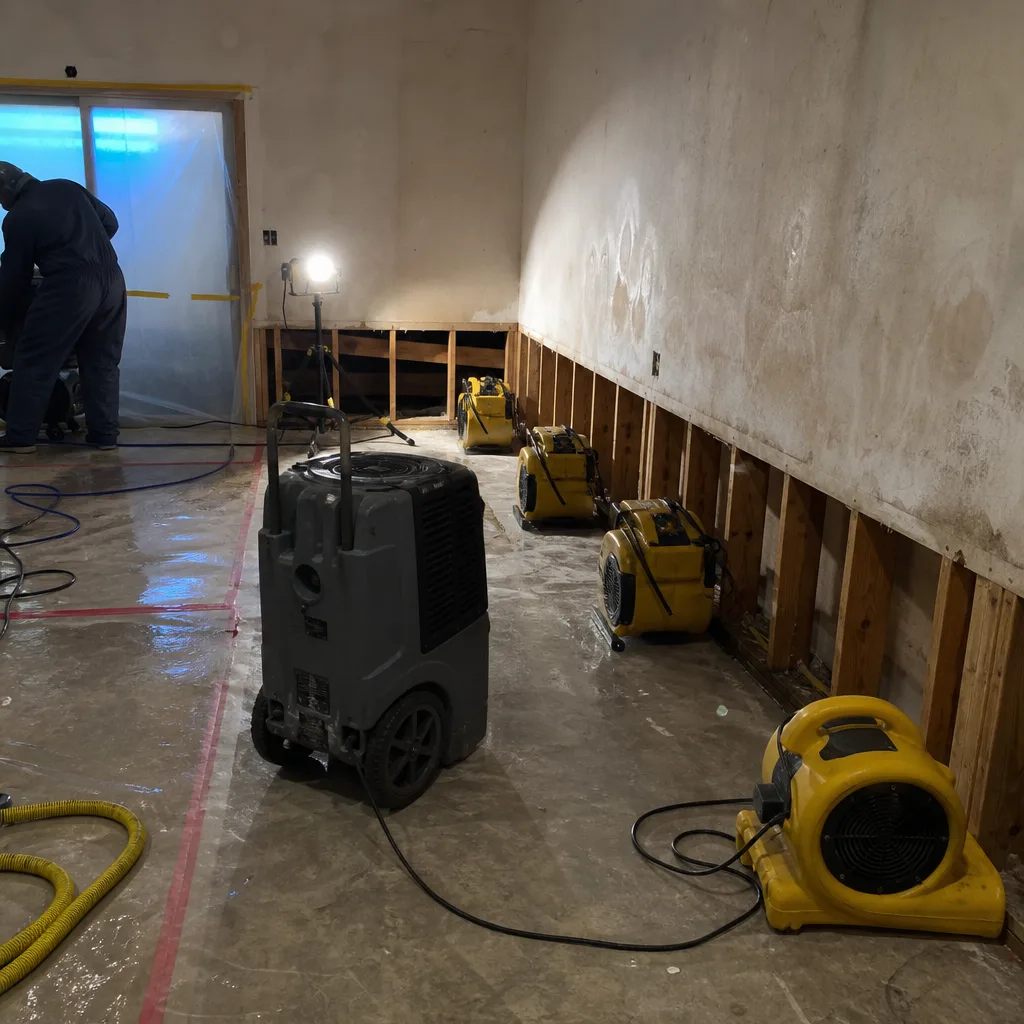
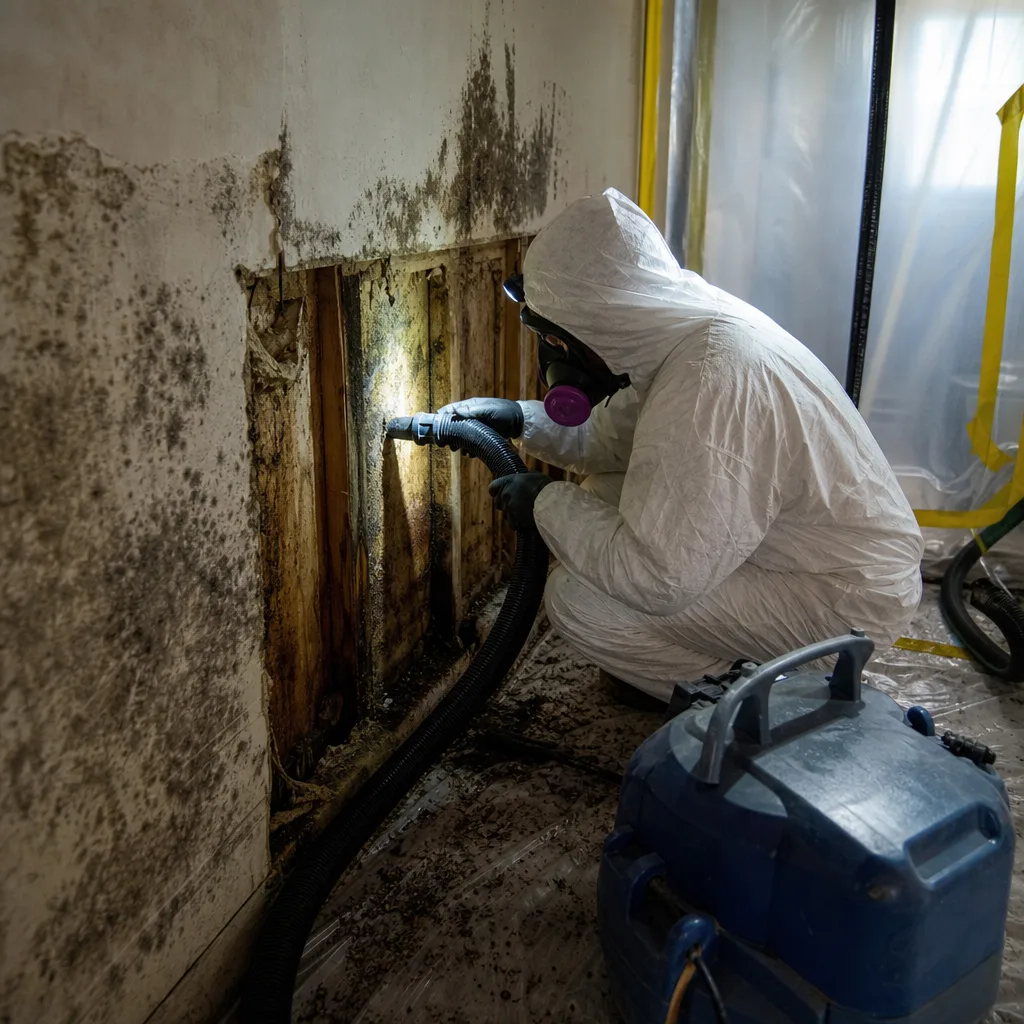
Mold removal in Rolling Hills Estates homes usually means containment, HEPA vacuuming, antimicrobial treatment, and controlled drying. On a ranch home from the 1960s with original drywall, we’re careful about what we open and what we can save. On a detached tack room or hay storage area, the protocol shifts, because those spaces carry a different moisture load and different air movement patterns than the main house.
We treat each structure as its own project, not as an extension of the house. Your barn isn’t a big closet.
Black Mold Remediation
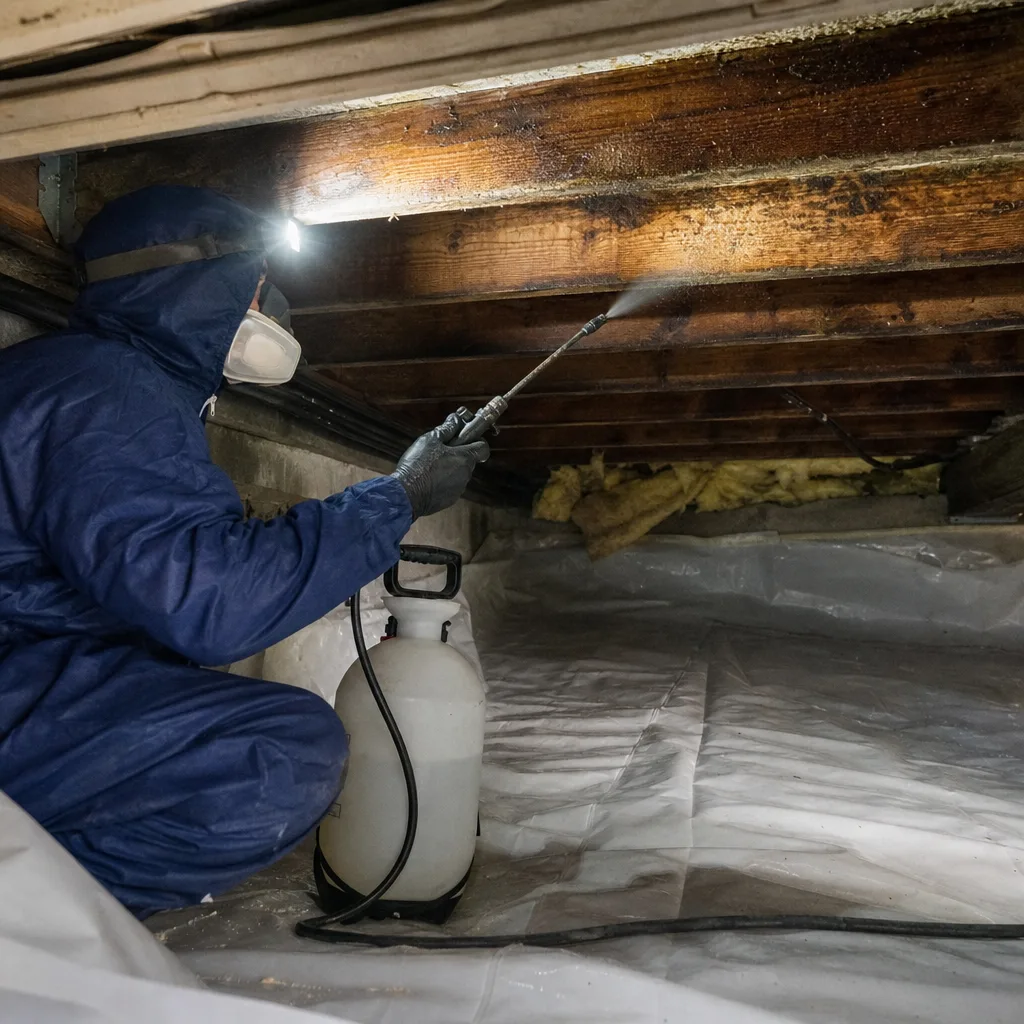
Black mold in Rolling Hills Estates is commonly found on the underside of subflooring where a sheared drain line has been weeping into the crawl space for months. We see it in the garage corners where water staining traces back to a slab shift, and in attic voids where marine-layer humidity has sat undisturbed through a cool summer.
Black mold removal here takes 2-5 days for a typical crawl space or single-room job. That includes containment so spores don’t spread through the rest of the house while we work. You don’t need to move out, but you do need to stay out of the containment zone until we clear it.
Air Quality Restoration
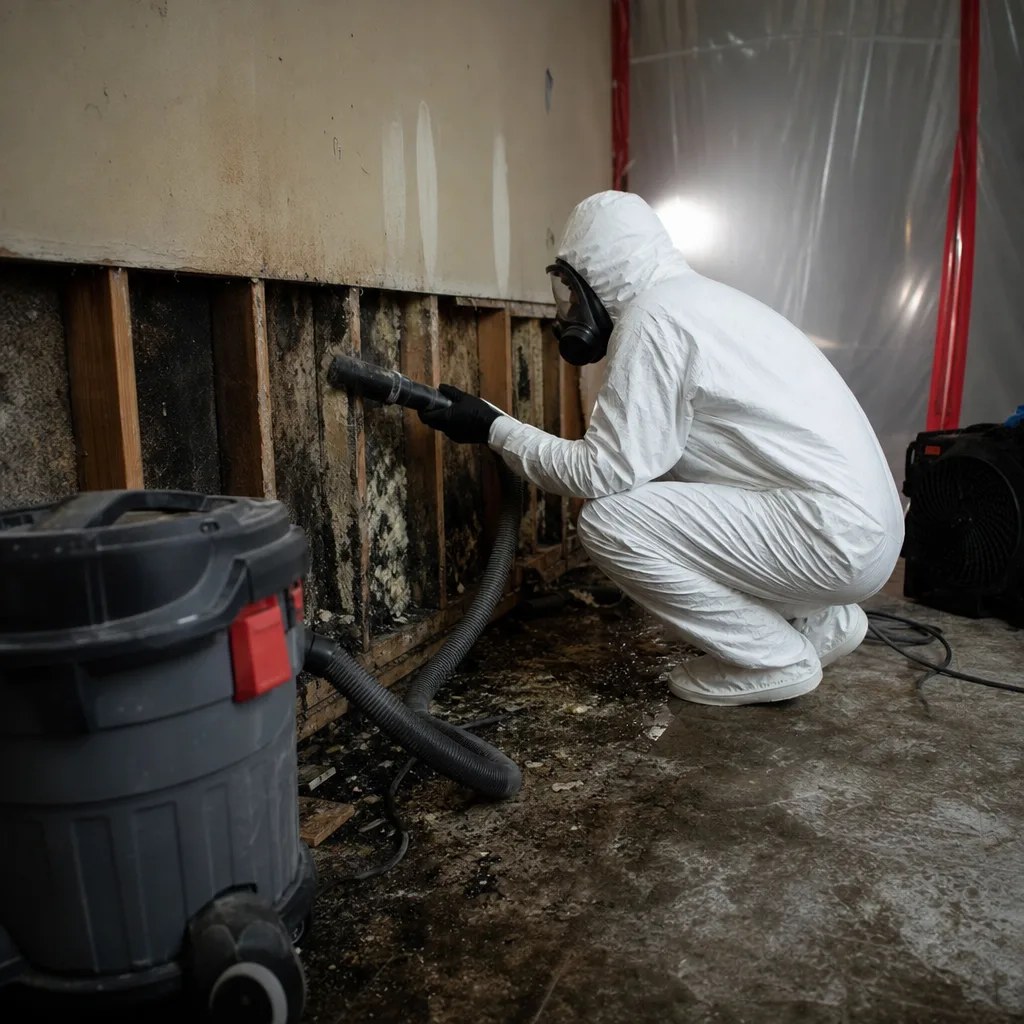
After remediation, we run B-Air HEPA filtration units to scrub airborne spores and restore the air inside your home or barn to normal levels. We test before and after, and we give you the numbers. If the post-remediation sample comes back higher than the baseline, we’re not done. That’s the 90-Day Done Right Promise in practice: if it’s not done right, we make it right. In writing.
What happens when you call
- 1
A real person answersNo phone trees - you reach a local pro.
- 2
You get an upfront price rangeHonest numbers before anyone is dispatched.
- 3
A background-checked tech heads outLicensed & insured, dispatched right away.
- 4
You approve before work beginsNothing starts until you say go.
Mold and Moisture Problems That Are Unique to Rolling Hills Estates
Here’s what we know from years of working on the peninsula, and it’s the single most important paragraph on this page. Rolling Hills Estates sits on the Palos Verdes Peninsula, where expansive clay soils and slow-moving landslide terrain cause slab foundations to crack and drain lines to shear over time. That means water enters your walls and crawl space from below, not from a roof leak or a burst pipe. If you remediate the mold but never check the slab, you’ll get the same mold back within a year, because the moisture source never stopped. The first thing we check on any mold job in Rolling Hills Estates is whether the ground under the structure is moving. It’s a diagnostic step that’s basically irrelevant in Torrance or Lomita, where the soil behaves itself. Up here, it’s the whole ballgame.
We responded to a ranch home on Buckskin Lane a while back where the owner reported musty odors in a detached tack room and repeated water staining at the base of a garage wall. Our crew found the slab had shifted enough to shear a cast-iron drain line under the tack room. Water had been feeding into the crawl space for months, and black mold had colonized the underside of the subfloor. We removed contaminated horse blankets and hay, treated the crawl space with B-Air filtration and antimicrobials, and replaced the damaged drain section. Finished in one trip, and the horses were back in a dry barn the same week. That’s the kind of job that makes us glad we’re the ones who showed up rather than a national outfit that would have sprayed and left.
Common Mold Remediation Problems We See in Rolling Hills Estates Homes
- Slab cracks feeding moisture from below: Expansive clay soils push and pull at slab foundations year-round. When the slab cracks, groundwater and waste-line moisture find their way into walls and crawl spaces. Remediating mold without addressing those cracks is a temporary fix at best.
- Barn and tack room mold that keeps coming back: Hay storage adds a heavy moisture load to any structure, and animal waste produces ammonia vapors that push humidity higher. Standard residential drying protocols fail in these spaces. We use LGR dehumidifiers and specialized containment designed for agricultural buildings, not living rooms.
- Persistent marine-layer humidity in attic voids: The coastal fog that rolls up the peninsula keeps relative humidity elevated compared to inland cities. Older ranch homes with soffit ventilation that was never upgraded trap that moisture in the attic. Mold grows on the underside of roof sheathing, out of sight, until the damage is advanced.
- Recurring crawl space mold after “successful” remediation: We get calls from homeowners who paid someone else to clean their crawl space last year and the mold is back. Most of the time, that’s because the previous contractor never looked for slab movement or sheared under-slab plumbing. The mold came back because the water never left.
Pricing for Mold Remediation in Rolling Hills Estates, CA
Here’s what we tell homeowners before we ever write a contract. A single-room mold removal in Rolling Hills Estates runs $1,800-$3,500 including containment, removal, treatment, and air scrubbing. A crawl space job with sheared plumbing involved typically lands between $4,500 and $9,000, because that’s a two-phase job: fix the drain, then remediate the damage. A detached barn or tack room with structural drying runs $3,000-$7,000 depending on square footage and what’s stored inside. Inspection and testing before we start is $350-$650.
What changes the price: whether we find slab movement that needs a structural opinion, how much hay or animal bedding has to be removed, and whether the attic needs containment or just ventilation corrections. We give you a written scope before any work starts. No trip charge inside our own county, and a free second opinion on any written estimate you already have. Seniors and veterans get 10% off, always. Call (855) 915-0646 and Wade will walk you through what applies to your situation.
Trusted Brands We Use on Mold Jobs in Rolling Hills Estates
We don’t bring rental-store equipment to your house. Our crews run Dri-Eaz moisture meters and dehumidifiers, Phoenix and Injectidry drying systems, XPOWER air movers, and B-Air filtration units. These are professional-grade tools that handle the persistent humidity of the Palos Verdes Peninsula without struggling. We stock replacement filters, hoses, and parts locally, so a mid-job equipment failure doesn’t mean a Monday follow-up. The gear shows up, it works, and it leaves when the moisture readings say the job is done.
For more on our full process, see our Mold Remediation team page, or read more about what we handle locally at Mold Remediation in Rolling Hills Estates.
We Also Serve Cities Near Rolling Hills Estates
Our crews work throughout the South Bay and the peninsula. If you’re in Manhattan Beach, Torrance, Lomita, or Palos Verdes Estates, we can usually have someone out the same day. Same phone, same owner on the other end: (855) 915-0646.
Serving Rolling Hills Estates, CA - Our Local Coverage Area
We’re based in the Rolling Hills Estates area and know this community well. Use the map below to see our service coverage - if you’re nearby, we can almost certainly help.
FAQs - Mold Remediation in Rolling Hills Estates
You usually can’t tell from looking at the wall. The clue is where the water staining appears and whether it keeps returning after you’ve cleaned it. A plumbing leak shows up near pipes and fittings. Slab movement shows up as diagonal cracks in the slab itself, doors that suddenly stick, and water staining low on walls where no pipe runs. We check both, because the soil movement question changes the entire remediation plan. Call (855) 915-0646 and Wade can talk you through what you’re seeing before we even schedule the inspection.
Yes, in most cases. We contain the tack room or affected area with 6-mil polyethylene and maintain negative pressure so spores don’t reach the stalls. We’re careful about antimicrobial selection because horses are sensitive. The horses can usually stay on the property in the adjacent stalls or turnout, though we’ll advise you on temporary hay storage so we’re not pulling moisture right back into the space. A typical tack room job takes 2-4 days. When we’re done, we’ll give you moisture logs for the whole structure so you know the job held.
Because the water source likely never got fixed. On this peninsula, that water source is often a slab crack or a sheared drain line under the floor. If a contractor cleaned and treated the crawl space but never checked for soil movement, they treated the symptom. The moisture came right back, and so did the mold. That’s why our crawl space treatments in Rolling Hills Estates always start with a ground-stability assessment and a full moisture map before we tear anything out. Call us at (855) 915-0646 and we’ll explain what the previous contractor likely missed.
The ground moves up here, and it doesn’t down there. Rolling Hills Estates is built on expansive clay and landslide terrain. Torrance and San Pedro sit on stable coastal plains. That single difference changes what causes mold in each place, where we look for it, and what has to happen before remediation can actually fix the problem. A mold job in Torrance might start with a plumbing check. A mold job in Rolling Hills Estates starts with slab inspection and drainage line evaluation. That’s why you want a contractor who works on the peninsula regularly, not one driving over from the flatlands.
Yes. We run pre-remediation and post-remediation air samples through an independent lab and give you the numbers either way. If the post-remediation sample isn’t clean, we’re not done, and we don’t ask you to accept the work until it is. That’s the 90-Day Done Right Promise, and it’s in writing on every contract. Call (855) 915-0646 for a free estimate and we’ll include testing in the scope.
Written by Wade Ferris, Owner at Wade’s Restoration of California, serving Rolling Hills Estates and the Palos Verdes Peninsula since 2007.