
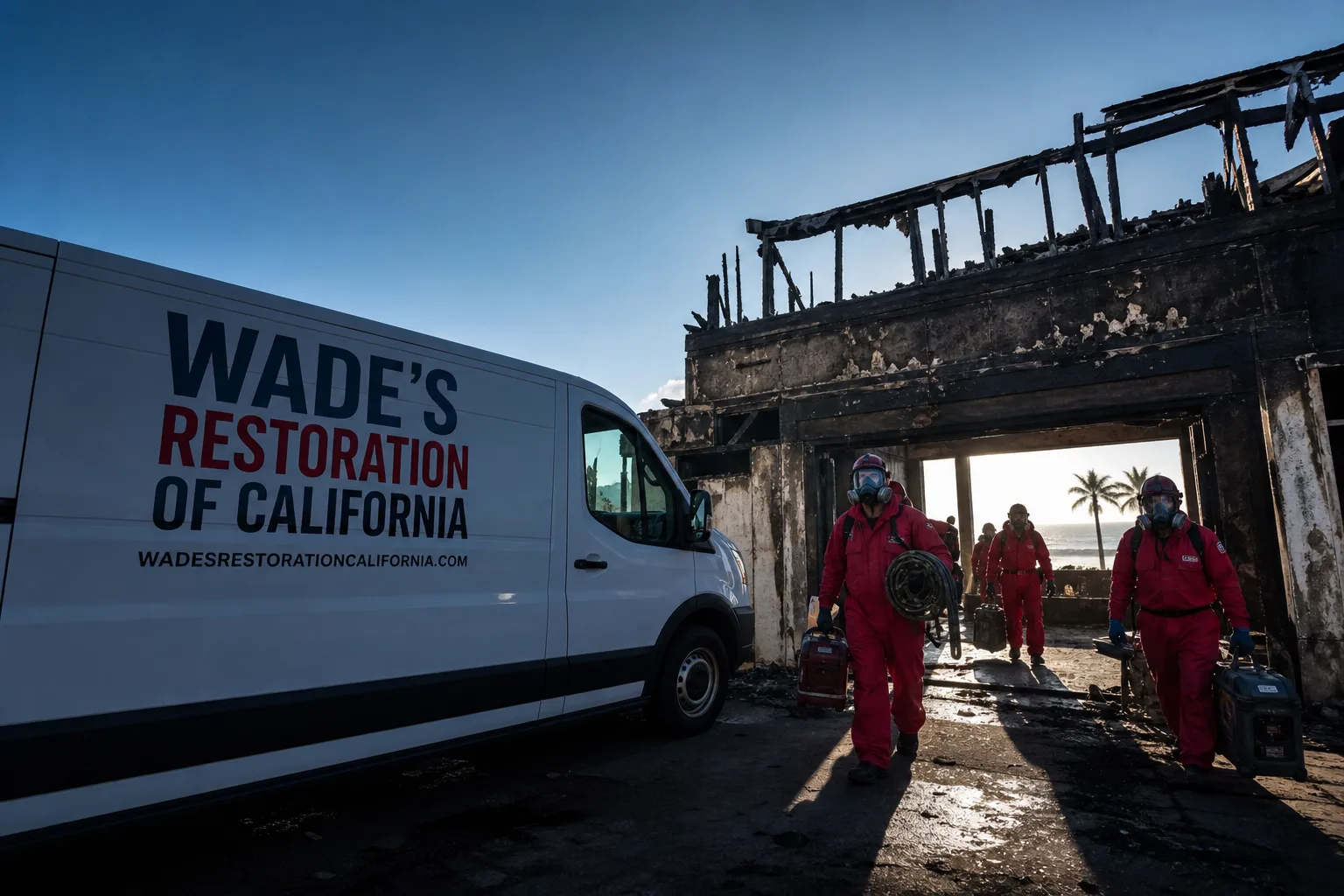
Fast, Reliable Mold Remediation Across Plumas Lake
Mold remediation in Plumas Lake typically costs $1,800 to $6,500 depending on how far the growth has spread, and the honest truth is that this community’s unique soil and water table make fast action more important here than almost anywhere else in the valley. Plumas Lake homes sit on former rice fields, and when slab foundations wick moisture upward after a wet winter, mold can establish itself inside wall cavities before you ever see a stain. Wade heads out to Plumas Lake the same day you call, because he knows what that clay does to a foundation. Call (855) 915-0646 and Wade will answer his own phone.
We’ve been doing Mold Remediation in Plumas Lake long enough to know that most of the mold problems here aren’t caused by what people think. It’s not always a leaky pipe or a roof failure. It’s the ground itself. And that’s why the national franchises that treat every job with the same checklist keep missing what’s actually happening in these homes.
Why Wade’s Restoration of California Is Plumas Lake’s Preferred Mold Remediation Company
Wade Ferris started this company in 2007, and he put his name on the truck for a reason. He lives in this region, he knows the subdivisions off River Oaks Boulevard and the streets that back up to the levee, and he’s going to run into you again at the grocery store. That’s the oldest accountability mechanism there is, and it works. Plumas Lake homeowners have told us they’d rather hire a company whose owner they can look in the eye than a national chain that sends a different crew every time.
When you call for Mold Remediation in Plumas Lake, you get a live person, not a recording. Wade takes moisture readings every single day on every mold job and hands you the full log at the end, which almost nobody else in this trade does. If your adjuster has questions, Wade talks to them directly. You’re not the one relaying information between two sides at midnight. And every mold job carries the 90-Day Done Right Promise in writing: if it’s not done right, Wade makes it right.
Response time to Plumas Lake matters because mold doesn’t wait. When a slab keeps wicking moisture into an OSB subfloor, every day costs more money. Wade’s crew can be on site in Plumas Lake within hours, not days.
Our Mold Remediation Services in Plumas Lake
Mold Inspection & Testing
A visual inspection alone won’t tell you what’s happening inside your Plumas Lake walls. Stucco cladding, used on virtually every one of these 2003-2008 tract homes, hides moisture intrusion for months before surface staining appears. We drill small access points, inspect the cavity, and take air samples when the situation calls for it. If you’re smelling musty air but can’t find the source, that’s almost always where it’s hiding.
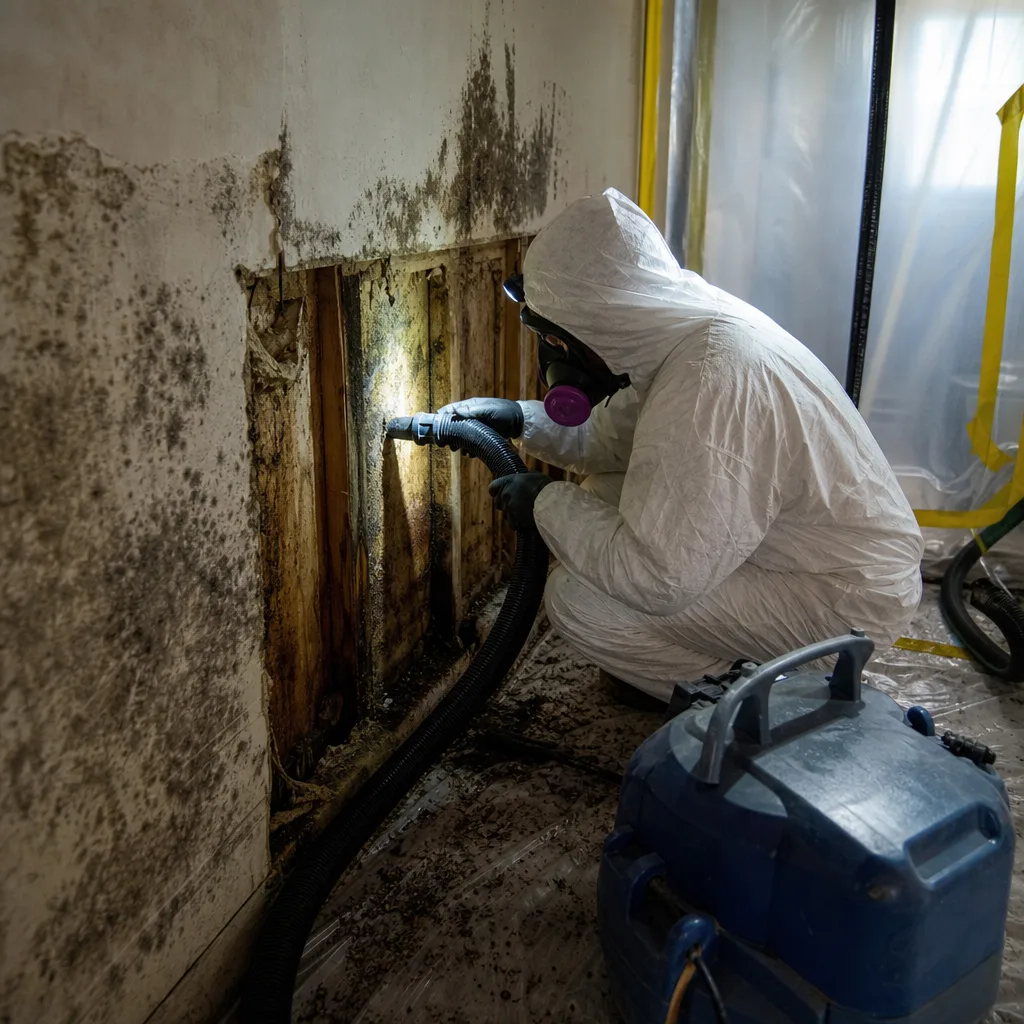
Mold Removal
Removing visible mold from drywall is the easy part. The hard part is finding where the moisture is coming from so it doesn’t return after the next Sacramento Valley rain event. In Plumas Lake, that means checking the slab, the crawl space, and the stucco exterior, not just the wall where you saw the staining. We remove contaminated materials, treat the framing, and dry everything to the proper moisture content before we rebuild.
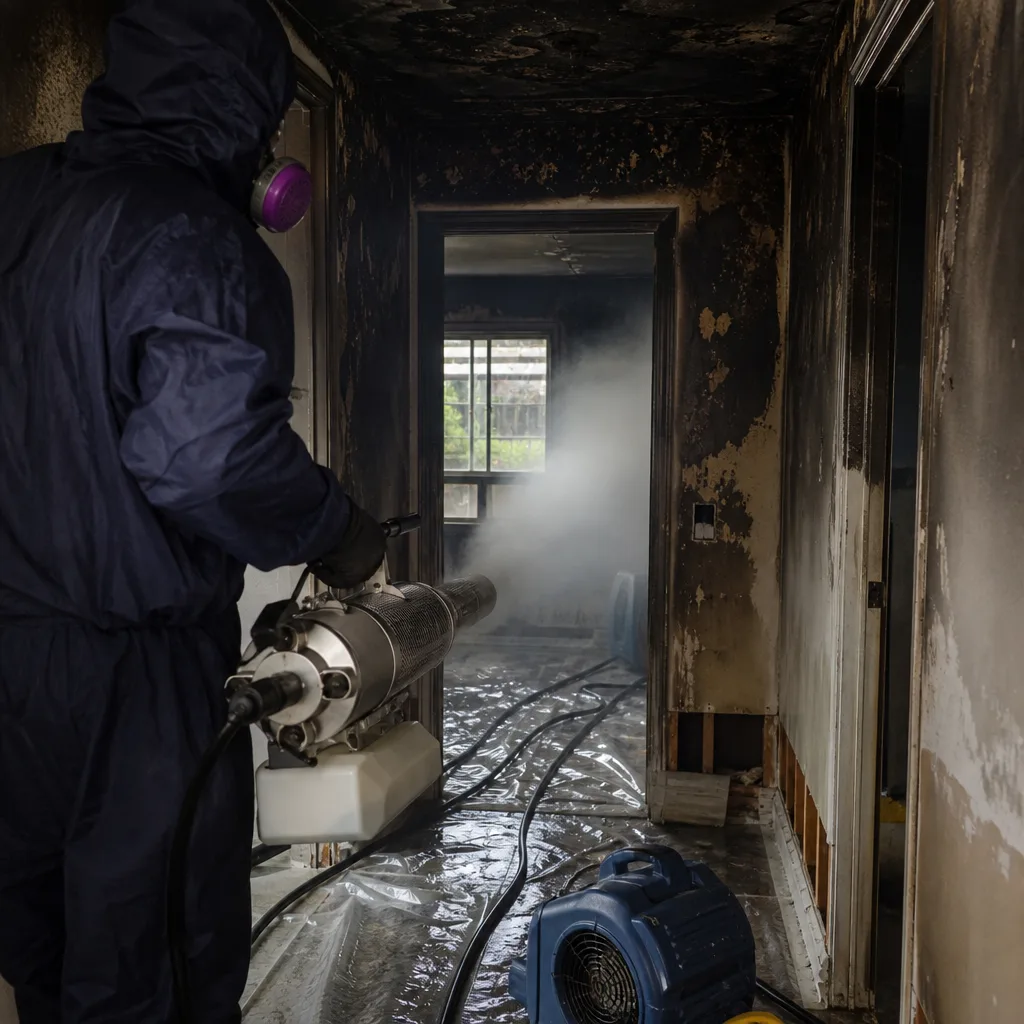
Black Mold Remediation
Black mold gets the attention, and understandably so. But in Plumas Lake, the bigger issue is often the conditions that let it grow in the first place: the high seasonal water table and the hardpan clay that doesn’t drain. We contain the affected area, remove the contaminated material under negative air pressure, and treat the framing with an antimicrobial. Then we fix the moisture problem, because otherwise it’s just going to come back.
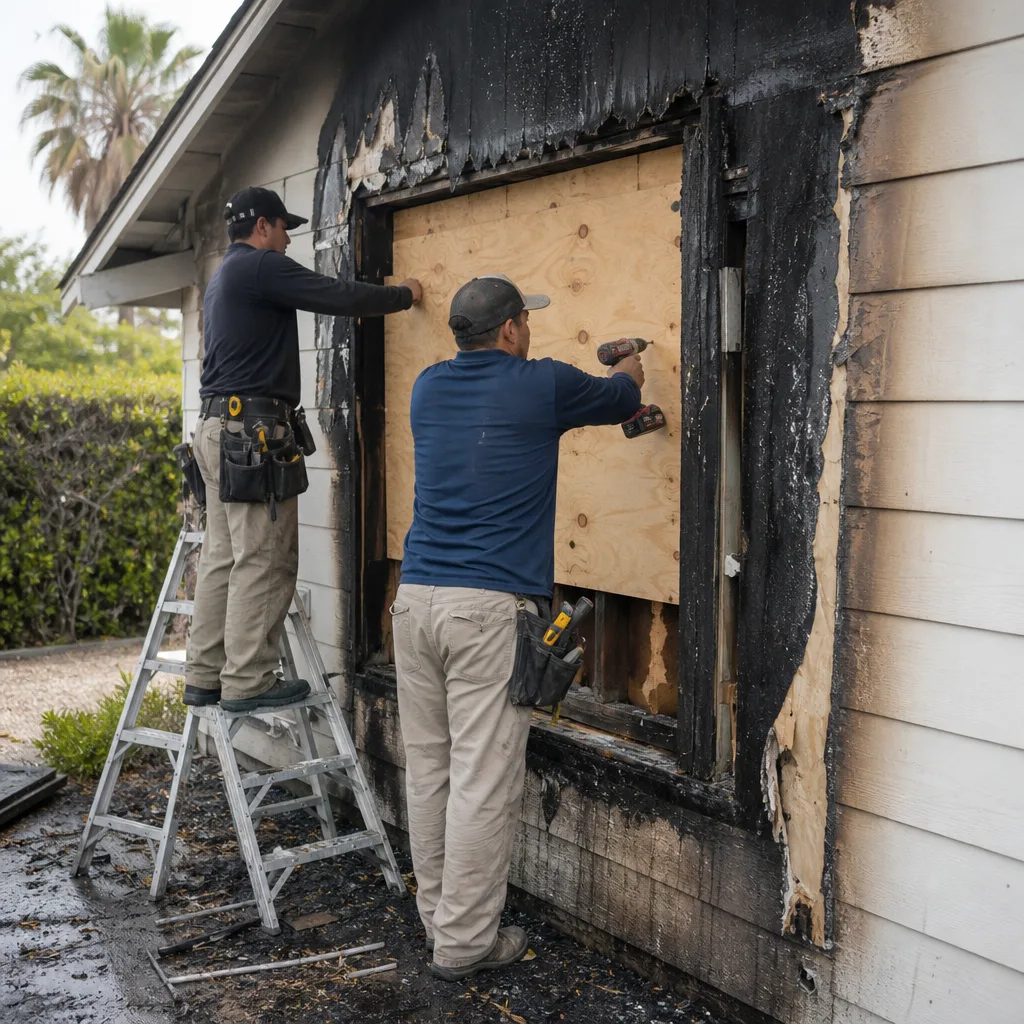
Air Quality Restoration
After mold is removed, the air in your home still carries spores until it’s been properly filtered and exchanged. We run HEPA air scrubbers and dehumidifiers sized for the actual cubic footage of your Plumas Lake home, not whatever’s on the truck. We also measure humidity levels in the crawl space and living areas, because in this community the air in your house and the moisture under your slab are connected in ways a generic restoration crew won’t look for.
What happens when you call
- 1
A real person answersNo phone trees - you reach a local pro.
- 2
You get an upfront price rangeHonest numbers before anyone is dispatched.
- 3
A background-checked tech heads outLicensed & insured, dispatched right away.
- 4
You approve before work beginsNothing starts until you say go.
Trusted Brands We Service in Plumas Lake
Wade’s crew runs professional-grade equipment from Dri-Eaz and Phoenix on every Plumas Lake mold job. These aren’t the consumer-grade dehumidifiers you can rent at a hardware store. In Plumas Lake specifically, equipment sizing matters more than usual because the slab keeps feeding moisture into the structure even after surface water is gone. We stock replacement filters, drying equipment, and containment supplies locally so we’re not waiting on a shipment when your walls are wet. The work is backed by IICRC, RIA, and IFA standards, and Wade’s technicians are background-checked and uniformed.
Common Mold Remediation Problems We See in Plumas Lake Homes
- Slab wicking that gets mistaken for a plumbing leak. Plumas Lake’s 2003-2008 homes were built on engineered pads over former rice fields, and the hardpan clay beneath drains poorly. After a wet winter, moisture moves upward through the concrete into OSB subfloors and wall framing, creating mold conditions that have nothing to do with a pipe. If a contractor only fixes the visible mold and doesn’t address the slab condition, the mold returns within weeks.
- Stucco hiding moisture until the problem is severe. Because every subdivision in Plumas Lake is stucco-clad, water can get behind the exterior during a driving rain and sit there for months. By the time you see staining on the inside of a wall, the framing behind it has often been wet for a long time. We drill into the stucco to check, something many remediation companies skip entirely.
- Undersized drying equipment that can’t keep up. Plumas Lake’s high seasonal water table means moisture doesn’t stop entering the structure just because you dried the visible water. Standard dehumidifiers can’t handle continuous slab wicking. This is why Wade sizes equipment for the specific conditions of each Plumas Lake home, and why he checks moisture readings daily instead of setting and forgetting.
- Ignoring the crawl space. In Plumas Lake, the crawl space is often the source of the musty smell that seems to come from everywhere. A wet crawl space feeds humidity into the floor assembly and wall cavities. We treat the crawl space as part of the remediation, not an afterthought.
Pricing for Mold Remediation in Plumas Lake, CA
A mold inspection with air sampling in Plumas Lake typically runs $350 to $700, depending on how many samples you need and whether we’re accessing wall cavities. Small-scale removal jobs, like a single bathroom wall or a closet, usually land between $1,200 and $2,800. A full crawl space treatment with moisture barrier installation and antimicrobial application typically runs $3,000 to $7,500. Whole-house remediation involving multiple rooms and stucco wall cavity work runs $6,500 to $15,000 or more, depending on square footage and how far the damage extends.
What affects the price is the extent of the hidden moisture, not just the visible mold. A Plumas Lake home with slab wicking into multiple rooms costs more than a single wall with surface growth. Wade gives you a written scope before work starts, and there’s no trip charge inside his own county. He’ll also give you a free second opinion on any written estimate you’ve received from another company. If you’re a senior or a veteran, you get 10% off, always. Call (855) 915-0646 for an exact quote.
We Also Serve Cities Near Plumas Lake
If you’re outside Plumas Lake proper, Wade’s crew also serves Yuba City, Linda, Olivehurst, and South Yuba City. Many of these communities share the same Sacramento Valley climate and similar housing stock, and Wade knows the territory well. Plumas Lake is our focus on this page, but if you’re a neighbor, the same direct approach applies.
Serving Plumas Lake, CA - Our Local Coverage Area
We’re based in the Plumas Lake area and know this community well. Use the map below to see our service coverage - if you’re nearby, we can almost certainly help.
FAQs - Mold Remediation in Plumas Lake
In Plumas Lake, musty odors without a visible water event almost always trace back to slab wicking or crawl space moisture. Your home sits on former rice-field hardpan that doesn’t drain well, and after a wet winter, moisture moves upward through the concrete slab into OSB subfloors and wall framing. The smell is mold growing inside wall cavities or under flooring, fed by groundwater that has nothing to do with your plumbing. Call (855) 915-0646 and Wade will investigate the actual source.
Yes. In Plumas Lake, storm mold risk comes from the ground, not just the roof. The high seasonal water table rises after concentrated winter rains, and the hardpan clay under your slab holds that water against your foundation for weeks. Stucco exteriors can also trap wind-driven rain in wall cavities without any roof damage. If a storm rolled through, it’s worth checking the slab and stucco even when your attic is dry. Estimates are free, and there’s no trip charge inside the county.
Mold can begin growing within 24 to 48 hours when moisture and temperatures allow. Plumas Lake’s summer highs above 100°F combined with residual moisture in wall cavities create an extremely fast growth environment. During the summer months, we’ve seen visible growth emerge within three days of a slab moisture event. That’s why Wade heads out the same day you call. The sooner we dry the structure, the less remediation you’ll need.
Treat the crawl space as a moisture source feeding your whole house. In Plumas Lake, a wet crawl space after winter rain means the water table under your home is high enough that moisture is rising through the ground. We remove standing water, run dehumidifiers sized for the space, treat any mold on the framing, and install or repair a moisture barrier to keep the ground vapor out of your floor assembly. If you ignore it, the musty smell moves upstairs. Call (855) 915-0646 and we’ll take moisture readings before we do anything else.
Often yes, but sometimes small access holes are the only way to find hidden growth. Stucco hides moisture for months, and if we suspect mold inside a wall cavity on a Plumas Lake home, we may need to drill a small test opening to see what’s actually in there. We keep access points as small as practical and patch them properly afterward. If we don’t check behind the stucco, you’re paying for half a remediation. Wade will show you photos of everything we find, and you’ll get a written scope before work begins.
A Real Plumas Lake Job, in Wade’s Words
We remediated a three-bedroom home off River Oaks Boulevard after the owners reported musty odors without any visible water event. Our techs found the engineered I-joists under the kitchen had swelled and delaminated from moisture rising through the slab, and the stucco exterior had trapped humidity in the wall cavity for months. We set up a Dri-Eaz LGR 7000XLi dehumidifier and XPOWER air movers after removing the damaged OSB, treated the framing with an antimicrobial, and installed a moisture barrier before rebuilding. The post-remediation air sample came back clear within 72 hours. That’s the kind of job the checklists miss, because nobody who only looks at the visible drywall ever finds the slab underneath it.
Why Plumas Lake’s Ground Is Different
Plumas Lake was developed almost entirely in the mid-2000s on former rice fields in a low-lying floodplain between the Bear River and the Feather River. The land was graded flat, the homes were built fast, and the hardpan clay underneath wasn’t going to change its drainage characteristics just because somebody poured a slab on top of it. That means the water table under these homes is measured in inches, not feet, for large parts of the winter. When the Sacramento Valley gets concentrated precipitation events, the drainage infrastructure gets overwhelmed, and water sits against foundations across entire subdivisions at once. There will be a cluster of mold calls from houses that never had a plumbing failure, never had a roof leak, and never saw standing water inside. The mold came from underneath.
If you live in a 2003-2008 tract home in Plumas Lake, your house was built on a slab over expansive clay that drains poorly. The OSB subfloors and engineered I-joists in those homes swell and delaminate quickly when they get wet. Stucco on the exterior traps humidity behind the walls. When summer hits and the temperature passes 100°F, any residual moisture in a wall cavity becomes a mold incubator. This isn’t a generic mold problem. It’s a Plumas Lake mold problem, and generic remediation checklists don’t account for it.
What to Do Right Now if You Suspect Mold in Plumas Lake
Don’t wait to see if the smell goes away. It won’t. Don’t paint over the stain. Don’t run a hardware store dehumidifier and hope for the best. Slab wicking doesn’t stop on its own, and stucco doesn’t dry out without help. Call Wade at (855) 915-0646. He’ll answer his own phone, he’ll take moisture readings before he tells you what you need, and he’ll give you a written scope before any work starts. There’s no trip charge inside the county. Seniors and veterans get 10% off. And the 90-Day Done Right Promise is on every mold job: if it’s not done right, Wade makes it right, in writing.
Written by Wade Ferris, Owner at Wade’s Restoration of California, serving Plumas Lake since 2007.