
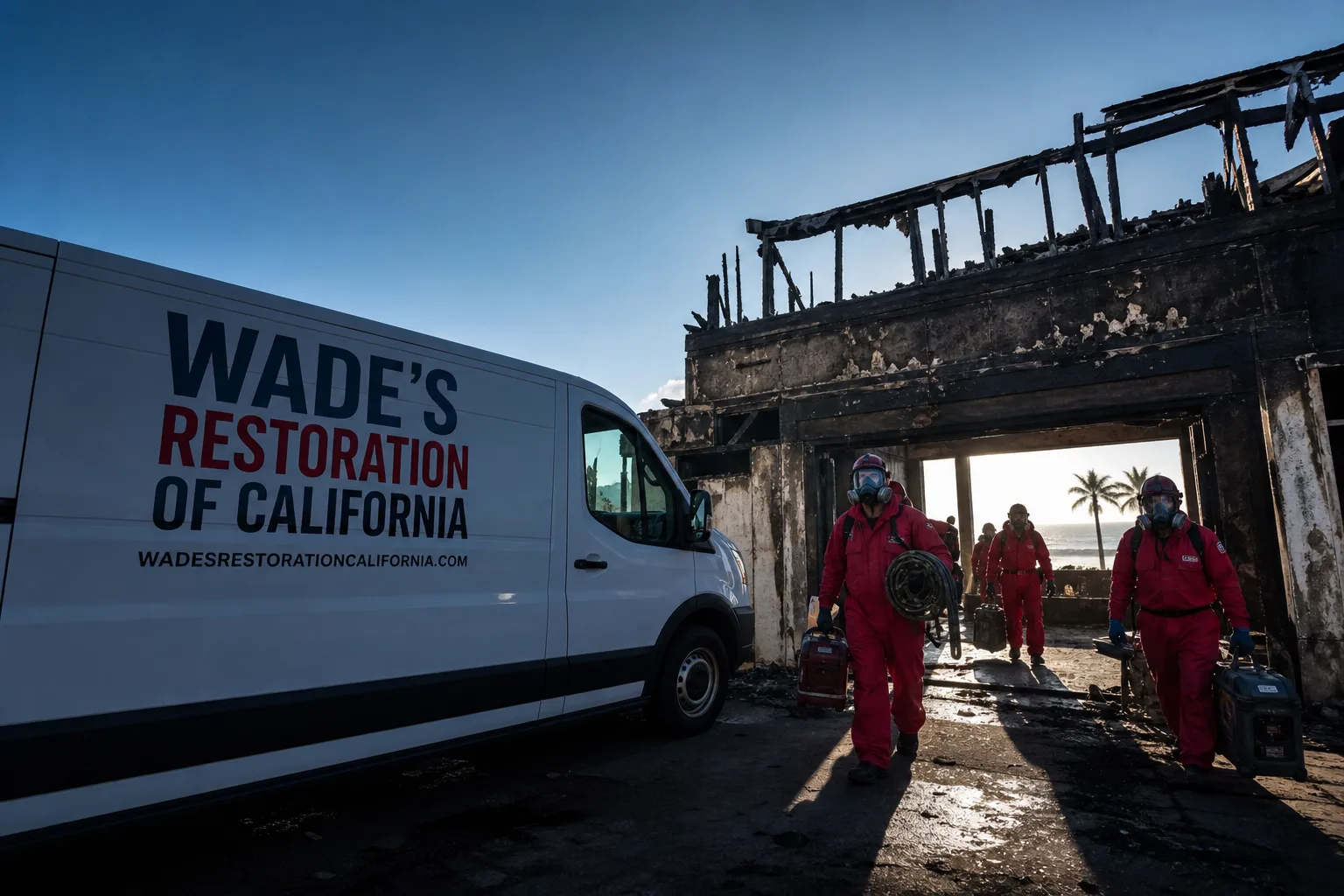
Fast, Reliable Mold Remediation Across Monrovia
Mold remediation in Monrovia almost always costs between $1,800 and $6,500 depending on how far the growth has spread and whether a crawl space is involved. Black mold on visible drywall is one thing. Black mold feeding on mud-caked joists under a 1926 Craftsman is another. Wade’s Restoration has spent nearly two decades digging out the second kind. If you’ve got water staining, a musty smell that won’t quit, or visible growth anywhere in your Monrovia home, call (855) 915-0646 and Wade will walk you through exactly what he’d do before anyone steps foot on your property.
We work throughout Monrovia, from the flatlands south of Foothill Boulevard up into the canyon-adjacent streets where debris flow hazard maps overlap with century-old framing. That matters more than you’d think. Monrovia’s mold problems often start in places a typical restoration crew never looks.
Why Wade’s Restoration of California Is Monrovia’s Preferred Mold Remediation Company
Wade Ferris founded this company in 2007 and still answers his own phone. That’s not a marketing line. Call (855) 915-0646 at two in the morning and the voice on the other end belongs to the man whose name is on the truck. Homeowners around Monrovia tend to appreciate that, especially the ones who’ve already been through a national chain that quoted one number on the phone and a very different one at the door. Wade’s address is public. His license number is public. He will run into you at the Monrovia Street Fair on a Friday night, and that is the oldest accountability mechanism there is.
Our Monrovia customers call us back because we document everything. Every single day, Wade’s crew takes moisture readings in the affected areas and hands you the full log when the job wraps. Almost nobody else in this trade does that. We also deal with your insurance adjuster directly, so you’re never the one stuck relaying numbers and photos between two parties who should be talking to each other. And every mold job we do in Monrovia carries the 90-Day Done Right Promise, in writing: if it’s not done right, Wade makes it right. One call brings him back.
Our Mold Remediation Services in Monrovia
Crawl Space Treatment
This is the service Monrovia homeowners need most, and the one most remediation companies gloss over. The pre-1950 Craftsman and Victorian homes near Old Town and north of Foothill Boulevard sit on pier-and-beam foundations with little or no below-grade waterproofing. When canyon debris flows push mud and gravel under the house, that material holds water against the floor joists for months. Mold roots into the wood long before you ever see it on a wall upstairs. Our Mold Remediation crew starts in the crawl space because that’s where Monrovia mold problems actually begin. We remove the contaminated material, steam-clean framing, treat affected wood, and bring in Dri-Eaz LGR dehumidifiers until the structure reads dry.
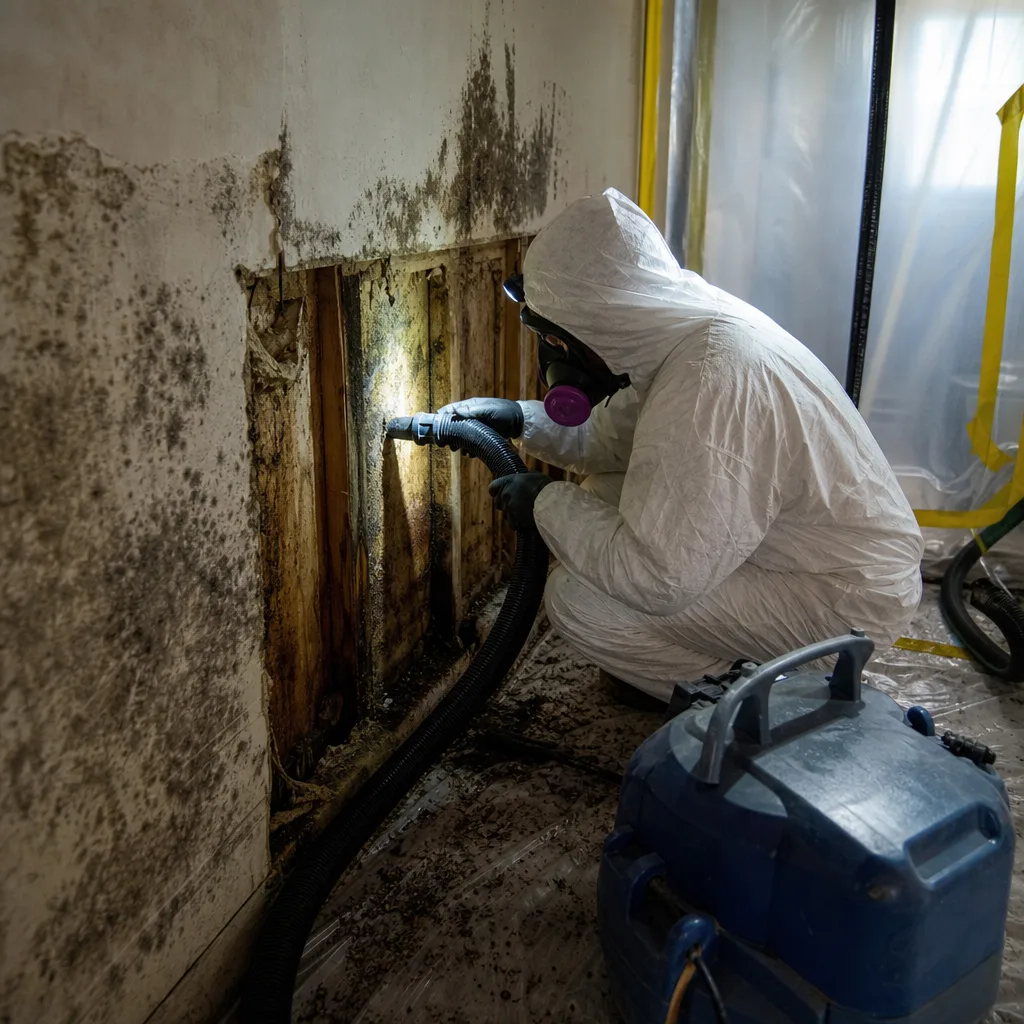
Mold Inspection & Testing
Not every musty smell is mold, and not every mold problem needs a full gut. Before we quote anything, we inspect. In Monrovia, that means checking the crawl space, the attic, the walls around old single-pane windows, and anywhere a debris surge or Santa Ana-driven rain could have entered. We take air samples when the situation calls for it, and we tell you plainly what we found and what we’d do about it. If you already have a written estimate from another company, bring it to us. Wade will give you a free second opinion. No charge for that.
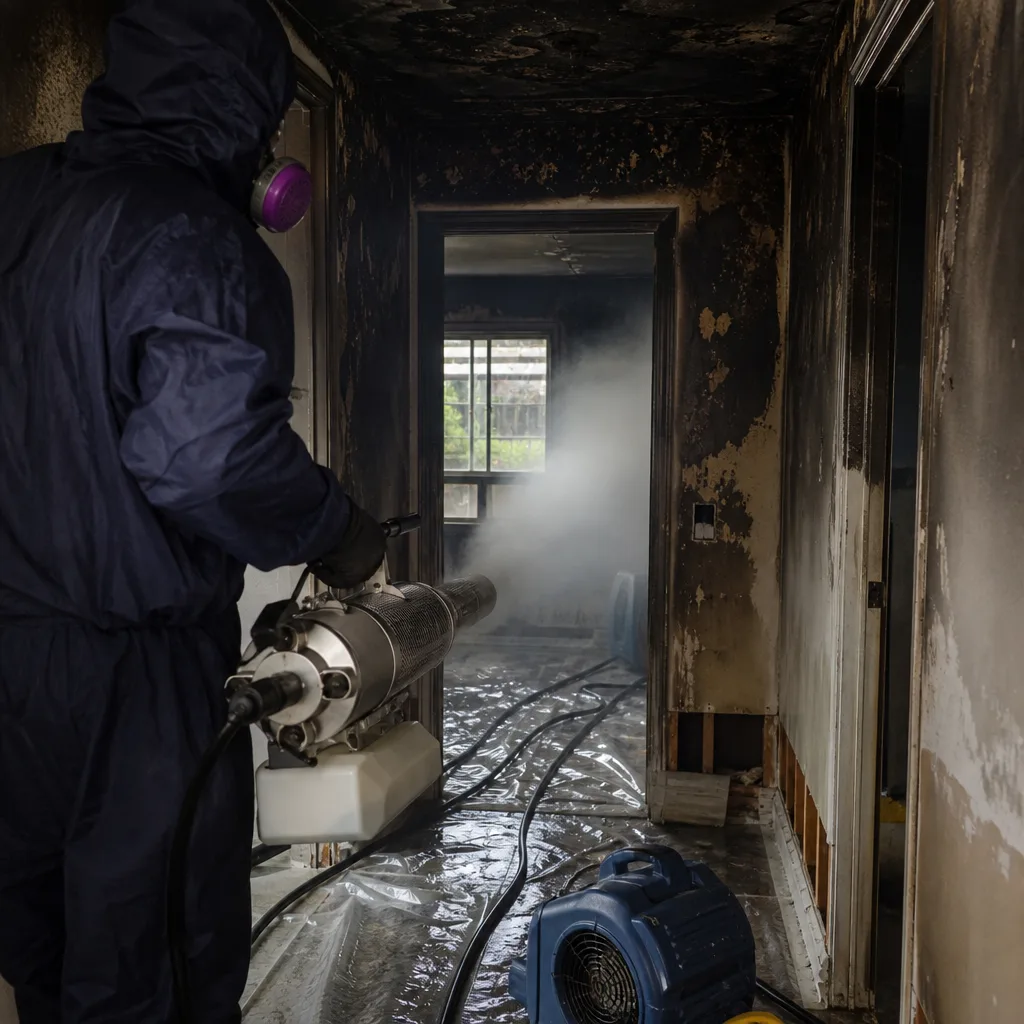
Black Mold Remediation
Black mold, or Stachybotrys, thrives in the exact conditions Monrovia’s older homes create: chronic dampness, organic material, and poor airflow. We see it most often in crawl spaces where hydrophobic post-fire soil from the San Gabriels has wicked moisture upward into the subfloor. We also see it behind baseboards in 1920s bathrooms that never had exhaust fans. Our protocol is straightforward: contain the area with HEPA-filtered negative air pressure, remove affected porous materials, treat the framing, and verify clearance with post-remediation testing. You get the lab results. Not just a handshake.
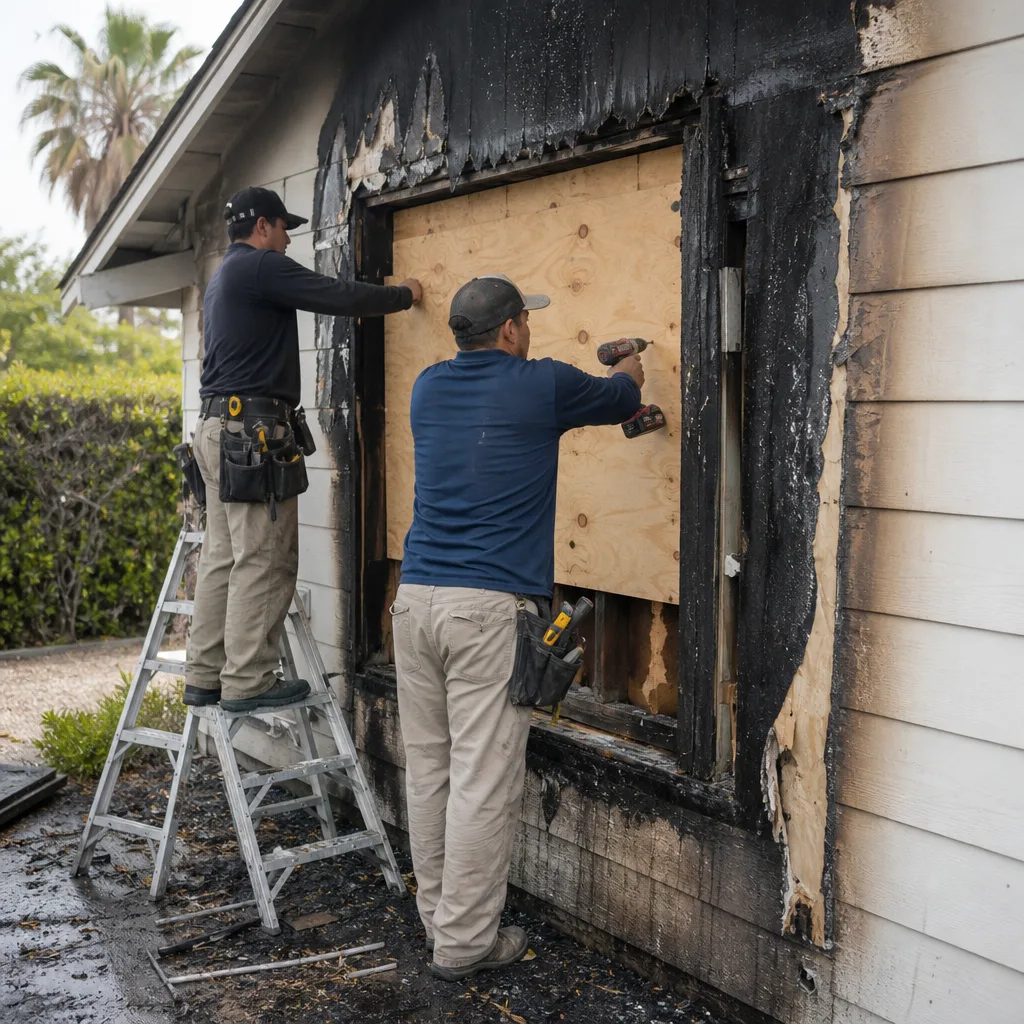
Air Quality Restoration
After the source is gone, the air still carries what the mold left behind. That’s why we run HEPA air scrubbers during and after remediation in Monrovia homes, especially in the tight, closed-up rooms typical of mid-century ranch houses in the 91016 and 91017 zip codes. If you’ve been coughing at night or your allergies spike the moment you walk in the door, the air is often the tell. We test it, we clean it, and we show you the before-and-after numbers.
What happens when you call
- 1
A real person answersNo phone trees - you reach a local pro.
- 2
You get an upfront price rangeHonest numbers before anyone is dispatched.
- 3
A background-checked tech heads outLicensed & insured, dispatched right away.
- 4
You approve before work beginsNothing starts until you say go.
Trusted Brands We Service in Monrovia
We’re an IICRC-certified and RIA-affiliated firm, and we run professional-grade equipment from Dri-Eaz and Phoenix on every Monrovia job. That means the dehumidifiers, air scrubbers, and moisture meters showing up at your house are the same models commercial restoration contractors use, not the rental-counter stuff. We keep our equipment maintained and calibrated because Monrovia’s humidity swings, especially in the foothill neighborhoods, punish sloppy readings. If your crawl space was treated last winter and now it smells again in September, something was missed. We’ll find it.
Common Mold Remediation Problems We See in Monrovia Homes
- Hydrophobic post-fire soil deposits in crawl spaces. After a burn, the slopes above Monrovia Canyon shed water instead of absorbing it. That runoff carries ash-heavy mud under homes, and that mud wicks moisture into joists and subflooring for months. Mold follows. If the mud isn’t removed first, surface treatment is a waste of money.
- Wind-driven ember entry points turned moisture traps. Santa Ana winds push rain and embers through old gable vents, cracked siding, and the gaps where 1920s framing has settled. Those openings let water into wall cavities and attics during storm cycles. Mold grows inside walls where you can’t see it until the paint starts bubbling.
- Surface mold on pier-and-beam homes with foundation debris still caked underneath. We see this constantly in the blocks around Old Town. A previous contractor wiped down visible mold on a wall or a beam, but never touched the mud and gravel caked under the house. The mold returned within weeks because its water source was never removed.
- Bathrooms and kitchens in pre-1950 homes without mechanical ventilation. Many Monrovia bungalows were built before exhaust fans were standard. Decades of shower steam condensing on uninsulated walls and single-pane windows creates persistent dampness. Black mold behind the baseboard is almost routine in these houses.
Pricing for Mold Remediation in Monrovia, CA
Here’s what you’re looking at in Monrovia, based on what we’ve actually billed over the past few years. A basic containment and surface remediation for visible mold in a bathroom or closet typically runs $1,800 to $3,200. A full crawl space remediation with debris removal, structural cleaning, and drying on a 1920s pier-and-beam home usually lands between $3,500 and $6,500. Black mold requiring full containment, drywall removal, and post-remediation clearance testing can reach $8,000 to $12,000 on larger footprints. What moves the number: how much of the crawl space is affected, whether flooring or wallboard has to come out, and how long the drying equipment needs to run. Every estimate is in writing and itemized before work begins. Call (855) 915-0646 and Wade will come out and give you a straight number. No trip charge inside our own county.
We Also Serve Cities Near Monrovia
Wade’s Restoration handles mold jobs across the San Gabriel foothills. We work in Monrovia daily, and we’re regularly in Mayflower Village, Duarte, Arcadia, and Sierra Madre. If you’re in a neighboring community with a water damage or mold problem, call (855) 915-0646. Wade heads out the same day in nearly every case.
Serving Monrovia, CA - Our Local Coverage Area
We’re based in the Monrovia area and know this community well. Use the map below to see our service coverage - if you’re nearby, we can almost certainly help.
FAQs - Mold Remediation in Monrovia
Monrovia’s position at the mouth of Monrovia Canyon means storm runoff travels the shortest possible distance from mountain slopes to residential blocks. When rain follows a fire season, the denuded slopes shed ash-heavy mud and debris directly into foothill neighborhoods. In practical terms, we treat Monrovia crawl spaces as debris flow sites first and mold sites second. The contaminated material has to go before drying and treatment can start. A generic water-damage playbook that skips debris removal won’t fix the problem. If you’re in the 91016 or 91017 zip, especially north of Foothill Boulevard, call (855) 915-0646 and Wade will tell you straight what you’re dealing with.
Yes, if your home is in the foothill neighborhoods within a half-mile of Monrovia Canyon Park, you should absolutely have an inspection after a major Santa Ana storm. Wind-driven rain enters through gable vents, old siding seams, and window flashing gaps, and it doesn’t always leave a visible puddle. It leaves a damp wall cavity, which becomes a mold colony in as little as 48 hours. An inspection costs a few hundred dollars. Pulling out and rebuilding a mold-rotted exterior wall costs many thousands. Wade will check the obvious places and the hidden ones. Free second opinion on any written estimate, too.
The right way is full containment and source removal, not spraying. You remove the mud and gravel that carried water and organic material under the house, cut out contaminated insulation, steam-clean and treat the framing, run HEPA air scrubbers and dehumidifiers until moisture readings drop below 15%, and then re-test the air. On a 1926 Craftsman on N. Canyon Blvd last winter, our crew spent three days doing exactly that after a debris surge came down from the canyon. We pumped out the pier-and-beam crawl space, steam-cleaned the subfloor, and kept Dri-Eaz LGR 7000XLi dehumidifiers and HEPA scrubbers running until spore counts returned to background. That’s the protocol. Anything short of that is a band-aid.
Usually not by itself. Ventilation helps, but if the crawl space floor is still caked with debris-flow mud or if the soil below the house is holding water against the joists, more air just moves moisture around. What actually solves the problem is removing the contaminated material, installing a proper vapor barrier on the crawl space floor, and managing the moisture at its source. In some Monrovia hillside homes we also add a perimeter drain or regrade the soil so runoff doesn’t pool under the house. Wade can walk you through what makes sense for your specific lot after he sees it. Call (855) 915-0646 and he’ll come look.
Mold can begin growing within 48 to 72 hours of water intrusion, and the clock starts the moment debris-flow mud and water settle under the house. The longer that material sits against the floor joists, the deeper the mold roots and the more expensive the fix. Insurance coverage depends on your policy language and the cause of loss. Many policies cover mold remediation when it results from a covered water damage event, like a storm-driven debris flow. We photograph everything, document the moisture readings every day, and deal with your adjuster directly so you don’t have to become the middleman. That documentation matters when the claim is reviewed.
If you smell something musty, see staining on a wall or ceiling, or know for a fact that last winter’s storm pushed mud under your Monrovia home, don’t wait. Call Wade’s Restoration of California at (855) 915-0646. Wade will answer the phone himself, tell you what he’d do, and give you an honest number in writing. No pressure. No trip charge in the county. Free second opinion on any written estimate.
Written by Wade Ferris, Owner at Wade’s Restoration of California, serving Monrovia since 2007.