
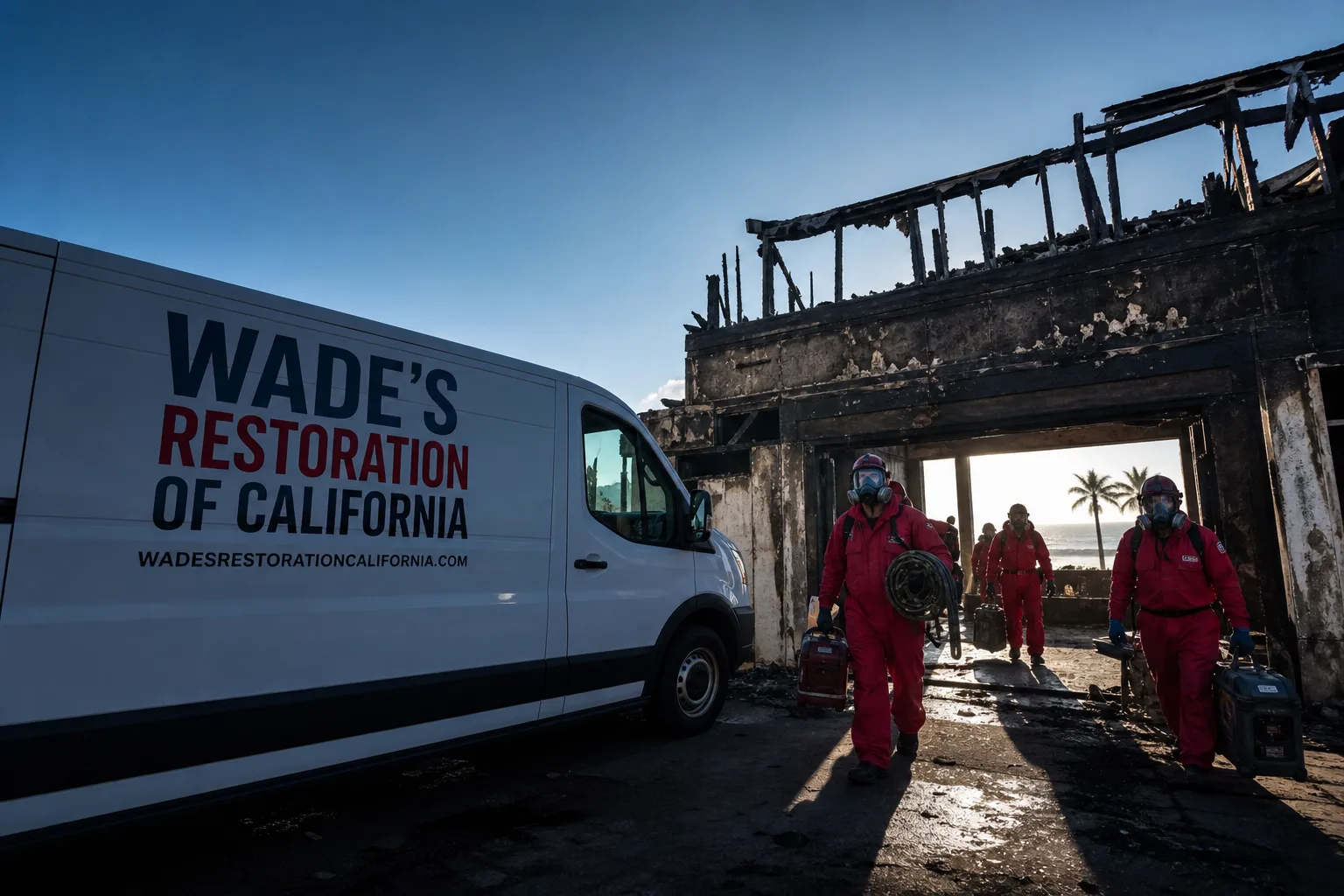
Fast, Reliable Mold Remediation Across Manhattan Beach
Mold remediation in Manhattan Beach costs $1,800-$6,500 for a typical single-room removal, and you can have Wade’s crew at your door within hours, not days. We know the Sand Section, the Tree Section, and every block between Highland and The Strand, because we work here constantly. Marine-layer moisture and salt air mean mold here doesn’t wait for a roof leak to announce itself – it starts in wall cavities and crawl spaces between rain events. Call (855) 915-0646 and Wade Ferris himself will answer.
Here’s the Manhattan Beach reality: a home two blocks from the ocean and a home in Torrance can have the same water intrusion event, but the Manhattan Beach home will grow mold faster and hide it longer. That’s not a guess. It’s what our moisture meters tell us when we compare readings from Sand Section jobs to inland jobs in the same week. We calibrate equipment differently here. We document differently here. And we don’t leave until the moisture log says the marine layer isn’t going to win the rematch.
Why the Coastal Air in Manhattan Beach Changes Everything About Mold Remediation
Manhattan Beach’s Sand Section – dense three-story luxury homes on 30-foot-wide oceanfront and near-oceanfront lots – faces a mold reality unlike any neighboring South Bay city. Chronic salt-air and marine-layer moisture accelerates mold colonization and corrodes structural hardware between rain events, not just during them. With median home values exceeding $3M and irreplaceable ocean-view custom finishes at stake, every water or mold job here demands restoration-grade precision over standard replacement logic, and ambient coastal humidity routinely extends drying timelines beyond what inland equipment protocols predict. If a remediation crew shows up treating your Manhattan Beach home like a house in Palmdale, you’re going to have mold again in six weeks.
Mold Remediation here requires reading the building the way a local reads the surf report. We know which east-facing Sand Section walls hold moisture because the marine layer sits on them longer. We know which Tree Section ranch homes have original 1960s plumbing that’s one pressure surge from a pinhole leak. That local knowledge isn’t a marketing perk – it’s what keeps us from missing the second, hidden moisture source that a generic crew would never check.
Wade Ferris founded this company in 2007. He publishes his name, his address, and his license number. He answers his own phone. When you call about mold in your Manhattan Beach crawl space at nine at night, you’re talking to the man who will show up with the moisture meter, not a call center in another state.
Our Mold Remediation Services in Manhattan Beach
Mold Inspection & Testing
A mold inspection in Manhattan Beach should start with a moisture audit, not a swab. Because ambient marine humidity keeps readings elevated, a technician who calibrates equipment for inland standards will either false-positive your walls or miss a trapped pocket behind the vanity. We inspect with the coastal reality in mind, and we hand you the full moisture log when the job’s done. That log is yours, and it’s the single best defense against a recurrence you can’t see coming.
Mold Removal
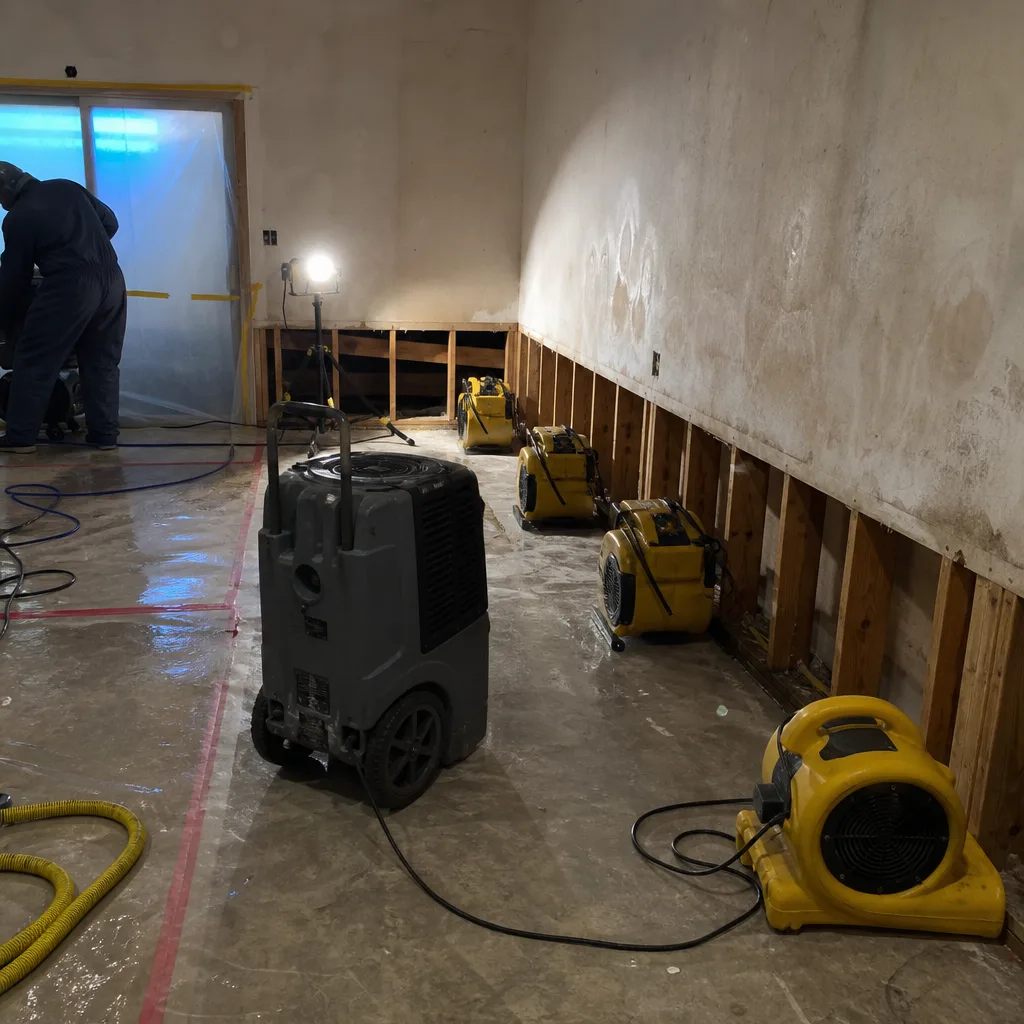
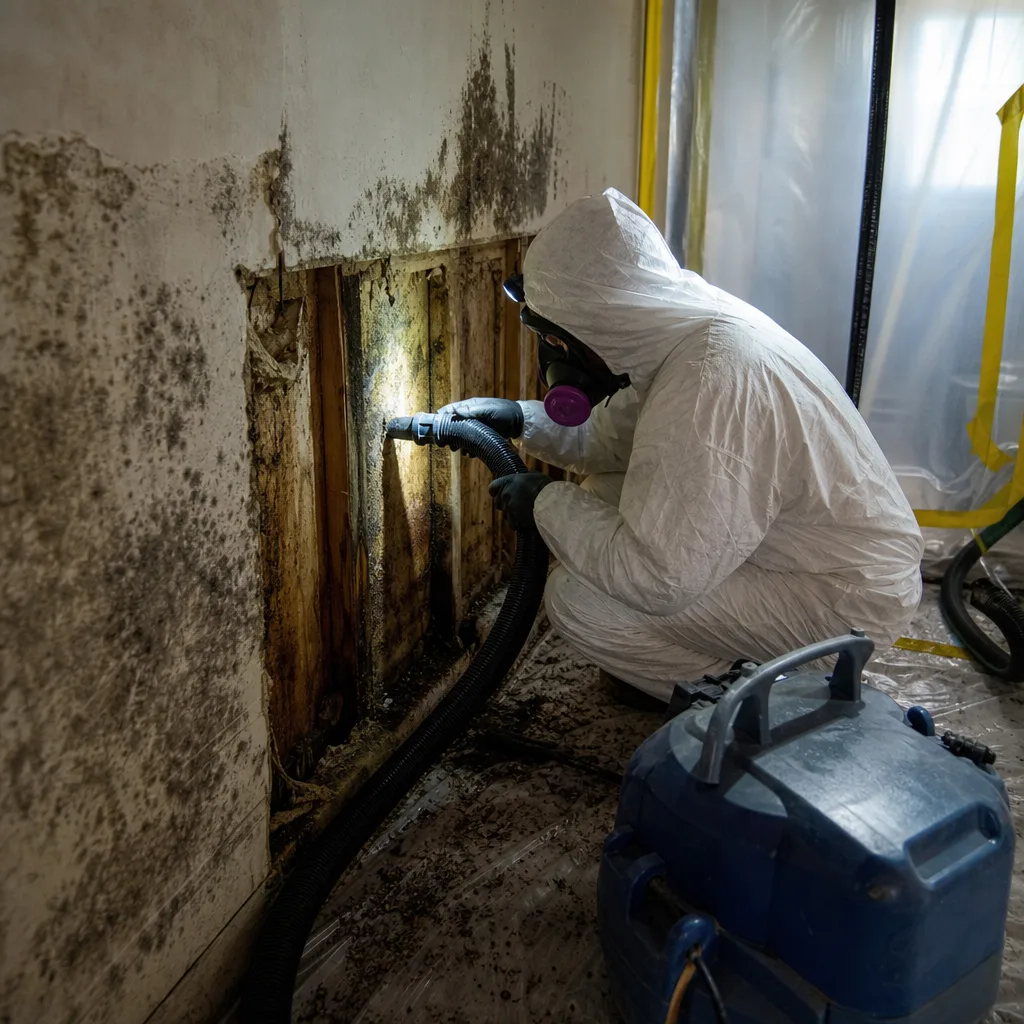
Removal in Manhattan Beach homes often means working inside tight, finished spaces where drywall, custom millwork, and three-story stairwells limit equipment access. We contain the affected area, remove the damaged material, treat the framing, and dry to a marine-layer-adjusted standard – not the number a software program spits out for a Phoenix jobsite. A typical single-room mold removal in Manhattan Beach runs $1,800-$4,200 depending on how far the colony has spread.
Black Mold Remediation
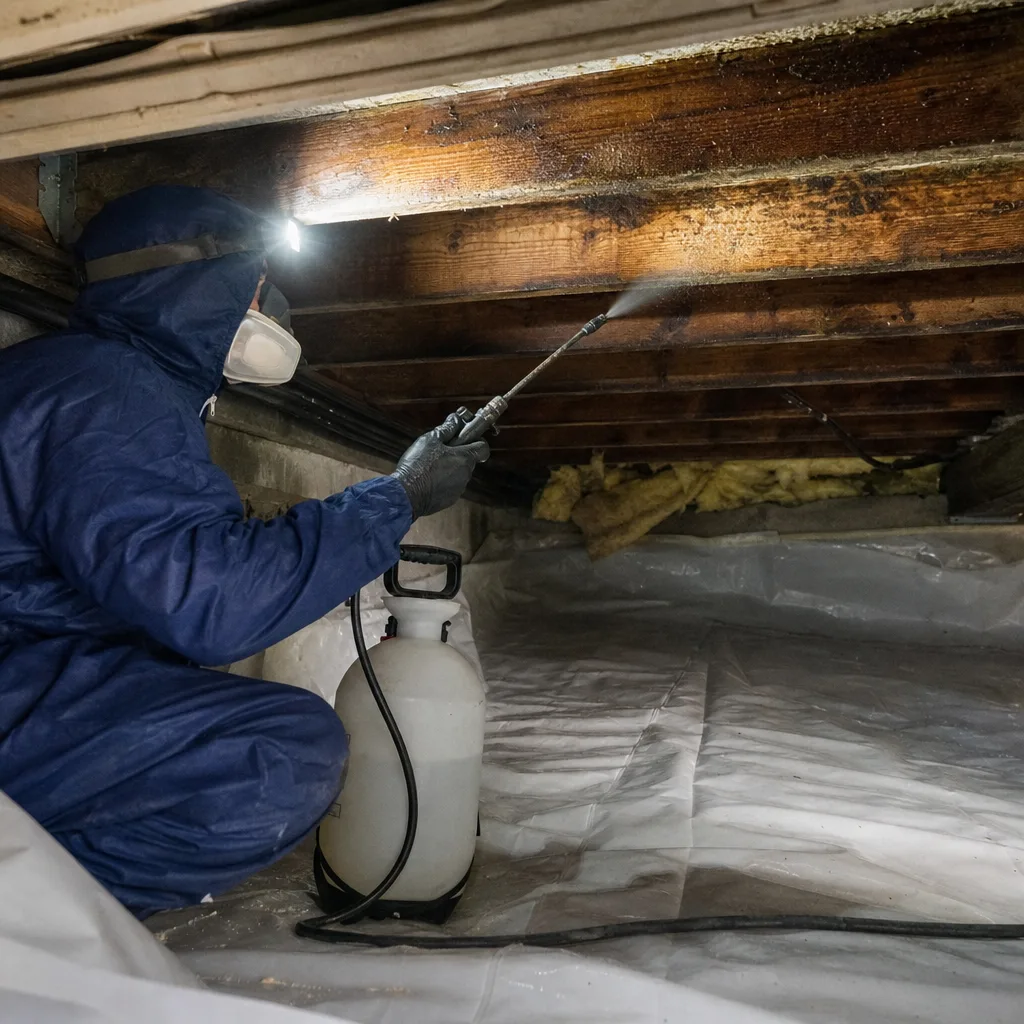
Black mold (Stachybotrys) in Manhattan Beach is more common than people expect, especially behind ocean-facing walls and deck ledger boards where salt-laced moisture has seeped through hairline stucco cracks for months. We treat it as a structural threat, not a stain. EPA-registered antimicrobials come out, affected materials come out, and we document exactly what we found and where. Your adjuster will want that documentation. We give it to them directly.
Air Quality Restoration
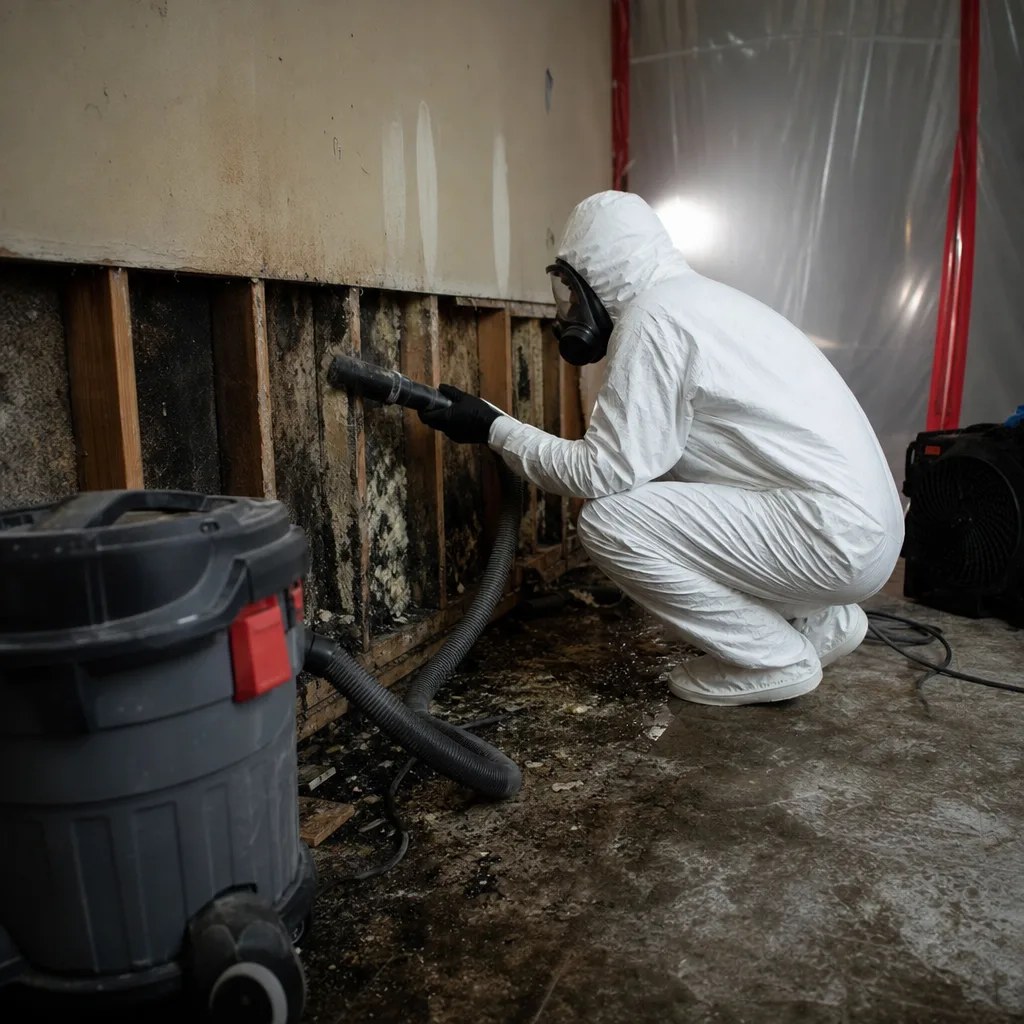
After any mold removal in Manhattan Beach, the air matters as much as the surfaces. We run HEPA air scrubbers during containment and removal, then verify clearance with post-remediation air sampling. Because the marine layer keeps outdoor humidity high, we pay special attention to HVAC coil moisture and return-air plenum readings. In 90266 and 90267, a musty odor that lingers after a “successful” job is usually airborne – which tells us the other crew never actually ran a clearance test.
What happens when you call
- 1
A real person answersNo phone trees - you reach a local pro.
- 2
You get an upfront price rangeHonest numbers before anyone is dispatched.
- 3
A background-checked tech heads outLicensed & insured, dispatched right away.
- 4
You approve before work beginsNothing starts until you say go.
The Salt-Air Failure Pattern You Won’t Find on a Generic Mold Page
Mold in Manhattan Beach doesn’t follow the inland playbook, and that’s the information gain page. In the Sand Section off Highland Avenue, our crew handled a mold outbreak in a three-story luxury home where a failed ocean-facing deck membrane had allowed salt-laced moisture to wick into the wall cavity. We found black mold behind the drywall and corrosion on steel stud fasteners; we removed affected materials, treated with an EPA-registered antimicrobial, and installed a Dri-Eaz dehumidifier calibrated for the higher ambient humidity, restoring the space while documenting the cause for the adjuster. That’s the Manhattan Beach pattern: a freshwater loss wouldn’t corrode the fasteners, and the mold grew behind the drywall because the marine layer kept the cavity damp even after the visible leak stopped.
Here’s another one. During high-surf events, salt spray seeps into exterior wall assemblies through hairline stucco cracks. It migrates down, sits behind baseboards, and the first sign is a musty odor. Not a stain. Not a wet patch. Just a smell that comes and goes with the onshore flow. By the time the stain appears, you’ve got a colony. We’ve pulled baseboards in Sand Section homes where the drywall behind them was black for two stud bays, and the homeowner had no idea because the paint was fine.
And then there’s the staging problem. Sand Section streets are narrow. You can’t park a box truck in front of a house on 30-foot lots without blocking a driveway or violating city parking codes. So we hand-carry every air scrubber, every dehumidifier, every HEPA vac through side yards and up three stories. That’s slow. But missing a window of drying time in this climate lets secondary mold colonize in the wall cavity before equipment even reaches the affected area. We plan for Manhattan Beach logistics, and it’s why we can actually get there when we say we will.
Why Adjusters Using Inland Protocols Keep Failing Manhattan Beach Homes
The single most common mold recurrence we see in Manhattan Beach is a home that was “remediated” by a crew using inland drying-chamber standards. Here’s what happens: the adjuster’s software uses standard psychrometric charts that don’t account for a persistent marine layer. The drying chamber hits a target grain-per-pound reading that would be dry in Torrance. So the equipment gets pulled. Equipment goes back. Four weeks later, the homeowner smells must again.
What happened is this: the wall cavity never reached a true dry standard for an 85% ambient-humidity coastal microclimate. Mold went dormant, then revived when the marine layer returned. We calibrate drying targets for Manhattan Beach’s actual vapor pressure, not a generic Southern California inland default. We leave the Dri-Eaz units in place longer than an inland crew would, and we take moisture readings every single day until the log proves the cavity is stable. That daily log is the difference between a job that stays done and a callback you didn’t want.
In the Sand Section’s tightly packed blocks, there’s another wrinkle that generic adjusters never see coming: a single unit’s plumbing failure or roof leak can wick moisture through shared party walls into an adjacent multi-million-dollar home. Restoration crews regularly find themselves managing multi-property moisture claims across property lines while also hand-carrying all equipment through narrow side yards because no truck can stage at the front door. If your neighbor’s leak is now your mold, the claim gets complicated. We deal with both adjusters directly. You don’t relay messages between two insurance companies, and you don’t pay for someone else’s water.
Common Mold Problems We See in Manhattan Beach Homes
- Crawl space mold that keeps coming back. In the Tree Section and Hill Section, mid-century ranch and split-level homes sit on vented crawl spaces. Coastal ground vapor rises, hits the floor joists, and the vents that worked in the 1960s now just cycle in marine-layer air. The fix isn’t more spray. It’s a moisture and humidity control system sized for coastal vapor drive, plus a vapor barrier that’s actually sealed at the edges.
- Black staining on garage walls – mold or salt-air corrosion? We see this constantly in 90266 and 90267. Salt air causes a dark oxidation pattern on fasteners and drywall that looks alarmingly like mold. Sometimes it is mold, sometimes it’s corrosion staining. Our inspection tells you which, and we don’t sell a remediation on corrosion. We’ll point to the test results and show you the difference.
- Mold behind ocean-facing baseboards after high-surf events. Salt spray gets through hairline stucco cracks, wicks downward, and colonizes behind baseboards where it’s warm and damp. The first sign is usually a faint smell, not a stain. By the time you see it, the drywall behind is typically gone.
- False-clearance pass from a previous remediation. A company runs a post-job air sample that reads “acceptable” because HEPA scrubbers are still running and the air’s been scrubbed. But behind the wall cavity, the moisture is still there. We test before we call it done, and we hand you the daily moisture log so you know exactly when the cavity hit dry – not just when the air smelled fine.
Pricing for Mold Remediation in Manhattan Beach, CA
Here’s what you can expect to pay for mold remediation in Manhattan Beach. A visual mold inspection with moisture mapping typically runs $350-$650. Air sampling and lab analysis adds $250-$500 depending on the panel count. A contained mold removal in a single bathroom or wall section runs $1,800-$4,200. A crawl space treatment with antimicrobial fogging, vapor barrier repair, and humidity control sizing runs $2,800-$6,500. A whole-home remediation across multiple floors in a Sand Section three-story – the kind where we’re hand-carrying equipment up three flights and working around custom finishes – runs $7,000-$18,000. Those numbers reflect Manhattan Beach’s building realities: tight lots, oceanfront materials, and marine-layer-corrected drying. Estimates are free, and they’re in writing before anyone touches your walls.
We also honor a few standing offers that are simply how Wade does business: no trip charge inside our own county, a free second opinion on any written estimate, and a permanent Senior & Veteran 10% discount. If another company quoted you $5,000 and you want a local second look, call (855) 915-0646. No charge for that.
Trusted Equipment and Standards We Bring to Manhattan Beach Jobs
We run professional-grade equipment from Dri-Eaz, Phoenix, and Injectidry – brands that hold up to daily use in coastal conditions. Our techs are IICRC-certified, RIA-affiliated, and IFA-recognized, which means the protocols we follow are the industry’s highest standard, not a franchise’s shortcut. Every mold remediation job we do in Manhattan Beach is covered by our 90-Day Done Right Promise: if it’s not done right, Wade makes it right, in writing. You’ll see that promise printed on your contract before we start, not buried in a fine-print paragraph you never read.
We Also Serve Cities Near Manhattan Beach
Wade’s Restoration covers the full South Bay coastline, and we regularly work mold jobs in Redondo Beach, Rolling Hills Estates, Palos Verdes Estates, and Torrance. If you’re in a neighboring city and your adjuster is using inland drying standards, the problem is the same. Read more about how we handle Mold Remediation in Manhattan Beach, or call us from wherever you are – Wade heads out from the Los Angeles office and can be on the road within the hour.
Serving Manhattan Beach, CA - Our Local Coverage Area
We’re based in the Manhattan Beach area and know this community well. Use the map below to see our service coverage - if you’re nearby, we can almost certainly help.
FAQs - Mold Remediation in Manhattan Beach
The marine layer keeps ambient relative humidity elevated even on rainless days, so drying chambers calibrated to inland Southern California standards routinely underperform here. That means we run dehumidifiers longer, take more frequent grain-per-pound readings, and set drying targets for a coastal microclimate rather than Torrance’s inland ones. Expect a Manhattan Beach drying timeline to run 20-40% longer than a comparable inland loss, and be suspicious of any crew that says otherwise. Call (855) 915-0646 for a moisture assessment that accounts for coastal humidity.
Yes. Sand Section homes on shared walls can wick moisture through party-wall assemblies into adjacent units, and we’ve managed multi-property mold claims across property lines more times than we can count. Wade handles coordination between you, your neighbor, and both adjusters directly, so no one’s stuck relaying information between two insurance companies. If you suspect water migrating from a neighbor’s unit, call us – we can map the moisture path and document it for your claim before the mold spreads further.
It can be either, and the difference matters. Salt air corrodes fasteners and drywall in a dark, localized pattern that looks like mold but isn’t. Mold grows outward and responds to moisture mapping. Our inspection tells you which one you’re dealing with, and we don’t sell remediation on corrosion staining. We’ll show you the test results and the moisture readings so you know exactly what’s on your walls.
Because the company treated the symptom, not the moisture source. In Manhattan Beach, crawl spaces under mid-century homes in the Tree Section and Hill Section get constant coastal ground vapor, and if the vapor barrier isn’t sealed at the edges and the ventilation isn’t sized for marine-layer humidity, mold returns within weeks. We install vapor barriers with actual edge sealing and humidity control systems sized for coastal vapor drive, then we hand you the moisture log so you can verify it’s holding. Call (855) 915-0646 for a crawl space assessment that fixes the cause.
It slows staging down, which means the window for secondary mold growth gets wider before equipment reaches the affected area. We plan Manhattan Beach jobs around that reality – smaller, modular equipment stages, crews who know the side-yard dimensions, and a schedule that gets containment up before the drying clock starts. That’s why we can actually show up when we say we will, and why we stay until the moisture log proves the job is done.
Call Wade’s Restoration for Mold Remediation in Manhattan Beach
If you smell mold, see staining, or just bought a home in the Sand Section and want a moisture baseline before the marine layer makes a problem you didn’t know about, call Wade. He’ll answer. You’ll get a straight answer about whether you have a mold issue, what it costs to fix, and whether you need remediation at all. No pressure. No script. Just someone who’s been doing this in Manhattan Beach long enough to know what the salt air does to a wall cavity. Call (855) 915-0646 for a free estimate, or to get a second opinion on a written quote from any other company. We’ll come out, take readings, and tell you the truth.
Written by Wade Ferris, Owner at Wade’s Restoration of California, serving Manhattan Beach since 2007.