
Fast, Reliable Mold Remediation Across Koreatown
Mold remediation in Koreatown usually costs between $1,800 and $6,500 for a typical single-unit job, and for multi-unit spread inside one of the neighborhood’s older courtyard buildings, that number climbs fast. We know those buildings. We’ve worked inside them for years. If you’ve found mold in a Koreatown apartment, condo, or dingbat walk-up, call Wade’s Restoration of California at (855) 915-0646 and we’ll have a certified crew at your door, usually the same day you call.
Koreatown is not like a suburban mold job. The buildings are older, the units are stacked, and one slow leak behind a shared wall can quietly feed mold across two or three tenancies before anyone sees a stain. We handle those jobs the way they actually need to be handled: with moisture readings, containment, and a written scope agreed before we open a single wall. No guesswork, no overselling.
Why Wade’s Restoration of California Is Koreatown’s Preferred Mold Remediation Company
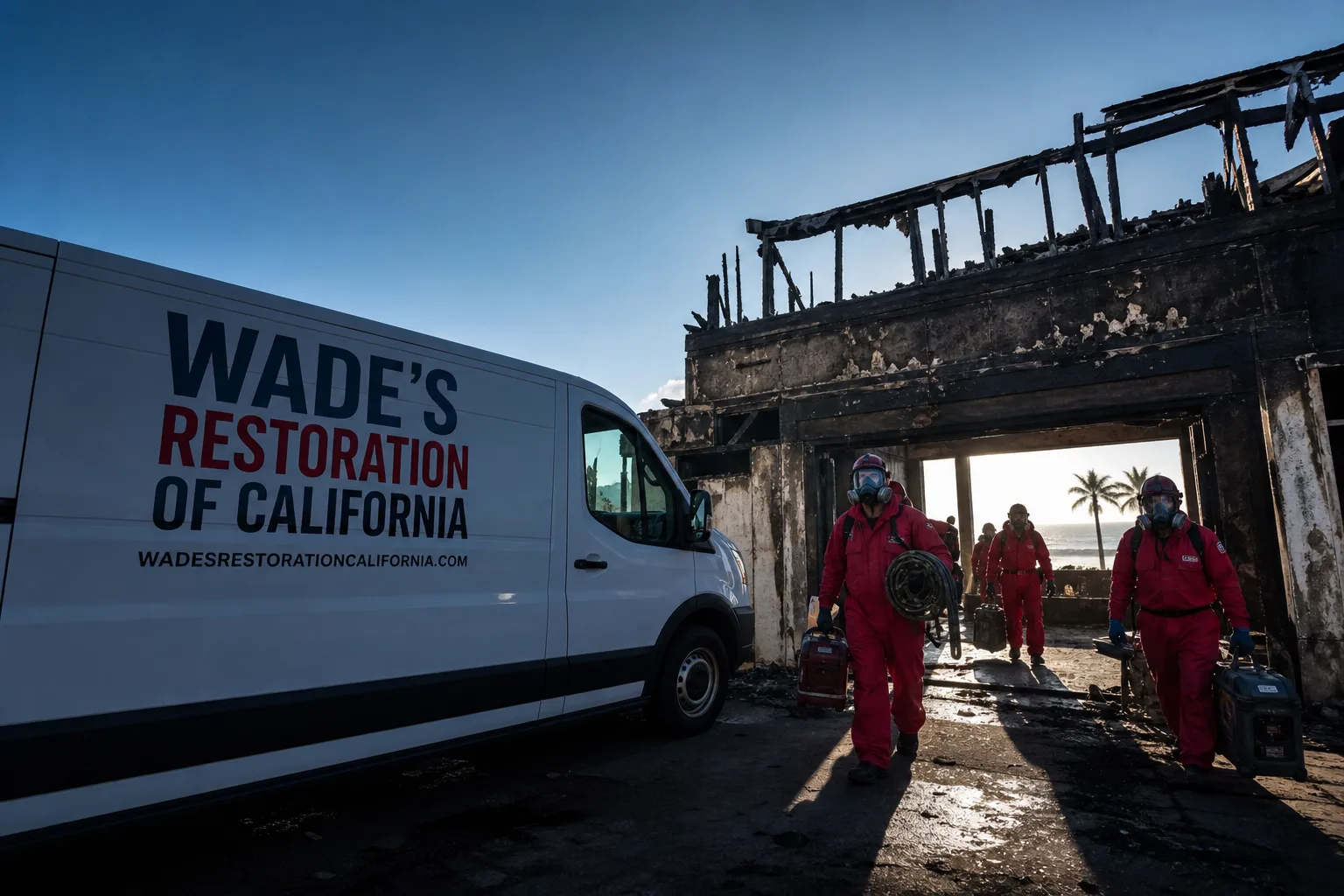
Wade Ferris founded this company in 2007 and still answers his own phone. In Koreatown, where a mold problem can involve a landlord, two tenants, and an HOA board all asking questions at once, that matters. You’re not getting a call center. You’re getting the owner, the same person whose name is on the truck and whose written 90-Day Done Right Promise goes on every mold job we contract.
Our Mold Remediation team works in Koreatown every week. We know the 90005 ZIP code, the alley-load buildings off Western and Normandie, the courtyard complexes along Wilshire and Olympic, and the dingbat walk-ups east of Crenshaw. We know where the parking choke points are. We know which buildings have original cast-iron supply lines that are nearing the end of their life. We show up with the right equipment staged for tight access, and we don’t waste your time figuring out the building while the mold keeps growing.
Every job gets daily moisture readings logged and handed to you in full at the end. That’s not standard in this trade. Most companies take a reading on day one and another on the last day. Wade takes readings every single day and you get the log. If mold comes back because we missed something, the 90-Day Done Right Promise means we come back and make it right. In writing.
Our Mold Remediation Services in Koreatown
We handle the full scope of mold work in Koreatown, from first inspection to final air clearance. Here’s what that looks like in your building.
Mold Inspection & Testing
In Koreatown’s older apartments, mold isn’t always visible. A musty smell in a 1930s courtyard unit off South Mariposa Avenue can be a colony growing inside the shared wall cavity, not in the room you’re standing in. We start with a visual inspection, then use moisture meters and thermal imaging to trace where water is coming from and where mold is actually living. If testing is needed, we collect air and surface samples and send them to an independent lab. You get the report, not a sales pitch.
Expect to pay $350-$650 for a full inspection with two or three air samples in Koreatown. If it turns out you don’t need remediation, that’s what we tell you. The free second opinion offer applies here too. Bring us a written estimate from another company and Wade will look it over. No charge for that.
Mold Removal
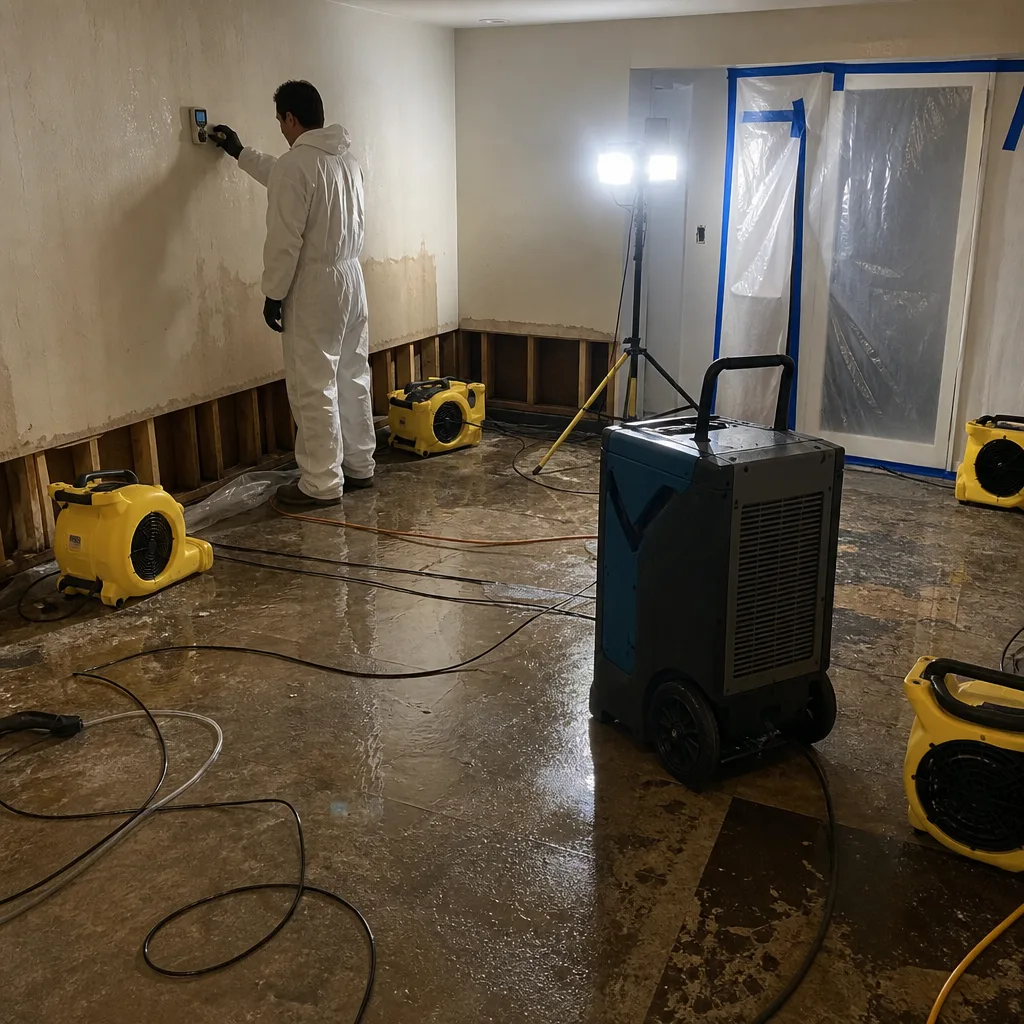
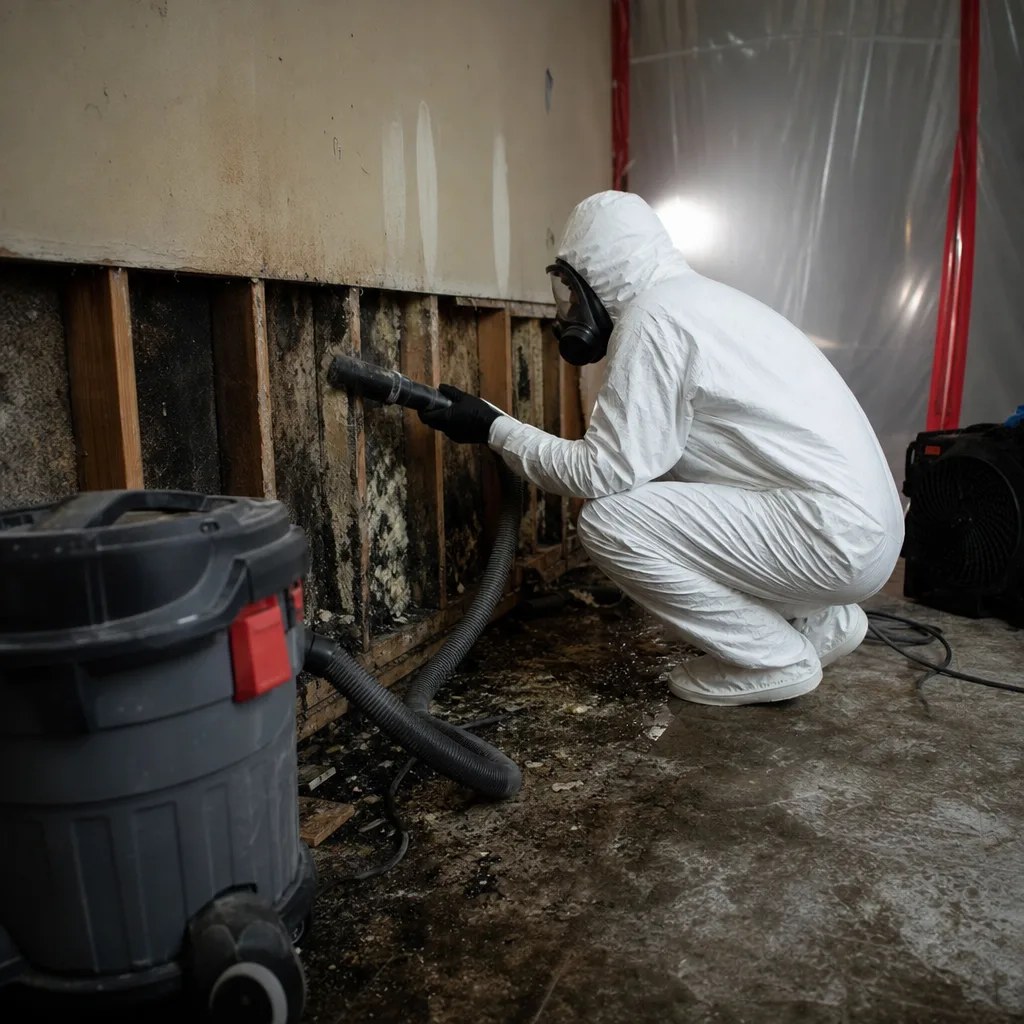
Removal in Koreatown almost always involves containment. In a tightly stacked courtyard building or a 1960s dingbat, opening a moldy wall without sealing the work area sends spores into the hallway, the unit next door, and the HVAC chase. We set up negative-air containment with HEPA-filtered exhaust, remove contaminated drywall and insulation, bag it, and seal it for disposal. Then we dry the framing to a documented moisture content before anything goes back up.
A standard single-room mold removal in Koreatown runs $1,800-$4,200. When the affected area spans multiple units, which happens often here, the cost scales with the square footage of containment and the number of air scrubbers running. We explain every line item before we start.
Black Mold Remediation
Black mold, or Stachybotrys, gets attention because it produces mycotoxins that can cause respiratory irritation, headaches, and chronic cough, especially in older adults and people with asthma or compromised immune systems. In Koreatown, black mold tends to show up where water has been sitting for weeks or months: behind a failed supply line in a wall cavity, under a warped subfloor, inside a ceiling below a bad roof drain.
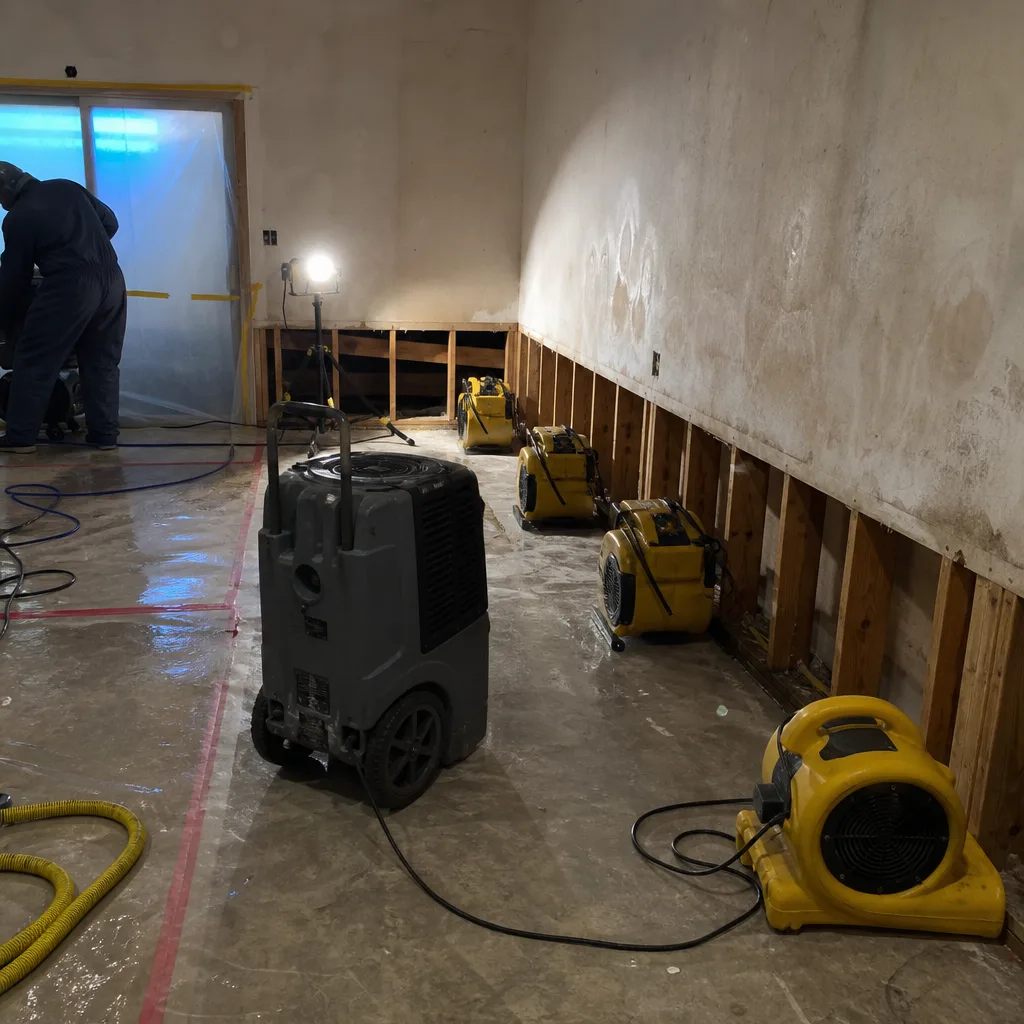
We treat black mold with full containment, HEPA air scrubbing, removal of porous materials that can’t be effectively cleaned, and application of an EPA-registered antimicrobial to the remaining structure. In a 1920s courtyard apartment on South Mariposa Avenue, our crew traced a hidden black mold colony behind the shared wall cavity of two units. A corroded galvanized supply line had been saturating the subfloor assembly for months. We dried the inter-unit framing with a Dri-Eaz LGR dehumidifier array and Injectidry floor mats, removed the contaminated drywall, treated the cavity, and rebuilt the wall so both tenants could breathe again.
Air Quality Restoration
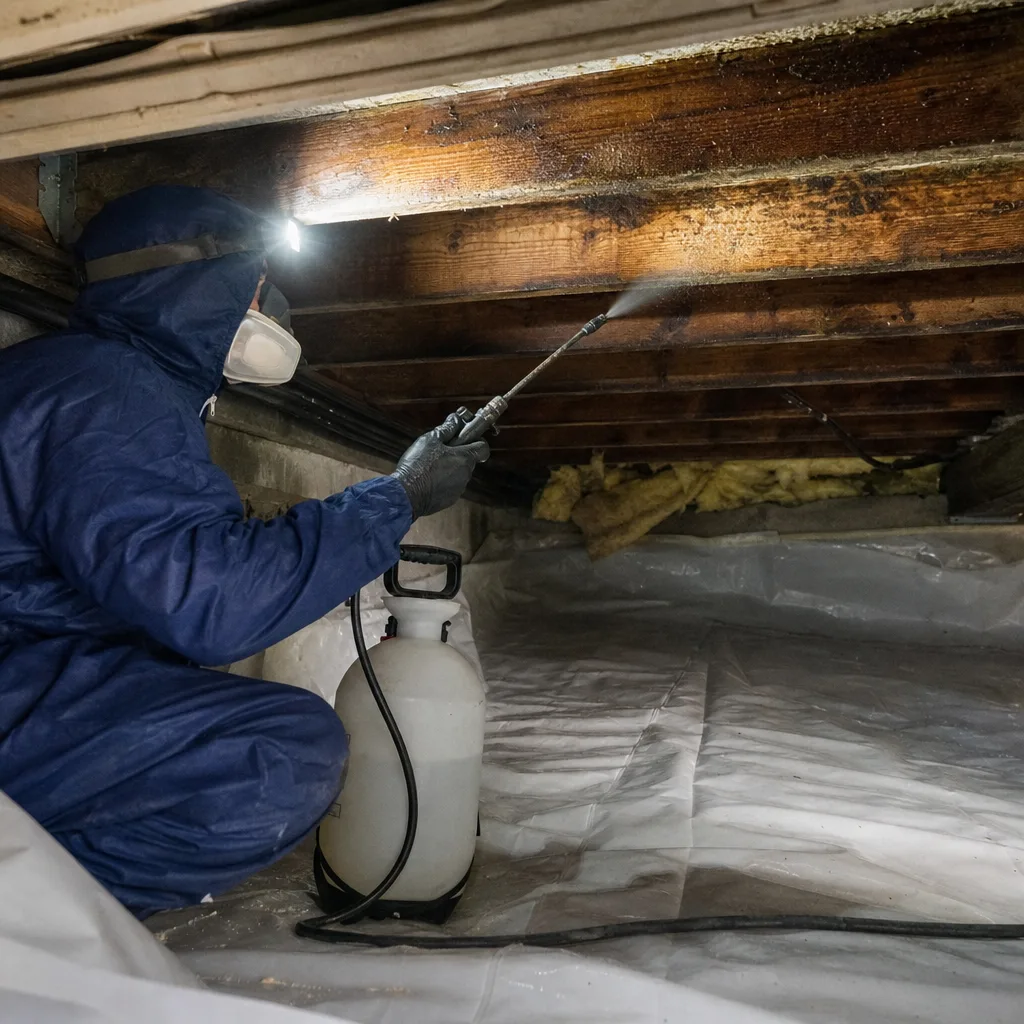
Mold spores don’t stay behind the drywall. They move through wall penetrations, electrical outlets, and the gaps around pipes. In a Koreatown multi-story building, they move up and down through the plumbing chases. After physical removal, we run HEPA air scrubbers to pull airborne spores out of the living space, then take clearance air samples to verify counts are back to normal outdoor levels. You get the lab results. If they’re not clean, we keep working until they are.
What happens when you call
- 1
A real person answersNo phone trees - you reach a local pro.
- 2
You get an upfront price rangeHonest numbers before anyone is dispatched.
- 3
A background-checked tech heads outLicensed & insured, dispatched right away.
- 4
You approve before work beginsNothing starts until you say go.
Trusted Brands We Service in Koreatown
We’re IICRC-certified and we run professional-grade equipment from Dri-Eaz and other manufacturers that restoration pros actually use, not homeowner-grade rentals. That matters in Koreatown because the job sites are tight. Alley-load buildings and units with no elevator mean we can’t roll in a full-size commercial dehumidifier on a cart. We stage smaller, high-output equipment in pieces and run it hard. The tools we use are built for exactly that kind of work.
Common Mold Remediation Problems We See in Koreatown Homes
- Slow leaks inside shared wall cavities. Koreatown’s 1920s-1940s courtyard apartments often have galvanized supply lines corroded by LA’s mineral-heavy water. They fail inside walls, saturate the framing between two units, and by the time anyone sees a stain, the mold has been growing for months. Remediation becomes a two-unit job instead of a one-room patch.
- Tight alley-load access and no parking. Many Koreatown buildings load equipment from an alley no wider than a car. Rolling a full drying setup through a courtyard and up a narrow stairwell takes time and planning. Companies that don’t know these buildings clog the alley, tick off the neighbors, and bring less drying capacity than the job needs.
- Post-seismic retrofit penetrations. LA’s soft-story retrofit ordinance pushed new steel moment frames and anchor bolts into older buildings. Those penetrations, if not properly sealed, become new entry points for water. We see moisture weeping through retrofit bolt holes and into framing, creating mold inside walls that were dry for decades before the retrofit.
- Flat roofs with clogged drains. Koreatown’s dingbat walk-ups and older apartment blocks sit through LA’s long dry season with flat-roof drains packed with leaves and debris. When winter rain hits, water ponds on the roof, finds a seam failure, and runs down through three or four stacked units. The mold shows up on a ceiling. The source is five floors up.
Pricing for Mold Remediation in Koreatown, CA
Here are honest numbers for Koreatown’s market. A basic inspection with moisture mapping runs $350-$650. A single-room mold removal with containment and clearance testing typically lands between $1,800 and $4,200. A multi-unit spread in a courtyard building, which is common here, runs $6,500-$14,000 depending on how many units share the affected wall, how much drywall has to come out, and how long the drying takes. Crawl space treatment in older Koreatown buildings, where the crawl access is often a 2-foot hatch under a stairwell, runs $1,200-$3,800. The big variable is always the same: how far the moisture traveled before you found it. We give you the full written scope before we start, and we don’t “find” extra work after opening a wall. Call (855) 915-0646 for a free estimate, and ask about the Senior & Veteran 10% discount if it applies to you.
We Also Serve Cities Near Koreatown
Our crews handle Mold Remediation in Koreatown and the neighborhoods around it every week. If you’re in Los Angeles, Echo Park, Silver Lake, or Hollywood and you’ve got a mold problem in an older building, that’s our work too. Same crew, same standards, same written promise.
Serving Koreatown, CA - Our Local Coverage Area
We’re based in the Koreatown area and know this community well. Use the map below to see our service coverage - if you’re nearby, we can almost certainly help.
FAQs - Mold Remediation in Koreatown
Because the buildings share wall cavities, floor plates, and sometimes plumbing chases between units. A slow leak in one unit’s wall can saturate the framing that another unit shares. By the time you see a stain, the mold has usually spread behind the drywall into the adjacent tenancy. That’s why containment and inter-unit inspection are standard on our Koreatown jobs. Call (855) 915-0646 and we’ll inspect the whole affected wall, not just the visible stain.
We inspect every retrofit penetration we can access, including anchor bolts, moment frame connections, and any new openings cut through the exterior. Those penetrations are common water entry points in Koreatown buildings that went through the mandatory seismic retrofit. If we find moisture at a penetration, we treat the mold and then seal the opening properly so the problem doesn’t come back. Most mold companies remove the mold and ignore the water source. We fix both.
Yes, in most cases. We run containment with HEPA-filtered negative air inside the affected unit, seal off the work area from hallways and neighboring doors, and stage equipment through the alley or back entrance instead of the main lobby. Residents in other units usually keep their normal routines. If the mold has spread into shared framing, we coordinate with the building manager to schedule work in the least disruptive sequence possible. We write that plan out before we start.
Clogged roof drains and dried-out membrane seams. LA goes months without rain, and during that time flat-roof drains fill with leaves and debris, and the roof membrane bakes and cracks. When a winter storm hits, water ponds and finds the seam failures. It runs down through stacked units, and if the leak isn’t fully stopped, the mold comes back after remediation. We don’t just treat the mold. We document where the water came from and tell you in writing what needs to be fixed so the job doesn’t repeat itself in six months.
Same day in almost every case. If you call before noon, we can usually have a technician on site that afternoon for an initial inspection and moisture assessment. If it’s an active leak feeding the mold, we can start emergency water extraction and drying the same day. In Koreatown, where a slow leak can be spreading into neighboring units while you wait, we treat that first call as urgent. Call (855) 915-0646 and talk to a live person, not a voicemail.
If you’re dealing with mold in a Koreatown apartment, dingbat, or courtyard building, don’t wait for it to spread. Call Wade’s Restoration of California at (855) 915-0646 for a free estimate. Ask for Wade. He’ll be the one answering.
Written by Wade Ferris, Owner at Wade’s Restoration of California, serving Koreatown and surrounding Los Angeles neighborhoods.