
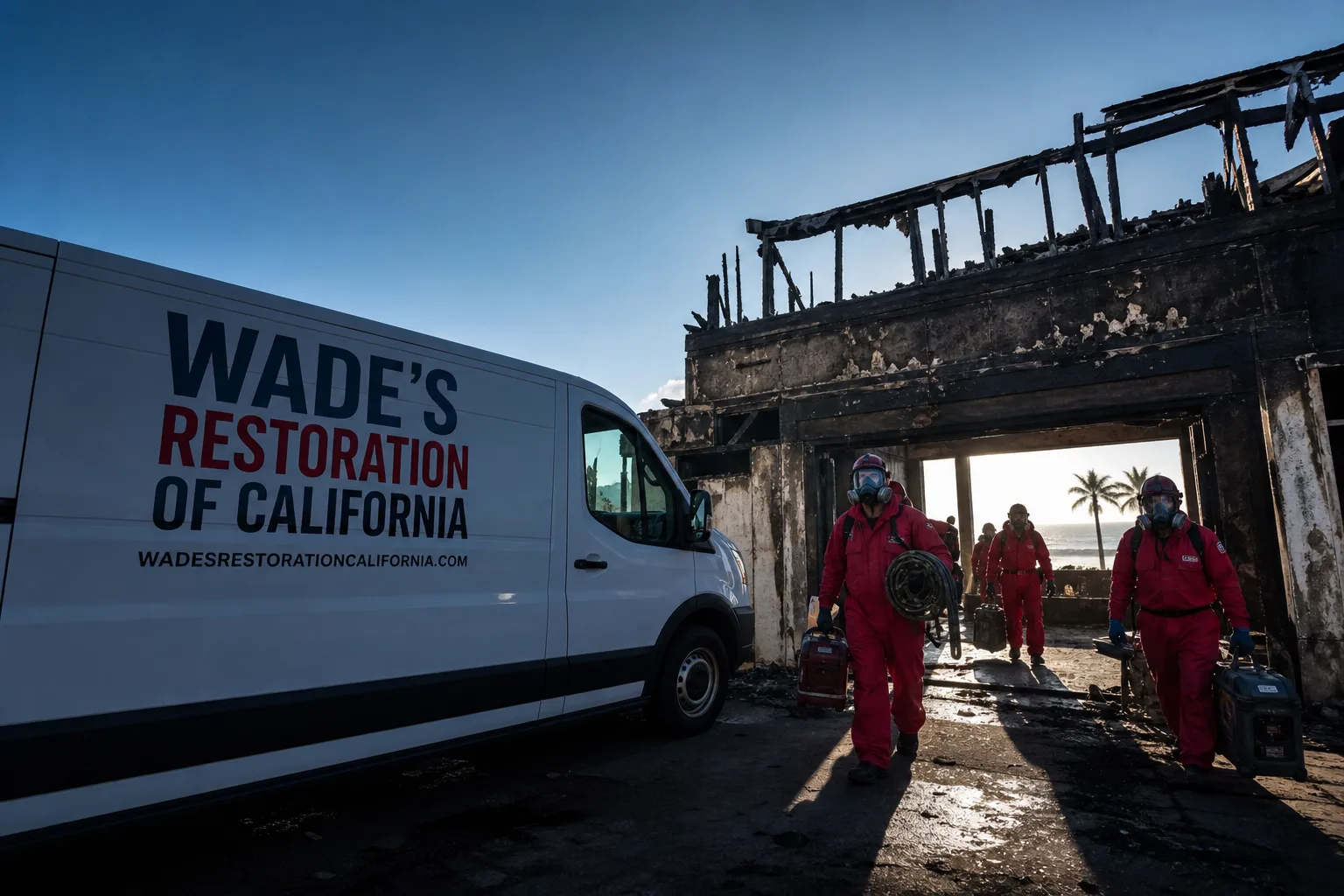
Fast, Reliable Mold Remediation Across Irvine
Mold remediation in Irvine usually costs between $1,800 and $6,500 for a standard contained area, and with a trained crew on the road, we can often have a scope written and containment up within 24 hours. If you’re smelling must in a Woodbridge townhome or seeing dark staining along a baseboard in University Park, the fastest way to stop it spreading through a shared wall cavity is to call (855) 915-0646 and get a live person, not a script. We work in Irvine every week, and we know what the attached construction here does when moisture gets behind stucco.
Wade Ferris answers his own phone. That’s not a slogan. If you call at 11 p.m. with water running into a wall cavity in Northwood, you’ll talk to Wade, and he’ll tell you straight whether you need extraction tonight or containment tomorrow. This city’s housing was built tight, village by village, and the way mold moves through it isn’t the way it moves through a 1960s ranch house in Tustin. We plan for that difference before we even park the truck.
Why Wade’s Restoration of California Is Irvine’s Preferred Mold Remediation Company
Irvine homeowners and HOA boards call us because we write down what we’re going to do, what it costs, and what happens if it doesn’t work, before we cut any drywall. The 90-Day Done Right Promise is stamped on every mold job we do here. If we remediate a wall cavity in a Westpark condo and the must comes back inside 90 days, Wade comes back and makes it right. No phone tree, no corporate escalation.
We’ve also sat through enough HOA meetings in this city to know how the politics work. When a supply line fails on the third floor of a Woodbridge building, the water doesn’t ask who owns the wall cavity it’s traveling through. It just moves. We deal with the HOA master policy and the individual unit-owner claim at the same time, and we give the homeowner a moisture log every single day, with actual readings, not a summary. Almost nobody else in this trade hands over that log. Ask any property manager in Irvine Ranch if that matters.
Wade’s crew wears uniforms, is background-checked, and uses Dri-Eaz and Phoenix equipment that actually pulls moisture out of slab-on-grade wall cavities, not just the air. IICRC-certified, RIA-affiliated, and IFA-recognized, same standards on a small crawl space job in Northwood as on a 12-unit remediation in the Spectrum area. And if you want a second opinion on a written estimate from another company, bring it to us. That part’s free. Always has been.
Our Mold Remediation Services in Irvine
Mold Inspection & Testing
A proper mold inspection in Irvine isn’t a swab and a handshake. It means moisture readings across floors, walls, and shared chase penetrations, plus air sampling that tells you whether the spore count in your unit is coming from your bathroom or from the neighbor’s. In attached construction, that distinction decides who pays. We test both spaces and give you numbers, not adjectives.
Mold Removal
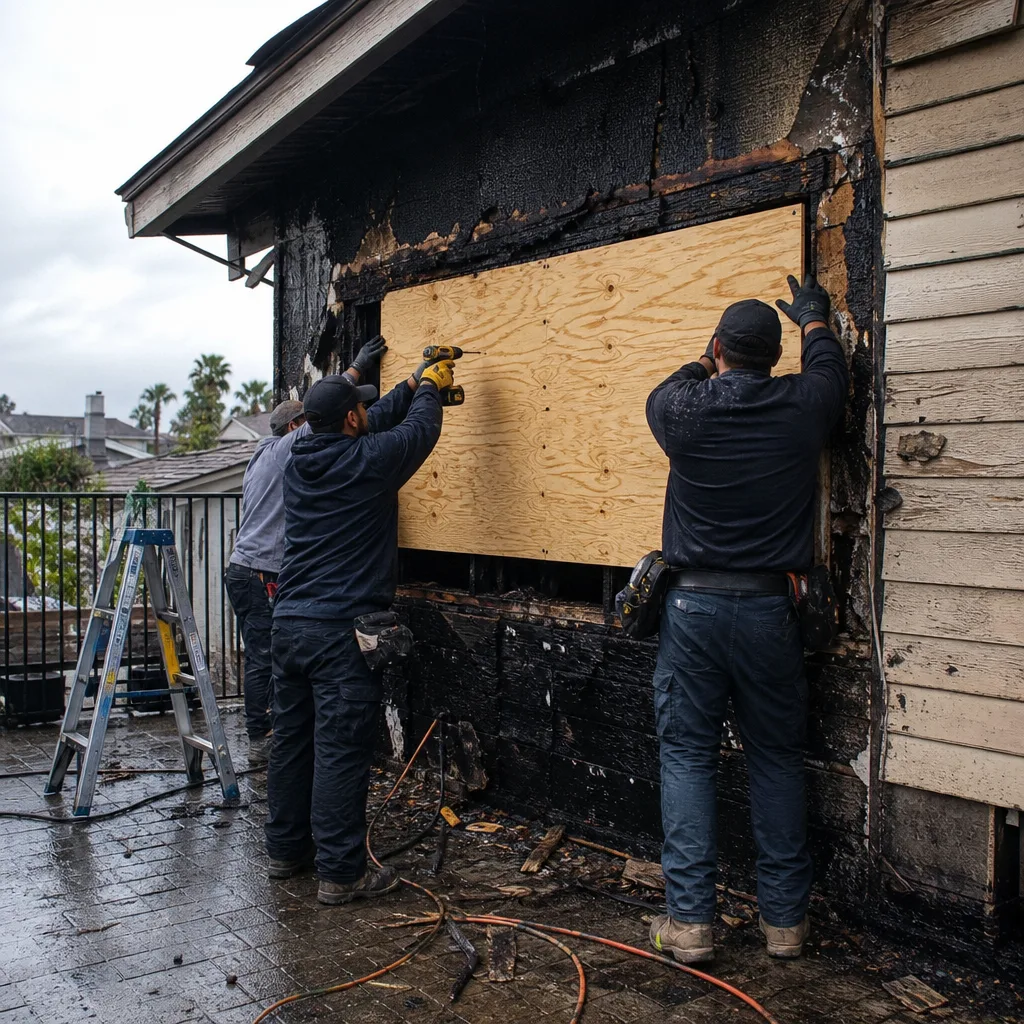
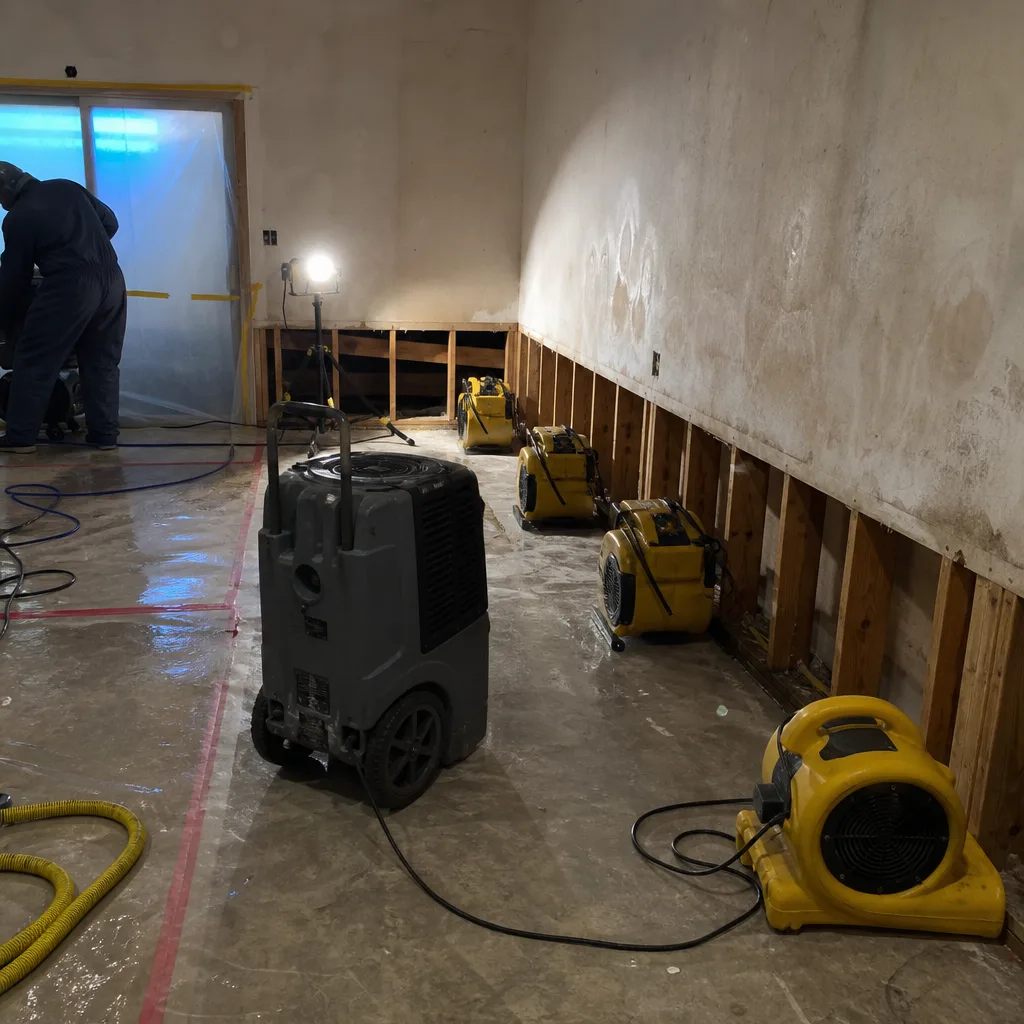
Removing mold from Irvine attached housing means setting up containment before you open the wall, because negative air pressure is the only thing stopping spores from sucking into the common hallway when you cut. We strip affected drywall, bag it inside the containment, HEPA-vac the studs, and run air scrubbers until clearance testing comes back clean. In a University Park townhome with a shared chase, we’ll often contain the neighbor’s unit too, just to be safe. Most companies won’t. We do, and we’ve never had an HOA argue with us about it afterward.
Black Mold Remediation
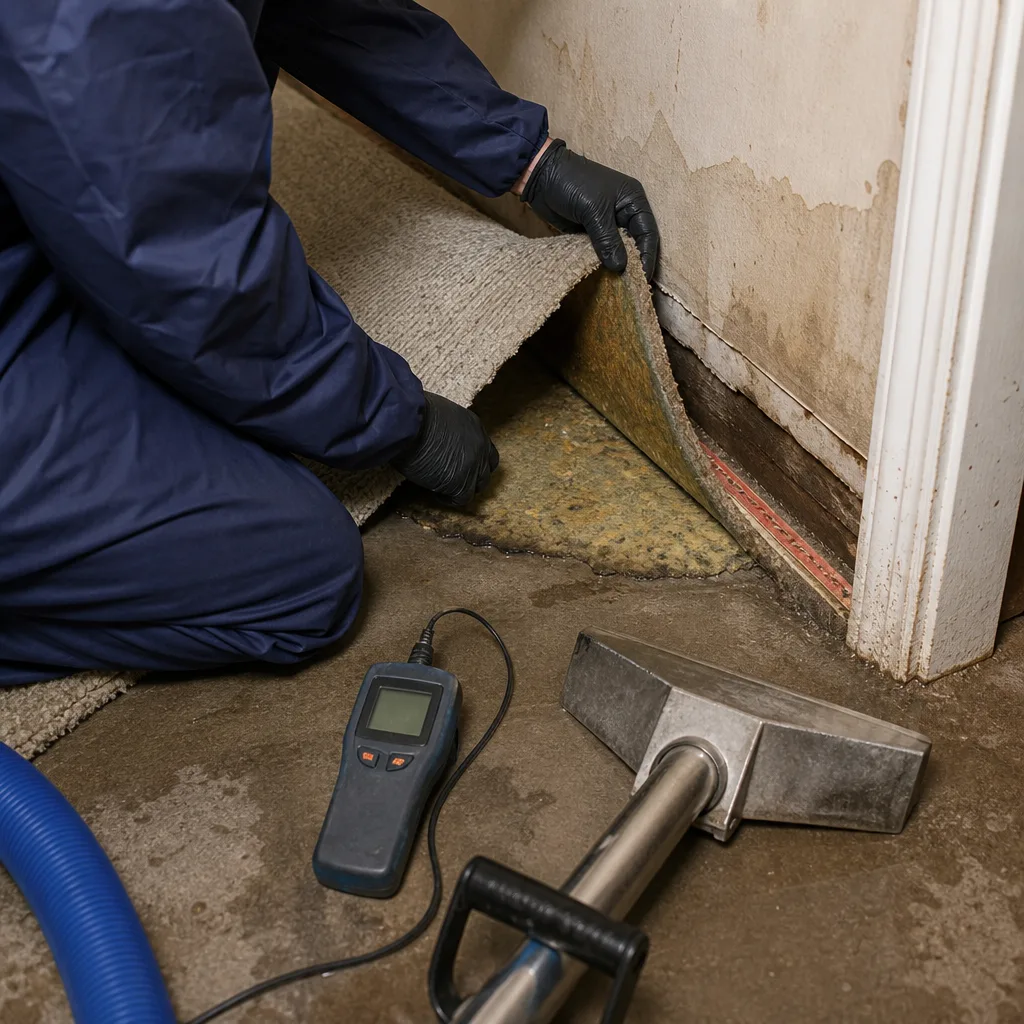
Stachybotrys, what people usually mean when they say black mold, likes the same thing every other mold likes: cellulose and water that never fully dried. In Irvine’s stucco-clad condos, that often means a supply-line drip that’s been running inside a wall cavity for months, invisible from the living space. By the time you see the staining, the colony has usually been established for weeks. We treat it the same way we’d treat any serious mold, full containment and clearance testing, but we also hunt for the water source first, because if we don’t fix the drip, the mold comes back in a season. That’s the part that separates a real remediation from a surface wipe.
Air Quality Restoration
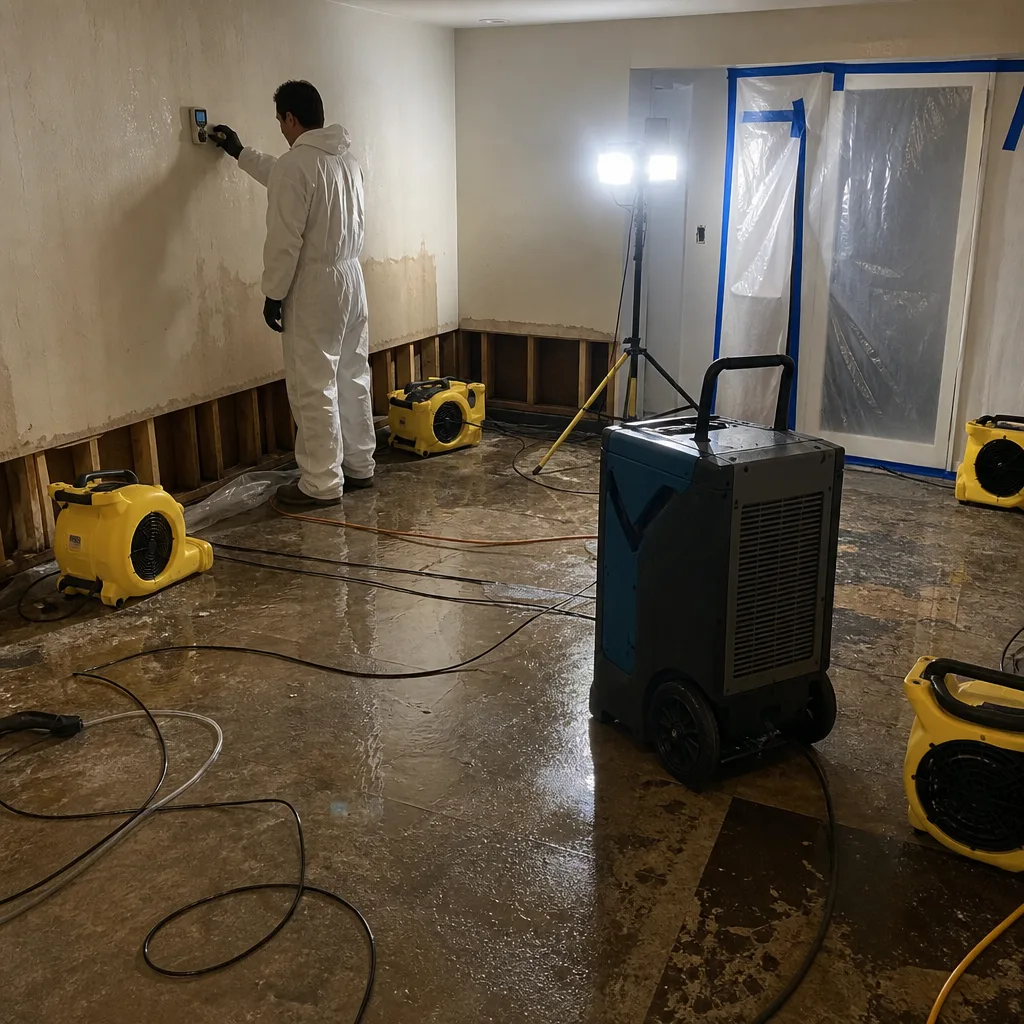
After a wildfire pushes smoke down through Stonegate and Portola Springs, or after a slow leak has fed mold inside a shared chase for months, the air in a home isn’t right even after you clean what you can see. We run HEPA air scrubbers and negative-air setups through the affected zones, then follow with post-remediation verification air sampling to prove the spore counts dropped. In a stacked Irvine building, we’ll often pull air samples from the unit above and below the source unit, because spores travel through mechanical chases, not through drywall. If your neighbor’s upper-floor bathroom leak left you with a musty bedroom, the problem may have literally come down the wall. We test for that.
What happens when you call
- 1
A real person answersNo phone trees - you reach a local pro.
- 2
You get an upfront price rangeHonest numbers before anyone is dispatched.
- 3
A background-checked tech heads outLicensed & insured, dispatched right away.
- 4
You approve before work beginsNothing starts until you say go.
Trusted Brands We Service in Irvine
We’re IICRC-certified and RIA-affiliated, and the equipment we run in Irvine comes from Dri-Eaz and Phoenix, the same brands commercial remediation firms use on hospital jobs. That matters in a city with this much attached construction, because a consumer-grade dehumidifier from a big-box store will not pull water out of a slab-on-grade wall cavity. It just won’t. We stock enough of the right equipment to handle a multi-unit job in Woodbridge or a single crawl space in Northwood without waiting on a supplier, and parts and consumables get to Irvine same-day from our regular suppliers, which means your containment doesn’t sit open over a weekend.
Common Mold Remediation Problems We See in Irvine Homes
- HOA master policy disputes delaying containment. When a leak in one Woodbridge unit migrates into the neighboring unit’s ceiling cavity, the HOA and the two unit owners sometimes spend two weeks arguing about who pays before anyone opens a wall. Meanwhile the mold grows. We write a scope that assigns work by physical location, not by policy, so remediation starts while the insurance argument happens behind the scenes.
- Mold hiding behind stucco cladding on 1970s and 1980s wood-frame condos. The Irvine Company built University Park and Westpark (92612, 92614) with stucco over wood frame, and when the paper backing fails, moisture sits between the cladding and the sheathing for months. You can’t see it from the outside. You usually find it when the neighbors below complain about a musty smell.
- Recurring crawl space and wall-cavity moisture after winter rain. Irvine’s drainage was matched to a low-rainfall climate, so when the heavy storms hit, water shears into slab-on-grade foundations and shallow crawl spaces. Standard drying pulls surface moisture. It does not address a saturated slab edge. We take daily moisture readings for the full duration of the job and hand you the log at the end.
- Smoke and mold spores migrating through shared HVAC chases. In attached complexes, especially older villages, air-handling chases connect floors and sometimes entire wings. A unit-level mold problem becomes a multi-unit problem through those chases. We test adjacent units even when nobody has complained yet, because by the time a neighbor smells it, the colony has usually crossed over.
Pricing for Mold Remediation in Irvine, CA
A contained mold remediation in a single Irvine bathroom or wall cavity typically runs $1,800 to $3,500. A multi-room job with shared-chase involvement in a Woodbridge or University Park townhome, where we’re containing in two units and coordinating with an HOA, often lands between $4,500 and $8,000. Whole-unit remediation after a serious supply-line failure across floors can run $12,000 to $25,000, depending on how far the moisture tracked through the slab and shared walls.
What moves the number: whether we’re testing at the start, how many units are involved, whether the HOA requires third-party clearance testing, and whether we’re pulling the stucco or only the interior drywall. We give you a written scope with line-item pricing before we start, and we never charge a trip fee inside Irvine. Wade will come look at it, walk you through what he sees, and write it up. If you’ve already got an estimate from another company, bring it along, a second opinion is free. Call (855) 915-0646.
We Also Serve Cities Near Irvine
We work throughout central Orange County, from the older attached villages of Irvine up through Tustin and North Tustin, and down toward Aliso Viejo and Santa Ana. Same crew, same written scope, same 90-Day Done Right Promise on every job. If you’re in one of the neighboring cities and dealing with a moisture problem that’s crossing walls, call and Wade will tell you straight what you’re looking at.
Serving Irvine, CA - Our Local Coverage Area
We’re based in the Irvine area and know this community well. Use the map below to see our service coverage - if you’re nearby, we can almost certainly help.
FAQs - Mold Remediation in Irvine
The originating unit owner’s policy usually pays for the source of the water, and each affected unit owner’s own policy covers their own unit’s remediation. What complicates Irvine jobs is the HOA master policy, which often covers the common wall and the mechanical chase itself, and the three policies do not always agree on boundaries. We write our scopes by physical location and hand each party exactly what their policy needs, so the work starts while the adjusters sort out the money. Call (855) 915-0646 and we’ll walk you through how we’d scope it for your specific building.
Because the water source was never actually found. In a 1970s stucco-clad wood-frame building, the moisture can be coming from a pinhole leak in an aging copper line inside a shared wall, from a failed paper backing behind the exterior stucco, or from a slab edge that gets wet every winter. A crew that only cleans the visible mold and repaints hasn’t fixed any of those. We find the water source first, document it with moisture readings, fix it, then remediate. That’s the only sequence that holds up over time.
Yes. Wildfire smoke drives fine particulates and ash into wall cavities through vents and chases, and those particles give mold spores something to cling to and a new food source. In eastern Irvine ZIP codes like 92602 and 92618, where the Silverado Fire forced evacuations in 2020, we’ve seen units that had a dormant moisture problem in a shared chase turn into active mold growth after a smoke event, because the cavity suddenly had both moisture and an influx of organic debris. If you had smoke intrusion in 2020 and now you’re smelling must, the two are likely connected.
Water moves sideways through a slab, not just down. When a supply line fails in a first-floor Irvine unit, the water runs into the wall cavity, but it also tracks along the concrete and wicks up into drywall in rooms with no visible plumbing. You can’t see it, and a quick drying job won’t catch it. We take moisture readings across the slab surface and along the bottom plates of every adjacent wall, not just the one where the leak happened, and we run drying until the numbers actually drop. That’s why we leave the homeowner a daily log of readings instead of just telling them it’s dry.
Because in attached construction, especially the older Woodbridge and University Park villages, air moves through shared mechanical chases, not just through your front door. A bathroom exhaust fan in one unit can pull air from the unit below through an unsealed chase penetration. If that lower unit has mold, the spores ride along. We test adjacent units when we find elevated counts that don’t match the visible moisture in the unit we were called to, and we’ve found source colonies two floors away on more than one occasion. The building has to be looked at as a connected system, not as single units.
If you’re smelling must, seeing staining, or dealing with an HOA that’s stalling on a known leak, call Wade at (855) 915-0646. He’ll answer, talk through what you’re seeing, and tell you honestly whether you need a full remediation or a targeted fix. Estimates are free, and the second-opinion offer stands whether the first estimate came from us or anyone else.
Written by Wade Ferris, Owner at Wade’s Restoration of California.