
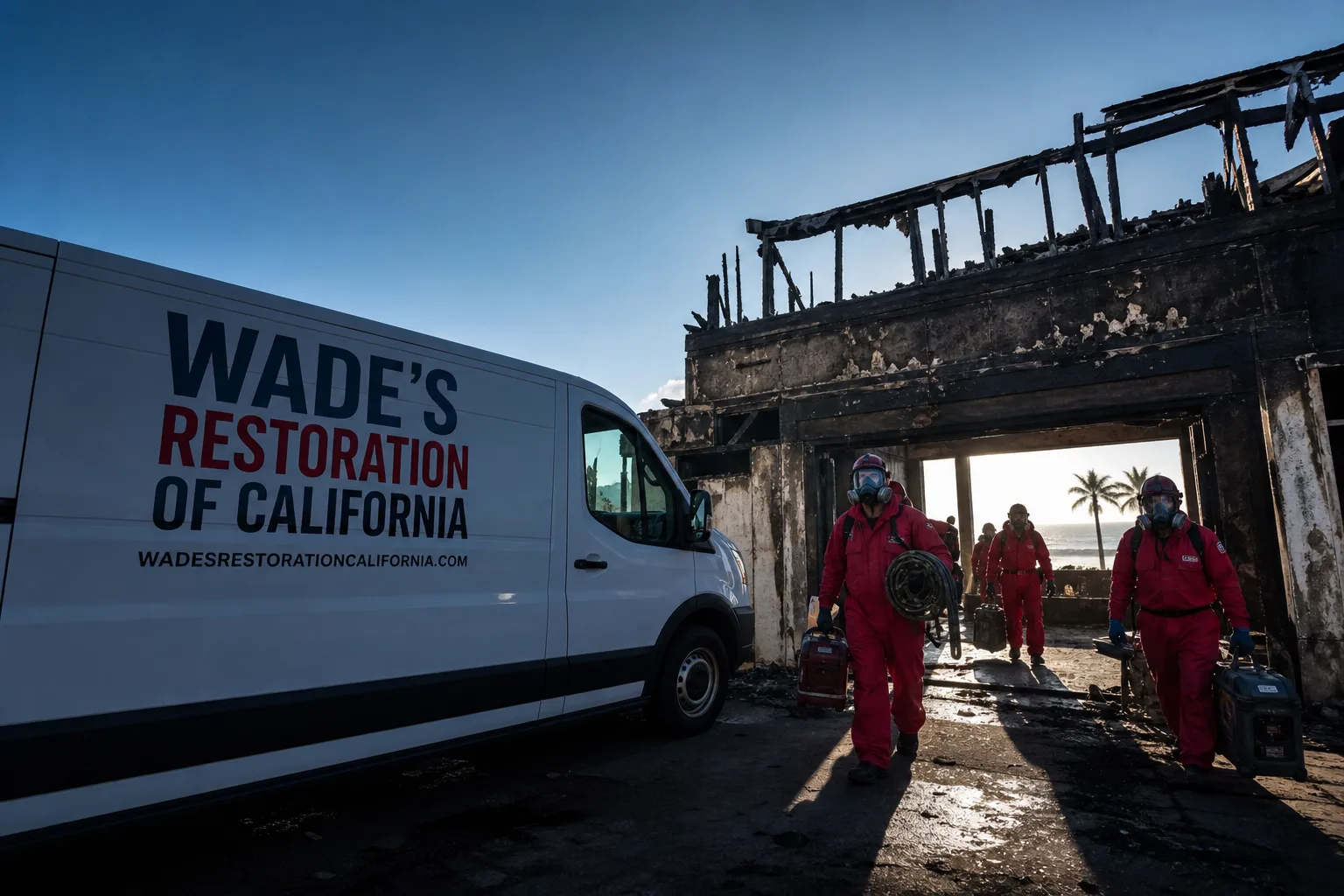
Fast, Reliable Mold Remediation Across Huntington Park
Mold remediation in Huntington Park typically costs $1,800-$6,500 depending on how far the colony has spread through walls, subfloor, or crawl space, and most jobs in the 90255 ZIP can be started within 24 hours of inspection. We know the 1920s-1940s wood-frame stucco bungalows that dominate this city, and we know how fast mold moves once it gets behind original plaster walls. If you can smell must or see discoloration spreading, call us at (855) 915-0646 and Wade Ferris will answer himself. He’s been doing this since 2007, and he’s not going to hand you off to a call center.
Key Takeaways for Huntington Park Homeowners
- Hidden mold behind original plaster walls in Huntington Park’s pre-WWII bungalows is the single most common finding on our inspection calls.
- Unpermitted rear units and converted garages create a real complication: a mold remediation permit can trigger a city inspector stop-work notice on the whole property.
- Our moisture detection equipment finds mold before you can see it, which matters when shared walls run through informally divided rentals.
- Every job in Huntington Park comes with Wade’s 90-Day Done Right Promise in writing, and the full moisture log gets handed to you at the end.
Why Wade’s Restoration of California Is Huntington Park’s Preferred Mold Remediation Company
Huntington Park is dense. It’s one of the most tightly packed small cities in the United States, and in a place where homes sit inches apart, a mold problem on your side of the property line has a way of becoming a mold problem on your neighbor’s side too. We work here regularly, off Pacific Boulevard, along Florence and Gage, through the neighborhoods around Salt Lake Park and the 710 corridor. When you call, you get a live person, and that person is very often Wade himself. No voicemail. No answering service. He has answered his own phone since 2007.
Wade’s crew shows up in uniform, background-checked, and carrying professional-grade equipment: Dri-Eaz and Phoenix dehumidifiers, HEPA air scrubbers, and the moisture meters that let us chart exactly where the water went, not just where the stain is. We write the scope before we start, hold to it, and your 90-Day Done Right Promise is in writing on the contract. If something isn’t right, Wade comes back. One call, no argument.
We’re also the company that deals with your insurance adjuster directly, so you’re not the one stuck relaying information between two sides. In a city with as many multi-unit conversions as Huntington Park, that adjuster coordination gets complicated, and it’s a big part of the reason homeowners here call us first.
And yes, we honor the standing offers everyone asks about: no trip charge inside the county, a free second opinion on any written estimate, $40 off any repair over $200, and a permanent 10% discount for seniors and veterans. Ask anyone on your street. This is a small town, and Wade runs into people again on Saturday at the hardware store.
Our Mold Remediation Services in Huntington Park
Mold Inspection & Testing
In Huntington Park, the question isn’t usually if there’s mold. It’s where and how far. The original plaster walls on these 1920s-1940s bungalows hide moisture for years before you see a stain. We test the air, swab suspected colonies, and take moisture readings throughout the structure, not just in the room where you smelled it. If you’re buying or selling a converted property near Gage or Florence, this inspection is the difference between closing and a surprise.
Mold Removal
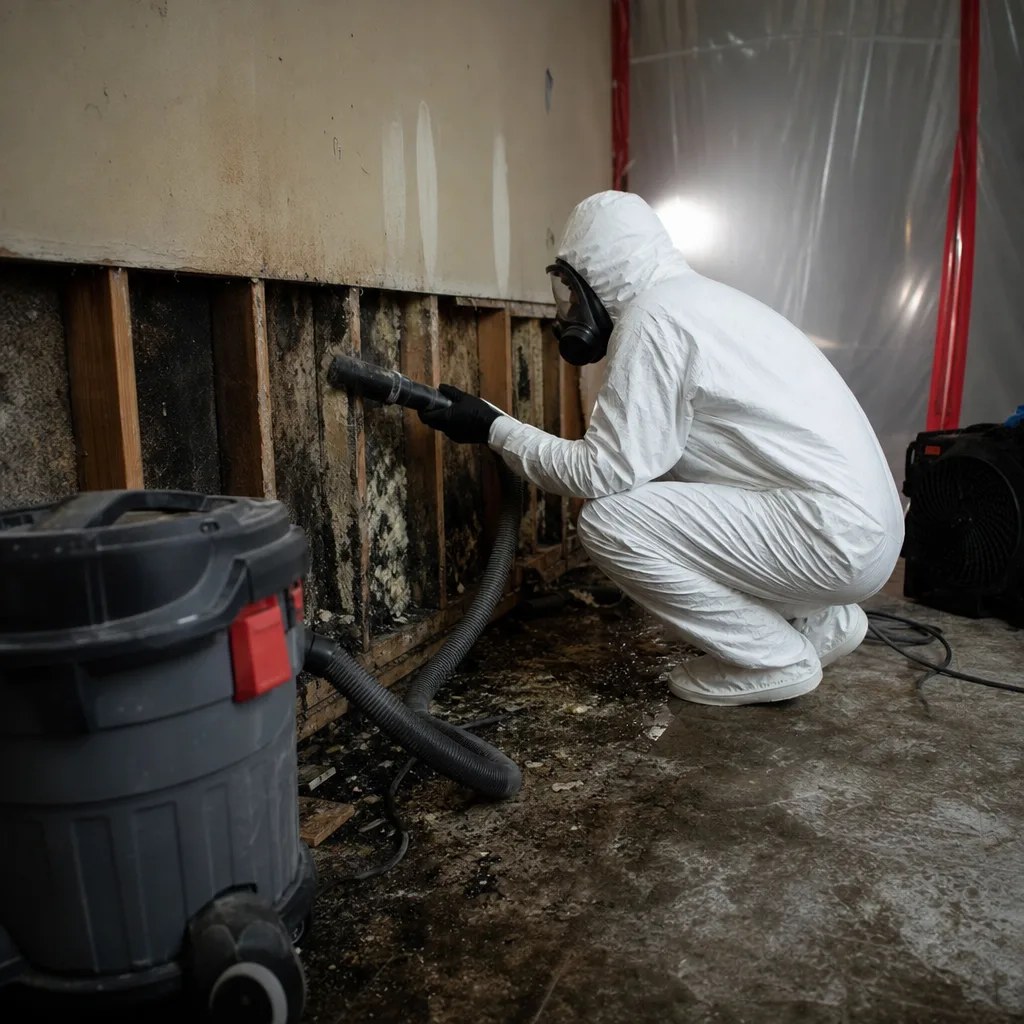
We remove mold by removing the moisture that feeds it. That means cutting out affected drywall or plaster, treating the framing, and running Dri-Eaz and Phoenix air movers and dehumidifiers until the readings say the cavity is dry, not just when the stain is gone. In Huntington Park bungalows with shared wall cavities, containment is critical. We seal off the work area and run HEPA filtration so spores don’t spread to the converted rental next door.
Black Mold Remediation
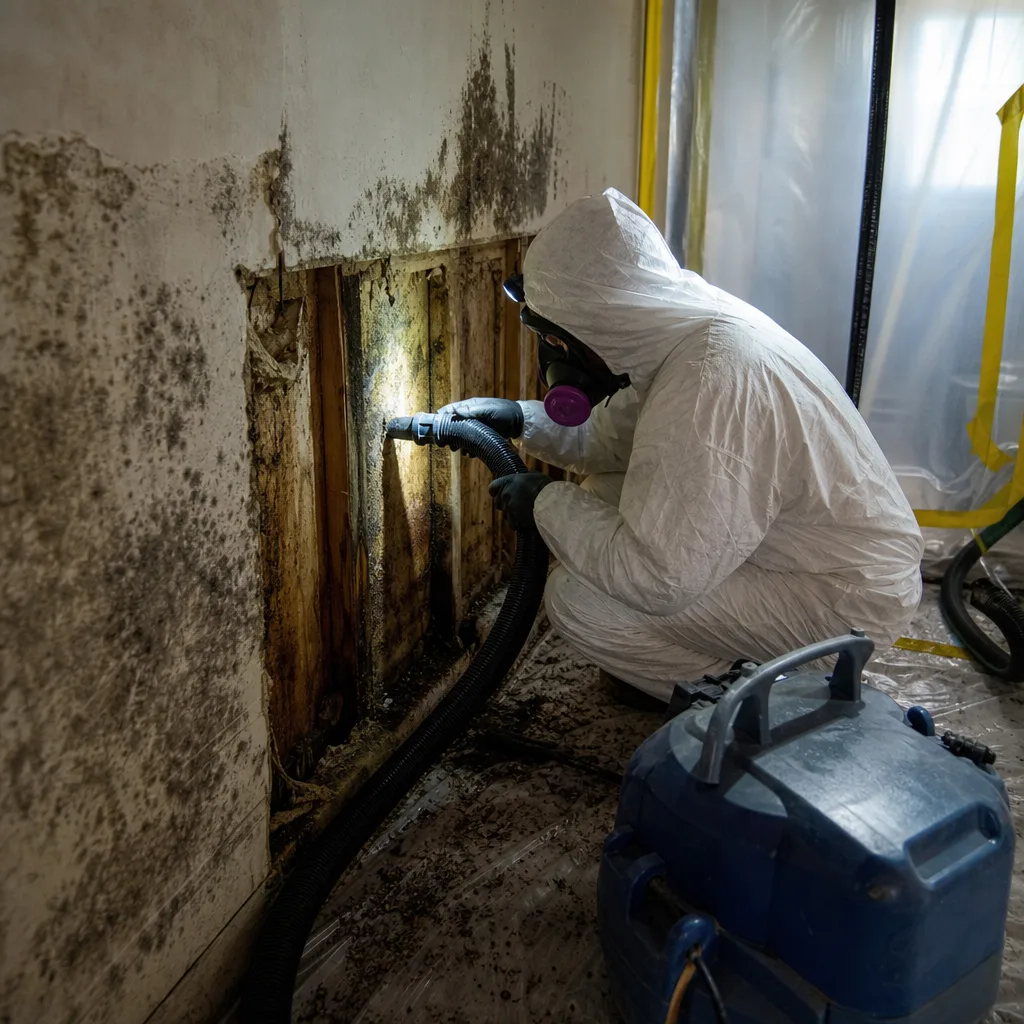
Black mold, Stachybotrys chartarum, is the one that scares people, and it deserves respect. In Huntington Park we find it most often behind original plaster walls after a slow leak from aging galvanized supply lines, leaks that never got noticed because the water wicked into wood lath and sat there for months. We treat it with full containment, HEPA vacuuming, antimicrobial treatment, and post-remediation air verification. You will see the lab report, not just hear that it’s done.
Air Quality Restoration
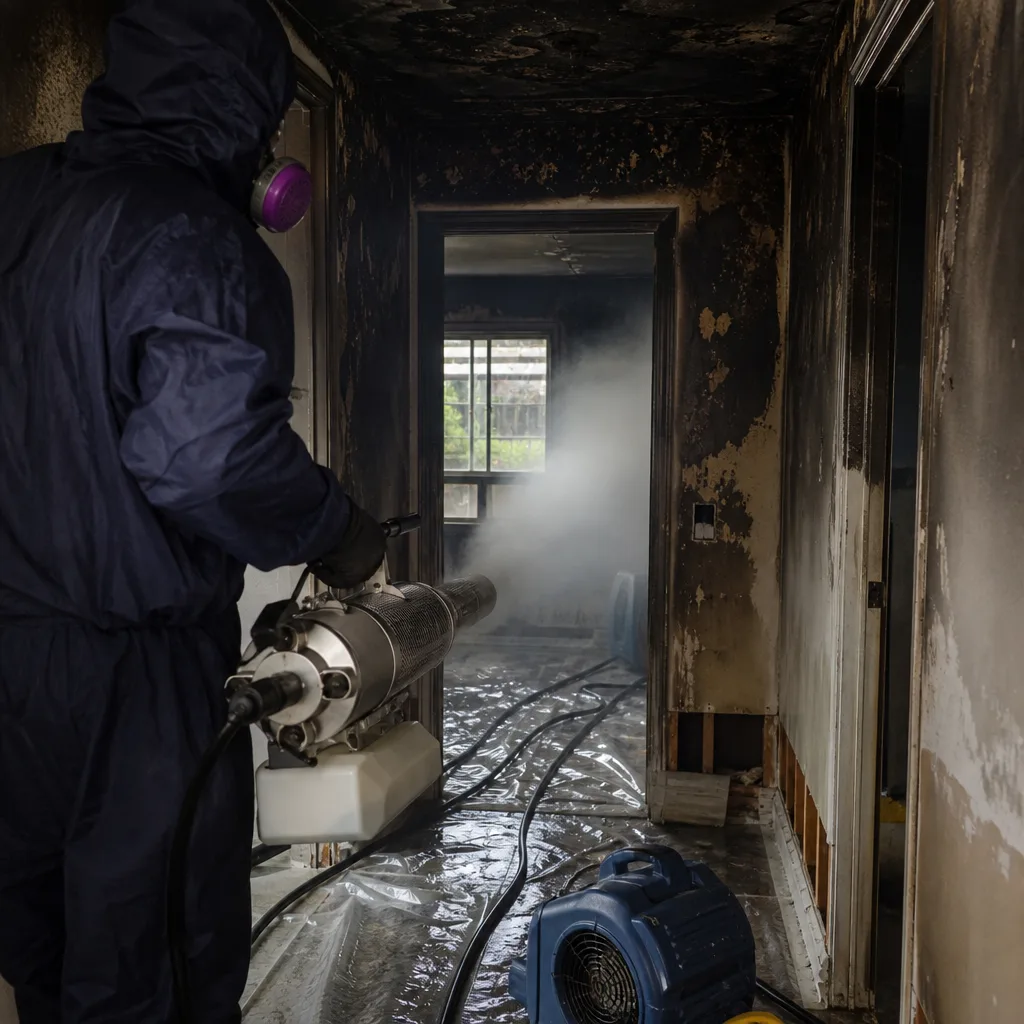
Mold spores in the air are the part you can’t see and the part that keeps making people sick. After remediation we run HEPA air scrubbers to pull spores out of the air, and we test before we leave to confirm the counts have dropped. This matters more in Huntington Park than in newer cities because these older homes hold dust, old building materials, and spores in original ductwork, around windows, and in the crawl spaces under those flat rooflines.
What happens when you call
- 1
A real person answersNo phone trees - you reach a local pro.
- 2
You get an upfront price rangeHonest numbers before anyone is dispatched.
- 3
A background-checked tech heads outLicensed & insured, dispatched right away.
- 4
You approve before work beginsNothing starts until you say go.
How Huntington Park’s Housing Stock Causes Mold Problems
Huntington Park sits flat and low in the LA Basin, where atmospheric river storms dump a lot of rain in a short window. The storm drains are older than most of the people living here, and when they back up, water finds the lowest point, which is often your foundation or under your house. Between storms, the long dry spells bake roofing membranes and window caulking until they crack. So when the rain finally arrives, it doesn’t creep in. It comes in fast, and it feeds mold almost immediately in the warm, tight wall cavities of these old bungalows.
The houses themselves are part of the problem. Pre-WWII wood-frame stucco bungalows were built with no vapor barriers and very little insulation. The walls breathe, which sounds nice until you realize that means moisture moves freely through them. Original low-pitch and flat rooflines pond water. Galvanized supply lines from the 1940s and 1950s have corroded from the inside and burst without warning. When they do, water travels down through the framing into walls that have been hiding previous damage for decades.
And here is what makes Huntington Park genuinely different from almost anywhere else in Los Angeles County: a huge share of these bungalows have been informally converted into multi-unit rentals. The rear unit, the garage someone turned into a studio, the side bedroom added in the 1970s. Most of those were never permitted. When water or mold moves through shared walls into an unpermitted unit, the remediation scope gets bigger, and pulling a city permit can trigger an inspector’s notice that the conversion itself was never legal. The property owner then has to choose between legalizing the whole addition mid-job, which costs thousands and can stall the remediation for weeks, or removing it. That is a Huntington Park problem in a way it simply isn’t in South Gate or Downey, where the housing stock skews newer and the conversions are less common.
One job that stays with us: a bungalow near Gage Avenue, original 1920s stucco, water heater line let go and soaked the wall behind it. We opened that wall and found black mold feeding on moisture that had traveled through the framing of an unpermitted rear-unit conversion. We set up Dri-Eaz HEPA filtration and containment, then coordinated with the owner and the city inspector when the permit check flagged the unpermitted conversion. It extended the timeline, but every affected unit got remediated before we rebuilt anything. That is how you do this work in Huntington Park.
Trusted Brands We Service in Huntington Park
We run Dri-Eaz and Phoenix equipment on every Huntington Park job because those are the machines that actually dry wood framing behind plaster, not just the surface. Our techs carry IICRC certifications, and our shop stays current with RIA and IFA standards. We stock the filters, sampling cartridges, and antimicrobials we use most often in this city, so we’re not waiting on a shipment when your wall has been open for two days. If you need Mold Remediation done right, you want the crew that walks in with the right equipment, not the cheapest rental from the home center.
Common Mold Remediation Problems We See in Huntington Park Homes
- Hidden mold behind original plaster walls. The lath-and-plaster assemblies in these 1920s-1940s bungalows hide moisture for years. By the time a stain shows on the surface, the colony is usually well established behind it.
- Shared wall cavities spreading contamination. In homes divided into informal rentals, a leak in one unit commonly feeds mold growth that travels through shared framing into the adjacent unit, which means the remediation area is almost always larger than the homeowner expected.
- Flat rooflines and ponding water. Original low-pitch and flat roofs pond water after Huntington Park’s intense rain events, and the water finds its way into walls and ceilings before anyone notices a drip inside.
- Permit complications from unpermitted conversions. We have seen a mold remediation project stall for weeks when the city inspector, called out for a routine permit, flagged the converted garage or rear unit. This is the single biggest local variable in scope and timeline for Huntington Park remediation work.
Pricing for Mold Remediation in Huntington Park, CA
For a contained mold removal in a single room of a Huntington Park bungalow, expect to pay between $1,800 and $3,200. If the mold has moved through a shared wall cavity or into a crawl space, a typical full remediation runs $4,000 to $6,500, and when the property includes an unpermitted converted unit that triggers additional permitting work, the total can exceed $8,500. These are real ranges we have billed in this ZIP code, not national averages.
What drives cost here specifically: the age of the plaster, whether lath needs to be removed or can be treated, how many wall cavities are involved, and whether the city requires the unpermitted conversion to be addressed before we can close the permit. A basic inspection with air sampling and moisture mapping runs $250-$500, and it is the cheapest insurance you can buy against a five-figure surprise.
Call (855) 915-0646 for a real number on your house. The estimate is free. No trip charge inside the county. And if you already have a written estimate from another outfit, we will give you a second opinion for free too.
We Also Serve Cities Near Huntington Park
Our Mold Remediation in Huntington Park team also runs calls into Walnut Park, Bell, Cudahy, and Maywood. Same crew, same equipment, same 90-Day Done Right Promise. If you’re on the edge of 90255 in any direction, call us at (855) 915-0646 and Wade will tell you how soon he can be there.
Serving Huntington Park, CA - Our Local Coverage Area
We’re based in the Huntington Park area and know this community well. Use the map below to see our service coverage - if you’re nearby, we can almost certainly help.
FAQs - Mold Remediation in Huntington Park
They affect both significantly. When mold remediation requires a city permit, which it usually does for structural work, the inspector may flag the unpermitted conversion during the permit check. That can force the owner to choose between legalizing the addition mid-project, which takes time and money, or removing it entirely. In Huntington Park this is common enough that we factor permitting risk into every multi-unit bungalow estimate. Call (855) 915-0646 and we will walk through what your specific property is likely to face before you commit to anything.
Hidden mold is common behind original plaster because these walls have no moisture barrier, and the lath behind the plaster is bare wood that absorbs water and holds it. Galvanized supply lines from the era have been corroding for 80 years, and slow pinhole leaks can drip inside a wall for months without a visible stain. By the time you see discoloration, the cavity is likely fully colonized. We use moisture meters and thermal imaging to find these colonies before opening the wall, which keeps the containment area smaller and the job cheaper.
Yes. Flat and low-pitch rooflines pond water during heavy rain, and that water sits against old flashing and cracked membrane seams until it finds a path into the wall or ceiling cavity. In newer cities with pitched roofs, water sheds faster. Here, the water lingers, and lingering water is what turns a leak into a mold colony. We inspect the roofline as part of every Huntington Park mold job, because if we remediate the wall but the roof keeps leaking, we haven’t solved anything.
Yes. When the storm drain system backs up during an atmospheric river event, water pools at street level, and the geography of Huntington Park is flat enough that water pushes against foundations and under crawl spaces before it drains away. Homes with original foundations have cracks, and those cracks become water entry points. The water that gets under the house evaporates slowly in the warm LA Basin climate, raising humidity in the crawl space and feeding mold growth on floor joists. Crawl space treatment and moisture control are not optional here; they are the difference between recurring mold and a one-time fix. Call us to have the crawl space evaluated, (855) 915-0646.
Know that the remediation work itself may be the least complicated part of the project. Landlords with informally converted rentals should understand that pulling a mold remediation permit can trigger a city inspector’s review of the entire property, and unpermitted conversions may come to light. We have worked through this exact scenario many times in Huntington Park. Wade coordinates directly with the city, with your insurance adjuster, and with you, and his crew works in occupied multi-unit buildings regularly. The earlier you bring us in, the more options you have. Call (855) 915-0646 and talk to Wade directly, day or night.
Written by Wade Ferris, Owner at Wade’s Restoration of California, serving Huntington Park since 2007.