
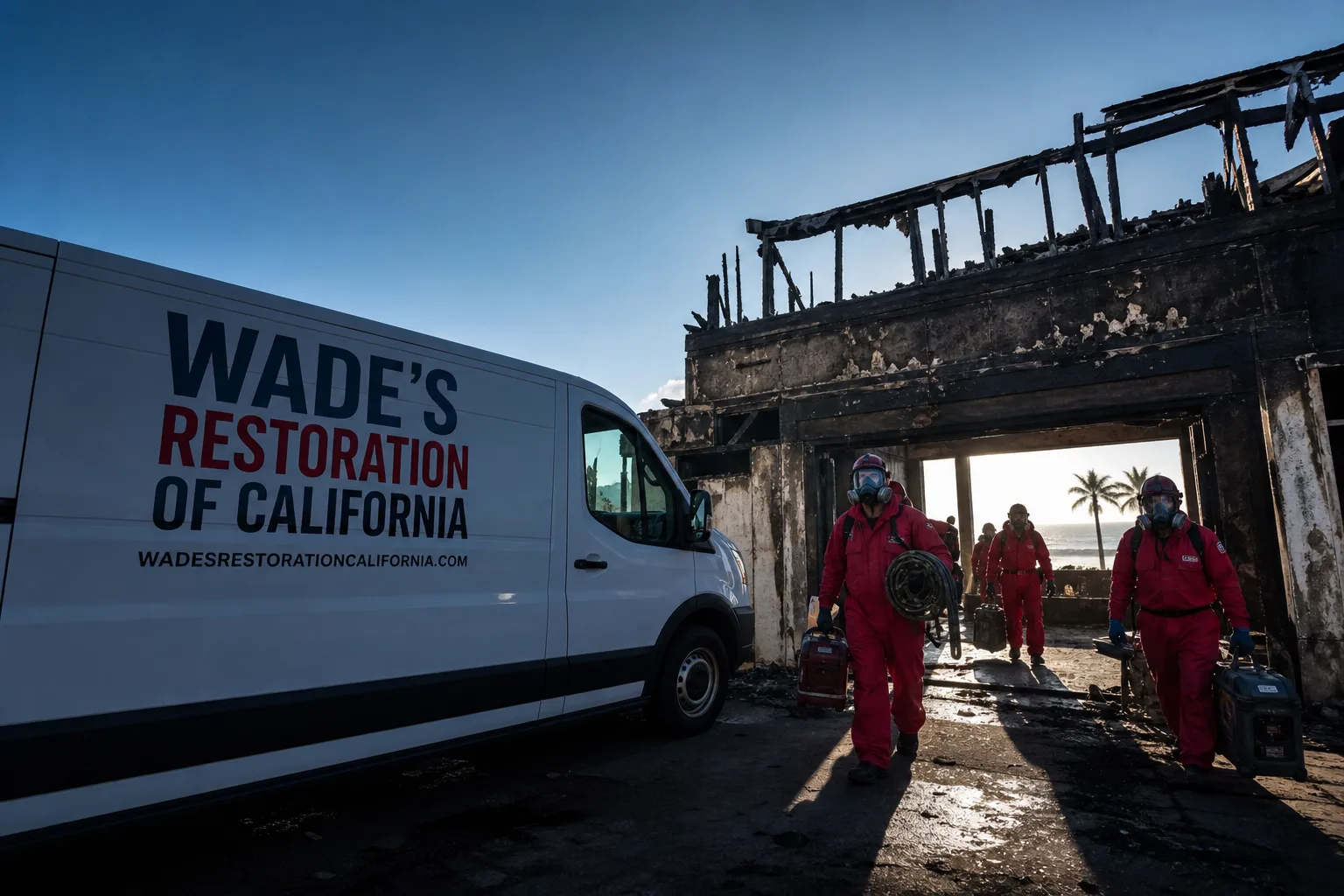
Fast, Reliable Mold Remediation Across Grass Valley
Mold remediation in Grass Valley typically costs $1,800-$6,500 depending on how far the moisture has traveled through old-growth framing and lath-and-plaster walls. Most jobs in the 95945 and 95949 ZIP codes start with a same-week inspection and finish within 3-7 days once drying equipment is running. We know this town’s houses differently than a crew driving up from Sacramento ever could, because the problems here aren’t the problems you’ll find 60 miles downhill. Call (855) 915-0646 and Wade will tell you straight what you’re looking at, usually before he even rolls up.
Key Takeaways:
- Grass Valley’s 50+ inches of annual Sierra precipitation and pre-1940 housing stock create moisture problems that standard drywall drying timelines miss.
- Lath-and-plaster walls hold water for weeks, which means mold returns if you treat them like modern drywall.
- We service every neighborhood in Grass Valley, from downtown Victorians to Alta Sierra ranches off Highway 49.
- Crawl space mold in post-and-pier homes is a structural risk here, not just an air quality nuisance.
- Every job carries the 90-Day Done Right Promise in writing. If it’s not done right, Wade makes it right.
Why Wade’s Restoration of California Is Grass Valley’s Preferred Mold Remediation Company
Wade Ferris has been running Mold Remediation jobs in the Sierra foothills since 2007, and he’s the one who actually shows up. Not a call center. Not a rotating cast of subcontractors. Wade answers his own phone, and on a Saturday morning you’re as likely to pass him at the Ace Hardware on Sutton Way as you are to see his truck in your driveway. That’s the accountability model a small town runs on.
The houses we work in across Grass Valley are some of the oldest in interior California. We’ve pulled mold out of 1890s Victorians on Church Street, 1930s bungalows near Empire Mine, and plenty of 1970s ranchers up toward Alta Sierra that got hammered by ice dams. The thing that separates us from a chain is simple: we know which walls in a pre-1940 house are load-bearing lath and which are just partition, and we know how to dry the first without tearing out the second. Wade’s crew is IICRC-certified and RIA-affiliated, and they run Dri-Eaz and XPOWER equipment that gets the wood moisture down to a number we can show you in writing.
Our Mold Remediation Services in Grass Valley
Mold Inspection & Testing
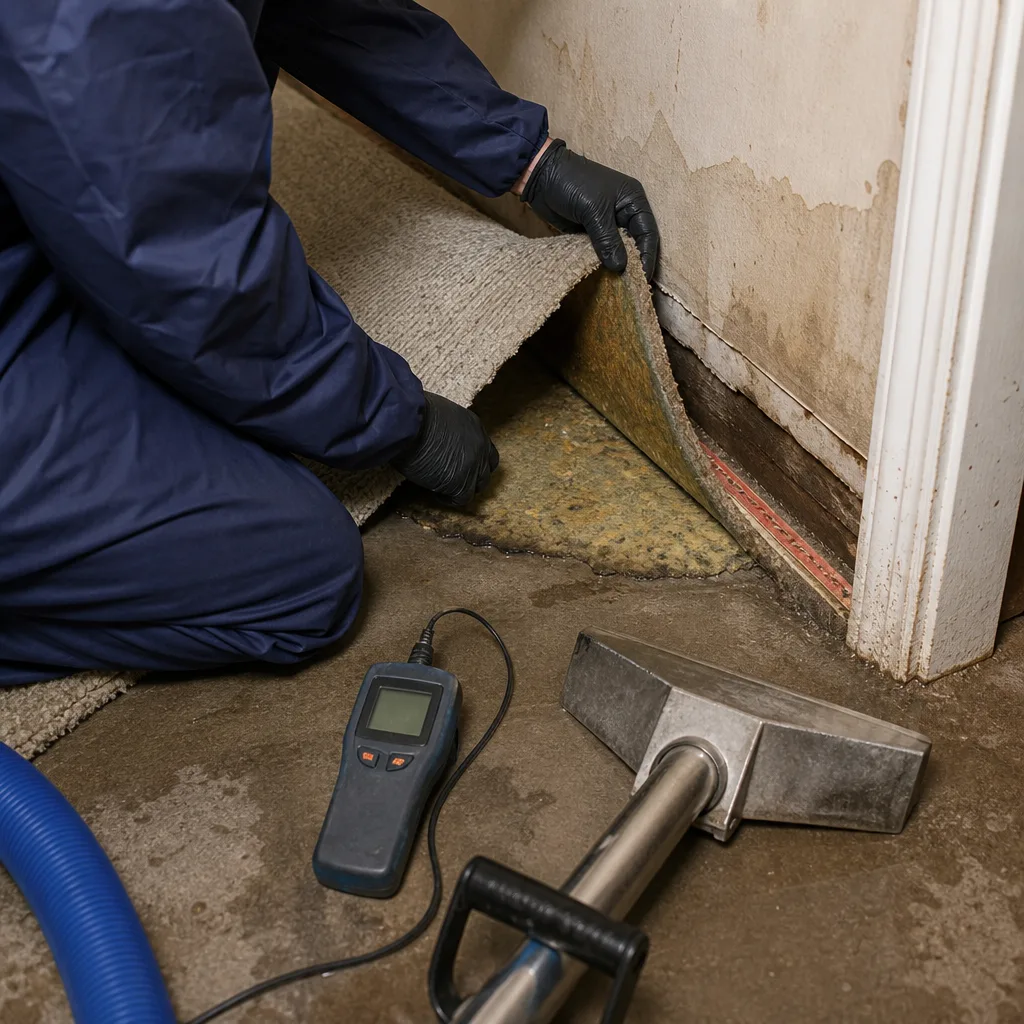
Before we touch a wall, we find out what’s actually growing and where the water is coming from. In Grass Valley, that usually means tracing a roof leak to a clogged gutter under a ponderosa pine canopy or a failed junction on a 1920s lath-and-plaster interior. We take moisture readings throughout the affected area and hand you the full log at the end, every single day. Almost nobody in the trade does that, and it matters when you’re trying to decide whether a $2,000 remediation or a $12,000 wall rebuild is the honest answer.
Mold Removal
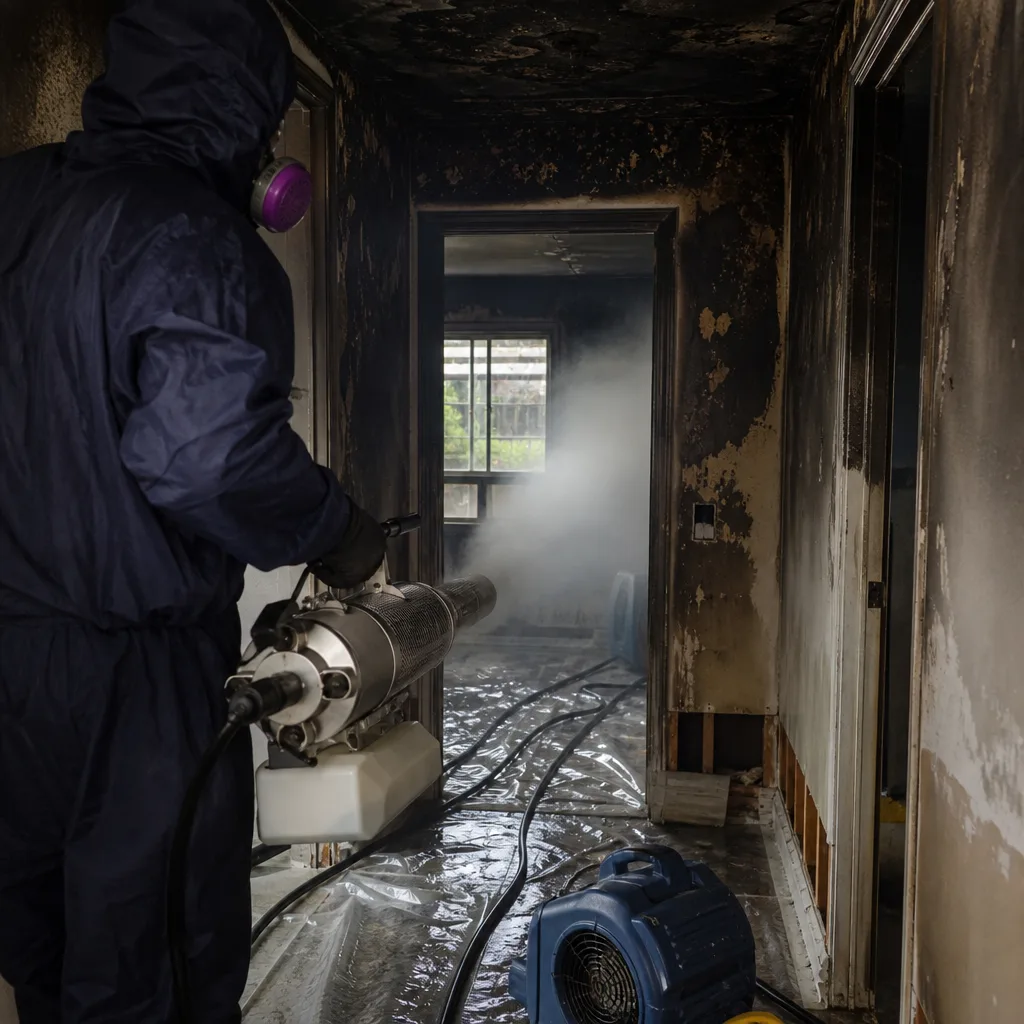
The physical removal work in Grass Valley homes almost always involves opening as little of the original plaster as possible. Old-growth fir studs from the 1880s mining era dry differently than modern Douglas fir from Home Depot, and we treat them accordingly. For surface mold on intact plaster, HEPA vacuuming and antimicrobial fogging usually does the job. For concealed mold inside wall cavities, we use minimum plaster keyhole openings rather than full gut jobs, which keeps costs down and preserves trim you’d never be able to match today.
Black Mold Remediation
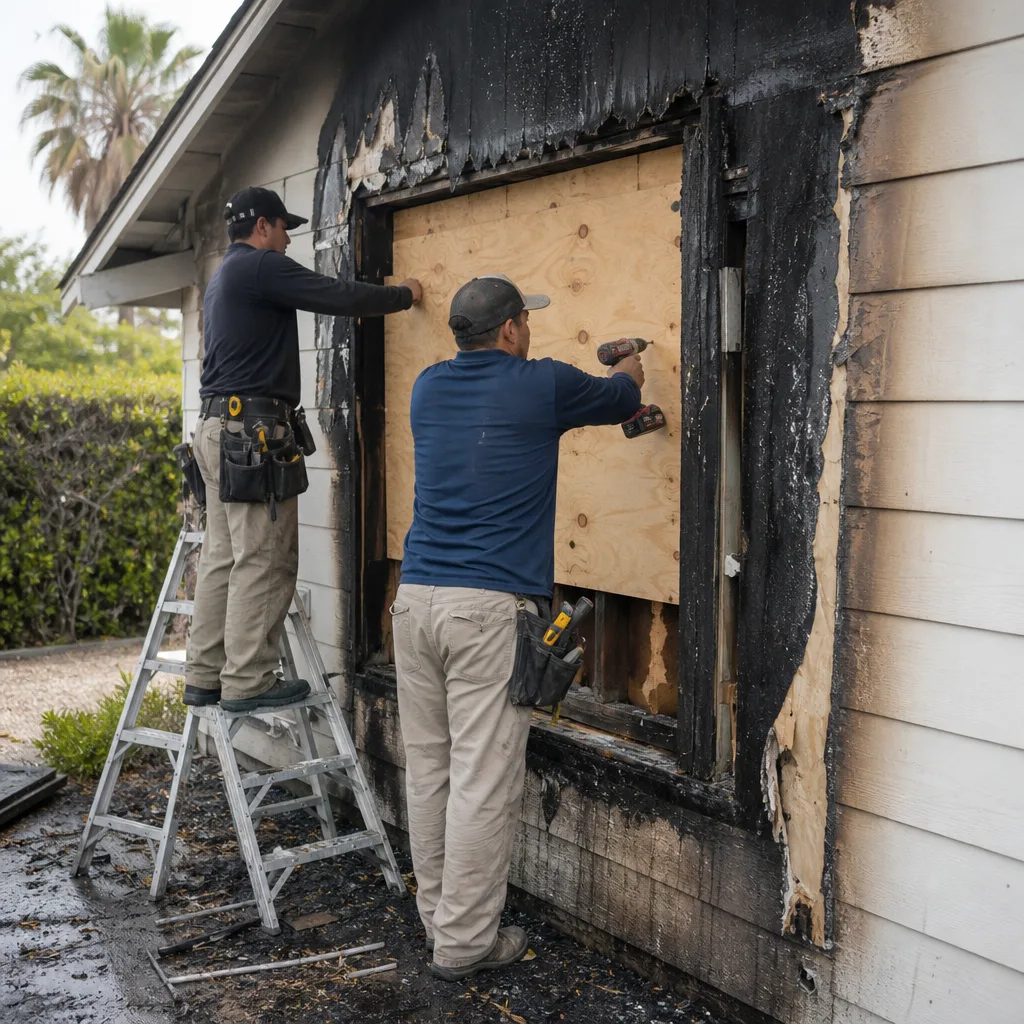
Stachybotrys, the black mold people understandably panic about, shows up in Grass Valley more often in crawl spaces and behind failed gutters than anywhere else. The reason is simple: our post-and-pier foundations sit over dirt floors that never fully dry from November through April. When black mold is confirmed, containment is non-negotiable. We seal the affected area, run HEPA air scrubbers, remove affected material, and dry the framing to a documented moisture level before any rebuilding starts. This is not work to attempt yourself. Black mold spores carried into living areas from an open crawl space can cause serious respiratory reactions, and the structural damage hidden behind old-growth joists is worse than anything you can see.
Air Quality Restoration
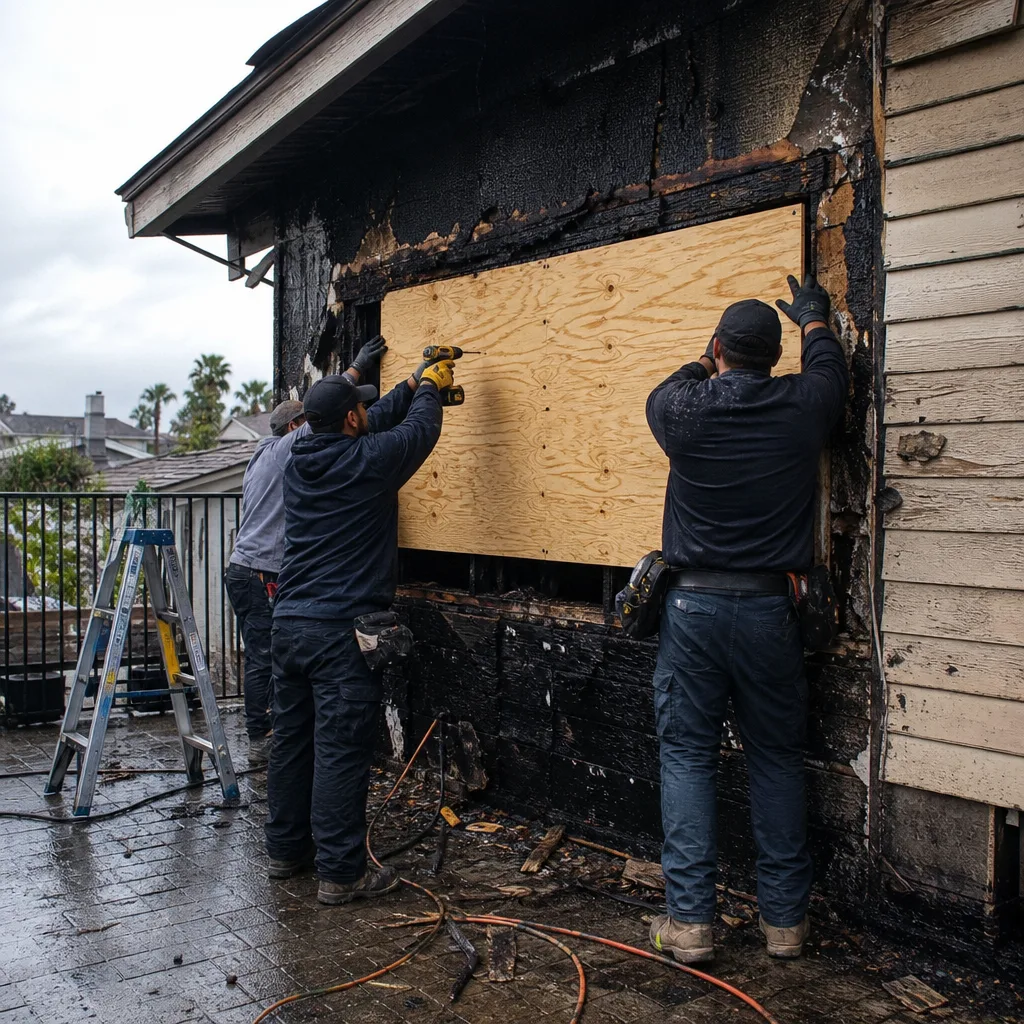
After a mold or smoke event in Grass Valley, the air inside your house is carrying what the walls are holding. We run HEPA air scrubbers during and after remediation, and for older homes with no mechanical ventilation, we’ll often recommend a dehumidification plan for the crawl space and attic. The summer fire season here means windows stay shut for weeks at a time, which concentrates whatever is off-gassing from wet plaster and old framing. Air quality restoration is about making sure the house you live in isn’t making you sick, and in a pre-1940 Victorian with original windows, that takes actual equipment, not just a spray bottle.
What happens when you call
- 1
A real person answersNo phone trees - you reach a local pro.
- 2
You get an upfront price rangeHonest numbers before anyone is dispatched.
- 3
A background-checked tech heads outLicensed & insured, dispatched right away.
- 4
You approve before work beginsNothing starts until you say go.
Trusted Brands We Service in Grass Valley
We work on every type of construction this town throws at us, from 130-year-old redwood-framed Victorians to 1980s tract homes built during the foothill building boom. Our equipment comes from manufacturers we trust on older structures: Dri-Eaz LGR dehumidifiers for deep structural drying, XPOWER air movers for lath-and-plaster cavity ventilation, and B-Air scrubbers for containment work in tight crawl spaces. We stock replacement filters, HEPA media, and antimicrobial treatments locally, which means when we’re mid-job on a 1910s Victorian near downtown and the air scrubber needs a new HEPA filter, we’re not waiting on a Sacramento parts run. Wade keeps the truck stocked for Grass Valley jobs specifically, because he knows which houses he’s walking into before he gets there.
Common Mold Remediation Problems We See in Grass Valley Homes
- Ponderosa pine debris loading on roofs and gutters. The canopy over older Grass Valley neighborhoods drops needles, pitch, and cones year-round. A backed-up gutter sends water over the fascia and down into window sills and wall cavities, re-saturating areas that were just dried and cleaned. We trace this exact pattern on more than half our spring mold calls.
- Post-and-pier crawl spaces that never dry. Dirt floors under 1920s homes hold moisture from November through April. If you run an air scrubber without sealing the crawl space first, you’re just recirculating mold spores from the dirt floor into the living room. That’s a specific failure we see when crews from lower elevations treat a Grass Valley crawl space like a Sacramento slab foundation.
- Lath-and-plaster walls that hide moisture behind dried-out surfaces. A wall can feel dry to the touch while wood studs behind it are still at 40% moisture content. If you apply standard drywall drying targets to old-growth fir and plaster, you’ll “finish” the job and then get a call back in six months when the musty smell returns.
- Ice dam damage from hard freeze events. Grass Valley gets snow and hard freezes that the valley floor doesn’t. When pipes burst in a 1905 Victorian or an uninsulated 1940s cottage, water runs inside walls and under floors for hours before anyone notices. The mold clock starts immediately, and homes with original wood floors and no vapor barrier are the worst cases.
Pricing for Mold Remediation in Grass Valley, CA
Mold inspection and testing in Grass Valley runs $300-$600 for a full moisture survey and air sample analysis. Surface mold removal on a single wall with intact plaster typically costs $1,200-$2,800. Crawl space remediation with containment, HEPA vacuuming, and antimicrobial treatment runs $2,500-$6,000 depending on square footage and whether joist repair is needed. Black mold remediation inside a lath-and-plaster wall cavity is the big-ticket item: $3,500-$8,500 when we’re doing minimum keyhole openings rather than full demo, which is usually the smart play in a house with original trim.
A few things that push Grass Valley prices up compared to Auburn or Lincoln: the age of the framing, the need to preserve original plaster and woodwork, and the extra drying time required for old-growth material at 2,500 feet. We give you a written scope before any work starts, and the 90-Day Done Right Promise is stamped on every contract. Call (855) 915-0646 for a free estimate. And if you’ve already got a written quote from another company, bring it in. We’ll give you a free second opinion on it, no charge, because Wade would rather you know what you’re actually being sold.
We Also Serve Cities Near Grass Valley
Wade’s Restoration covers all of western Nevada County and the surrounding foothills. We handle mold remediation in Alta Sierra, Auburn, North Auburn, and Lincoln as well as the rural pockets in between. Whether you’re up Highway 49 toward Nevada City or down toward Lake of the Pines, same crew, same standards, same written promise.
Serving Grass Valley, CA - Our Local Coverage Area
We’re based in the Grass Valley area and know this community well. Use the map below to see our service coverage - if you’re nearby, we can almost certainly help.
FAQs - Mold Remediation in Grass Valley
Because lime plaster and old-growth wood are both highly hygroscopic, meaning they absorb water deep into their structure and release it slowly. A drywall wall dries from the surface inward because gypsum has uniform density and capillary action moves water to the air quickly. Lath-and-plaster has irregular density, multiple layers, and solid wood lath strips behind it that act like a second reservoir. In Grass Valley’s cool, wet winters, that trapped moisture can take 2-3 weeks to dissipate even with drying equipment running, compared to 3-5 days for drywall. If your remediation contractor applies the shorter timeline, the job isn’t done. Call (855) 915-0646 if you’re seeing fresh staining or musty odor in an older Grass Valley wall.
Yes, it can be, especially in post-and-pier homes where old-growth fir joists sit directly above a perpetually damp dirt floor. Stachybotrys feeds on cellulose, and wood is cellulose. Over several years of exposure, the joists can lose enough structural integrity to sag floors and crack plaster above. The bigger issue in Grass Valley is that the same moisture that feeds the mold also attracts wood-boring beetles and dry rot, and in a 1920s home you’ve now got a three-way assault on the framing. We treat the moisture first, then the mold, then repair any compromised wood. A crawl space in a pre-1940 Grass Valley house is not a place to try a DIY vinegar spray. The dust alone from disturbed old-growth wood can be a respiratory hazard. Get it inspected by someone who knows what he’s looking at.
Within 24-48 hours, and faster is genuinely better. Mold spores that are already present in the dust of any older home begin germinating within 24-48 hours of sustained moisture. In a Grass Valley winter, when outdoor humidity is high and indoor heat is running, that window can shrink. If you find a burst pipe in a 95945 home at 7 a.m., call us by noon. We’ll have extraction running that day, and the moisture readings will tell us whether the wall cavities need remediation or just enhanced drying. Waiting four or five days while you “see how it dries” is how a $1,500 cleanup becomes a $7,000 wall restoration.
Indirectly, yes. Smoke and ash themselves don’t cause mold. But during fire season, Grass Valley homeowners keep their windows shut for weeks and their gutters often fill with fine ash that combines with ponderosa pine needles to form a dense, water-retaining mat. When the first fall rain comes, that mat blocks drainage and water backs up under the shingles or into the fascia. Now you’ve got a roof-side moisture intrusion right at the wall line, and the mold starts inside the wall cavity where you can’t see it. We’ve found hidden mold in Grass Valley homes that had no visible interior damage, all because the water entry point was behind a clogged gutter line. If you’re in the WUI zone, check your gutters after fire season, or have us do it while we’re up there.
Yes, in most cases. The method we use on pre-1940 lath-and-plaster homes involves cutting small plaster keyholes behind the picture rail or above the baseboard, accessing the wall cavity with a HEPA vacuum and fogging equipment, and then patching in a way that matches the original lime plaster texture. We don’t take a sledgehammer to a 1910s wall unless there’s no other option. On a recent Victorian near downtown Grass Valley, we traced a persistent musty smell to a failed knob-and-tube junction box behind lath-and-plaster. The moisture meter read 42% wood moisture on old-growth fir studs. We ran Dri-Eaz LGR 7000 dehumidifiers and XPOWER air movers for structural drying, then HEPA-vacuumed and fogged with Benefect Decon 30 through minimum access points. The original crown molding and picture rail stayed in place, and the homeowner didn’t have to watch a crew haul 130-year-old trim to the dump. That’s the only way to do this work in Grass Valley.
Written by Wade Ferris, Owner at Wade’s Restoration of California, serving Grass Valley and the Sierra foothills since 2007.