
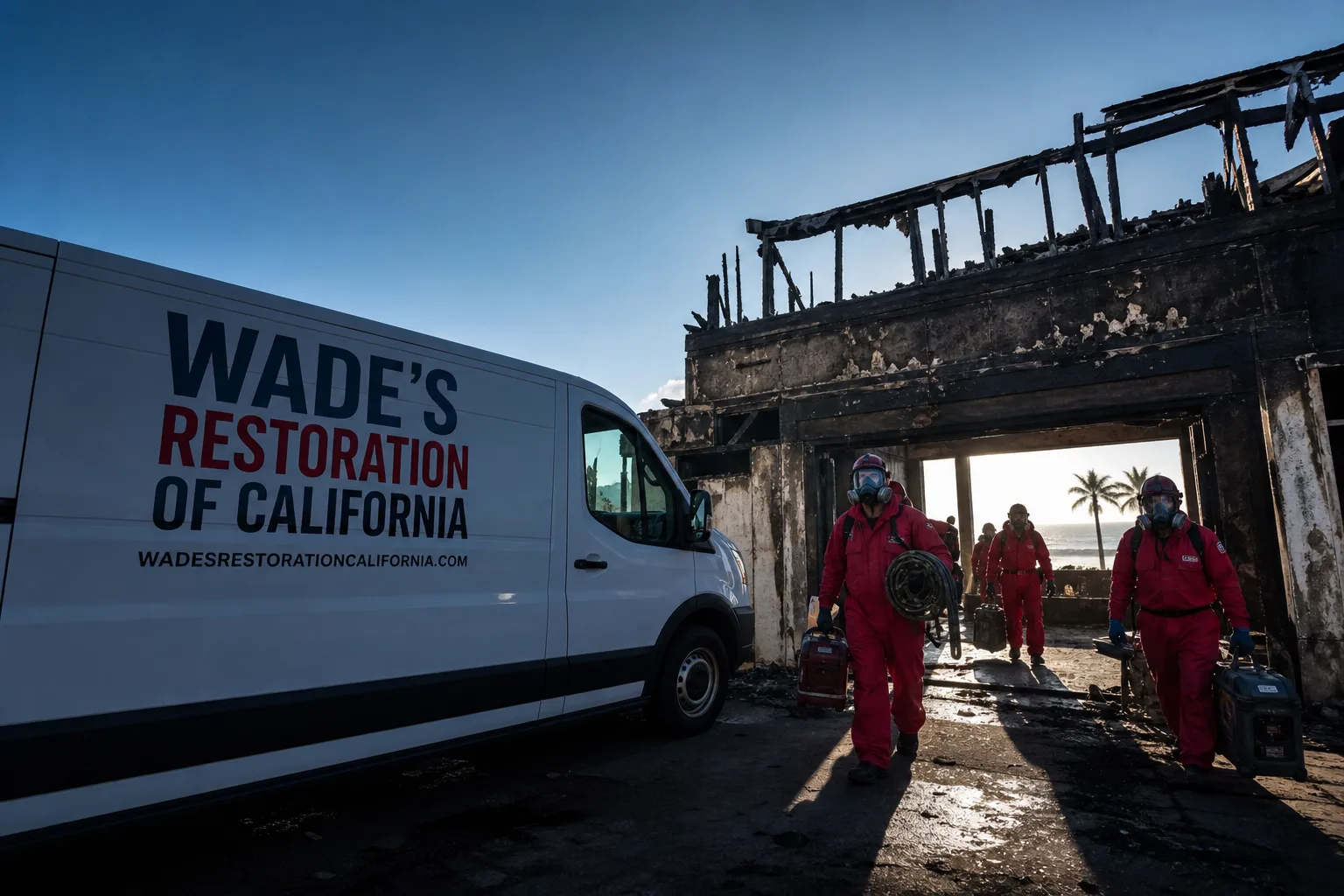
Fast, Reliable Mold Remediation Across Glendora
Mold remediation in Glendora typically runs $1,800-$6,500 depending on how far the growth has spread and whether crawlspaces or attics are involved. Most jobs in Glendora are completed within 3-5 days once containment is set. If you’ve spotted staining on a wall, smelled something musty that won’t leave, or just found out a slow leak has been dripping behind drywall for weeks, call Wade’s Restoration of California at (855) 915-0646. Wade Ferris answers his own phone, and he knows Glendora’s housing stock well enough to tell you over the phone whether you’re looking at a cleanup or a full remediation.
Why Wade’s Restoration of California Is Glendora’s Preferred Mold Remediation Company
We’re not a franchise. Wade Ferris founded this company in 2007, put his name on the truck, and published his address and license number. When you call about mold in a Glendora home, the person who picks up is the person who will stand in your living room and tell you what’s actually wrong. He’s been doing this for over 29 years, and he’s seen every failure mode Glendora’s housing stock can throw at a homeowner.
Glendora is a small enough town that reputation travels faster than any marketing. Wade shows up in a uniform, with background-checked crew members, and he does the work like he’s going to run into you at the Glendora Public Market on Saturday. Because he probably will. That’s the accountability a national chain can’t offer.
Response time matters when mold is spreading. For Glendora calls, Wade heads out the same day in nearly every case. Foothill homes in 91741 and flatland tract homes in 91740 get the same treatment: a live person on the phone, a straight answer, and a written scope before any work starts. No trip charge inside the county. Free second opinion on any written estimate. Senior and veteran discount of 10%, always.
Our Mold Remediation Services in Glendora
Mold Inspection & Testing
Before anyone tears out drywall, you need to know what you’re dealing with. In Glendora, that question gets complicated by the city’s fire history. Homes in the north foothills often carry smoke-impregnated insulation from the Colby Fire era, and that charred material behaves differently when wet than clean framing does. Wade’s crew tests for mold species, measures moisture content with daily readings, and hands you the full moisture log at the end of the job. Almost nobody in this trade does that. It tells you exactly what was wet, how wet, and whether it’s dry now.
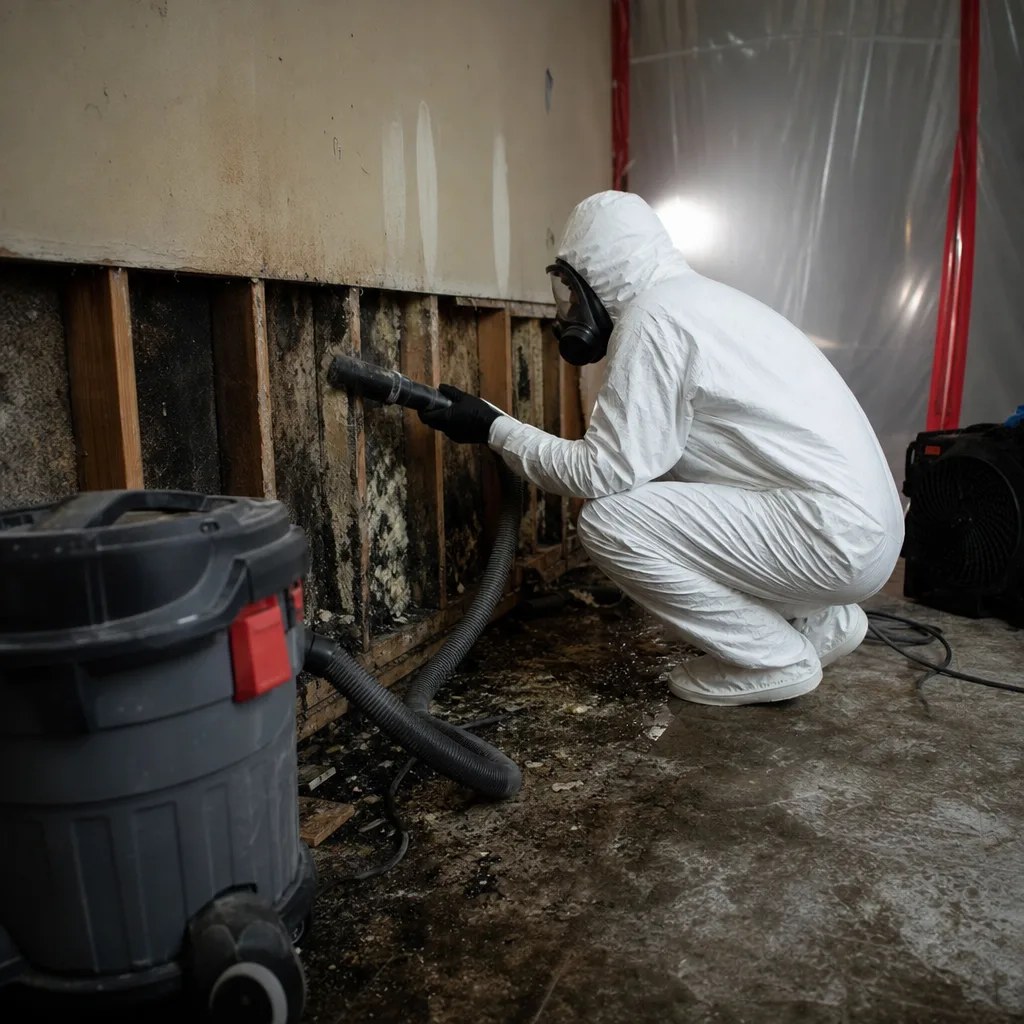
Mold Removal
We remove the mold, not just the stain. In Glendora’s 1950s tract homes south of Foothill Boulevard, we regularly find mold growing behind original galvanized plumbing walls, where slow corrosion has been weeping moisture for years. Our Mold Remediation team cuts out the affected material, bags it under containment, and treats the framing so the colony doesn’t rebound. Then we dry the cavity to a documented standard before any rebuild happens. You’d be surprised how many companies skip the drying part.
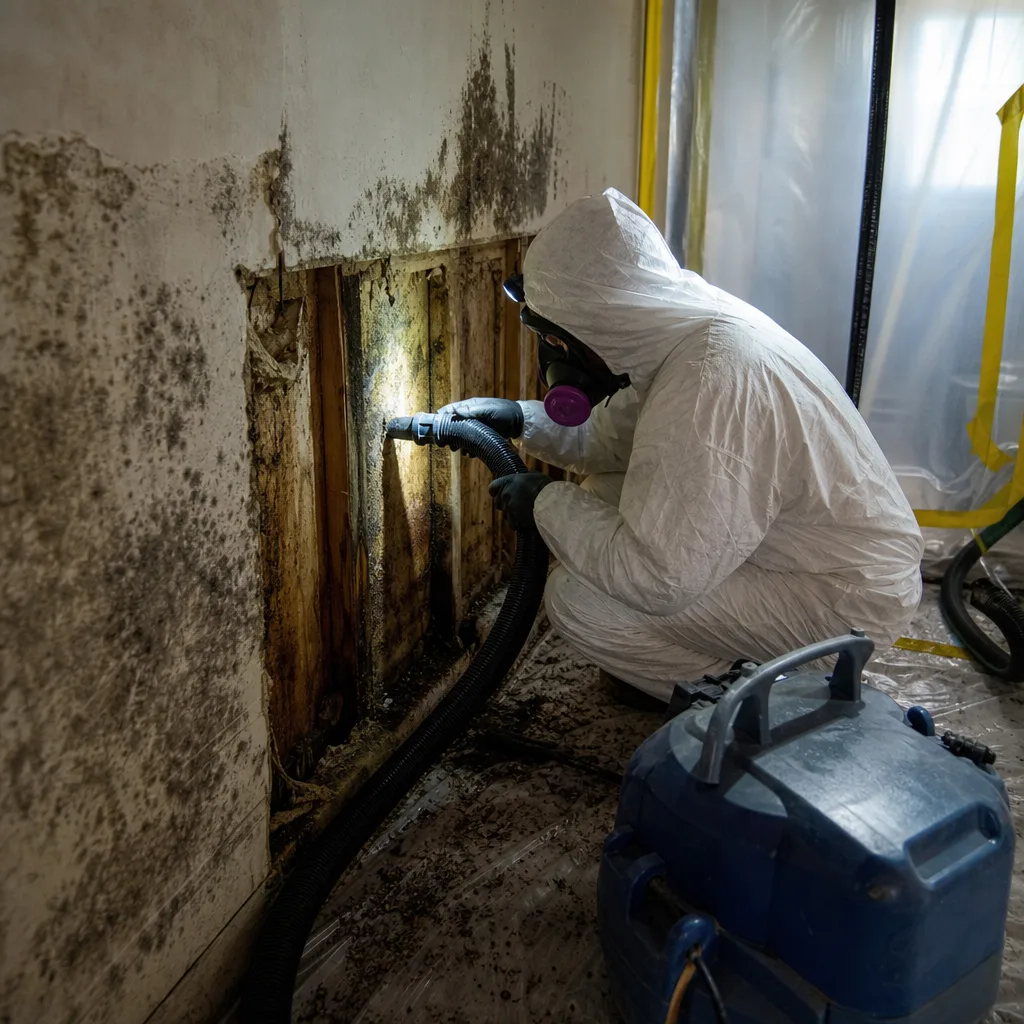
Black Mold Remediation
Black mold, Stachybotrys, gets a lot of attention, and for good reason: it’s a toxigenic mold that thrives on chronically wet cellulose, like drywall and framing. In north Glendora hillside homes, we’ve traced black mold in crawlspaces to failed foundation drains more often than plumbing leaks. A 1990s custom home above Baseline Road might have a drain line that collapsed years ago, silently feeding moisture into the crawlspace every winter. We address the source, not just the visible colony.
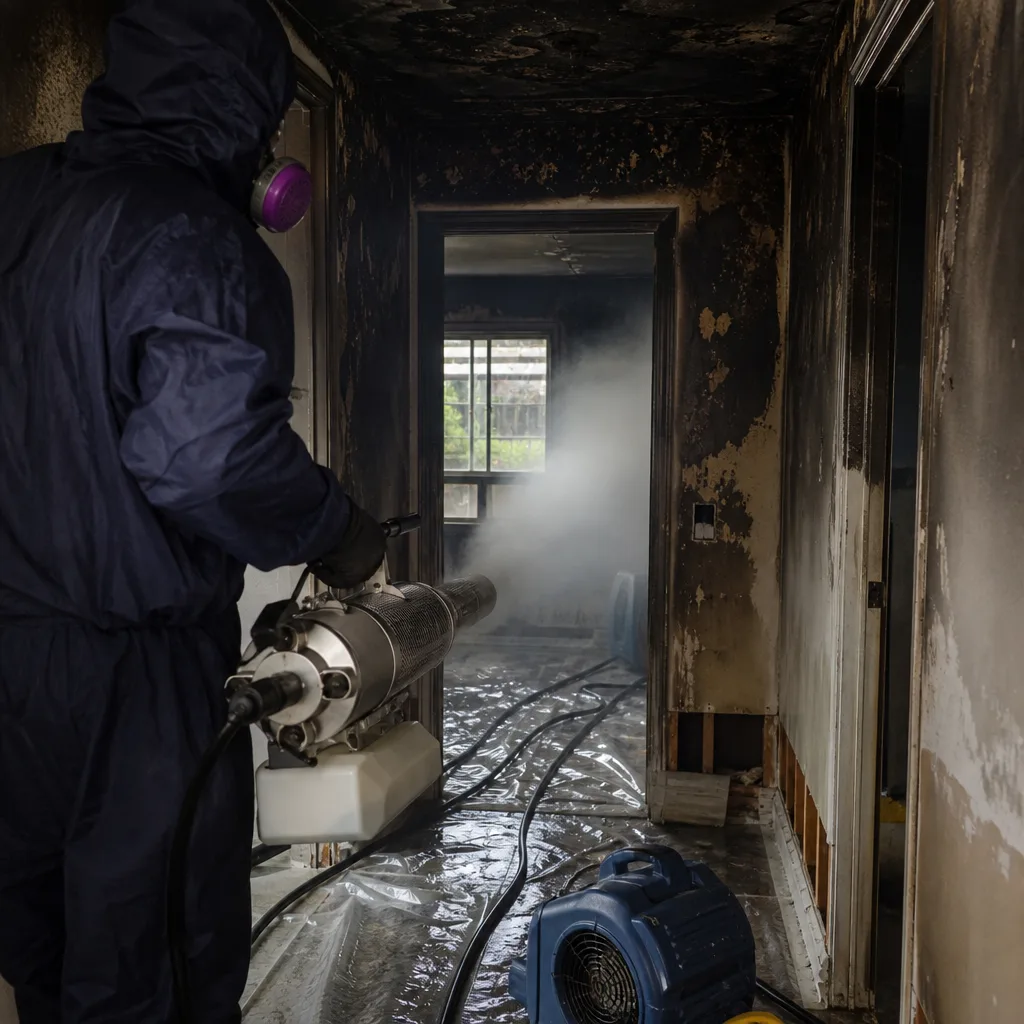
Air Quality Restoration
If you’ve been living with a musty smell, or if someone in the house has been waking up congested, the air itself is part of the problem. After remediation, we run HEPA air scrubbers and dehumidifiers sized for the actual cubic footage of the space. Glendora’s foothill humidity behaves differently than flatland humidity, especially behind non-airtight 1970s-1990s hillside framing. We use Dri-Eaz dehumidifiers that are built for those conditions, not the budget units flatland crews haul around.
What happens when you call
- 1
A real person answersNo phone trees - you reach a local pro.
- 2
You get an upfront price rangeHonest numbers before anyone is dispatched.
- 3
A background-checked tech heads outLicensed & insured, dispatched right away.
- 4
You approve before work beginsNothing starts until you say go.
Trusted Brands We Service in Glendora
Wade’s crew works with professional-grade equipment from Dri-Eaz, Phoenix, and Injectidry, and our technicians carry IICRC, RIA, and IFA credentials. That matters because Glendora homes span 70 years of construction styles, and the tools that work on a 1955 tract home won’t necessarily handle the airflow patterns of a 1985 custom foothill build. We stock the equipment and the parts locally, so there’s no waiting on a warehouse order when your crawlspace is getting worse by the day. Wade’s name is on the work.
Common Mold Remediation Problems We See in Glendora Homes
- Fire-charred attic insulation reactivating after winter rain. In north Glendora ZIP 91741, homes below the San Gabriel Mountains carry smoke residue from years of Santa Ana-driven fire seasons, including the 2014 Colby Fire. When winter rains push humidity into attics, that charred organic matter absorbs moisture and becomes a mold incubator. A standard dry-out crew that misses the smoke residue will be back next season for the same problem.
- Hillside crawlspace drainage failures, not plumbing leaks. Custom homes from the 1970s-1990s on graded slopes often have foundation drains that were installed without the longevity of today’s materials. When they fail, they push groundwater against mudsills and into crawlspaces. We find this pattern constantly in the neighborhoods above Baseline Road.
- Galvanized plumbing corrosion in 1950s tract homes. South Glendora ZIP 91740 has block after block of original galvanized supply lines. Glendora’s hard water accelerates corrosion at joints and elbows, creating slow, hidden leaks that keep a wall cavity wet for months before anyone notices. The mold gets treated, but if the pipe isn’t addressed, the mold comes back.
- Non-airtight hillside framing that traps foothill humidity. Foothill homes weren’t always built with the vapor barriers and sealing standards we’d spec today. That means humid air gets into wall cavities and stays there. Flatland-standard dehumidifiers stall in that environment. The equipment has to match the house.
Pricing for Mold Remediation in Glendora, CA
Here’s what Glendora homeowners can expect. Mold inspection and testing for a typical 1,200-1,800 sq ft home runs $350-$650. Mold removal with containment for a single affected room runs $1,500-$3,200. Crawl space treatment, including debris extraction, drying, and antimicrobial fogging, runs $2,000-$5,500 depending on square footage and access. Full black mold remediation with air quality restoration in a foothill custom home can reach $7,500-$12,000 when multiple rooms and HVAC ducting are involved.
What moves the number: how much material has to come out, whether the HVAC system is contaminated, accessibility of the crawlspace or attic, and whether the moisture source is still active. Wade gives you a written scope before work starts, and the price doesn’t change unless the house tells us something different once we open the wall. Free second opinion on any written estimate. Call (855) 915-0646 for a number specific to your house.
We Also Serve Cities Near Glendora
Wade’s Restoration of California handles mold remediation across the eastern San Gabriel Valley. If you’re in San Dimas, Azusa, Citrus, or Charter Oak, the same crew and the same 90-Day Done Right Promise apply. Mold Remediation in Glendora is our focus, but Wade heads out to any of these nearby cities the same way: live person on the phone, no trip charge inside the county, and a written scope before any work begins.
Serving Glendora, CA - Our Local Coverage Area
We’re based in the Glendora area and know this community well. Use the map below to see our service coverage - if you’re nearby, we can almost certainly help.
FAQs - Mold Remediation in Glendora
We pull insulation samples and run moisture readings across the attic, focusing on areas where charred residue from the 2014 Colby Fire collected, especially along the underside of the roof deck. Standard air sampling won’t tell you what’s hiding inside the insulation itself. In north Glendora homes, we also look for the telltale smell of smoke-soaked fiberglass that’s been wet, because that material becomes a mold host faster than clean insulation. Call (855) 915-0646 and Wade can walk you through what to check before you spend money on testing.
In hillside homes above Baseline Road, it’s more often a drainage failure than a plumbing leak. The 1970s-1990s foundation drains on graded slopes fail over time, and winter rain gets pushed against the foundation, wetting mudsills and subflooring. We’ve traced multiple black mold colonies in custom foothill homes to collapsed or crushed drain lines that were never replaced. The fix isn’t just spraying the mold. The drain has to be addressed, and then the framing dried with equipment that can handle foothill humidity. Wade gives you the moisture log every day, so you see the numbers dropping.
Yes, but only if the mold is addressed first. Santa Ana winds push smoke and ember residue into attics and wall cavities, and when winter rain follows, that charred material gets damp and starts supporting mold growth. The smoky smell and the musty smell blend together, and a lot of homeowners assume it’s all smoke. Once we remove the mold-contaminated material, dry the cavity, and run HEPA scrubbers with odor treatment, the smell clears. If the mold isn’t treated, the smell comes back after the next wet season. That’s the three-phase cycle we know from the Colby Fire aftermath, and it’s exactly what we plan for on any foothill job in Glendora.
For a typical 1950s tract home in south Glendora, expect to pay $350-$650 for a full mold inspection with air and surface sampling. That covers the kind of testing that tells you whether the staining behind your baseboard is cosmetic or an active colony. In ZIP 91740 specifically, we also look at galvanized plumbing runs, because slow corrosion leaks behind original walls are the most common moisture source in those homes. The inspection cost is credited toward remediation if you hire Wade. Call (855) 915-0646 and ask about the free second opinion on any written estimate.
Because the fire damage never fully left. The Colby Fire and subsequent Santa Ana events pushed smoke, ash, and ember residue into attics, wall cavities, and crawlspaces throughout the foothill neighborhoods. When winter rain comes, water enters the same spaces through compromised flashing, non-airtight framing, and hillside drainage paths. Wet charred material supports mold growth far more aggressively than clean building materials. A mold claim that only addresses the water damage will fail. The char has to go, the moisture has to stop, and the space has to be dried to a documented standard. That’s why Wade’s crew carries both fire and water credentials, and why adjusters in Glendora know to call us when a foothill home shows both warning signs.
Call Wade’s Restoration of California for Mold Remediation in Glendora
If you’re seeing mold, smelling it, or just worried about what that water stain means, call Wade Ferris at (855) 915-0646. You’ll get him on the phone, not an answering service. He’ll give you a straight answer, and if he comes out, you’ll get a written scope before any work starts. That’s how it’s always worked since 2007, and that’s why Glendora homeowners keep calling. 90-Day Done Right Promise, in writing, on every mold job. If it’s not done right, Wade makes it right.
Written by Wade Ferris, Owner at Wade’s Restoration of California, serving Glendora and the eastern San Gabriel Valley since 2007.