

Fast, Reliable Mold Remediation Across Garden Grove
Mold remediation in Garden Grove typically costs $1,800-$6,500 depending on how far the colony has spread, and the work usually takes three to seven days from containment to final air clearance. That’s the straight answer. But here’s what matters more: in this city’s 1950s and 1960s slab-on-grade tract homes, the mold you can see is rarely the mold that’s actually causing the problem. The real source hides under the concrete. If you’re seeing black streaks on baseboards, smelling something musty near interior walls, or noticing warped flooring in a mid-century ranch, call (855) 915-0646 and Wade will walk you through what’s happening before you spend a dime.
Wade’s Restoration has done Mold Remediation work across Garden Grove for years. The houses here are different from what you’ll find in newer Orange County developments, and the way mold behaves in them is different too. We know the neighborhoods, the building patterns, and the specific ways older slab homes fail. That local knowledge changes how we test, where we look, and what we open up.
Why Wade’s Restoration of California Is Garden Grove’s Preferred Mold Remediation Company
Wade Ferris founded this company in 2007, and he still answers his own phone. Not a call center. Not a dispatcher. Wade. When you call about mold in a Garden Grove home, you’re talking to the person who will personally review your moisture logs and sign off on the final clearance report. People around here tend to appreciate that, especially after dealing with outfits that quote one price on the phone and a different one at the door.
Our crews know Garden Grove’s housing stock the way you know your own street. A 1960s ranch off Chapman Avenue has a different mold profile than a 1970s two-story near Lampson. A condo in a 1972 complex on Westminster Avenue has different wall assemblies than a single-family home in the 92845 tract. That specificity means we don’t waste your time opening walls that don’t need opening, and we don’t miss the ones that do. We’re IICRC-certified, and every job ends with a written moisture log showing exactly where the moisture readings started and where they ended. Almost nobody in this trade hands homeowners that documentation. Wade does it on every single mold job.
Calls are answered by a live person 24/7. If you’ve got a Santa Ana wind event pushing dry air through your attic and you’re worried about what it’s doing to already-compromised drywall, call at midnight. Someone picks up.
Key Takeaways
- Garden Grove slab-on-grade homes hide mold under concrete where other companies won’t look
- We moisture-map the slab before touching visible mold because that’s where the water source lives
- Every job ends with a written moisture log you keep, plus a 90-Day Done Right Promise in writing
- Wade answers his own phone and will come out himself, no charge for the estimate inside Garden Grove
- Free second opinion on any written estimate from another company, and a permanent Senior & Veteran 10% discount
Our Mold Remediation Services in Garden Grove
Mold Inspection & Testing
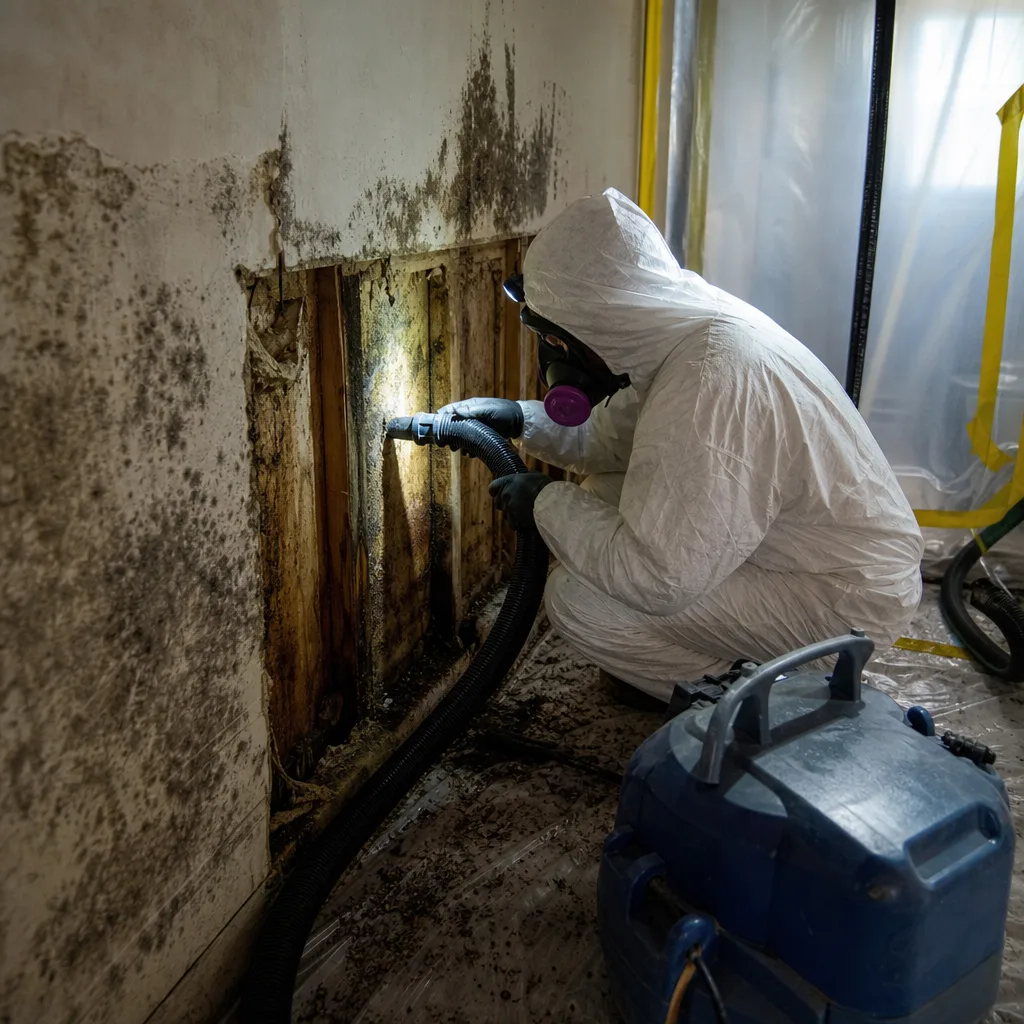
In a Garden Grove slab home, inspection starts at the slab. Our techs run moisture meters along baseplates, interior partition walls, and the slab surface itself before any mold testing happens. That’s because the water source in these homes is so often a pinhole leak in 60-year-old copper or galvanized supply lines running through or under the concrete. Air sampling and surface swabs come after we know where the moisture is, not before. For homes near Little Saigon off Brookhurst, we also check party wall cavities, because mold in one strip mall unit rarely respects the lease line.
Mold Removal
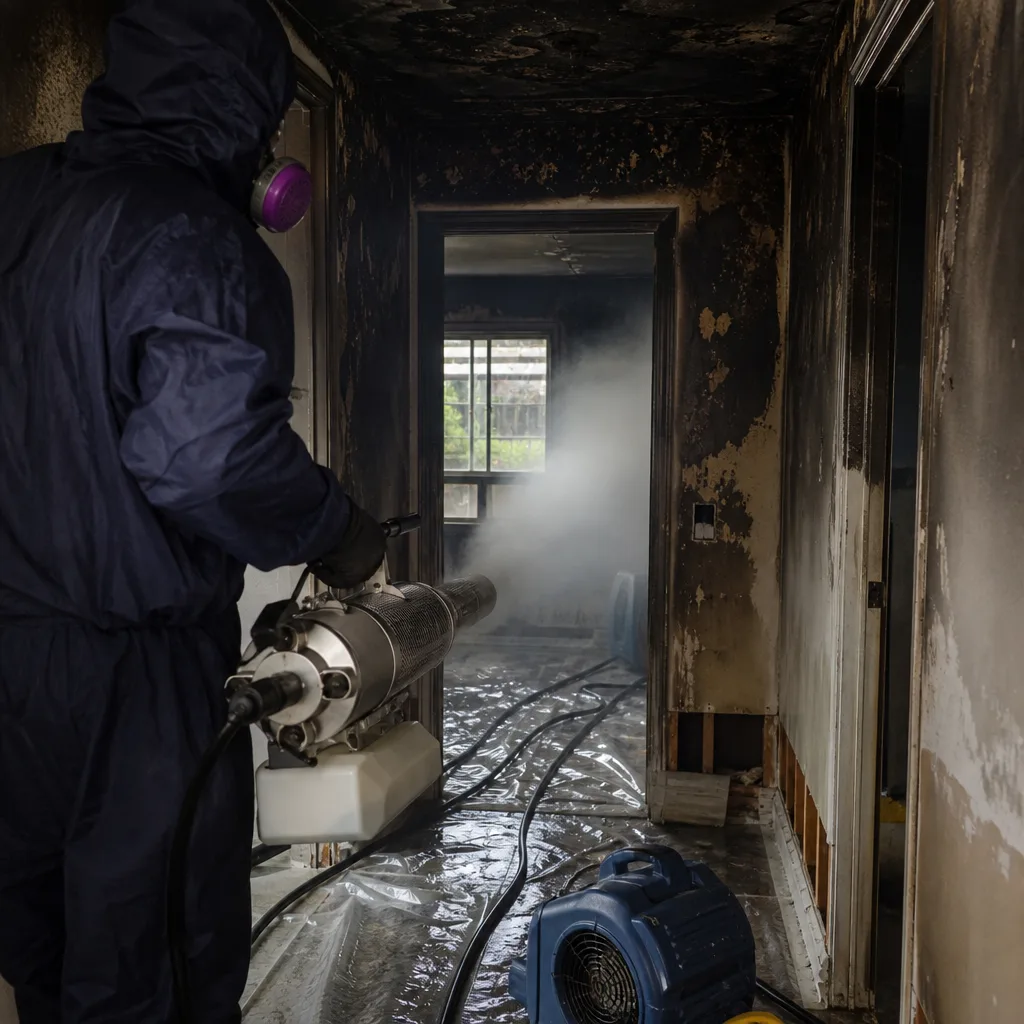
Removing mold from a Garden Grove ranch means controlled demolition, HEPA-grade containment, and drying the slab assembly to below 4% moisture content before any reconstruction happens. We use Dri-Eaz LGR 2800i dehumidifiers and XPOWER air movers on every job. The dense, poorly insulated slab assemblies in these older homes hold moisture deep, and fall Santa Ana conditions can create a false “dry” reading on the surface while the interior of the assembly stays wet. We account for that. It’s not optional here.
Black Mold Remediation
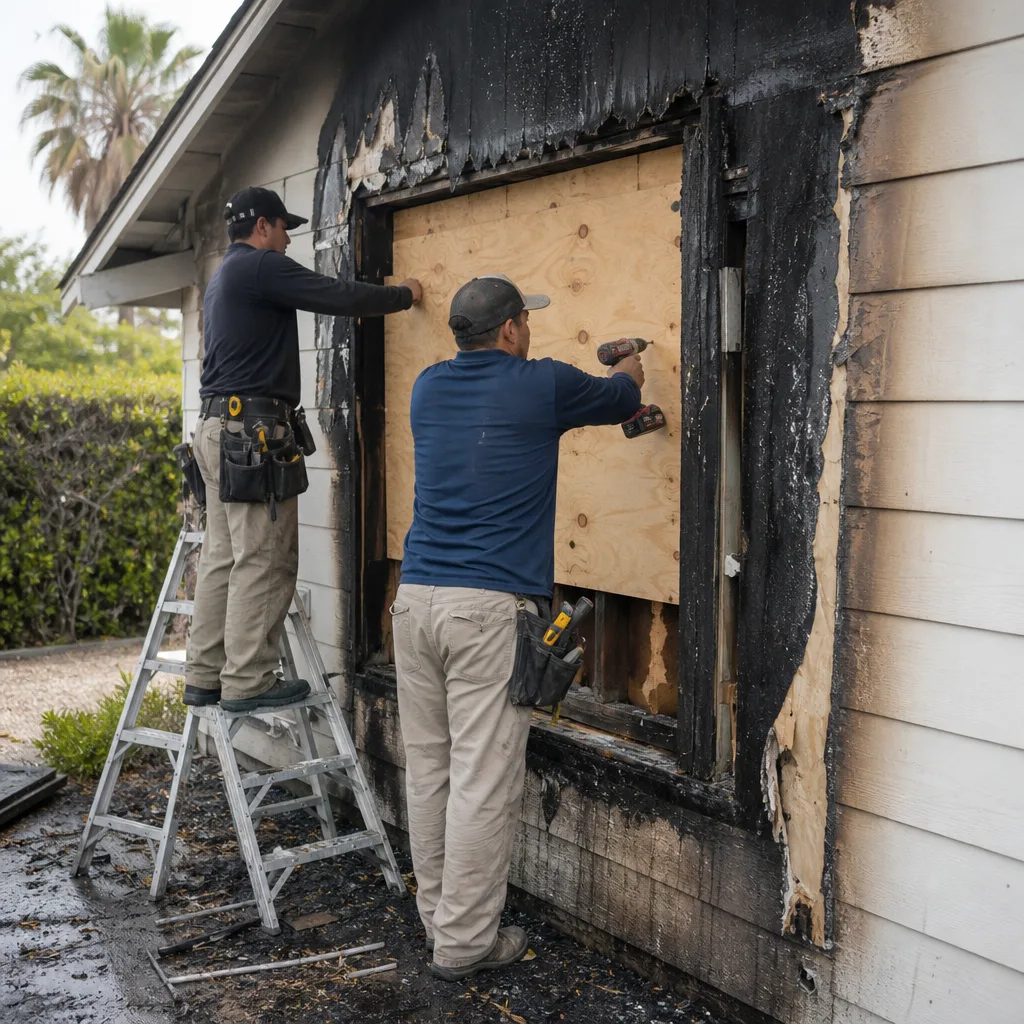
Black mold behind lime plaster walls is a different animal in a 1958 tract home. Lime plaster is more porous than modern drywall, which means mycelium gets deeper into the wall cavity and sends roots into the plaster keys themselves. We open those walls after containment is set, remove the affected plaster back to clean material, and treat with antimicrobial coating before drying. Cleaning surface mold off lime plaster and repainting doesn’t fix it. The roots survive. We remove the plaster. In slab homes, we also treat the concrete surface after drying, because that’s where the next colony will try to establish.
Air Quality Restoration
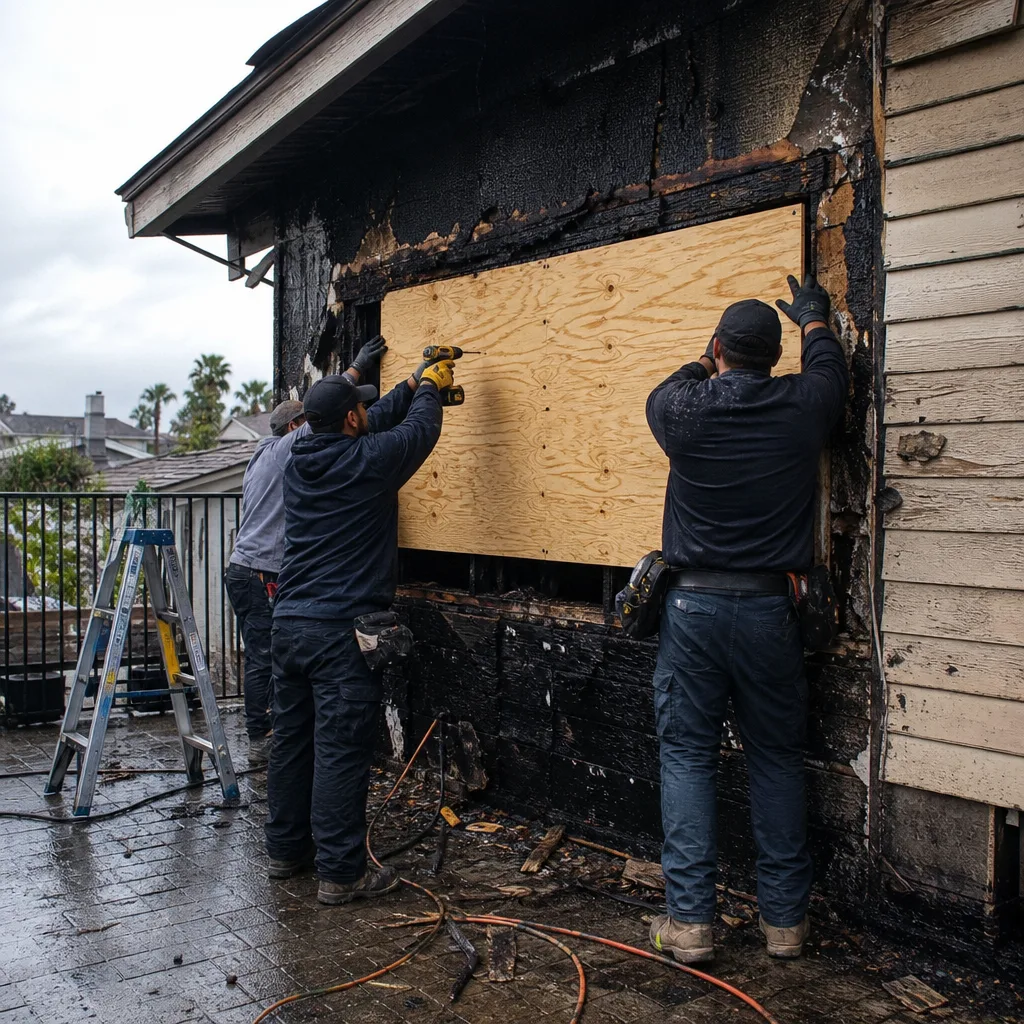
After the mold is removed and the slab is dry, we run HEPA air scrubbers to pull mold spores, dust, and demolition particulate out of the air. In a sealed 1950s ranch with no crawl space and minimal air exchange, this step matters more than in a newer home. We also check HVAC ducts, because in many Garden Grove homes the ducts run through unconditioned attic spaces where daily marine layer humidity has been condensing for decades. If your ducts share air with a moldy wall cavity, the air quality problem stays after the wall is cleaned. We don’t miss that.
What happens when you call
- 1
A real person answersNo phone trees - you reach a local pro.
- 2
You get an upfront price rangeHonest numbers before anyone is dispatched.
- 3
A background-checked tech heads outLicensed & insured, dispatched right away.
- 4
You approve before work beginsNothing starts until you say go.
Common Mold Remediation Problems We See in Garden Grove Homes
- Treating visible mold without moisture-mapping the slab. In a 1960s slab home, the mold you can see on drywall is often fed by moisture wicking up from a leak under the concrete. Clean the wall without finding the source, and the mold is back in six weeks.
- Leaving original galvanized or copper supply lines untouched. The next pinhole leak is already forming. Remediating mold while leaving 60-year-old supply lines in place means you’re scheduling your next mold job before we’ve left the driveway.
- Under-drying the slab during Santa Ana conditions. Dry winds pull surface moisture fast, which makes a moisture meter read low on the slab surface while the interior of the assembly is still saturated. That trapped moisture later migrates upward and feeds concealed mold behind baseboards and under flooring.
- Ignoring shared party walls in strip mall units. Along Garden Grove Boulevard and Brookhurst, adjacent units often share unsealed wall cavities and HVAC plenums. Mold from a water loss in one unit moves into the next. We treat the party wall assembly, not just the affected side.
Pricing for Mold Remediation in Garden Grove, CA
Here are real ranges for this market, not national averages.
- Mold inspection with moisture mapping of a slab-on-grade ranch: $250-$500
- Containment setup, HEPA air scrubbing, and demo of one affected wall cavity: $1,200-$2,800
- Full black mold remediation of one room with slab drying and antimicrobial treatment: $2,500-$6,500
- Crawl space treatment (for the few Garden Grove homes with raised foundations): $1,500-$4,000
- Whole-home duct inspection and air quality restoration: $800-$2,200
What drives cost in Garden Grove specifically is the slab. Opening a 1958 ranch’s wall cavity, drying the slab assembly, and treating the concrete costs more than a standard drywall mold job in a raised-foundation home. But skipping that work is how you end up with a recurring mold problem that costs triple a year later. We’ll give you a written scope before any work starts. You’ll know exactly what we’re going to open, how long it’ll take, and what it’ll cost. Call (855) 915-0646 for a free estimate. And if another company gave you a written estimate, we’ll second-opinion it for free.
Mold in Garden Grove Slab Homes: Why the Slab Comes First
Garden Grove’s residential core is overwhelmingly post-WWII slab-on-grade tract housing built between roughly 1950 and 1975. That’s not trivia. It’s the single most important fact about mold remediation in this city. These homes have no crawl space. The floor sits directly on concrete, and the concrete sits on soil. Supply lines run under or through that slab. When a galvanized or early-copper line pinholes, the water doesn’t pool in a crawl space where someone might notice. It wicks into the slab, migrates through the concrete, and rises into wall cavities behind baseplates and original lime plaster.
You won’t see that water. You’ll see mold on a baseboard or smell something musty near an interior wall. By that point, the slab has been pumping moisture into the wall assembly for weeks or months. A remediation company that cleans the visible mold and calls it done hasn’t fixed anything. The mycelium under the baseplates survives, and the colony re-establishes itself in a few weeks. This is why mold remediation in Garden Grove must start with the concrete slab, not the visible mold. It’s a condition rare in neighboring cities with raised foundations, and it’s the reason we moisture-map every slab home before touching any wall.
In one 1958 ranch near Brookhurst Street and Garden Grove Boulevard, our techs traced a recurring musty odor to a pinhole leak in the original galvanized supply line under the concrete slab. The moisture had wicked into the baseplates of three interior partition walls. We set containment, opened the walls, removed black mold from the plaster keyways, dried the slab to below 4% moisture content using Dri-Eaz LGR 2800i dehumidifiers and XPOWER air movers, and sealed the foundation with an antimicrobial coating before the homeowner’s adjuster completed the claim. The homeowner kept the moisture log. That’s standard procedure for us.
Moisture & Humidity Control in Garden Grove’s Climate
The daily marine layer cycle here creates a specific problem for older, poorly insulated slab homes. High coastal humidity at night condenses on cool surfaces. Dry afternoon heat bakes the exterior walls. That daily swing stresses the vapor dynamics inside wall cavities, especially in homes built before insulation was standard. Moisture that penetrates original stucco or wood siding gets trapped between the exterior sheathing and the interior plaster, and the result is concealed mold growth that has nothing to do with a leak. We address this with targeted dehumidification protocols and, where needed, crawl space or wall cavity ventilation improvements. For the small number of Garden Grove homes with raised foundations, crawl space treatment follows a similar logic: seal the soil, control the humidity, and the mold loses its water source.
When Santa Ana Winds Make Mold Worse
Fall Santa Ana events push outdoor humidity down to single digits. That sounds helpful for drying, but it creates a specific problem in mid-century slab homes. The dry wind pulls moisture from the surface of the slab and drywall rapidly, which makes the surface read dry on a moisture meter while the interior of the assembly stays wet. A technician who doesn’t account for that will pull equipment too early and declare the job done. Trapped moisture then migrates back outward over the following weeks, and concealed mold returns. We use penetrating moisture meters that read into the slab, not just on top of it, and we keep drying equipment running until the interior moisture content is actually low. Not when it looks low.
Shared Walls in Little Saigon’s Strip Mall Units
Garden Grove’s dense commercial corridor along Garden Grove Boulevard and Brookhurst Street concentrates dozens of shared-wall strip mall units. Many of these buildings date from the 1960s through 1980s, with wood-frame or masonry party walls that were never sealed between tenants. A water loss in one unit, whether it’s a supply line failure in a restaurant or a roof leak over a retail space, moves through those unsealed cavities into neighboring units. Mold follows. In these buildings, remediation means treating the party wall assembly, not just the affected side, and coordinating with multiple insurance carriers and tenants. We’ve managed those jobs. It’s routine here in a way it isn’t in lower-density neighboring cities.
We Also Serve Cities Near Garden Grove
Wade’s Restoration handles mold jobs across Garden Grove and the surrounding communities. If you’re in Stanton, Westminster, Midway City, or Cypress, we cover those too. Same owner answering the phone, same written moisture logs, same 90-Day Done Right Promise. If you’re anywhere in the 92841, 92842, 92843, or 92844 ZIP codes, we’re close by and we’ll come out without a trip charge.
Serving Garden Grove, CA - Our Local Coverage Area
We’re based in the Garden Grove area and know this community well. Use the map below to see our service coverage - if you’re nearby, we can almost certainly help.
FAQs - Mold Remediation in Garden Grove
We start with moisture mapping of the slab itself, running penetrating meters across the concrete surface and along baseplates and interior partition walls to find where moisture is wicking up from below. Air sampling and surface swabs come after that. In a slab home, the water source is usually under the concrete, so testing the air without mapping the slab tells you mold is present but not why. Once we find the moisture, we open the wall cavity at that location and test directly. Call (855) 915-0646 to schedule an inspection.
Yes, and not because black mold is inherently different. Lime plaster is more porous than modern drywall, so the mycelium penetrates deeper into the wall assembly and roots into the plaster keys. That means we remove more material back to clean plaster and treat the cavity more aggressively. The drying protocol also takes longer because the dense plaster holds moisture. It’s more work, which means it costs more, but the alternative is leaving live mold roots behind closed walls. We don’t do that.
Santa Ana winds can create a false “dry” reading on wall and slab surfaces while inner materials stay wet, which can lead a remediation company to pull equipment too early. That trapped moisture then feeds concealed mold growth. If we’re drying a Garden Grove home during a Santa Ana event, we extend the drying protocol and use penetrating meters to verify interior moisture content before releasing the job. If you already have visible mold and a Santa Ana event is coming, call us. We’ll assess it before the wind complicates things.
In those buildings, the wall cavities between units are usually unsealed, so moisture and mold spores from one unit move directly into the neighboring space. Remediating only the affected unit doesn’t work. We treat the party wall assembly as one system, which means opening both sides of the wall when needed and coordinating containment across multiple tenant spaces. It’s a standard part of our commercial work along Brookhurst and Garden Grove Boulevard.
Most slab-leak mold jobs in Garden Grove take five to seven days from initial moisture mapping to final clearance. The longest phase is slab drying, which can’t be rushed without creating the conditions for mold to return. Containment and demo usually happen on day one, drying runs for three to five days depending on how much moisture the slab holds, and reconstruction follows once we’ve documented the slab is below 4% moisture content. Your insurance claim moves faster when we’re speaking directly with your adjuster, which we do on every job. Call (855) 915-0646 and Wade will give you a straight timeline for your specific house.
Call Wade’s Restoration for Mold Remediation in Garden Grove
If you’ve got mold in a Garden Grove home, don’t wait for it to spread behind your walls. Call (855) 915-0646. Wade answers his own phone. He’ll talk you through what you’re seeing, tell you whether you need an inspection or just some peace of mind, and come out himself if it makes sense. Estimates are free inside Garden Grove. Seniors and veterans get 10% off, always. And if another company gave you a written estimate, we’ll give you a free second opinion on it. You’ll know exactly what’s going to happen before anyone opens a wall. That’s how we’ve done it since 2007, and it’s why people on your street trust Wade’s Restoration.
Written by Wade Ferris, Owner at Wade’s Restoration of California, providing mold remediation services throughout Garden Grove since 2007.