
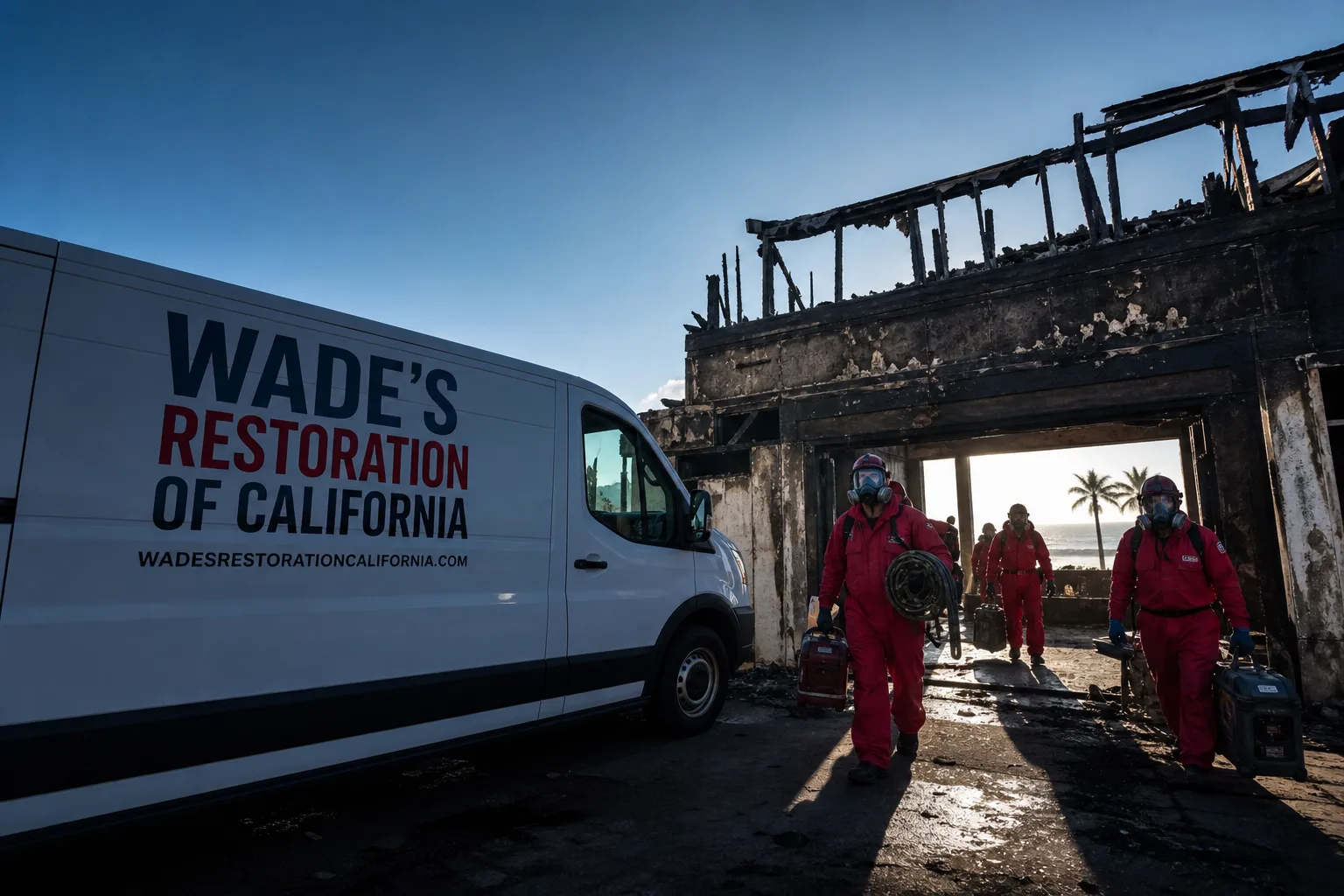
Fast, Reliable Mold Remediation Across Dublin
Mold remediation in Dublin typically runs $1,800-$6,500 for a single-room job, and most projects we handle in the 94568 zip code are completed in 3-7 working days, including HOA-required architectural review coordination. That matters when you live in a Positano or Schaefer Ranch townhome where a notice of violation can stall your project for weeks. We know how Dublin’s stucco-clad, master-planned housing stock fails, and we know how to fix it without triggering an ARB complaint. Call (855) 915-0646 and Wade Ferris will answer directly.
Why Wade’s Restoration of California Is Dublin’s Preferred Mold Remediation Company
Wade Ferris founded this company in 2007 and still puts his own name, address, and license number on every contract. That’s not marketing; that’s how accountability works. When you call about mold in a Dublin townhome, Wade is the person on the line, and he may be the person knocking on your door. He doesn’t hide behind a call center, and his technicians are background-checked and uniformed, not subcontractors pulled from a rotation.
Dublin homeowners keep calling us back because we handle the part of the job most restoration companies in the Tri-Valley either ignore or don’t understand: HOA and architectural-review compliance. In east Dublin’s 1990s-2000s master-planned tracts, remediation means more than removing drywall. It means scheduling demolition within posted quiet hours, matching the original paint sheen the HOA’s design standards specify, and communicating directly with the property manager so you don’t end up with a violation notice in the middle of a repair. We do that every week, and we document it in writing as part of your scope.
We’re IICRC-certified and RIA-affiliated, and we use professional-grade equipment from Dri-Eaz and other brands the insurance industry recognizes. But what matters most in Dublin is this: our 90-Day Done Right Promise is stamped in writing on every mold job. If it isn’t done right, Wade comes back. One call brings him back, not a customer service department.
Our Mold Remediation Services in Dublin
Here’s what we handle most often for Dublin homeowners, including a few things specific to this city’s housing stock, which differs meaningfully from San Ramon and Danville. The homes in Dublin’s east-side tracts were built in a narrow window, from roughly 1995 to 2010, and they share the same stucco-over-wood-frame details. When one fails, the neighbors’ often fails within the same storm season. We scope for that from day one.
Mold Inspection & Testing
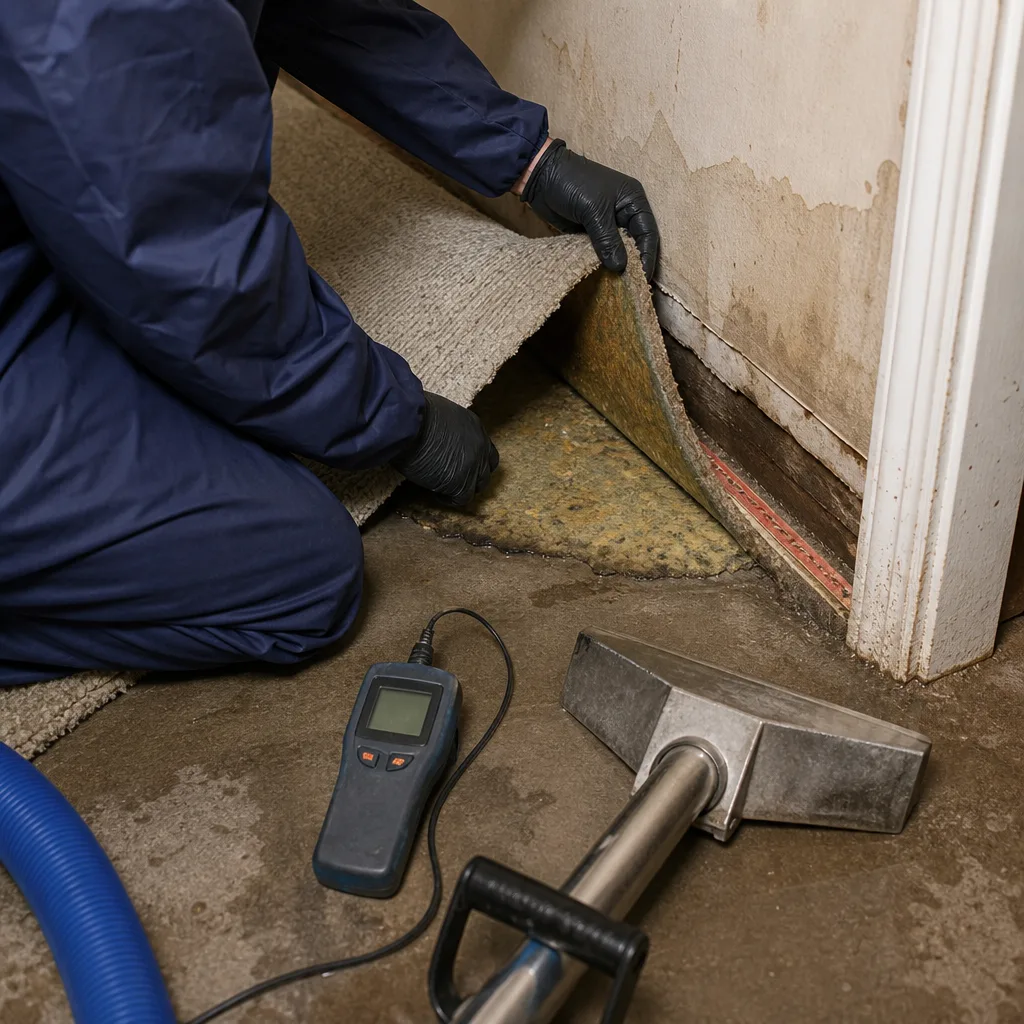
In Dublin, a mold inspection should never stop at the visible stain. Because so many of the city’s attached townhomes share identical envelope details, we routinely check the shared party wall for hidden mold behind the drywall, especially after an atmospheric river event, when easterly winds off the Altamont Pass drive rain into window corners and stucco kick-outs. We take moisture readings daily and hand you the full log when the job ends. Almost nobody else in the trade does that, and it matters when your HOA or your insurer asks for proof the drying actually worked.
Mold Removal
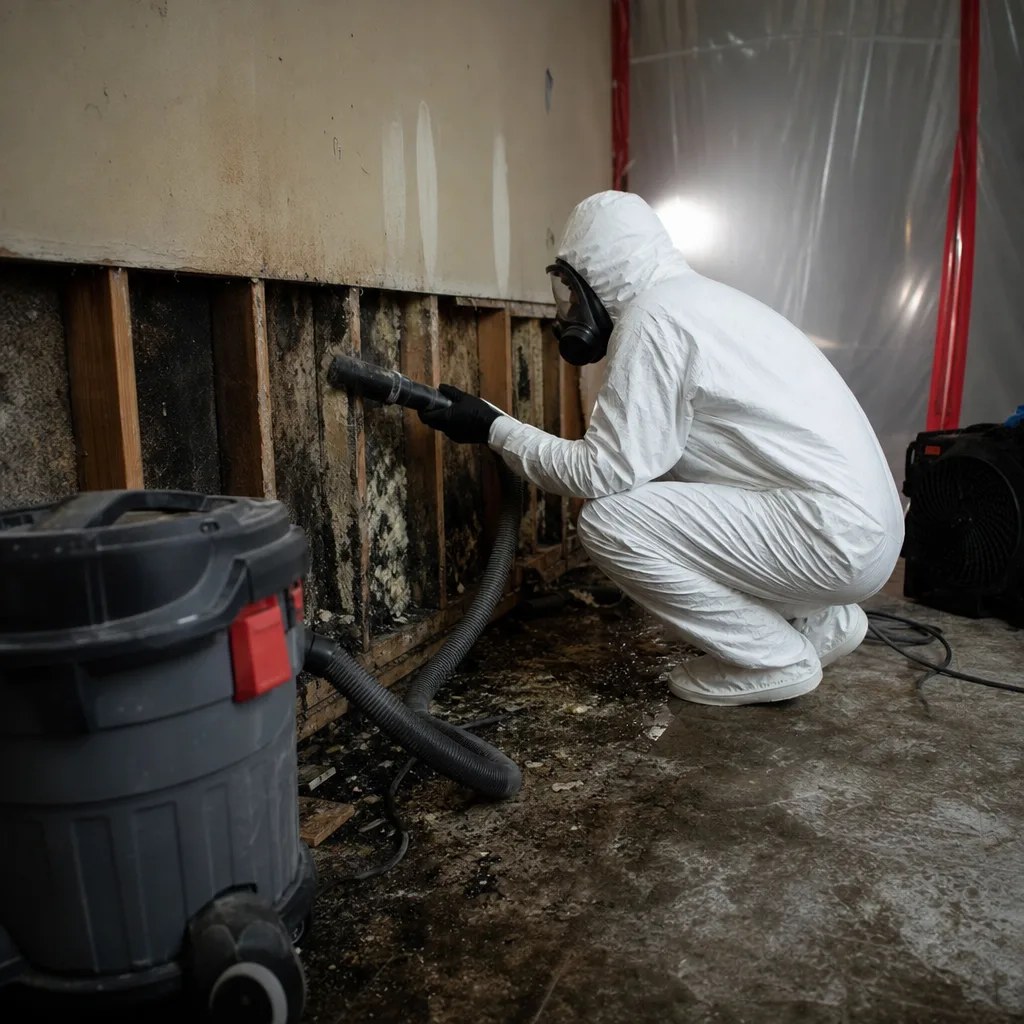
Mold removal in a Dublin townhome usually involves cutting out wet drywall, treating the framing cavity with an IICRC-approved antifungal, and sealing the wall before rebuild. We schedule that work around your HOA’s posted quiet hours. If your community’s rules restrict demolition on weekends, we don’t ask you to get a variance. We work Monday through Friday when possible and coordinate with the property manager if a weekend tear-out is unavoidable. The repair gets restored to the original texture and paint sheen, so it doesn’t look patched.
Black Mold Remediation
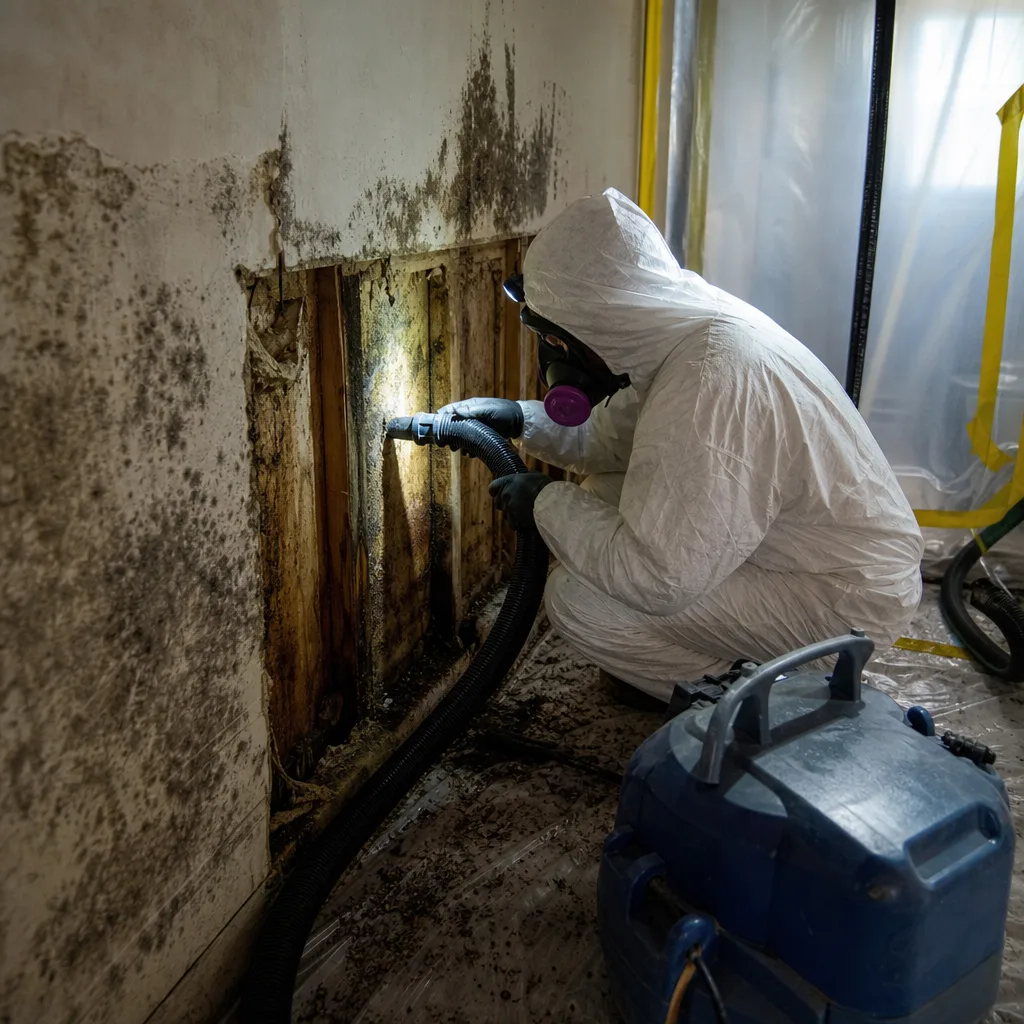
Black mold in Dublin most often shows up where you can’t see it: behind a window seat, inside a wall cavity below a failed stucco kick-out, or in a crawl space that’s been gathering moisture from clay soil and easterly storm winds. It’s not a DIY job. The spores are a genuine health risk for people with respiratory conditions, and improper removal spreads them through the HVAC system. Our crew contains the affected area, runs negative air pressure where needed, and disposes of contaminated material under containment protocols. If you’re unsure whether you’re looking at black mold or mildew, call us before you cut into anything.
Air Quality Restoration
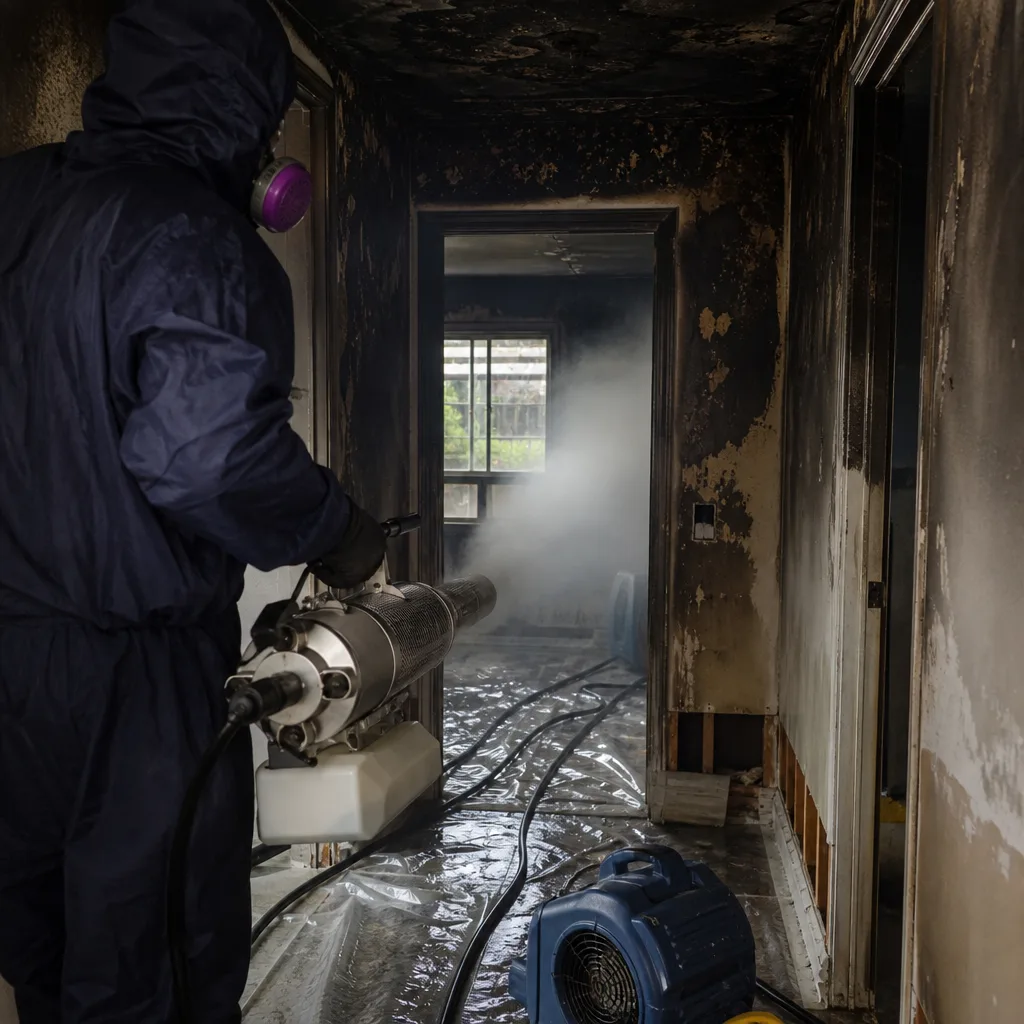
After the mold is gone, the air in your Dublin home has to be clean enough for your family to live in. We run HEPA air scrubbers during and after remediation, and we re-test the air before we call the job done. This isn’t an upsell; it’s how we confirm the spore count dropped to normal outdoor background levels for the Tri-Valley. Your HOA can’t tell you whether the air is safe; we can, and we’ll put the numbers in your hands.
Moisture & Humidity Control
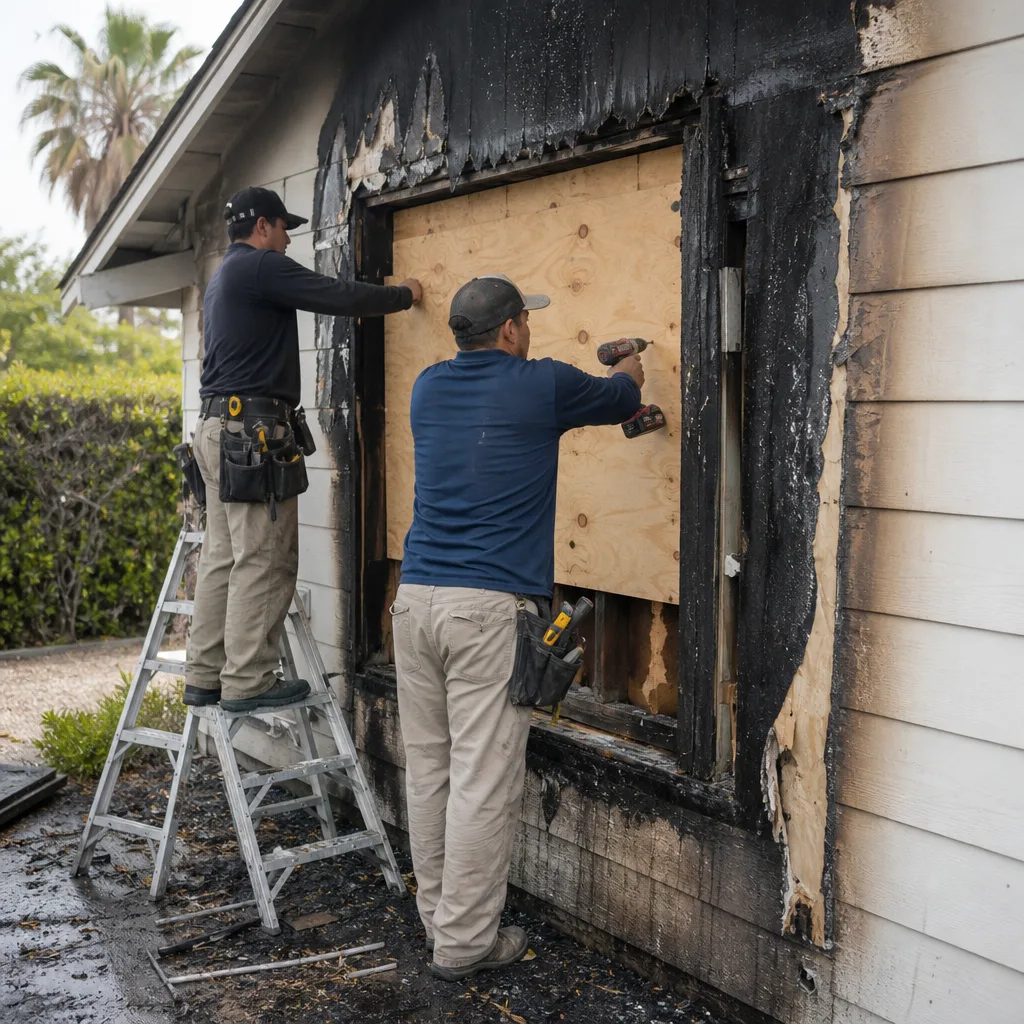
Dublin’s inland location means hot, dry summers, but winter atmospheric rivers push moist air through the Altamont Pass and into east-facing stucco details. If your home’s building envelope isn’t drying out after a storm, we find out why. That usually means checking window flashings, stucco terminations, and crawl space ventilation. We may recommend a dehumidifier or a drainage correction, and we’ll tell you honestly if the fix is minor or structural. This is the part of the job where the neighbor’s contractor often skips out, and the mold comes back inside a year.
Crawl Space Treatment
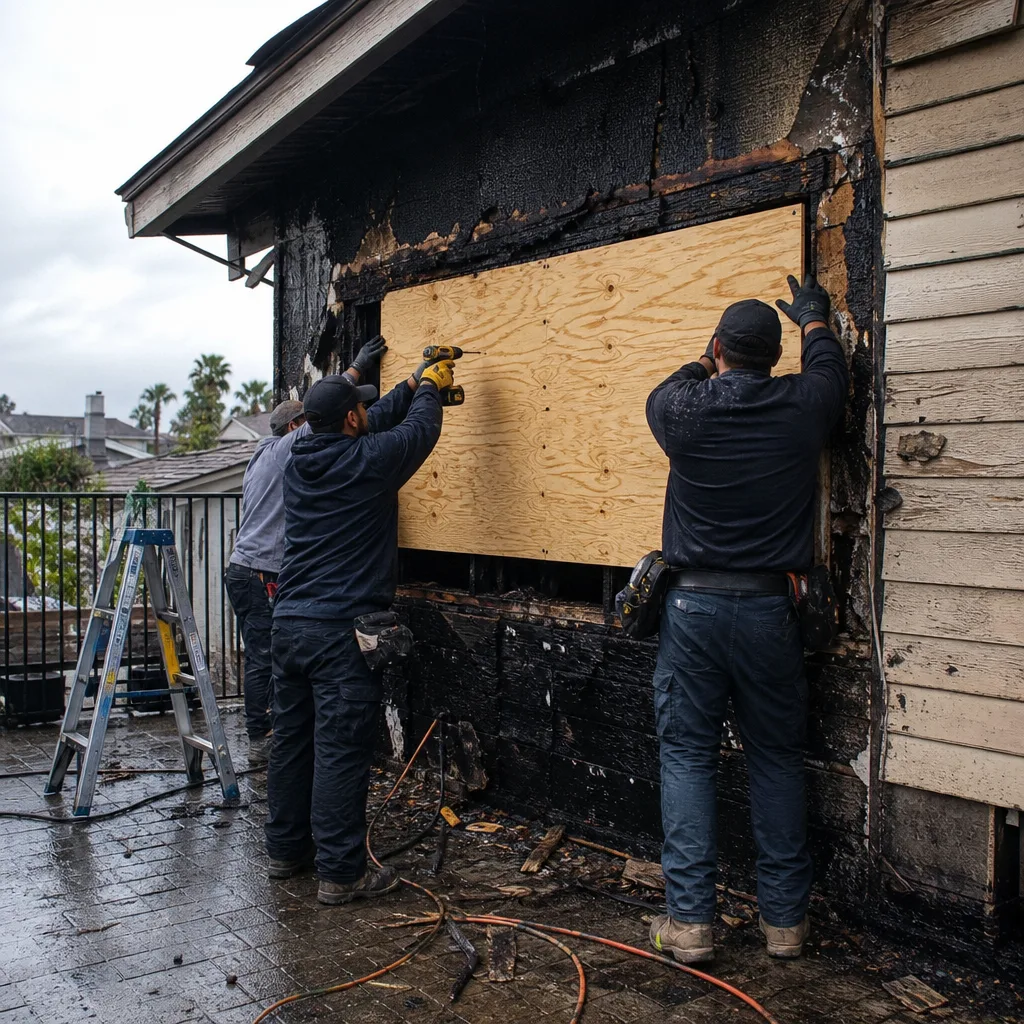
Crawl spaces under Dublin homes, especially those built on the clay-heavy soils of east Dublin, hold moisture differently than crawl spaces in Hayward or Pleasanton. The easterly winter winds drive rain into vent openings, and clay soil doesn’t drain the way loam does. We treat crawl space mold with antifungal application, seal foundation vents where appropriate, and install a vapor barrier when the subfloor is exposed to persistent moisture. You get a written before-and-after moisture log, which your insurer will actually accept as evidence of a completed job.
What happens when you call
- 1
A real person answersNo phone trees - you reach a local pro.
- 2
You get an upfront price rangeHonest numbers before anyone is dispatched.
- 3
A background-checked tech heads outLicensed & insured, dispatched right away.
- 4
You approve before work beginsNothing starts until you say go.
Trusted Brands We Service in Dublin
Dublin’s housing stock is overwhelmingly 1990s-2010s stucco construction from a handful of large production builders, and the drywall textures and paint palettes inside those homes are consistent from unit to unit. That’s useful. When we repair a wall in a Positano townhome, we know which texture hopper setting the original builder used and which Benjamin Moore or Dunn-Edwards colors dominate the interior courtyards and living spaces. We carry the equipment to match orange peel and knockdown textures, and we hold standing relationships with local paint suppliers in Dublin so you’re not waiting two weeks for material while your family lives with an open wall. The brands that matter on the equipment side are Dri-Eaz and Phoenix for drying, and we stock replacement parts locally so we’re not shipping from a regional warehouse when a dehumidifier fails mid-job.
Common Mold Remediation Problems We See in Dublin Homes
- Failed stucco kick-outs at window corners. Easterly storm winds off the Altamont Pass push rain into a detail that was designed for westerly coastal storms. Water gets behind the stucco, soaks the sheathing, and black mold forms in the wall cavity. A visible stain on the interior drywall is usually the last thing to appear, not the first.
- Hidden mold in a shared party wall. In attached Dublin townhomes, a leak in one unit’s window corner can wet the shared framing between two homes. You may not see anything on your side until the mold has been growing for weeks. If your neighbor is doing remediation, call us to check your side.
- HOA quiet-hour and architectural-review conflicts. Demolition and drying equipment are loud. If your remediation crew starts hammering on a Sunday morning in a Positano interior loop, you may get a violation before the first dumpster arrives. We schedule around the posted hours and file the architectural-review paperwork before we touch a wall.
- Paint and texture mismatch after repair. Replacing damaged drywall is only half the job in a master-planned Dublin community. We match the original texture and paint sheen to the HOA’s approved standard, so the repair passes ARB inspection on the first pass. A mismatch on the first inspection costs you a second one, and a second one costs you money.
Pricing for Mold Remediation in Dublin, CA
A single-room mold removal in Dublin runs $1,800-$3,800 including containment, antifungal treatment, and drywall repair to HOA-compliant texture and paint. A crawl space job with vapor barrier installation typically lands between $2,500 and $6,000 depending on square footage and how much material has to be removed. Full-scale black mold remediation behind a shared party wall can reach $8,000-$12,000 when multiple rooms are involved and the building science partner wants a structural engineer’s sign-off before rebuild. These are honest ranges for the 94568 market, not phone-quote bait. Call Wade at (855) 915-0646 and he’ll tell you what your specific home needs, and he’ll quote it free. No trip charge inside the county, and if you have a written estimate from another company, Wade will give you a free second opinion on it.
We Also Serve Cities Near Dublin
We work throughout the Tri-Valley, including San Ramon, Pleasanton, Hayward, and Danville, and we handle mold remediation in Dublin’s HOA communities as our core specialty. If you’re in a Schaefer Ranch townhome or a single-family home on the older west side of town, the same crew and the same 90-Day Done Right Promise apply. Learn more about our full-service Mold Remediation team and how we approach Mold Remediation in Dublin specifically.
Serving Dublin, CA - Our Local Coverage Area
We’re based in the Dublin area and know this community well. Use the map below to see our service coverage - if you’re nearby, we can almost certainly help.
FAQs - Mold Remediation in Dublin
Yes, if the remediation involves exterior changes, visible repairs, or structural work beyond basic interior drywall replacement, you should notify your HOA’s architectural review board before we start. Most Dublin HOAs in the 1990s-2000s master-planned tracts require approval for any work that alters the exterior appearance or penetrates a shared wall. We handle the ARB paperwork and scheduling compliance for you, and we’ve worked with the property managers in Positano and Schaefer Ranch enough to know exactly which forms they want. Call (855) 915-0646 and Wade will walk you through the approval sequence for your specific community.
Because the stucco kick-outs and window flashings were detailed for westerly coastal storms, not easterly atmospheric rivers that come through the Altamont Pass and hit east-facing walls with driving rain. The water gets behind the stucco at the kick-out, soaks the wood sheathing, and black mold forms inside the wall cavity. You won’t see it until the drywall stains, which can take weeks. If your neighbor had a window-corner leak after the last storm, get your side checked.
We contain our workspace with negative air pressure, remove only the damaged material on your side, treat the exposed framing with an IICRC-approved antifungal, and leave the neighbor’s side untouched unless their unit is also affected. In a party wall, the framing is shared, but the interior drywall is not. We coordinate with the neighboring unit’s owner or property manager if cross-unit testing is needed, and we document everything in writing so your HOA and insurer both know exactly what was done and what wasn’t.
Yes. We match the orange peel or knockdown texture the original builder used in your tract, apply the same paint sheen specified in your HOA’s design standards, and blend the repair into the surrounding wall. We’ve done enough work in Dublin’s master-planned communities to know which builders used which texture settings and which paint palettes dominate the interiors. The goal is that you can’t tell where the repair starts and the original wall ends, and your ARB inspector can’t either.
Yes, and it’s significant. Dublin’s clay-heavy soils hold water against foundation walls longer than the loam soils in Pleasanton or Livermore, and the easterly storm winds push rain into crawl space vents that face the Altamont Pass direction. That combination keeps subfloor wood wetter for longer after each storm, which means mold in Dublin crawl spaces is more persistent and more likely to return if you only treat the surface. We treat the wood, correct the ventilation or drainage issue, and install a vapor barrier when the subfloor exposure demands it.
Mold in a Dublin home, especially an attached townhome, is not a wait-and-see problem. The damage spreads behind the wall while you’re figuring out what to do, and an HOA violation can make a bad month worse. Call Wade at (855) 915-0646. He’ll answer his own phone, schedule a free inspection, and give you a written scope before any work starts. If a national outfit already quoted you something that feels wrong, bring it to us for a free second opinion. No charge for that.
Written by Wade Ferris, Owner at Wade’s Restoration of California, serving Dublin since 2007.