
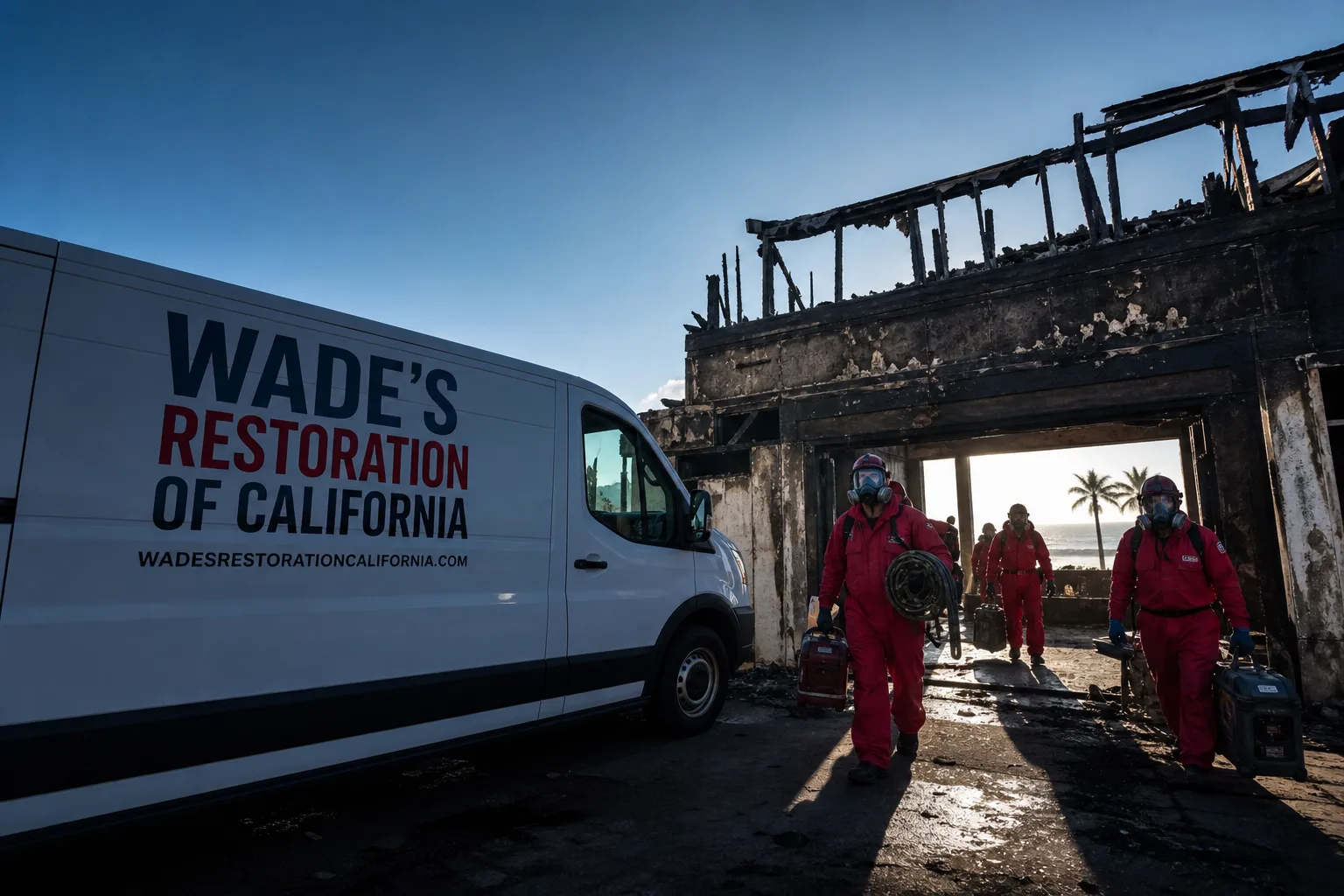
Fast, Reliable Mold Remediation Across Covina
Mold remediation in Covina runs between $1,800 and $6,500 for most homes, with the price driven by how far moisture has traveled behind walls and under floors. In Covina’s post-war tract homes, what starts as a faint musty smell near a baseboard is usually a galvanized supply line that’s been weeping inside the wall for years. We’re on the road to Covina the same day you call, and Wade Ferris answers the phone himself. Call (855) 915-0646 for a straight answer and a free estimate, not a call center.
Why Wade’s Restoration of California Is Covina’s Preferred Mold Remediation Company
Covina homeowners have a specific kind of house problem, and we’ve spent years learning it from the inside of their walls. The 91722 ZIP carries the densest concentration of 1945 to 1955 tract homes in the city, and those homes share a common failure: original galvanized supply lines corroding from the inside out thanks to the San Gabriel Valley’s hard, mineral-heavy water. When a homeowner calls about a dish washer leak or a musty closet, we already know what we’re likely to find before we open the first wall cavity. That’s not guesswork. That’s repetition.
Wade Ferris founded this company in 2007 and still answers the phone. When you call about mold in Covina, you’re not routed through a national dispatch center. You talk to Wade. He’s the one who schedules the crew, reviews the moisture readings, and signs the 90-Day Done Right Promise on your contract. If it’s not done right, he makes it right. That promise is in writing on every mold job we do in Covina, the 91722, 91723, and 91724 ZIP codes included.
Our response time to Covina is measured in hours, not days. Because our crews work the San Gabriel Valley corridor regularly, we’re familiar with the north-south streets that run from Badillo down to Covina Boulevard, and the older neighborhoods around Citrus Avenue where pre-war Craftsman bungalows sit beside mid-century ranch homes. We also handle the adjuster communication directly. You don’t have to translate between your insurance company and your restoration crew. Wade deals with the adjuster; you deal with getting your house dry and safe.
Our Mold Remediation Services in Covina
Mold Inspection & Testing
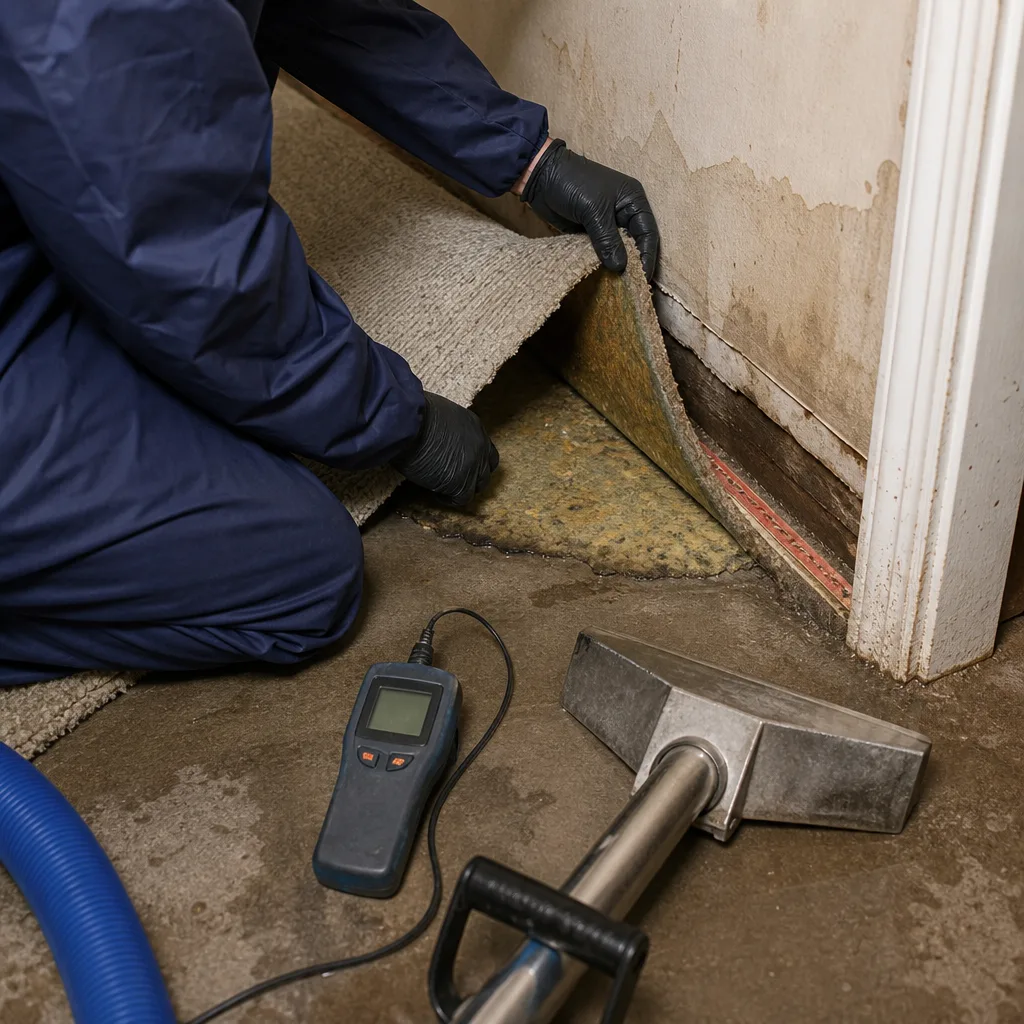
In Covina’s older homes, the question is rarely whether moisture exists. It’s where the moisture has been hiding and how long it’s been there. Our inspection process uses thermal imaging and moisture meters to trace water migration through post-and-beam framing and lath-and-plaster walls, the construction types that dominate the homes built between 1945 and 1970. We don’t just swab visible mold. We map the moisture signature of the entire wall cavity so the remediation plan addresses the colony, not just the stain. Air and surface samples go to an independent lab, and you get the full report, not a summary.
Mold Removal
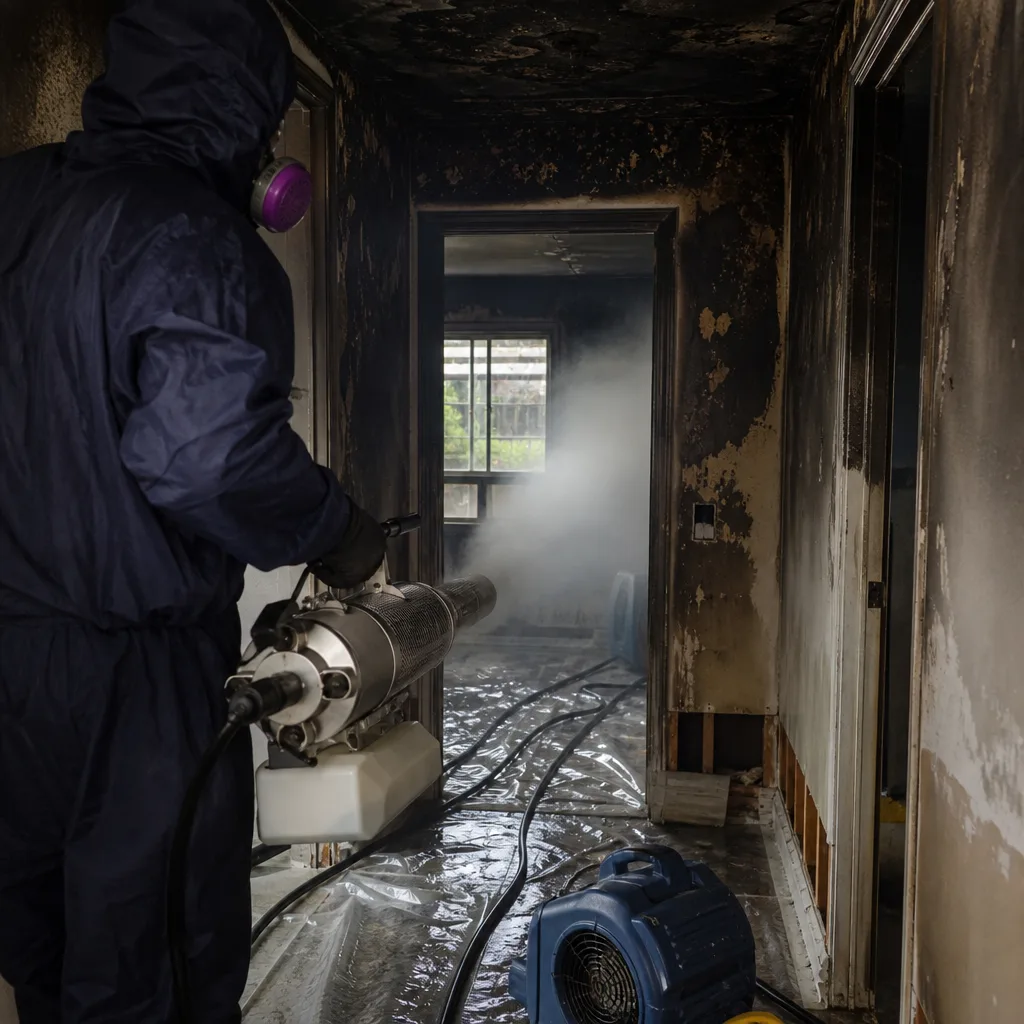
Removing mold from a Covina home means more than scrubbing drywall. It means finding the source that fed the colony. In the 91722 and 91723 ZIP codes, that source is frequently a galvanized supply line that’s been leaking inside a wall for years, hidden from view. We contain the affected area with negative air pressure, scrub the air with HEPA filtration, remove and bag contaminated materials, and treat the framing with IICRC-approved antimicrobial products. Then we address the moisture source, because mold removed without fixing the leak is mold that returns within weeks. This is the full Mold Remediation process, applied to the specific realities of Covina’s housing stock.
Black Mold Remediation
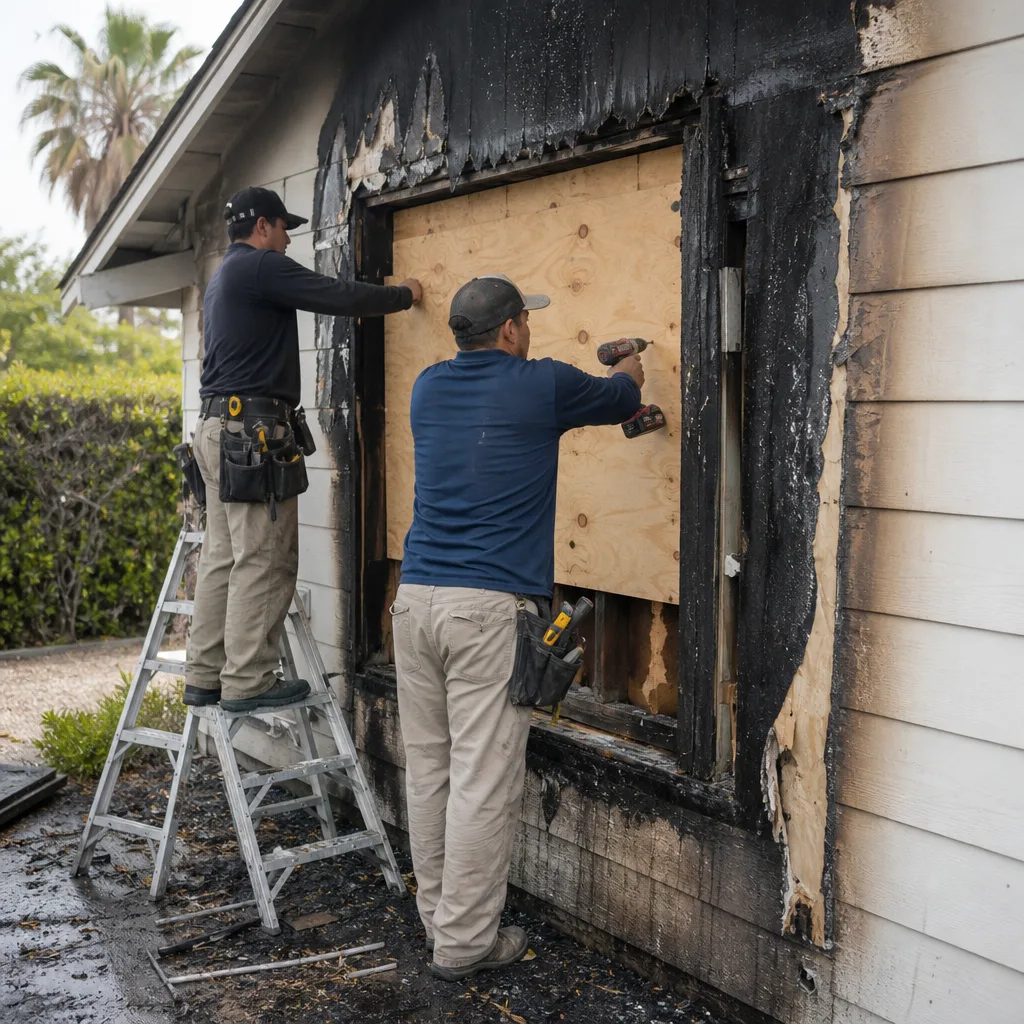
Black mold, or Stachybotrys chartarum, shows up in Covina homes after prolonged hidden moisture, the kind that sits behind walls and under sink cabinets for months. The 100-degree-plus summer heat in Covina’s inland thermal belt doesn’t create mold on its own, but it does accelerate the drying cycle on the exterior of a wall while the interior cavity stays damp. That temperature differential pulls moisture through drywall and feeds slow-growing colonies. We treat black mold with the same containment and removal protocol as any toxic mold, but we pay closer attention to source elimination: in Covina’s homes, the source is usually plumbing, not weather.
Air Quality Restoration
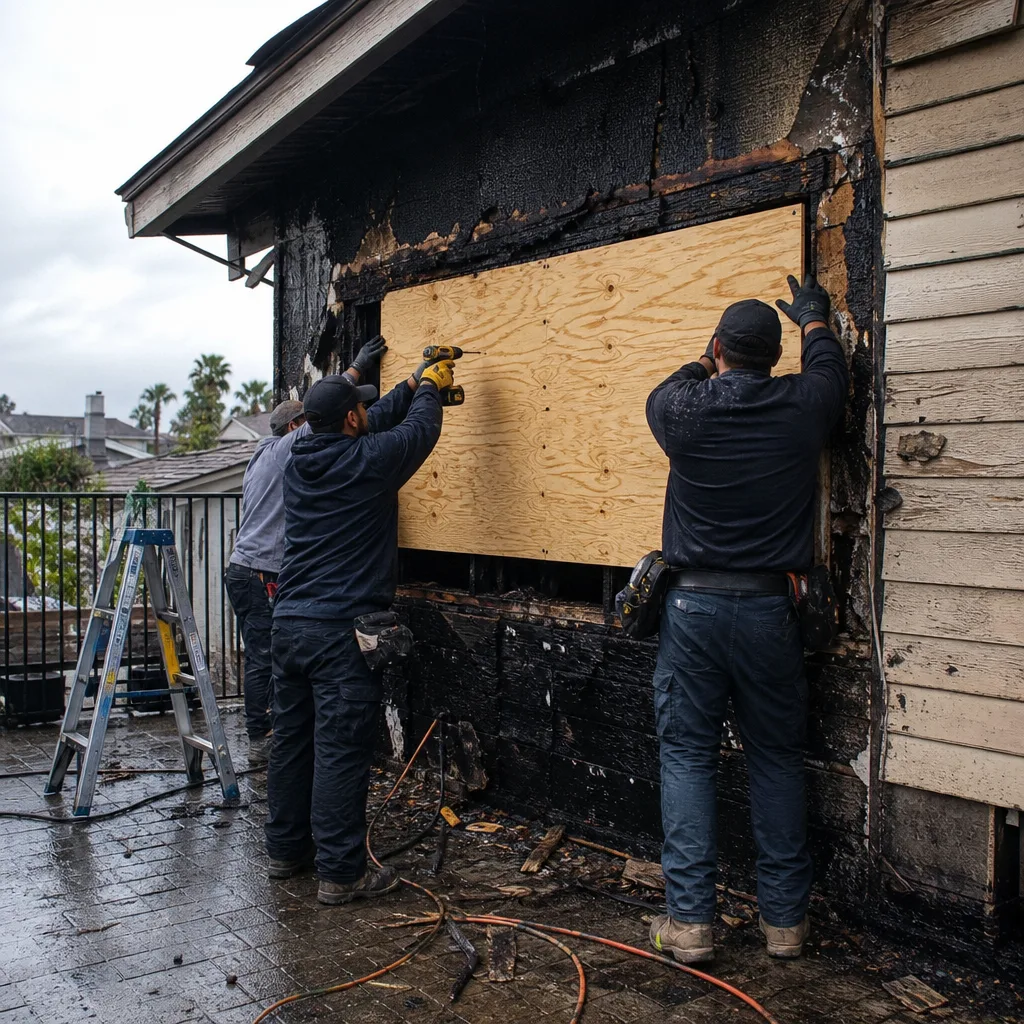
After a mold colony is removed, the air in your house still carries the spores and the microbial volatile organic compounds that caused the musty smell in the first place. In Covina’s single-story ranch homes, where the bedrooms share wall cavities with kitchens and baths, cross-contamination is common. We run HEPA air scrubbers during and after remediation, then re-sample the air before we clear the space. The goal is measurable: airborne spore counts inside the house should be lower than the outside baseline. We give you that comparison in the final report. You’ll know the number, not just our word.
What happens when you call
- 1
A real person answersNo phone trees - you reach a local pro.
- 2
You get an upfront price rangeHonest numbers before anyone is dispatched.
- 3
A background-checked tech heads outLicensed & insured, dispatched right away.
- 4
You approve before work beginsNothing starts until you say go.
Trusted Brands We Service in Covina
We run professional-grade equipment from Dri-Eaz, Phoenix, and XPOWER because Covina’s older homes demand real drying power, not rental-shop fans. Our crews are IICRC-certified and RIA-affiliated, and we carry the Injectidry wall cavity drying systems that let us dry inside walls without tearing out every square foot of lath and plaster in your 1948 bungalow. For Covina customers, we stock the components and antimicrobial treatments we use most often in local homes, which means we’re not waiting on a supplier when your remediation is underway.
Common Mold Remediation Problems We See in Covina Homes
- Hidden galvanized supply line leaks. In homes built between 1945 and 1955, particularly in the 91722 ZIP, original galvanized pipes corrode from the inside. The hard water delivered through the San Gabriel Valley system accelerates that corrosion. A pin-hole leak weeps for years behind drywall before the musty smell ever reaches a living space.
- Santa Ana heat spikes that trigger bloom. Covina sits in a wind funnel between the Puente Hills and the San Gabriel Mountains. When Santa Ana winds push dry, hot air through the city, the exterior side of a wall dries rapidly while the interior cavity stays humid. That pressure differential can pull moisture through the wall assembly and trigger a sudden visible mold bloom.
- Crawl space moisture under post-and-beam ranches. Many Covina homes sit on post-and-beam foundations with vented crawl spaces. The combination of hard-water pipe sweating and the city’s dry-wet seasonal cycles creates a damp, warm environment under the floor joists. Mold in the crawl space migrates upward through floor assemblies and into living areas.
- Post-remediation rebound after heavy rain. Covina’s position on the alluvial apron of the San Gabriels makes expansive soil shift a real issue. After a dry spell, the soil contracts. When heavy rain follows, the soil swells and re-opens micro-cracks in slab foundations. That’s how moisture returns after remediation and why we document moisture readings daily during the drying process.
Pricing for Mold Remediation in Covina, CA
Here are the numbers we quote in Covina, based on real jobs we’ve done in the 91722, 91723, and 91724 ZIP codes. Crawl space treatment under a typical post-and-beam ranch runs $1,200 to $3,800 depending on square footage and access. Mold inspection with lab testing costs $350 to $700. A contained mold removal in a single room is $1,800 to $4,200. Full-home remediation on a slab foundation with hidden plumbing leaks ranges from $5,500 to $9,500 when the source is an original galvanized line. What moves the price is containment complexity, how far the colony has spread through framing, and whether we need to open lath-and-plaster walls. Estimates are free, and we give you a written scope before any work starts. Call (855) 915-0646 and Wade will give you an honest range for your specific house.
Key takeaways for Covina homeowners:
- Galvanized supply lines in 1945 to 1970 homes fail from the inside, so the leak is hidden until mold is already established.
- Santa Ana heat spikes can trigger visible mold blooms in walls that have been damp for months.
- Crawl space treatment requires addressing the moisture source, not just spraying the framing.
- We take daily moisture readings and hand you the complete log when the job is done.
- The 90-Day Done Right Promise is in writing on every mold job, not a verbal reassurance.
We Also Serve Cities Near Covina
Our crews work throughout the eastern San Gabriel Valley. If you’re in Charter Oak, Azusa, Citrus, or West Covina, the same team that handles Mold Remediation in Covina can be at your door, usually within the hour. Same owner answering the phone. Same 90-Day Done Right Promise. Same written scope before we start. Call (855) 915-0646 and tell Wade what you’re seeing.
Serving Covina, CA - Our Local Coverage Area
We’re based in the Covina area and know this community well. Use the map below to see our service coverage - if you’re nearby, we can almost certainly help.
FAQs - Mold Remediation in Covina
Because the water damage was never visible. Covina’s post-war tract homes were built with galvanized steel supply lines, and the San Gabriel Valley’s hard water corrodes those pipes from the inside at roughly twice the rate of softer-water coastal areas. A pin-hole leak inside a wall can weep for ten or fifteen years before the first musty smell appears. By the time you notice it, the mold colony behind the drywall is already well established. This is the single most common scenario we see in the 91722 and 91723 ZIP codes. If your Covina home is from the 1940s, 50s, or 60s and has never had its supply lines replaced, a mold inspection is cheap insurance. Call (855) 915-0646 for a free estimate.
Both contribute, but in Covina’s post-and-beam ranch homes the more common driver is the cast-iron drain system. Original cast-iron drains from the 1940s and 50s develop cracks along the pipe seams as they age, and those cracks release moisture directly into the crawl space. Foundation moisture is a secondary factor after heavy rains, when expansive soil shifts and opens micro-cracks in the slab. Our crawl space treatment always starts with a drain camera inspection to rule out a failing cast-iron line, because treating the mold without fixing the pipe means you’ll be treating it again next year. Call us for an inspection at (855) 915-0646.
Yes. We use thermal imaging cameras and non-invasive moisture meters to trace moisture signatures through drywall and lath-and-plaster. Thermal imaging shows temperature differentials that indicate damp cavities. Moisture meters read through the wall surface. Air sampling can detect elevated spore counts in a room even when no visible mold is present. If the readings justify it, we’ll take a small air sample through a wall cavity to confirm spore types before we open anything. Most of our Covina inspections don’t require opening a single wall until we have a clear remediation plan. Call (855) 915-0646 to schedule testing.
The short answer is yes, but not from ash alone. Wildfire ash is dry particulate; it doesn’t create mold on its own. The mold risk comes from what happens when fire-damaged slopes above Covina lose their vegetation. The San Gabriel Mountain front above the city is steep. After a burn, the soil becomes hydrophobic and the first heavy rain sends debris-laden runoff down the alluvial fan channels into Covina’s residential neighborhoods. That water enters crawl spaces, wall cavities, and foundations. If your home took on water after post-fire rains even without direct flood damage, you should have a moisture assessment. We inspect for hidden moisture intrusion and treat any mold before it colonizes. Call (855) 915-0646 and mention the wildfire concern.
Lath-and-plaster walls in Covina’s older homes present a specific challenge: they’re thick, dense, and hold moisture differently than drywall. We use Injectidry wall cavity drying systems to force air through the plaster key and into the cavity, drying the space without removing entire wall sections. When removal is necessary, we cut clean access points and preserve as much of the original plaster as possible. The framing behind the plaster gets treated with an IICRC-approved antimicrobial. Then we document the moisture readings daily and hand you the log at the end of the job. It’s the only way to prove the wall cavity actually dried. For a free estimate on lath-and-plaster remediation in Covina, call (855) 915-0646.
Call Wade’s Restoration of California for Mold Remediation in Covina
If you smell something musty in your Covina home and you can’t find the source, don’t wait for the Santa Ana winds to bloom the problem into something visible. Call (855) 915-0646. Wade Ferris answers his own phone, and he’ll be on the road to your street in Covina inside the hour. You’ll get a written scope before any work starts, daily moisture documentation if we remediate, and a 90-Day Done Right Promise in writing. We also offer a free second opinion on any written estimate you’ve received from another company, no trip charge inside our own county, and a permanent 10% discount for seniors and veterans. Ask anyone on your street. Wade’s name is on the truck.
Written by Wade Ferris, Owner at Wade’s Restoration of California, serving Covina since 2007.