
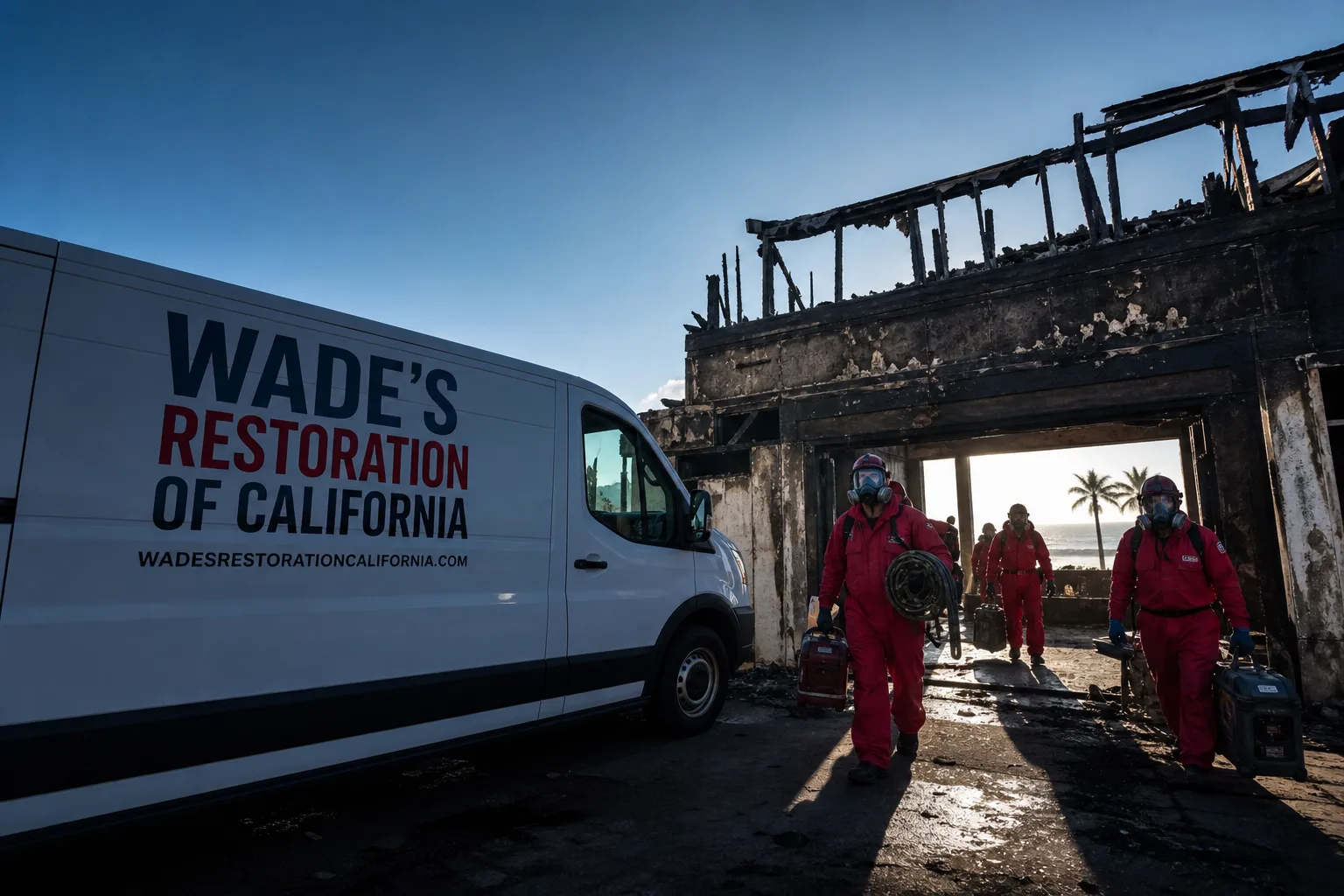
Fast, Reliable Mold Remediation Across Corona
Mold remediation in Corona typically runs $1,800 to $6,500 for a standard containment and removal job, and most homes we test show elevated spore counts within 24 hours of a hidden leak. We’re Wade’s Restoration of California, and we’ve worked inside enough Corona tract homes to know the difference between surface staining and the kind of wall-cavity growth that keeps coming back. If you smell something musty near the downtown circle, or you’ve spotted dark staining along a baseboard in Eagle Glen, call (855) 915-0646. Wade Ferris answers his own phone, day or night.
Why Wade’s Restoration of California Is Corona’s Preferred Mold Remediation Company
We’re not a national chain with a call center three states away. This is a locally owned, owner-operated outfit. Wade Ferris founded it in 2007, he puts his name and license number on every contract, and he’s the one who shows up when you call. Corona homeowners have dealt with enough out-of-town crews that quote one price on the phone and a different one at the door. Ask anyone on your street. They’ll tell you Wade is the guy they ran into at the Stater Bros. on Main Street a month after the job, and he still asked how the crawl space was holding up.
Our Mold Remediation team covers every Corona zip code: 92877, 92878, 92879, and 92880. That includes the neighborhoods off Ontario Avenue, the Dos Lagos area, the Temescal Valley corridor, and the older pockets around the historic downtown circle. We carry professional-grade Dri-Eaz and Phoenix equipment on the truck, and our techs hold IICRC credentials with RIA affiliation. But what actually matters is the moisture log. Wade takes readings every single day and hands you the full log when the job’s done. Almost nobody else in this trade does that.
Our Mold Remediation Services in Corona
Every house in Corona sits on the same basic conditions: compacted clay soil, hard municipal water, and Santa Ana winds that stress roofs. That combination produces specific kinds of mold problems, and our services are built around them.
Mold Inspection & Testing
Before we pull a single piece of drywall, we find out what’s actually growing and where it’s coming from. That means air sampling, surface swabs, and a physical inspection of the places Corona mold hides: behind stucco, under tile roofs with hairline cracks, inside HVAC returns that ran during a red-flag wind event. We don’t guess. We test.
Mold Removal
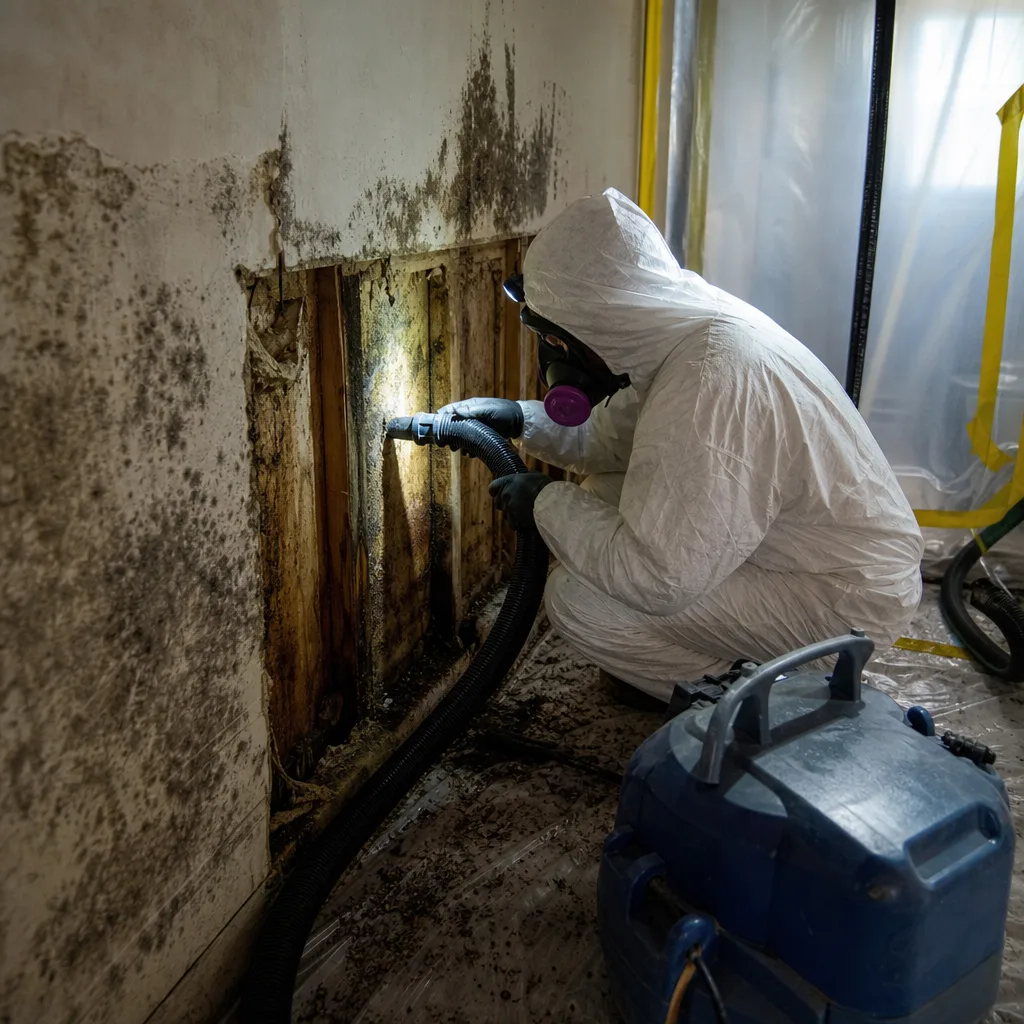
Once testing confirms the species and spread, we set containment, run HEPA-filtered negative air, and remove affected materials. In Corona’s 1985-2008 stucco tract homes, that usually means opening the wall cavity behind the drywall. Surface scrubbing alone leaves spores in the framing, and the problem returns in three months. We remove, not just wipe.
Black Mold Remediation
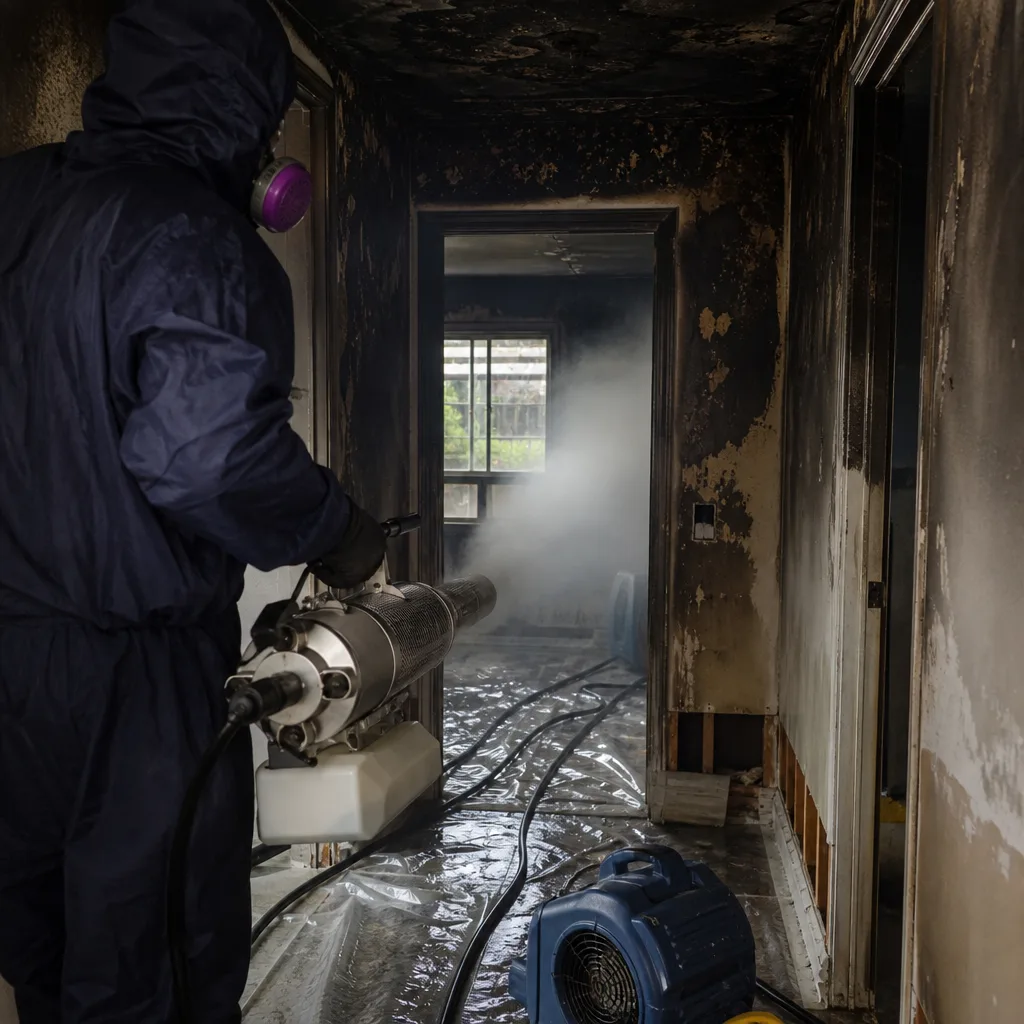
Stachybotrys – what people call black mold – shows up in Corona homes where water has been sitting for weeks, not days. That’s common behind dishwasher cabinets fed by corroded galvanized lines in pre-1970s houses near the circle. Stachybotrys requires full containment, proper PPE, and disposal of porous materials. This is not a bleach-and-paint job. We treat it like the contamination event it is.
Air Quality Restoration
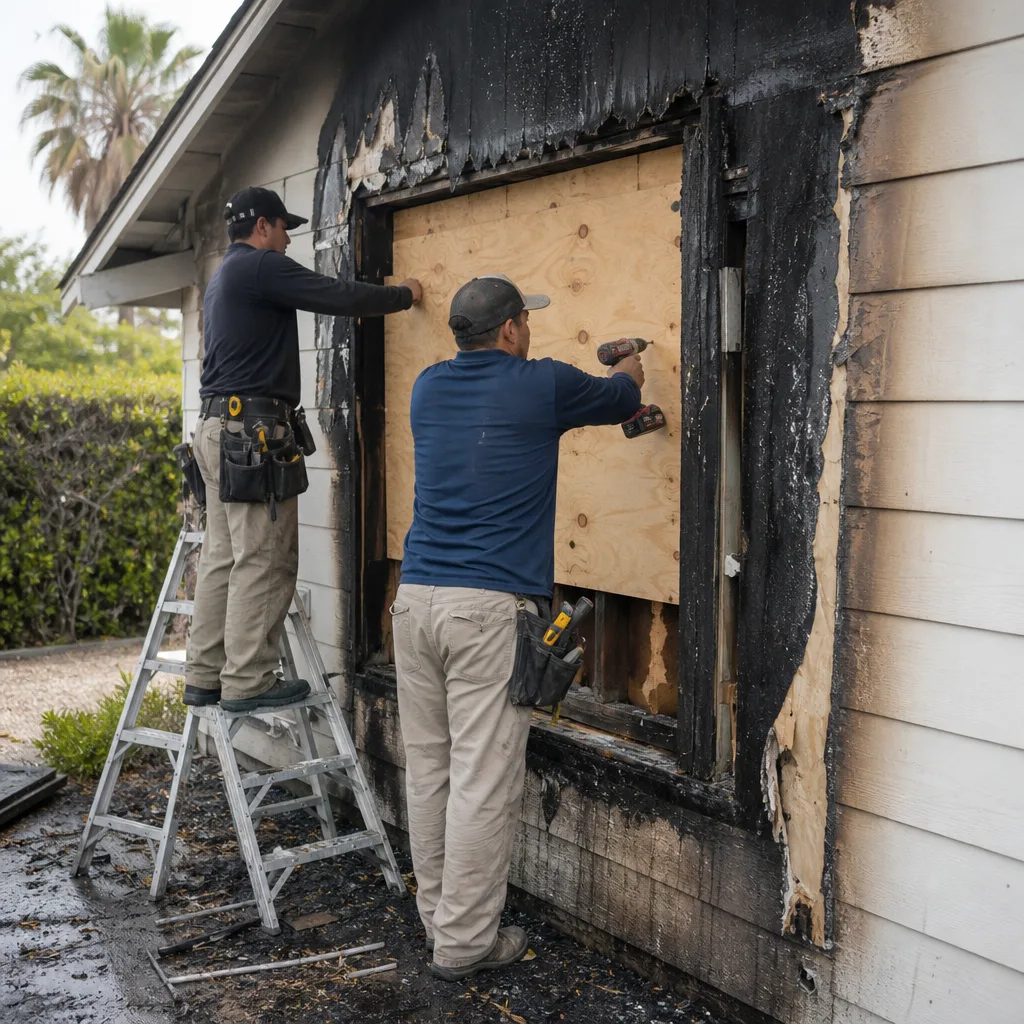
South Corona homes in 92883 deal with something most of the Inland Empire never sees: HVAC systems that pulled wildfire smoke and fine ash from a Cleveland National Forest burn into the ductwork. That ash carries combustion particulates that spike VOC readings and mask residual mold spores on post-remediation samples. We run duct decontamination and HEPA air scrubbing after every south Corona mold job, because skipping it produces a false pass and a call-back.
What happens when you call
- 1
A real person answersNo phone trees - you reach a local pro.
- 2
You get an upfront price rangeHonest numbers before anyone is dispatched.
- 3
A background-checked tech heads outLicensed & insured, dispatched right away.
- 4
You approve before work beginsNothing starts until you say go.
Trusted Brands We Service in Corona
We work on homes in Eagle Glen, Dos Lagos, and the Temescal Valley corridor, and we stock the consumables those jobs need: HEPA filters, containment sheeting, and antimicrobial treatments rated for the specific mold species our Corona testing turns up. We run Dri-Eaz dehumidifiers and Phoenix air movers because they hold up under back-to-back fire-season and flood-season workloads. No matter the brand of equipment in your house – Carrier, Lennox, Trane, Goodman – the mold behind the wall doesn’t care. We handle the remediation side, then coordinate with your HVAC contractor if duct cleaning is needed.
Common Mold Remediation Problems We See in Corona Homes
- Hidden growth behind stucco: Contractors scrape visible mold off drywall but never open the cavity behind it. In Corona’s 1985-2008 stucco tract homes, hard-water pinhole leaks keep feeding that cavity moisture, and the mold returns within weeks.
- Skipped crawl space treatments: Tight side-yard clearances on 1980s tract homes make crawl space access a pain, so some outfits skip it. We don’t. Subfloor mold re-contaminates living spaces fast, and Corona’s clay soil holds moisture tight against foundation vents.
- False-pass air samples: South Corona homes get air samples taken before HVAC ducts are cleaned. When Santa Ana ash particles mask residual spores, the sample passes and the homeowner thinks the job’s done. It isn’t.
- Tile roof cracks ignored: Santa Ana wind gusts put mechanical stress on tile roofs. Those hairline cracks let wind-driven winter rain behind the stucco, creating a slow, hidden moisture source that festers for months before anyone notices.
The Hard Water Problem Near the Downtown Circle
Corona’s municipal water supply averages 13-17 grains per gallon of hardness. That’s significantly harder than neighboring Riverside. What that means for pre-1970s homes near the historic downtown circle is simple: the original galvanized plumbing corrodes faster than it should, and pinhole leaks show up inside walls. Those leaks don’t flood a room. They drip behind the lath and plaster for months, feeding hidden mold colonies that eventually bleed through as dark staining. If your house near the circle still has original galvanized supply lines, the mold you’re seeing is probably the symptom, not the disease. We fix both: we remediate the fungal growth, then we identify and address the leak source so you’re not calling us again in six months.
A few years back, our techs traced a persistent musty odor in a 1992 stucco tract home in Eagle Glen to a hairline crack in the tile roof. Santa Ana-driven rain had been seeping behind the stucco for months. We scoped the cavity, found Aspergillus growth, and ran a HEPA-scrubbed negative-air containment with Dri-Eaz dehumidifiers before rebuilding the affected wall cavity. The homeowner had lived with that smell for a year and two other contractors had told her it was “just an old house.” It wasn’t. It was a roof crack and a wet wall.
Pricing for Mold Remediation in Corona, CA
A standard mold remediation in Corona runs $1,800 to $6,500. That covers containment, removal of affected materials, HEPA air scrubbing, and clearance testing. A crawl space treatment under a 1980s tract home typically lands between $2,200 and $4,800 depending on square footage and access. Black mold remediation in an older home near the downtown circle where galvanized lines are implicated often runs higher – $3,500 to $8,000 – because the leak source has to be addressed alongside the fungal removal. Air quality restoration with full duct decontamination for a south Corona fire-smoke job generally runs $1,900 to $5,000. Every estimate is free. Call (855) 915-0646 and Wade will give you a written scope before any work starts.
We Also Serve Cities Near Corona
Wade’s Restoration of California serves Corona and the surrounding communities. That includes Home Gardens, El Cerrito Corona, Eastvale, and Norco. If you’re in one of those areas and dealing with mold, water damage, or fire smoke, the same team covers you, and there’s no trip charge inside our own county.
Serving Corona, CA - Our Local Coverage Area
We’re based in the Corona area and know this community well. Use the map below to see our service coverage - if you’re nearby, we can almost certainly help.
FAQs - Mold Remediation in Corona
Corona’s water supply runs 13-17 grains per gallon of hardness, which corrodes original galvanized plumbing in pre-1970s homes faster than surrounding cities. Those corroded pipes develop pinhole leaks that drip inside wall cavities, feeding hidden mold for months before you see staining. If you live near the circle and have galvanized supply lines, a mold problem usually points to a plumbing leak behind the wall.
During red-flag Santa Ana wind events, south Corona homes sit at the wildland-urban interface where smoke and embers from Cleveland National Forest burns push toward foothill subdivisions. HVAC systems running during those events pull fine ash and combustion particulates into the ductwork and living spaces. That contamination holds moisture and organic material, creating conditions where mold spores thrive even though no flame ever touched the house.
Yes. Santa Ana wind gusts put repeated mechanical stress on tile roofs across Eagle Glen and the Temescal Valley corridor. Hairline cracks form, and then compressed winter storms drive rain behind the stucco and into the wall cavity. The moisture sits there for months, and mold grows inside the wall before you ever see a stain on the ceiling. We’ve opened dozens of these cavities. It’s one of the most common hidden mold sources in Corona.
Corona’s compacted clay soil absorbs very little rainfall, so winter storm runoff channels directly against foundation walls and into low crawl space vents. The fix starts with proper drainage away from the foundation, sealed crawl space vents, and a vapor barrier rated for continuous ground contact. We also run a dehumidifier in the crawl space after treatment, because clay soil holds moisture against the structure for weeks after a storm.
In Corona’s dry summer heat, mold spores can germinate within 24 to 48 hours after a leak, even though the air feels dry. The moisture is trapped inside the wall cavity or under the slab, where heat creates a near-tropical microclimate. If you’ve had a supply-line leak, a water heater failure, or an AC condensate overflow, call (855) 915-0646 the same day. Faster response means a smaller remediation job and a lower bill.
Call Wade’s Restoration of California for Mold Remediation in Corona
If you’ve got a musty smell you can’t place, staining you’ve been watching for weeks, or an air-quality concern in 92883 after a Santa Ana wind event, call (855) 915-0646. Wade Ferris picks up, and he’ll tell you straight whether you need a full remediation or just a targeted cleaning. We offer a Free Second Opinion on any written estimate, and there’s no trip charge inside our own county. The 90-Day Done Right Promise applies to every mold job we take in Corona: if it’s not done right, Wade makes it right, in writing. Call now, and he’ll be on the road.
Written by Wade Ferris, Owner at Wade’s Restoration of California, serving Corona and the Inland Empire since 2007.