
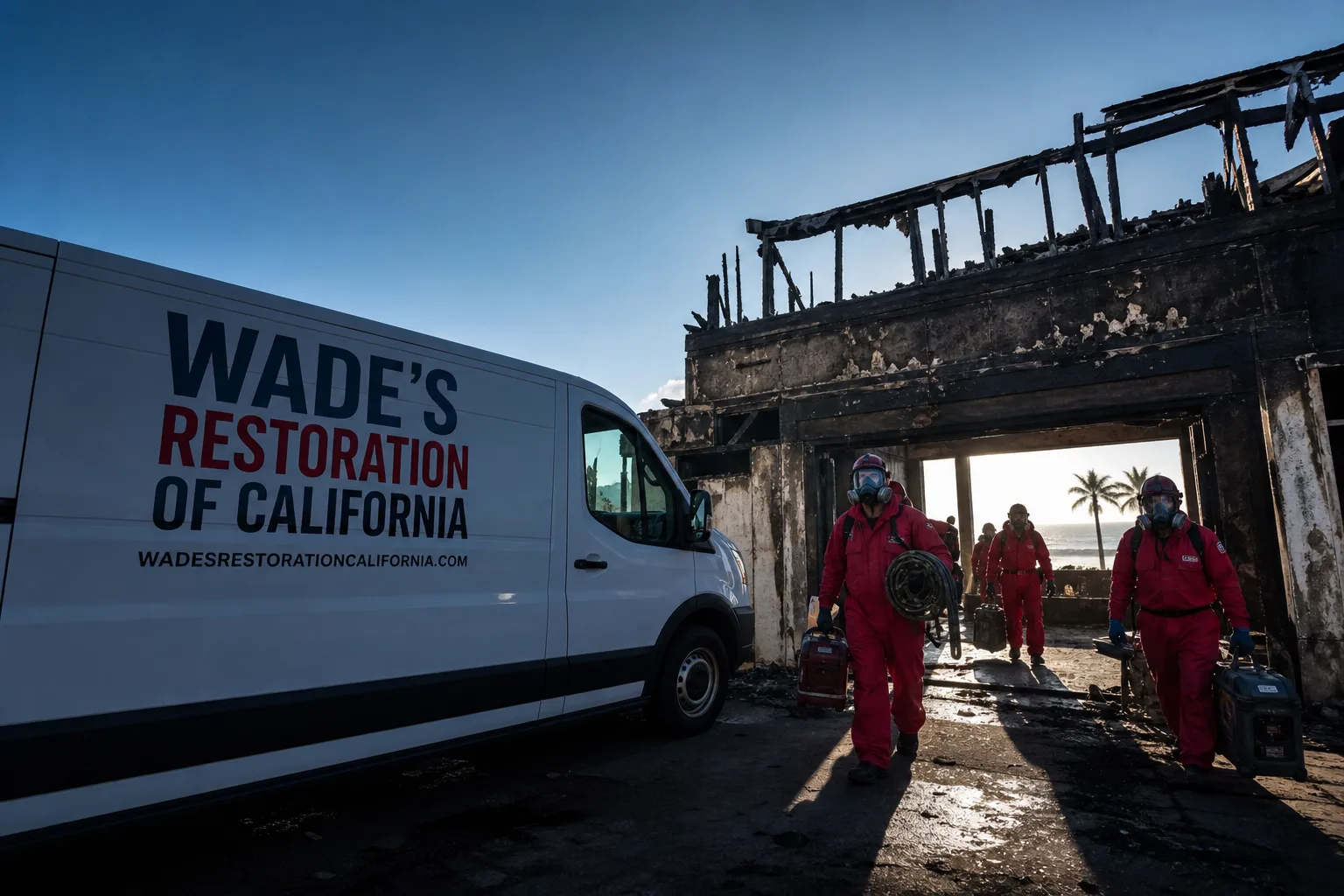
Fast, Reliable Mold Remediation Across Canoga Park
Mold remediation in Canoga Park typically costs between $1,800 and $6,500 depending on how far the growth has spread, and the work can often start within 24 hours of your call. If you’re smelling something musty near Saticoy or dealing with water stains on a ceiling in 91304, the problem is usually deeper than it looks. We know these postwar tract homes because we’ve opened up hundreds of their walls.
Wade’s Restoration of California has been handling mold problems in Canoga Park ZIP codes 91303, 91304, 91305, and 91309 long enough to know that what hides behind stucco here doesn’t act like mold in West LA or the beach cities. The Valley heat cooks moisture into places you’d never think to look. Call (855) 915-0646 and you’ll get a real person, not a call center. Often that person is Wade himself.
Why Wade’s Restoration of California Is Canoga Park’s Preferred Mold Remediation Company
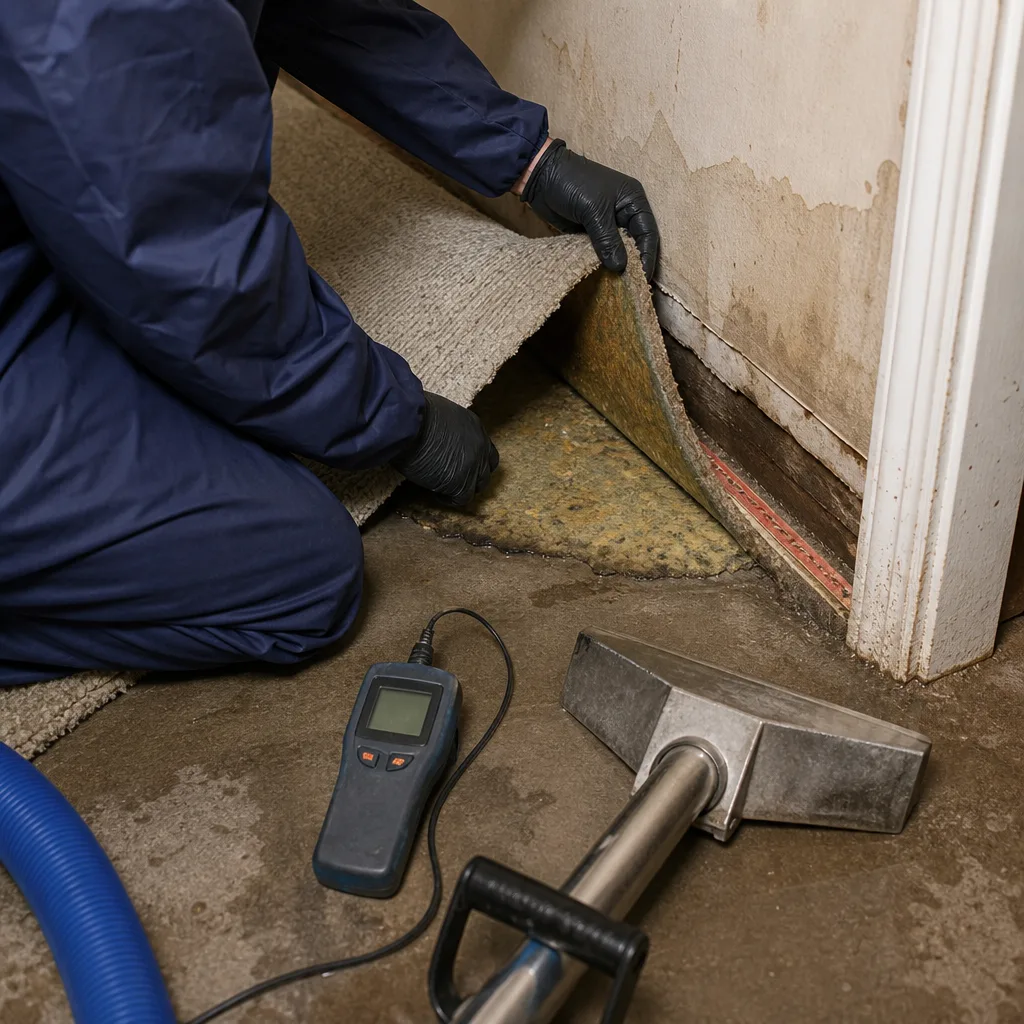
Wade Ferris started this company in 2007 and never turned it into a franchise. His name is on the truck, his license number is published, and he answers his own phone. When you call about mold behind a bathroom wall off Topanga Canyon Boulevard, the person you talk to is the same person who will show up with a moisture meter and tell you the truth, even when the truth is that you don’t need full remediation, just a HVAC cleaning and a dehumidifier.
That honesty is why homeowners in Canoga Park keep our number. We don’t send a sales rep with a script and a scare tactic. We send trained, background-checked people who take daily moisture readings and hand you the full log at the end of the job. Almost nobody in this trade does that. We do it because you should be able to see exactly what was wet, how wet, and when it got dry.
Canoga Park sits in a weird spot, climatically speaking. The western Valley acts like a heat and wind funnel. Summer days over 105°F and Santa Ana events with single-digit humidity mean a small water leak can turn into a mold bloom faster than homeowners expect. We run tighter drying timelines here than we would in Santa Monica because the building science demands it. That local knowledge comes from over 29 years of doing restoration work in communities like this one, and from a man who lives where he works.
Our Mold Remediation team holds IICRC certifications and RIA affiliation, and we run professional-grade Dri-Eaz equipment that actually pulls moisture out of building materials rather than just moving air around. Every mold job in Canoga Park carries our 90-Day Done Right Promise in writing. If it’s not done right, we make it right. No fine print, no argument.
Our Mold Remediation Services in Canoga Park
Mold Inspection & Testing
Mold inspection in Canoga Park should start with moisture mapping, not just air samples. We walk the property with thermal imaging and pin meters, checking the places Valley homes hide water: behind stucco, under S-tile roof penetrations, in crawl spaces that bake all summer. Air samples alone miss mold growing inside wall cavities until it’s already spread to drywall. We test, but we also look. That combination has caught problems in 91303 homes that other companies walked right past.
Mold Removal
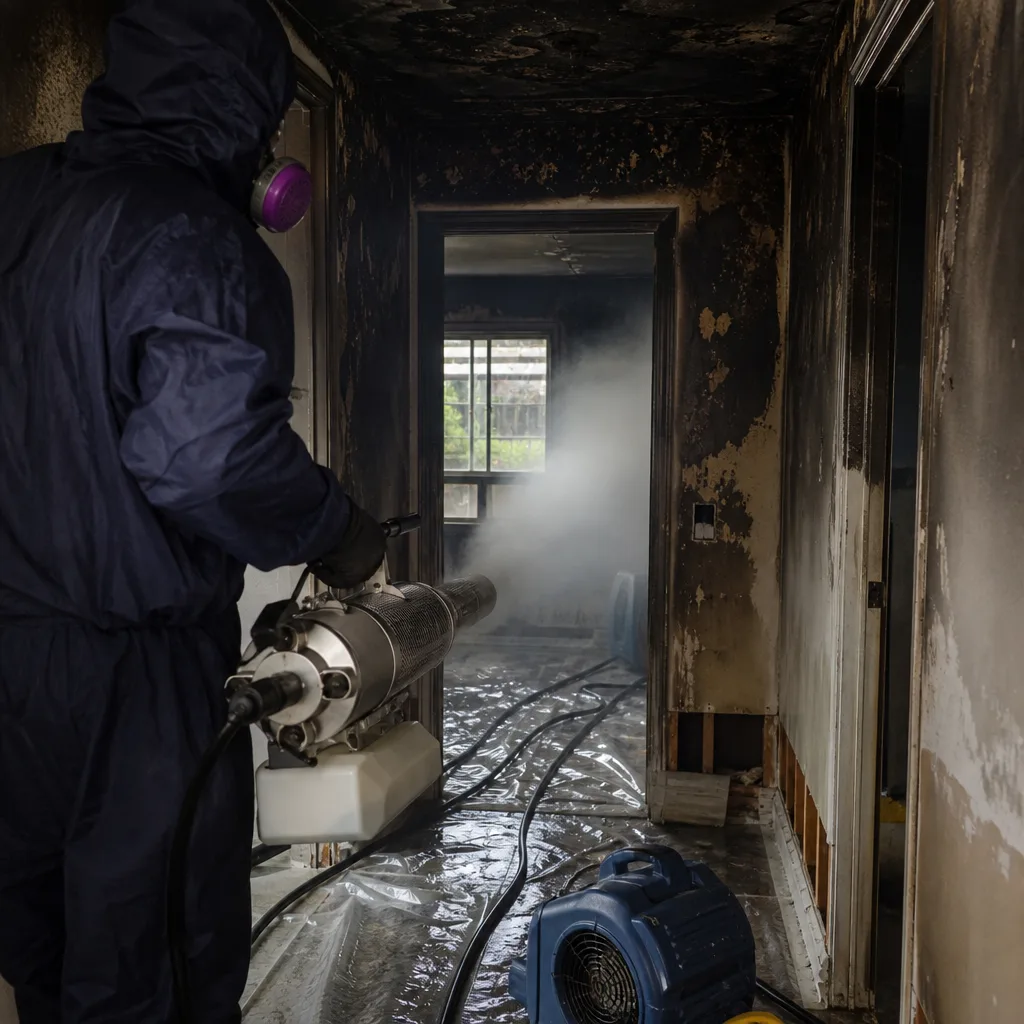
Mold removal here usually means cutting out affected drywall, HEPA-vacuuming every stud bay, and treating the framing with an EPA-registered antimicrobial. In Canoga Park’s postwar tract homes, that often means working around original 1960s construction quirks like undersized joist bays and zero exterior drainage planes. We contain the work area under negative air pressure so spores don’t spread through the HVAC system while we’re cutting. Then we dry it down to building-standard moisture content before a single sheet of new drywall goes up.
Black Mold Remediation
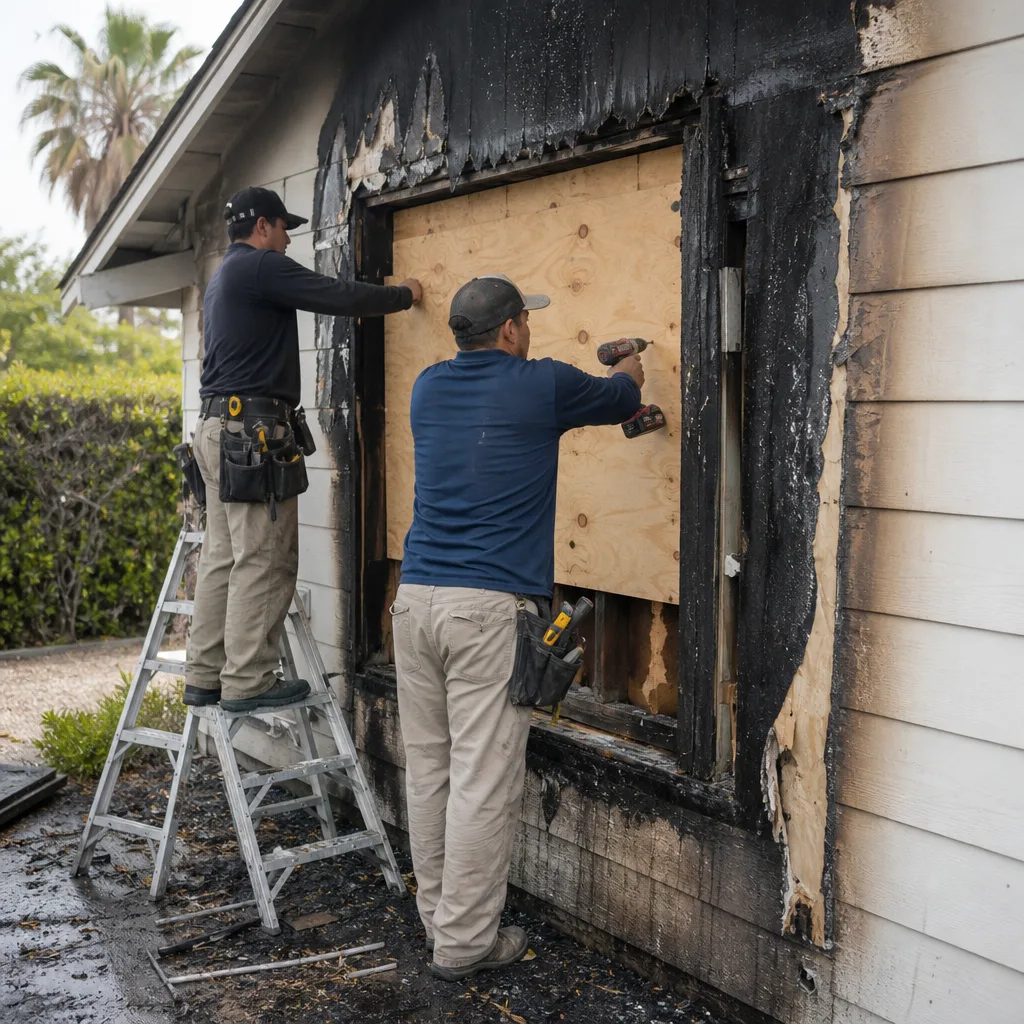
Black mold, usually Stachybotrys chartarum, turns up most often in Canoga Park in two places: behind walls with slow plumbing leaks and attic spaces where warm, moist air condenses against the underside of the roof deck. This is not a bleach-and-paint situation. Black mold remediation in 91304 requires full containment, HEPA filtration, removal of porous materials, and verification testing after the job. We’ve done it in homes along Sherman Way and Vanowen, and we’ll show you the before, during, and after photos of the stud bays before we close the wall.
Air Quality Restoration
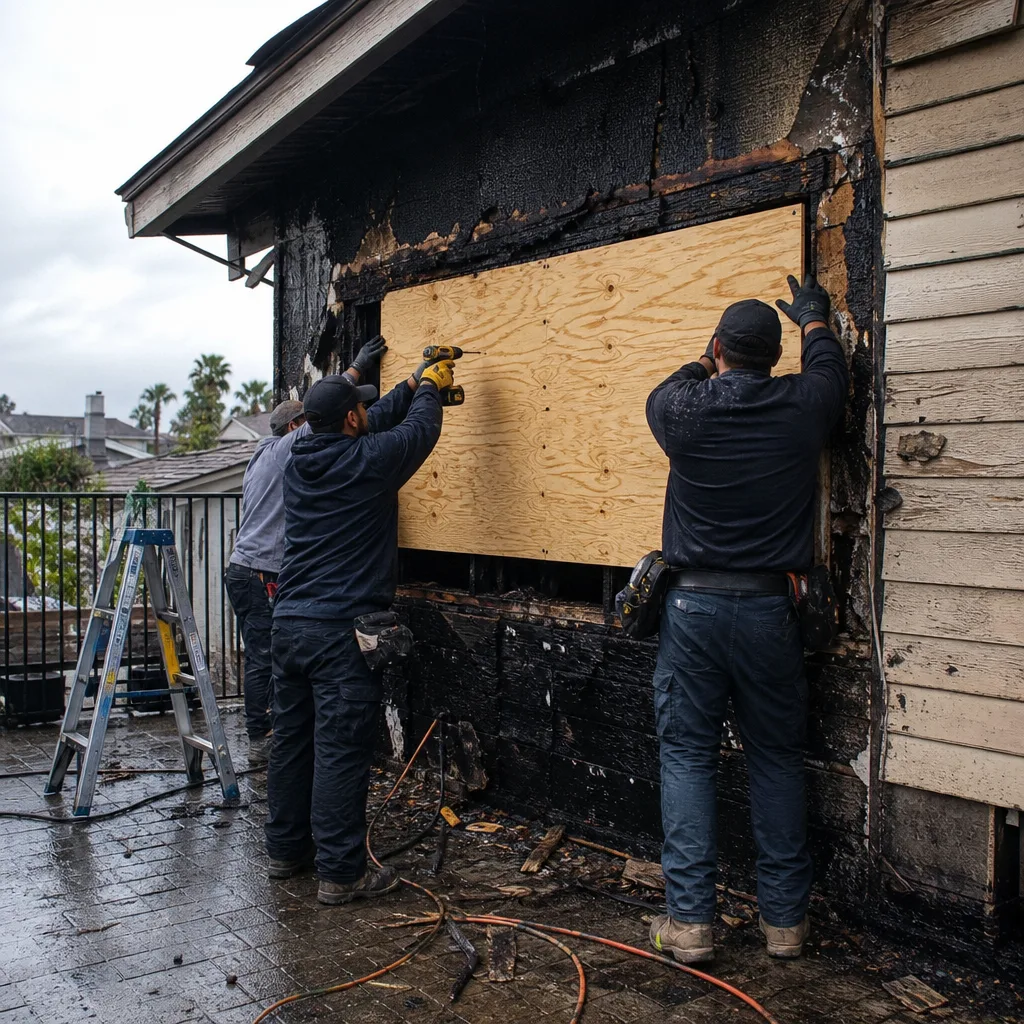
After wildfire smoke events, Canoga Park homes routinely show elevated airborne mold spore counts weeks after the fire, even when the interior seems fine. That’s because ash and soot that infiltrated attic insulation become a moisture-holding colony when the first fog or rain arrives. Air quality restoration in the 91304 corridor often means HEPA-vacuuming attic trusses, sealing off the S-tile roof penetrations, replacing contaminated insulation, and running air scrubbers for 48 to 72 hours. We test before and after so you’re not taking anyone’s word for it, including ours.
What happens when you call
- 1
A real person answersNo phone trees - you reach a local pro.
- 2
You get an upfront price rangeHonest numbers before anyone is dispatched.
- 3
A background-checked tech heads outLicensed & insured, dispatched right away.
- 4
You approve before work beginsNothing starts until you say go.
Trusted Brands We Service in Canoga Park
We don’t push one equipment brand or one antimicrobial across every job. We stock parts and supplies that match what Canoga Park homes actually need: Dri-Eaz dehumidifiers and air movers for drying, HEPA-filtered air scrubbers for containment, and a range of EPA-registered treatments sized to the specific surface and spore load. If you’ve got a 1960s-era forced-air system with original ducting, we address that. If you’ve got a crawl space that never got sealed, we address that too. The equipment matters, but knowing what this neighborhood’s houses are built from matters more.
Common Mold Remediation Problems We See in Canoga Park Homes
- S-tile roofs letting ash and moisture into attics. The overlapping tiles that look great from the curb create thousands of small gaps where wind-driven ash and rain can enter. Once that material settles into insulation, it holds moisture and feeds mold you can’t see from the living room. This is a Canoga Park-specific problem that flat-roof and composite-shingle neighborhoods don’t face the same way.
- Stucco wicking sprinkler overspray into wall cavities. Older stucco-over-wood-frame walls are porous. When sprinklers hit the base of the wall every morning, moisture wicks upward behind the stucco and into the sheathing. Mold grows inside the cavity while the exterior paint looks fine. We find this constantly in homes along Victory and Roscoe.
- Hard-water pinhole leaks in original galvanized supply lines. Canoga Park’s water is hard enough that the original galvanized pipes in homes built from the late 1940s through the 1960s have been corroding from the inside for decades. A pinhole leak behind a bathroom wall can run for weeks unnoticed, creating chronic subfloor and crawl space mold conditions. The fix is remediation first, then re-plumbing, in that order.
- Cold spots on ceilings that signal condensation above the insulation. In the Valley’s summer heat, air conditioning runs hard. When insulation is uneven or missing around recessed lights and attic hatches, cold interior surfaces meet hot attic air and create condensation that soaks into drywall. Homeowners notice a faint musty smell months before any stain appears. If you can feel a cold spot, you likely have a moisture problem above it.
Pricing for Mold Remediation in Canoga Park, CA
Here’s what mold work actually costs in Canoga Park right now, based on what we see coming out of homes in 91303, 91304, and 91305:
- Mold inspection with moisture mapping and air sampling: $350-$650
- Single-room containment and remediation (bathroom or closet): $1,800-$3,200
- Crawl space treatment with vapor barrier installation: $2,500-$5,500
- Attic mold remediation including insulation removal and replacement: $3,000-$7,500
- Whole-home remediation with HVAC cleaning and post-remediation verification: $6,000-$14,000
The size of the affected area, whether the crawl space or attic is involved, and how long the moisture has been present are the biggest cost drivers. If you’ve got a written estimate from another company, bring it to us. We’ll give you a free second opinion, and we won’t upsell you on work you don’t need. Call (855) 915-0646 for a free estimate, and ask about our Senior & Veteran 10% discount if it applies to you.
We Also Serve Cities Near Canoga Park
Our crews work all over the western Valley, so if you’re in West Hills, Woodland Hills, Chatsworth, or Northridge, we’ll head your way. We bring the same Canoga Park playbook wherever we go, because those neighborhoods share the same S-tile roofs, hard water, and stucco construction. Call (855) 915-0646 and we’ll get you on the schedule.
Serving Canoga Park, CA - Our Local Coverage Area
We’re based in the Canoga Park area and know this community well. Use the map below to see our service coverage - if you’re nearby, we can almost certainly help.
FAQs - Mold Remediation in Canoga Park
Wildfire ash and smoke infiltrate S-tile attic spaces through the thousands of small gaps in overlapping tiles, settling into insulation and onto trusses. That ash holds moisture from fog, humidity, or the first rain, and within weeks it creates a breeding ground for mold that never touches the living space. If you noticed ash on window sills during a smoke event near Canoga Park, it’s almost certainly in your attic too. The fix is full attic HEPA vacuuming, insulation replacement, and sealing tile penetrations. Call (855) 915-0646 for a post-wildfire attic assessment.
Canoga Park’s 105°F summer temperatures accelerate mold growth by turning a damp crawl space into a warm, humid incubator. Water from a slab leak or plumbing failure that would sit dormant in a cooler climate can produce visible mold growth within 48 to 72 hours here. That’s why we run tighter drying timelines in the western Valley than we would closer to the coast. The faster the moisture is pulled, the less remediation you ultimately need.
Yes. The original galvanized supply plumbing in postwar tract homes corrodes from hard-water mineral buildup, creating slow leaks that go undetected for months and soak subflooring and crawl spaces. Stucco-over-wood-frame construction wicks sprinkler overspray into wall cavities where mold grows unseen. And S-tile roofs, which cover the majority of Canoga Park homes, allow ash and moisture intrusion that feeds attic mold. None of these are rare here. They’re the standard conditions we work with daily.
A cold spot on the ceiling means insulation is uneven or missing in that exact place, often around recessed lights, bathroom fans, or attic hatches. The temperature difference between the cool interior drywall and the hot attic air creates condensation on the ceiling surface, and that moisture wicks into the drywall and insulation. By the time you feel the cold, mold has likely already started. We check these spots with thermal imaging and pinpoint meters before we recommend any remediation scope.
Mold remediation should begin within 48 to 72 hours of discovering a slab leak in a Canoga Park home. The Valley’s heat and low humidity paradoxically make mold growth faster once water is trapped under flooring because warm, dark, humid conditions under vinyl or tile create an ideal environment. We can have extraction and drying started the same day you call (855) 915-0646, and we’ll document every moisture reading so you know exactly when the structure is dry.
One Thing Canoga Park Homeowners Should Know Before Calling Any Mold Company
Canoga Park’s position at the western edge of the San Fernando Valley puts it directly downwind of the Santa Monica Mountains fire corridors. The 2018 Woolsey Fire burned through West Hills within the same 91304 ZIP code, and Canoga Park homes took heavy ash fall and deep smoke infiltration. That means restoration work here disproportionately involves what’s called smoke-to-mold transition: ash that entered attic spaces months ago becomes a moisture-holding colony the first time humidity rises, and suddenly a home that survived a fire needs mold remediation.
We recently remediated a 1962 stucco tract home off Saticoy Street where a pinhole leak in the original galvanized supply line had gone unnoticed behind a bathroom wall for weeks. The combination of hard-water corrosion and high attic heat had created a moisture pocket that sent humidity into the crawl space, and within 72 hours of our crew opening the wall, our Dri-Eaz LGR 7000XLi dehumidifiers were pulling 28 pints a day. We had to cut out 140 square feet of drywall, HEPA-vacuum every stud bay, and treat the crawl space with an EPA-registered antimicrobial, then rebuild with moisture-resistant drywall and a sealed vapor barrier to prevent recurrence in the Valley’s summer heat. That’s the kind of job that generic mold guides don’t prepare you for, but it’s a Tuesday for us.
If you’ve got a musty smell, a water stain, a cold ceiling, or a crawl space that smells like a wet basement every August, call (855) 915-0646. Estimates are free. Wade answers his own phone. And if it’s not done right, you’ve got his word in writing: we make it right within 90 days. That’s the Done Right Promise, and it applies to every mold job we do in Canoga Park.
Written by Wade Ferris, Owner at Wade’s Restoration of California, serving Canoga Park and the western San Fernando Valley.