
Fast, Reliable Fire & Smoke Damage Restoration Across Stanford
Fire damage in Stanford moves fast, and smoke works its way into places you’d never expect: behind baseboards, inside shared vent runs, through the gaps in original 1960s framing. A kitchen fire in an Escondido Village apartment or a faculty home on the 94305 ZIP doesn’t just leave surface soot. It leaves odor that keeps returning weeks later because the source was never fully removed. We respond quickly, coordinate the access side so you don’t have to, and start with a written scope before any work begins. Call (855) 915-0646 and Wade will answer.
This page is for Stanford specifically. Not Palo Alto, not Menlo Park. The rules here are different, and you need a crew that already knows them.
Why Wade’s Restoration of California Is Stanford’s Preferred Fire & Smoke Damage Restoration Company
Most restoration companies show up to a Stanford job and learn the hard way that the property isn’t owned by the person standing in the kitchen. It’s owned by Stanford University, and the work flows through Facilities Management and an approved-vendor system that weeds out anyone who isn’t already vetted. We’re in that system. We’ve coordinated access through the university’s work-order portal, we document to IICRC S700 standard for campus insurance files, and we don’t waste your time learning the process on your claim.
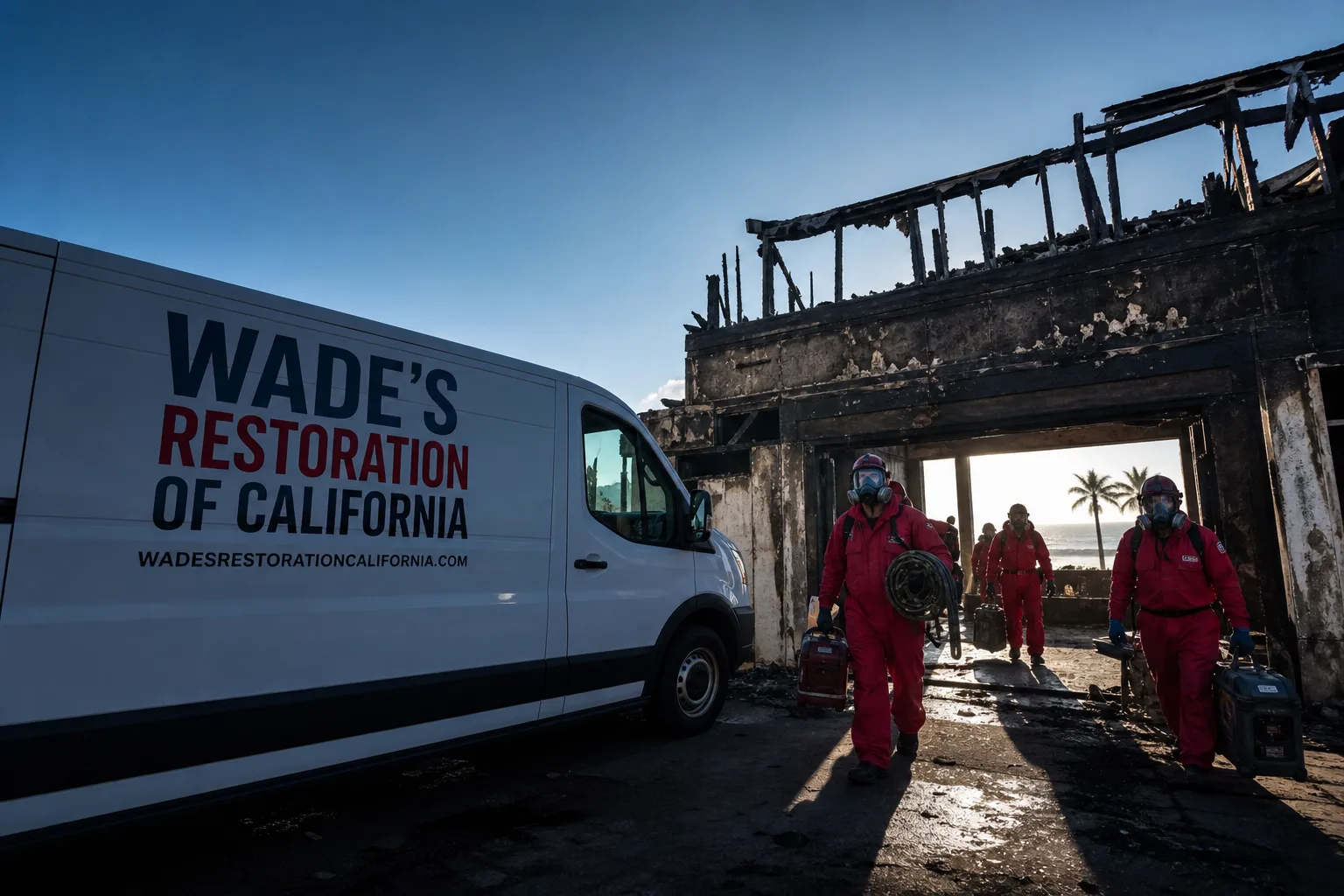
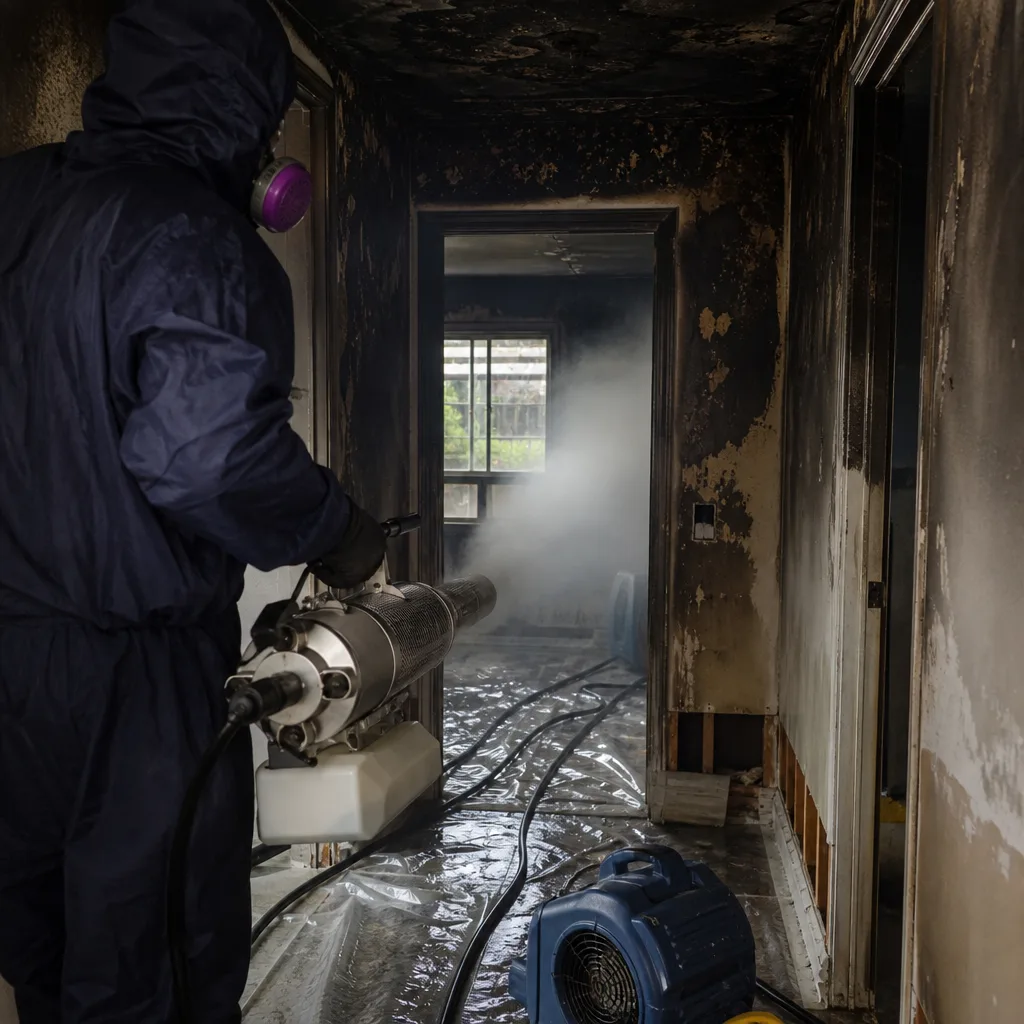
Wade Ferris founded this company in 2007 and has competed on one thing since: transparency. When a kitchen fire in Escondido Village graduate housing sent smoke through a shared corridor, our team coordinated access through Stanford’s Facilities Management work-order portal before any on-site work began. We deployed XPOWER air scrubbers and Dri-Eaz HEPA 500s in the unit and hall, then used a thermal fogger for odor removal throughout the complex’s original 1960s wood framing. The project was completed within the university’s approved-vendor window, and we documented everything for the campus insurance file.
If the scope is larger than expected, we put it in writing before work starts. Not after. Wade deals with adjusters directly, so you’re never stuck relaying information between one side and the other. And every fire restoration job carries the 90-Day Done Right Promise, stamped in writing. If it’s not done right, Wade makes it right.
Ask anyone on your street. In a campus community this tight, reputation travels fast. Wade’s name is on the truck, his address is published, and he’s going to run into you again at the hardware store. That’s the accountability mechanism that matters.
Our Fire & Smoke Damage Restoration Services in Stanford
Fire damage is never just one problem. It’s soot, odor, water from suppression, and contents that need a decision made fast. Here’s what we handle for Stanford properties, campus and residential, with the university’s access requirements built into how we schedule.
Smoke & Soot Removal
Soot in Stanford behaves differently depending on the building. In the postwar faculty homes from the 1940s through the 1960s, smoke travels through shared vent runs and the gaps in original wood framing, then re-deposits in bedrooms weeks after a surface-only cleaning. In the historic sandstone buildings of the Main Quad, soot from a Diablo wind ember event embeds in the masonry pores and requires specialized poultice cleaning. An untrained crew using a standard chemical wash will etch the sandstone further. We use the right method for the material, and we document everything.
Odor Removal & Deodorization
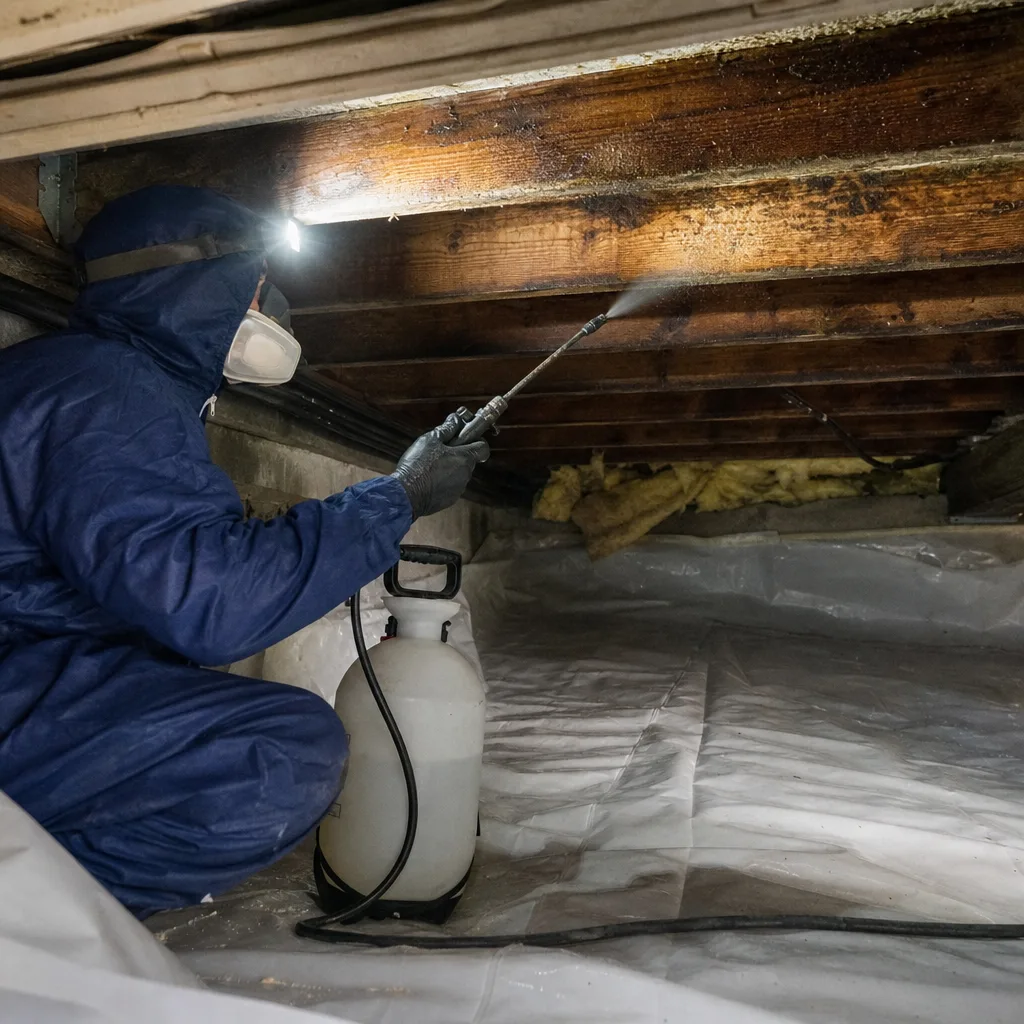
Odor removal in Stanford’s older campus housing is a shared-cavity problem. Smoke moves through ceiling and wall voids common in the original graduate student complexes and infill university housing, then seeps back through drywall joints. We run thermal fogging and hydroxyl generators through those cavities, not just the room where the fire started. A surface deodorization job on these buildings will fail. We treat the path the smoke actually took.
Contents Cleaning & Pack-Out
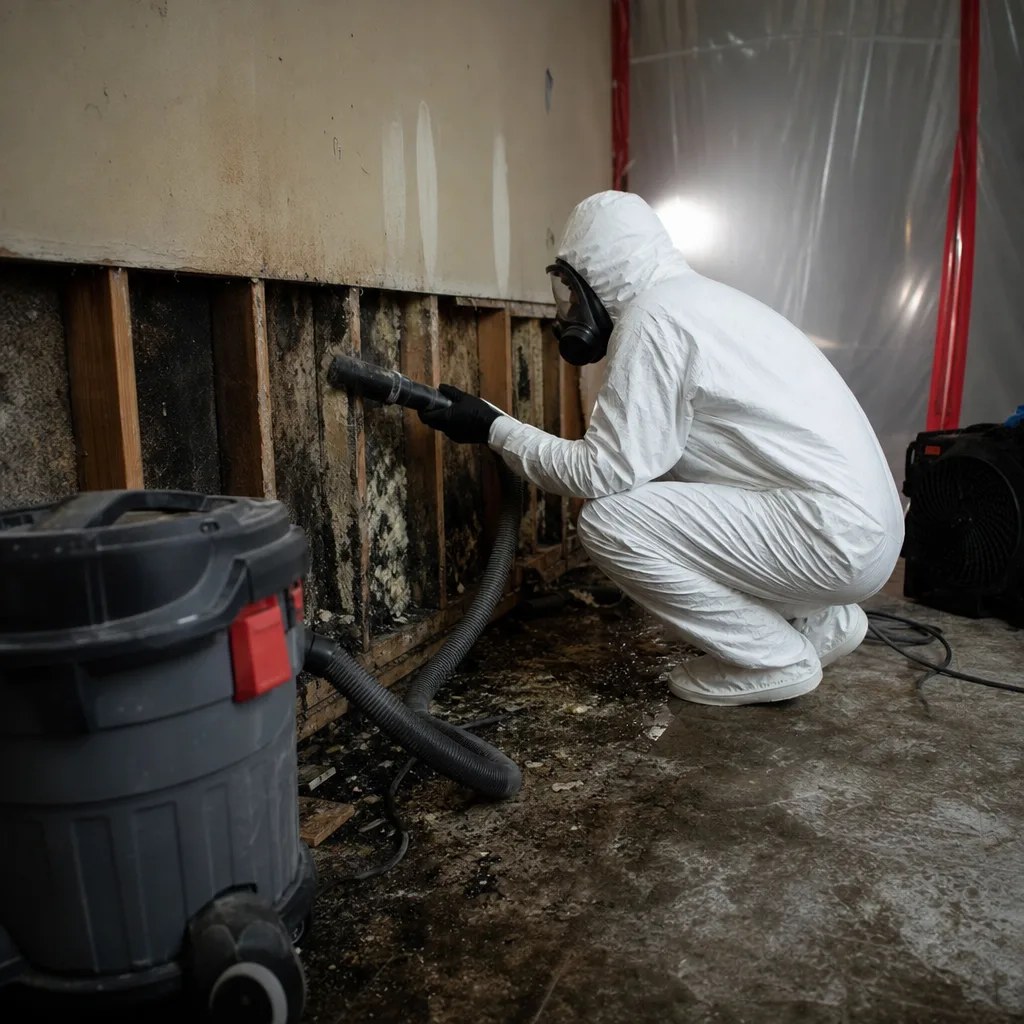
After a faculty home fire where the upper floor is smoke-damaged but not burned, the decision is whether to clean contents in place or pack them out to our off-site facility. In Stanford’s older homes, that decision usually comes down to the vent layout and the age of the materials. Books, textiles, and wooden furniture from decades on campus absorb smoke differently than newer synthetic furnishings. We inventory everything, photograph before and after, and work directly with the adjuster so your claim moves without you becoming the project manager.
Fire Damage Cleanup
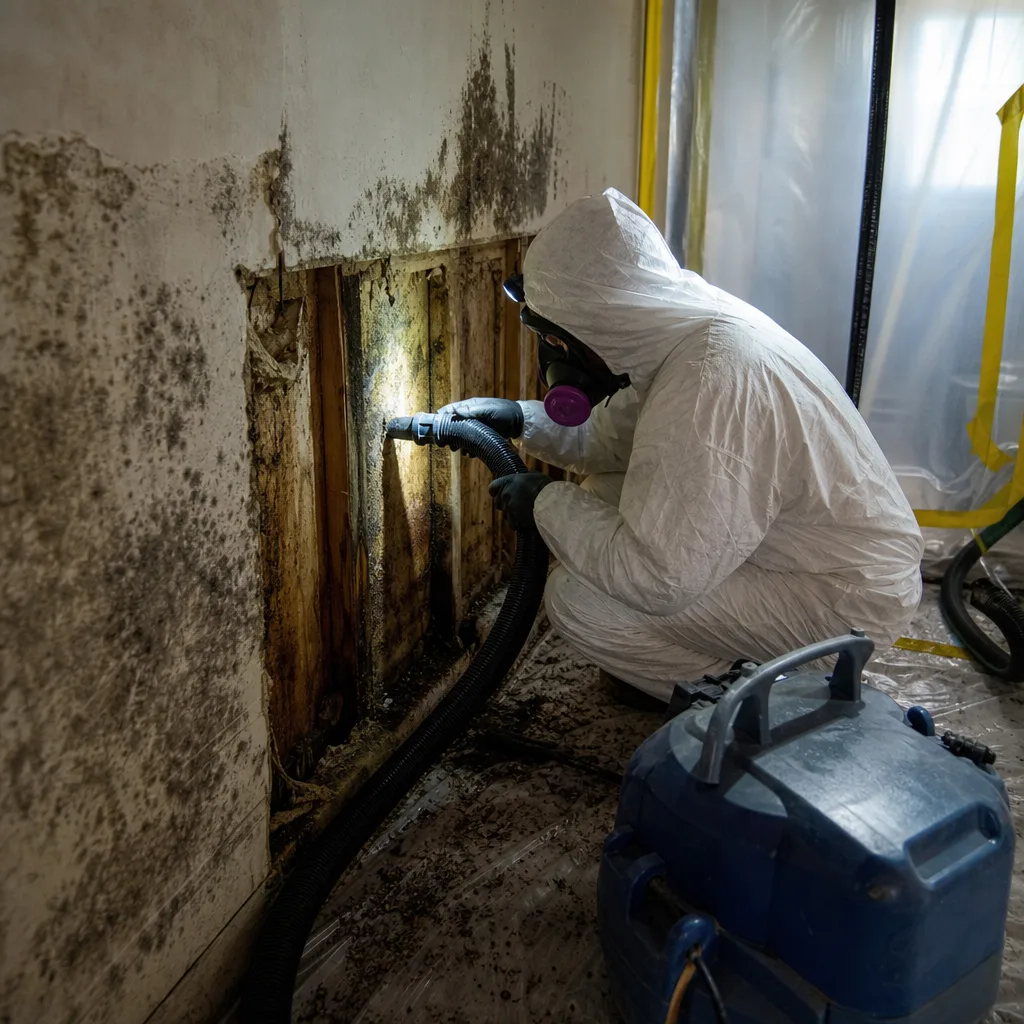
Fire damage cleanup in Stanford means addressing the water from suppression alongside the char and soot. That water soaks into unsealed 1940s framing and leads to hidden problems if it’s not extracted properly. Our Fire & Smoke Damage Restoration team handles both fronts at once, because you don’t have time to wait for separate crews. We bring the drying equipment running within the hour when the job calls for it.
What happens when you call
- 1
A real person answersNo phone trees - you reach a local pro.
- 2
You get an upfront price rangeHonest numbers before anyone is dispatched.
- 3
A background-checked tech heads outLicensed & insured, dispatched right away.
- 4
You approve before work beginsNothing starts until you say go.
Trusted Brands We Service in Stanford
We run Dri-Eaz and Phoenix equipment on Stanford jobs because the conditions demand it. The tight clearance in original mid-century complexes, the masonry surfaces on university buildings, and the wildland-urban interface soot from the foothills all require gear that holds up. Our techs are IICRC-certified and RIA-affiliated, and when a unit has specific containment requirements from university Facilities Management, we arrive with the right air scrubbers and HEPA filtration already on the truck. We keep the equipment calibrated and ready for Stanford’s access windows, not waiting on a rental desk in another county.
Common Fire & Smoke Damage Restoration Problems We See in Stanford Homes
- Smoke in shared vent runs. A surface-only estimate on a 1950s faculty home misses the shared duct work common in postwar university housing. Soot re-deposits in bedrooms days after odor removal, and the homeowner is told the first cleaning “didn’t hold.” It’s not that the cleaning failed. It’s that the source was never addressed.
- Wet smoke residue driving into unsealed framing. When a fire happens near San Francisquito Creek during a flood event and board-up is delayed, wet smoke residue soaks into original framing. That becomes a mold problem six weeks later. Early containment is the difference between a smoke claim and a mold remediation.
- Sandstone soot contamination on historic buildings. Ember-cast smoke from a Diablo wind event carries fine particulate that bonds to Main Quad sandstone. Standard chemical washes etch the surface. It takes poultice cleaning by a crew that understands landmark materials.
- Concealed seismic damage complicating restoration. The 1989 Loma Prieta earthquake left cracks in unreinforced masonry walls across campus. Partially upgraded buildings still conceal past seismic damage, and smoke and water find those hidden pathways behind walls. What looks like a routine smoke job can turn into a structural inspection.
Pricing for Fire & Smoke Damage Restoration in Stanford, CA
Here’s what you can expect to pay in the 94305 ZIP, based on the work we’ve completed on university-managed and private residential property in Stanford. A contents pack-out and cleaning after a faculty home kitchen fire typically runs $2,800 to $7,500 depending on volume and material type. Odor removal through shared cavities in original graduate housing runs $1,200 to $4,000, higher when multiple units in a corridor are affected. Smoke and soot removal from a single room starts around $900. Sandstone poultice cleaning on Main Quad surfaces is quoted per square foot, typically $12 to $28.
What affects cost: whether containment is required by Facilities Management, whether pack-out is needed, and whether water from suppression has already wicked into framing. We give you a written scope and a line-item price before work starts. Free second opinion on any written estimate from another company, no trip charge inside our own county. Call (855) 915-0646 and Wade will walk you through it.
We Also Serve Cities Near Stanford
Our crews serve Palo Alto, Atherton, East Palo Alto, and Los Altos Hills, which means we’re already on the road in your area and can reach Stanford quickly when an emergency hits. Each of those cities has its own housing stock and access rules, but the same standard applies: written scope, documented work, direct adjuster communication. If you’re in Stanford, we’re close enough that response time isn’t a question.
Serving Stanford, CA - Our Local Coverage Area
We’re based in the Stanford area and know this community well. Use the map below to see our service coverage - if you’re nearby, we can almost certainly help.
FAQs - Fire & Smoke Damage Restoration in Stanford
Yes. Because Stanford’s CDP is owned nearly entirely by the university, fire and smoke restoration work on any campus structure is routed through Stanford’s centralized Facilities Management and approved-vendor system. Pre-vetting and compliance are the threshold requirement. Contractors who aren’t already in the university’s system cannot even bid on the disruption that follows a faculty-housing kitchen fire or ember-cast smoke intrusion into a Main Quad lab. We’re already vetted and active in that system. Call (855) 915-0646 for a free estimate.
We treat the cavities, not just the room. Smoke in Escondido Village and similar 1960s complexes moves through the ceiling and wall voids that connect units, then re-enters through drywall joints and baseboards. We deploy thermal fogging and hydroxyl generators directly into those shared cavities, run XPOWER air scrubbers and Dri-Eaz HEPA 500s in both the affected unit and the adjacent hall, and document the entire process. A surface-only deodorization on these buildings will fail within weeks. Call (855) 915-0646 for an exact scope.
The protocol is poultice cleaning, not a chemical wash. Soot from Diablo wind ember events embeds in the sandstone’s pores, and standard cleaning agents will etch or stain the surface permanently. A trained restoration tech applies a poultice that draws soot out of the masonry without surface damage. We work within university landmark-preservation rules and document for the campus insurance file. Call (855) 915-0646 and we’ll assess it.
Choose pack-out when smoke has entered the shared vent runs and concealed cavities, and when contents are porous or older. In a 1950s faculty home with decades of books, textiles, and wood furnishings, in-place cleaning rarely reaches the smoke embedded in the items themselves, and re-deposition through the vent system undoes the work within weeks. If the damage is contained to one modern room with good seals, in-place cleaning can work. We’ll tell you which applies, in writing, before you commit. Call (855) 915-0646 for a free estimate.
Yes, and this is where many restoration companies get tripped up. Stanford’s campus zoning requires that emergency board-up and tarping be coordinated through university Facilities Management, which means access, timing, and material standards are set by the university, not by the property occupant. A contractor without approved-vendor standing cannot secure the site in an emergency. We’re already cleared through that system, so we can act the same day. Call (855) 915-0646 if you need board-up right now.
Written by Wade Ferris, Owner at Wade’s Restoration of California, serving Stanford since 2007.