
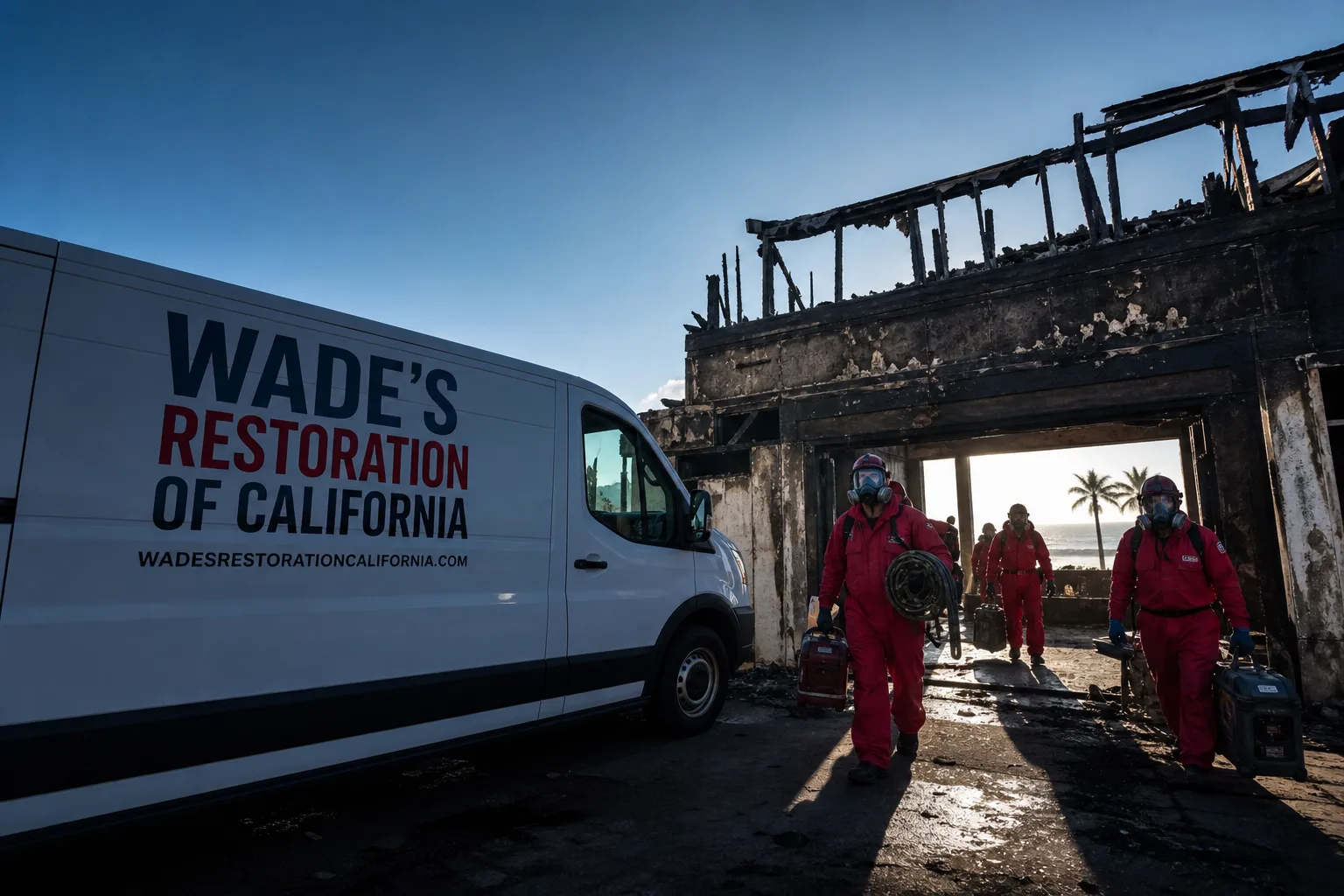
Fast, Reliable Fire & Smoke Damage Restoration Across Big Bear Lake
Fire and smoke damage restoration in Big Bear Lake costs between $3,800 and $8,500 for a typical kitchen fire affecting 400-800 sq ft, with full A-frame cabin content restoration running $10,000-$35,000 when odor and structural repairs are included. Most small fires are ready for a same-week scope of work, and we coordinate board-up and tarping immediately so snow and rain don’t turn a bad fire into a complete structural loss. If you’re standing in a smoky cabin on Fox Farm Road or waiting on a report from a property manager off North Shore Drive, call (855) 915-0646 and Wade Ferris will talk you through the next move himself.
Big Bear Lake is a different kind of fire restoration call than anything down the hill. At 6,752 feet, the physics of drying changes. The housing stock is older wood-frame cabins built before modern fire codes. And a lot of the owners aren’t on-site when the fire happens. Those three facts shape how we approach every job here.
Why Wade’s Restoration of California Is Big Bear Lake’s Preferred Fire & Smoke Damage Restoration Company
Wade Ferris started taking calls in the mountain communities in 2007, and he still answers his own phone at (855) 915-0646. That matters when a fire hits a vacation cabin in the 92315 zip code and the owner is three hours away in Orange County trying to figure out who to trust. Wade’s crew has worked A-frames on Summit Boulevard, chalets in Moonridge, and short-term rentals throughout Big Bear Lake, and the property managers who call us keep calling us because we document everything and talk to adjusters directly.
Ask any property manager in Big Bear Lake who they call when a chimney fire leaves the loft smelling like a campfire that won’t quit. They’ll tell you to call Wade. We’re the company that shows up with Dri-Eaz and Phoenix equipment sized for high-altitude work, takes moisture and odor readings daily, and hands the homeowner a full log at the end of the job. Almost nobody else in this trade does that, and it’s the only way to prove the cabin is actually dry and the smoke odor won’t come back once the guests do.
Big Bear Lake presents a specific challenge that separates restoration companies quickly: the mountain is 6,752 feet above sea level. Atmospheric pressure is lower up here, which means water evaporates more slowly and boiling points drop. Equipment that works fine in San Bernardino or Riverside won’t hit the same drying targets in Big Bear Lake without adjustments. Contractors who don’t know this leave hidden moisture in log walls and rough timber framing, and that moisture reactivates smoke odor within weeks or triggers microbial growth inside the wall cavities. Wade’s team runs extended low-grain settings and adjusted dwell times specifically for elevation. It takes longer. We tell you that upfront, because the alternative is a cabin that smells like smoke again six months later.
Our Fire & Smoke Damage Restoration team has worked this mountain long enough that we know the roads, the building styles, and the seasonal rhythms. Big Bear Lake crews deal with plowed roads, chain controls, and cabin layouts where the only access to the attic is a 24-inch hatch in a bedroom closet. None of that stops the work. It just means you want the people who already know it.
Our Fire & Smoke Damage Restoration Services in Big Bear Lake
Fire Damage Cleanup
Fire damage cleanup in Big Bear Lake usually means removing charred framing and drywall from cabins built with materials that predate modern fire-resistive codes. The older wood-frame construction common throughout the 92315 area burns faster and leaves deeper char patterns than newer builds. We cut out the damaged material, evaluate the remaining structure for heat exposure, and give you a written scope before any rebuild work starts. No one oversold, no surprise change orders.
Wade’s crew handles the demolition and debris removal, then sets up the containment and drying plan before a single repair nail goes in. For a typical kitchen fire on a 1950s cabin near the village, expect cleanup to take two to four days before reconstruction can begin.
Smoke & Soot Removal
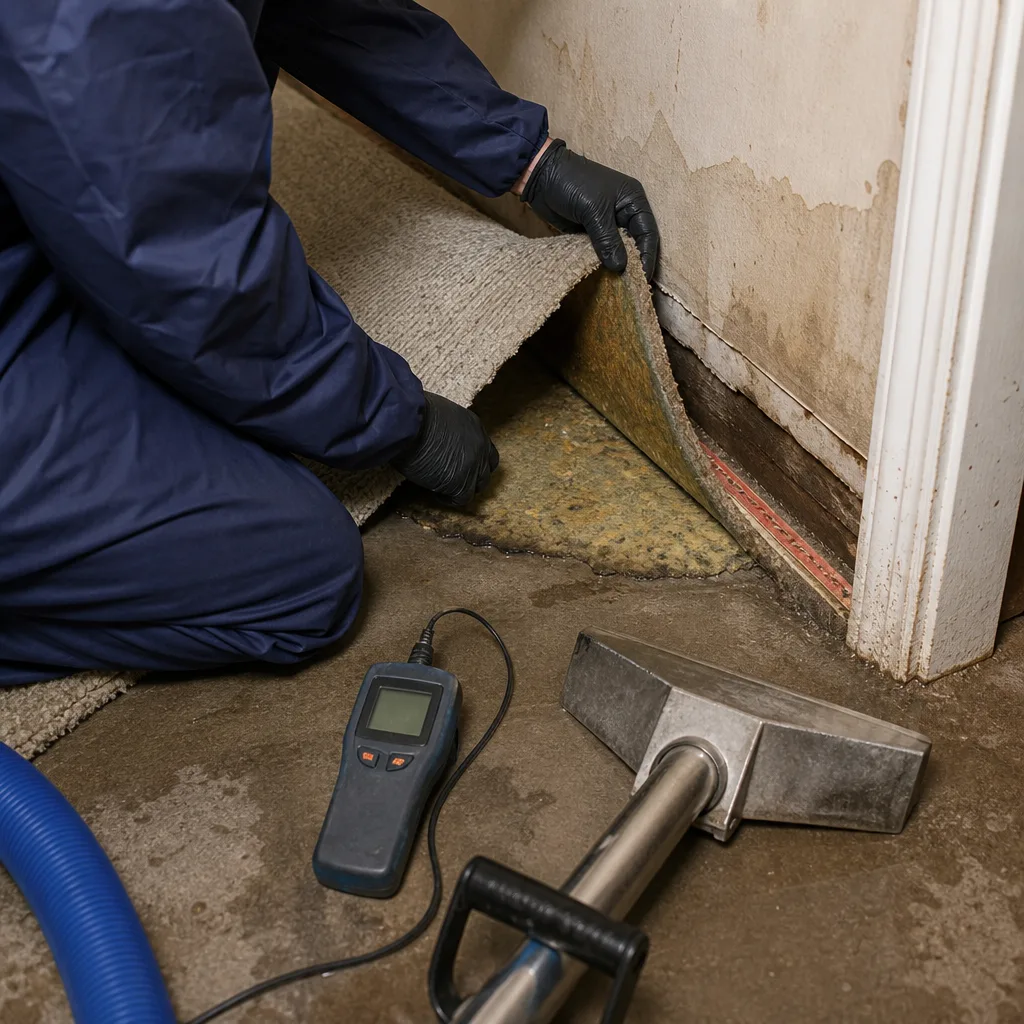
Soot here is a particular problem because so many Big Bear Lake homes have open beam ceilings, exposed wood paneling, and rough-sawn timber that soot works into and refuses to let go. Soot removal in Big Bear Lake runs $1,800-$4,500 for a typical room, with whole-cabin cleaning on larger fires reaching $7,000-$12,000. The price depends on whether the framing is smooth drywall or exposed timber, and how long the soot sat before we got the call.
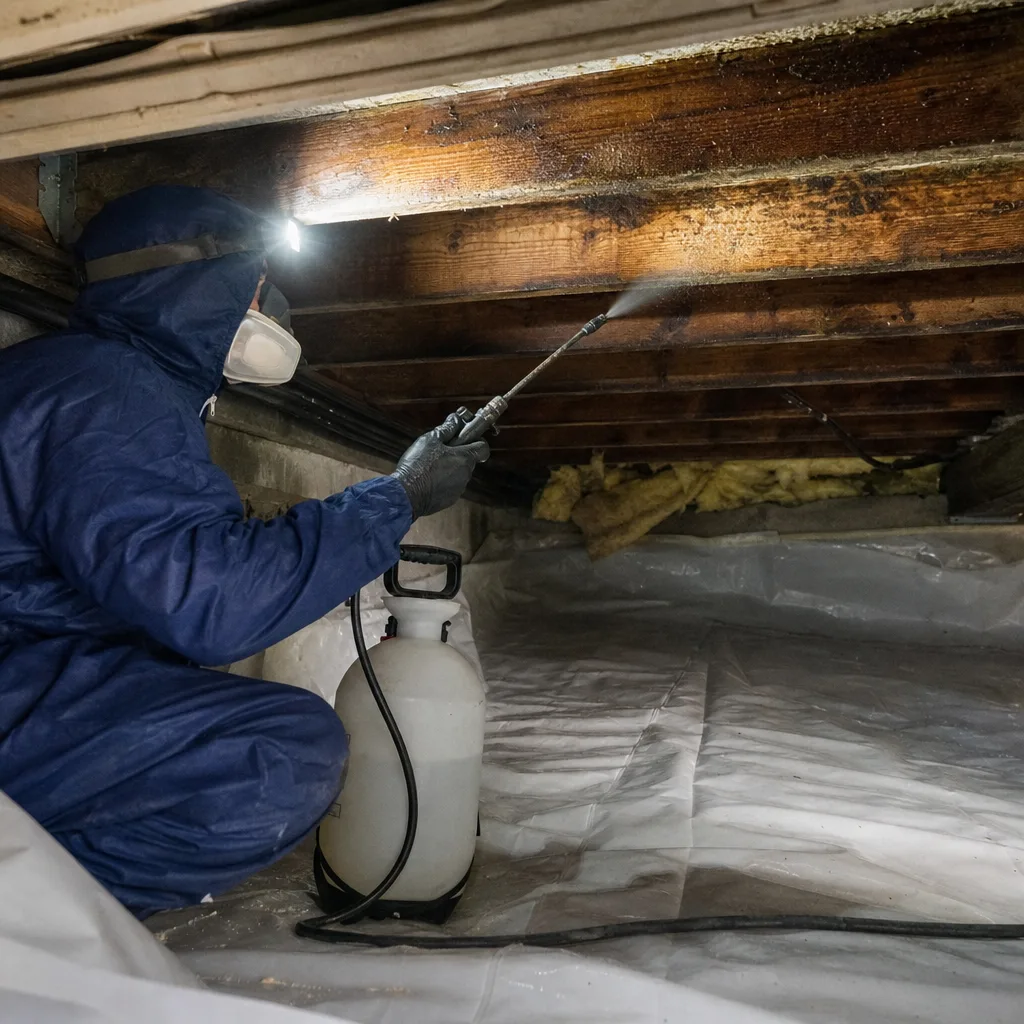
At elevation, soot behaves differently than it does down the hill. Lower atmospheric pressure means particles hang in the air longer and settle into horizontal surfaces more evenly. That’s good for wiping down walls, and terrible for log beams and open shelving where even a light coat of soot becomes a persistent odor source. We use dry-ice blasting on exposed wood beams and thermal fogging on the rest, because regular sponges won’t touch soot that’s had weeks to sink into pine.
Odor Removal & Deodorization
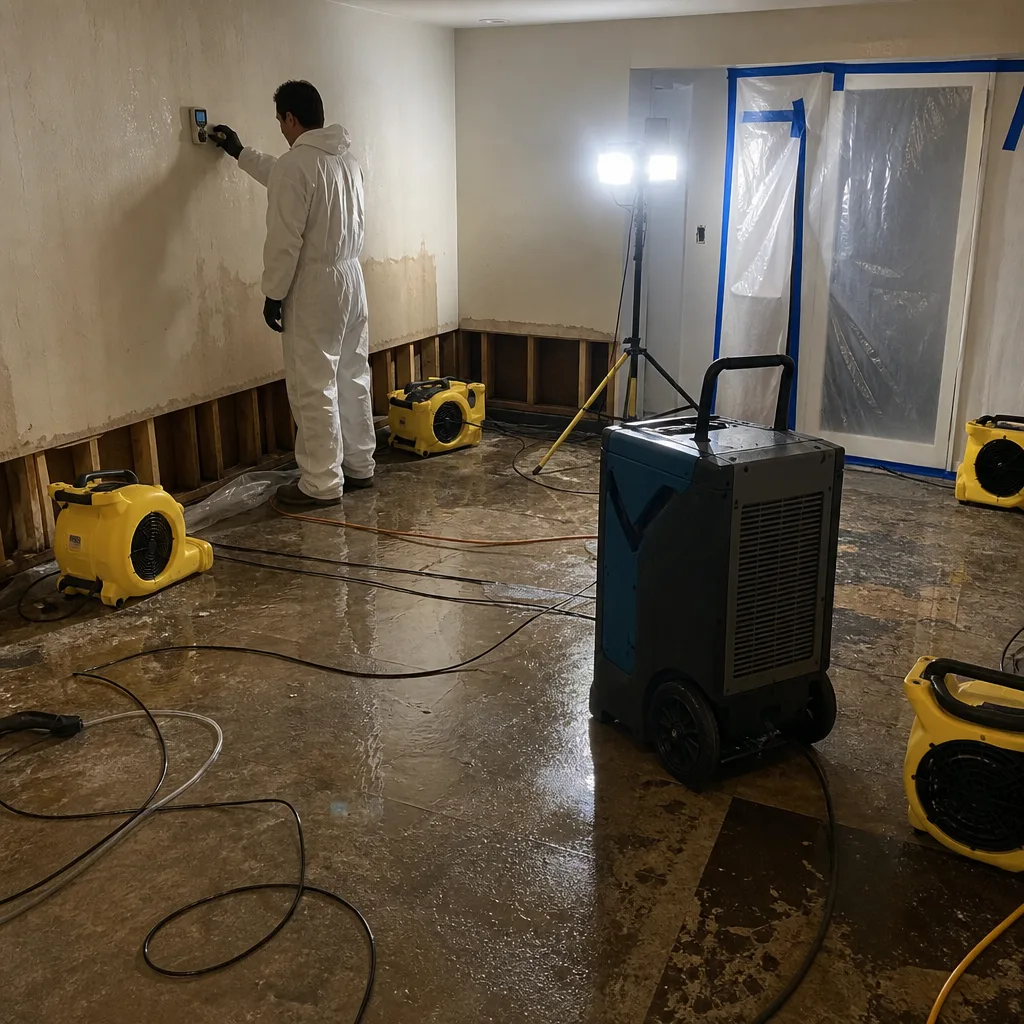
Odor removal is the job that makes or breaks a Big Bear Lake restoration, and it’s the one out-of-town companies get wrong most often. Smoke odor in a cabin that’s been closed up for two weeks is a different animal than smoke odor in a primary residence that got treated the morning after the fire. When a fire happens in a short-term rental on a Tuesday and the first person on-site is a property manager the following Saturday, that odor has had time to penetrate every porous surface in the building.
Odor removal and deodorization in Big Bear Lake typically runs $2,500-$7,000 for a standard A-frame or cabin interior. Larger homes and heavy timber interiors push toward $10,000. We run HEPA air scrubbers with extended dwell times, use thermal fogging to neutralize odor at the molecular level, and may seal and re-paint interior framing if the wood can’t be cleaned back to neutral. The goal is not to mask the smell. The goal is for a guest to walk in and not know a fire ever happened.
Contents Cleaning & Pack-Out
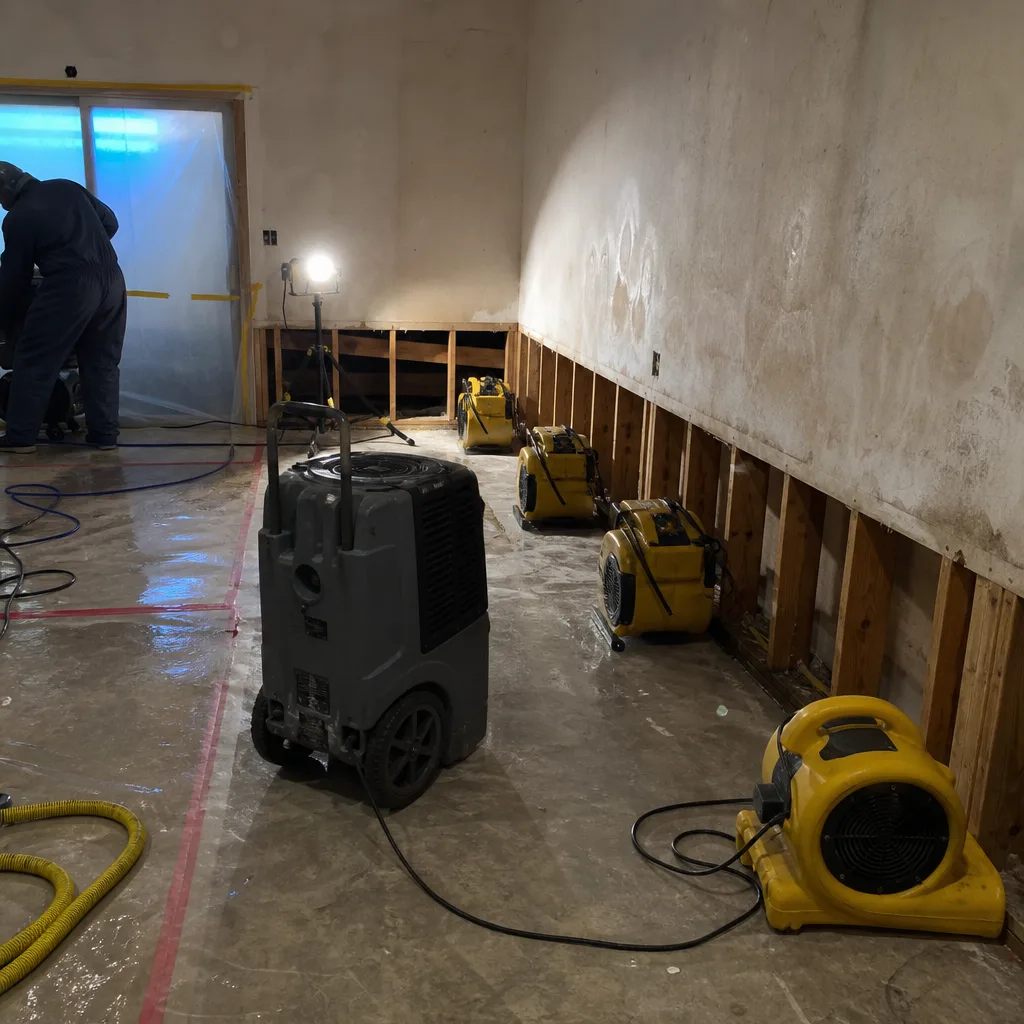
When a Big Bear Lake rental takes a fire, there’s usually a full house worth of furniture, linens, kitchenware, and guest supplies that needs evaluation. We itemize, photograph, and pack out what we can restore, cleaning soft goods, hard goods, and the odd collection of mountain cabin inventory you don’t see in a city home. Contents cleaning and pack-out for a typical Big Bear Lake cabin runs $4,000-$14,000, depending on volume and what can be restored on-site versus what needs to go to a cleaning facility.
Insurance adjusters respond to documentation, and our photo inventory process is designed to make their job easy. We coordinate with your adjuster directly so you’re not the one relaying messages between a cleaning crew and a claims department. That’s especially valuable when you’re in Riverside or Los Angeles and the cabin is up here. You call Wade. Wade handles the rest.
What happens when you call
- 1
A real person answersNo phone trees - you reach a local pro.
- 2
You get an upfront price rangeHonest numbers before anyone is dispatched.
- 3
A background-checked tech heads outLicensed & insured, dispatched right away.
- 4
You approve before work beginsNothing starts until you say go.
Common Fire & Smoke Damage Restoration Problems We See in Big Bear Lake Homes
- Delayed discovery from absentee owners. Most Big Bear Lake properties are second homes or short-term rentals. When a fire is contained but the cabin sits closed up for a week or two before anyone opens the door, smoke and soot settle into the wood paneling and open framing. That makes odor removal significantly harder and usually more expensive than it would have been with same-day response.
- Ice dams and snow loads after a fire. A small chimney fire that compromises a roof section becomes a much bigger problem when three feet of snow piles on before board-up gets done. We prioritize emergency tarping on the mountain because a January storm can turn a one-room fire into whole-cabin water damage within 48 hours.
- High-elevation drying targets set by contractors who don’t know the mountain. A standard dehumidifier setting that works in San Bernardino does not achieve the same results at 6,752 feet. Lower atmospheric pressure slows evaporation, so drying equipment has to run longer and at adjusted settings. When it doesn’t, hidden moisture stays in the logs and walls, and the smoke odor comes back.
- Open beam ceilings and rough-sawn timber that burn and smoke differently. The big, beautiful timber interiors that make Big Bear Lake cabins special are also the hardest to restore. Soot penetrates deeply into unfinished wood, and traditional sponge wiping streaks rather than cleans. It takes dry-ice blasting, thermal fogging, and a lot of patience to get exposed timber back to neutral.
Pricing for Fire & Smoke Damage Restoration in Big Bear Lake, CA
Let’s talk real numbers for the Big Bear Lake market. Emergency board-up and tarping runs $800-$2,200 depending on the span and slope of the roof. A typical room-and-contents fire cleanup with smoke and soot removal on a standard cabin interior starts around $3,800 and runs to $8,500. Whole-cabin odor removal on a vacation rental, including contents pack-out and cleaning, lands between $10,000 and $25,000 for most properties. Heavy timber interiors, log walls, or extended time before discovery push costs toward the top of those ranges.
Several factors move the number in Big Bear Lake specifically. Exposed beam ceilings cost more to clean than drywall. A cabin that sat closed up for two weeks costs more than one cleaned the day after the fire. And high-altitude drying adds time compared to sea-level work, which shows up in equipment hours. We give you the same thing on every job: a written scope before work starts, daily documentation during the work, and a 90-Day Done Right Promise in writing when it’s finished. Call (855) 915-0646 for a free estimate and Wade will come out himself.
Key takeaways:
- Fire damage cleanup in Big Bear Lake starts around $3,800 for a typical cabin room.
- Odor removal on older wood-frame cabins runs $2,500-$7,000 due to porous timber and delayed discovery.
- Emergency board-up must happen fast here because snow load compounds fire damage quickly.
- High altitude changes drying physics; we run equipment longer and with adjusted settings.
- We coordinate directly with your insurance adjuster, with photo documentation on every phase.
Trusted Brands We Work With in Big Bear Lake
Wade’s crew runs Dri-Eaz HEPA air scrubbers and Phoenix 200 HT LGR dehumidifiers on nearly every Big Bear Lake fire job. At this elevation, equipment choice actually changes the outcome, and those two brands have been the most reliable for holding consistent grain settings at altitude. Our technicians carry IICRC certifications and the company maintains RIA and IFA affiliations, so you’re not getting a handyman with a rented carpet fan. You’re getting trained people with commercial-grade equipment who know what the equipment can and cannot do at 6,752 feet.
Big Bear Lake’s Altitude Changes Fire and Smoke Restoration
Here’s the thing most restoration companies won’t tell you, usually because they don’t know it. At 6,752 feet, the boiling point of water is lower and evaporation is slower than it is at sea level. For fire and smoke restoration, that means drying equipment needs adjusted dwell times and lower-grain targets to actually pull moisture and odor out of framing. If someone sets the dehumidifier to standard San Bernardino settings, they leave moisture in the walls. That moisture reactivates smoke odor within weeks, or worse, creates conditions where mold gets a foothold inside a cabin that already had a fire. In Big Bear Lake, the house stock is mostly 1940s through 1970s wood-frame cabins and A-frames, many originally built as summer retreats with no insulation in the walls. Smoke and soot penetrate those old materials deeply, and the only way to get them out is with equipment run correctly for the elevation. We adjust for altitude on every single job, and we show you the readings to prove it.
There’s also the vacancy factor. Big Bear Lake is dominated by second homes and short-term rentals. A fire in a primary residence usually gets noticed in minutes or hours. A fire in an Airbnb cabin on a Wednesday in November might not get noticed until Saturday, when a property manager does a turnover walkthrough. That’s four days of smoke and soot settling into exposed pine and shipping up into the open loft. The restoration isn’t just about cleaning what burned. It’s about undoing four days of settling time. We’ve handled dozens of those jobs, and they shape how we price, how we sequence the work, and how fast we move once the call comes in.
On a snowbound February morning, our crew navigated plowed roads to a 1963 A-frame on Pine Knot Avenue after a chimney fire had filled the open loft with acrid smoke and soot. We set up a Dri-Eaz HEPA 500 air scrubber and a Phoenix 200 HT LGR dehumidifier with extended low-grain settings, then used dry-ice blasting to remove soot from exposed beam ceilings before thermal fogging to neutralize odor, getting the cabin ready for a returning Airbnb guest within five days. That’s the pace this mountain demands, and it’s the pace we build our schedules around in snow season.
We Also Serve Cities Near Big Bear Lake
Wade’s Restoration of California handles fire and smoke damage restoration throughout the San Bernardino mountain communities. Our Fire & Smoke Damage Restoration in Big Bear Lake service area also covers Big Bear City, Lucerne Valley, Mentone, and Yucaipa, with crews already familiar with the roads, the housing stock, and the seasonal access patterns in each of those towns. If your property is anywhere in the 92315 zip code or the surrounding mountain areas, call (855) 915-0646 and Wade will head up the hill.
Serving Big Bear Lake, CA - Our Local Coverage Area
We’re based in the Big Bear Lake area and know this community well. Use the map below to see our service coverage - if you’re nearby, we can almost certainly help.
FAQs - Fire & Smoke Damage Restoration in Big Bear Lake
Big Bear Lake’s 6,752 ft elevation means drying and deodorization work takes 15-25% longer than the same job in San Bernardino or Riverside because lower atmospheric pressure slows evaporation and lowers the boiling point of water. We set our equipment for extended low-grain targets and longer dwell times, and we tell you that upfront so the schedule is realistic, not optimistic. Call (855) 915-0646 if you want an honest timeline for your specific cabin.
Yes, with the caveat that the longer soot and smoke sit in a closed cabin, the deeper they penetrate into exposed wood, textiles, and paper. We’ve restored contents from Big Bear Lake cabins that sat for two to three weeks after a fire, but we’re honest when an item has reached the point where restoration isn’t cost-effective. We pack out, clean, and document everything, and your insurance adjuster gets the item-by-item list. Call (855) 915-0646 and we’ll come evaluate what can be saved.
Yes. Emergency board-up and tarping in Big Bear Lake runs $800-$2,200 depending on roof span and pitch, and we treat winter storm board-up as a priority because snow load on a fire-damaged roof creates a rapid cascade of secondary damage. Wade’s crew runs the mountain roads with snow-rated vehicles and coordination with local road maintenance so we can get to the property even when chain controls are in effect. Call (855) 915-0646 the moment you know there’s an opening in the roof.
The biggest challenge is exposed timber and open beam ceilings that soak up smoke deeply and are nearly impossible to clean with standard sponges or sprays. Those surfaces require dry-ice blasting followed by thermal fogging to reach odor that’s settled into the wood grain. In a 1960s A-frame with rough-sawn interior framing, odor removal is 30-50% more labor-intensive than a drywall interior of the same square footage. That’s why we price Big Bear Lake cabins by material, not just by square foot. Call (855) 915-0646 and Wade can walk you through what your specific cabin will need.
We work backward from your booking calendar. If a cabin has a confirmed guest arriving in seven days, we sequence the demolition, board-up, containment, and drying so the property is safe and functional for that arrival, and we stage deeper cosmetic restoration around open dates. That often means multi-phase work, which we price and schedule in the initial written scope. We’ve gotten short-term rentals back online in as little as five days for a contained chimney fire. Call (855) 915-0646 and Wade will look at your calendar with you.
Written by Wade Ferris, Owner at Wade’s Restoration of California, serving Big Bear Lake since 2007.