
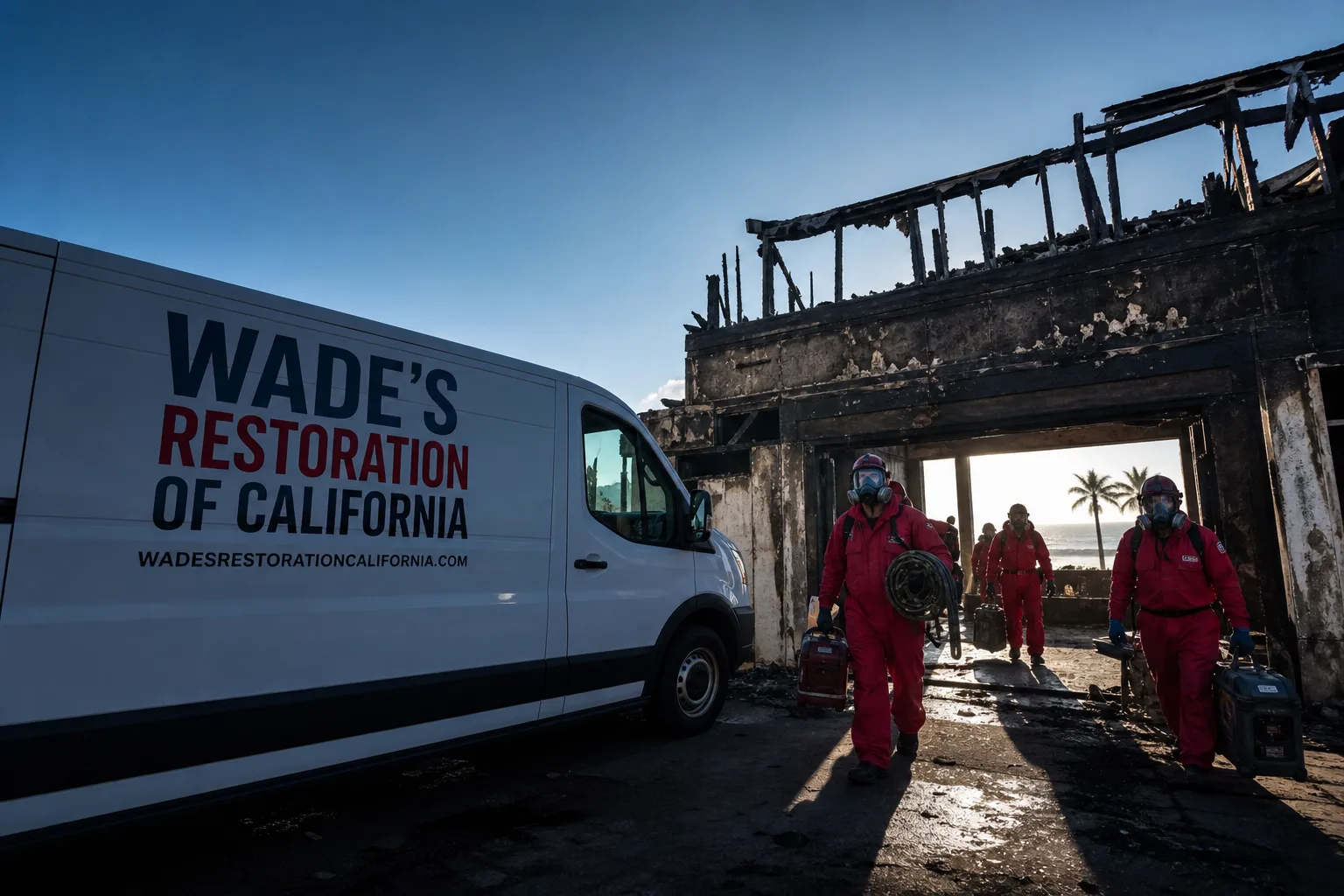
Fast, Reliable Biohazard & Crime Scene Cleanup Across Mission District
Biohazard and crime scene cleanup in Mission District requires a hazmat-first approach that most restoration companies don’t plan for. The neighborhood’s 1890s-1920s wood-frame Victorians and Edwardians hide lead paint, asbestos, and original cast-iron waste stacks behind lath-and-plaster walls, which means blood, bodily fluids, or sewage don’t just sit on surfaces. They seep. They migrate between shared walls. And they create contamination that standard cleaning won’t touch. Wade Ferris has been handling biohazard jobs in 94110 long enough to know what’s behind the walls before we open them. Call (855) 915-0646 and you’ll get Wade himself on the line, not a call center.
Why Wade’s Restoration of California Is Mission District’s Preferred Biohazard & Crime Scene Cleanup Company
Wade’s Restoration isn’t a national franchise with a rotating cast of techs. It’s Wade Ferris, his name on the truck, his cell number given out freely, and a crew he’s trained himself. In Mission District, that matters more than anywhere else we work. The buildings are old, the walls are shared, and the neighbors talk. If we cut a corner at a job near 24th and Folsom, someone’s going to hear about it at Farolito the next day. That’s the kind of accountability a corporate outfit simply does not have.
Our Biohazard & Crime Scene Cleanup team works the Mission every week. We know the difference between a building that needs containment on the second floor versus one where the soft-story garage below limits what equipment can come upstairs. We’ve handled trauma cleanup in three-unit Edwardian flats where biological material traveled through a party wall into the adjacent unit. We’ve disinfected Victorians where knob-and-tube wiring was still active behind the plaster. None of this is hypothetical to us. It’s Tuesday.
Wade holds IICRC certification and the company is RIA-recognized. But credentials only matter if the person holding them will stand behind the work. Wade guarantees every biohazard job with the same 90-Day Done Right Promise he uses on water and fire restoration. If it’s not done right, he comes back. That’s not a slogan. It’s written on the contract.
Our Biohazard & Crime Scene Cleanup Services in Mission District
Trauma & Unattended Death Cleanup
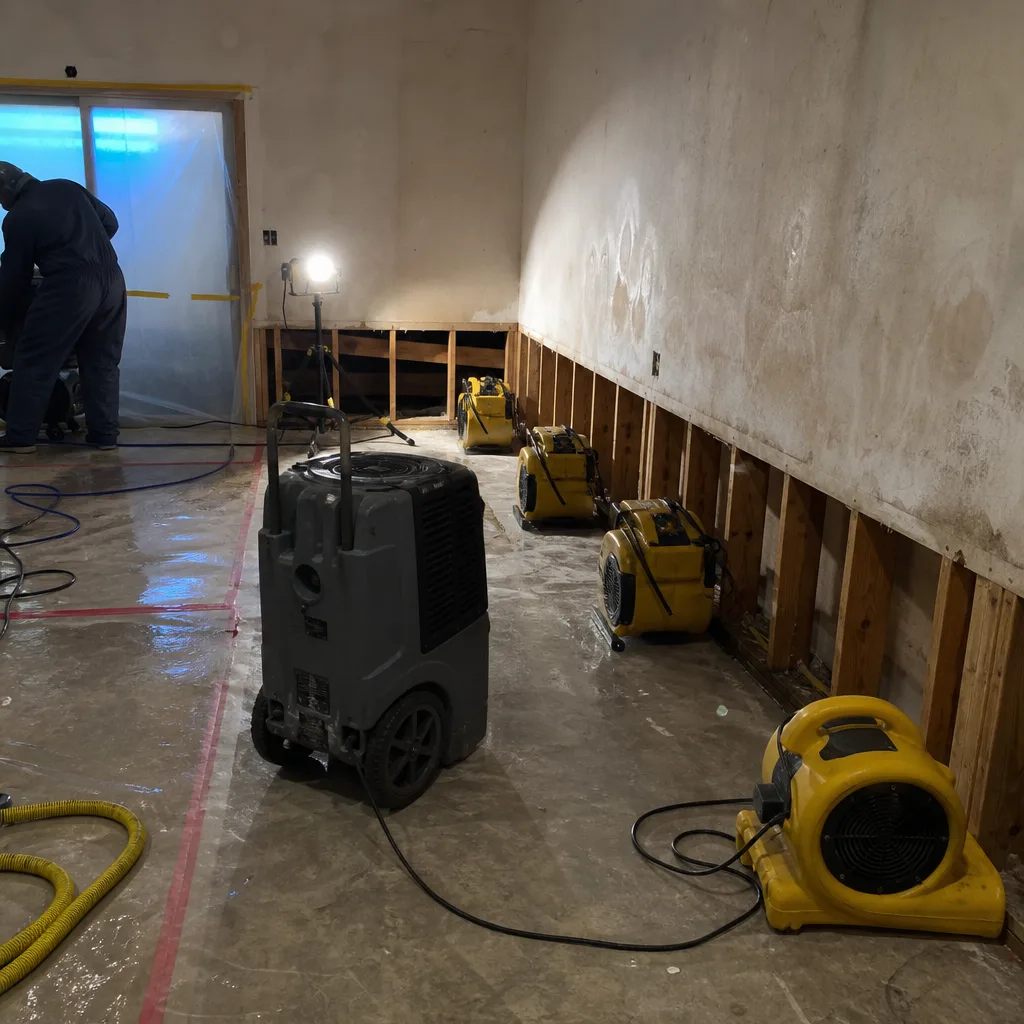
Unattended death cleanup in Mission District almost always involves a unit in a multi-family Victorian or Edwardian flat. Time is not on your side. Biological fluids sink through carpet, through hardwood, through subfloor, and into the lath-and-plaster assemblies below. By the time anyone notices an odor, the contamination has usually spread further than visible staining suggests. Wade’s crew seals the affected area with negative air pressure, removes contaminated materials down to the framing, and dries with Phoenix desiccant units before any rebuilding happens. We do not paint over the problem. We remove it.
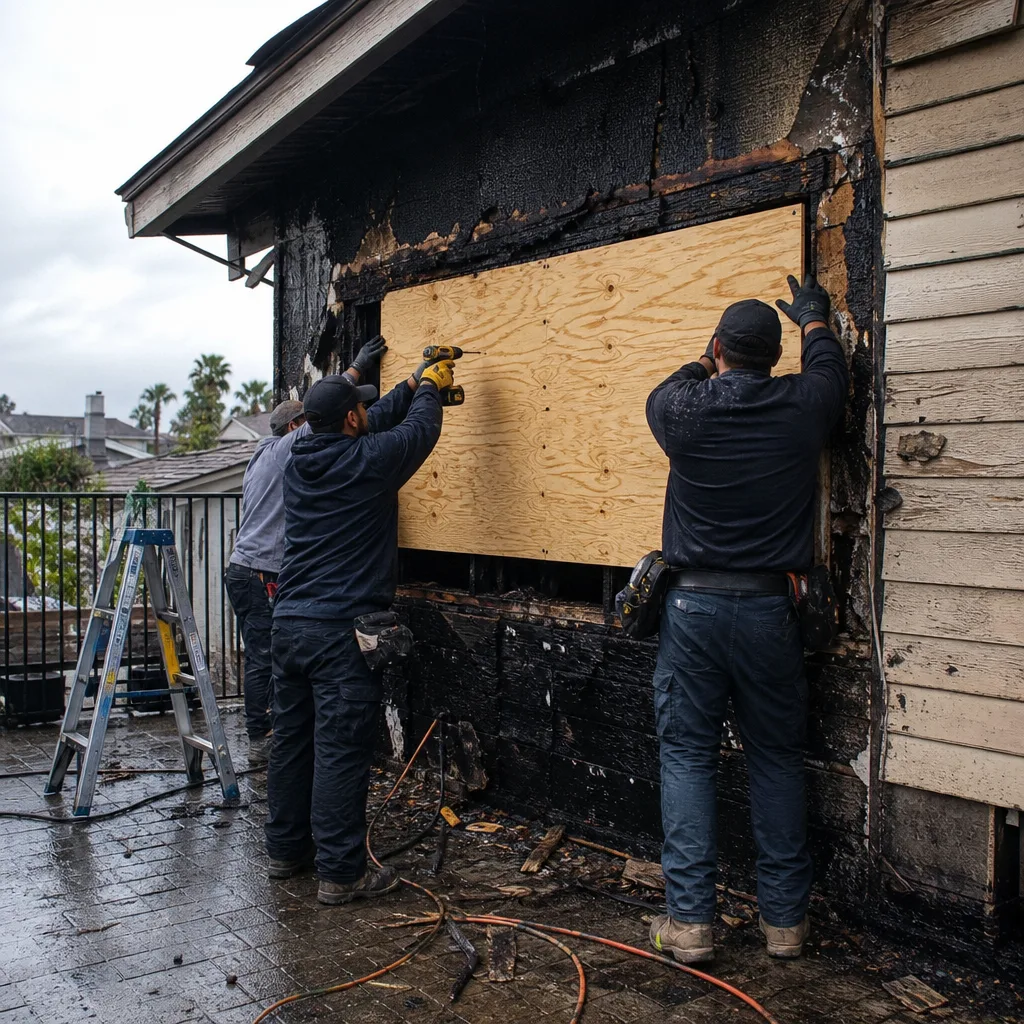
Blood & Bodily Fluid Cleanup
Blood cleanup in Mission District is rarely contained to one room. In shared-wall flats, fluids travel horizontally through wall cavities where lath strips create channels that draw moisture sideways. We treat every blood job as a cross-contamination event until proven otherwise. That means containment barriers, HEPA air scrubbing with Dri-Eaz equipment, and moisture mapping of adjacent units before we sign off. Property owners in 94110 tell us the same thing: the last company cleaned what they could see and left what they couldn’t. Wade doesn’t do that.
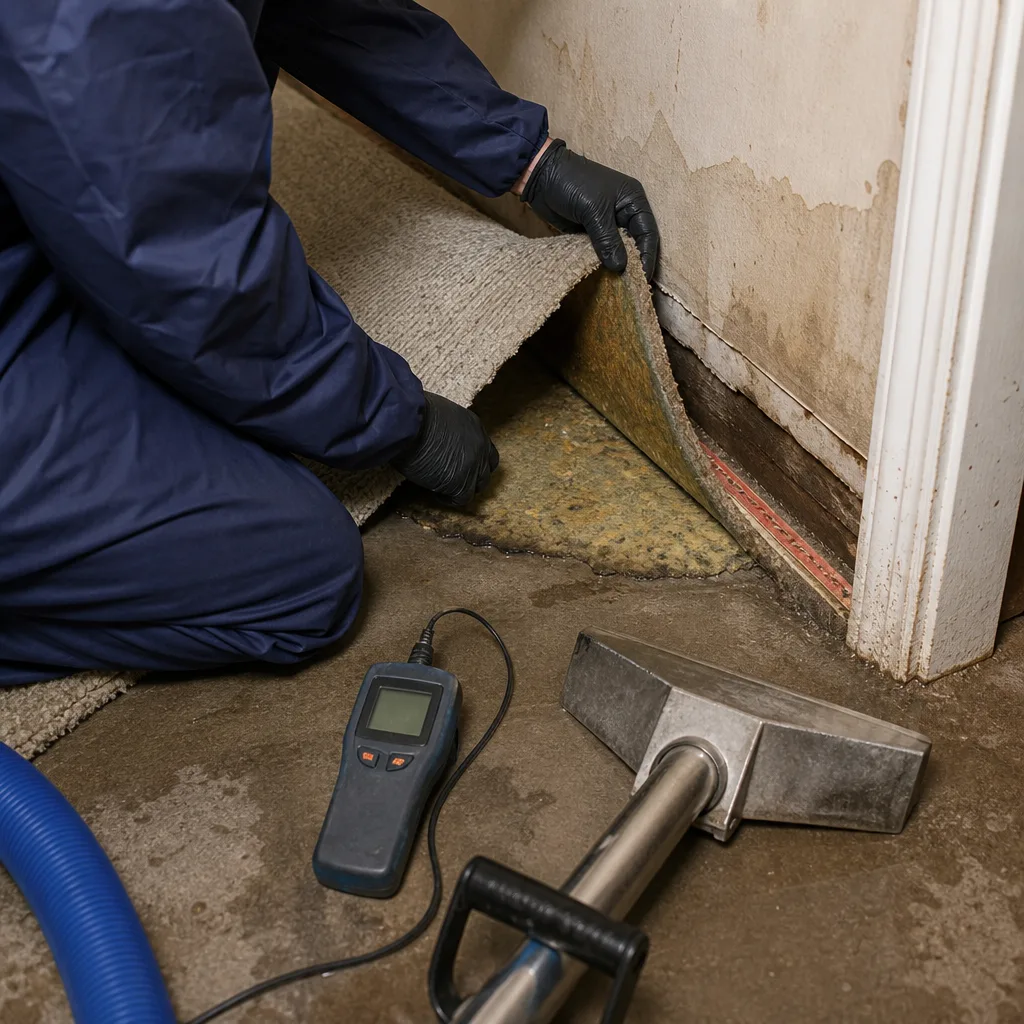
Infectious Disease Disinfection
Infectious disease disinfection in Mission District’s pre-1940 housing stock comes with a complication most guidelines gloss over: you cannot fog a room with disinfectant and call it done when lead paint and asbestos-containing materials are present. Aggressive cleaning methods can release lead dust into the air. Wet methods can saturate asbestos insulation around old pipes. Wade’s protocol starts with a hazmat assessment of the unit’s materials, then selects disinfection methods that won’t create a bigger hazard than the one we’re removing. That’s the hazmat-first approach this neighborhood demands.
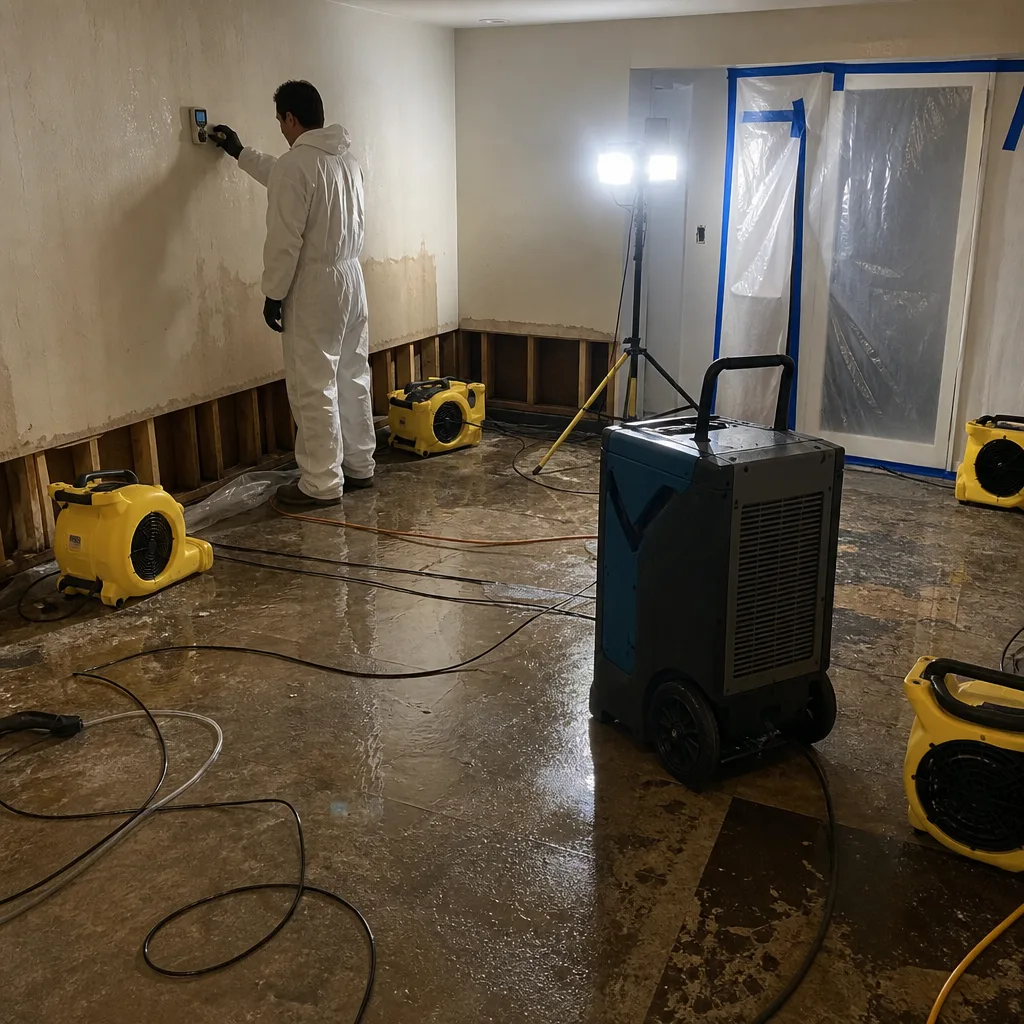
Hoarding Cleanup
Hoarding cleanup in Mission District often reveals what years of accumulated material have hidden: collapsed sections of original flooring, rodent and pest contamination, structural damage from long-ignored leaks, and sometimes raw sewage from failed cast-iron stacks buried under the debris. Wade’s team works methodically, documenting everything with photos as we go. We coordinate directly with property managers and insurance adjusters, so the owner isn’t stuck relaying information between parties. We also handle biohazard waste disposal per California regulations, which is not something a junk-hauling service can legally do.
What happens when you call
- 1
A real person answersNo phone trees - you reach a local pro.
- 2
You get an upfront price rangeHonest numbers before anyone is dispatched.
- 3
A background-checked tech heads outLicensed & insured, dispatched right away.
- 4
You approve before work beginsNothing starts until you say go.
Trusted Brands We Service in Mission District
Wade’s Restoration runs professional-grade equipment that holds up under the demands of San Francisco’s oldest housing stock. We use Dri-Eaz HEPA 500 air scrubbers and negative-air machines on every biohazard containment, Phoenix desiccant dryers when framing needs deep drying, and Injectidry injection systems for lath-and-plaster wall cavities that hold moisture for weeks. Our IFA and RIA affiliations mean our protocols are reviewed against the industry’s toughest standards. For Mission District property owners, that equipment and those credentials mean one thing: a job done to a standard that will hold up when the next tenant moves in.
Common Biohazard & Crime Scene Cleanup Problems We See in Mission District Homes
- Cross-unit contamination through shared party walls: The 2-4 unit Victorians and Edwardians that dominate 94110 share wall cavities without modern fire-blocking or vapor barriers. Blood, fluids, and odors move sideways through these cavities, which means a cleanup on one side of a wall often requires opening and treating the other side too.
- Lath-and-plaster hiding contamination: Plaster over wood lath looks solid even when the cavity behind it is saturated with biological material. Standard drying timelines that work on drywall will fail here. The material stays wet, odor rebounds weeks later, and mold follows. We treat lath-and-plaster assemblies as a biohazard reservoir until moisture mapping proves otherwise.
- Lead paint and asbestos complications during trauma cleanup: Pre-1978 buildings in Mission District almost always contain lead paint somewhere on the original surfaces. Disturbing those surfaces during biohazard removal releases lead dust. Asbestos pipe wrap in walls and around old steam risers creates the same problem. We test before we disturb. It’s not optional here.
- Soft-story garages limiting equipment staging: Many Mission Victorians have residential floors stacked over open ground-floor garages. These soft-story structures have load limits that national restoration chains ignore until the floor starts racking. We stage heavier equipment in the garage below when necessary, not in the unit above, and we coordinate with the property manager to prevent structural stress during drying.
Pricing for Biohazard & Crime Scene Cleanup in Mission District, CA
A straightforward blood cleanup in a single Mission District room typically runs $1,500 to $3,500. Unattended death cleanup, where decomposition fluids have penetrated flooring and walls, generally falls between $3,000 and $7,000 depending on how long the scene sat and whether containment of adjacent units is required. Infectious disease disinfection for a one-bedroom Mission flat runs $800 to $2,500 when hazmat assessment and lead-safe protocols are included. Hoarding cleanup starts around $2,000 and rises with debris volume, pest contamination, and structural damage. These are honest ranges for 94110’s housing stock. Anything cheaper usually means someone is skipping the hazmat testing. Call (855) 915-0646 for a written estimate before work starts. No phone quote games. Wade prices in writing.
We Also Serve Cities Near Mission District
Wade’s Restoration serves all of Mission District and the surrounding San Francisco communities. We handle biohazard and trauma cleanup in Noe Valley’s family flats, the dense multi-unit buildings of Visitacion Valley, commercial and residential properties across San Francisco proper, and the mixed housing stock of Chinatown. The same hazmat-first protocol applies everywhere we work. Call (855) 915-0646 and Wade will tell you exactly what the job requires.
How We Handle Biohazard Cleanup in Mission District’s Old Housing Stock
In Mission District’s 94110, nearly all Victorian and Edwardian flat buildings predate modern plumbing and still run on original cast-iron waste stacks. That’s not a footnote. It’s the single most important fact about biohazard cleanup in this neighborhood. When a pipe fails or a trauma occurs, biological material doesn’t just pool on the floor. It follows gravity through the framing and finds the path of least resistance, which in a 1920s wood-frame flat means the wall cavities, the ceiling bays, and often the neighboring unit. Blood and bodily fluids seep through lath-and-plaster, saturate the horsehair insulation common in original walls, and create a contamination zone that extends well beyond what anyone can see. Before structural drying can even be discussed, the affected materials must be removed under containment, the remaining framing must be assessed for saturation, and a hazmat review must determine whether lead dust or asbestos fibers were released in the process. That order of operations is non-negotiable in Mission District, and any contractor who skips it is creating a liability that will surface later as odor, mold, or a multi-unit insurance claim.
On a Friday night, we responded to an unattended death in a second-floor Edwardian flat near 24th and Folsom. Our crew sealed the unit with negative air and used a Dri-Eaz HEPA 500 to scrub airborne pathogens while our techs removed affected lath-and-plaster sections that had absorbed biological fluids. Because the building’s soft-story configuration limited floor loading, we coordinated with the property manager to stage our Phoenix desiccant in the garage below, preventing racking stress while we dried the framing to IICRC standards. That’s what biohazard cleanup in Mission District actually looks like: a structural awareness that most companies don’t have, combined with equipment that’s suited to the building’s age and configuration. Anyone can spray disinfectant. Very few crews can do the job without making the building worse.
Then there’s Mission Creek, the culverted waterway that runs beneath the neighborhood’s lower blocks near Cesar Chavez Street. Its old drainage basin still channels groundwater toward basements and lower units, which means a biohazard incident in a ground-floor or basement-level space often involves standing groundwater mixed with biological material. That water isn’t sterile, and it carries whatever it’s touched through the slab and into the walls. We pump, we contain, we test, and we dry. But in this part of Mission District, the water table is part of the job description, and ignoring it is how you end up with a basement that smells like a morgue every foggy season.
Serving Mission District, CA - Our Local Coverage Area
We’re based in the Mission District area and know this community well. Use the map below to see our service coverage - if you’re nearby, we can almost certainly help.
FAQs - Biohazard & Crime Scene Cleanup in Mission District
We test before we disturb anything. Plaster, paint, and the wall cavity are all sampled for lead and asbestos content, and the results dictate our removal method. Where lead is present, we use wet removal methods and HEPA filtration to prevent dust release, and we contain the work area with negative air pressure. The same applies to asbestos-containing pipe wrap or insulation. Disturbing lath-and-plaster in a pre-1978 Mission Victorian without testing is a hazard to everyone in the building. Wade’s crew will not do it. Call (855) 915-0646 and we’ll explain exactly what the job needs.
Yes, often significantly. Many Mission Victorians have residential floors stacked over open garages with limited racking strength, which means heavy desiccant dryers and large air scrubbers can’t always be staged in the affected unit. We assess the building’s configuration before we bring equipment upstairs, and we coordinate with the property manager to stage heavier machines in the garage or on the ground floor when needed. This is not a complication most restoration companies plan for. Wade’s crew plans for it on every job in 94110.
That adjacent unit becomes part of the job. We open the shared wall assembly from the contaminated side, remove saturated materials, and contain the area before any drying begins. If fluids have migrated into the neighbor’s wall cavity, that space must be cleaned and dried too, or odor and mold become a recurring problem. In Mission District’s 2-4 unit flats without modern fire-blocking between units, cross-unit migration is common. We document everything with photos for insurance purposes and handle the neighbor’s claim coordination directly. Call (855) 915-0646 for a written scope that includes adjacent-unit assessment.
Yes, but the disinfection method must be selected to avoid creating a fire hazard. Wet fogging or overspraying near live knob-and-tube wiring can cause shorting and create a serious electrical risk. We assess the wiring’s condition and location before choosing between spray application, UV treatment, or manual wiping protocols. In some Mission Victorians, circuits must be de-energized before we can safely disinfect certain wall areas. That coordination goes through the property owner and, when needed, a licensed electrician. Wade doesn’t guess around active knob-and-tube. Call us and we’ll assess before we spray.
The old Mission Creek drainage basin still adds groundwater pressure to basements and lower units along the neighborhood’s lower blocks near Cesar Chavez Street, which means biohazard cleanup in those spaces often includes managing contaminated groundwater that has entered through slab seepage. The water must be pumped and extracted before disinfection and drying begin, and the water itself is treated as biologically contaminated. If the water table is actively contributing, drying timelines lengthen and the structural materials below grade may require extended desiccant drying. This is a Mission District-specific complication that most generic restoration guides don’t address. Wade’s team knows it well. Call (855) 915-0646 for a basement assessment that accounts for Mission Creek’s influence.
Call Wade’s Restoration for Biohazard & Crime Scene Cleanup in Mission District
If you’re dealing with a trauma scene, an unattended death, blood contamination, or an infectious disease exposure in Mission District, don’t wait for the damage to spread through your walls. Call (855) 915-0646 now. You’ll speak to Wade Ferris directly, not a dispatcher. He’ll tell you what he’d do, what it’ll cost, and whether he can be there today. Free estimates, senior and veteran discounts, and a written scope before any work begins. That’s how we’ve done it since 2007, and that’s how we’ll do it at your place in Mission District.
Written by Wade Ferris, Owner at Wade’s Restoration of California, serving Mission District since 2007.