
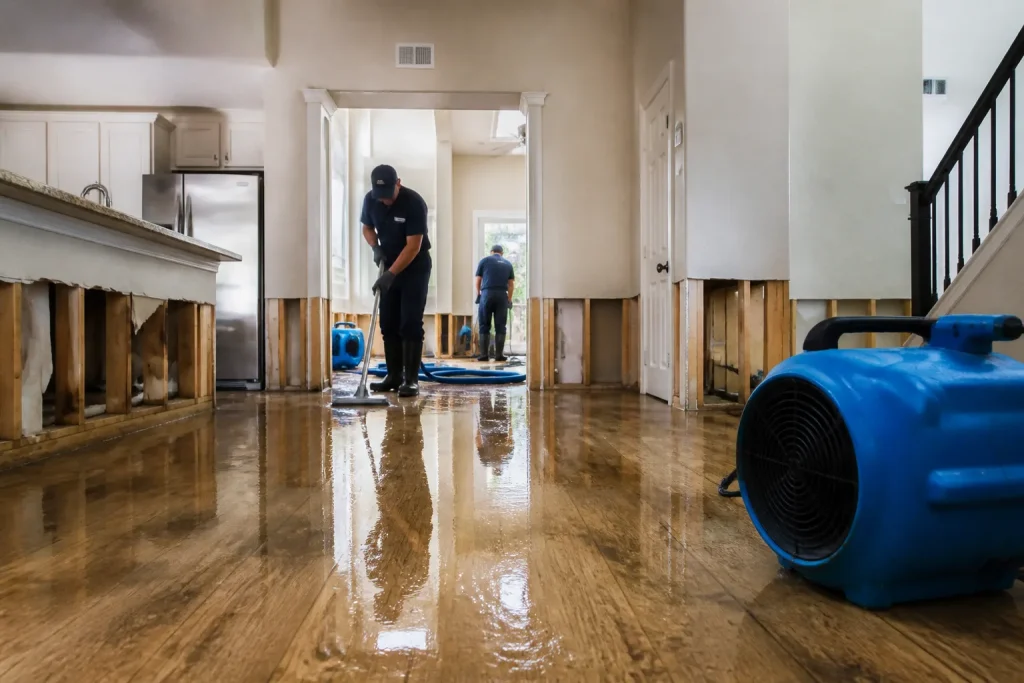
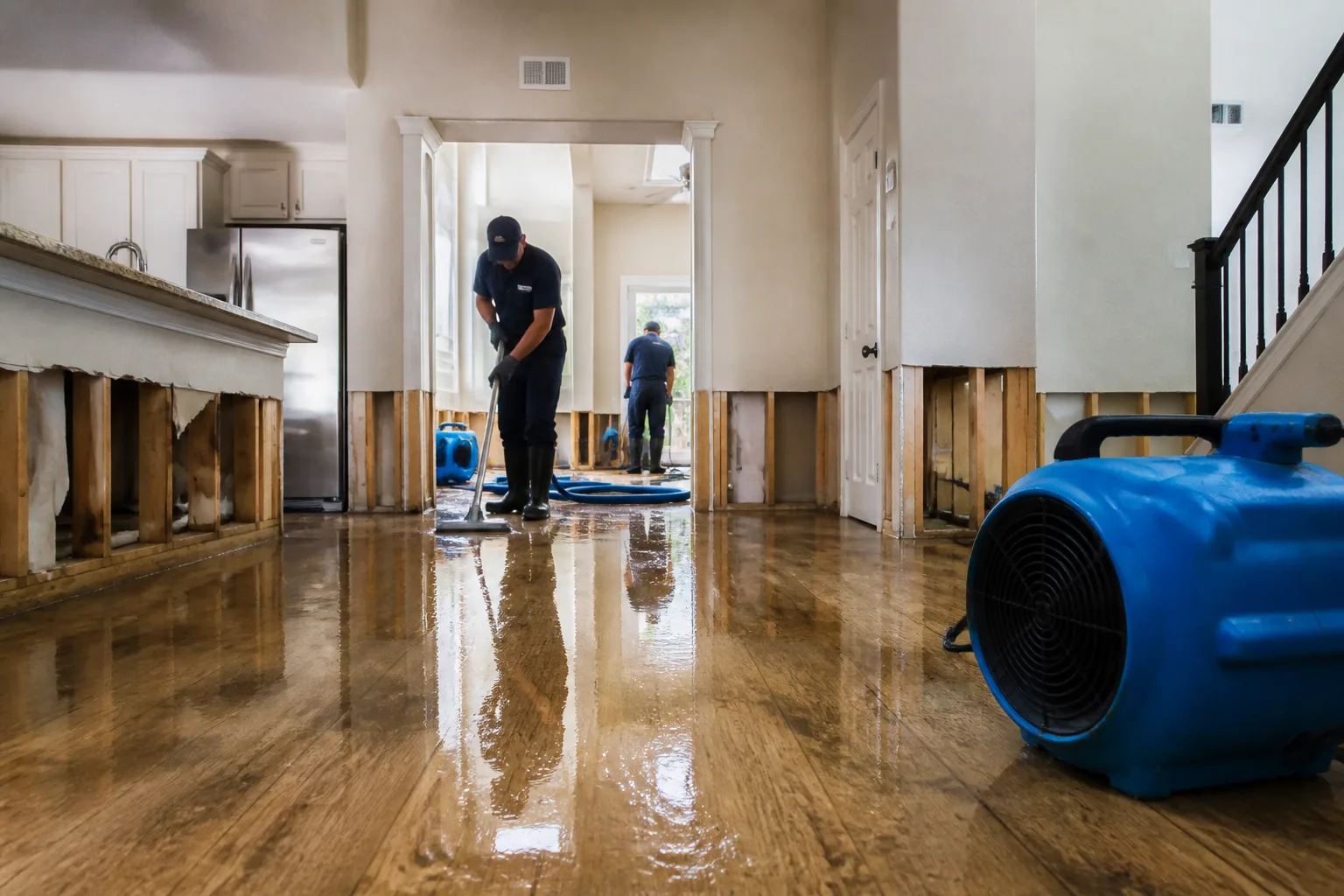
RIA Water Damage Restoration in San Diego: A Homeowner’s Guide
The Restoration Industry Association (RIA) helped publish the IICRC S500, the single most important document governing how your water damage should be dried. It sets specific, measurable drying goals your contractor either hits or doesn’t. Most San Diego homeowners we talk to have never heard of it, and that knowledge gap is exactly where bad restorers hide. If you’d rather not learn the standard and just want someone who follows it, call (855) 915-0646.
What the S500 Standard Actually Requires (in Plain English)
The S500 isn’t a suggestion. It’s a technical framework that tells restorers exactly how to dry a structure so it won’t grow mold later. Here’s what it actually mandates, stripped of industry jargon:
- Psychrometric readings. Your contractor must measure temperature, relative humidity, and dew point in every affected room, every single day. Not once at the start. Not “when they get around to it.” Daily.
- A written drying goal. Before equipment goes in, the restorer calculates what “dry” means for your specific materials in your specific San Diego climate. That number gets written down.
- Moisture content readings against the dry standard. Each day, they compare actual moisture readings in your drywall, studs, and flooring to that written goal. When readings match the standard, the job is done. When they don’t, drying continues.
- Documentation of everything. A compliant contractor produces a log showing every reading, every day, for every affected area. You should get that log at the end. Period.
In San Diego, this matters more than most homeowners realize. Our marine layer keeps ambient humidity between 70 and 85 percent for long stretches, especially in coastal neighborhoods like Point Loma, Ocean Beach, and La Jolla. Drying a wall in that humidity takes longer than drying the same wall in El Cajon in September. A restorer who doesn’t account for San Diego’s specific psychrometric conditions will pull equipment too early and leave you with a mold problem that shows up six months later.
Why San Diego’s Coastal Humidity Changes Your Drying Timeline
Here’s a fact most articles won’t tell you: the S500’s drying thresholds are absolute, but the time it takes to reach them isn’t. San Diego’s humidity is the variable that breaks contractor promises.
We pulled one out of a garage over in Clairemont last spring where a water heater had let go. The homeowner had already been burned by a national outfit that promised “three days, guaranteed.” Three days came and went, the equipment came out anyway, and the baseboards were still holding 24 percent moisture. By the time we got the call, there was visible mold behind the drywall. The fix cost triple what the first company quoted.
What happened? That first company didn’t account for the marine layer. When you run dehumidifiers and fans in 80 percent ambient humidity, you’re fighting the air itself. Every time they opened a door to check readings, they let more wet air in. The dry standard for wood framing in a coastal San Diego home is typically 10-14 percent moisture content, depending on the wood type and its location. Hitting that in Point Loma in May is a different job than hitting it in Rancho Bernardo in October.
What should a realistic drying timeline look like here? For a Category 1 clean-water loss affecting a room or two, plan on four to seven days when the marine layer is active. Category 2 losses (washing machine overflows, dishwasher leaks) often run five to nine. If anyone promises you “two days, guaranteed” in coastal San Diego between May and July, ask to see their psychrometric math.
Reading Your Own Moisture Log (What “Dry Standard” Really Means)
The single most important document in your water damage job is the moisture log. Here’s how to read it before you sign off on anything:
- Every reading has three numbers: the moisture content of the affected material, the dry standard for that material, and the date. If any of those three is missing, the log isn’t complete.
- “Dry standard” is a number, not a feeling. If your contractor says “it feels dry to me,” that’s not compliance. The S500 requires a number. For drywall, that’s usually 5-12 percent depending on the manufacturer. For hardwood flooring, 6-9 percent is common. For framing lumber, 10-14 percent. The specific number gets written on the log.
- You should see a trend. Day one should be high. Each day after should show a decrease. If readings plateau for two consecutive days, the drying setup isn’t working and something needs to change. More equipment, different placement, or a different approach. A plateau with no adjustment is a red flag.
- Comparison readings matter. A compliant restorer also takes readings from an unaffected area as a baseline. They compare the affected material against that baseline, not just against a chart. Your wall was “dry” at a certain number before the leak; that’s the target.
When we finish a water job anywhere in San Diego, the homeowner gets the full log. Every reading, every day, from the minute we set equipment to the minute we pull it. Most companies don’t do this. Wade’s Restoration of California home has built our reputation on it since 2007. If your contractor won’t hand you the log, you should be asking why not.
RIA-Certified vs. IICRC-Certified vs. Uncertified: What Actually Matters in San Diego
Here’s the honest answer: certification matters less than documentation, and documentation matters more than either.
The Restoration Industry Association and the IICRC (Institute of Inspection, Cleaning and Restoration Certification) are separate organizations that work closely together. RIA publishes the S500 standard through the IICRC. Both offer certifications. An RIA-certified restorer has been trained on the standard. An IICRC-certified restorer has passed specific coursework on water damage restoration. Both are good signals.
But neither guarantees compliance. We’ve walked into San Diego homes where the previous contractor was certified and still didn’t take a single psychrometric reading the entire job. The certification means they know the standard. It doesn’t mean they follow it.
What separates a professional restorer from a crew running fans is simple: they prove their work. Water Damage Restoration in San Diego done correctly leaves a paper trail. A certified contractor who won’t give you a written log is no better than an uncertified one who won’t. Uncertified contractors in San Diego can absolutely do good work, but you’re betting on their word with no standard to hold them to. That’s a risk you don’t need to take when the alternative is a company that documents everything it does.
One more thing: equipment matters, but not in the way you think. A Phoenix dehumidifier or an XPOWER air mover is only as good as the person reading the moisture meter. We use Dri-Eaz, Phoenix, and B-Air equipment because they’re reliable and their performance curves are well documented. But a lazy restorer with great equipment is still a lazy restorer. The log tells the truth.
The One Question That Separates Professionals from Fan-Runners
Before work starts, ask this exact question:
“Will you give me a written moisture log at every reading?”
That’s it. That’s the whole filter.
Professional restorers won’t blink. They’ll say yes because they already do it. Fan-runners will mumble something about “daily updates” or “you’ll see the progress yourself.” Some will say “we’ll go over readings with you at the end.” Those are refusals wearing a customer-service costume.
In San Diego, where the humidity makes guessing easy and precision hard, the log is the only proof that the S500 was actually followed. It’s the difference between “we dried your house” and “here’s the evidence we dried your house.” One is a claim. The other is a document.
If the answer is anything other than an immediate yes, call someone else. If you’re in San Diego and need that someone, we’re at (855) 915-0646. Wade Ferris answers that phone himself, and I’ll tell you exactly what you’ll get before we start: a written drying goal, daily readings, and the full log at the end. No charge for a second opinion on any written estimate, and if you’re a senior or veteran, there’s a permanent 10 percent discount on top of everything else.
When to Call a Pro (and When to Wait)
Some water damage can wait until morning. Some can’t. Here’s the quick version:
- Call immediately: water from a sewage line, toilet backup, or any source that isn’t clean water. Also call immediately if water has reached electrical outlets, if ceilings are sagging, or if water has been sitting more than 24 hours. San Diego’s warmth turns Category 1 into Category 2 fast.
- Can wait a day if you start drying yourself: a clean supply line leak under a kitchen sink, a water heater that failed onto concrete, a window leak during a storm. Mop up what you can, run fans, keep air moving. But call the next morning to get real drying started.
- Never wait: any water in contact with drywall for more than 48 hours, water in a room with no airflow, or water that has soaked into flooring underlayment. By day three, you’re in mold territory. Mold Remediation in San Diego is a different job with a different standard, and it costs more than drying.
And if you’re dealing with fire or smoke damage alongside water from the firefight, that’s a separate concern entirely. Fire & Smoke Damage Restoration in San Diego has its own protocols, and the S500 still applies to the water used to put the fire out. We handle both under one roof, which saves you the headache of coordinating two contractors.
The Bottom Line
RIA water damage restoration in San Diego means this: your house gets dried to a written standard, not to someone’s opinion. The S500 exists to give you a measurable definition of “done.” In San Diego’s coastal humidity, that standard is harder to hit, which makes documentation more important, not less. Ask for a written moisture log before work starts. If you get a yes, you’re working with a professional. If you get anything else, you’re working with a gamble.
If you’re in San Diego and need help, Wade’s Restoration of California offers free estimates. Call (855) 915-0646. We’ve been serving San Diego since 2007, and every water, fire, and mold job we do is backed by a 90-Day Done Right Promise in writing. That means if it’s not done right, we make it right. One call brings Wade back.
Frequently Asked Questions
RIA stands for the Restoration Industry Association, a trade organization that works with the IICRC to publish the S500 standard. That standard governs how water damage restoration should be performed, including drying goals, documentation, and moisture readings. In San Diego, any contractor claiming RIA compliance should be able to show you the specific readings and logs the standard requires.
For a typical clean-water loss affecting one or two rooms in San Diego, expect four to seven days of active drying. Coastal humidity during marine layer months can extend that timeline to eight or nine days. The job isn’t done when equipment comes out; it’s done when moisture readings match the written dry standard. Anyone promising a two-day dry-out in coastal San Diego humidity should be asked to show their psychrometric math.
Ask for a written moisture log at every reading. A compliant contractor will have no problem providing daily psychrometric readings, moisture content comparisons against a written dry standard, and baseline readings from unaffected areas. If they won’t hand you the log, they’re not following the standard, regardless of what their website says. In San Diego, this one question separates real restorers from fan-runners faster than any certificate.
No. RIA and IICRC certifications show that a contractor has been trained on the S500 standard. They don’t prove the contractor follows it. In San Diego we’ve seen certified companies skip daily readings entirely. The only proof of quality is documentation: a written drying goal, daily moisture logs, and a final log handed to you at job’s end. Ask for the paperwork, not the certificate.
Written by Wade Ferris, Owner at Wade’s Restoration of California, serving San Diego since 2007.
Need Damage Restoration Help?
Call Wade's Restoration of California - licensed & insured, here with fast after-hours help in San Diego.
(855) 915-0646