
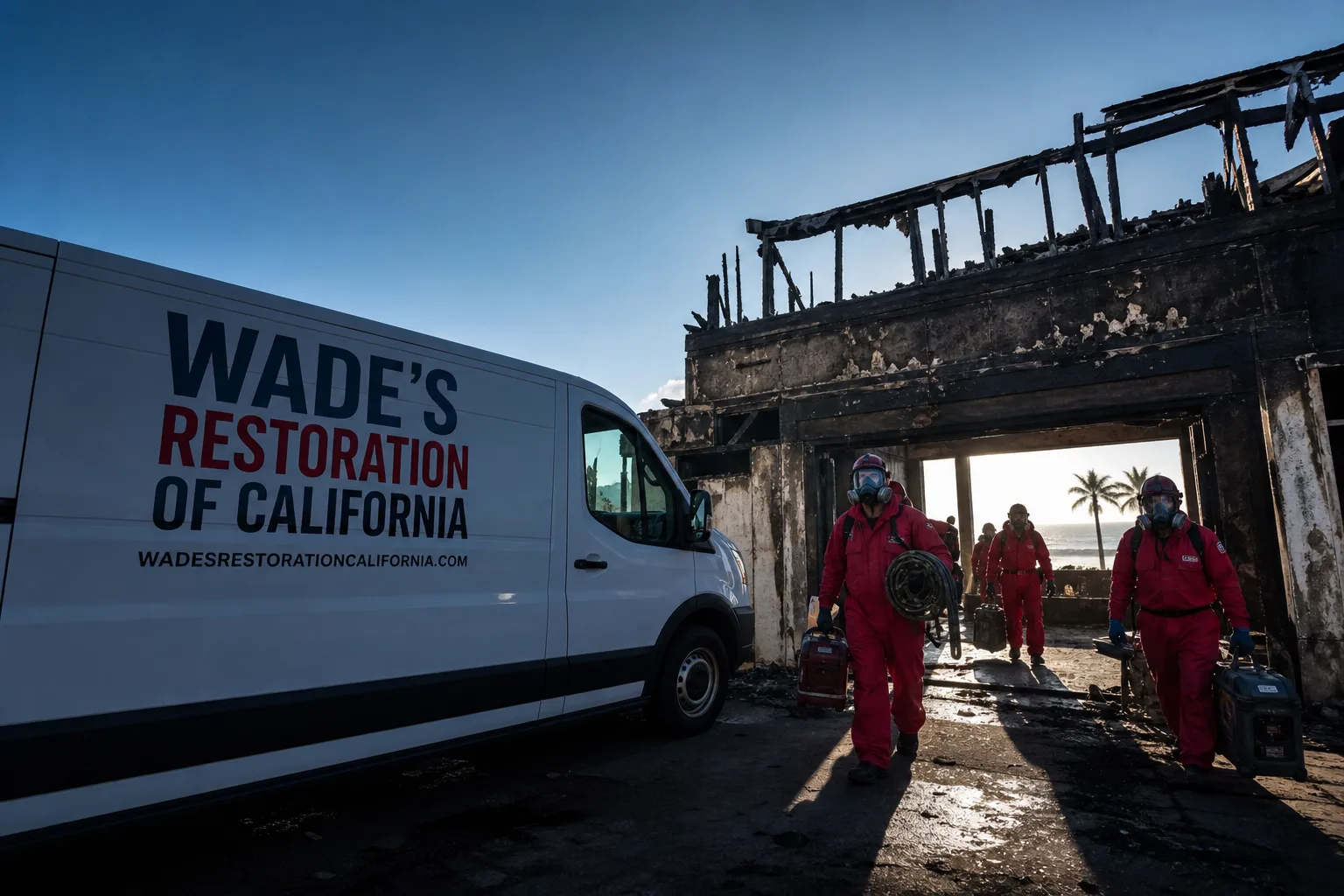
Fast, Reliable Water Damage Restoration Across Vista
Water damage restoration in Vista typically costs between $1,800 and $6,500 depending on the scope, and emergency extraction can usually be running within the hour. We’re Wade’s Restoration of California, and we’ve handled everything from pinhole leaks in 1960s tract homes off East Vista Way to mud intrusion in canyon lots near Buena Creek Road. If you’ve got water where it shouldn’t be, call (855) 915-0646 right now. A live person answers, and Wade heads out himself.
Vista’s not Oceanside. It’s not Carlsbad. The water damage here runs different, and a crew that only knows coastal stucco and ocean air is going to miss what’s actually wrong with your house. We know the 92084 hillsides, the Shadowridge weep-screed problems, and the galvanized pipes hiding behind your 1970s drywall. That local knowledge means we fix the real problem the first time.
Why Wade’s Restoration of California Is Vista’s Preferred Water Damage Restoration Company
Wade Ferris started this company in 2007 and never turned it into a franchise. His name is on the truck, his license number is published, and you’ll run into him at the hardware store on Sycamore Avenue. That’s the accountability structure Vista homeowners actually want when a restoration crew is inside their house. One call brings Wade back. Not a call center. Not a regional manager. Wade.
Response time to Vista matters because water doesn’t wait. We can have extraction running inside the hour for most ZIP codes in Vista, including 92083, 92084, and 92081. Calls are answered by a live person 24/7. Not a voicemail. Not an answering service. Wade answers his own phone, and if he’s on another job, one of his crew picks up and gets him on the road.
Every water job gets the 90-Day Done Right Promise in writing. If it’s not done right, we make it right. Wade also hands you the full moisture log at the end of every job, daily readings included. Almost nobody in this trade does that. Ask anyone on your street about the restoration company that didn’t document anything. Then ask about us.
Our Water Damage Restoration Services in Vista
Here’s what we actually do when water hits a Vista home, whether it’s a burst pipe on Sunset Drive at 2 a.m. or slow seepage that’s been hiding behind a Shadowridge stucco wall for months.
Emergency Water Extraction
Standing water in a Vista home needs extraction fast, and we mean equipment running within the hour. On a 1960s tract home in the 92084 corridor, we’re pulling water from crawlspaces, slab foundations, and hardwood that’s been soaked through. We use Dri-Eaz extraction and drying equipment, the professional-grade stuff that actually removes water, not the rental-center fans that just move air around.
Structural Drying & Dehumidification
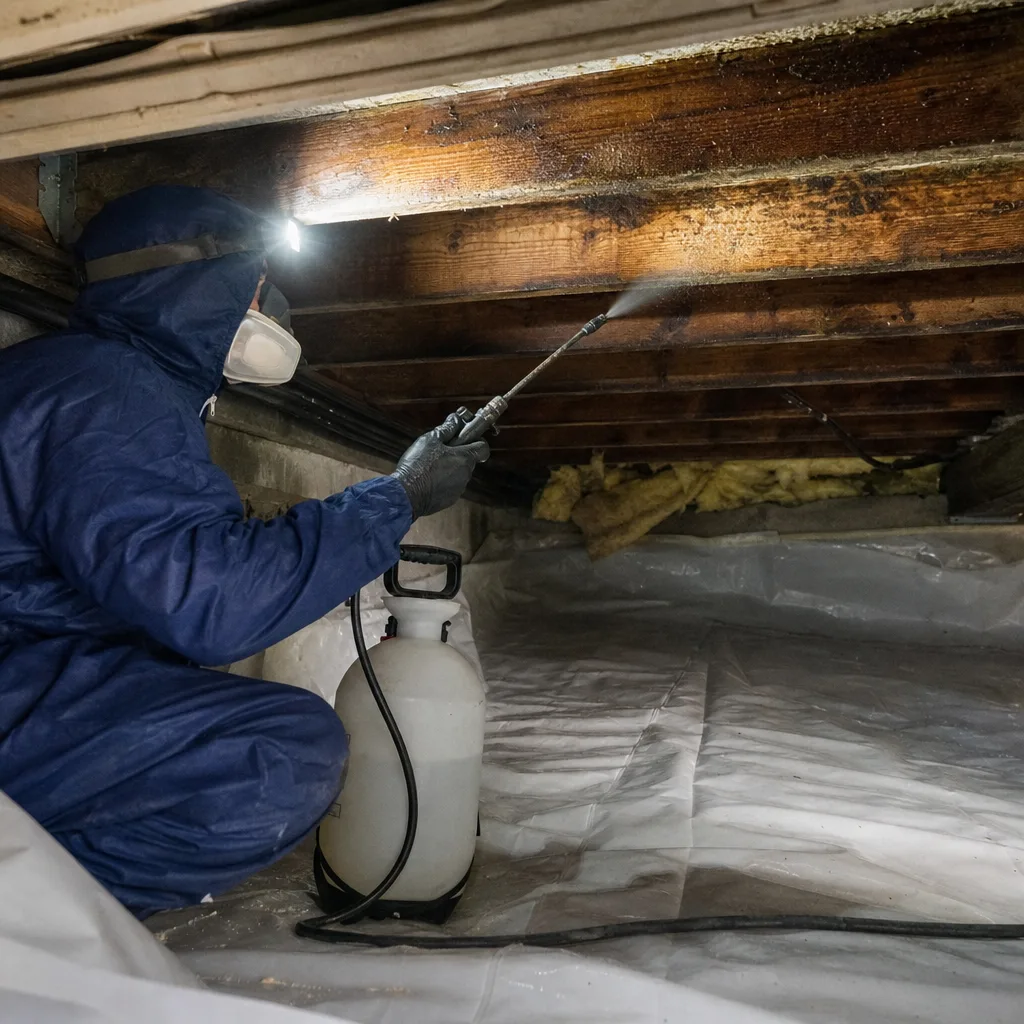
Drying a Vista home properly means hitting target moisture levels in framing, subfloor, and drywall, not just drying the carpet. Wade takes moisture readings every single day and hands you the log at the end. That matters in Vista specifically because our inland Santa Ana winds can create a false sense of dryness on the surface while the framing underneath is still wet enough to grow mold. You’ll see the numbers yourself.
Flood Cleanup
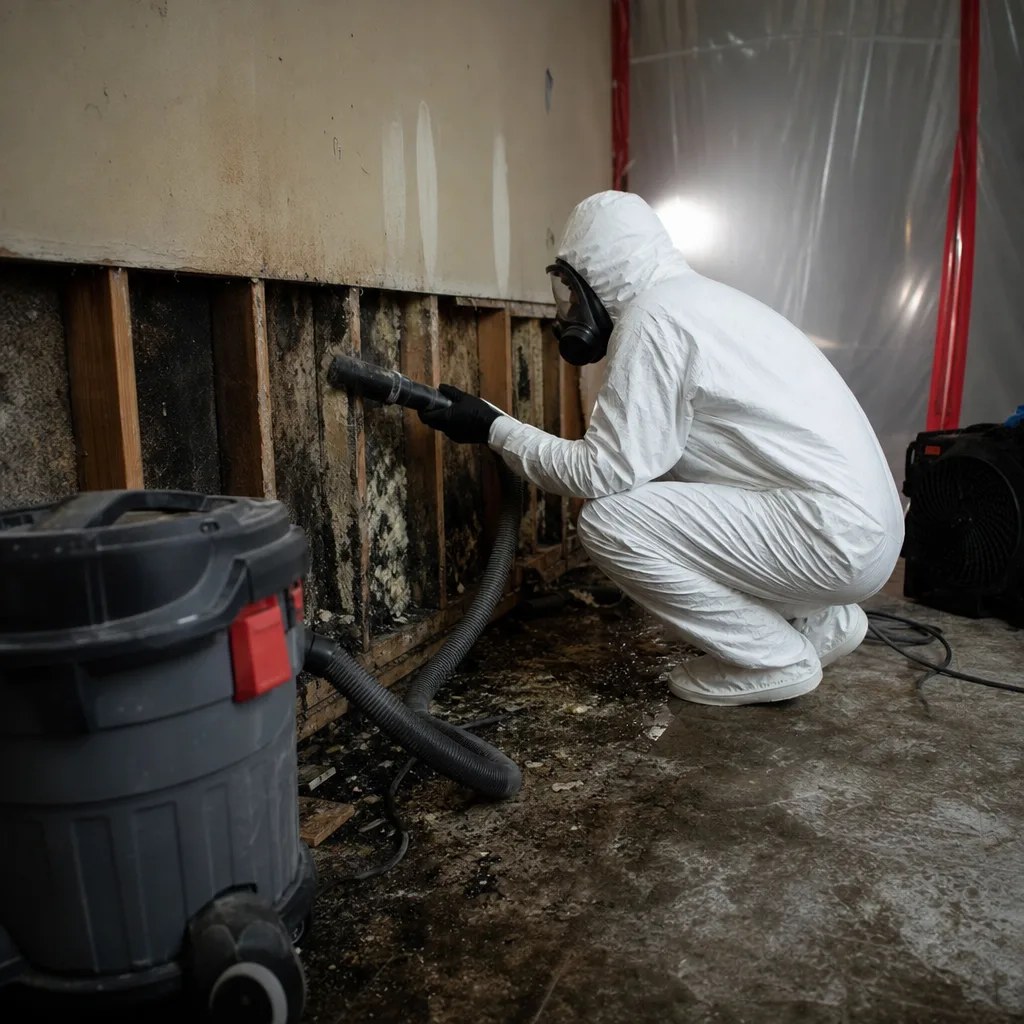
Vista’s canyon neighborhoods, especially in 92084, deal with a flood pattern most San Diego restoration crews never see. After a wildfire denudes the hillsides, the next heavy rain sends mud and runoff into foundations that were only ever designed for normal stormwater. We handle the water extraction, the structural drying, and the silt removal. Then we look at the erosion path and tell you what needs to happen so it doesn’t happen again in February.
Burst Pipe Restoration
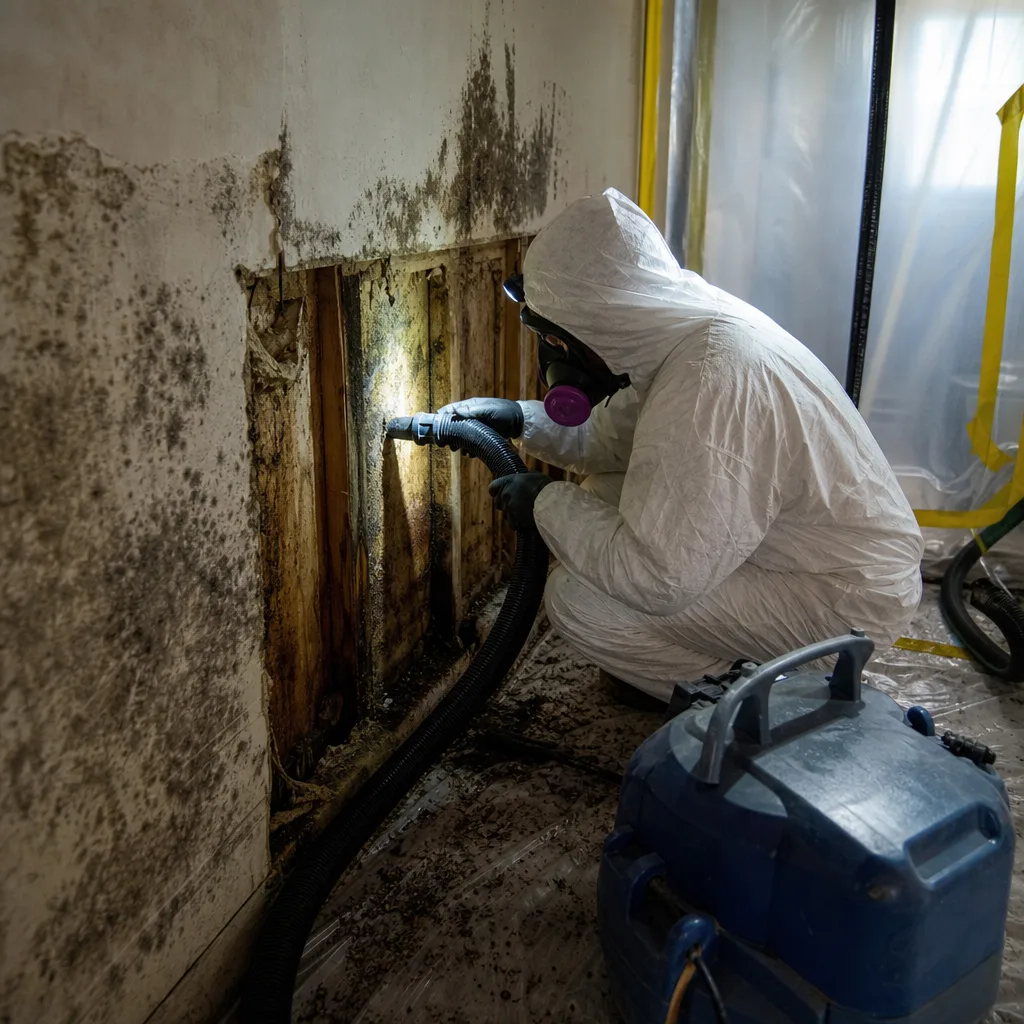
Vista’s older housing stock, particularly the 1950s through 1970s tract homes in 92083 and 92084, is full of original galvanized supply plumbing. San Diego County’s hard water corrodes those pipes from the inside out. When one goes, it doesn’t drip. It lets go. We handle the extraction, drying, drywall replacement, and we’ll tell you honestly if a full re-pipe is the right call before you patch a third pinhole leak this year.
What happens when you call
- 1
A real person answersNo phone trees - you reach a local pro.
- 2
You get an upfront price rangeHonest numbers before anyone is dispatched.
- 3
A background-checked tech heads outLicensed & insured, dispatched right away.
- 4
You approve before work beginsNothing starts until you say go.
Trusted Brands We Service in Vista
We restore water damage in homes of every era, from 1950s ranch styles near Brengle Terrace Park to 1990s Shadowridge stucco builds. Our Water Damage Restoration team works with Dri-Eaz drying equipment and holds IICRC certification, with RIA affiliation backing the work. That matters when your insurance adjuster asks who did the drying and whether the moisture readings are defensible. They are. We document everything.
Common Water Damage Restoration Problems We See in Vista Homes
- Pinhole leaks in original galvanized pipes. Homes built in Vista’s older core between the 1950s and 1970s often still have the original galvanized supply lines. San Diego County’s hard water corrodes them from the inside, and they leak behind walls for weeks or months before you see a ceiling bubble or smell mold. By then, the structural drying scope is much bigger than a simple pipe repair.
- Post-wildfire mud and water intrusion in canyon lots. The 2017 Lilac Fire burned through eastern Vista’s canyon neighborhoods. Properties in 92084 that survived the fire now deal with denuded hillsides above them. When heavy rain finally comes, the runoff carries mud and debris straight into foundations and crawlspaces that were graded for normal stormwater, not fire-flood conditions.
- Weep-screed failures on Shadowridge stucco. The 1980s and 1990s wood-frame stucco homes in the Shadowridge district often have poorly executed weep-screed details where the stucco meets the foundation. Moisture wicks behind the cladding and shows up as a water stain on an interior wall. Homeowners think roof leak. It’s not. It’s a cladding issue, and it recurs until the moisture path is actually remediated.
- Attic condensation from inland marine layer mornings. Vista sits far enough inland that marine layer influence seems unlikely, but overnight condensation does happen in poorly ventilated attic spaces. Homeowners see a ceiling stain and assume a roof leak. Sometimes it’s condensation. Sometimes it’s a leak. We diagnose it properly before anyone tears into your roof.
Pricing for Water Damage Restoration in Vista, CA
Here’s what we see in Vista’s market. Emergency water extraction for a single-room pipe break typically runs $1,800 to $3,200, including equipment and initial drying. A whole-home flood cleanup in a canyon lot with mud intrusion runs $4,500 to $8,500, because you’re dealing with silt removal, structural drying, and often foundation drainage work. Burst pipe restoration with drywall replacement and re-pipe coordination runs $2,800 to $6,500 depending on how much wall and flooring came out. These are real ranges we quote every month in Vista, not national averages.
We give you a written scope before work starts. No surprises at the door. Call (855) 915-0646 for a free estimate. And if you already have a written estimate from someone else, Wade offers a free second opinion. No charge for that.
We Also Serve Cities Near Vista
Our crews serve Water Damage Restoration in Vista and the surrounding North County communities, including Camp Pendleton North, San Marcos, Carlsbad, and Oceanside. If you’re in a neighboring city and dealing with water damage, call the same number. Wade heads out the same way. Same response time, same documentation, same promise in writing.
Serving Vista, CA - Our Local Coverage Area
We’re based in the Vista area and know this community well. Use the map below to see our service coverage - if you’re nearby, we can almost certainly help.
FAQs - Water Damage Restoration in Vista
We see this pattern constantly in the 92084 canyon homes. The Lilac Fire burned the hillsides above your street and destroyed the vegetation that used to slow down and absorb rainfall. Now when heavy rains arrive, usually in January or February, the water and mud funnel straight down those denuded slopes into the foundations below. Your home doesn’t have to be fire-damaged to suffer fire-related water damage. The erosion path is the problem. We handle the current water intrusion and then assess what needs to be done about the runoff path so it doesn’t recur. Call (855) 915-0646 and we’ll put eyes on it.
Most people find out the hard way, when a ceiling sags or mold shows up. The original galvanized pipes in Vista’s 1970s tract homes corrode slowly, and the early signs are subtle: a musty smell with no visible source, a warm spot on the floor, a water bill creeping up for no reason. If you’re in a home that still has original galvanized supply lines parallel to your water meter, a pinhole leak is not a matter of if but when. We can do a moisture assessment with the same equipment we use for restoration duty. Call (855) 915-0646 and we’ll take readings.
Shadowridge homes are mostly 1980s and 1990s wood-frame stucco, and the weep-screed details where the stucco meets the foundation are often the source of the water damage. Moisture wicks behind the cladding, shows up as a water stain on an interior wall, and gets misdiagnosed as a roof leak. Coastal Vista neighborhoods closer to the 78 don’t have the same volume of this construction pattern, nor the same failure mode. It’s a Shadowridge-specific problem, and we treat it as a cladding moisture issue, not a roof repair.
Yes, and here’s the pattern. Santa Ana events are dry, so they don’t directly cause water damage. But when a Santa Ana event follows wildfire or coincides with fire season, it strips the hillsides. The next heavy rain, usually weeks or months later, sends water and mud where it never used to go. If you live on a hillside lot in 92084 or near a canyon rim, you should walk your property line after the first heavy rain of the wet season and look for new water paths, soft spots in the soil, or dampness in your crawlspace. If you see any of that, call (855) 915-0646 and we’ll take a look before it becomes an interior restoration job.
A roof leak stain typically grows after rain and has a defined edge or drip pattern, while condensation stains tend to be more diffuse and appear in the morning after cool, still nights, which Vista does get when the marine layer pushes inland. But the only way to know for sure is to take moisture readings in the attic and trace the stain in the ceiling cavity. We do that as part of every ceiling water damage assessment. If it’s condensation, the fix is attic ventilation. If it’s a roof leak, we’ll tell you and coordinate with a roofer. Either way, you’ll know what you’re dealing with. Call (855) 915-0646 for an assessment.
Written by Wade Ferris, Owner at Wade’s Restoration of California, serving Vista and North County San Diego since 2007.