
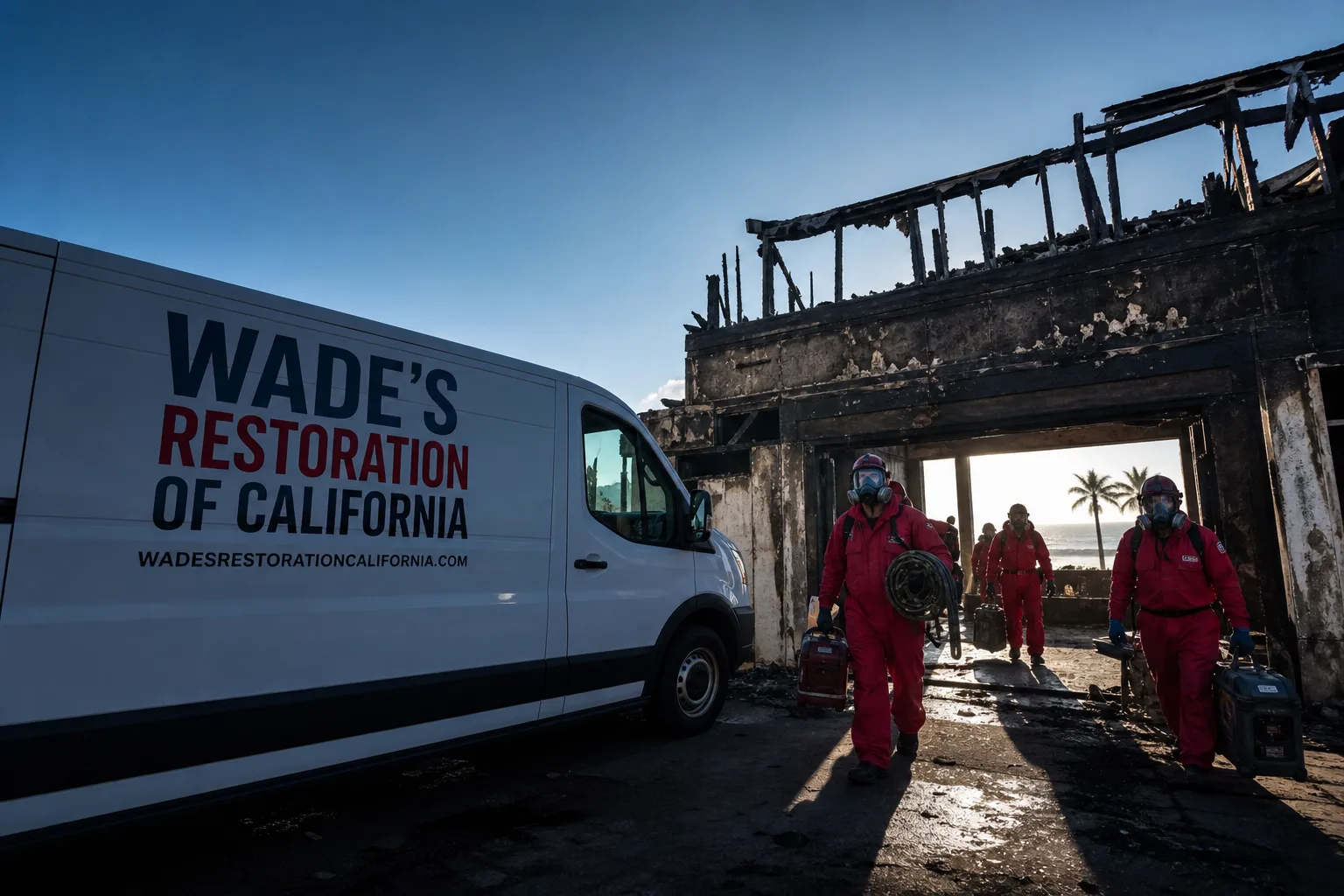
Fast, Reliable Water Damage Restoration Across Pittsburg
If you’re standing in water in Pittsburg right now, here’s what you need to know: extraction should start within the hour, structural drying needs to be running before the tidal fog settles in, and the person you call should know the difference between a clean-water appliance leak and a brackish Delta surge. Wade Ferris does. He’s been running Water Damage Restoration crews in Pittsburg long enough to know which homes near Marina Boulevard have plaster walls that wick moisture and which 1960s ranch houses have original galvanized pipe waiting to fail. Call (855) 915-0646 and Wade answers his own phone. He’ll be there himself, not a crew you’ve never met.
Why Wade’s Restoration of California Is Pittsburg’s Preferred Water Damage Restoration Company
Here’s the difference between Wade and the national outfits that advertise in Pittsburg: Wade Ferris lives where he works. His name is on the truck, his face is the one you’ll see at the hardware store on a Saturday, and he publishes his address and license number because he has nothing to hide. Since 2007, he’s run this company on a simple rule: if it’s not done right, he makes it right. That’s in writing on every job, including right here in Pittsburg, CA.
Wade’s crew doesn’t hand you a moisture reading and disappear. You get the full moisture log, every reading from day one to the day the job closes. Almost nobody in this trade does that. And when your insurance adjuster calls with questions, Wade talks to them directly. You’re not the one stuck relaying information between two sides while your plaster keeps soaking it up.
Ask anyone on your street in Pittsburg. The guy who had a water heater let go in Old Town. The family near the Marina whose crawlspace flooded during a winter surge. They’ll tell you the same thing: Wade showed up fast, didn’t oversell, and left the house drier than it was before the leak. That’s the reputation that matters in a town this size.
Our Water Damage Restoration Services in Pittsburg
Emergency Water Extraction
A burst supply line under a Pittsburg kitchen sink doesn’t wait for business hours. Neither does Wade. When you call (855) 915-0646 at two in the morning, he answers. Extraction equipment can be running inside the hour because standing water in a Delta-adjacent home doesn’t just damage floors. It feeds the humidity that Pittsburg’s tidal fog already keeps high. The faster we pull the water out, the faster the structure starts drying.
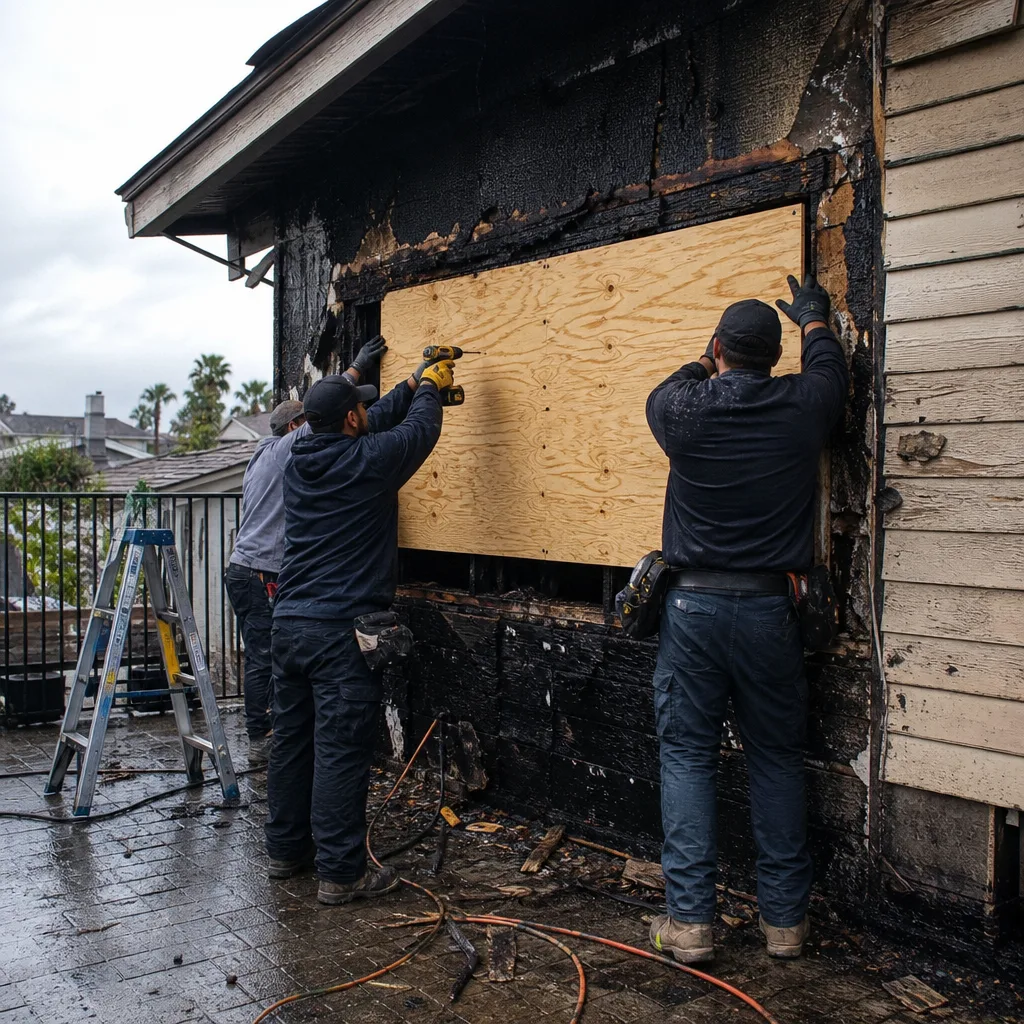
Structural Drying & Dehumidification
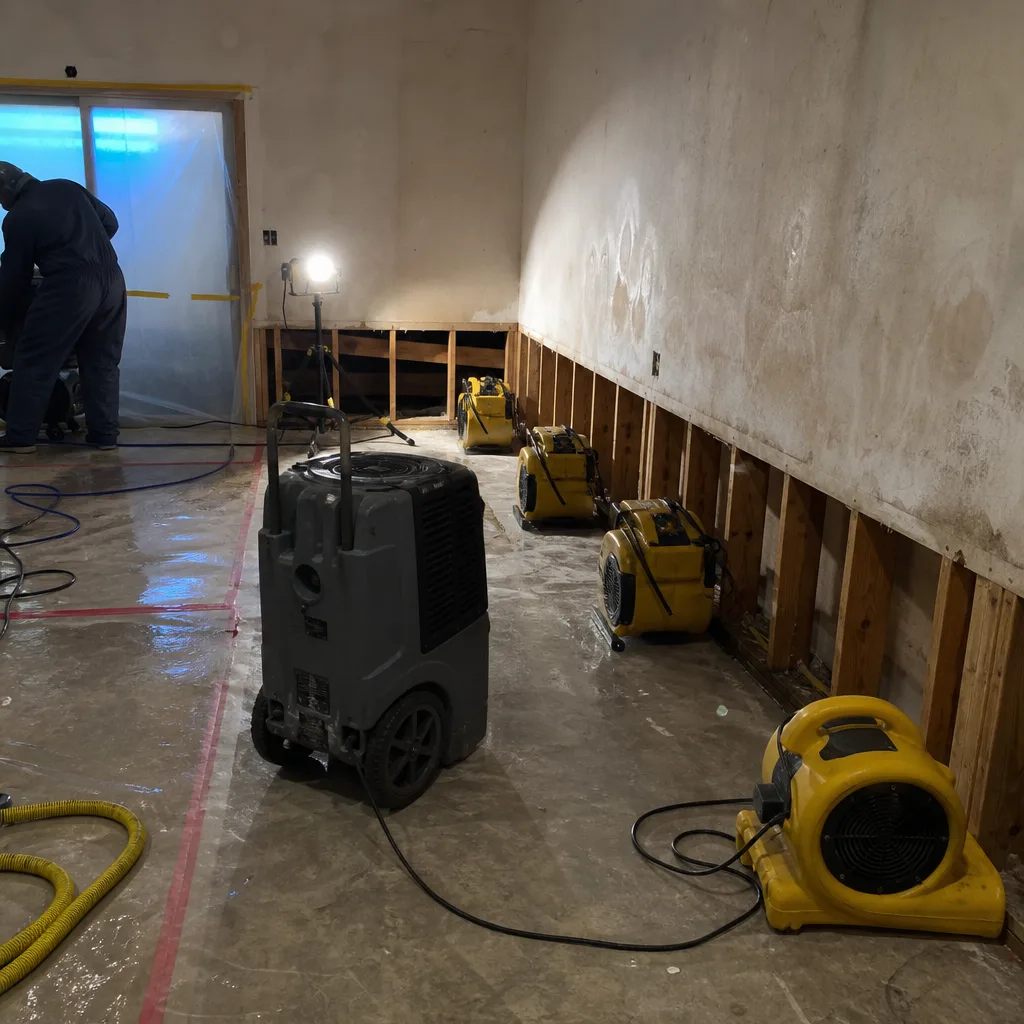
Drying a 1960s wood-frame home in Pittsburg is not the same as drying a stucco tract home in Concord. Plaster walls hold moisture in cavities. Original framing may have settled into pockets that trap water. Wade runs Dri-Eaz LGR dehumidifiers and Phoenix air movers sized for the actual moisture load, not a generic formula. In Pittsburg’s fall and winter fog, you can’t under-dry and hope for the best. Mold colonization in this climate starts fast, which is why Wade takes moisture readings every single day and hands you the log at the end.
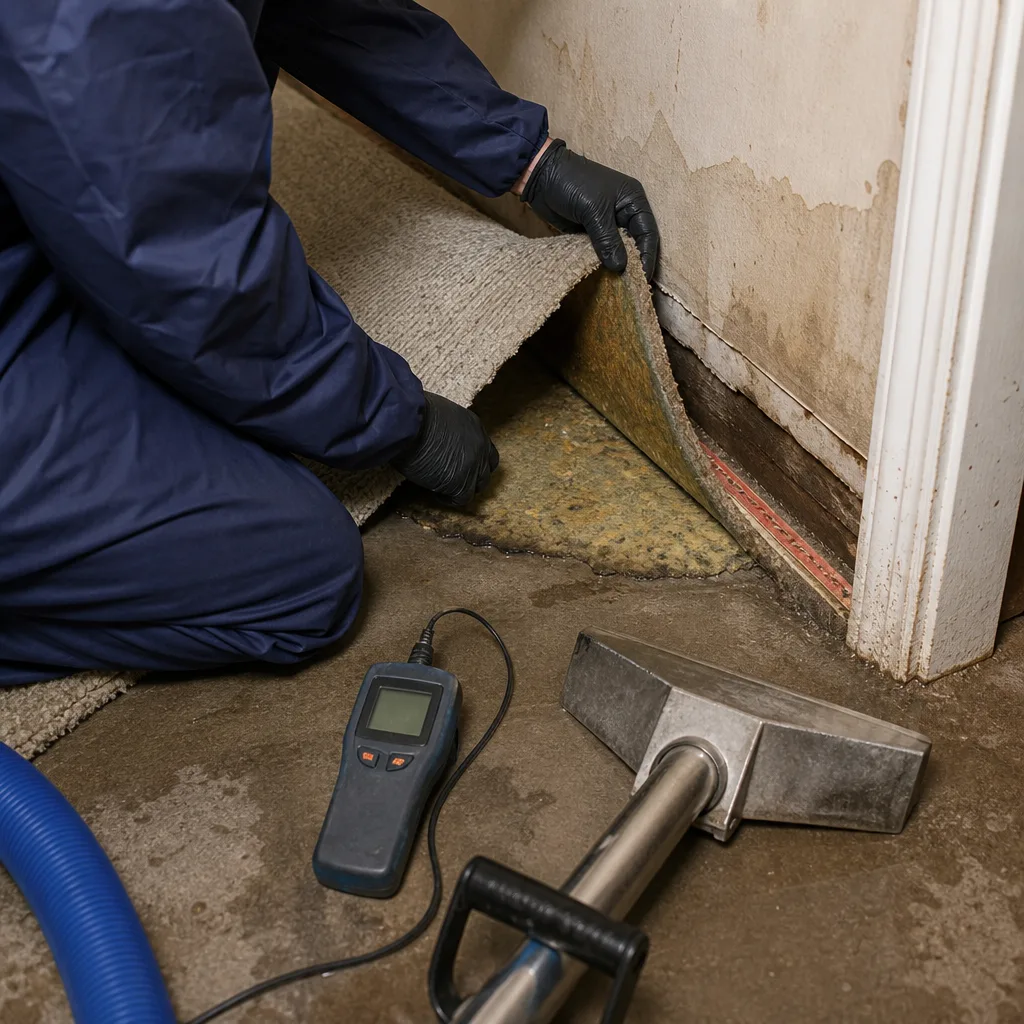
Flood Cleanup
Pittsburg sits at the western edge of the Sacramento-San Joaquin Delta, right where it meets Suisun Bay. That’s not a fun fact for a trivia night. It means floodwater in Pittsburg frequently carries brackish or black-water contamination, not the clean water you’d get from a burst pipe in Antioch. When a winter storm pushes a Delta surge into the waterfront neighborhoods near the Marina, what looks like a simple flood cleanup may legally be a Category 3 loss requiring Sewage Cleanup - Pittsburg protocols. Wade’s crew knows that. Full containment, PPE, and proper disposal protocols are standard on those jobs, because pretending otherwise is how you get a family sick in their own living room.
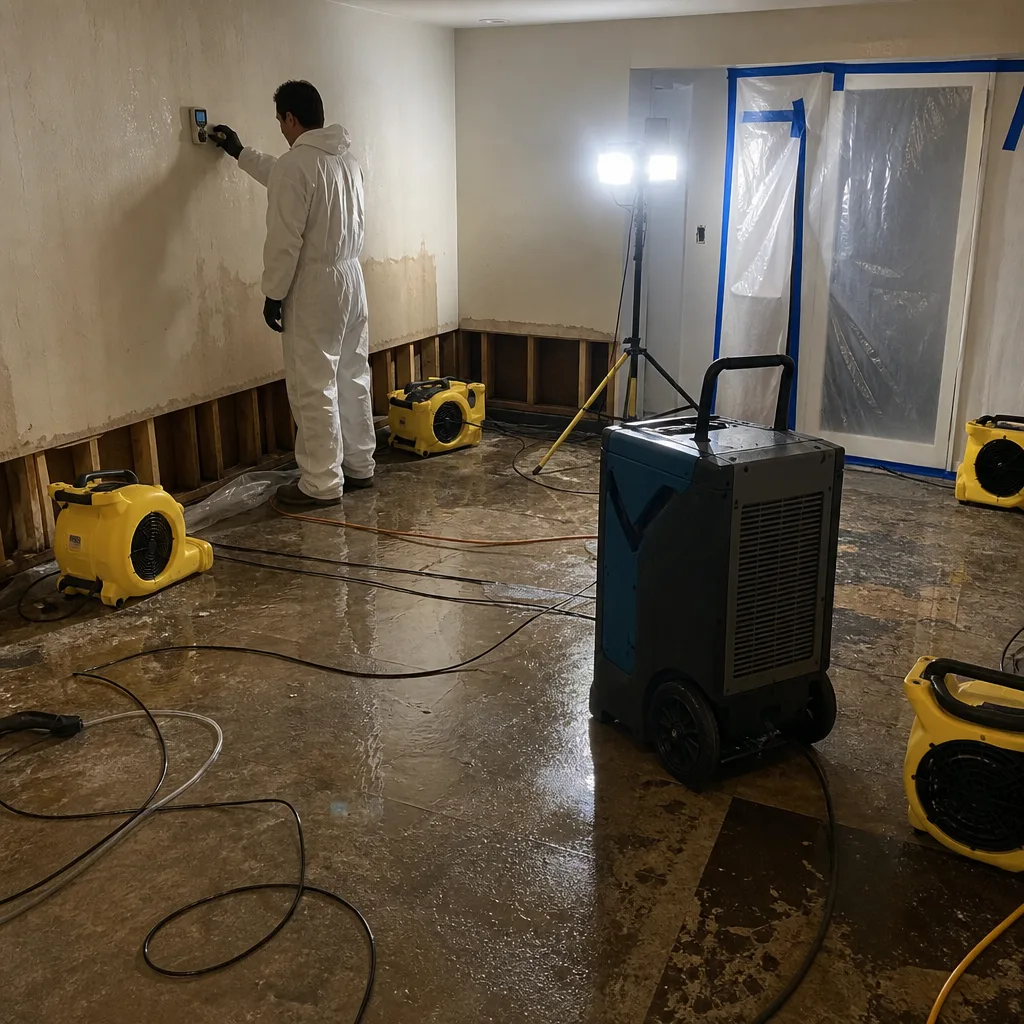
Burst Pipe Restoration
Original galvanized and early copper plumbing runs through a lot of Pittsburg’s housing stock, much of it installed during the mid-century steel boom. Those pipes have been corroding from the inside for 50 to 70 years. When one lets go, it’s usually inside a wall or under a slab, not somewhere you can just mop up. Wade’s crew traces the leak, extracts the water, and then gets the structure drying. If that pipe is in a wall with original plaster and lath, the drying plan accounts for the slower moisture release those materials are known for in Pittsburg homes.
What happens when you call
- 1
A real person answersNo phone trees - you reach a local pro.
- 2
You get an upfront price rangeHonest numbers before anyone is dispatched.
- 3
A background-checked tech heads outLicensed & insured, dispatched right away.
- 4
You approve before work beginsNothing starts until you say go.
Trusted Brands We Service in Pittsburg
We don’t use rental equipment or whatever’s left at the supply house. Wade runs professional-grade gear from Dri-Eaz and Phoenix, with Injectidry systems for hard-to-reach cavities and XPOWER and B-Air air movers for circulation. The credentials behind the work come from IICRC training and RIA affiliation. That matters in Pittsburg because the humidity here punishes weak drying setups. A homeowner deserves equipment that can pull moisture out of a plaster wall cavity, not just a box fan and a wet-vac. That’s the standard Wade holds, and it’s the standard he’d want if it was his own house on Railroad Avenue.
Common Water Damage Restoration Problems We See in Pittsburg Homes
- Brackish floodwater where clean water was expected. A tidally influenced surge can push Suisun Bay water under slabs and into crawlspaces near the Marina and Old Town. What starts as a Class 1 cleanup becomes a Category 3 containment job once the source is confirmed. That changes the entire scope, the PPE requirements, and the disposal plan.
- Asbestos in mid-century building materials. Much of Pittsburg’s residential inventory was built during the 1940s through 1970s, when the city was a steel-manufacturing hub. Popcorn ceilings, vinyl floor tile, and pipe insulation from that era commonly test positive for asbestos. Before Wade opens any wall or pulls any ceiling, those materials get tested. Skipping that step halts a drying plan and adds abatement cost and days to the timeline, so Wade’s crew tests first.
- Mold that moves faster than you’d think. Persistent tidal fog and elevated baseline humidity through fall and winter mean a damp stud bay in Pittsburg colonizes with mold faster than the same stud bay in Clayton or Concord. If the drying setup is too small or shut down too early, mold gets established in the wall cavity before the homeowner even sees it. Wade runs the drying long enough, and verifies with daily readings.
- Plaster walls that soak up water like a sponge. A 1960s wood-frame home near Marina Boulevard with plaster and lath holds moisture differently than drywall construction. Wet plaster wicks moisture upward and outward, saturating framing behind it. Standard drying timelines don’t apply, and cutting the drying short leaves hidden moisture that leads to warped trim, peeling paint, and mold months later.
Pricing for Water Damage Restoration in Pittsburg, CA
Here’s honest money talk, because you deserve it. Emergency water extraction in Pittsburg typically runs $400 to $900 for a single room, depending on how much water is standing and how far it traveled. Structural drying and dehumidification for a Pittsburg plaster-and-wood-frame home usually falls between $1,200 and $3,500, and the older the home, the longer the drying runs and the higher that lands. A burst pipe restoration with drywall removal and drying can run $2,000 to $6,000, and if asbestos abatement is triggered, that adds cost and days, which is why Wade tests before cutting. Flood cleanup with brackish water contamination runs $3,000 to $10,000 or more depending on square footage and how far the water reached. Wade’s estimates are free, and the price he gives you is the price, not a starting point for an upsell at the door. Call (855) 915-0646 and get a real number in writing before any work starts.
We Also Serve Cities Near Pittsburg
Wade’s crew covers Pittsburg and the surrounding communities of Bay Point, Concord, Clayton, and Antioch. No trip charge inside the county, and the same direct-to-Wade phone line whether you’re in a 1950s tract near Buchanan Park or a newer build on the east side of Antioch.
Serving Pittsburg, CA - Our Local Coverage Area
We’re based in the Pittsburg area and know this community well. Use the map below to see our service coverage - if you’re nearby, we can almost certainly help.
FAQs - Water Damage Restoration in Pittsburg
Pittsburg’s location where the Delta meets Suisun Bay means floodwater here is more likely to be brackish or Category 3 black water than the clean-water flooding more common inland. That triggers containment, PPE, and specialized disposal protocols that a typical appliance-leak call in Antioch or Concord wouldn’t require. Wade’s crew knows the difference and plans for it before cutting anything open. Call (855) 915-0646 and Wade will tell you straight whether your job is Category 1 or Category 3.
If your home was built between the 1940s and 1970s, yes, almost certainly. Popcorn ceilings, vinyl floor tile, and pipe insulation from that era commonly test positive for asbestos in Pittsburg’s older housing stock. Wade’s crew tests those materials before any invasive demolition, because opening walls without testing can halt the entire drying plan and add abatement cost and days to your timeline. The testing is done first, every time. Call (855) 915-0646 to schedule an assessment and Wade will walk you through exactly what gets tested.
In Pittsburg’s fall and winter tidal fog, mold colonization can begin within 48 to 72 hours on wet organic materials, and it can start even faster inside a damp wall cavity where there’s no air movement. That’s why Wade gets extraction running inside the hour and keeps structural drying going until daily moisture readings prove the cavities are dry, not just the surfaces. Waiting a day or two to call (855) 915-0646 is the most expensive mistake a Pittsburg homeowner can make after a leak.
If the source traces to a Delta or Suisun Bay surge, that crawlspace is Category 3 black water until proven otherwise. Wade’s crew sets containment, uses PPE, extracts the water, removes contaminated insulation and debris, and disinfects the framing before drying begins. The disposal of contaminated materials follows local regulations, and Wade coordinates with your adjuster so the claim reflects the true Category 3 scope. Call (855) 915-0646 and Wade will assess whether the crawlspace is clean-water, gray-water, or black-water before any work starts.
Plaster and lath walls, original wood framing that has settled and sealed itself into tight bays, and Pittsburg’s elevated baseline humidity from the Delta all work against fast drying. A 1960s home near Marina Boulevard will hold moisture in wall cavities longer than a 2000s drywall build in Clayton, which means the drying plan must run longer and the equipment must be sized correctly. Wade’s crew takes daily moisture readings and keeps the Dri-Eaz and Phoenix equipment running until those numbers actually come down, not until the calendar says it’s been long enough. Call (855) 915-0646 and Wade will explain exactly how your home’s construction affects your drying timeline.
Last Winter, We Saw It Firsthand
Last winter, our crew responded to a burst supply line in a 1960s wood-frame home near Marina Boulevard. The plaster walls and original galvanized piping had wicked moisture into the wall cavities, and elevated tidal fog kept the studs above 20% moisture content for days. We deployed Dri-Eaz LGR 7000XLi dehumidifiers and injected dry air into the plaster cavities with our Injectidry system, then coordinated asbestos testing on the original popcorn ceiling before removing damaged drywall. That sequence kept the job in compliance with local abatement rules and stopped mold before it started. That’s not a procedure from a training manual. That’s just what a Pittsburg house requires when it floods in the middle of winter fog season, and why Fire & Smoke Damage Restoration in Pittsburg follows the same meticulous approach.
The Pittsburg Restoration Difference
In Pittsburg, a water damage call that looks like a simple appliance leak may legally be a Category 3 loss if the source traces to Suisun Bay or a Delta surge. The city’s waterfront sits at the confluence of brackish tidal water, which means contamination protocols trigger more often here than in inland neighbors like Antioch or Concord. A dishwasher overflow in a kitchen on Harbor Street is one thing. That same puddle fed by an upstream surge through a floor drain is something else entirely, and may require Pittsburg Storm & Disaster Restoration expertise. Wade’s crew has handled both, and they know which one requires a hazmat-tier response before the first fan gets plugged in.
Add to that the reality of Pittsburg’s housing stock: wood-frame homes with plaster walls, original galvanized or early copper plumbing, and building materials that commonly test positive for asbestos. A major water loss in one of these homes means structural drying that runs slower, testing that must happen before demolition, and a scope that includes abatement coordination on top of restoration. That’s the job. Wade’s Restoration of California has been doing it in Pittsburg long enough to have it down to a sequence, and every step of it is written down for you and your adjuster.
Call Wade Ferris Directly
If there’s water in your Pittsburg home right now, don’t wait. Call (855) 915-0646. Wade Ferris answers his own phone, day or night, and he’ll tell you what you’re dealing with and what it’ll take to fix it. Free estimate, no trip charge inside the county, and a 90-Day Done Right Promise in writing on every job. If it’s not done right, Wade makes it right. That’s the whole deal, and it’s been that way since 2007.
Written by Wade Ferris, Owner at Wade’s Restoration of California, serving Pittsburg and the surrounding Delta communities.