
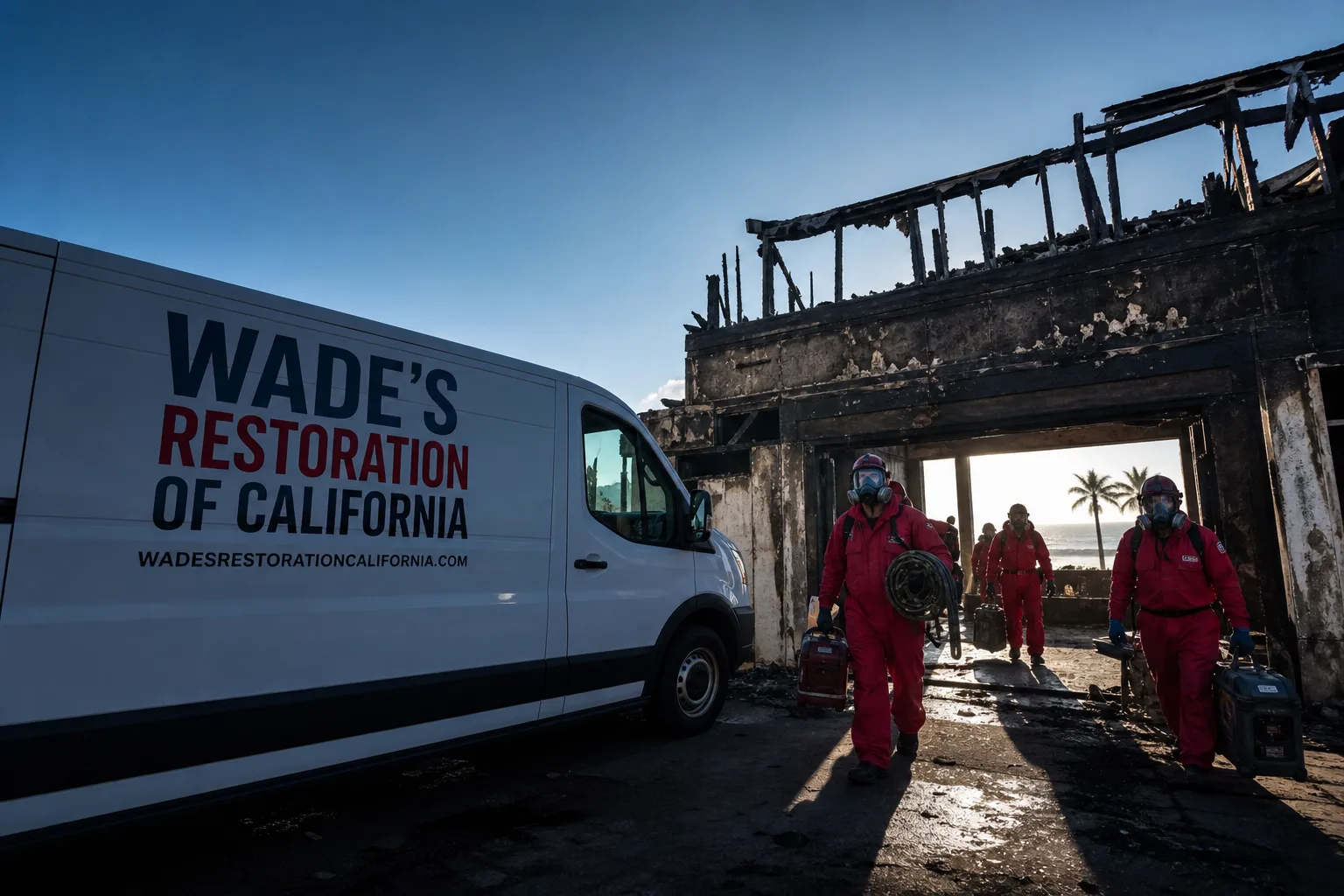
Fast, Reliable Water Damage Restoration Across Menlo Park
Water damage in Menlo Park doesn’t wait for business hours, and neither do we. A burst supply line in a 1930s craftsman off El Camino Real or groundwater flooding a Belle Haven crawl space east of 101 needs extraction running inside the hour, not a callback tomorrow. Wade’s Restoration answers the phone live, 24/7, and Wade himself heads out. Call (855) 915-0646 and you’ll talk to the owner, not a call center. We know which side of Highway 101 you’re on and what that means for your drying plan before we ever pull up.
Why Wade’s Restoration of California Is Menlo Park’s Preferred Water Damage Restoration Company
Wade Ferris founded this company in 2007 and put his own name on the truck. That’s not branding. It’s the oldest accountability mechanism there is. When you call for Water Damage Restoration in Menlo Park, you get Wade’s crew, background-checked and uniformed, running IICRC-standard dry logs and professional-grade Dri-Eaz and XPOWER equipment. Wade takes moisture readings every single day and hands you the full log at the end of the job. Almost nobody in this trade does that. It’s your house. You should see the numbers.
Menlo Park homeowners have told us the same story for years: a national chain quotes one number on the phone, then a different number at the door. That doesn’t happen here. We write the scope before work starts. We don’t pad it after. And every water, fire, or mold job we do carries the 90-Day Done Right Promise in writing. If it’s not done right, Wade makes it right. One call brings him back.
We serve Menlo Park from our San Francisco Bay Area office, and dispatch to this city means we’re on scene fast, typically inside the hour for emergencies. Ask anyone on your street. Wade has been the name people in Menlo Park call when water’s where it shouldn’t be.
Our Water Damage Restoration Services in Menlo Park
Emergency Water Extraction
Standing water in a Menlo Park home doesn’t politely wait. Whether it’s a slab leak off Santa Cruz Avenue or a failed supply line in a mid-century ranch in the Stanford Hills area, we pull water fast with truck-mounted extraction and high-volume pumps. In Belle Haven, where bay-fill clay sheds water horizontally, we don’t just pull what’s visible. We check under the floor. Groundwater intrusion hides there, and missing it means mold starts before the floor even feels dry.
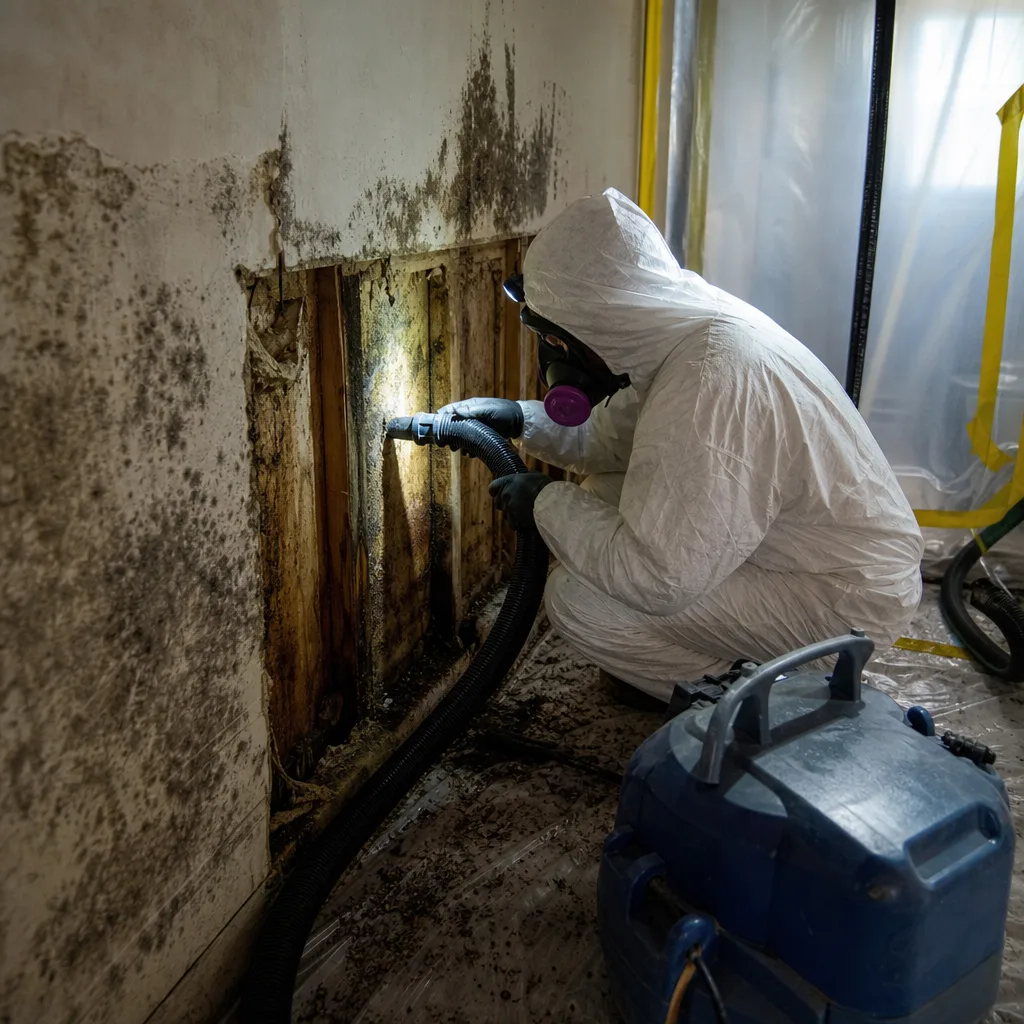
Structural Drying & Dehumidification
Menlo Park’s summer fog keeps interior relative humidity elevated year-round. That means materials stay wet longer here than they do in the drier South Bay, and a dry-out timeline that works in San Jose will fail on a Menlo Park lath-and-plaster wall. We set drying targets for this climate, not a generic chart. Injectidry panels pull moisture from inside wall cavities in older craftsman homes, while Phoenix and Dri-Eaz dehumidifiers bring the room to spec. Daily moisture readings go in your log. You’ll see the numbers drop.
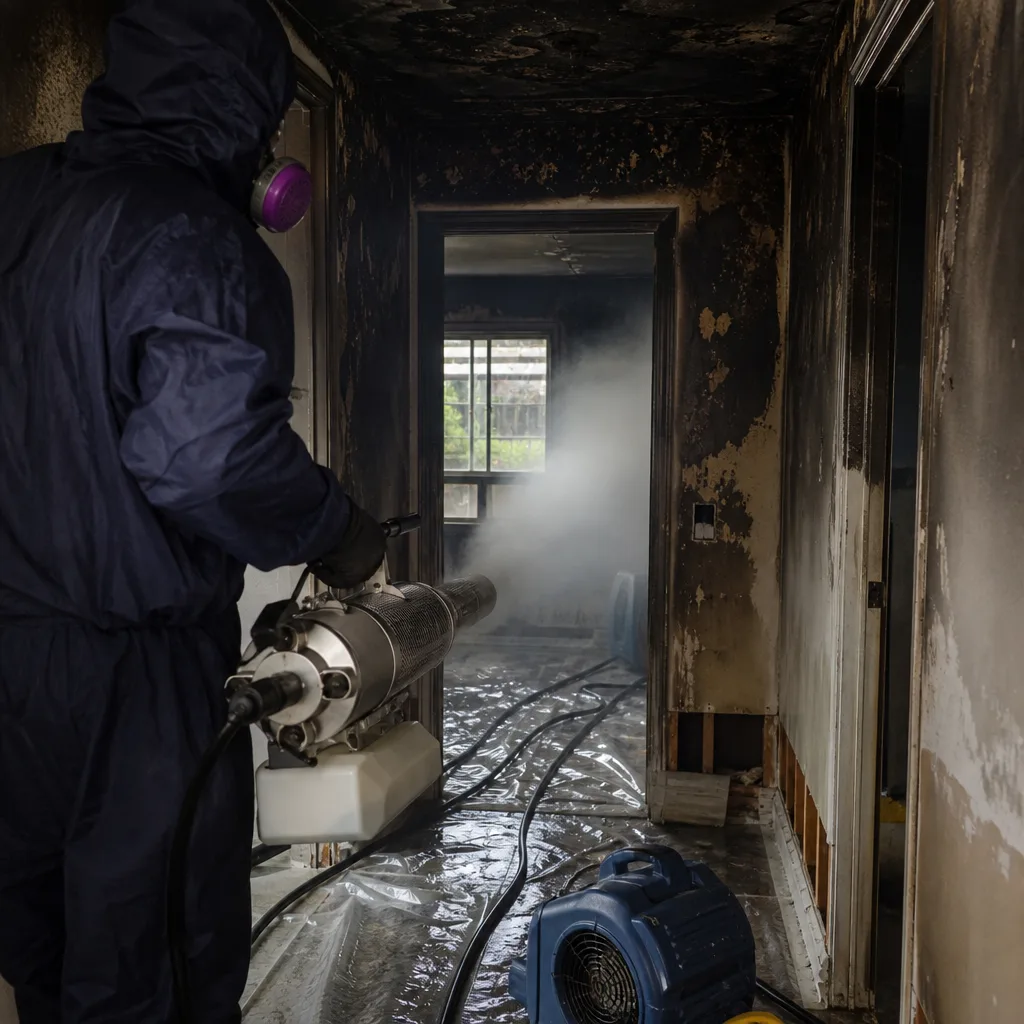
Flood Cleanup
When an atmospheric river dumps two inches of rain in a few hours, the calls start. Menlo Park’s west side sees roof and drainage-driven water. Belle Haven sees something different: groundwater rising up through the slab. Our flood cleanup adapts to which side of 101 you’re on. Crawl-space water in clay-heavy bay fill needs horizontal-drainage drying protocols, not just air movers blowing around. We document contamination, work with your adjuster directly, and keep you out of the middle of the insurance back-and-forth.
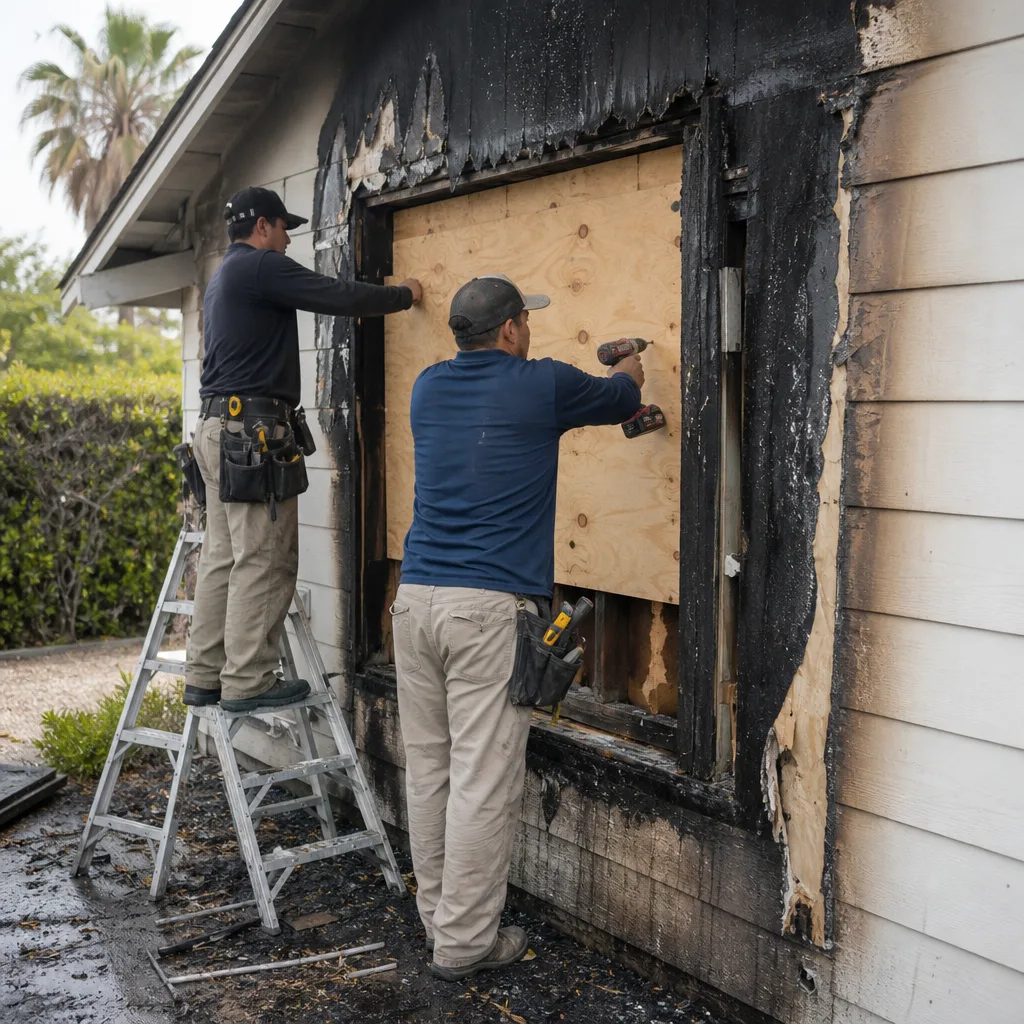
Burst Pipe Restoration
Old galvanized supply lines are common in Menlo Park’s 1920s-1940s homes. When one bursts inside a wall, the water spreads contamination further than a clean copper line would. That means extraction alone isn’t enough. We cut out affected material, treat the framing, and dry the cavity to IICRC standards before rebuild. No shortcuts. The 90-Day Done Right Promise applies here as much as anywhere.
What happens when you call
- 1
A real person answersNo phone trees - you reach a local pro.
- 2
You get an upfront price rangeHonest numbers before anyone is dispatched.
- 3
A background-checked tech heads outLicensed & insured, dispatched right away.
- 4
You approve before work beginsNothing starts until you say go.
Trusted Brands We Service in Menlo Park
We work on homes of every era: 1920s-1940s craftsman bungalows near downtown, 1950s-1970s ranch-style tract homes throughout mid-city, and the older single-family stock throughout Belle Haven. Many of these homes still have their original galvanized plumbing and, in some cases, knob-and-tube wiring. We know what that means for water restoration. We stock the fittings and drying materials that older Menlo Park construction demands, and our technicians are IICRC-certified and RIA-affiliated. The equipment is Dri-Eaz, Phoenix, XPOWER, and Injectidry. No rented gear from a big-box lot.
Common Water Damage Restoration Problems We See in Menlo Park Homes
- Belle Haven crawl-space flooding after winter storms. The clay-heavy bay-fill soils east of 101 shed water horizontally rather than absorbing it. Even with an intact roof, standing water appears under the floor. Standard air-mover setups won’t dry this. It takes horizontal-drainage protocols and a moisture map that accounts for the water table sitting only a few feet down.
- Galvanized pipe corrosion in pre-1940s craftsman homes. Menlo Park’s older housing stock, especially in the Willows and downtown-adjacent blocks, often retains original galvanized supply lines. When they leak, corrosion spreads contamination further than clean copper. Incomplete extraction leaves hidden microbial growth behind the walls.
- Compressed mold timelines from summer fog. The Peninsula’s marine layer keeps interior humidity elevated all year. Materials that would dry in two days in the South Bay take three or four here. Pulling equipment too early, using a one-size-fits-all timeline, leads to secondary mold growth. We adjust dry-out durations for Menlo Park’s actual humidity profile.
- Knob-and-tube wiring discovered mid-extraction. In older west-of-101 homes, water intrusion often exposes aged wiring. Before we run dehumidifiers at full output, we coordinate with an electrician to rule out re-ignition risk. It adds a step. It also prevents a fire from following a flood.
Pricing for Water Damage Restoration in Menlo Park, CA
Here’s what Menlo Park homeowners can expect. Emergency water extraction typically runs $800-$1,400 depending on square footage and how much standing water we’re pulling. Structural drying and dehumidification usually falls between $1,200 and $3,000 for a single room or crawl space, with whole-home dry-outs starting around $4,000. Flood cleanup with contamination runs $2,500-$6,000, and burst pipe restoration with wall cavity access averages $1,800-$4,000. Every job gets a written scope before we start. No trip charge inside our own county. Free second opinion on any written estimate. Senior and veteran customers get 10% off, always. Call (855) 915-0646 for an exact quote. Estimates are free.
We Also Serve Cities Near Menlo Park
Wade’s crew covers the whole Peninsula stretch. Same live-answer phone, same written scopes, same 90-Day Done Right Promise. Woodside, Redwood City, Atherton, and Stanford are all regular stops for us, and the drying plan shifts with each town’s soil, housing age, and weather exposure.
Serving Menlo Park, CA - Our Local Coverage Area
We’re based in the Menlo Park area and know this community well. Use the map below to see our service coverage - if you’re nearby, we can almost certainly help.
FAQs - Water Damage Restoration in Menlo Park
Belle Haven sits on clay-heavy bay fill with a water table often only a few feet below the surface. That clay sheds water horizontally instead of letting it percolate down. After a heavy winter storm, groundwater pushes up under slabs and into crawl spaces, even with zero roof damage. Last winter, after a two-inch atmospheric-river downpour, our crew ran an emergency water extraction at a 1940s craftsman in the Willows neighborhood just west of 101, and the pattern was different: a galvanized supply line had burst behind a wall. But just a few blocks east, we were pulling groundwater out of crawl spaces with no plumbing failure at all. That’s the 101 divide. If you’re east of the freeway and water appears from below, call (855) 915-0646. We’ll map the moisture before we set equipment.
Many 1920s-1940s Menlo Park homes still have knob-and-tube wiring in walls and attics. When water saturates those cavities, aged insulation and brittle sheathing become a real fire risk once dehumidifiers and air movers hit full output. We coordinate with an electrician before running drying equipment at full output in any pre-1940s home. It’s not optional for us. It’s part of what a proper Menlo Park dry-out requires. Call the office and Wade will explain the sequence before anyone touches your walls.
Menlo Park’s marine layer keeps interior relative humidity higher than what a San Jose or Sunnyvale crew typically sees. That means lath-and-plaster walls and wood framing stay wet longer. A drying timeline that works in the drier South Bay will pull equipment too early here, leaving moisture behind. We adjust our dry-out durations and dehumidification targets for Menlo Park’s actual humidity profile. Our moisture logs reflect that. Call (855) 915-0646 if you’re not sure whether your walls are actually dry.
Flood cleanup itself, meaning extraction and drying, typically doesn’t trigger a permit in Menlo Park. But if standing water has compromised framing, electrical runs, or requires structural repair, the rebuild portion may require one. We handle the documentation and coordinate with the city’s building department when the scope crosses from mitigation into reconstruction. Wade deals with the adjuster and the paperwork. You get a written scope either way.
West of 101, Menlo Park lots are generally graded with better drainage, and the soils are less saturated than the bay fill to the east. That means most calls from the Willows, the Stanford Hills, and the downtown-adjacent blocks come from roof failures, flashing gaps, clogged gutters, and skylight leaks, not rising groundwater. The drying approach is different too: we’re treating ceilings, attic insulation, and wall cavities rather than slab-level and crawl-space moisture. If you’ve got a ceiling stain spreading after a storm, call (855) 915-0646 and get a real person who knows which side of the freeway you’re on.
Written by Wade Ferris, Owner at Wade’s Restoration of California, serving Menlo Park since 2007.