
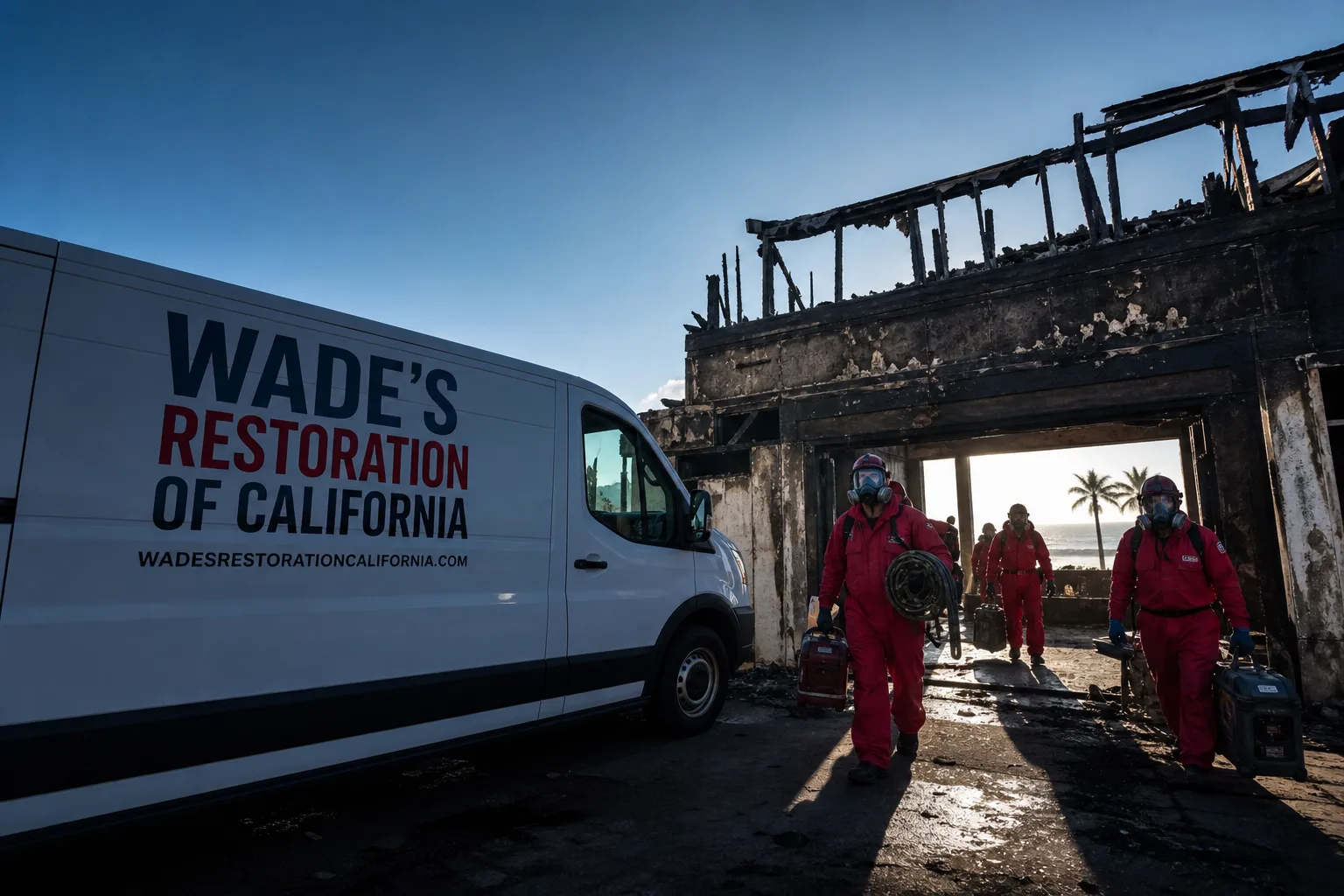
Fast, Reliable Water Damage Restoration Across Lucas Valley-Marinwood
Water damage restoration in Lucas Valley-Marinwood works a little differently than it does in the flatter parts of Marin County. The creekside lots flood fast during winter storms, the fog keeps damp walls from drying on their own, and the older ranch-style homes hold water in crawl spaces long after the standing stuff is gone. We’ve been handling that specific mix of problems since 2007. If water is climbing across your floor right now, call (855) 915-0646. Wade’s team heads out the same day, extraction running inside the hour.
Why Wade’s Restoration of California Is Lucas Valley-Marinwood’s Preferred Water Damage Restoration Company
Wade Ferris built this company on a simple idea: put your name on the truck, publish your address, and show up when people call. That still happens here. When water pools under a split-level on Las Gallinas Avenue at 2 a.m., Wade answers his own phone. He doesn’t route you to a call center in another state. He gets the address, loads the truck, and heads out. Homeowners in this valley have been burned by national franchises that quote one price on the phone and a different one at the door. That is exactly what Wade refuses to do. The 90-Day Done Right Promise gets stamped on every water damage job: if it’s not done right, he makes it right. In writing.
The Water Damage Restoration work we do in Lucas Valley-Marinwood has to account for fog, creek flooding, and houses built before modern drainage codes. Out-of-town crews don’t always catch what that means. Wade’s crew lives with it. We carry Dri-Eaz desiccant and refrigerant dehus, XPOWER air movers, and B-Air scrubbers sized for crawl spaces that don’t want to let go of moisture. And we log moisture readings every day, then hand you the full record when the job closes. Almost no one else around here does that.
All our technicians are background-checked and uniformed. The company is IICRC-certified and RIA-affiliated. We deal with your insurance adjuster directly so you’re not stuck as the messenger between two sides. And we are a local, owner-operated shop: ask anyone on your street which companies showed up after the last flood event and whether they’d call them again.
Our Water Damage Restoration Services in Lucas Valley-Marinwood
Emergency Water Extraction
Water extraction in Lucas Valley-Marinwood has to happen fast because the valley floor doesn’t give water many places to go. When a water heater lets go in a 1960s rancher on Marinwood Avenue, the crawl space floods in minutes. We get pumps and extraction wands running, pull the standing water, and start mapping where it wicked into drywall and subfloor. In creek-adjacent homes near Miller Creek, we also check for the fine silt the floodwater leaves behind, because that silt throws off moisture sensors and makes wet framing read dry when it isn’t.
Structural Drying & Dehumidification
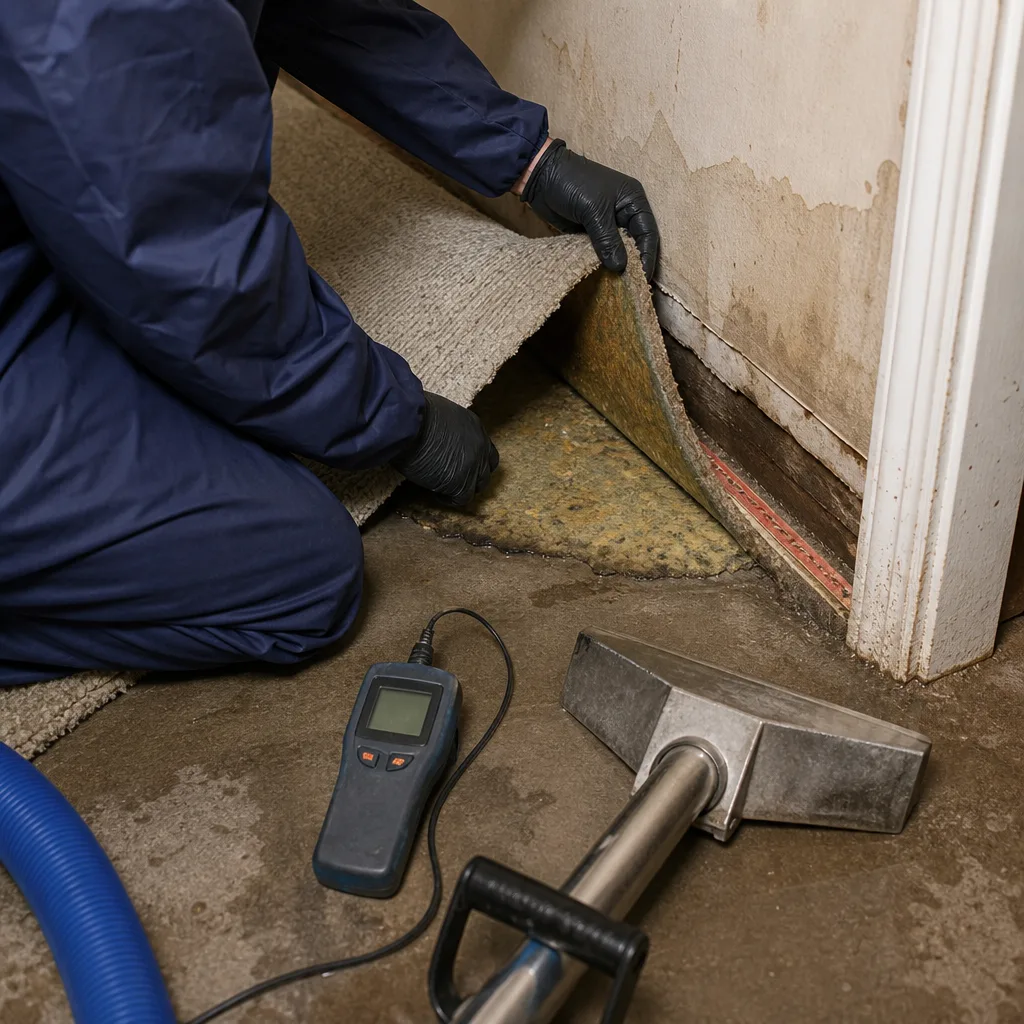
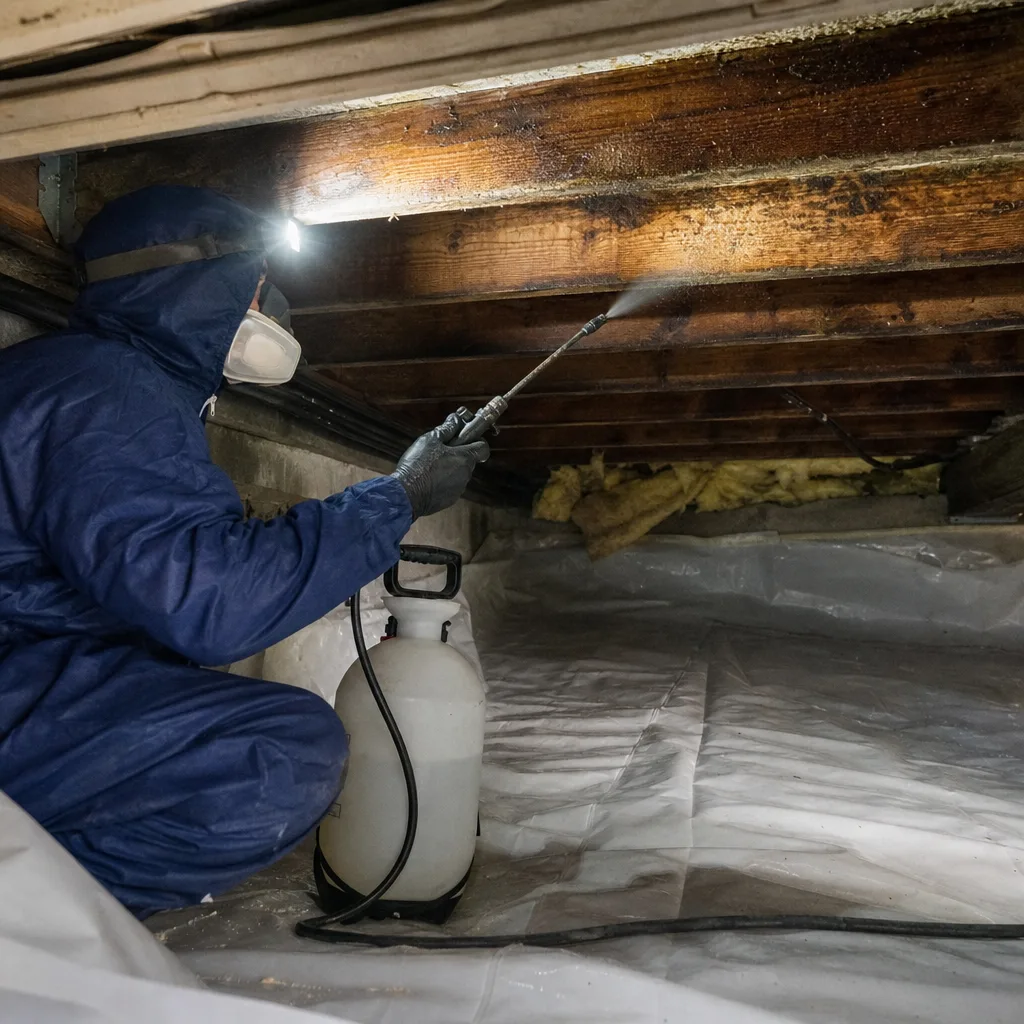
Structural drying in this valley is a different animal than it is three miles away in San Rafael. The summer marine fog can push overnight humidity high enough that improperly dried framing reabsorbs water, even days after extraction. That’s the fog problem. The creek problem is worse: localized flooding saturates sill plates and floor joists, and if a contractor skip sub-slab ventilation, the damp just migrates upward through the slab and into living spaces. We run Dri-Eaz and Phoenix dehumidifiers sized to the cubic footage of the affected space, not a rental-yard guess, and we document intake and exhaust conditions every day.
Flood Cleanup
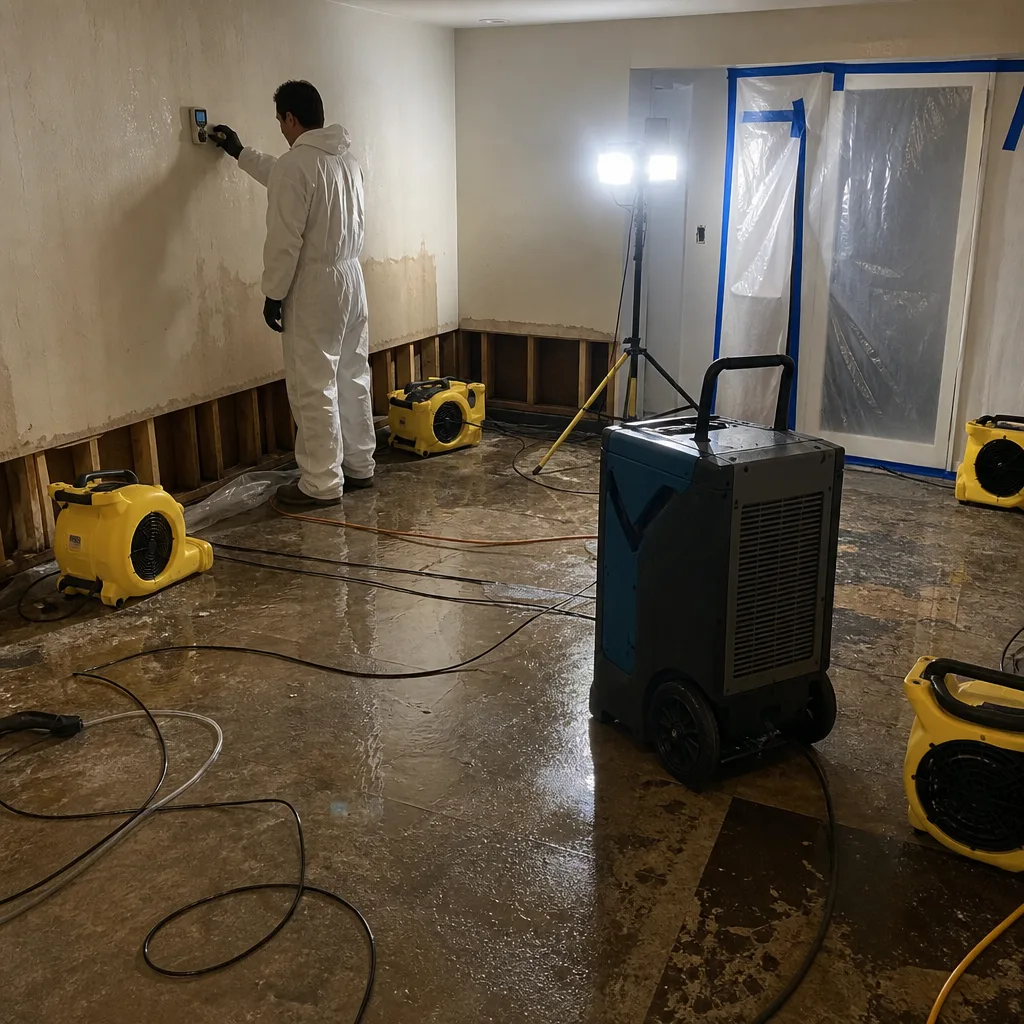
Flood cleanup for Miller Creek overflow is not just pulling wet carpet. Homes in the Marinwood side of town and along the creek corridor deal with contaminated water carrying sediment, landscape runoff, and occasionally sewage from backed-up laterals. We separate salvageable from non-salvageable material, remove the silt and muck before it hardens into concrete, and sanitize affected surfaces. For homes in the Lucas Valley Road low spots, we also inspect the drainage path after the flood so you know whether water will build in the same place again before the drywall even goes back up.
Burst Pipe Restoration
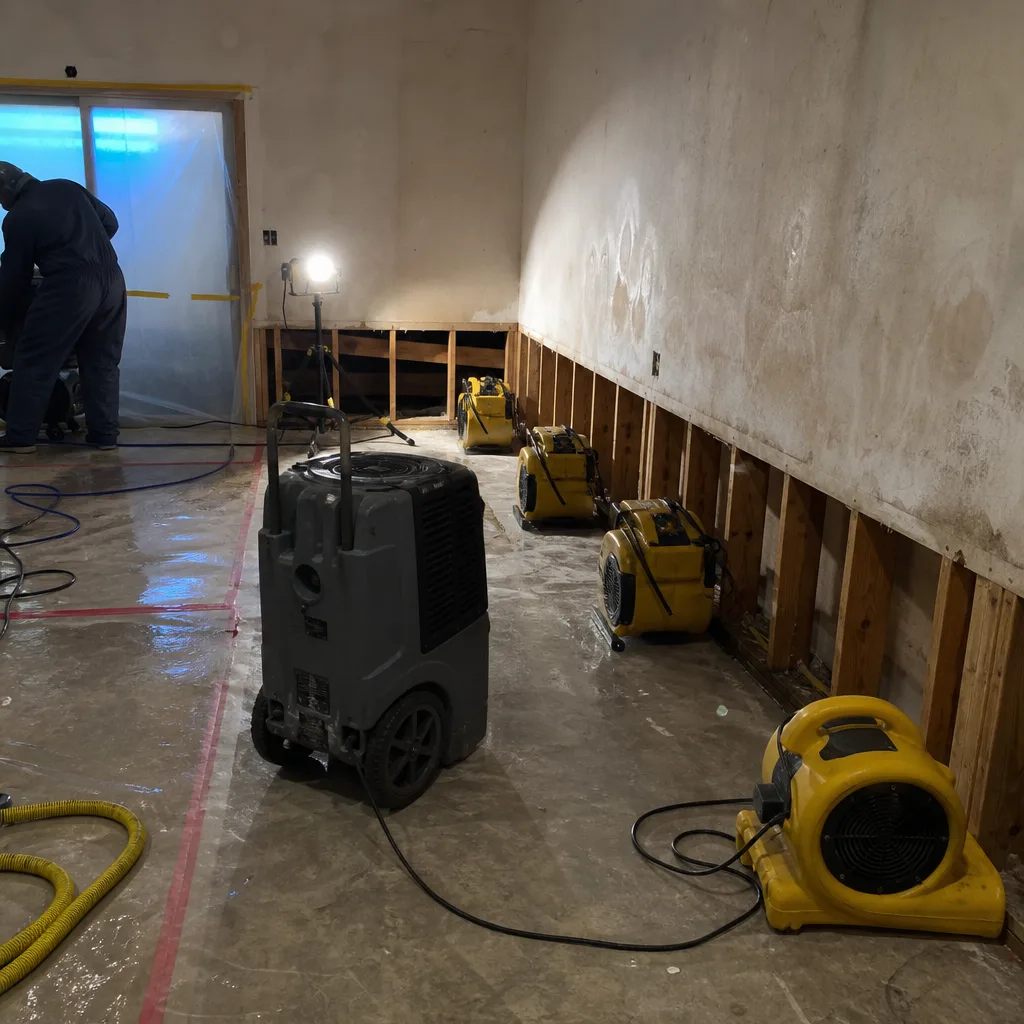
Burst pipe restoration in the 1950s and 1960s homes we work on usually means cast-iron and galvanized supply or drain lines that failed under pressure. These aren’t PEX lines that you can just clamp and move on; the break is often the first sign that a whole run is compromised. Wade’s team locates the source, extracts the water, and scopes the line to see whether the failure is isolated or the whole run is at risk. We’ve cut open enough of these old walls to know exactly where the pipe runs tend to be in the tract homes between Las Gallinas and the open space, and we plan the repair so we’re not joining new copper to failing cast iron without a plan.
What happens when you call
- 1
A real person answersNo phone trees - you reach a local pro.
- 2
You get an upfront price rangeHonest numbers before anyone is dispatched.
- 3
A background-checked tech heads outLicensed & insured, dispatched right away.
- 4
You approve before work beginsNothing starts until you say go.
Trusted Brands We Service in Lucas Valley-Marinwood
We run Dri-Eaz LGR dehumidifiers and Phoenix axial air movers on most of our Lucas Valley-Marinwood water damage jobs, and we keep injection-dry equipment from Injectidry in the truck for water that’s trapped inside walls and under flooring. XPOWER air movers handle the tight crawl spaces on the Marinwood side. For sewage and flood contamination, B-Air negative air machines keep the rest of the house from breathing what we’re cleaning up. Because those homes near the Miller Creek corridor tend to need extraction and drying fast, we keep that gear stocked on our service vehicles and ready to run, not back-ordered from a warehouse.
Common Water Damage Restoration Problems We See in Lucas Valley-Marinwood Homes
- Crawl-space moisture that never fully resolves. The 1950s-1970s ranch and split-level homes here have vented crawl spaces under wood-framed floors. After a flood or pipe break, that space needs aggressive dehumidification and sometimes sub-slab ventilation. Contractors who just set a fan and leave find the framing is damp again in three days because the fog-driven humidity never let the wood release the water. We measure moisture content in the framing, not the air, and we keep drying until the wood hits a dry standard, not until the rental contract runs out.
- Legacy drain lines that crack during a storm surge. The clay, cast-iron, and early asphalt-fiber drain pipes under these homes are long past their expected service life. When heavy rain saturates the soil, the ground shifts, and those old lines crack. A quick extraction without scoping the line means water keeps leaking from the break and the whole problem restarts as mold inside the wall a month later. We scope before we seal up.
- Silt-caked moisture sensors after creek overflow. Miller Creek floodwater carries a lot of fine silt, and that silt coats Dri-Eaz and Phoenix sensor probes. An inexperienced tech gets a false “dry” reading because the probe isn’t in contact with the wood. We clean sensors between every reading, every day, so the numbers you see in the moisture log are real.
- Asbestos and lead-paint complications in pre-1978 homes. Most of the houses in Lucas Valley-Marinwood were built before 1978, which means any demolition, any wall cutting, any subfloor removal can kick up lead dust or disturb asbestos-containing materials. We test before we cut, and we bring in certified containment when the test comes back positive. That adds a step, but it’s the difference between a restoration and a contamination event inside your house.
Pricing for Water Damage Restoration in Lucas Valley-Marinwood, CA
What you’ll pay for water damage restoration in Lucas Valley-Marinwood depends on what got wet and how long it stayed that way. Simple emergency water extraction for a supply-line break in a single bathroom runs about $900-$1,600. Full structural drying with dehumidifiers and air movers running for three to five days lands in the $2,500-$5,500 range for a typical single-room event. Flood cleanup after a Miller Creek overflow, which includes contaminated water handling, silt removal, sanitation, and material disposal, runs $4,000-$9,000 on average. Burst pipe restoration with wall and floor repair typically costs $3,800-$8,200 depending on how many rooms the water reached. These are real ranges for the houses around here. We give you a written scope of work before we start, so you know the actual number before any tool comes off the truck. Call (855) 915-0646 and Wade will walk you through it. Estimates are free, and there’s no trip charge inside our own county.
We Also Serve Cities Near Lucas Valley-Marinwood
When water damage spreads across the ridge, we handle the whole corridor: San Rafael, Fairfax, San Anselmo, and Novato. If you’re in those areas and need the same same-day response, call the same number. If you’re looking for Water Damage Restoration in Lucas Valley-Marinwood, we’re already minutes from your door and we know exactly what your creek, your fog, and your house are going to do once water gets inside.
Serving Lucas Valley-Marinwood, CA - Our Local Coverage Area
We’re based in the Lucas Valley-Marinwood area and know this community well. Use the map below to see our service coverage - if you’re nearby, we can almost certainly help.
FAQs - Water Damage Restoration in Lucas Valley-Marinwood
It can. Lucas Valley-Marinwood sits inside Marin County Flood Control District Zone 3, which covers the Miller Creek watershed. If a homeowner has received federal flood-loss payments and the restoration work involves substantial repair to the structure, the county’s floodplain ordinance can require a review of whether the home meets current elevation standards. That’s a real tripwire that out-of-area contractors miss, and it can turn a routine repair into a full code-compliance evaluation. We flag it early so you know what’s coming. Call (855) 915-0646 and we’ll check your specific situation before we give you a number.
The houses themselves hold water. Crawl-space foundations with low clearance, wood-framed floors, and vented crawl spaces don’t release moisture quickly. The summer marine fog that settles into the valley floor overnight keeps the outdoor humidity high, so damp wood can’t dry by evaporation. Without dedicated dehumidification running for several days and sub-slab ventilation to address vapor drive, that framing stays wet. We run Dri-Eaz dehus sized for the space and bring in XPOWER air movers to move air through the crawl space, not just across the top of the access opening. If you’ve had a pipe break and the crawl space still smells musty a week later, call us. You should not have to live with that.
Sometimes. If the failure is a single pinhole or a cracked section and the surrounding pipe is still solid, we can cut out the failed piece and join the remaining run with appropriate fittings. But galvanized pipe from the 1960s and 1970s tends to be close to the end of its service life. In homes near the Marinwood side where the original plumbing is still in place, a burst is often the first sign that the whole line is due. We scope the pipe and tell you straight: patch it if it’s isolated, replace the run if it’s systemic. The price difference is real, and we write it out before we start so there’s no surprise.
We test first, then we cut. Any house built before 1978 may have lead paint, and many of the ranch homes around here also have asbestos-containing materials in drywall joint compound, textured ceiling, or flooring. Before any demolition, we collect samples and send them to a certified lab. If the results come back positive, we set up containment, use HEPA filtration, and work under proper work practices so dust doesn’t spread into the rest of the house. It adds time, but skip that step and you could be dealing with a whole-home contamination problem that costs far more than the water damage repair ever did.
Homes within a few hundred feet of the creek corridor are most likely to see silt and sediment inside after an overflow, but the creek’s floodplain in the lower part of the valley can push water into yards and into garages even for homes further off the channel. That floodwater often carries landscape chemicals, animal waste, and occasionally sewage from overwhelmed laterals. If the water that got in wasn’t clean, don’t treat it like clean water. We separate contaminated materials, dispose of them properly, and sanitize before we dry. If you’re not sure whether the water that reached your floors was contaminated, call (855) 915-0646 and we’ll tell you what to look for over the phone. No charge for that.
If water is already in your house, or you just found a wet wall and you don’t know how long it’s been that way, call right now: (855) 915-0646. Wade answers. He’ll tell you whether this is something you can watch for a day or something that needs a crew tonight. Either way, you get a straight answer from the guy whose name is on the truck.
Written by Wade Ferris, Owner at Wade’s Restoration of California, serving Lucas Valley-Marinwood since 2007.