
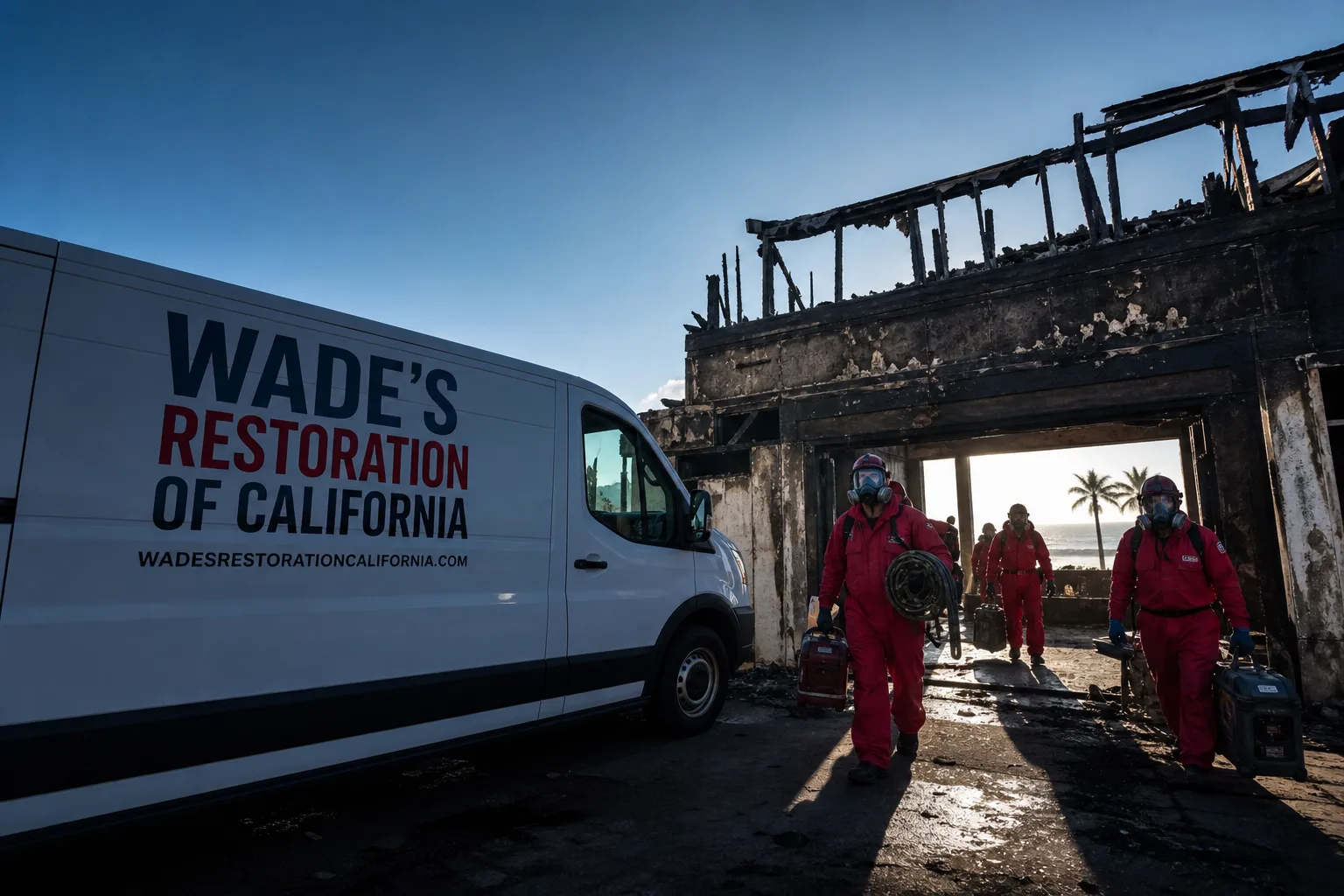
Fast, Reliable Water Damage Restoration Across Glendora
Water damage restoration in Glendora typically costs between $1,800 and $6,500 depending on the source, square footage affected, and whether you’re in the flatlands of 91740 or the foothill slopes of 91741. Emergency extraction usually runs $400 to $900, while full structural drying and dehumidification lands between $1,200 and $3,800. When water is moving through your house at 2 a.m., you need someone who knows Glendora’s specific failure points: corroded galvanized pipes in south Glendora’s 1950s tract homes, slope drainage failures in the north foothills, and the fire-to-flood sequence that makes this city different from every flatland neighbor around it. Call (855) 915-0646 and Wade Ferris will answer his own phone. He has been doing this since 2007 and his name is on the truck.
Key Takeaways
- Response time to Glendora: Wade or his crew can be on-site within the hour because dispatch runs from the Los Angeles office with crews serving Glendora directly.
- ZIP code matters here: 91740 and 91741 have fundamentally different water damage profiles. South Glendora fails from aged plumbing; north Glendora fails from slope drainage and wind-driven intrusion.
- Fire-to-flood sequence: Homes above Baseline Road need a restoration plan that anticipates mud and ash-laced runoff after fire seasons, not just clean-water breaks.
- Pricing transparency: You get a written scope before work starts. No surprises at the door.
- Documented drying: Wade hands you the full moisture log at the end of every job. Almost nobody else does that.
Why Wade’s Restoration of California Is Glendora’s Preferred Water Damage Restoration Company
Wade Ferris founded this company in 2007 and he still answers the phone himself. Not a call center in another state. When you call (855) 915-0646 about water damage in Glendora, you’re talking to the man whose name is on the contract. That’s the oldest accountability mechanism there is: he lives here, his address is published, and you’ll run into him at the hardware store on a Saturday.
Glendora homeowners have told us the same story for years: a national outfit quoted one price on the phone and a much higher one at the door. Wade’s crew operates differently. You get a written scope before any work starts. The price on that scope is the price you pay. And every water, fire, and mold restoration job carries the 90-Day Done Right Promise in writing: if it isn’t done right, Wade comes back and makes it right.
The crew Wade sends to Glendora is background-checked and uniformed. They run Dri-Eaz and Phoenix drying equipment, the same professional-grade gear you’ll find on large commercial losses. Wade himself carries IICRC certification, holds RIA affiliation, and is IFA-recognized. He also does something almost nobody in this trade does: he takes moisture readings every single day and hands you the complete log when the job closes. You’ll know exactly what was wet, how wet it was, and when it reached dry standard.
Our Water Damage Restoration Services in Glendora
Our Water Damage Restoration team handles the full sequence: extraction, drying, cleanup, and reconstruction. Here’s what that looks like in Glendora specifically.
Emergency Water Extraction
When a supply line breaks in a 1960s Glendora tract home, water doesn’t wait. It moves through wall cavities, under baseboards, and into the subfloor within minutes. Wade heads out with truck-mounted extraction units and can have standing water pulled from your home inside the hour. For Glendora’s older housing stock, speed matters more than in newer construction because the original galvanized and cast-iron drain lines leave less tolerance for saturation before secondary damage sets in.
Structural Drying & Dehumidification
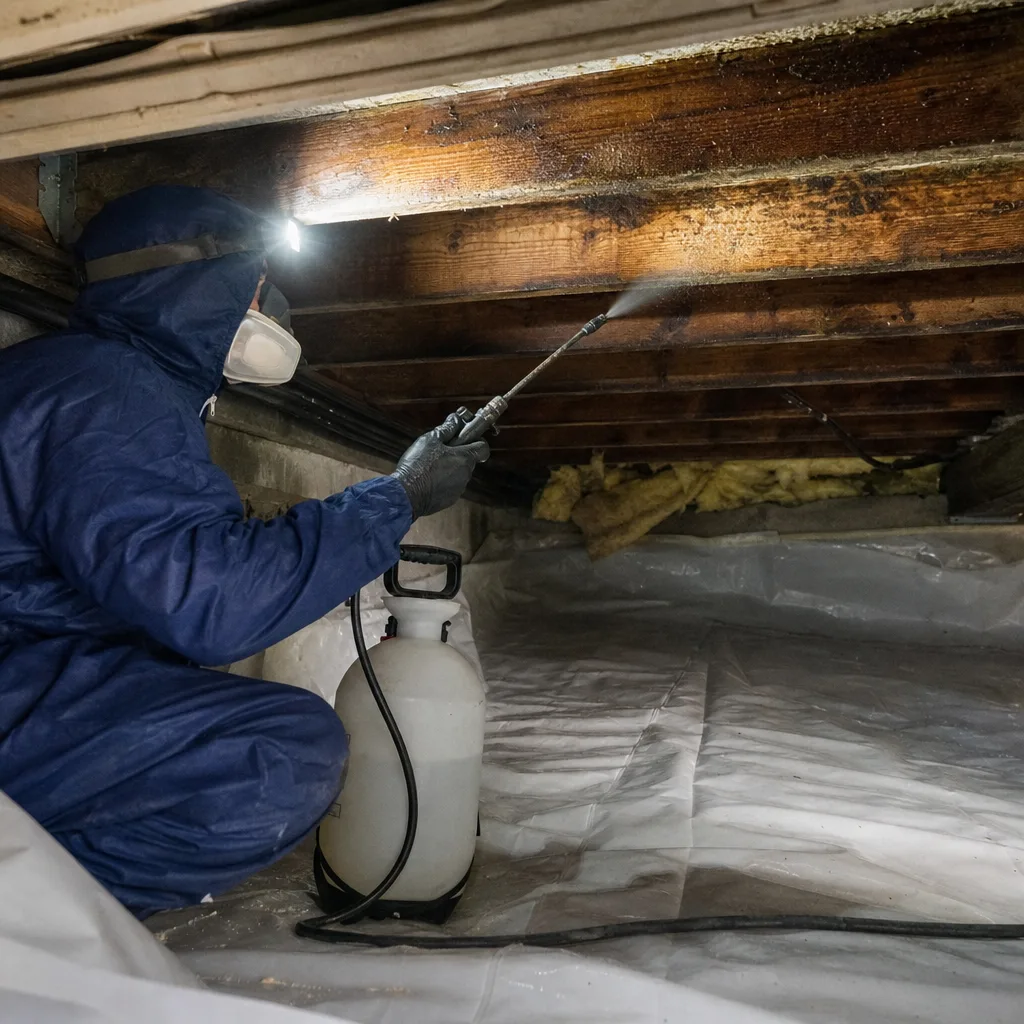
Drying a Glendora home properly means understanding the construction. South Glendora tract homes from the 1950s through 1970s have wall cavities that hold moisture differently than the custom foothill builds above Sierra Madre Avenue. We use Dri-Eaz LGR dehumidifiers and XPOWER air movers positioned based on psychrometric readings, not guesswork. Wade checks moisture content daily and documents every reading.
Flood Cleanup
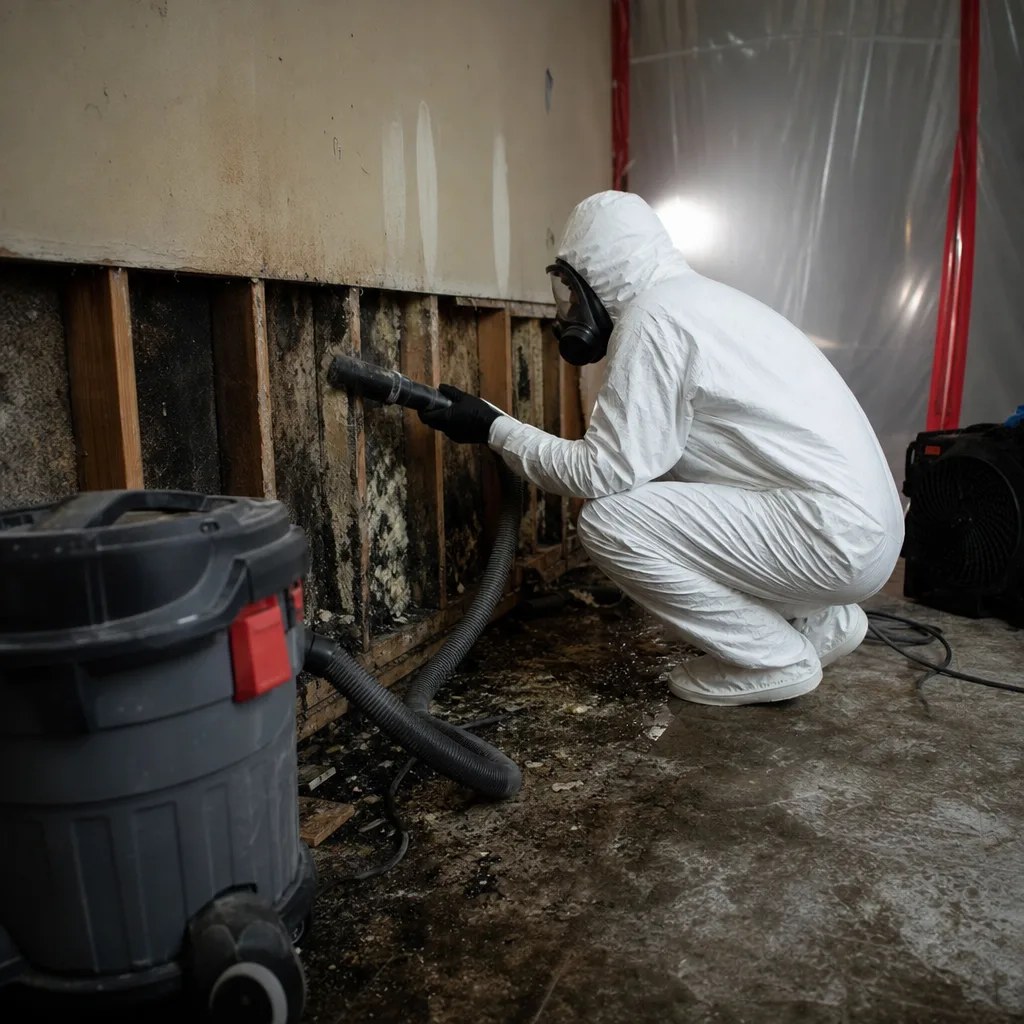
Flood water in Glendora is rarely clean. If it comes off the San Gabriel Mountain front after a rain event, it’s carrying silt, ash, and debris from the burn scars. That’s Category 3 water: contaminated. We treat it accordingly with full containment, antimicrobial application, and structural drying to IICRC standards. If you live in 91741 below Angeles National Forest, this is the service you’re most likely to need.
Burst Pipe Restoration
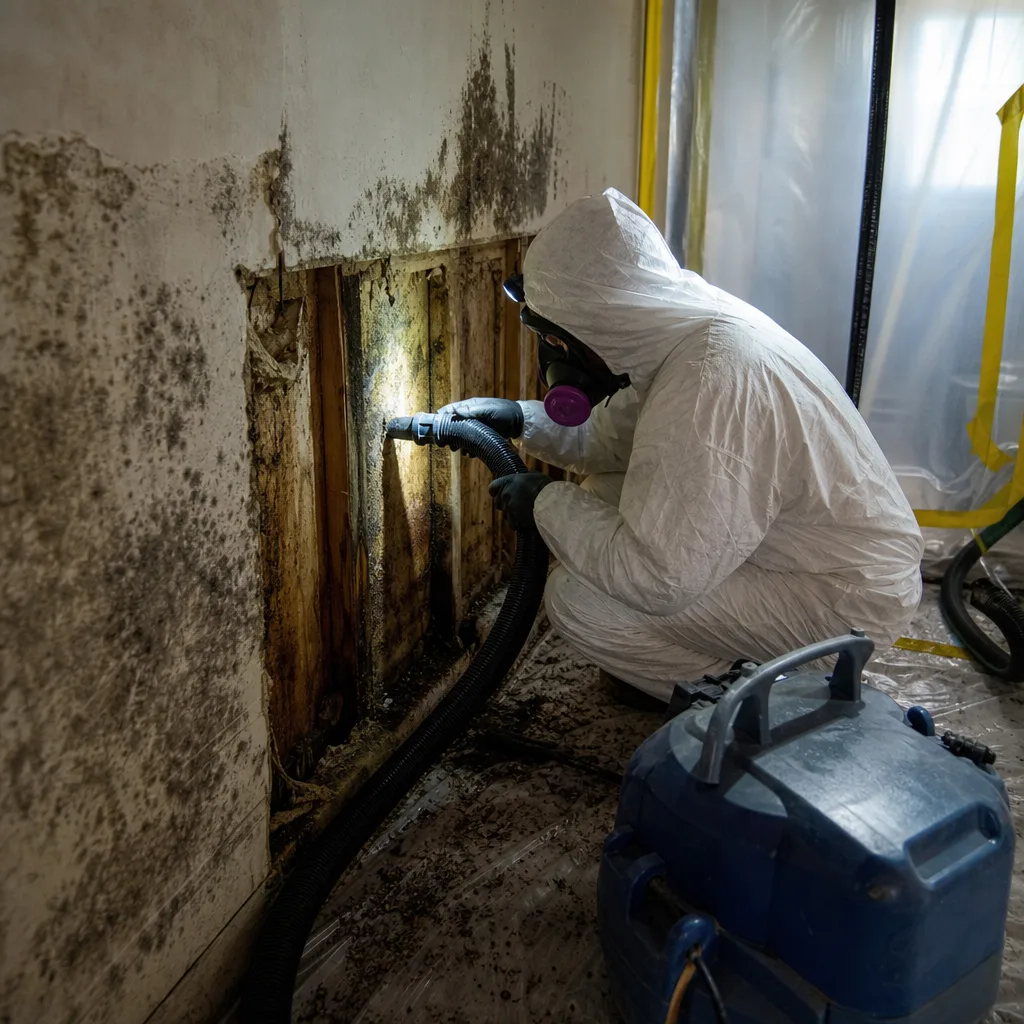
Glendora’s hard water is hard on pipes. Galvanized steel supply lines in 1950s and 1960s tract homes corrode from the inside out over decades, then fail without warning. We isolate the break, extract the water, dry the affected areas, and coordinate the plumbing repair so you’re not juggling two companies and an insurance adjuster at once. Wade deals with the adjuster directly. You don’t relay information between sides.
What happens when you call
- 1
A real person answersNo phone trees - you reach a local pro.
- 2
You get an upfront price rangeHonest numbers before anyone is dispatched.
- 3
A background-checked tech heads outLicensed & insured, dispatched right away.
- 4
You approve before work beginsNothing starts until you say go.
Common Water Damage Restoration Problems We See in Glendora Homes
- Galvanized pipe failure in 91740 tract homes: South Glendora’s 1950s through 1970s housing stock was built with galvanized steel supply lines. Glendora’s mineral-heavy water corrodes these from the inside, and they eventually fail in-wall or under-slab. By the time you notice the stain on the ceiling, water has been traveling for hours.
- Slope drainage failure in 91741 hillside homes: Custom foothill construction on graded slopes means foundation drainage systems work harder. When debris or poor grading channels water toward the foundation, it enters through cracks, sill plates, and below-grade walls. These homes need drainage correction, not just drying.
- Wind-driven rain intrusion through non-airtight hillside framing: Santa Ana winds push rain sideways into the north Glendora foothills. Older custom homes up there were not built to modern air-sealing standards, so water finds its way through wall penetrations, window flashing, and roof-to-wall intersections.
- Ash-laced runoff after fire seasons: After a burn above Glendora, the first heavy rain sends ash, silt, and fire-retardant residue down slope. That water doesn’t just soak your floors; it carries chemical contaminants that require different cleaning and drying protocols than standard flood water.
Pricing for Water Damage Restoration in Glendora, CA
Here’s what Glendora homeowners can expect to pay, based on real job ranges in this market:
| Service | Typical Glendora Range |
|---|---|
| Emergency water extraction (single room) | $400 - $900 |
| Full structural drying & dehumidification | $1,200 - $3,800 |
| Flood cleanup with containment (Category 3) | $2,500 - $6,500 |
| Burst pipe restoration (including dry-out) | $1,800 - $4,200 |
| Ceiling & roof leak water damage | $800 - $2,400 |
| Basement water removal and drying | $1,500 - $3,500 |
What moves the number: square footage of affected area, water category (clean vs. contaminated), how long the water sat before extraction, and whether Glendora permits require documentation for your specific neighborhood. That last item catches people off guard. Some foothill rebuilds need permit coordination, and Wade handles that paperwork. No trip charge inside our own county. Free second opinion on any written estimate. Senior & Veteran 10% discount always applies. Call (855) 915-0646 for an exact quote.
Trusted Brands We Service in Glendora
If you’ve got a water heater, supply line, or appliance connection from a major brand that’s failed, we can restore the damage around it. Wade’s crew works around equipment from Rheem, Bradford White, Whirlpool, AO Smith, GE, and Kohler, and we stock common fittings and connectors for Glendora’s older housing stock, which means faster turnaround when a part needs replacing mid-job. We also service homes with copper repipe systems that failed at a joint or fitting. The drying equipment we bring on every Glendora job includes Dri-Eaz, Phoenix, and XPOWER units, the same brands trusted on commercial drying projects across Southern California.
We Also Serve Cities Near Glendora
Wade’s crew covers Glendora and the surrounding foothill and valley communities: San Dimas, Azusa, Citrus, and Charter Oak. If you’re in one of these nearby cities and dealing with water damage, the same owner-operator accountability applies. One call, one crew, one name on the contract.
Serving Glendora, CA - Our Local Coverage Area
We’re based in the Glendora area and know this community well. Use the map below to see our service coverage - if you’re nearby, we can almost certainly help.
FAQs - Water Damage Restoration in Glendora
The 91740 ZIP in south Glendora is dominated by 1950s through 1970s tract homes with original galvanized plumbing, so the most common water damage source is slow, in-wall pipe corrosion and sudden joint failure. The 91741 ZIP north of Baseline Road sits on graded foothill slopes where foundation drainage failures, wind-driven rain intrusion through non-airtight framing, and post-fire debris flow runoff are the recurring culprits. A one-size-fits-all drying plan misses the actual source in either zone. That’s why Wade’s crew starts every Glendora job with a source assessment specific to your neighborhood, not a generic checklist. Call (855) 915-0646 and Wade will ask which side of Baseline Road you’re on. It matters that much.
Debris-flow water is silt-heavy and chemically contaminated from fire retardant and ash, so we bring a combination of solids-handling extraction pumps, a Dri-Eaz LGR dehumidifier for deep moisture removal, and XPOWER air movers to pull water from crawlspaces and wall cavities where mud has wicked upward. After extraction, thermal imaging finds what’s hiding in the subfloor so we don’t dry only visible surfaces. If you’ve had mud through a ground-floor entry in 91741, the risk isn’t just the water; it’s what’s left behind after the surface looks dry. Wade documents every step and hands you the log. Call (855) 915-0646 for an exact assessment.
North Glendora sits directly below the fire-prone Angeles National Forest, and Santa Ana wind events push embers, smoke, and ash into residential zones faster than in any surrounding flatland city. After the 2014 Colby Fire, restoration contractors here dealt with a three-phase sequence: smoke and ember intrusion first, then ash-laced water from fire retardant and suppression efforts soaking into attics and crawlspaces, and finally mud and debris intrusion through ground-floor entries the following rainy season. That sequence means water damage in 91741 frequently carries fire-related contaminants. Our restoration protocol for north Glendora homes includes both water extraction and smoke-odor-neutralizing treatment when necessary. Call (855) 915-0646 to talk through what you’re seeing.
You should call within the first hour. A burst galvanized pipe in a 1950s or 1960s Glendora tract home can flood a wall cavity and subfloor before you ever see standing water, and the longer water sits, the more it wicks into drywall, insulation, and framing. Within 24 to 48 hours, mold growth starts in the damp, dark cavities of those old builds. Wade’s crew can have extraction running inside the hour when you call (855) 915-0646, and early response is the single biggest factor in keeping a $900 extraction from becoming a $6,500 rebuild.
If water damage affects a wind-rated door or structural panel in Glendora, especially in the foothill zones, city permitting may require documentation that the replacement or reinforcement matches current wind-load standards for the San Gabriel Mountain front. Wade’s crew handles the permit paperwork and coordination so you don’t walk into the building department blind. For older custom homes on graded slopes, unpermitted repair work can become a problem when you sell. We’ll tell you upfront what needs a permit and what doesn’t, and we’ll put it in the written scope. Call (855) 915-0646 for a straight answer.
Why the Fire-to-Flood Sequence Changes Everything in Glendora
In Glendora, water damage restoration is uniquely intertwined with the post-fire debris flow cycle. After the 2014 Colby Fire ignited directly above the city, homes in the 91741 foothills dealt with smoke and ember damage first, then ash-laced fire-retardant runoff soaking attics and crawlspaces, and finally mud intrusion through ground-level entries the next rainy season. That three-phase claim sequence has shaped how local adjusters and restoration firms pre-plan for any fire event north of Baseline Road. Flatland neighbors like Covina or West Covina almost never face this combination. Glendora does, and the restoration plan has to account for all three phases, not just the water you can see on the floor today.
Our crew responded to a home in the 91741 foothills off Glendora Mountain Road after a Santa Ana wind event had driven embers into the hillside and the first heavy rain sent ash-laden runoff down the slope. We found ground-floor entries buried in silty mud and water wicking into the subfloor. We set up a Dri-Eaz LGR dehumidifier and XPOWER air movers to pull moisture from the crawlspace, then hand-extracted the mud slurry from the entry before mold could take hold, finishing with structural drying and a moisture-content check that met IICRC standards for pre-loss equilibrium.
That job taught us what flatland restoration playbooks miss: mud moves differently than water. It carries abrasive silt that damages extraction equipment, it seals moisture beneath its own weight so surface drying lies to you, and it brings fire-retardant chemical residue that requires containment and cleaning separate from standard flood work. If you live in 91741 and you’re looking at water after a rain that followed a fire season, you need a crew that has done this before, not one that’s learning on your subfloor.
Glendora’s Two Zip Codes Need Two Different Plans
South Glendora’s 91740 tract homes fail from the inside out. The galvanized supply lines installed in the 1950s through 1970s have been corroding for half a century in Glendora’s hard water, and when they go, they go without warning: a pinhole leak inside a wall, a joint failure under the slab, a slow drip behind the water heater. The damage is usually hidden until the drywall stains or the floor buckles. Restoration here means leak forensics first, drying second.
North Glendora’s 91741 hillside homes fail from the outside in. Custom construction on graded slopes means foundation drains work against gravity and clay-heavy soil after every rain. Wind-driven rain from Santa Ana events forces water through wall penetrations and window flashing on homes that were never air-sealed to modern standards. And when fire seasons strip the slopes above Baseline Road, the next winter rain sends debris-laden runoff toward foundations instead of soaking into vegetation. These homes need drainage correction and exterior-source investigation, not just extraction and drying.
If a crew shows up in Glendora and doesn’t ask which ZIP code you’re in, that’s a warning sign. The source matters as much as the standing water, and the source is different depending on which side of Baseline Road you call home.
Contact Wade’s Restoration of California
When water is moving through a Glendora house at two in the morning, you don’t want a call center. You want Wade. He answers his own phone. He has been doing this since 2007, his address is published, and to wade is what you do through a flooded basement at 2 a.m., and it happens to be his name. Call (855) 915-0646 now for a free estimate. No trip charge inside our own county. Free second opinion on any written estimate. Senior & Veteran 10% discount always. One call and Wade heads out.
Written by Wade Ferris, Owner at Wade’s Restoration of California, serving Glendora since 2007.