
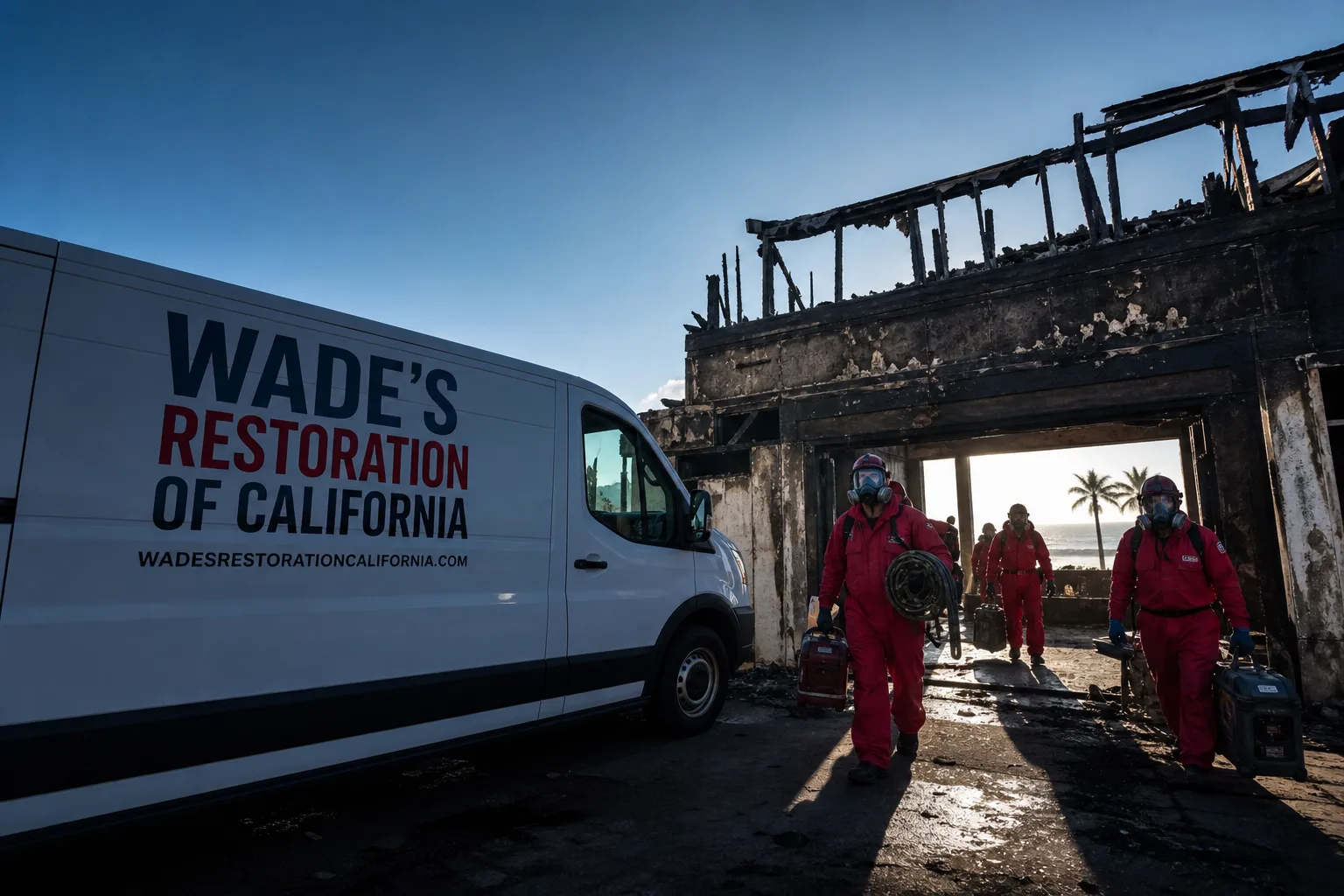
Fast, Reliable Water Damage Restoration Across Fillmore
Water damage restoration in Fillmore is different from what works in Moorpark or Camarillo, and if you’ve lived here through the last few winters, you already know why. When rain hits the Thomas Fire burn scar above town, it doesn’t soak in. It runs off. Fast. That’s why we can get to a Fillmore home within the hour, get extraction running, and start logging moisture readings the same day. Call (855) 915-0646 and Wade Ferris will answer, not an answering service.
We’ve worked enough Fillmore basements and crawlspaces to know what a post-fire mud pulse does to a 1940s foundation. We’re not learning on your walls. The people we send are background-checked, uniformed, and carrying Dri-Eaz and Phoenix equipment sized for the kind of saturation Fillmore homes actually see. You’ll get a straight scope in writing before any work starts.
Why Wade’s Restoration of California Is Fillmore’s Preferred Water Damage Restoration Company
Most restoration outfits that show up in Fillmore are running jobs from Ventura or the Valley. We’re different. Wade Ferris founded this company in 2007 and put his name on the truck, his cell number on the card, and his address on the contract. He answers his own phone at 2 a.m. That matters when water is running through your ceiling joists and every hour adds another few hundred dollars in drying time.
Fillmore homeowners call us because word travels on Central Avenue, along Highway 126, and through the neighborhoods off Sespe Street. A neighbor tells another neighbor that the owner showed up himself, took moisture readings every single day, and handed over a full log at the end. Not many companies do that. Almost nobody does. Ask anyone on your street. The name is funny, sure. To wade is what you do through a flooded basement at two in the morning, and it happens to be his name.
We also deal with your insurance adjuster directly. You don’t relay calls between two sides. We document everything with photos, coordinate the scope, and bill the carrier where coverage applies. That’s how it should work, and it’s how we’ve done it since 2007.
Our Water Damage Restoration Services in Fillmore
Emergency Water Extraction
When a supply line lets go in a Fillmore home, the water is already wicking into original plaster walls and 1920s-era framing within minutes. We arrive fast, get truck-mounted extraction running, and begin pulling standing water from floors, subfloors, and crawlspaces. In Fillmore, the clock matters more than in newer cities because older wood-frame construction absorbs water deeper and holds it longer.
Structural Drying & Dehumidification
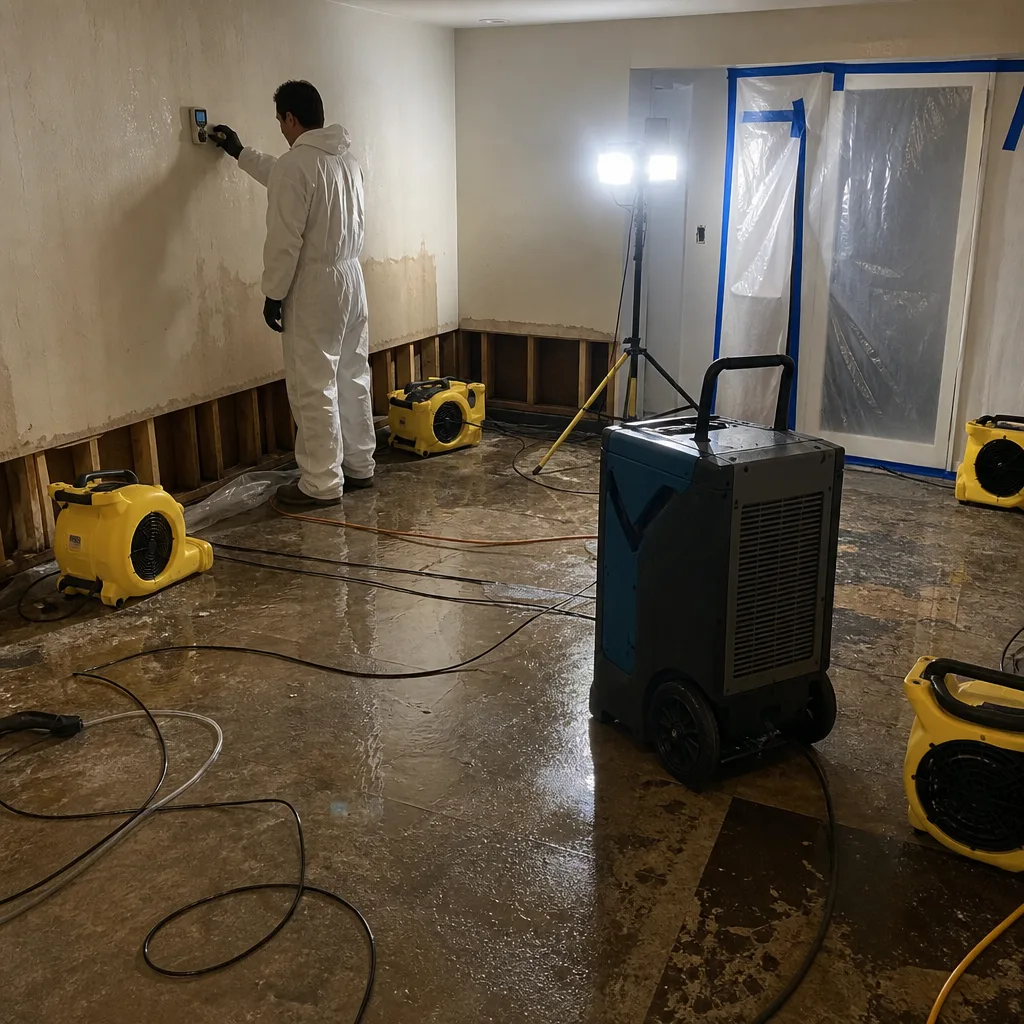
Drying a Fillmore house correctly means knowing what’s inside the walls. Original plaster over wood lath, single-pane windows, foundations that shifted during the 1994 Northridge earthquake. If the framing has hairline cracks, moisture travels through those gaps and hides where standard equipment misses it. We use Dri-Eaz dehumidifiers and Injectidry drying mats, and we take daily moisture readings and hand you the log. You’ll know exactly when the structure hit dry standard, not just when the floor feels dry.
Flood Cleanup
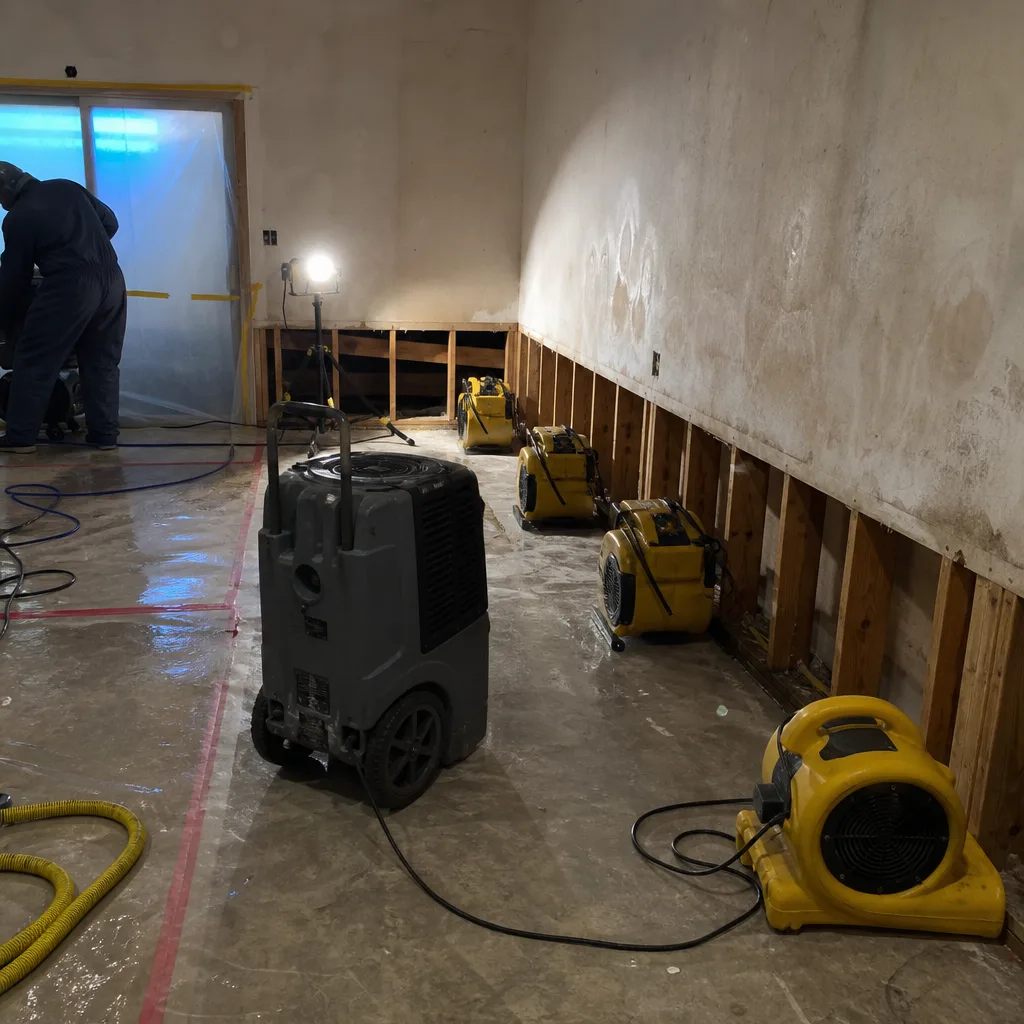
Fillmore’s position in the Santa Clara River Valley means post-fire debris flows and flash flooding are now a regular winter reality, even for homes that were never directly touched by the Thomas Fire flames. Mud-laden runoff overwhelms sump pumps and French drains sized for pre-burn runoff rates. We extract the mud, remove contaminated materials, sanitize what can be saved, and dry the crawlspace properly. This Water Damage Restoration work is what we do most after storm season in the 93015 and 93016 ZIP codes.
Burst Pipe Restoration
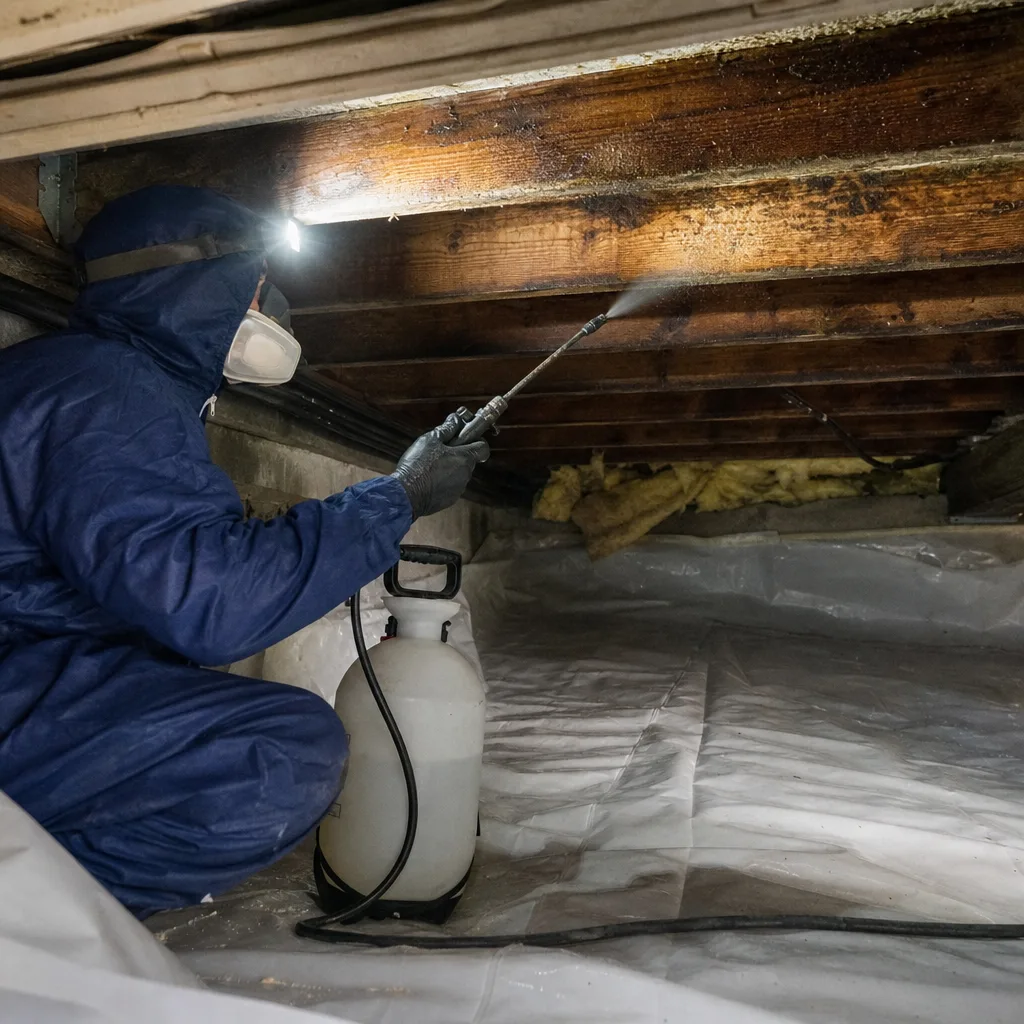
A frozen pipe in Fillmore is rarer than a burst one, but old galvanized plumbing in pre-1960 homes fails routinely. When a pipe lets go, water follows the path of least resistance, which in Fillmore often means through earthquake-compromised foundation cracks and into wall cavities. We stop the source, extract, dry, and then assess what framing and plaster is salvageable. You get a written scope before we open a single wall.
What happens when you call
- 1
A real person answersNo phone trees - you reach a local pro.
- 2
You get an upfront price rangeHonest numbers before anyone is dispatched.
- 3
A background-checked tech heads outLicensed & insured, dispatched right away.
- 4
You approve before work beginsNothing starts until you say go.
Trusted Brands We Service in Fillmore
We’re IICRC-certified and RIA-affiliated, and we run professional-grade equipment: Dri-Eaz, Phoenix, Injectidry systems, XPOWER air movers, and B-Air drying technology. When a Fillmore homeowner needs a replacement part or a specific drying setup for older plaster walls, we don’t wait on a warehouse in Los Angeles. Our crews carry what they need for the housing stock here. It means faster drying and fewer return visits.
Common Water Damage Restoration Problems We See in Fillmore Homes
- Post-fire debris flows overwhelm existing drainage. Sump pumps and French drains installed before the Thomas Fire were sized for normal rainfall. Since 2017, burn-scar runoff hits harder and faster, leaving crawlspaces saturated for days unless extraction starts immediately.
- Santa Ana wind-driven rain through 1920s-1960s windows. Single-pane windows and original plaster walls that have never been re-flashed let wind-blown rain into wall cavities. This hidden interstitial moisture is exactly what standard drying misses and what later becomes a mold problem.
- Northridge-era foundation cracks channel water invisibly. Homes that shifted in the 1994 quake often have hairline foundation cracks that act like irrigation lines when water hits the exterior wall. Restoration crews unfamiliar with Fillmore’s quake history misjudge drying times and leave pockets of moisture behind.
- Aging flat and low-slope roofs on pre-1960 homes. Many Fillmore homes still have original roofing materials or layers on layers. When wind-driven rain gets under loose flashing, water travels down through the wall assembly and pools in the ceiling. By the time the stain shows, the insulation is already saturated.
Pricing for Water Damage Restoration in Fillmore, CA
What does water damage restoration actually cost in Fillmore? A straightforward emergency extraction with drying equipment typically runs $900 to $2,400 depending on how much water and how deep. Burst pipe restoration with structural drying usually lands between $1,500 and $4,000 in Fillmore, though earthquake-compromised framing and original plaster add complexity. Flood cleanup after a debris flow event, with mud removal and sanitization, starts around $1,800 and goes up from there. Ceiling and roof leak water damage work averages $800 to $2,600. These are real Fillmore market ranges, not national averages.
What moves the price: how long the water has been sitting, how much plaster and original flooring is involved, and whether the foundation has known Northridge cracking. We don’t give a phone quote and change it at the door. Wade walks the job, gives you a number, and if you have a written estimate from anyone else, he’ll give you a free second opinion on it. Estimates are free. Call (855) 915-0646.
We Also Serve Cities Near Fillmore
Our crews handle Water Damage Restoration in Fillmore plus the surrounding 93015 and 93016 service area, and we regularly work in Moorpark, Santa Paula, Simi Valley, and Camarillo. If you’re in any of those spots, the same owner-accountability rule applies: Wade’s cell number, a written scope, daily moisture logs, and a 90-Day Done Right Promise on every water, fire, and mold restoration job.
Serving Fillmore, CA - Our Local Coverage Area
We’re based in the Fillmore area and know this community well. Use the map below to see our service coverage - if you’re nearby, we can almost certainly help.
FAQs - Water Damage Restoration in Fillmore
The burn scar above the Santa Clara River Valley fundamentally changes how water hits Fillmore homes. Post-fire soils shed rainfall instead of absorbing it, so runoff rates from the Topatopa slopes are many times higher than before 2017. That means crawlspaces that stayed dry for sixty years now flood during storms that would have caused no damage previously. Restoration work has to account for more water, faster, with more mud and debris in it. If your crawlspace flooded last winter and the house never saw flame exposure, that’s the burn scar doing it. Call us at (855) 915-0646 and we’ll assess what’s actually happening under your house.
Yes. Original plaster over wood lath behaves very differently from drywall. Plaster holds water longer, releases it slower, and conceals moisture inside the wall assembly. Many Fillmore homes also carry hidden foundation and framing stress from the 1994 Northridge earthquake, so water travels through cracks that would not exist in a newer build. Standard drying timelines fail in these houses. We use daily moisture readings with hand-held meters, set up Injectidry mats on hard-to-dry assemblies, and adjust the drying plan every day based on what the numbers say. You get the full log at the end. Most contractors in the trade won’t hand you that.
Yes, and it’s a common call from Fillmore homeowners along the Highway 126 corridor during Santa Ana season. Wind-driven rain forces water through older single-pane windows, failed flashing, and unsealed wall penetrations, soaking wood framing and plaster from the inside out. The restoration side is extraction and drying. The repair side is sealing the gaps, re-flashing the window, and replacing damaged wall assembly components. We do both. If you’ve noticed water staining around your windows after a wind event, call (855) 915-0646 and Wade will walk it with you. No charge for the estimate, and if you’re a senior or veteran, ask about the standing 10% discount.
Very likely yes. Even Fillmore homes that never saw a single ember have filed water and mud intrusion claims since 2017 because the scorched hillsides above town now shed rainfall at a rate the old drainage systems were never designed for. Low-lying foundations along the Santa Clara River floodplain and the Highway 126 corridor are the most exposed. Previously dry crawlspaces now take on water during moderate storms. The restoration approach has to match this new reality: faster extraction, more aggressive drying, and drainage assessments that account for post-burn runoff. Call (855) 915-0646 and we’ll tell you honestly whether your crawlspace issue is burn-scar related or something else entirely.
We treat the cracks as active moisture pathways, not cosmetic defects. Water from a burst pipe will follow the floor’s low point and find its way into those foundation fissures. We set up drying in the wall cavities, the subfloor, and the crawlspace simultaneously, then use penetrating moisture meters to track what’s happening inside the foundation assembly itself. Daily readings get compared against the dry standard for Douglas fir and plaster in this climate. Only when the numbers say dry do we stop. You get the complete moisture log at the end, in writing, plus our 90-Day Done Right Promise. If something isn’t right within 90 days, Wade makes it right. One call brings him back.
If you’ve got water where it shouldn’t be in Fillmore, don’t wait. The longer it sits, the deeper it gets into original plaster, old framing, and quake-cracked foundations. Call (855) 915-0646 now and talk to Wade directly. He’ll head out, give you a straight answer, and put everything in writing before any work begins.
Written by Wade Ferris, Owner at Wade’s Restoration of California, serving Fillmore and the Santa Clara River Valley.