
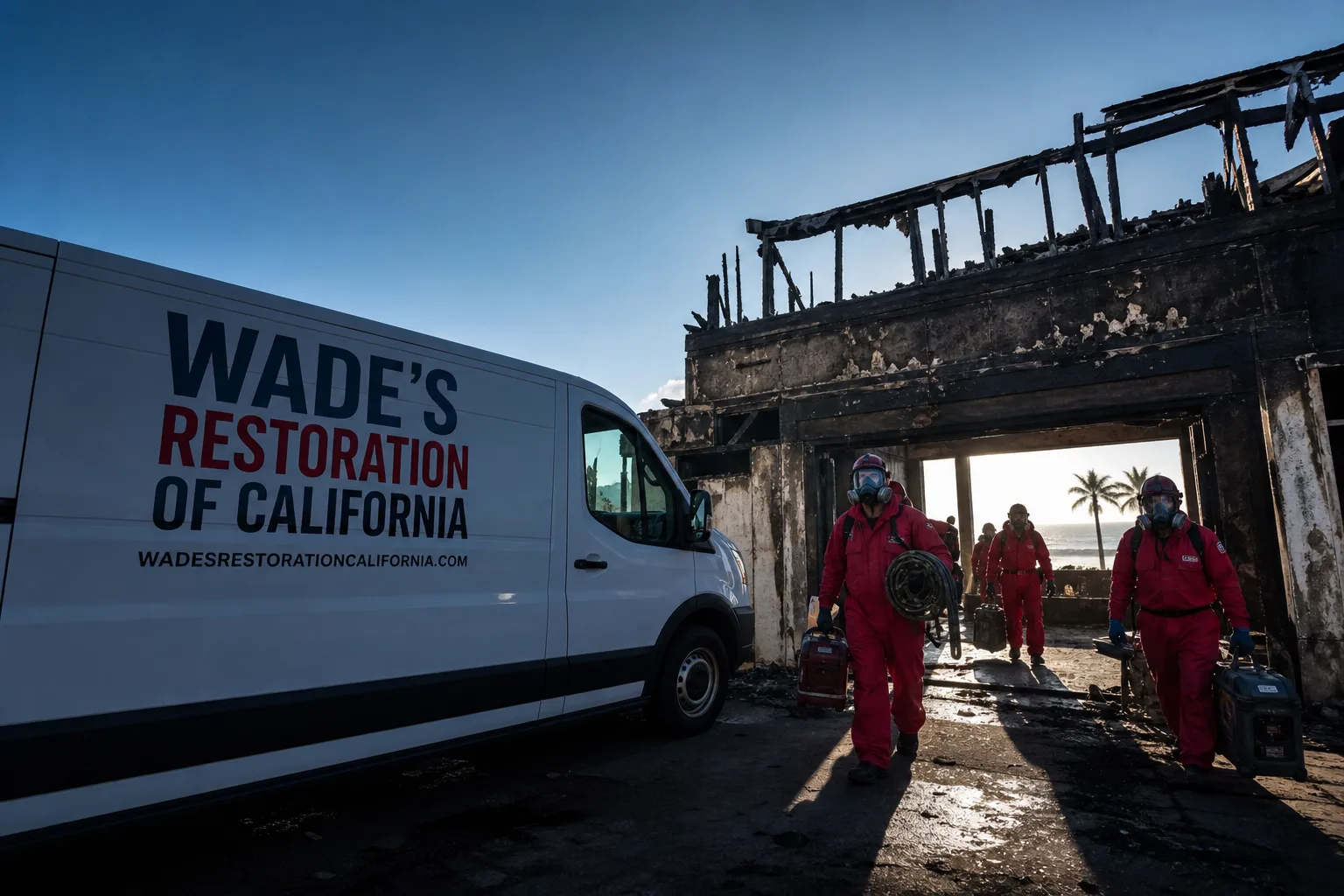
Fast, Reliable Water Damage Restoration Across Dana Point
Water damage restoration in Dana Point usually runs between $1,800 and $6,500 depending on how far the water has traveled, but the real variable here is salt. Marine air corrodes copper supply lines and roof fasteners years faster than inland, and by the time water shows up on a ceiling in Lantern Village or a harbor-area condo, it has often been moving through common walls for weeks. We know the 1970s stucco buildings, the shared plumbing chases, and the HOA policies that govern them. If you’re seeing water where it shouldn’t be, call (855) 915-0646 and Wade Ferris will head out himself.
Why Wade’s Restoration of California Is Dana Point’s Preferred Water Damage Restoration Company
Wade Ferris started this company in 2007 and put his own name on the truck. That’s not marketing. It means when you call, you get Wade. Not a call center, not a rotating cast of subcontractors. He answers his own phone, and he can have extraction running inside the hour for Dana Point addresses.
Ask anyone on your street who has dealt with water damage near the harbor. The thing people remember is that Wade takes moisture readings every single day during structural drying and hands you the full log at the end. Almost nobody in this trade does that. The log tells you, in writing, what the moisture levels were in every affected wall cavity, every day, until they came down. You can see the progress. You can hold your own drying record.
Dana Point condos and townhomes present a particular challenge that bigger restoration franchises rarely handle well: multi-unit coordination. When water moves through a common wall, you’re suddenly dealing with your unit’s policy, your neighbor’s policy, and the HOA master policy. Wade deals with insurance adjusters directly, so you’re not the one relaying information between three parties. He’s done it hundreds of times in the 92629 zip code.
Our Water Damage Restoration Services in Dana Point
Emergency Water Extraction
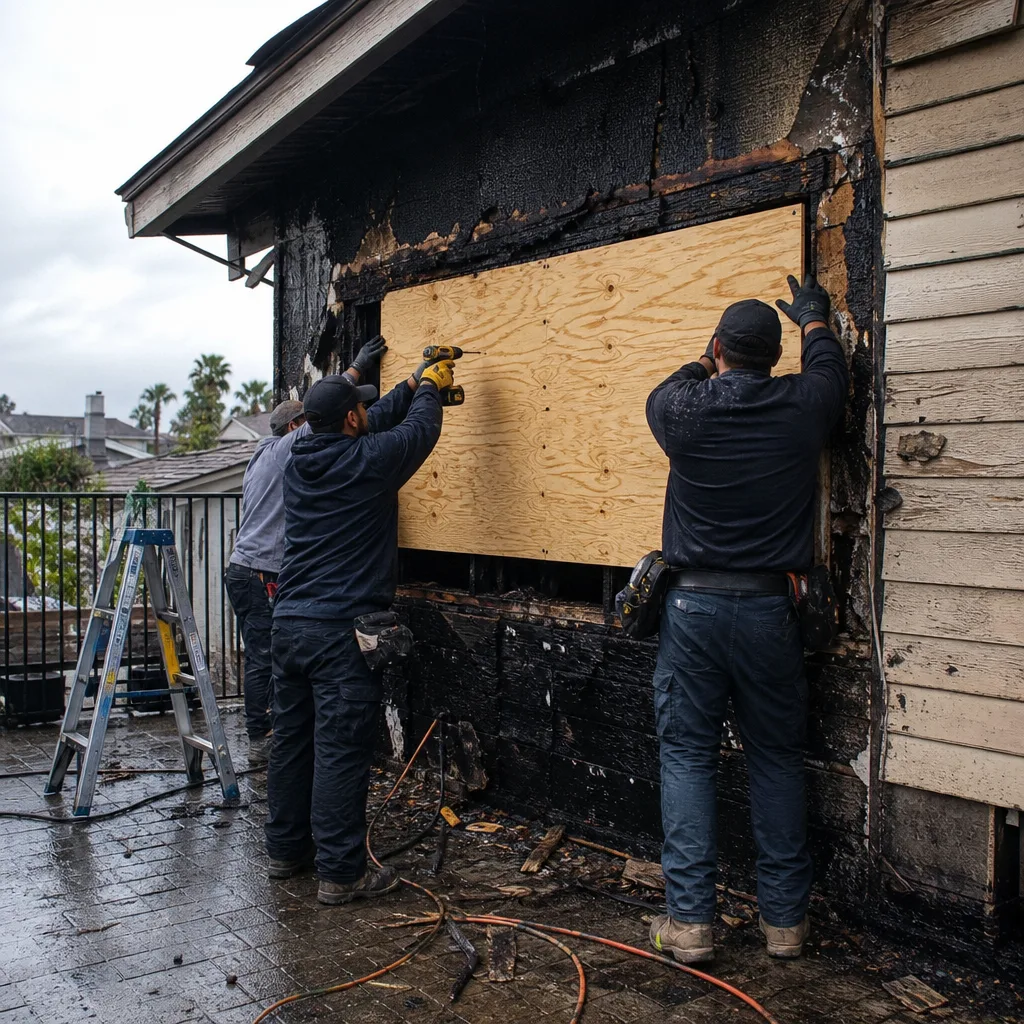
When a supply line lets go in a Dana Point condo, the water doesn’t wait. Extraction is the first move, and in most cases we can have pumps and vacuums running within an hour of your call. We use professional-grade Dri-Eaz extraction equipment that pulls water from carpet, padding, and hard surfaces fast enough to prevent it from wicking into drywall and subflooring. In multifamily buildings, speed matters even more because the water is already trying to find its way into the unit below.
Structural Drying & Dehumidification
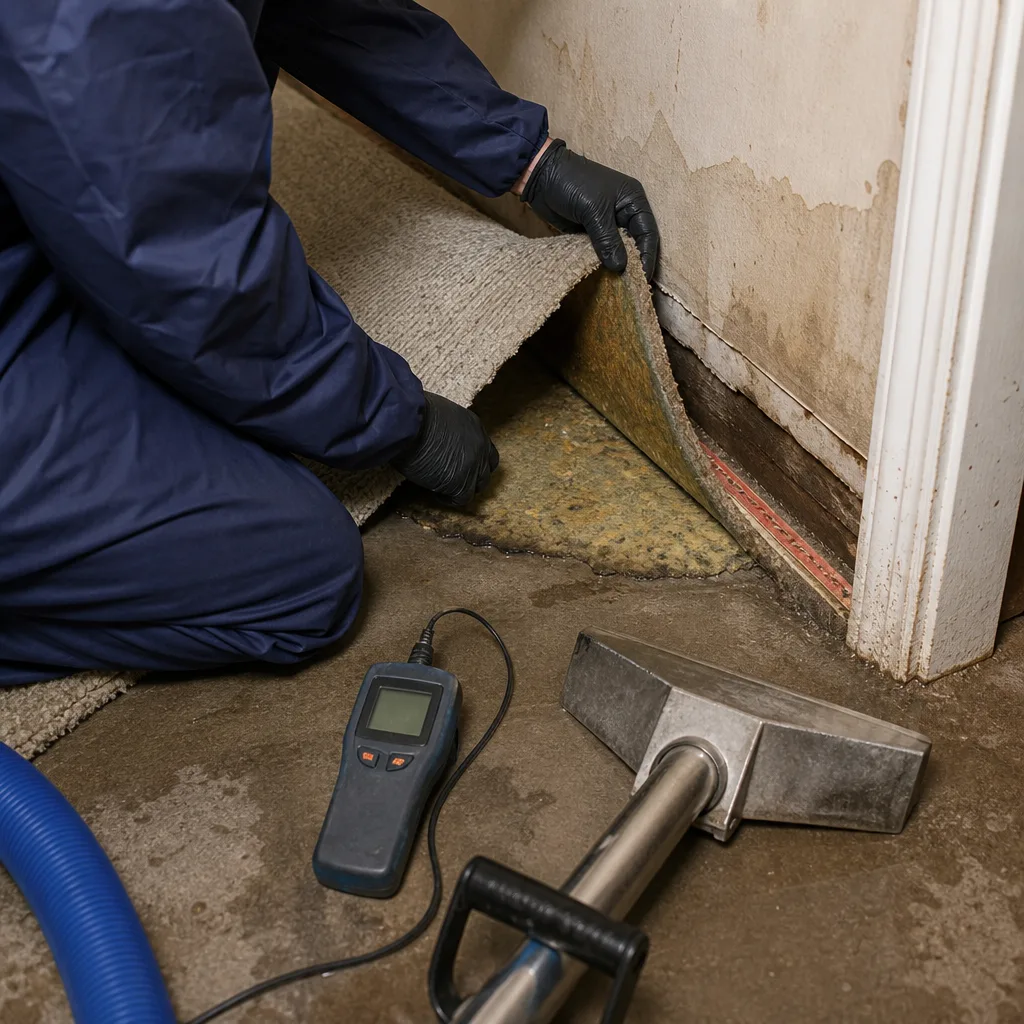
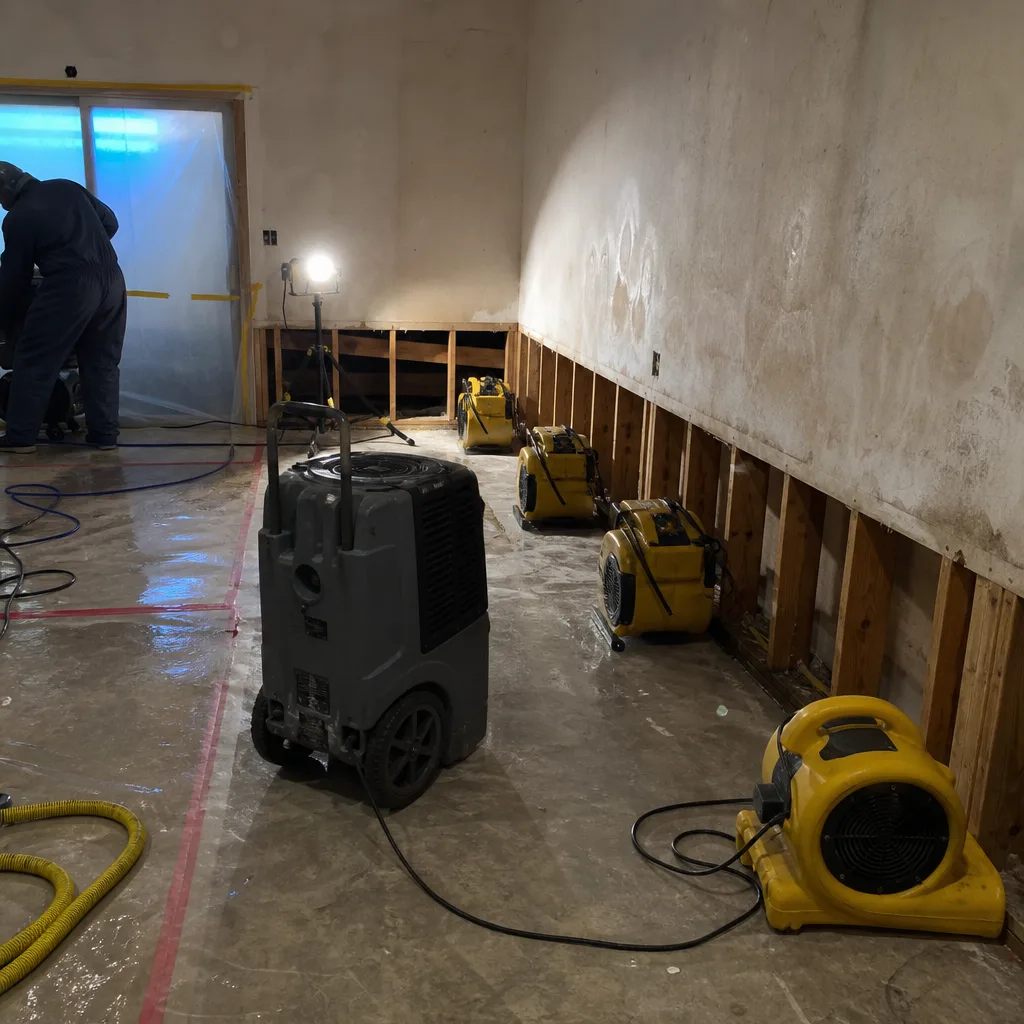
Dana Point’s marine layer keeps relative humidity high even on sunny days. That means wall cavities don’t dry on their own the way they do in, say, Temecula or Riverside. If you leave damp drywall alone, mold will get a foothold within 48 to 72 hours here, not the five to seven days you might see inland. We set up Dri-Eaz dehumidifiers and high-velocity air movers immediately after extraction, and we monitor those readings daily. You get the log at the end. County health standards and IICRC drying protocols guide every reading.
Flood Cleanup
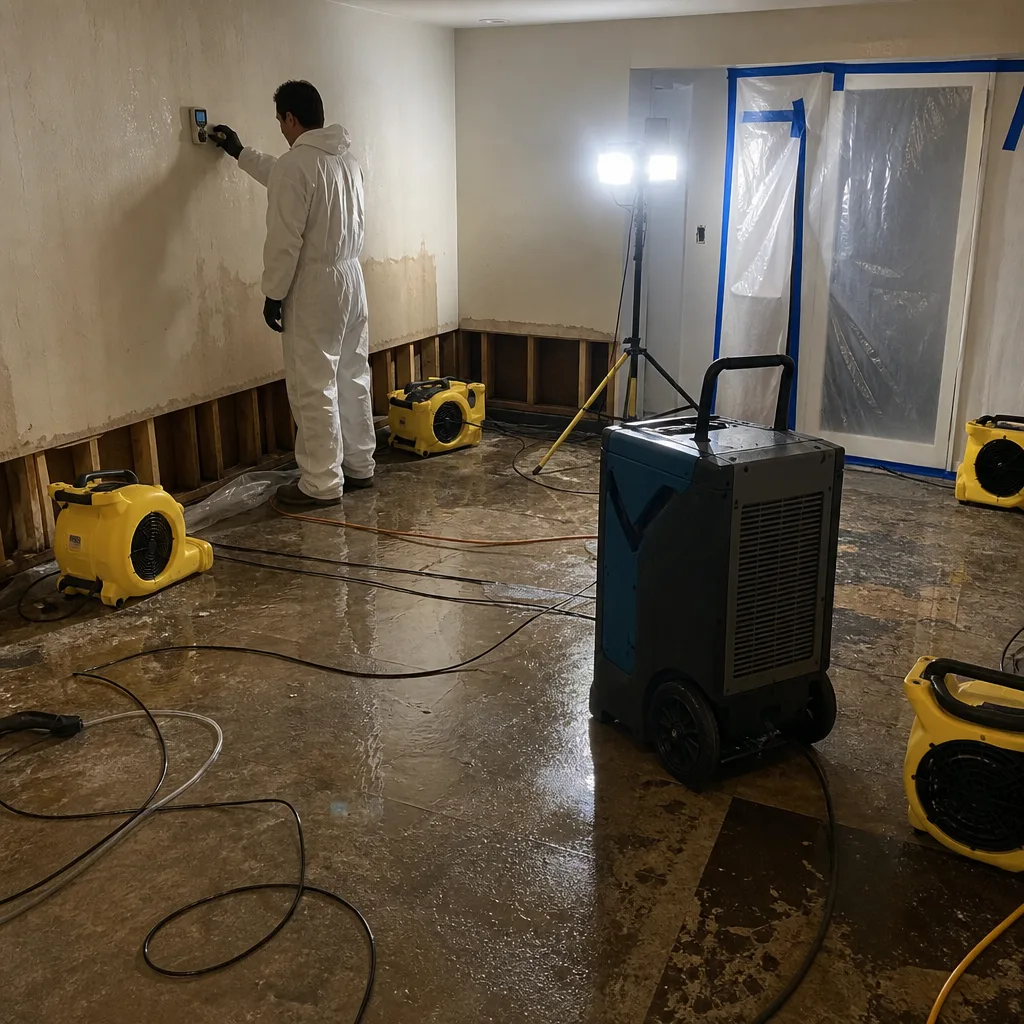
Dana Point isn’t in a major flood zone, but storm surge, failed drainage on blufftop properties, and the occasional king tide have caused their share of water intrusion in homes along Pacific Coast Highway and the streets above the harbor. Flood water brings whatever it passed through. We treat it as contaminated until proven otherwise, remove affected materials, and dry the structure aggressively. This is the work of our Water Damage Restoration team, and it starts with a written scope so you know exactly what we’re doing before we touch a wall.
Burst Pipe Restoration
Copper pipes in Dana Point fail the same way boat fittings do: salt corrosion at joints and elbows. A pinhole leak behind a common wall can run for weeks before it presents as a stain on your ceiling. By the time you see it, water has usually saturated the framing, the drywall, and possibly the drywall in the unit next door. We open the wall, expose the failed line, extract, dry, and coordinate with your plumber to get the line repaired. Then we restore whatever we removed. The entire scope is documented for your adjuster.
What happens when you call
- 1
A real person answersNo phone trees - you reach a local pro.
- 2
You get an upfront price rangeHonest numbers before anyone is dispatched.
- 3
A background-checked tech heads outLicensed & insured, dispatched right away.
- 4
You approve before work beginsNothing starts until you say go.
Trusted Brands We Service in Dana Point
We don’t play favorites with equipment manufacturers. We use what works, and in Dana Point that means Dri-Eaz for extraction and drying, Phoenix for high-capacity dehumidification in large common areas, and Injectidry systems for drying inside wall cavities without tearing out more drywall than necessary. Every job we do is backed by our IICRC certification and RIA affiliate standards. When you’re dealing with a shared wall in a 1974 harbor condo, the right equipment and the right documentation are the difference between a quick dry and a mold claim that drags out for months.
Common Water Damage Restoration Problems We See in Dana Point Homes
- Salt-corroded copper supply lines. The onshore wind carries salt that pits copper pipes at fittings and elbows. A slow leak behind a wall can go undetected for weeks, because the marine layer keeps everything damp anyway. By the time it shows up as a ceiling stain, it’s often a multi-unit loss.
- Flat and low-slope roof failures on 1970s condos. The stucco-over-frame complexes around the harbor were built with roof assemblies that were marginal on day one. Fifty years of salt spray and UV later, the flashings and seams fail, sending water down chase walls and into units that have no visible roof leak of their own.
- Compressed mold timelines. Cavity moisture in Dana Point rarely dries naturally. The persistent humidity means mold colonization can start within two to three days of a water event. That’s why structural drying has to start immediately, and why daily moisture readings are not optional here.
- Shared-wall wicking between units. When the recirculation line in a Lantern Village condo lets go, the water doesn’t respect property lines. It travels through common subfloors and party walls. One unit’s leak becomes three units’ restoration, and the HOA master policy gets involved. This is the defining challenge of water damage work in Dana Point, and most national franchises simply aren’t set up to handle the paperwork.
Pricing for Water Damage Restoration in Dana Point, CA
Emergency water extraction in Dana Point typically runs $1,800 to $3,500 for a standard single-room loss with moderate saturation. Structural drying with dehumidification and daily monitoring usually adds $1,200 to $2,800 depending on how many walls are involved and whether we’re drying cavities with Injectidry mats. A burst pipe restoration with wall opening, extraction, drying, and rebuild commonly lands between $4,000 and $8,000, especially in older harbor condos where we have to coordinate with an HOA. Roof leak water damage to ceilings and chase walls runs $2,500 to $6,000 on average. You’ll get a written scope before any work starts, and estimates are free. Call (855) 915-0646 and Wade will walk you through it over the phone.
We Also Serve Cities Near Dana Point
Our Water Damage Restoration in Dana Point coverage area extends to the neighboring coastal and canyon communities. We handle jobs in San Juan Capistrano, Laguna Niguel, San Clemente, and Ladera Ranch regularly. Same owner, same crew, same written promise on every job.
Serving Dana Point, CA - Our Local Coverage Area
We’re based in the Dana Point area and know this community well. Use the map below to see our service coverage - if you’re nearby, we can almost certainly help.
FAQs - Water Damage Restoration in Dana Point
It slows natural drying dramatically. Dana Point’s relative humidity stays elevated year-round, even on clear days, so wall cavities that get wet do not release moisture to the surrounding air the way they would in inland Orange County. That means structural drying has to be active and forced, not passive. We set up dehumidifiers and air movers immediately, and we track moisture levels daily until the wood reaches its dry standard. Expect drying to take two to four days longer in a harbor-area condo than it would in Lake Forest or Mission Viejo. Call (855) 915-0646 for an assessment of your specific situation.
It depends on the governing documents. In most Dana Point complexes built in the 1970s, pipes inside common walls are part of the common area, which means the HOA master policy covers the pipe itself and often the drywall repair. Your individual unit policy typically covers your personal property and any improvements you made. In practice, restoration work in shared walls almost always involves both policies plus your neighbor’s if the water traveled. Wade deals with the adjusters directly and sorts out the coverage in writing before work begins. You won’t be stuck relaying information.
Salt. The onshore wind deposits a fine salt film on everything, including the copper lines inside exterior walls and roof chases. Over decades, that salt accelerates galvanic corrosion at fittings, elbows, and solder joints. A fresh copper line in San Juan Capistrano might last 60 years. The same line in a Dana Point harbor condo can pinhole at 35 to 40. We see it constantly, particularly in the Lantern Village and Marina District complexes. If you have original copper from the 1970s, it’s worth a close look at exposed fittings before a leak finds you.
Yes, and it routinely does. Flat and low-slope roofs on older Dana Point townhomes direct water into chase walls and party-wall cavities when flashings fail. That water runs down inside shared walls and subfloors, appearing as stains in units that have no roof leak of their own. We’ve opened walls in Lantern Village where a single roof penetration above unit C had been feeding moisture into units A and B for months. If you see staining on a ceiling you share with a neighbor, call (855) 915-0646. We’ll map the moisture and document everything for the HOA and the adjusters.
Call us, then call your neighbor. Water staining on a shared ceiling means the source is almost certainly above you or inside the common assembly, and every hour it keeps moving costs you more in drywall and framing. Don’t poke a hole in the stain with a screwdriver to ‘drain’ it unless you know exactly what you’re doing; the water may be coming from a pressurized line, and releasing it can cause more damage. Turn off any water fixtures above if you can, and call (855) 915-0646. Wade will be on the road within the hour.
Written by Wade Ferris, Owner at Wade’s Restoration of California, serving Dana Point since 2007.