
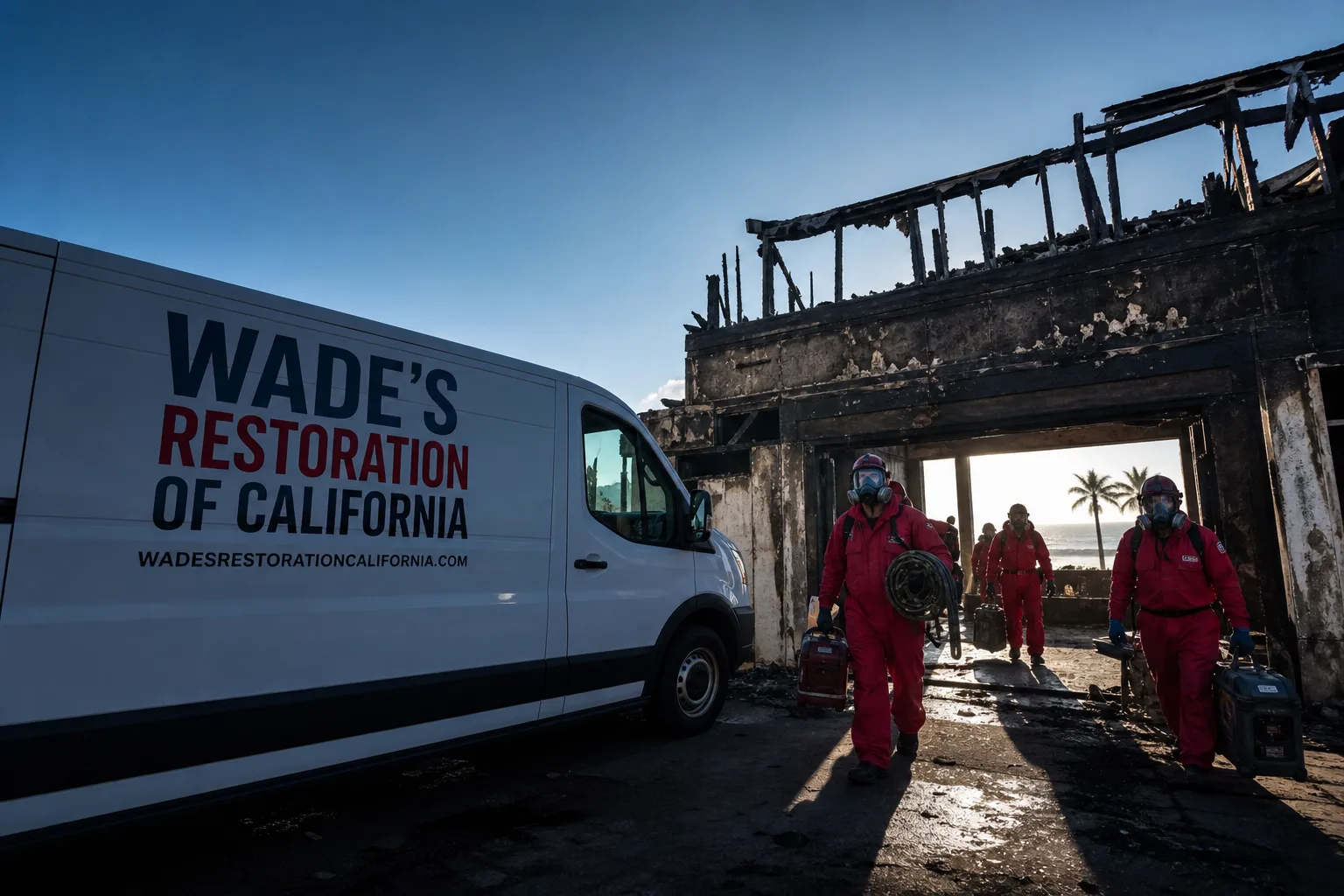
Fast, Reliable Water Damage Restoration Across Coronado
If you have water where it shouldn’t be in Coronado, here’s the straight answer: extraction should start within the hour, structural drying typically runs 3 to 7 days in this climate, and saltwater intrusion from the bay or ocean is a completely different animal than a burst pipe. That’s not scare talk, it’s the reality of living on a peninsula with seawater on both sides. We’re Water Damage Restoration specialists who have worked in Coronado homes from the Village to the Cays, and we know exactly what these older wood-frame houses do when they get wet. Call Wade directly at (855) 915-0646 and he’ll tell you what he sees and what he’d do about it. Not a script. A person who’s done this since 2007.
Why Wade’s Restoration of California Is Coronado’s Preferred Water Damage Restoration Company
Wade Ferris started this company because he got tired of watching national outfits sell homeowners on equipment and then disappear when the paperwork got hard. He lives the same way Coronado homeowners do: you see your neighbors at the grocery store, at Spreckels Park, at the ferry landing. If he does a bad job on Orange Avenue, he hears about it on Orange Avenue. That’s the accountability model. No call center, no rotating crew of strangers. The name on the truck is the name that answers the phone.
Coronado homeowners tell us the same things. They want someone who knows the difference between a 1920s cottage with plaster walls and a 1990s build in the Cays. They want moisture readings they can see with their own eyes. Wade’s crew takes readings every single day and hands you the full log when the job is done. Almost no one in this trade does that. And when the insurance conversation happens, Wade deals with the adjuster directly. You’re not the middleman relaying numbers between two parties who don’t know each other. That’s why the Coronado homeowners who call us tend to call us again, and why their neighbors call too. Ask anyone on your street.
Our Water Damage Restoration Services in Coronado
Emergency Water Extraction
When a supply line lets go in a second-floor bathroom above a 1930s living room, every minute the water sits means more of it wicks into original plaster and redwood framing. Wade heads out the same hour and can have extraction running before the water migrates through the subfloor. We use truck-mounted and portable extraction units, not a wet-vac from the hardware store. In Coronado specifically, we check for salt residue during extraction, because bay intrusion and a freshwater pipe break are not cleaned the same way.
Structural Drying & Dehumidification
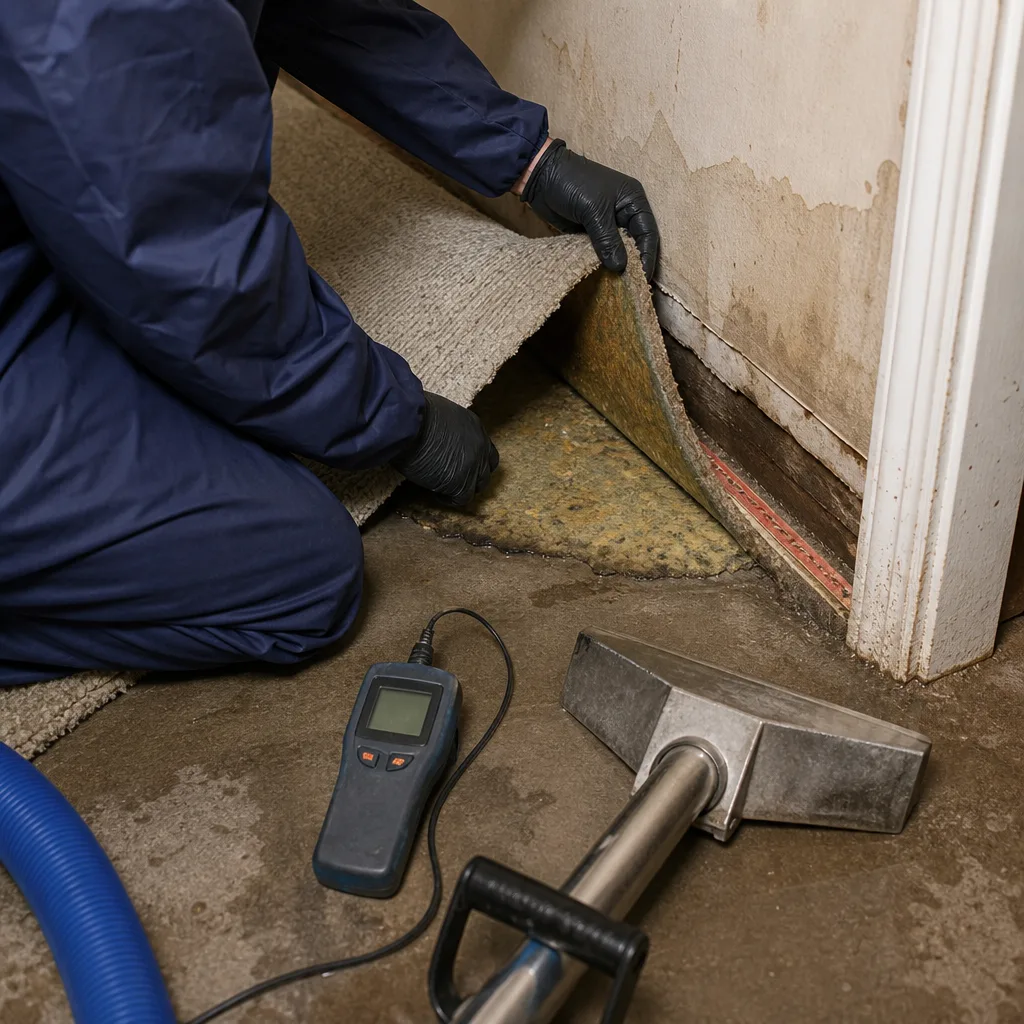
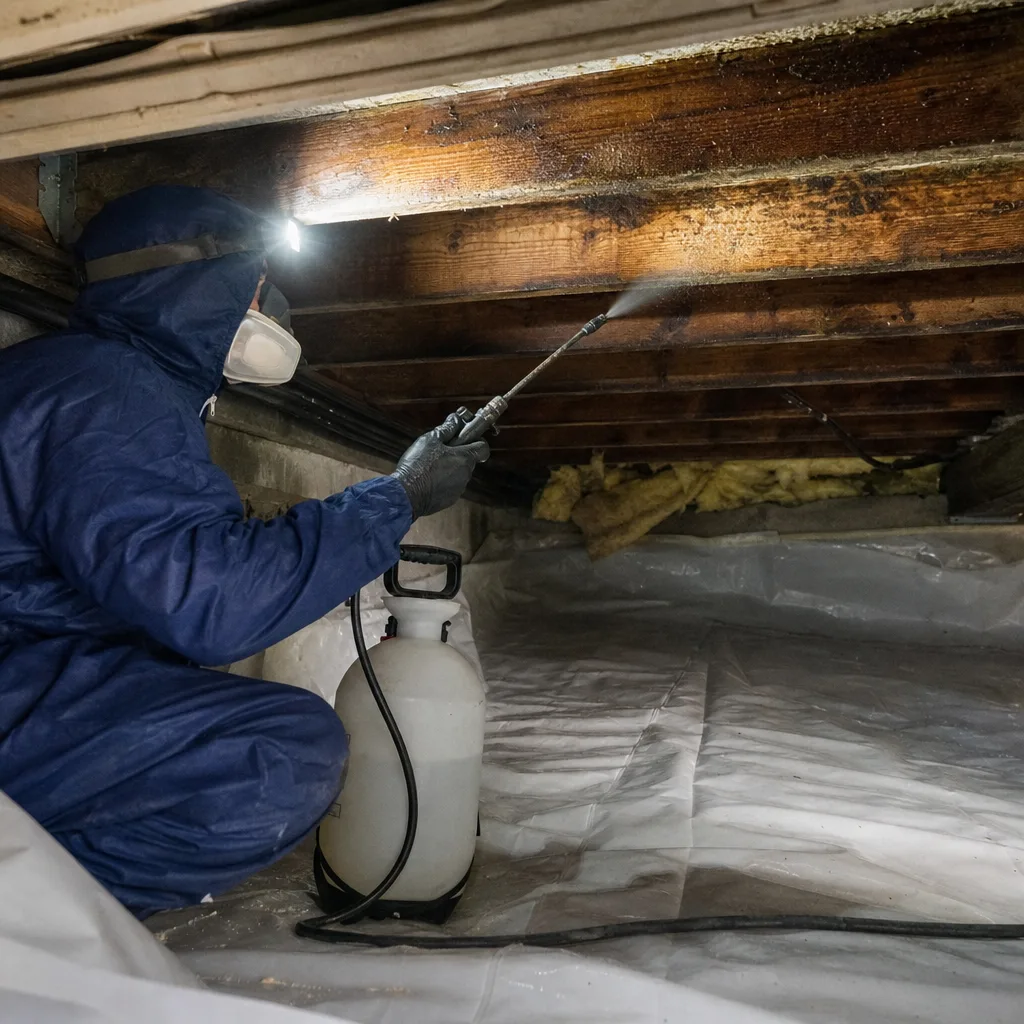
This is where Coronado bites back if you rush it. Surrounded by saltwater, this area rarely gets the kind of dry air you need for passive drying to work. Relative humidity stays stubbornly high, which means walls and floors stay wet longer, even with fans running. We run desiccant dehumidifiers, not just refrigerant units, because they pull moisture down to levels that actually matter in marine air. If the structure is a pier-and-beam home from the 1920s or 1930s, we map the crawlspace separately and dry it as its own zone. Standard timelines from an inland playbook will leave these homes wet under the surface.
Flood Cleanup
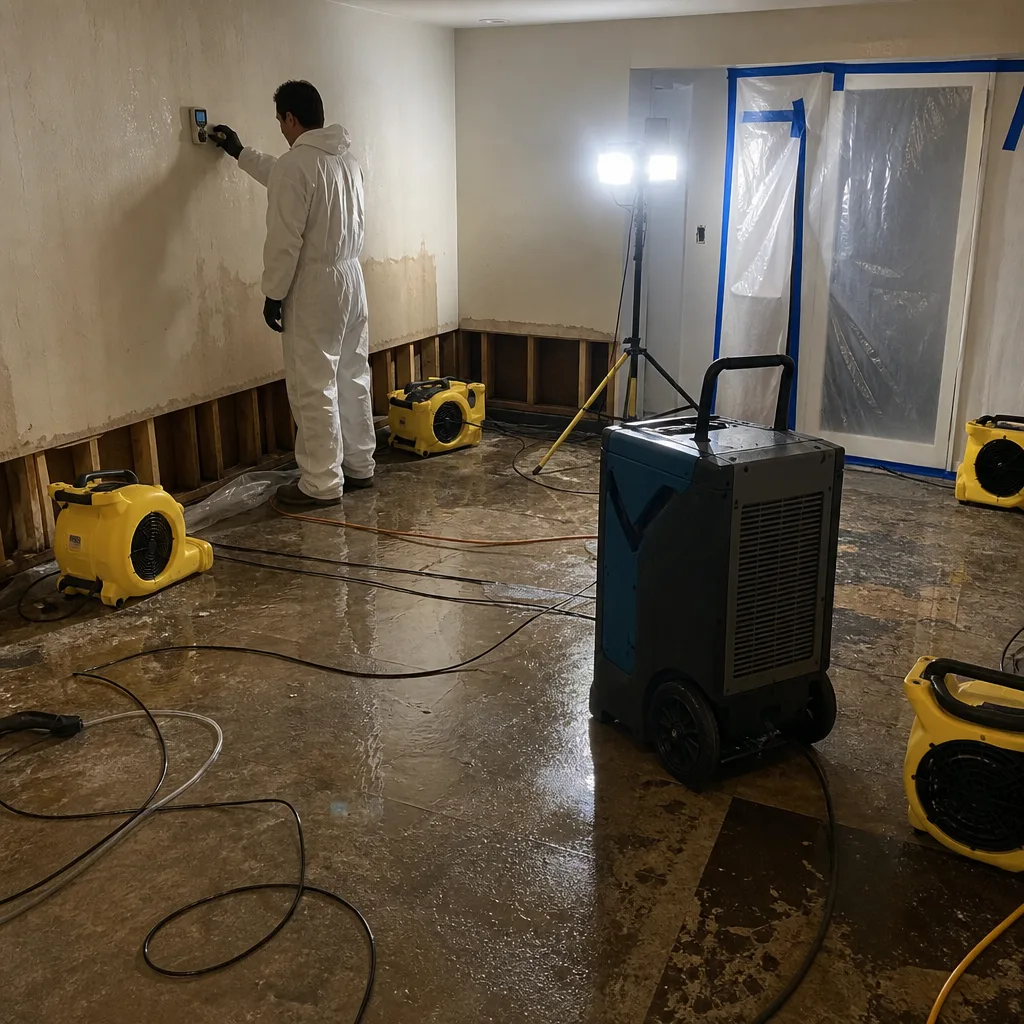
A king tide overtopping a bulkhead near Glorietta Bay is not the same as an overflowing bathtub. Under IICRC standards, that water is Category 3, grossly contaminated, and it carries salt. Our flood cleanup on bay-facing streets includes full salt remediation before any rebuild happens, because salt crystals left in wall cavities and subflooring will eat through new fasteners and framing within a year. We flush, dry, test, and only then rebuild. The visible damage often looks minor. What’s hiding behind the baseboard is what matters.
Burst Pipe Restoration
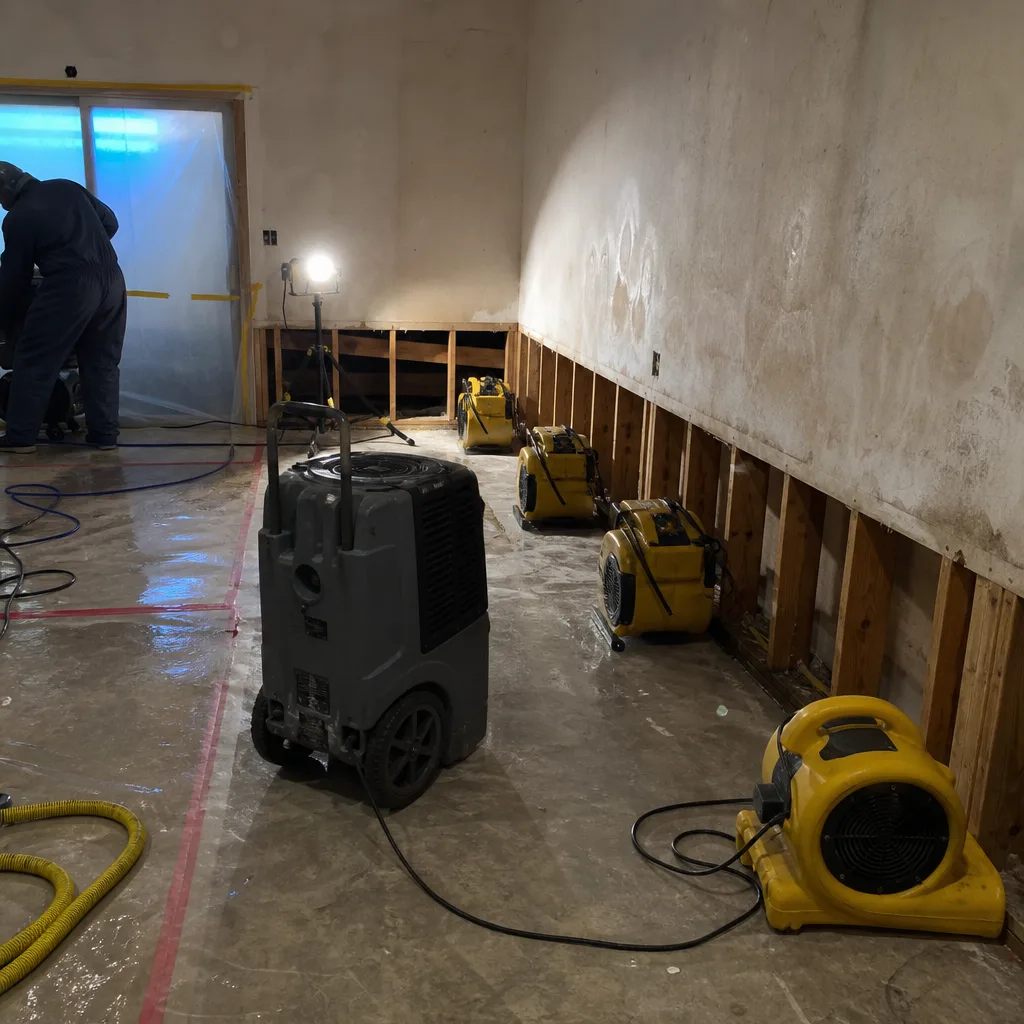
Coronado’s older homes have aging galvanized and copper supply lines, and when they fail, they fail thoroughly. A burst pipe inside a wall cavity soaks insulation, lathe, and plaster before it ever shows on the paint. We open the minimum amount of wall needed, extract, dry to a documented moisture standard, and hand you the log. If the pipe failure happened while you were away, we also check for salt-air corrosion on exposed metal during the rebuild. Marine air doesn’t rest, and neither does the damage it causes.
What happens when you call
- 1
A real person answersNo phone trees - you reach a local pro.
- 2
You get an upfront price rangeHonest numbers before anyone is dispatched.
- 3
A background-checked tech heads outLicensed & insured, dispatched right away.
- 4
You approve before work beginsNothing starts until you say go.
Trusted Brands We Service in Coronado
We use professional-grade equipment from Dri-Eaz, Phoenix, and Injectidry, and our techs carry IICRC, RIA, and IFA credentials. That matters in Coronado because the housing stock predates modern building codes by decades, and the drying equipment has to match the structure. You can’t throw a cookie-cutter drying plan at a 1926 cottage with plaster walls and expect it to work. We also keep marine-grade replacement hardware stocked, because we know standard steel fasteners corrode in this salt air within months. When we open a wall near the bay, we already have what we need to put it back right.
Common Water Damage Restoration Problems We See in Coronado Homes
- Saltwater intrusion treated as freshwater. Crews that don’t know Coronado’s exposure dry the space and close it up. Six months later the new fasteners are rusting and the studs are crystallizing. If the water came from the bay or a storm surge, it’s Category 3 and needs salt remediation, period.
- Drying timelines cut short. Marine humidity rarely drops low enough for passive drying. We run desiccant dehumidification on nearly every job here, often for longer than a standard coastal project. Pulling the equipment too soon leaves moisture in original plaster and redwood.
- Standard steel hardware in marine air. Restoration openings expose old metal connectors, and some techs replace them with whatever’s on the truck. In Coronado, that hardware fails within months. We use marine-grade or corrosion-resistant replacements even in interior applications.
- High water table undermining crawlspace drying. On the Silver Strand and bay-facing streets, the water table sits only feet below the surface. Any flooding adds ground moisture to whatever’s already there. You can’t dry a crawlspace by ignoring the soil beneath it.
Pricing for Water Damage Restoration in Coronado, CA
Here are real numbers, not vague ranges you can drive a truck through. Emergency water extraction in Coronado typically runs $2,500 to $6,000 depending on square footage and how far the water has traveled. Structural drying and dehumidification adds $1,800 to $5,000 for a typical single-story home, more for multi-story pier-and-beam construction with a wet crawlspace. Flood cleanup with salt remediation on a bay-facing property starts around $4,500 and can reach $12,000 or more when subfloor and framing are involved. Burst pipe restoration inside a wall cavity averages $3,000 to $8,000. What moves the number: how long the water sat, whether salt is present, and whether original plaster has to come out. Wade gives you a written scope before work starts, not a guess over the phone. Call (855) 915-0646 for a free estimate.
We Also Serve Cities Near Coronado
Wade’s crew covers Coronado directly, and we also take calls from National City, San Diego, Imperial Beach, and Bonita. If you’re just across the bridge or down the Silver Strand, the same live person answers the phone and the same written promise applies. No trip charge inside the county.
Serving Coronado, CA - Our Local Coverage Area
We’re based in the Coronado area and know this community well. Use the map below to see our service coverage - if you’re nearby, we can almost certainly help.
FAQs - Water Damage Restoration in Coronado
Yes. Bay water, ocean surge, and king-tide flooding are classified as Category 3 under IICRC standards, meaning grossly contaminated. A burst pipe is Category 1 or 2. Saltwater requires salt remediation before drying and rebuilding, because salt crystals left behind will corrode new framing and fasteners. Call (855) 915-0646 and Wade will walk you through what your specific situation calls for.
Plaster absorbs and holds water differently than modern drywall, and Coronado’s persistent marine humidity means passive drying rarely works. These homes need desiccant dehumidification and longer run times to reach a safe moisture standard. Rushing it traps moisture inside the wall, which leads to mold and crumbling plaster later.
In Coronado, yes. Even interior repairs are exposed to salt-laden air, and standard steel hardware corrodes quickly once walls are opened. We use marine-grade or corrosion-resistant connectors on restoration work here, especially in bay-facing or pier-and-beam homes where moisture exposure is ongoing. It costs a little more and fails a lot less.
The water table sits only feet below the surface, so any flood adds groundwater pressure from below. A crawlspace that looks dry may be pulling moisture from the soil underneath it. We treat these crawlspaces as their own drying zone, with separate moisture mapping and desiccant dehumidification. You can’t dry what you don’t measure.
Redwood is naturally rot-resistant, but saltwater changes the equation. If the wood has wicked saline water and salt crystals have formed, it needs to be flushed, dried, and evaluated board by board. In many cases, the redwood can be saved with proper remediation. In severe salt saturation, sections get replaced. Wade will show you the moisture log and tell you which path makes sense for your home. Call (855) 915-0646.
If you have water in your Coronado home, don’t wait for it to spread. Call Wade’s Restoration of California at (855) 915-0646 now. Live person. Straight answers. Free estimate.
Written by Wade Ferris, Owner at Wade’s Restoration of California, serving Coronado since 2007.