
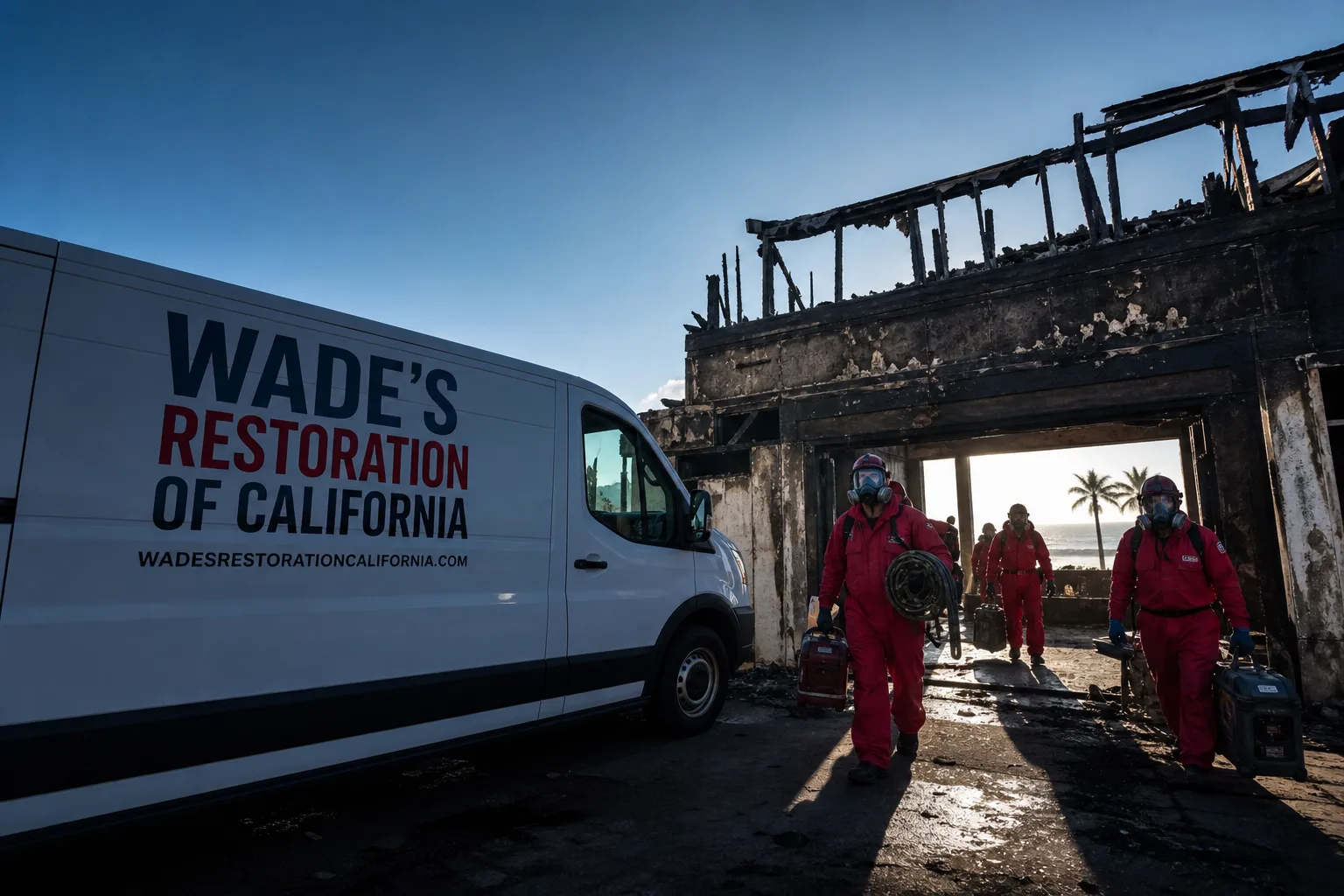
Fast, Reliable Water Damage Restoration Across Claremont
Water damage restoration in Claremont typically runs $2,800-$7,500 for a standard single-room mitigation, and in the foothill neighborhoods above Baseline Road that number climbs fast because of the city’s unique two-stage damage cycle. When a supply line lets go at 2 a.m. near the Claremont Colleges or a debris flow pushes mud through a sliding door on Indian Hill Boulevard, you need someone who knows this ZIP code’s housing stock and its failure modes, not a call-center ticket. Wade Ferris has been answering his own phone since 2007, and he’ll have extraction running inside the hour for most Claremont calls. Call (855) 915-0646 right now and you’ll get Wade himself, not a queue.
Why Wade’s Restoration of California Is Claremont’s Preferred Water Damage Restoration Company
Wade publishes his name, his license number, and his address. That’s not a marketing line; it’s how he’s done business in Claremont for years, because he knows he’ll run into you at the Saturday farmers market or outside Rhino Records. Ask anyone on your street who’s had water damage here. They’ll tell you the same thing: Wade shows up, he takes moisture readings every single day, and he hands you the full log at the end. Almost nobody in this trade does that. The log is your proof the walls are actually dry, not just “dry enough.”
Reviews from Claremont homeowners lean hard on two things: speed and honesty. The speed part matters in the foothills, where a standing-water event can become a mud intrusion if the next Santa Ana storm hits before the drying is done. The honesty part matters everywhere. Wade’s crew is background-checked, uniformed, and trained on Dri-Eaz and Phoenix equipment. He’s IICRC-certified and RIA-affiliated. And if something isn’t done right, the 90-Day Done Right Promise means he makes it right, in writing, on every water, fire, and mold job.
Response time to Claremont is inside the hour for most calls. Wade coordinates scheduling and dispatch from the Los Angeles office, but the crews who serve Claremont work this city weekly. They know that Indian Hill Boulevard and Foothill Boulevard are the two main north-south routes into the wildland-urban interface, and they know which streets lose access first when a debris flow crosses the road.
Our Water Damage Restoration Services in Claremont
Emergency Water Extraction in Claremont
Standing water does not wait, and neither do we. In Claremont’s older bungalow neighborhoods around the Colleges, a burst galvanized supply line can dump forty gallons a minute into a crawlspace, and original plaster walls wick that moisture upward faster than drywall ever will. Our Water Damage Restoration team brings truck-mounted extraction units and submersible pumps rated for the muck that comes with foothill runoff, not just clean-water breaks. We get the water out first, then we map the damage.
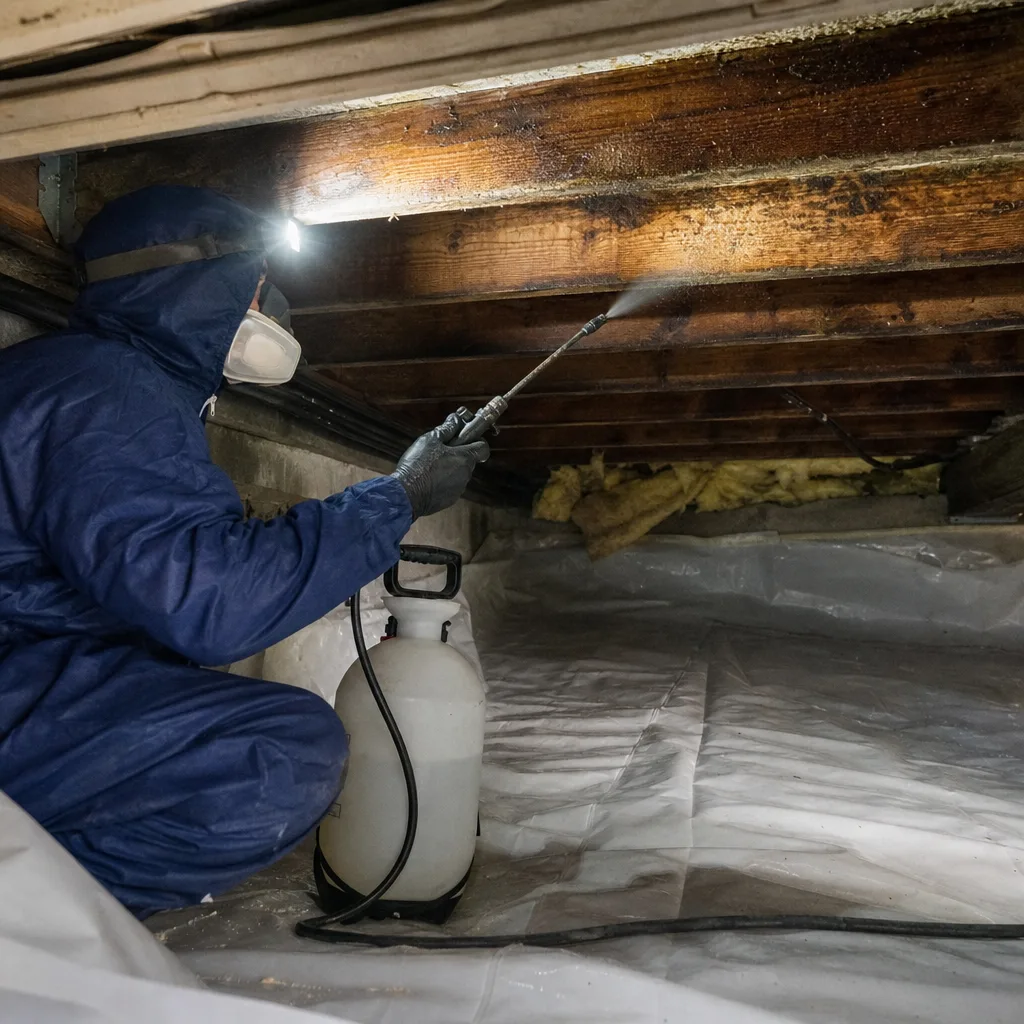
Structural Drying & Dehumidification in Claremont
Drying a 1920s Craftsman on a tight College-area lot isn’t the same job as drying a 2005 tract home in Pomona. Clearances are tighter, access is often alley-load only, and the original lathe-and-plaster walls hold moisture in ways that confound standard drying setups. We use Dri-Eaz LGR dehumidifiers and Injectidry wall-drying mats positioned for Claremont’s smaller floor plans, and Wade takes daily moisture readings until the numbers prove the structure is dry. You get the log. That’s the whole point.
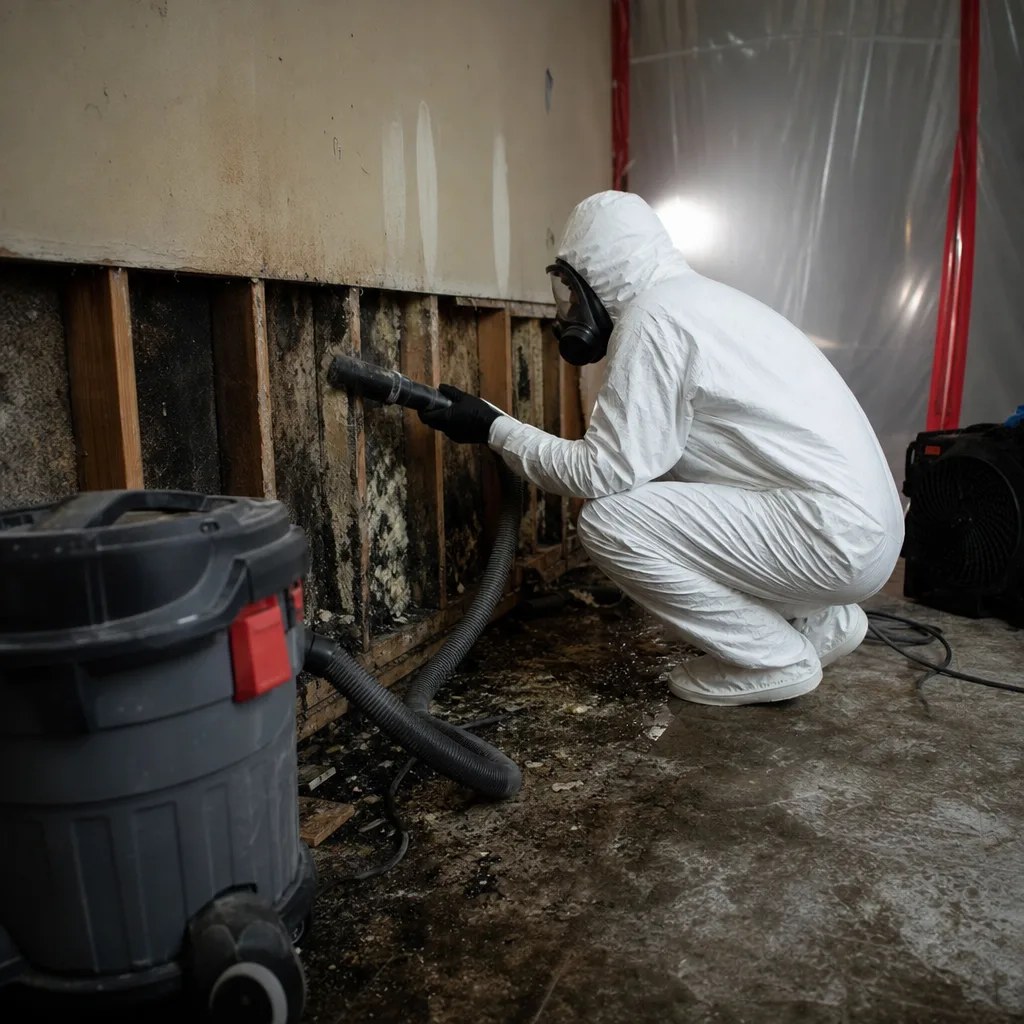
Flood Cleanup in Claremont
Claremont’s flood damage is rarely just flood damage. When the San Gabriel Mountains shed water after a burn scar has already stripped the slopes, the water arrives carrying ash, silt, mud, and debris. That’s not a mop job. We remove contaminated building materials, extract from subfloor cavities, and document the two-stage fire-then-flood sequence for your insurance claim, because your adjuster will need to see both events connected. The Claremont foothill homes we serve regularly need this exact kind of documentation.
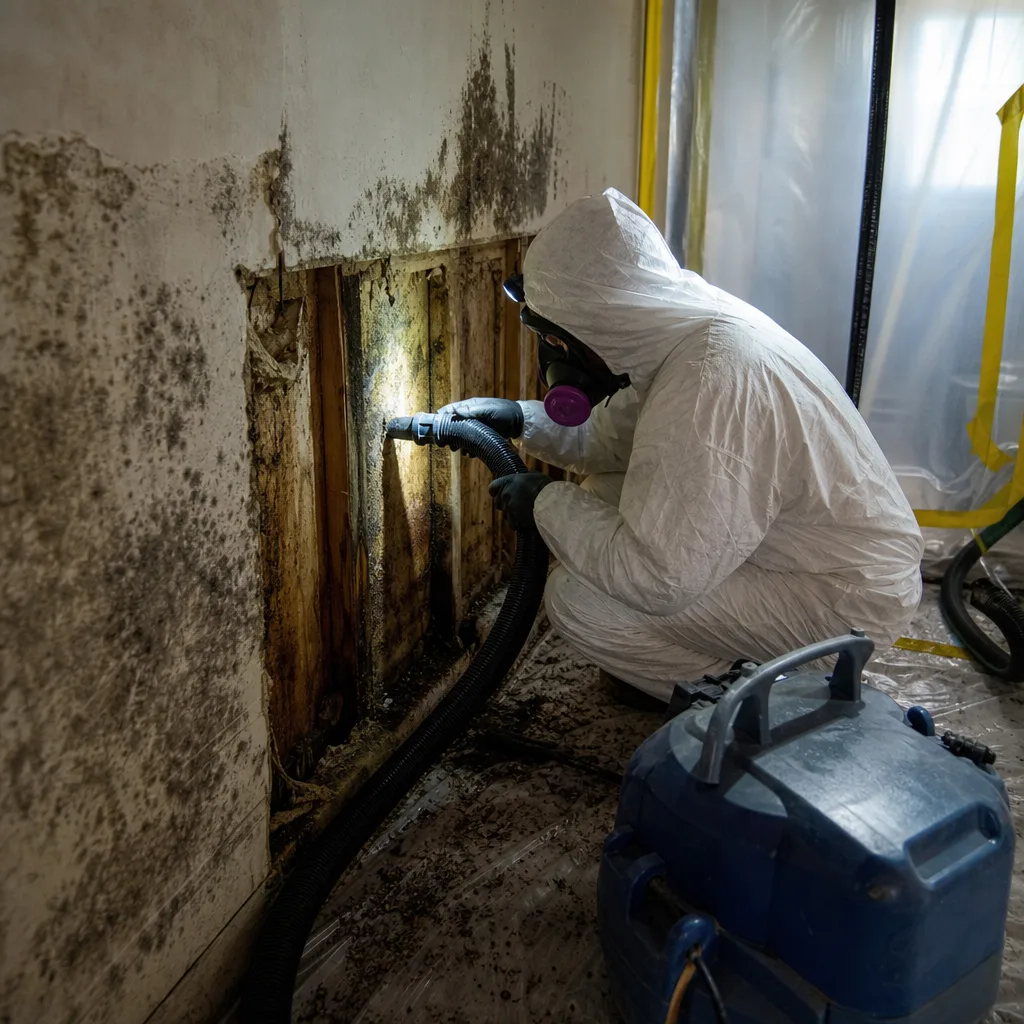
Burst Pipe Restoration in Claremont
Older Claremont homes were built with galvanized steel supply lines, and those pipes are now 70 to 100 years old. They corrode from the inside, the zinc layer wears thin, and then one winter pressure spike splits the pipe along its length. We handle the full sequence: shutoff coordination, extraction, structural drying, and the insurance paperwork that follows. We don’t do the plumbing repair itself, but we’ll dry everything the burst pipe soaked, and we’ll document it for your claim.
What happens when you call
- 1
A real person answersNo phone trees - you reach a local pro.
- 2
You get an upfront price rangeHonest numbers before anyone is dispatched.
- 3
A background-checked tech heads outLicensed & insured, dispatched right away.
- 4
You approve before work beginsNothing starts until you say go.
Common Water Damage Restoration Problems We See in Claremont Homes
- Two-stage damage nobody documents: A wildfire coats the attic and walls with soot and ash. Months later, the denuded slopes send mud through the same walls. Out-of-area crews treat the mud as the whole story and miss the contamination already trapped in the plaster. We look for both stages every single time, because in north Claremont it’s not an edge case. It’s the default.
- Tight clearance drying failures: The bungalows around the Claremont Colleges were built in the 1920s through 1950s, with narrow doorways, small rooms, and alley-load access that fights standard drying equipment layouts. A one-size-fits-all dehumidifier array doesn’t reach the far corners of a 900-square-foot Craftsman. Our drying plans are drawn for the actual footprint of your house.
- Debris flow staging mistakes: Crews scheduled for a single-day extraction leave equipment on a mud-prone hillside lot overnight, and the next Santa Ana storm washes half of it downslope. We schedule Claremont foothill jobs with the next storm in mind, not just the current one.
- Galvanized plumbing secondary leaks: After a primary water event, the compromised galvanized lines in older Claremont homes often spring a second leak within days. We look for that, and we flag it before it becomes a second restoration project.
Pricing for Water Damage Restoration in Claremont, CA
Here are real numbers for Claremont. Emergency water extraction alone typically runs $900-$1,800 for a single room, depending on water depth and contamination class. Structural drying and dehumidification with daily monitoring runs $1,400-$3,200 for a standard Claremont bungalow job, more for larger foothill homes with multiple affected floors. Full flood cleanup involving mud, silt, and contaminated water runs $3,500-$9,500, and burst pipe restoration usually lands between $2,200 and $5,800. What moves the number is the contamination class of the water, the square footage affected, and whether the insurance adjuster needs the two-stage documentation we provide. Estimates are free. Call (855) 915-0646 and Wade will give you a written scope before any work starts, so you’re never surprised at the door.
We Also Serve Cities Near Claremont
Wade’s Restoration serves Water Damage Restoration in Claremont and the surrounding communities, including Montclair, La Verne, Upland, and Pomona. If you’re in one of those cities and dealing with water damage, the same crew, the same 90-Day Done Right Promise, and the same live-person phone answer apply. No call center, no runaround.
Serving Claremont, CA - Our Local Coverage Area
We’re based in the Claremont area and know this community well. Use the map below to see our service coverage - if you’re nearby, we can almost certainly help.
FAQs - Water Damage Restoration in Claremont
Because the wildfire itself causes water damage, just not the kind you can see at first. Soot and ash infiltrate ridge vents, return-air intakes, and attic insulation. Then the winter storms come, and the fire-denuded slopes above Baseline Road funnel mud and debris into the same homes. The water damage from the storm saturates walls that are already carrying fire contamination. If the restoration only addresses the water, the trapped contamination breeds mold regrowth. That’s why we document both stages and dry every affected cavity to the mudline, not just the visible water line. Call (855) 915-0646 if you’re in the foothills and worried this applies to your house.
We use Injectidry wall-drying mats and low-grain refrigerant dehumidifiers placed strategically in small rooms where standard equipment won’t fit. The mats pull moisture through the plaster by creating a vapor pressure differential, so we often avoid opening the walls at all. In the Indian Hill Boulevard foothill neighborhood, our crew extracted standing water from a 1980s tract home after a post-storm debris flow pushed mud through a sliding door, then used Dri-Eaz LGR dehumidifiers and Injectidry mats to dry the original plaster walls and subfloor without gutting the room. The key is daily moisture readings until the numbers say the wall is dry, not just until the surface feels dry. We give you that log. Call for a free assessment.
They treat a foothill water intrusion as a standalone flood event and miss the prior wildfire ash and soot already saturating the same walls and ceilings. It’s the single most common failure mode we correct on Claremont jobs, and it leads directly to trapped contamination and mold regrowth months later. The second mistake is scheduling a single-day extraction without accounting for the next Santa Ana-driven debris flow, which can strand equipment on a mud-prone hillside lot overnight. We plan for the second storm before the first one finishes. Call (855) 915-0646 and we’ll tell you what we’re seeing in your specific neighborhood right now.
Yes, and we’ve done it dozens of times in the 91711 ZIP code. The tight clearances and alley-load access in the College-area bungalows mean standard drying setups don’t always fit. We downsize our equipment footprint without sacrificing drying power, using Dri-Eaz and Phoenix units sized for smaller rooms. The work still gets done to the same standard, and you still get the daily moisture log. No trip charge inside our own county, and a free second opinion on any written estimate. Call for a walkthrough.
Immediately. Standing water mixed with mud and mountain runoff starts degrading original plaster, subfloor, and 70-year-old galvanized plumbing within hours, not days. The longer it sits, the more contaminated the building materials become, and the bigger the insurance claim gets. Wade answers his phone 24/7, and he can have extraction running inside the hour for most Claremont addresses. The sooner we start, the less we have to tear out. Call (855) 915-0646 now, even if it’s the middle of the night. That’s what the phone is for.
Written by Wade Ferris, Owner at Wade’s Restoration of California, serving Claremont and the surrounding communities.